Lower back pain often starts 36 inches below your brain — at your feet. When your arch collapses or your heel strike lacks proper shock absorption, the kinetic chain sends that instability straight up through your knees and hips to your lumbar spine. The right insole doesn’t just pad your step; it re-aligns your entire skeleton from the ground up.
I’m Emma — the founder and writer behind Baby Bangs. I’ve spent the last four years analyzing gait mechanics, orthotic foam densities, and arch support profiles to understand exactly which insert structures actually interrupt back pain at its source rather than just softening the blow.
This guide breaks down the seven most effective models on the market, each chosen for its measurable ability to reduce spinal stress, so you can confidently choose the best insoles for back pain for your specific foot type and daily routine.
How To Choose The Best Insoles For Back Pain
Not all orthotics are created equal when your target is the lumbar spine. You need an insole that controls excessive pronation (the inward roll that torques your pelvis) and provides enough heel-cup depth to stabilize the calcaneus. Here are the three specs that matter most.
Arch Height and Your Foot Type
If you have flat feet (low arches), your tibia rotates inward with every step, which twists your pelvis and strains your lower back. You need a firm, structured insole with a medial post to block that rotation. If you have high arches, you need a deeper heel cup and a flexible arch that doesn’t push up too aggressively — the goal is shock distribution, not rigidity. A neutral arch can get away with a semi-rigid design like the PowerStep Bridge that adapts to the foot’s natural shape.
Material Density vs. Cushioning
Plush foam feels great in the store but collapses under body weight within weeks, and a collapsed insole cannot maintain the skeletal alignment your back needs. Look for closed-cell polyurethane, TPU (thermoplastic polyurethane), or EVA blends with a durometer reading firm enough to resist your full weight without bottoming out. The MOVE All Day insole’s Recharge Foam and the Superfeet Work’s anti-fatigue layer are examples of materials that retain their shape under sustained load.
Heel Cup Depth and Midfoot Stability
The heel cup cradles your calcaneus and limits excess motion. A depth of at least 12-15 mm is ideal for back pain because it keeps the heel bone stacked directly under the tibia. Insoles with a flared medial flange — like the PowerStep Pinnacle — also provide a subtle wall that guides your foot into a neutral stride, reducing the torque transfer to your lumbar spine.
Quick Comparison
On smaller screens, swipe sideways to see the full table.
| Model | Category | Best For | Key Spec | Amazon |
|---|---|---|---|---|
| PowerStep Pinnacle | Premium | Maximum structure & plantar fasciitis relief | Dual-layer cushioning + rigid medial post | Amazon |
| MOVE All Day Comfort | Premium | All-day standing & shock absorption | X-Frame torsional support plate | Amazon |
| Superfeet Work Cushion | Premium | Heavy-duty work boots & long shifts | Anti-fatigue cushioning, trim-to-fit | Amazon |
| PowerStep Bridge | Mid-Range | Flexible, adaptable support for neutral arches | Energizing memory foam + moisture-wicking top | Amazon |
| Custom Fit Orthotics CF 440 | Mid-Range | OTC alternative to custom orthotics | 3/4 length, ergonomic 5-in-1 relief | Amazon |
| Timberland PRO Anti-Fatigue | Mid-Range | Work boots & concrete floor jobs | Hexagonal rubber pillars for energy return | Amazon |
| OUOKK 3/4 Arch Support | Budget | High arch support in tight shoes | 26mm TPU arch, 3 arch height options | Amazon |
In‑Depth Reviews
1. PowerStep Pinnacle

The Pinnacle is the gold standard for a reason — its dual-layer cushioning sits on top of a rigid polypropylene shell that creates a firm medial post. This is exactly what your lower back needs if you pronate excessively, because the post blocks the tibial rotation that twists your pelvis. Users report measurable reductions in lower back pain within the first week, with one reviewer noting a 65% decrease in plantar fasciitis symptoms that were contributing to their spinal discomfort.
The arch support is substantial but not aggressive — designed for moderate pronators who need structure without a high-arch wedge. The full-length design fits most athletic and casual shoes without trimming, and the moisture-wicking top layer keeps feet dry during 12-hour shifts. Made in the USA and backed by a 30-day guarantee, this is the most reliable pick for anyone whose back pain is linked to foot instability.
One thing to note: the rigidity means there is a brief break-in period of a few days while your foot adapts to the corrected alignment. Users with very high arches may find the support level too firm, though most adapt quickly. The Pinnacle is the safest bet for consistent spine-sparing performance across a wide range of activities.
Why it’s great
- Rigid shell prevents over-pronation that torques the lower back
- Dual-layer cushioning absorbs heel strike impact
- Fits most shoes without trimming
Good to know
- Firm feel may require a short adaptation period
- Less ideal for extremely high arches
2. MOVE All Day Comfort Insole
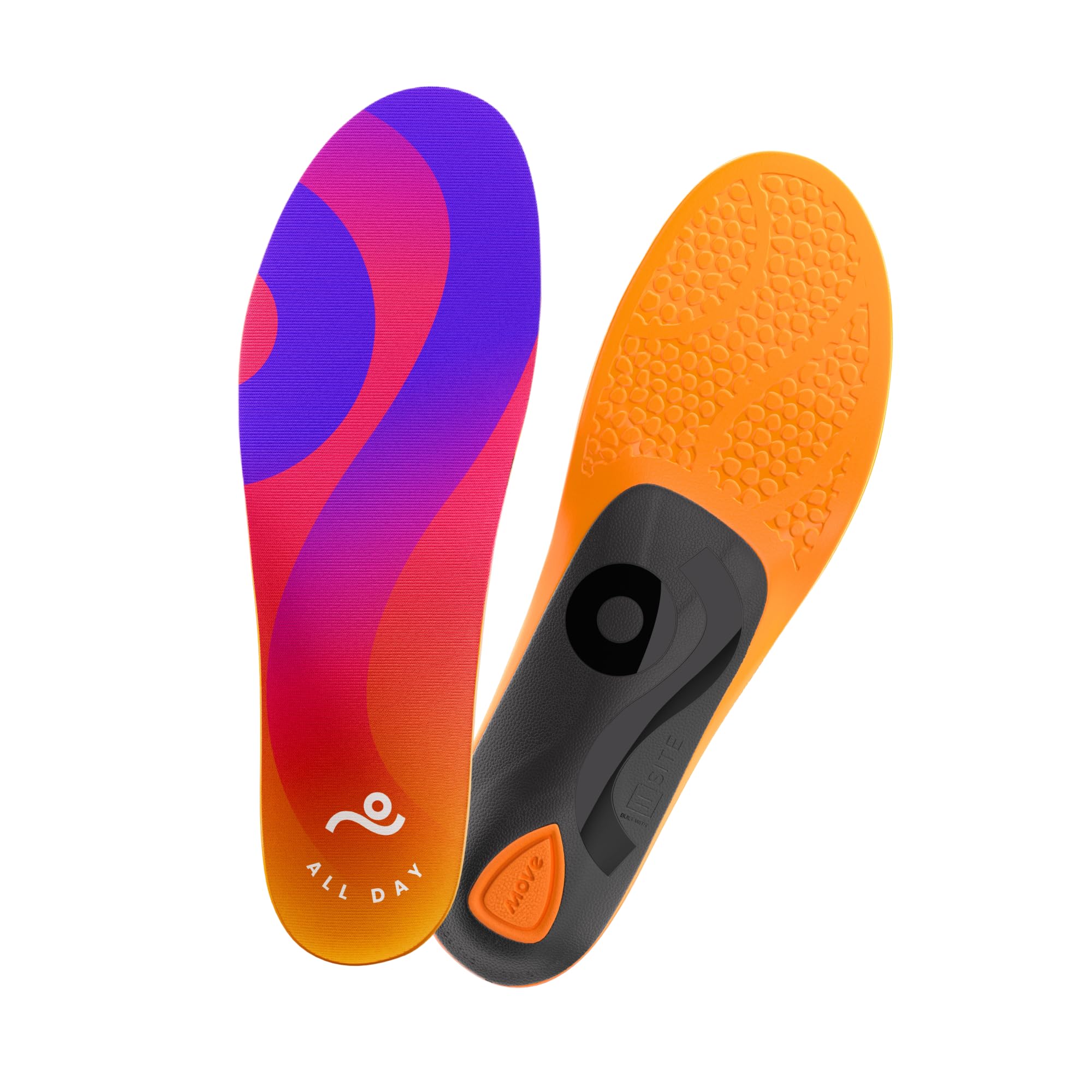
The MOVE insole was designed by a professional basketball player, and that athletic pedigree shows in its X-Frame Torsional Support system — a rigid midfoot plate that locks the heel and midfoot together while still allowing natural forefoot flex. This creates a stable platform that prevents the foot from collapsing inward, the primary mechanical cause of lower back strain during prolonged standing.
The Recharge Foam is a high-density polyurethane blend that provides notable bounce without the squishy collapse typical of cheaper memory foam. Users consistently report elimination of foot fatigue and lower back soreness during 10- to 12-hour workdays. The heel cup is deepened by Active Heel Technology that minimizes pressure points on the calcaneus, reducing the jarring impact that travels up to the lumbar spine.
A potential drawback: the insoles are a bit thicker than most — about 6mm at the forefoot and 12mm at the heel — which may crowd the toe box in low-profile sneakers like Adidas Samba or Gazelles. For roomier work boots, hiking shoes, or standard athletic sneakers, they fit perfectly. The material is easy to trim if needed, but the thickness is worth the trade-off for the shock absorption it delivers.
Why it’s great
- X-Frame plate stabilizes heel-midfoot complex
- High-density foam retains shape under sustained load
- Excellent for workers on concrete floors
Good to know
- Thicker design not ideal for low-profile shoes
- Price point is premium
3. Superfeet Work Cushion Insoles
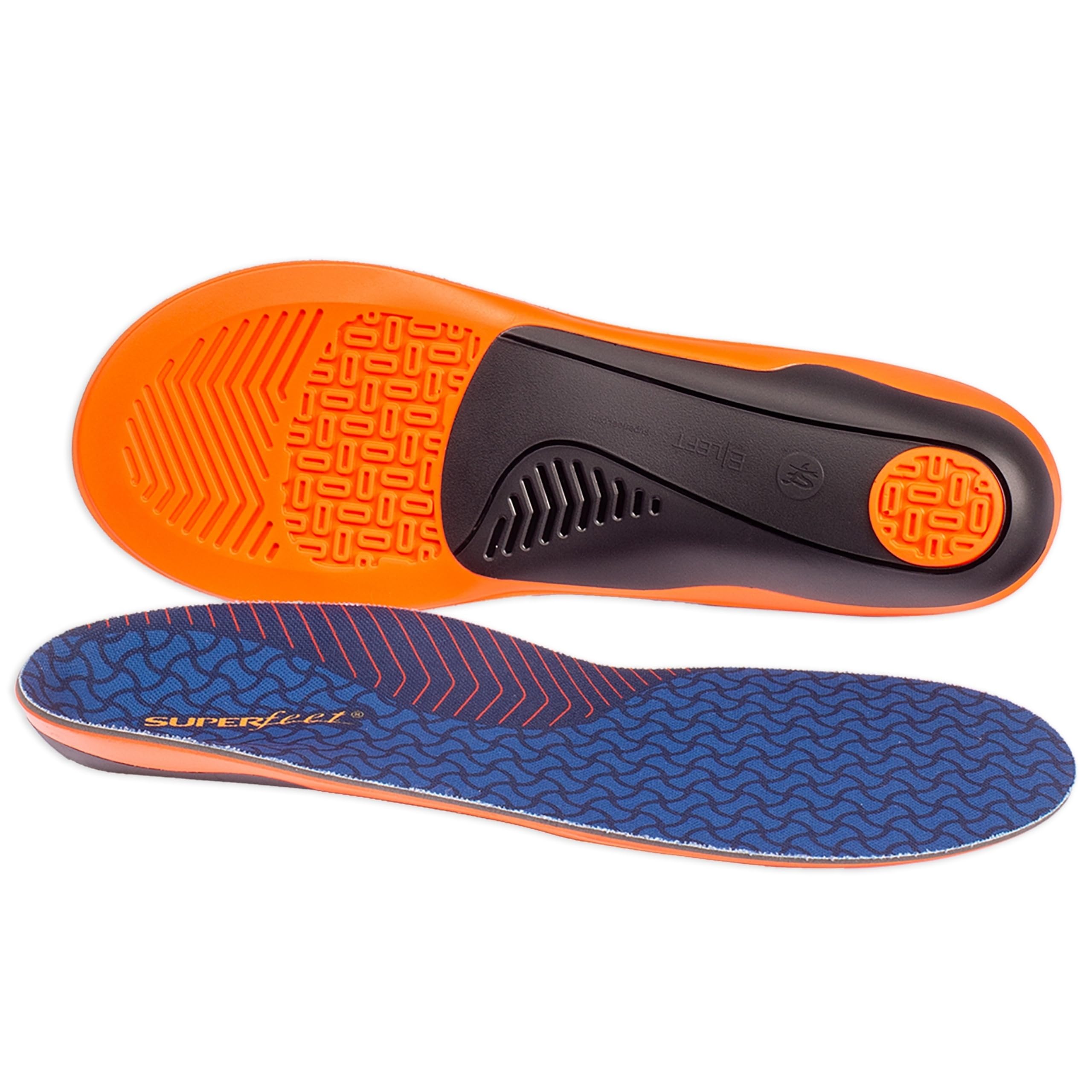
Superfeet’s Work Cushion is engineered for the specific demands of all-day standing in boots and roomy work shoes, which is the exact environment where back pain most often originates. The anti-fatigue cushioning layer is a closed-cell foam that doesn’t pack out over time — users report the insoles retain their supportive shape for up to 12 months, far longer than most alternatives in this category.
The arch support is designed for all arch heights, making it a versatile choice if you aren’t sure of your exact foot type. The heel cup is deep and structured, providing a stable cradle that limits calcaneal motion, while the Moisturewick top cover reduces odor and friction during long shifts. One reviewer with hip flexor pain noted immediate relief after switching to these in their work boots.
On the downside, these are trim-to-fit, so you will need to spend a few minutes cutting them down to size — but the instructions are clear, and sizing up is the recommended approach. The cushioning is slightly softer than the PowerStep Pinnacle, so if you require maximum rigidity for severe pronation, the Pinnacle remains the better choice. For general work-day comfort and back pain prevention, the Superfeet Work Cushion is outstanding.
Why it’s great
- Closed-cell foam retains shape for 12+ months
- Deep heel cup stabilizes calcaneus
- Versatile arch support for all foot types
Good to know
- Trim-to-fit requires careful cutting
- Slightly softer than rigid orthotics
4. PowerStep Bridge
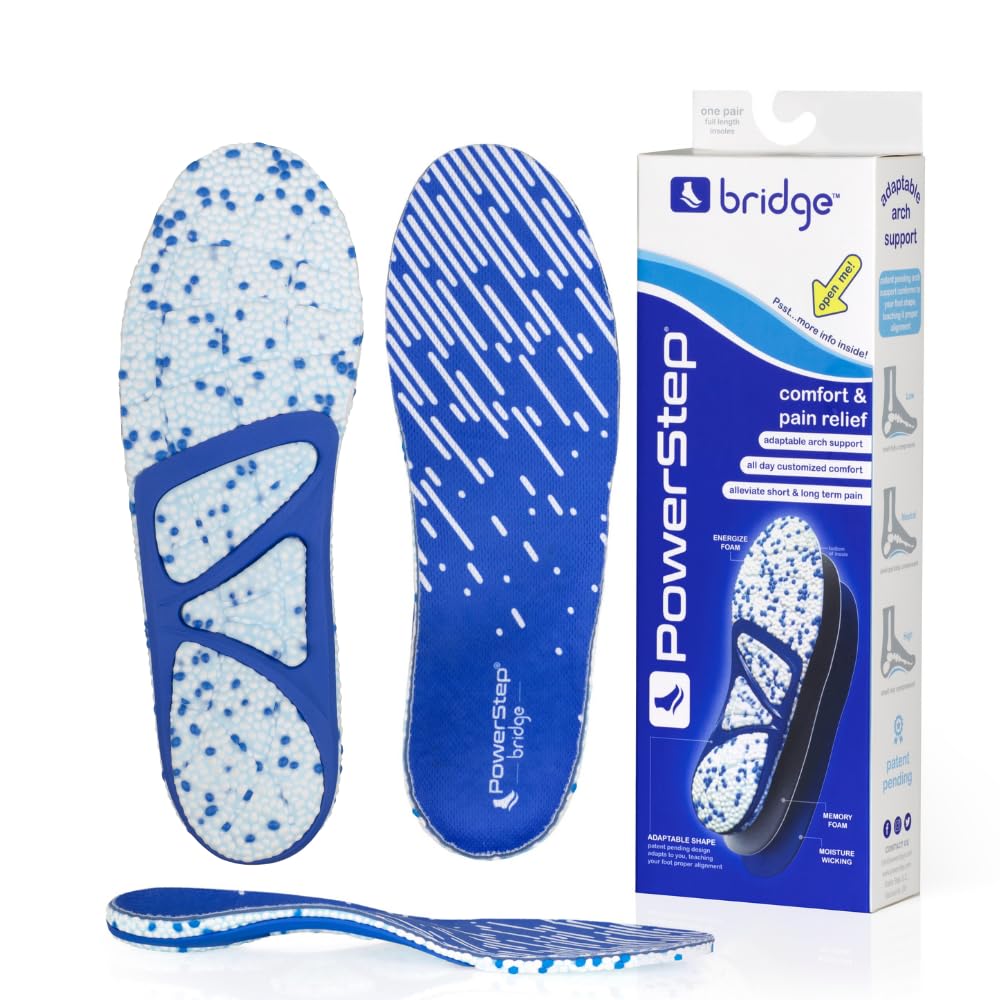
The PowerStep Bridge is the brand’s answer to those who want the company’s proven arch support shape but in a more flexible, less rigid package. It uses two layers of energizing memory foam with specialized channels on the underside that allow the insole to conform to the foot’s natural shape over time. This makes it the best option for neutral arches that don’t need aggressive pronation control but still benefit from guided alignment.
Users with high arches specifically praise the Bridge for resolving tendonitis and foot pain without the punishing stiffness of some orthotics. The moisture-wicking fabric keeps feet cool during runs or long walks, and the low-profile build fits well in sneakers, basketball shoes, and even some dress shoes. One reviewer who has been running for 40 years called it the best insole they’ve ever used, highlighting its smooth and forgiving ride.
A common durability note: the top fabric liner can peel at the heel under extreme daily use (20,000 to 30,000 steps per day). For most users, this isn’t an issue, but heavy-duty walkers may want to rotate pairs. The Bridge is an excellent middle ground for anyone who needs support without the full rigidity of a traditional orthotic.
Why it’s great
- Flexible support adapts to foot shape
- Excellent for high arches and neutral feet
- Low profile fits a wide range of shoes
Good to know
- Fabric liner may wear at heel under heavy use
- Not rigid enough for severe pronators
5. Custom Fit Orthotics CF 440
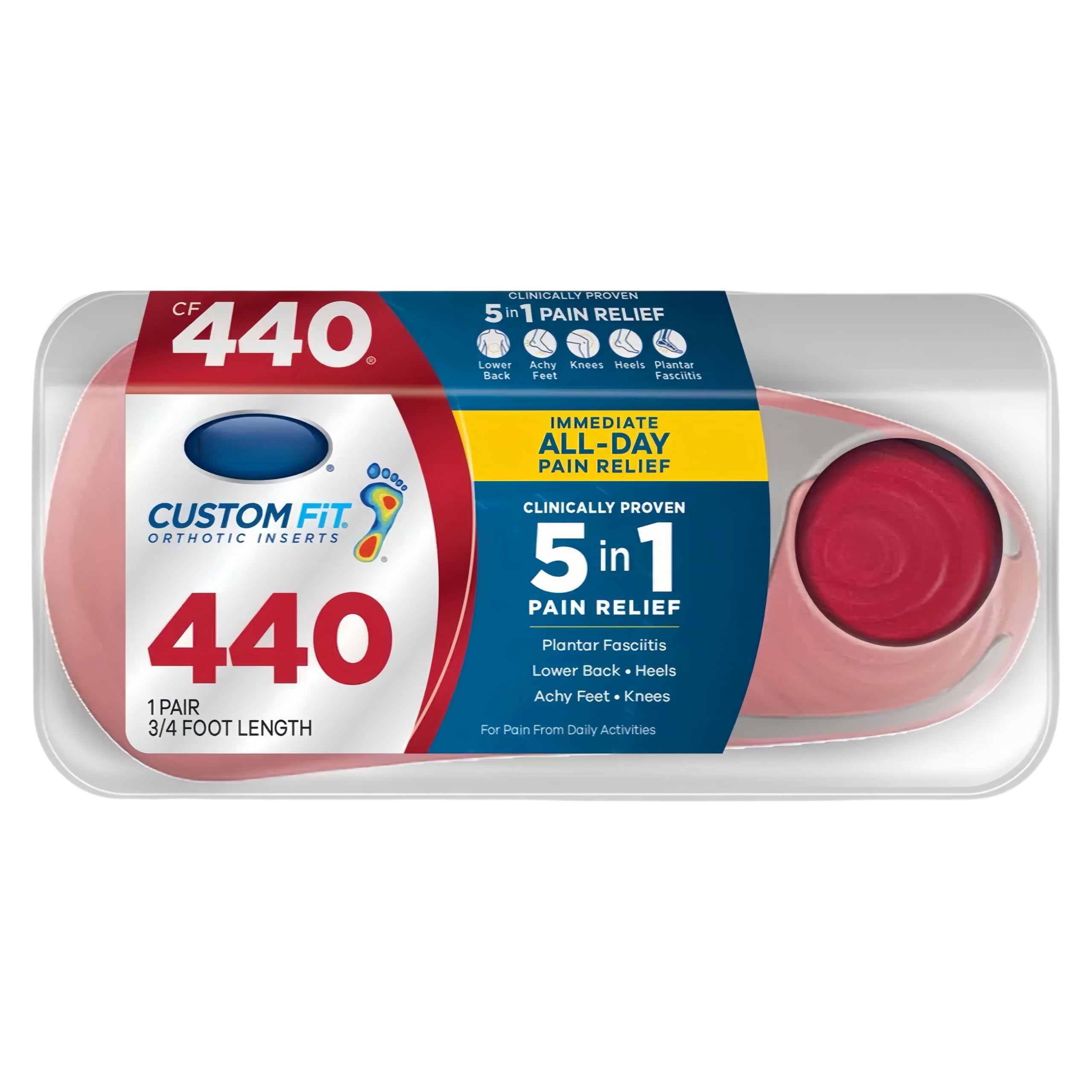
The CF 440 is an over-the-counter orthotic that mimics the structure of a custom podiatric insert, using a semi-rigid shell with a deep heel cup and a firm arch profile. It’s designed to address not just foot pain but also lower back, knee, and hip discomfort caused by gait misalignment. The 3/4 length fits most shoe types without crowding the toe box, making it an easy swap between different footwear.
User feedback is remarkably strong: multiple reviewers who had failed with other inserts noted immediate relief from severe knee and lower back pain on the first day. The key is the firm arch support — this is not a cushioned insole but a corrective one, so it works best for those whose back pain stems from biomechanical misalignment rather than sheer impact shock. It has also been effective for users weighing up to 300 pounds, holding its structure without collapsing.
The main downside is the 3/4 length design can slide forward slightly during high-impact activities like running, though it stays put well in casual and work shoes. Some users recommend visiting a Dr. Scholl’s kiosk to measure pressure points before committing to a size, then buying the correct match on Amazon. For the price, this is one of the most effective budget-to-mid-range options for structural back pain support.
Why it’s great
- Firm arch support corrects gait misalignment
- Immediate back pain relief for many users
- 3/4 length fits most shoes without trimming
Good to know
- May slide forward in high-impact activities
- Not designed for cushioned comfort
6. Timberland PRO Anti-Fatigue Insole

The Timberland PRO uses a unique system of hexagonal rubber pillars under the heel and forefoot that compress and rebound with each step, creating a dynamic energy return that reduces the cumulative impact on your lower back. This is one of the few insoles that genuinely combines cushioning with structure — the pillars provide firm support while the top layer offers a comfortable surface for long hours on hard surfaces.
Reviewers who work 12- to 14-hour shifts in steel-toe boots consistently report that these insoles eliminated knee, hip, and lower back pain where other orthotics failed. The anti-fatigue technology is particularly effective for workers who jump in and out of vehicles or stand on concrete all day, as the pillars absorb the micro-shocks that would otherwise accumulate in the lumbar spine. The arch support is moderate — not as aggressive as the PowerStep Pinnacle, but sufficient for most feet.
A notable consideration: the hexagonal pillars can break through the top material after roughly six months of heavy use, particularly in the 300-pound load range. Users recommend keeping a spare pair on hand for rotation. Also, these are not ideal for plantar fasciitis or high-arch needs since the arch is relatively neutral. For general work-duty back pain prevention, however, they are a proven and affordable choice.
Why it’s great
- Hexagonal pillars absorb micro-shocks to the spine
- No break-in period required
- Excellent for concrete floor workers
Good to know
- Pillars may break through top layer after 6 months
- Not designed for high arches or plantar fasciitis
7. OUOKK 3/4 Arch Support Inserts
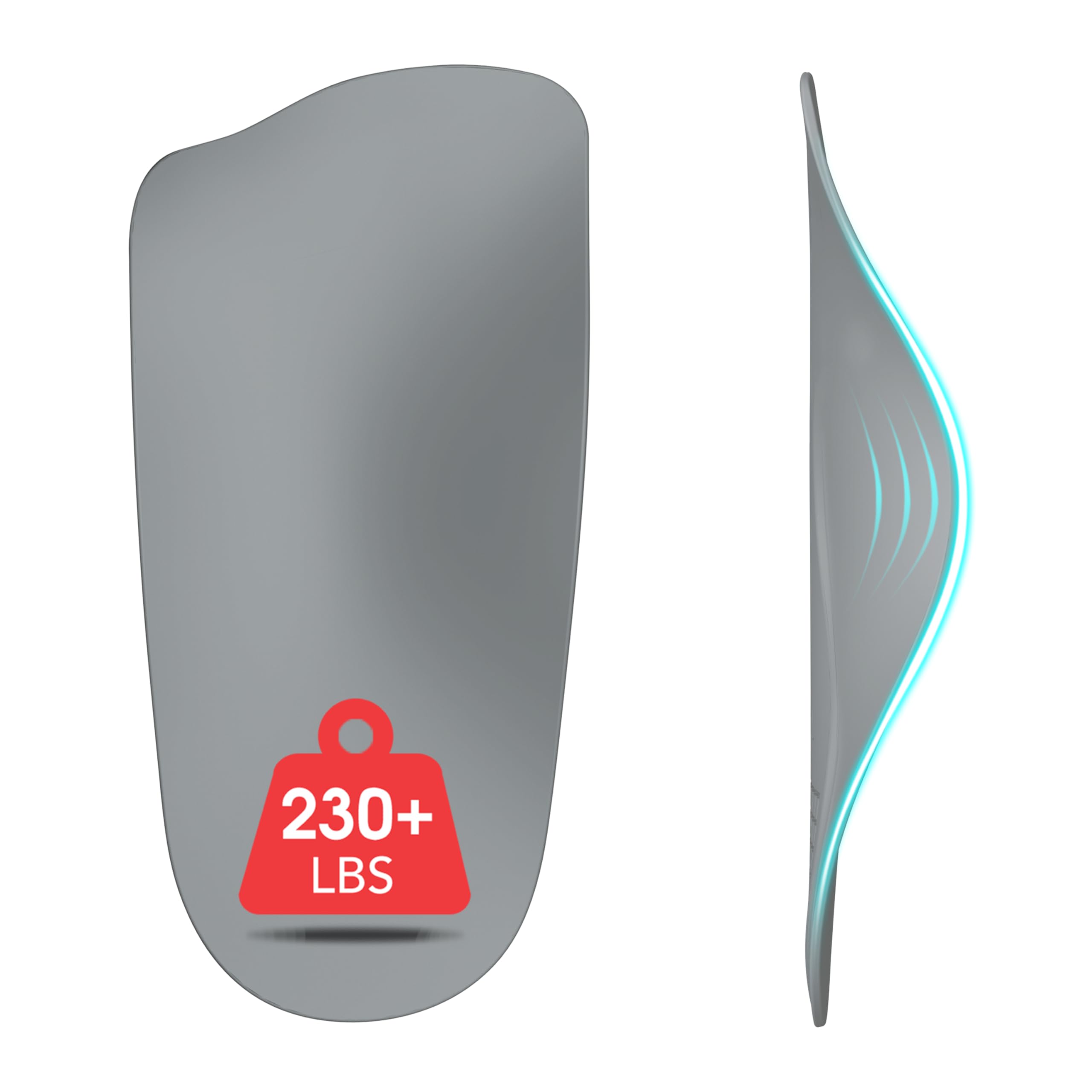
The OUOKK insert is a 3/4 length orthotic designed specifically for people with medium to high arches who need aggressive arch support without taking up space in the toe box. The 26mm TPU arch is firm and unyielding — it will not collapse under heavy loads, making it suitable for users over 230 pounds who need structure that lasts. The 3/4 design means it can fit into tighter shoes like heels, flats, and hiking boots where full-length insoles often bulge.
Users with high arches report that the OUOKK provides the kind of firm cradle typically found only in custom orthotics costing ten times as much. The arch support alleviates central plantar fasciitis and even improves toe splay, reducing hammer toe curling. For back pain specifically, the firm arch prevents the over-pronation that causes pelvic tilt, though the effect is more indirect than some full-length models.
The rigid nature of the TPU arch means there is a noticeable break-in period of one to two days, and the insert can feel uncomfortable if placed in shoes with insufficient heel depth. Some users also note that the 3/4 length can shift slightly during movement since there’s no forefoot anchor. If you have high arches and need a low-bulk solution for back pain management, the OUOKK is a solid, targeted tool — just be prepared for the firmness.
Why it’s great
- 26mm TPU arch supports heavy loads without collapse
- 3/4 length fits tight and dress shoes
- Three arch height options for customized fit
Good to know
- Rigid arch requires break-in period
- May shift in shoes without heel counters
FAQ
How long does it take for insoles to relieve back pain?
Can insoles fix back pain caused by leg length discrepancy?
How often should I replace insoles used for back pain?
Final Thoughts: The Verdict
For most users, the best insoles for back pain is the PowerStep Pinnacle because its rigid medial post and dual-layer cushioning correct over-pronation while absorbing heel strike impact — the two biggest mechanical drivers of lumbar strain. If you need maximum shock absorption for all-day standing on concrete, grab the MOVE All Day Comfort with its X-Frame stability plate. And for heavy-duty work boot use where durability matters more than low profile, the Superfeet Work Cushion delivers 12 months of reliable arch support that keeps your spine aligned shift after shift.