Your tennis shoes came with a flat slab of foam that was never designed to handle lateral cuts, explosive starts, or the constant pounding on a hard court. Stock insoles are the weak link in every pair of athletic shoes, and the result is predictable: foot fatigue, shin splints, and that dull ache in your arches after an hour of play. Finding the right replacement insole changes everything about how your foot interacts with the shoe.
I’m Emma — the founder and writer behind Baby Bangs. I’ve spent years analyzing the biomechanics of sports insoles, pouring over customer feedback for hundreds of models, and studying how material composition (gel, TPU, foam density) directly affects court performance and injury prevention.
This guide cuts through the noise to help you find the insoles for tennis shoes that match your playing style, arch type, and court-specific needs.
How To Choose The Best Insoles For Tennis Shoes
Not all athletic insoles are built for the demands of a tennis court. Your foot experiences multi-directional forces that running and walking insoles simply aren’t designed to handle. Here are the crucial factors to evaluate before making a choice.
Arch Support Height
Your arch type determines how well an insole supports your foot during lateral movements. Low-arch (flat feet) need a more neutral or low-profile support to avoid irritation, while high-arch feet require pronounced medial support to prevent overpronation during a cross-court sprint. Most tennis insoles offer medium arch support, which works for a broad range of players. Check the insole’s arch type specification, not just marketing copy.
Shock Absorption Material
Hard courts don’t forgive poor cushioning. Gel pads in the heel and forefoot provide excellent impact dispersion on landings after a jump serve or a quick stop. TPU (thermoplastic polyurethane) offers a firmer, more responsive feel that helps with energy return during push-offs. Foam-based insoles are lightweight but tend to compress faster under the repetitive pounding tennis demands. Look for a hybrid material — gel combined with foam or TPU — for the best blend of comfort and durability.
Heel Cup and Lateral Stability
A deep heel cup cradles your calcaneus and prevents your foot from sliding sideways inside the shoe during a lunge or change of direction. This is arguably the most tennis-specific spec you need to evaluate. Insoles with a U-shaped heel design and reinforced midfoot support (sometimes called a “frame”) provide torsional stability — that’s what keeps your foot from rolling over the edge of the shoe when you push off at an angle.
Trim-to-Fit Versatility
Tennis shoe toe boxes vary significantly between brands (Nike vs. Adidas vs. Asics). Most premium insoles come oversized and include cutting lines so you can tailor the length and width to your specific shoe. If you skip trimming, the insole will buckle or shift, which itself can cause blisters. Always trace your old insole onto the new one for the most accurate cut.
Quick Comparison
On smaller screens, swipe sideways to see the full table.
| Model | Category | Best For | Key Spec | Amazon |
|---|---|---|---|---|
| MOVE Game Day Pro | Premium | Aggressive court players needing lateral stability | X-Frame torsional support system | Amazon |
| New Balance Casual Flex | Mid-Range | Daily training & casual wear with firm cushion | Rebound foam cushioning | Amazon |
| Sof Sole Women’s Athlete Performance | Mid-Range | Plantar fasciitis relief during long matches | Gel heel & forefoot pads | Amazon |
| Sof Sole Men’s Athletic Performance | Mid-Range | Neutral arch runners transitioning to tennis | Moisture-wicking top cloth | Amazon |
| CRUVHEAL Running Insoles | Budget-Friendly | High-arch players seeking firm support | U-shaped heel cup + TPE arch | Amazon |
In‑Depth Reviews
1. MOVE Game Day Pro
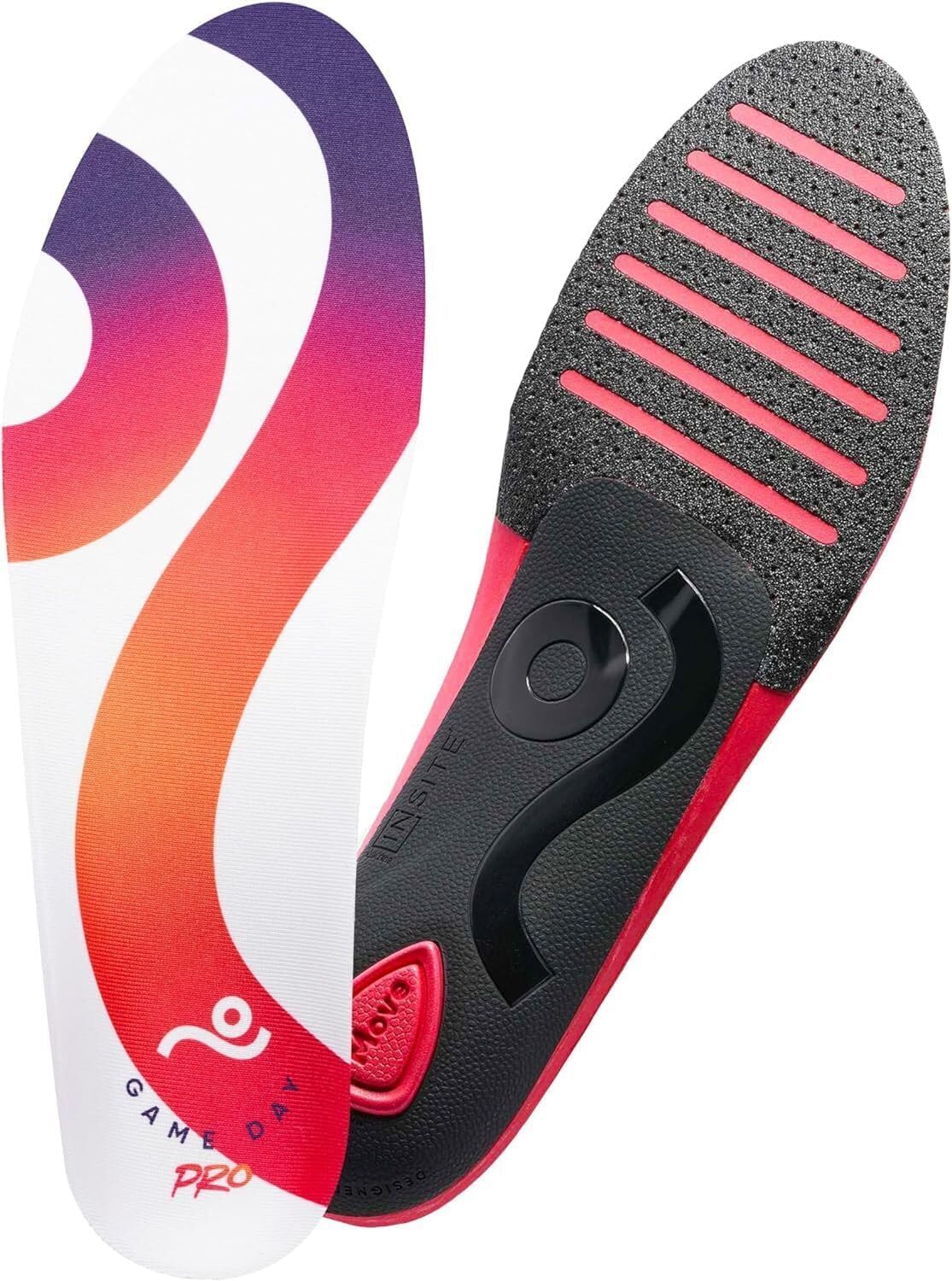
Built in collaboration with NBA All-Pro Damian Lillard, the Game Day Pro is not a general-purpose insole — it’s a performance weapon for explosive court sports. The defining feature is the X-Frame, a rigid support structure that wraps your heel and midfoot to prevent rolling during lateral cuts. This is exactly what your feet need when you’re sliding into a forehand or recovering from a backhand volley. The Active Heel Technology targets the sensitive fat pad in your heel, providing a plush landing zone without sacrificing stability.
Reviewers repeatedly mention that this insole eliminates the “locked-in” feeling that causes blisters in standard tennis shoes. The arch support is firm — almost orthotic-level — which means flat-footed players should expect a 3-5 day break-in period. After that, the materials adapt to your foot shape without compressing. On a hard court, the combination of TPU and foam delivers a springy push-off sensation while soaking up shock on every landing.
One drawback: the price sits at the premium end of the market, but several customer reviews note that it outperformed custom orthotics costing four times as much. It also shows no odor retention after weeks of heavy use, likely due to the breathable top layer. For players who compete multiple times a week, this is the closest you’ll get to a pro-level orthotic without a podiatrist visit.
Why it’s great
- X-Frame provides exceptional lateral stability for court sports
- Active Heel Technology absorbs high-impact landings
- Durable materials that don’t compress over time
- Breathable construction resists odor
Good to know
- Premium-tier investment
- Firm arch support requires a break-in period
- May not be ideal for very flat feet without trying on first
2. New Balance Casual Flex Orthotic Inserts

New Balance’s Casual Flex insole is a mid-range option that prioritizes reliable cushioning over aggressive support. The rebound foam core provides a consistent, medium-firm feel that works well for tennis players who don’t need heavy-duty arch correction but want to replace the worn-out factory insole in their performance shoes. It comes oversized, so you’ll need to trim it to fit your specific shoe — reviewers note that using your old insole as a tracing template yields the best result.
Customer feedback highlights this insole’s ability to “rebirth” old running and tennis shoes that had lost their internal support. The cushioning is noticeably thicker than standard insoles, which fills the deep heel pocket found in many New Balance court shoes. Players who log 3-5 hours of court time per week report that the rebound effect holds up for about six months before the foam begins to flatten in the forefoot area.
Where this insole falls short is lateral stability. There is no rigid frame or deep heel cup, so during sharp cuts, your foot may still shift inside the shoe. It’s best suited for recreational players, casual doubles matches, or as a comfortable walking insole for off-court wear. If your game involves aggressive sprinting and sliding, you’ll want more structure.
Why it’s great
- Consistent medium-firm cushioning for all-day wear
- Easy to trim for a custom shoe fit
- Good value for recreational players
- Extends the life of worn tennis shoes
Good to know
- No lateral support frame for intense court sports
- Foam compresses after 6 months of regular use
- No built-in arch correction for flat or high arches
3. Sof Sole Women’s Athlete Performance Insole

The Sof Sole Women’s Athlete Performance insole is specifically engineered for neutral-arched feet, with targeted gel pads in the heel and forefoot that absorb impact without adding bulk. This makes it an excellent choice for tennis players who already wear supportive shoes like Hokas or Brooks but want extra cushioning for the repetitious pounding of a hard court. The trim-to-fit design accommodates women’s sizes 8-11, and the moisture-wicking top cloth keeps feet cool during long matches.
Customer reviews rave about its performance for plantar fasciitis — one nurse working 12-hour shifts in Hokas reported that this insole provided noticeable relief. Tennis-specific feedback highlights the gel pads’ ability to reduce soreness in the ball of the foot, a common complaint among players who spend hours on the baseline. The arch support is neutral and unobtrusive, so it won’t irritate low-arched feet like a more aggressive orthotic might.
A minor drawback: the insole has a flexible construction without a rigid frame, so it provides minimal lateral guidance during quick directional changes. Additionally, several customers received the product in opened packaging, suggesting inconsistent quality control in the packaging process. However, the insole itself performs reliably and holds up well to regular athletic use.
Why it’s great
- Gel pads effectively reduce impact on hard courts
- Moisture-wicking fabric keeps feet dry
- Neutral arch support suits medium and low arches
- Trim-to-fit design matches most tennis shoes
Good to know
- No lateral stability frame
- Packaging may arrive already opened
- Not for severe overpronation or high-arched feet
4. Sof Sole Men’s Athletic Performance Insole

This men’s version from Sof Sole features a medium arch design with gel inserts concentrated in the heel and forefoot, similar to the women’s version but pitched for a larger foot volume and slightly firmer overall feel. It’s a straightforward comfort insole — lightweight, low-profile, and designed to slide into existing athletic shoes without making them feel tight. Reviewers confirm it fits effortlessly into brands like Nike, Adidas, and New Balance.
One notable feature is the moisture-wicking top cloth, which prevents the insole from becoming a sweaty, slippery mess during a two-hour session. The medium arch height hits a sweet spot for most male tennis players — not too aggressive for flat-footed players, yet present enough to keep the foot aligned during a forehand rally. Several long-term users mention using this insole exclusively for running since 2013, attesting to its durability.
The main limitation is the minimal arch height — it’s far from orthotic-level support. Flat-footed reviewers noted that the arch is so subtle that it essentially doesn’t bother them, which is a backhanded compliment: it means it doesn’t actively correct pronation. For players who pronate heavily, this insole will feel like an upgrade from stock foam but won’t fix alignment issues. It also arrived in overly small packaging that can crimp the insole, but the product itself remains functional.
Why it’s great
- Lightweight and low-profile, fits easily in most shoes
- Moisture-wicking fabric reduces sweat buildup
- Gel inserts provide effective shock absorption
- Proven durability over months of use
Good to know
- Minimal arch support for flat-footed players
- Packaging can damage the insole before use
- Not designed for severe biomechanical correction
5. CRUVHEAL Running Insoles
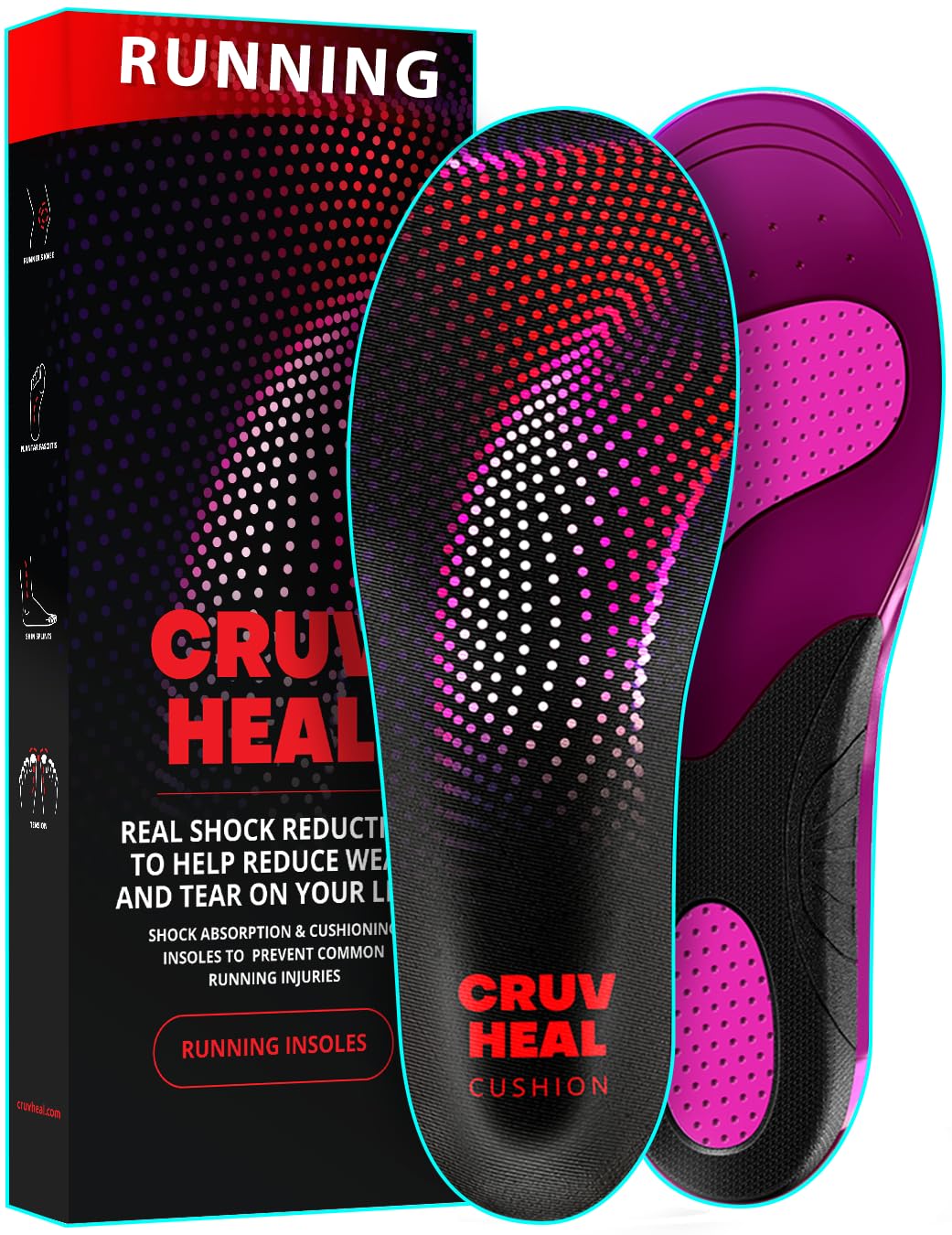
CRUVHEAL’s running insole packs features normally found in premium options — a U-shaped heel cup, TPE arch support, and gel cushioning — into a budget-friendly package. The heel cup actively cups your calcaneus, reducing heel slip during the rapid start-stop motions required by tennis. The TPE arch support is notably firm, providing a structured feel that helps correct overpronation for players with medium to high arches.
Customer reviews praise the insole’s ability to eliminate foot pain during longer walks and runs, with tennis players specifically noting that the shock absorption is excellent for recovery days after intense matches. The skin-friendly velvet cover helps keep odor in check, and the non-slip gel heel pad holds the insole firmly in place inside the shoe — no sliding or bunching. It’s also designed with a 3-7 day adaptation period, which is a reasonable expectation given the firmness of the arch.
The biggest complaint is width. Multiple customers found the insole too narrow for standard work boots and even some regular-width tennis shoes. If you have wide feet, this model will likely feel cramped. Additionally, the base is not cleaning-friendly if you remove it frequently, and the insole is heavier than other options in this price range. Still, for players with narrow to medium feet seeking structured support, this is the best bang for your dollar in the category.
Why it’s great
- Firm TPE arch support for high-arched players
- U-shaped heel cup provides excellent stability
- Non-slip gel pad keeps insole secure
- Budget-friendly price with features found in premium models
Good to know
- Narrow fit not suitable for wide feet
- Heavier than comparable insoles
- Requires a 3-7 day adaptation period
- Returns are not handled through Amazon directly
FAQ
What arch support height do tennis players need most?
Do I need a deep heel cup for tennis shoes?
Can I use running insoles for tennis shoes?
How often should I replace insoles in my tennis shoes?
Final Thoughts: The Verdict
For most players, the insoles for tennis shoes winner is the MOVE Game Day Pro because it delivers the X-Frame torsional support and Active Heel Technology that directly address the lateral stability and impact demands of court sports. If you want reliable cushioning and a trim-to-fit design at a solid mid-range price, grab the New Balance Casual Flex. And for high-arched players seeking structured arch support on a budget, nothing beats the CRUVHEAL Running Insoles.