There is a distinct frustration that comes with finding a perfect pair of shoes only to realize they are a size too big. Your heel slips with every step, your gait shortens, and blisters form where your foot slides against the back. The standard solution — return the shoes — isn’t always an option, especially with vintage finds, limited-edition releases, or hand-me-downs. What you need isn’t a thicker sock or a tighter lace; you need a specific tool designed to reclaim that internal volume.
I’m Emma — the founder and writer behind Baby Bangs. I have spent years analyzing the dimensional tolerances of footwear inserts and testing how different materials — from dense latex to natural cork — affect the internal fit, arch support, and overall comfort of oversized footwear.
This guide focuses on the best tactical options for filling dead space inside loose shoes. It breaks down the specific construction, thickness profiles, and materials that make an insole effective at solving the sloppy-fit problem. Whether you are dealing with a half-size gap or a full-size discrepancy, these are the insoles for too big shoes that actually keep your foot locked in place.
How To Choose The Best Insoles For Too Big Shoes
Selecting an insert to fix a loose shoe requires a different mental model than buying an insole for arch pain. You are not primarily seeking support — you are seeking volume displacement. The core question is how much space a given insole occupies inside your shoe and whether it occupies that space in the right places.
Total Thickness as the Primary Metric
When the shoe is too big, the insole’s total thickness — measured in millimeters — is the single most important spec. A thin insole around 3mm will only fix a half-size gap, while a thick insole at 6mm or more can bridge a full-size difference. Always check the stated thickness in the product details, not just the “size” label.
Full-Length vs. 3/4-Length vs. Heel-Only
Full-length insoles displace space from heel to toe, making them the best option for overall volume issues. A 3/4-length insole (which stops before the toe box) is better when the toe area already fits snugly and you only need to lift the heel and arch. Heel-only cushions are useful for sliding at the back but do nothing for the midfoot or toe volume.
Material Compression and Memory
Memory foam and soft PU foam compress under body weight and lose their thickness advantage over time. For a shoe that is too big, you want a material that resists compression — natural latex, cork-based bases, or dense EVA hold their structure longer, keeping your foot elevated inside the shoe after months of use.
Quick Comparison
On smaller screens, swipe sideways to see the full table.
| Model | Category | Best For | Key Spec | Amazon |
|---|---|---|---|---|
| SOLE Performance Thick Insoles | Premium | Maximum volume fill & durable support | 4.8mm total thickness / cork base | Amazon |
| Pedag Holiday 3/4 Sheepskin | Premium | Low-profile dress shoes needing arch support | 3/4-length / sheepskin leather | Amazon |
| Pedag Plantar Fasciitis Orthotic | Mid-Range | Thin yet supportive fill for casual shoes | 2.4mm approx / natural latex | Amazon |
| HANDARTE Leather Sockless Insole | Mid-Range | Ultra-thin volume fix for dress shoes | 2mm approx / goatskin leather | Amazon |
| Worzwin 4D Cloud Memory Foam | Budget-Friendly | Soft cushioning for casual sneakers | 8mm approx / PU memory foam | Amazon |
In‑Depth Reviews
1. SOLE Performance Thick Insoles

The SOLE Performance insole is the most effective option on this list for filling a shoe that is significantly too big. Its total thickness of 4.8mm — with 3.2mm of Softec cushioning layered over a dense ReCORK recycled cork base — provides serious vertical lift. The cork base resists compression far better than polyurethane foams, meaning the volume displacement lasts beyond a few months of daily wear. This is the insole to choose when you need to reclaim a full size of internal space.
The heat-moldable design is a practical advantage for the too-big-shoe problem. You heat the insole in the oven for a few minutes, place it in your shoe, and step into it to form a custom cradle that matches your arch height — low, medium, or high. This moldability also helps the insole conform to the shoe’s internal shape, reducing the chance it shifts around inside the loose footwear. The deep heel cup locks the rearfoot in place, a key feature for preventing heel slippage.
Users report that the SOLE insole works especially well in work boots, hiking boots, and high-top sneakers where the extra thickness does not compromise ankle mobility. One military-boot user noted three years of daily use without flattening or peeling. The main trade-off is that the 4.8mm thickness may crowd the toe box in low-profile athletic or dress shoes. If your shoe is only a half-size too big, this insole might feel too tight.
Why it’s great
- Thickest option (4.8mm) provides maximum volume fill for oversized shoes.
- Cork base retains structure and resists compression over years of use.
- Heat-moldable design creates a custom footbed for deep heel lock.
Good to know
- High thickness may not fit low-volume dress shoes or tight sneakers.
- May require break-in period for stiffness before full comfort.
2. Pedag Holiday 3/4 Sheepskin Orthotic

The Pedag Holiday is a specialized tool for the narrowest version of the too-big-shoe problem. Its 3/4-length construction — ending before the toe box — is ideal when the toe area fits correctly but the heel and arch have too much space. This is the most common scenario with loafers, oxfords, ballet flats, and slip-on dress shoes where a full-length insole would compress the toes or lift the foot too high. The sheepskin leather upper provides a non-slip surface that helps hold the foot in place without adhesive.
The built-in metatarsal pad and heel cushion serve a dual purpose: they provide space-filling elevation at the heel and ball of the foot while also addressing common foot pain conditions like plantar fasciitis and Morton’s neuroma. The plastic base shell offers rigid arch support that does not compress, maintaining its volume over time. The APMA Seal of Acceptance is a meaningful endorsement of its structural integrity for foot health.
Users consistently report that these insoles last a decade or more without losing their shape, making them a cost-effective buy despite their premium price tag. The universal fit covers women’s sizes 5-12 and men’s sizes 6-18. A recurring note: order one size up, as the insoles run slightly small. The 3/4 design allows the toes to flex naturally, which is important if you need to maintain ground feel in casual shoes.
Why it’s great
- 3/4-length design fills heel and arch space without crowding the toe box.
- Sheepskin leather surface prevents foot slippage inside a loose shoe.
- Rigid plastic shell maintains volume and provides long-term arch support.
Good to know
- Not suitable for high heels or shoes with very low backs.
- Arch height may be slightly low for users with high arches.
3. Pedag Plantar Fasciitis Heat Moldable Insole
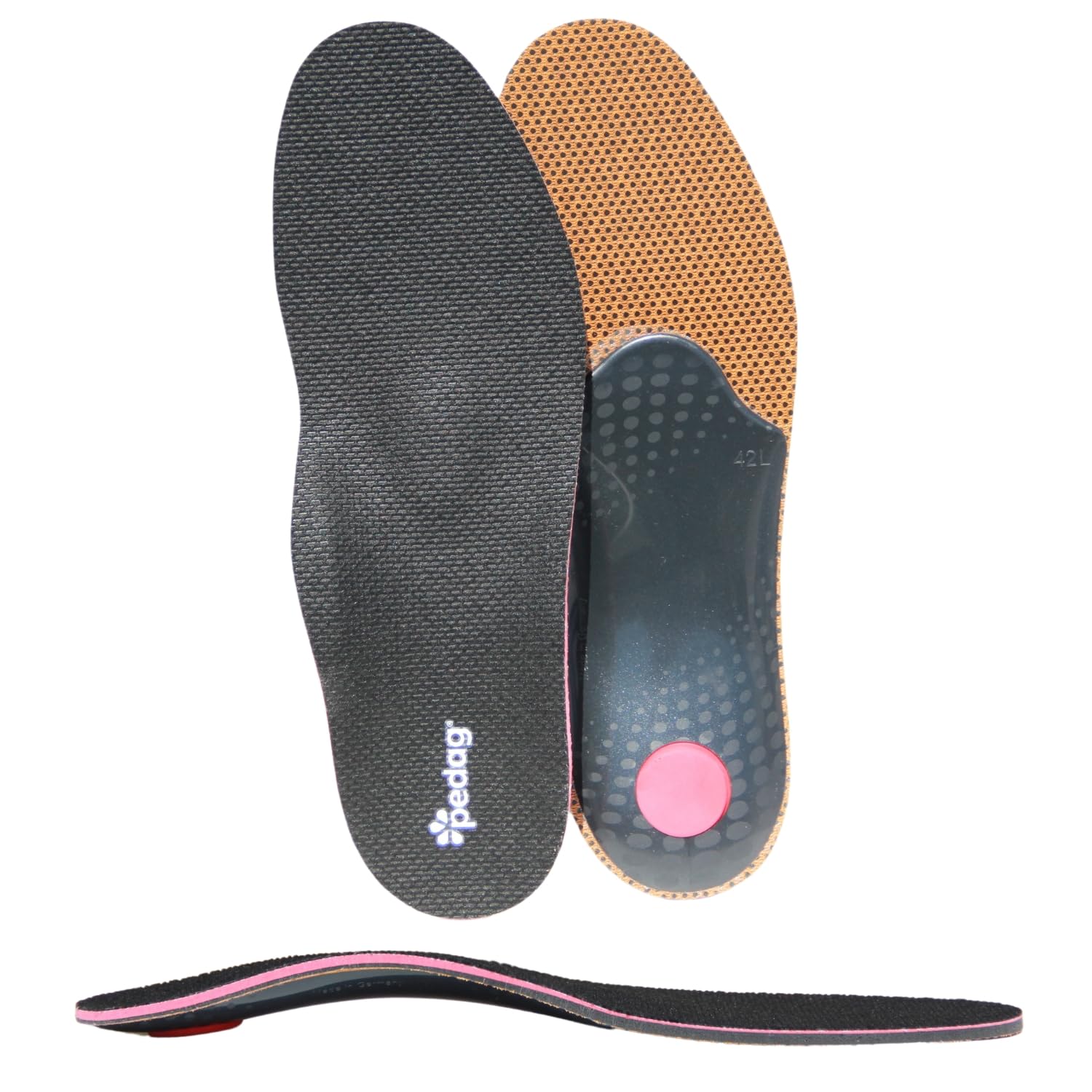
The Pedag Plantar Fasciitis insole occupies a sweet spot for shoes that are a half-size to one full size too big. At roughly 2.4mm thick (the total is 0.95 inches for the package, with the insole itself being notably thin compared to competitor products), it provides just enough lift to fix sloppy fit without making the shoe feel tight. This is the insole to reach for when you need to fill space in casual sneakers, skate shoes, and loafers where a thick insole would compress the foot uncomfortably.
Its construction from natural latex foam gives it a unique feel — it is thin but dense, with a springy quality that does not bottom out. This density is key for the too-big-shoe problem because it means the insole retains its thickness under body weight. The heat moldable arch support allows you to customize the contour to your foot, which helps center your foot inside the shoe rather than letting it drift toward the sides.
The natural latex also includes activated carbon charcoal for odor control — a practical benefit if you are wearing the shoes sockless or without thick socks. Users consistently describe this Pedag insole as “thin but supportive,” with one reviewer noting it revived old sneakers that were too roomy. The main compensation is that the forefoot cushioning is minimal; if your pain point is in the ball of your foot, you may want additional metatarsal padding.
Why it’s great
- Thin profile (around 2.4mm) adds volume without crowding tight footwear.
- Natural latex resists compression and maintains thickness over time.
- Heat-moldable arch allows customization for a centered footbed.
Good to know
- Limited forefoot padding for those with ball-of-foot discomfort.
- Sizing can be tricky — order by EU shoe size, not the included sizing chart.
4. HANDARTE Leather Sockless Shoe Insole

The HANDARTE Leather insole is designed for a very specific scenario: dress shoes that are too big when worn without socks. The 100% full-grain vegetable-tanned goatskin upper and the ultra-thin construction (approximately 2mm total thickness) mean it adds minimal vertical volume. This is not an insole for fixing a full-size gap — it is the solution for that 0.5-size looseness that causes your foot to slide forward in loafers or oxfords when you skip the socks.
The perforated goatskin leather is naturally breathable and sweat-absorbent, which addresses the moistness issue of wearing leather shoes sockless. An activated carbon layer underneath neutralizes odors. The thin foam cushion provides a small amount of shock absorption, though the primary function is to take up surface area inside the shoe rather than provide orthopedic support. The non-slip backing layer keeps the insole from bunching up under the arch.
Users praise the fit — most report that the insole matches their shoe size exactly without requiring trimming. The leather surface is soft to the touch and does not cause friction against bare skin. One cowboy boot wearer noted it eliminated the roomy feeling in size 6.5 boots without crowding the toe. The trade-off is thin heel padding; if you need maximum volume fill or serious arch support, look elsewhere. This insole is for fine-tuning fit, not rebuilding it.
Why it’s great
- Ultra-thin goatskin leather adds minimal volume for precise half-size adjustment.
- Breathable and sweat-absorbent for sockless wear in dress shoes.
- Trimming is rarely needed — true-to-size fit out of the box.
Good to know
- Not suitable for fixing a full-size difference; only addresses a slight looseness.
- Heel padding is minimal, offering limited shock absorption.
5. Worzwin 4D Cloud Memory Foam Insole (2-Pack)
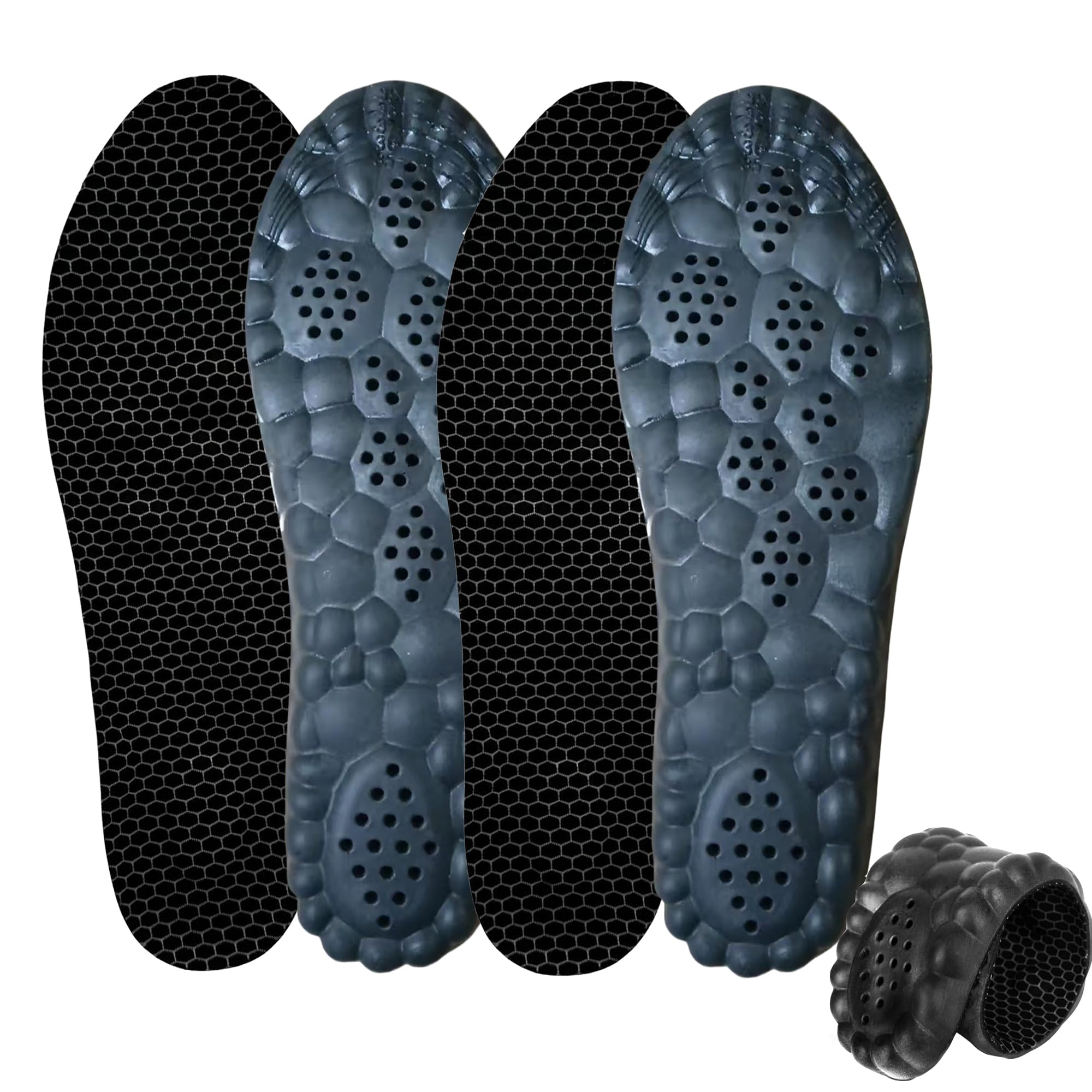
The Worzwin 4D Cloud insole is the entry-level option for filling space in casual sneakers, boots, and slippers. Its memory foam construction is thick — roughly 8mm — making it a straightforward volume filler. If your shoe is a full size too big and you simply want to take up space with a soft, cushioned layer, this 2-pack offers the most material for the money. The U-shape memory foam design wraps around the heel to provide a snug feel.
The 3D popcorn structure in the PU material is designed to return energy with each step, and the honeycomb perforated top layer helps with breathability. For the too-big-shoe scenario, the thick foam compresses noticeably under body weight, which means the initial volume advantage diminishes more over time compared to a latex or cork base. Users note the insole is “comfy” but that it runs slightly tall, which can cause ankle roll-out in shoes that already have a loose fit.
Customer feedback highlights that the cushioning is excellent in the heel but significantly thinner at the ball of the foot and toes. If you walk heavily on the forefoot, you may feel the drop-off. The 2-pack value (two pairs for the price of one) makes it an easy choice for someone who wants to test whether a thick insole solves their problem before committing to a pricier option. Trim carefully — the EU measurement markers on the insole can be confusing.
Why it’s great
- Thick memory foam provides substantial volume fill at a low entry point.
- Two-pair pack offers exceptional value for testing or multiple shoe pairs.
- U-shape heel cradle helps create a snug rearfoot feel.
Good to know
- Memory foam compresses over time, reducing its volume-fill advantage.
- Forefoot padding is thin compared to heel, creating an uneven feel.
FAQ
Can an insole fix a shoe that is one full size too big?
Will a thick insole make my toes hit the top of the shoe?
Final Thoughts: The Verdict
For most users, the insoles for too big shoes winner is the SOLE Performance Thick Insoles because its 4.8mm cork base maximizes volume fill while resisting compression for years. If you need a low-profile fix for dress shoes or loafers without toe-box crowding, grab the Pedag Holiday 3/4 Sheepskin. And for the budget-conscious buyer looking to test thick insoles without a big investment, nothing beats the value of the Worzwin 4D Cloud 2-Pack.