Toe pain during a simple walk can turn a short errand into a measured endurance test. Whether it’s a sharp jab from Morton’s neuroma or the dull burn of metatarsalgia, the wrong insole can amplify the problem by pressing on the very nerves you need to protect.
I’m Emma — the founder and writer behind Baby Bangs. I’ve spent years analyzing footbed geometry, foam densities, and metatarsal pad placements to separate genuine relief from marketing foam.
After combing through hundreds of user reports and material specs, I’ve identified the five most effective insoles for toe pain on the market today, ranked by how precisely they offload pressure from the forefoot.
How To Choose The Best Insoles For Toe Pain
Toe pain is rarely a simple callus issue — it’s usually a load-management problem. Your metatarsal heads (the knuckles of your toes) carry a disproportionate amount of body weight during the push-off phase of your stride. Without proper offloading, the pressure irritates nerves, inflames joints, or aggravates the interdigital space between toes. Choosing the right insole means matching the pad geometry to your specific pain pattern.
Metatarsal Pad Placement and Height
The single most important feature in any toe pain insole is the metatarsal pad — a raised bump placed just behind the ball of the foot. Its job is to lift the metatarsal heads slightly, redistributing pressure to the arch. A pad placed too far back (near the arch) or too high (like a golf ball) can cause new pain. Look for a pad that sits directly behind the painful metatarsal head, typically 5-10mm in height, and made of firm but forgiving foam rather than hard plastic.
Arch Support and Foot Type
Your arch type dictates how weight transfers to the forefoot. Low arches and fallen arches often roll inward (overpronate), concentrating pressure on the second and third metatarsals. High arches leave the forefoot stiff and shock-prone. A mid-range arch profile — neither aggressively high nor flat — works for most toe pain sufferers. Some insoles offer dynamic multi-density foam that adapts to your foot’s contour, providing a personalized match without a custom mold.
Length and Shoe Compatibility
Full-length insoles offer uniform shock absorption across the entire foot but can crowd narrow shoes like loafers or dress flats. The 3/4-length insole (like the Footlogics design) stops before the toe box, leaving room for toe splay and fitting more easily into low-volume footwear. If you wear slip-on shoes or wide athletic shoes, a full-length insole with a trimmed toe can provide more comprehensive metatarsal and arch support.
Quick Comparison
On smaller screens, swipe sideways to see the full table.
| Model | Category | Best For | Key Spec | Amazon |
|---|---|---|---|---|
| 10 Seconds Pressure Relief 3030 | Cushioned Orthotic | All-day standing and walking | Plastazote memory foam molds to foot | Amazon |
| Kelaide Metatarsalgia Insoles | Neutral Support | Mixed foot conditions (flat feet + neuroma) | Full-length with built-in metatarsal pad | Amazon |
| Cushwork Metatarsalgia Insoles | Premium Orthotic | Wide feet, bunions, severe neuroma | Firm heel cup + forefoot gel cushion | Amazon |
| Footlogics 3/4 Length | 3/4 Orthotic | Slip-on shoes, loafers, flats | Built-in metatarsal raise, 3/4 length | Amazon |
| Welnove Running Insoles | Budget Active | Running, walking, high-mileage days | Multi-density foam with forefoot gel | Amazon |
In‑Depth Reviews
1. 10 Seconds Pressure Relief 3030 with Metatarsal Pad

The 10 Seconds 3030 takes the top spot because its Plastazote topper actively molds to your foot contours over the first few wears, creating a custom-like fit without a heating process. The metatarsal pad is positioned with precision — multiple reviewers praise it for relieving pressure on the 2nd and 3rd metatarsal heads where neuroma pain concentrates. The Poron strike pads in the forefoot absorb shock better than standard EVA, making this an excellent choice for all-day standing or walking on hard surfaces.
Arch firmness is medium, not aggressive, which prevents the common complaint of the pad feeling like a golf ball underfoot. The cushion indents under sustained pressure, indicating the foam is responsive rather than springy. Some users report a brief adjustment period of a few days as the foot adapts to the new loading pattern, which is typical for any professional-grade orthotic.
Customer feedback over years of use shows consistent relief for metatarsalgia and Morton’s neuroma, with many calling it superior to pricier brands. The trim-to-fit design works with most athletic and casual shoes, though it’s best suited for lace-up footwear where the tongue can accommodate the extra volume.
Why it’s great
- Plastazote foam molds to your foot for personalized support
- Precise metatarsal pad placement reduces neuroma pressure
- Poron strike pads offer superior shock absorption
Good to know
- May require a few days of break-in for optimal comfort
- Best suited for lace-up shoes; less ideal for slip-ons
2. Kelaide Orthotics Arch Support Metatarsalgia Insoles

The Kelaide insoles are built for versatility — they target metatarsalgia, Morton’s neuroma, flat feet, and plantar fasciitis all within a single full-length frame. The neutral arch support is the key feature here: it doesn’t force a high arch on low-arched feet, which often triggers cramping. Instead, it stabilizes the foot in a natural position while the metatarsal pad offloads the forefoot.
Customer reports indicate immediate pain relief for a painful toe during walking, likely because the pad sits directly behind the metatarsal heads without extending too far back into the arch. The breathable fabric and soft foam layer reduce heat buildup, making them comfortable for extended wear in work shoes or casual sneakers. The heel cup is wrapped high enough to stabilize the rearfoot but not so high that it digs into the Achilles area.
One user noted that after a month of use, the relief subsided slightly — this suggests the foam may compress faster than denser alternatives. However, for the price point, it delivers a strong mix of condition coverage and immediate comfort that outpaces many store-bought orthotics.
Why it’s great
- Neutral arch works for both flat and medium-arched feet
- Full-length design provides uniform shock absorption
- Immediate relief reported for neuroma and ball-of-foot pain
Good to know
- Foam resilience may decrease over extended daily use
- Not recommended for shoes with thin, non-removable insoles
3. Cushwork Metatarsalgia Insoles

The Cushwork insole stands out for its construction quality — a firm, structured heel cup combined with a gel-based forefoot cushion that doesn’t bottom out under body weight. Multiple users with severe Morton’s neuroma, bunions, and collapsed arches reported that this insole performed better than custom orthotics costing ten times as much. The built-in metatarsal pad is positioned to lift the neuroma directly, and the splay of the toes is encouraged by the shape of the forefoot area.
The break-in period is notably short — around one hour — before the foot adapts to the metatarsal bump. This is rare for a premium orthotic, where stiffness often requires days of gradual wear. The insole fits well in wide athletic shoes and even work boots, but it is too bulky for dress shoes or low-profile sneakers. One reviewer with Raynaud’s-related neuropathy found the splay action particularly helpful for reducing toe discomfort and pressure.
Durability appears strong, with high-density materials that show minimal compression after weeks of daily use. The main trade-off is that the firm structure may feel too rigid for users accustomed to plush, memory-foam-style insoles.
Why it’s great
- Firm heel cup and gel forefoot prevent compression over time
- Short break-in period of about one hour
- Excellent for wide feet, bunions, and severe neuromas
Good to know
- Too bulky for low-volume or dress shoes
- Firm feel may not suit users seeking a plush, soft insole
4. Footlogics 3/4 Length Orthotic Insoles

If your toe pain flares up in loafers, moccasins, or flat sandals — shoes with no room for a full-length insole — the Footlogics 3/4 design is your answer. It ends before the toe box, leaving your toes free to spread while still providing the critical metatarsal raise behind the ball of the foot. The pad is prominent but shorter than some full-length competitors, reducing the risk of it pressing into your arch by accident.
Developed by Australian podiatrists, the insole uses Q-E.V.A. for lightweight support and Podflex padding in the heel and forefoot. Users recovering from Lisfranc fractures or chronic overpronation report significant reductions in shooting foot pain. The deep heel cup stabilizes the rearfoot, which is essential for preventing the foot from sliding forward and dumping weight onto the toes. Sizing is critical here — measure your foot length before ordering, as the pad position depends on accurate size matching.
One common gripe: the metatarsal pad is positioned slightly more toward the arch on some sizes, causing arch discomfort for users with neutral arches. If you have a high arch, the pad may feel misplaced. But for flat-footed wearers, it delivers targeted relief where standard insoles fail.
Why it’s great
- 3/4 length fits low-volume shoes like loafers and flats
- Developed by podiatrists for targeted metatarsal relief
- Deep heel cup prevents foot slide and stabilizes stride
Good to know
- Metatarsal pad placement may not suit all arch types
- Precise foot measurement is required for correct sizing
5. Welnove Running Insoles with Metatarsal Pad
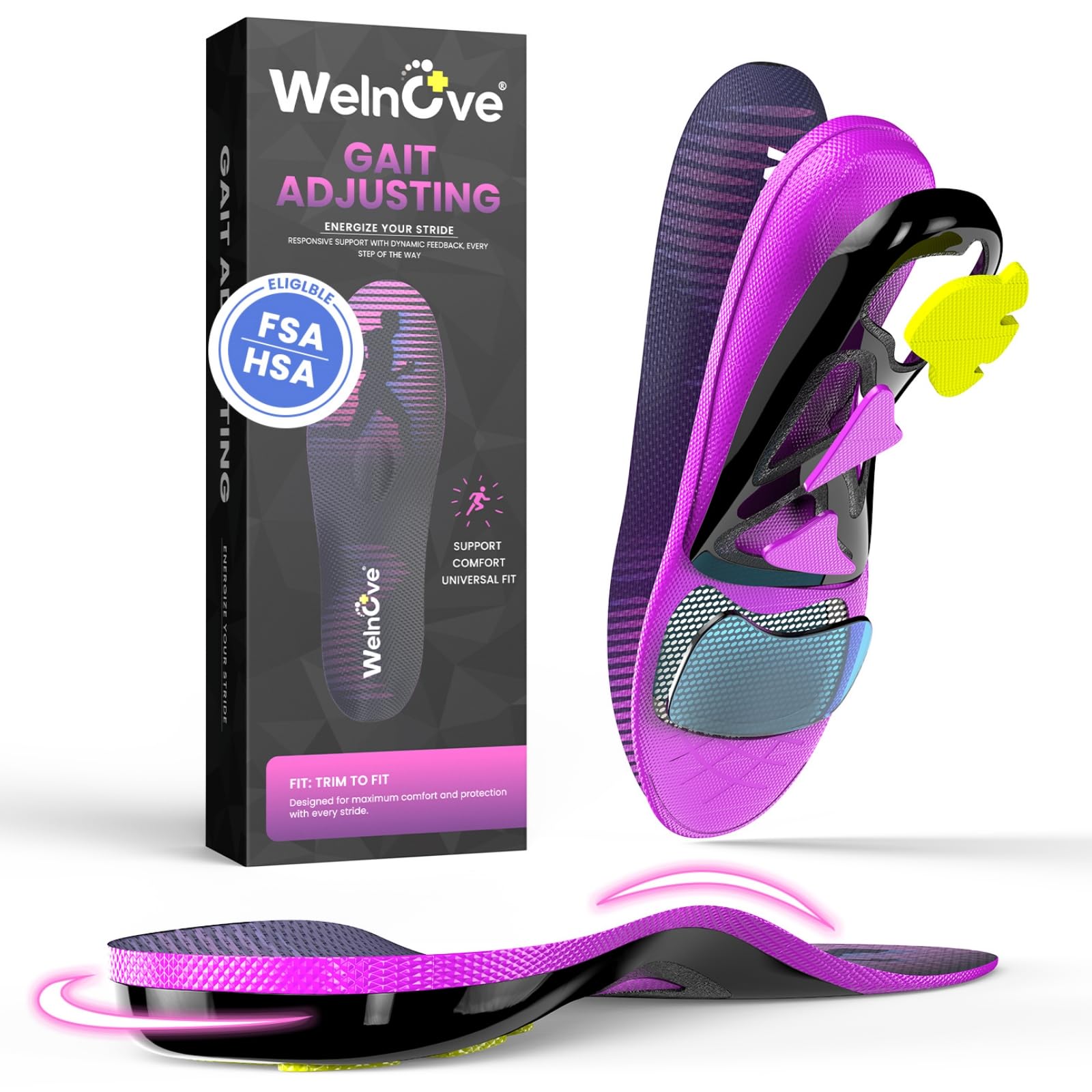
The Welnove insoles pack a surprising amount of technology into a budget-friendly package. The forefoot gel cushion absorbs shock effectively during running and walking, and the multi-density foam dynamically adapts to your arch contour — whether flat or high. The built-in metatarsal pad is positioned to relieve pressure from Morton’s neuroma and metatarsalgia, and user feedback confirms it enabled 100 miles of walking in a week without foot pain.
The moisture-wicking fabric layer is a practical addition for active users, keeping the foot dry even during sweaty runs. The non-slip gel base prevents the insole from shifting inside the shoe, a common problem with thinner universal insoles. It fits most lace-up athletic shoes including running, walking, hiking, and trail models.
One downside: the metatarsal pad is less pronounced than in premium options. Users with severe neuroma may find the relief sufficient but not transformative. Also, the insole’s medium arch support may not provide enough lift for those with very high arches who need more aggressive metatarsal offloading.
Why it’s great
- Forefoot gel cushion provides excellent shock absorption
- Multi-density foam adapts to both flat and high arches
- Moisture-wicking fabric keeps feet dry during activity
Good to know
- Metatarsal pad is less pronounced for severe neuroma cases
- Medium arch support may not suit very high or very low arches
FAQ
Should I choose a full-length or 3/4-length insole for toe pain?
How long does it take to adjust to insoles with a metatarsal pad?
Can insoles for toe pain fit in my current running shoes?
Final Thoughts: The Verdict
For most users, the insoles for toe pain winner is the 10 Seconds Pressure Relief 3030 because its Plastazote memory foam molds to your foot for personalized metatarsal offloading combined with superior Poron shock absorption. If you need a 3/4-length insole for loafers and slip-ons, grab the Footlogics. And for severe neuroma and wide feet, nothing beats the premium structure of the Cushwork.