Fallen arches don’t just make your feet ache — they throw your entire kinetic chain out of alignment, turning every step into a jolt that travels up through your knees, hips, and lower back. A properly designed insole can re-establish that critical arch support, absorb the ground impact, and let you move through your day without the familiar dull throb.
I’m Emma — the founder and writer behind Baby Bangs. I’ve spent months cross-referencing podiatrist recommendations, material science data, and thousands of user reports to isolate the insoles that actually hold their structure under load and deliver consistent relief.
This guide narrows the field to five rigorously reviewed options, helping you identify the best insoles for fallen arches based on arch height, body weight capacity, material durability, and intended use case.
How To Choose The Best Insoles For Fallen Arches
Fallen arches, or flat feet, cause the plantar fascia to overstretch and the foot to pronate excessively. The right insole counteracts this by providing a rigid or semi-rigid arch bridge, a deep heel cup to cradle the calcaneus, and a shock-absorbing layer that spares the joints. Selecting the wrong insole — one that is too soft or has the wrong arch profile — can worsen your pain.
Arch Height and Support Rigidity
Insoles are designed around three arch profiles: low, medium, and high. If your arch has fully collapsed (fallen arch), you need a medium-to-high arch support that lifts the navicular bone back into a neutral position. Look for materials that resist compression — rigid TPU or dense EVA — rather than memory foam that squishes flat under load. A support that is too low will not correct pronation; one that is too high without gradual break-in can cause mid-foot discomfort.
Weight Capacity and Material Stack
Heavier individuals above 220 pounds require insoles with multiple material layers: a rigid base (TPU or polypropylene) for structural support, a mid-layer of EVA for shock absorption, and a top layer of Poron or similar high-rebound foam for cushioning. Lightweight or all-foam insoles will bottom out quickly, losing their arch support and transferring impact directly to the heel and knees.
Length, Fit, and Shoe Compatibility
Full-length insoles provide heel-to-toe support but may crowd the toe box in tight shoes. Three-quarter-length inserts sit behind the ball of the foot and fit better in dress shoes and boots. Always check whether the insole requires trimming — many include cut lines for size adjustment. A deep U-shaped heel cup is non-negotiable to prevent slipping and maintain alignment during walking or running.
Quick Comparison
On smaller screens, swipe sideways to see the full table.
| Model | Category | Best For | Key Spec | Amazon |
|---|---|---|---|---|
| Fit Geno Arch Support | Premium | Heavy users over 220lbs on long shifts | Removable TPU arch plate + PORON foam | Amazon |
| OUOKK 3/4 Length | Premium | High arch correction in tight shoes | 26mm rigid TPU arch, 2-year lifespan | Amazon |
| DynWalker Arch Support | Mid-Range | All-day walking with shock absorption | 4cm 3D arch + TPU/memory foam stack | Amazon |
| Copper Fit Arch Relief | Mid-Range | Adaptive support for varied arch types | Memory foam with adaptive arch shape | Amazon |
| Psveb Heavy Duty | Mid-Range | Budget-friendly plantar fasciitis relief | Dual PORON cushion + Golden Triangle arch | Amazon |
In‑Depth Reviews
1. Fit Geno Arch Support Plantar Fasciitis Insoles
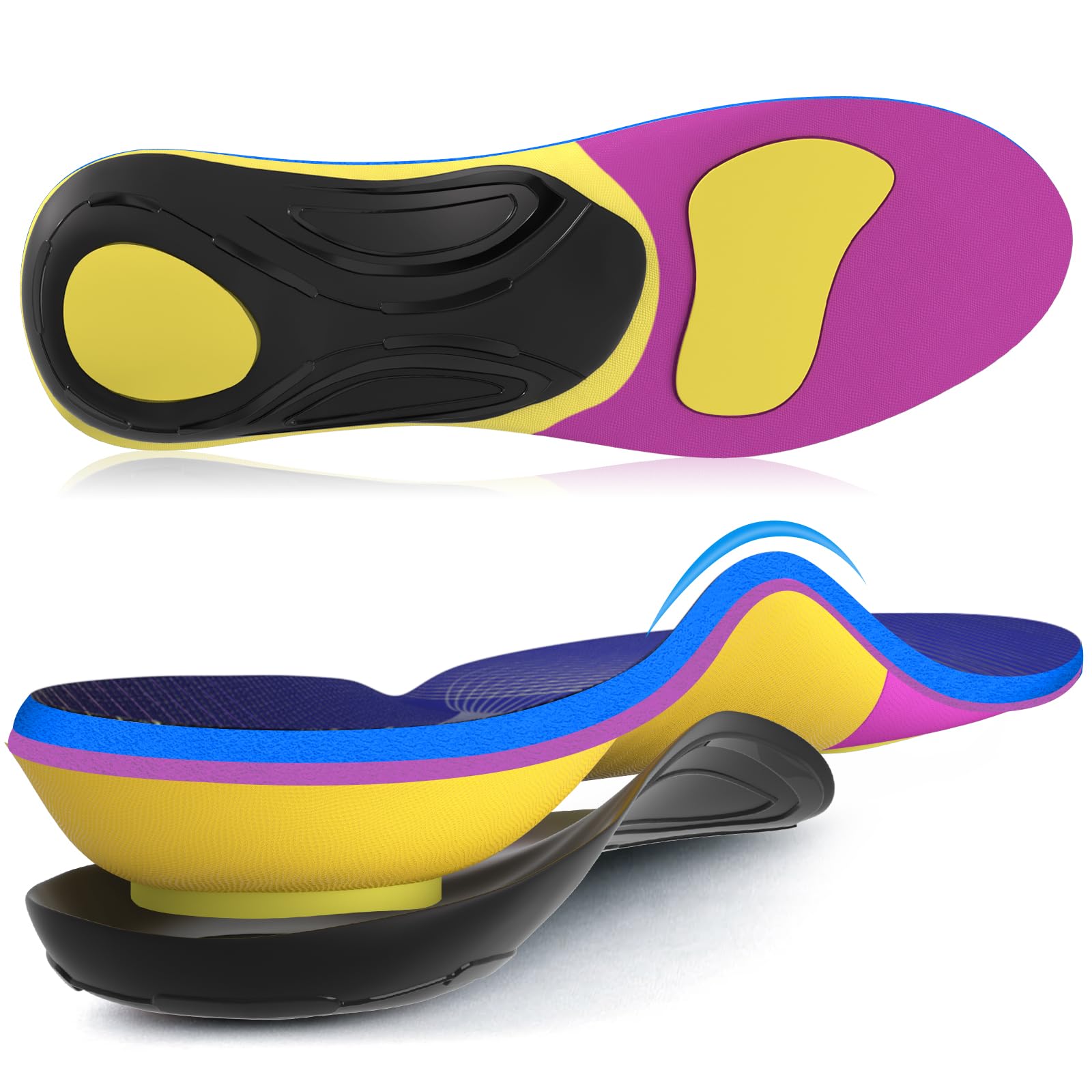
The Fit Geno insole is engineered for heavy-duty use, with a rigid high arch that actively lifts the fallen arch and a removable TPU plate that lets you dial in the support level. The PORON foam layer at the heel and forefoot provides high-rebound shock absorption — essential for users over 220lbs who need the insole to hold its shape under sustained load.
Nurses and retail workers who stand 10+ hours report noticeable relief in knee and lower back pain after switching to these. The deep heel cup prevents pronation, and the breathable fabric resists odor even through double shifts. Trimming is straightforward, and the insoles fit comfortably in work boots and running shoes without crowding the toe box.
The break-in period is short — about two days of gradual wear — before the rigid arch becomes comfortable. Some users note that the high arch may feel aggressive for those with naturally low arches who are not accustomed to structured support, so start with a few hours per day.
Why it’s great
- Removable TPU arch plate allows customized support stiffness
- PORON foam absorbs impact without losing rebound over time
- Rated for users over 220lbs with no bottoming out
Good to know
- High arch profile may feel firm during initial break-in
- Delivery times can vary outside of standard shipping windows
2. OUOKK Plantar Fasciitis Relief Low Arch Support Inserts
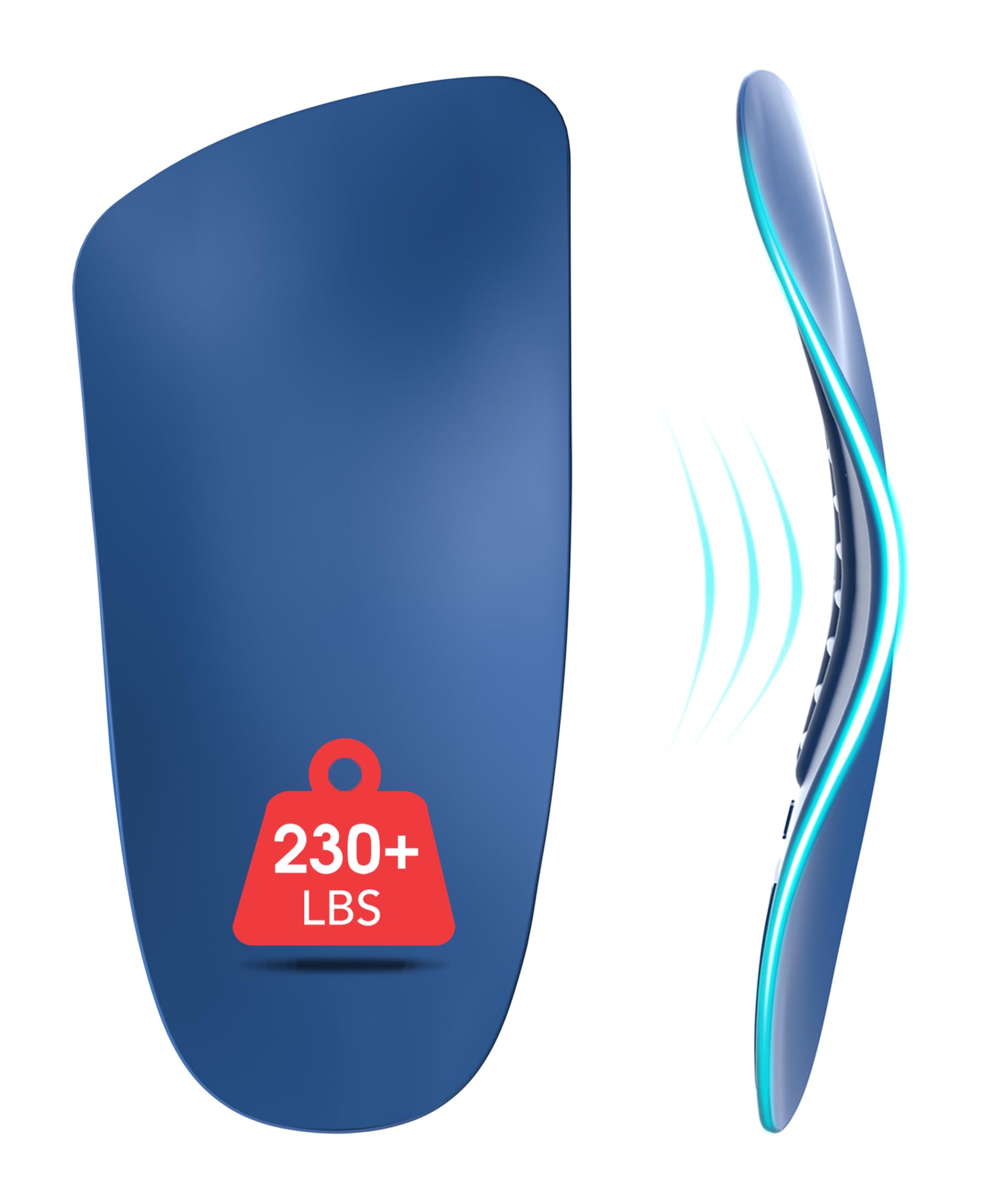
The OUOKK insert is a 3/4-length orthotic that prioritizes rigid arch support without adding bulk to the shoe. The 26mm TPU arch is designed to last over two years of daily use, making it a long-term solution for those with persistent fallen arches. Its thin-edge construction saves space in tight footwear like loafers, dress shoes, and low-profile sneakers.
Users with high arch correction needs appreciate how the firm support reduces pressure on the plantar fascia and helps realign the foot. The forefoot massage area also promotes circulation during all-day standing. Unlike full-length insoles, the 3/4 design leaves the toe box free, preventing the curled-toe sensation that some experience in narrow shoes.
Because the insert is rigid and does not have a soft cushion top layer, initial wear can feel stiff. The brand recommends a break-in of one to two hours per day for the first few days. Some users also note that the insert can shift slightly in shoes without a deep heel counter, though this is less common.
Why it’s great
- Rigid 26mm TPU arch holds shape for 2+ years
- 3/4 length fits tight shoes without crowding toes
- Massage area promotes blood flow during long standing
Good to know
- Firm support requires gradual break-in period
- May shift in shoes without a built-in heel counter
3. DynWalker Arch Support Insoles
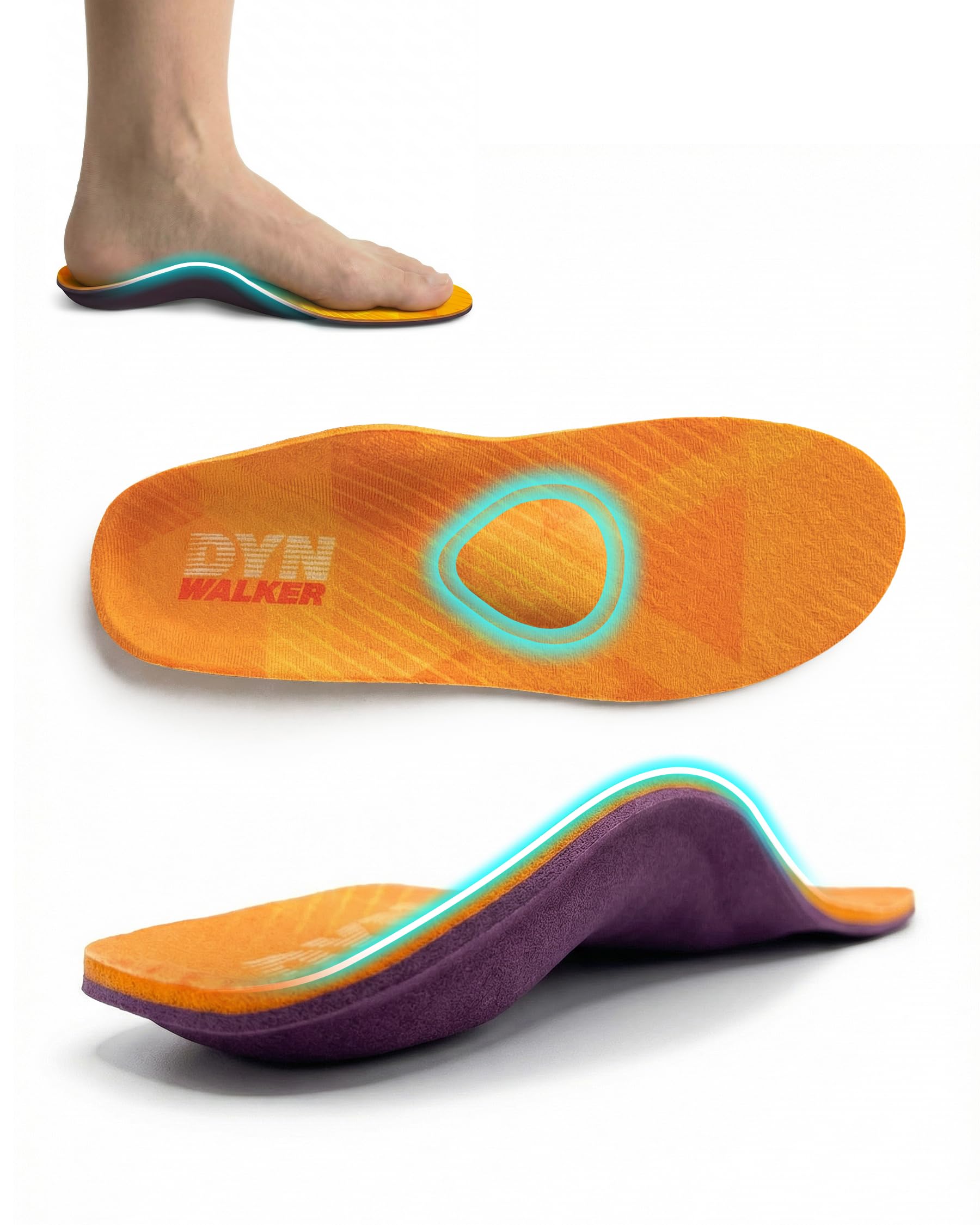
The DynWalker insole uses a 4cm 3D arch profile combined with a multi-layer stack of high-density TPU, memory foam, and elastic EVA. This combination creates a balance between structural correction and step-in comfort — the arch supports fallen feet while the memory foam conforms to individual foot contours for immediate relief.
The deep U-shaped heel cup effectively reduces excessive pronation, and the forefoot latex pad adds a gentle massage effect that cuts down fatigue during long walks or standing shifts. Users report that the insoles feel noticeably bouncy out of the box and require no break-in period, unlike stiffer orthotics.
Some wearers note that the arch height feels higher than expected — especially if they are used to flat inserts — which can take a couple of days to adjust to. The metatarsal cushion is also more prominent, which may feel unusual for those with sensitive forefeet. The insoles fit best in sneakers and casual shoes with removable original liners.
Why it’s great
- Multi-layer TPU/memory foam stack offers immediate comfort
- Deep heel cup stabilizes pronation effectively
- No break-in required for most users
Good to know
- Arch feels high for those unaccustomed to structured support
- Metatarsal pad may irritate sensitive forefeet
4. Copper Fit Arch Relief Orthotics
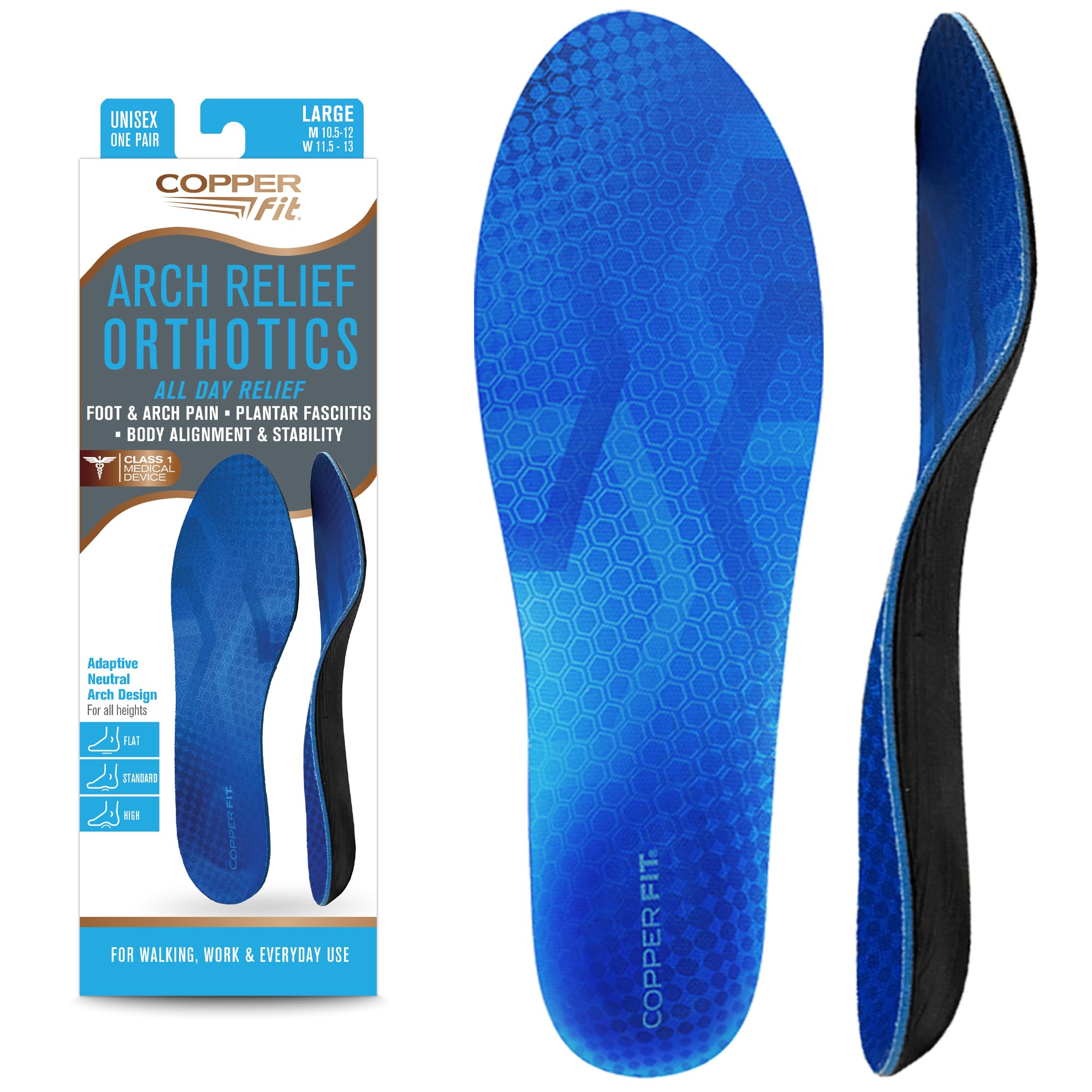
Copper Fit’s Arch Relief Orthotic is designed with an adaptive arch that molds to low, medium, or high arches over the first few wears. The memory foam core provides generous cushioning, while the stabilizing heel cup works to maintain proper foot alignment and reduce strain on the knees and lower back.
Users transitioning from flat insoles appreciate the lower initial stiffness — the break-in recommendation is only a few hours per day for the first two days. The shock-absorbing heel pad specifically targets the heel strike impact that aggravates plantar fasciitis and heel spurs. The low-profile build fits into casual shoes, work shoes, and even some dress shoes without lifting the heel out.
Because the support is adaptive rather than rigid, heavier users above 230lbs may find that the memory foam compresses more over time compared to a TPU-based insole. The insole is best suited for everyday walking and standing rather than high-impact running or intense athletic activity.
Why it’s great
- Adaptive arch molds to your specific foot shape
- Short break-in period with immediate comfort
- Low-profile design fits in most shoe types
Good to know
- Memory foam may compress faster under heavy loads
- Not ideal for high-impact running or sprinting
5. Psveb Professional Heavy Duty Support Pain Relief Orthotics

The Psveb insole uses dual PORON cushioning — a high-performance foam commonly found in premium medical orthotics — paired with a “Golden Triangle” ergonomic design that provides three-point support at the forefoot, arch, and heel. This configuration addresses both fallen arches and plantar fasciitis pain without requiring a premium investment.
Users weighing over 230lbs report significant improvement in heel pain within the first day, and the deep U-shaped heel cup effectively prevents side slippage during long shifts on hard flooring. The full PU layer adds softness underfoot while maintaining durability — the insoles show no flattening after several weeks of daily use. Trimming is straightforward for size adjustment.
The medium arch support is less aggressive than the rigid TPU options, which means it works well for those with moderate arch collapse but may not provide enough lift for severe flat feet. The insole thickness also requires looser laces in low-back shoes.
Why it’s great
- Dual PORON foam absorbs shock without flattening
- Three-point support distributes pressure evenly
- Immediate relief for heel and arch pain
Good to know
- Medium arch may be insufficient for severe collapsed arches
- Thicker build may not fit low-back shoes without lace adjustment
FAQ
How long does it take for insoles to relieve fallen arch pain?
Can I use the same insoles for running and work boots?
What is the difference between a 3/4-length and a full-length insole?
How often should I replace insoles for fallen arches?
Final Thoughts: The Verdict
For most users, the insoles for fallen arches winner is the Fit Geno Arch Support because it combines a removable TPU plate for customizable rigidity with PORON foam that holds up under heavy loads — essential for long-term correction. If you need a thin profile for tight shoes, grab the OUOKK 3/4 Length. And for a budget-friendly option that still provides dual PORON cushioning and three-point arch support, nothing beats the Psveb Heavy Duty Orthotics.