Posterior tibial tendonitis turns every step into a grinding reminder that your foot’s primary arch-support cable is failing. Without rigid, correctly-positioned arch support, that tendon stretches under load, inflammation compounds, and walking becomes a limping negotiation with gravity.
I’m Emma — the founder and writer behind Baby Bangs. I’ve spent years analyzing biomechanical support products, cross-referencing material durometers, arch-height geometry, and real user recovery timelines to separate insoles that actually unload the posterior tibial tendon from those that just feel cushy.
This guide breaks down the specific arch profiles, heel cup depths, and corrective stiffness that matter most when selecting the best insoles for posterior tibial tendonitis, based on podiatric principles and verified patient outcomes.
How To Choose The Best Insoles For Posterior Tibial Tendonitis
Posterior tibial tendonitis is not generic arch fatigue. The posterior tibial tendon runs from the calf muscle down behind the inner ankle bone, splitting to attach to several small bones in the midfoot — its job is to hold the arch up during weight-bearing. When the arch collapses, this tendon is overstretched. The wrong insole (soft, flexible, low-arch) lets the collapse continue, and the tendon never heals. The right insole provides a rigid shelf that the arch rests on, reducing tendon tension with every step.
Arch Height & Rigidity: The Medial Shelf
For posterior tibial tendonitis, the insole must have a pronounced medial arch support that is stiff — not squishy. Foam-only insoles compress under body weight and fail to offload the tendon. Look for polypropylene or semi-rigid shells with a firm top layer. The arch profile should sit directly under the navicular bone, roughly halfway between heel and ball of foot, and rise enough to fill the arch space without jamming into it. Adjustable options let you fine-tune this height.
Heel Cup Depth & Varus Wedge
The heel cup must be deep enough to cradle the calcaneus (heel bone) and prevent the foot from sliding laterally during gait. A 15mm to 20mm deep heel cup with a slight varus tilt (angled inward) helps lock the subtalar joint in a neutral position, reducing the pronation force that the posterior tibial tendon has to resist. Insoles with a flat or shallow heel cup allow excessive motion and prolong tendon stress.
Full-Length vs. 3/4-Length Design
Full-length insoles distribute force from heel to toe and prevent the orthotic from shifting inside the shoe. For posterior tibial tendonitis, a full-length design with a gentle metatarsal rise (not a sharp pad) is ideal — it maintains toe-off efficiency without jamming the forefoot. Avoid thin 3/4-length models that can tilt inside the shoe, since any rocking motion directly torques the posterior tibial tendon.
Quick Comparison
On smaller screens, swipe sideways to see the full table.
| Model | Category | Best For | Key Spec | Amazon |
|---|---|---|---|---|
| PowerStep Pinnacle | Mid-Range | Daily all-day support with podiatrist backing | Dual-layer cushioning + semi-rigid shell | Amazon |
| SelectFlex Adjustable | Premium | Customizable arch height for precise fit | 3-position adjustable arch + deep heel cup | Amazon |
| Samurai Ninjas | Mid-Range | Rigid support without bulk; trail/running | 3/4-length rigid shell, waterproof | Amazon |
| WalkFit Platinum | Mid-Range | Multi-arch adjustability and full-body alignment | 3 arch inserts + gel Bio-Lock heel cup | Amazon |
| PowerStep Pinnacle Wool | Premium | Winter warmth plus corrective arch support | Merino wool cover + medium arch shell | Amazon |
In‑Depth Reviews
1. PowerStep Pinnacle Insoles (M 7-7.5 / W 9-9.5)

The PowerStep Pinnacle is the #1 podiatrist-recommended over-the-counter orthotic for a reason — its semi-rigid polypropylene shell provides the medial shelf that posterior tibial tendonitis demands, while the dual-layer EVA foam absorbs heel strike shock without letting the arch collapse. The arch rises to a moderate height that suits most foot shapes, and the deep heel cup cradles the calcaneus to limit excessive pronation. Multiple verified users report complete relief from plantar fasciitis and associated foot pain within ten days, and the 12-hour shift workers found them comfortable immediately after a short break-in period.
Fit is precise — you order by shoe size, and no trimming is required. The insole sits flush in athletic shoes, work boots, and casual footwear where the factory insole is removable. Users with flat feet and heel spurs noted the arch support corrected their gait without the extreme pressure points found in cheaper rigid orthotics. The Pinnacle design has remained consistent for over twenty years, which speaks to its biomechanical correctness.
The polyester cover breathes reasonably well for all-day wear, though those with very high arches may find the support insufficient for severe overpronation. Some users noted the initial stiffness required a few hours of wear to soften, but this stiffness is precisely what makes it effective for unloading the posterior tibial tendon — flexible insoles cannot do the job. HSA and FSA eligible, with a 30-day money-back guarantee.
Why it’s great
- Podiatrist-recommended medial arch support resists collapse
- Deep heel cup limits overpronation torque on the tendon
- No trimming needed; fits most athletic and casual shoes
Good to know
- Moderate arch height may not suit very high-arched feet
- Initial stiffness requires gradual break-in (1-2 hours day one)
2. SelectFlex Adjustable Arch Support Orthotic Insoles (W 10.5-11.5 / M 9.5-10.5)

The SelectFlex stands apart from every other insole on this list because it features a mechanical arch adjustment system that lets you raise or lower the medial support height by rotating a dial on the underside of the orthotic. For posterior tibial tendonitis, this is a significant advantage — the tendon’s strain pattern varies by individual foot anatomy, shoe type, and activity level, and being able to dial in the exact arch elevation (low, medium, or high) means you can find the precise point where the tendon stops being overstretched without creating a new pressure sore elsewhere.
The teardrop-shaped heel cup is deeper than standard orthotics and locks the heel in place, which directly reduces the pronation moment that forces the posterior tibial tendon to overwork. Users with neuropathy and Morton’s neuroma reported foot pain relief after a month of consistent wear, and the PowerLift Arch feature provides a subtle massaging lift with each step that improves proprioception (awareness of foot position), helping retrain gait mechanics over time.
The trade-off is construction. Some users reported that the adjustment key can strip after several months of use, and the arch mechanism may feel less solid than a single-mold shell. The insole is also notably wider than average, which may require checking shoe fit — it works in boots and sneakers but can crowd narrower dress shoes. A foam top cover provides basic comfort, but there is minimal heel gel cushioning, so users with very sensitive fat pads may want additional padding.
Why it’s great
- Adjustable medial arch height for precise tendon offloading
- Deep teardrop heel cup minimizes lateral heel slide
- Encourages gait retraining through proprioceptive lift
Good to know
- Adjustment key can wear out after months of use
- Wide fit may not suit narrow shoes; no-heel gel layer
3. Samurai Insoles Ninjas Plantar Fasciitis Arch Support (M 7-7.5 / W 9-9.5)

The Samurai Ninjas take a different approach — they are 3/4-length rigid orthotics designed to sit under the shoe’s existing padding, providing a hard arch shelf without adding bulk under the toes. This design is ideal for posterior tibial tendonitis when you need uncompromising medial support but cannot afford the fit issues of a full-length insert in tight athletic shoes or trail runners. The polypropylene shell is remarkably stiff, and users who tried seven other inserts reported that the Ninjas were the only ones that reduced heel pain and allowed them to walk or mow without rest breaks.
The medium arch profile is positioned to support the navicular directly, and the lack of heel pad (it is intended to sit on top of the shoe’s built-in padding) forces the foot into a more corrected position. Multiple users noted that the rigid retraining effect eventually improved their gait so much that they could walk with better mechanics even without the orthotics. The waterproof construction makes them practical for sweaty work environments or wet conditions.
The main complaint is squeaking — the rigid plastic against shoe lining can produce noise when walking. Several users resolved this with a layer of clear tape on the underside. Additionally, as a 3/4-length design, they can shift slightly inside the shoe if the existing insole is very smooth. Best for users who want the stiffest possible support in a minimal footprint and are willing to resolve the occasional audible feedback.
Why it’s great
- Rigid polypropylene shell provides maximum medial arch stiffness
- 3/4-length fits tight shoes where full insoles do not
- Waterproof and lightweight; retrains gait over time
Good to know
- Can squeak against shoe lining; tape resolves this
- May shift in shoes with very smooth or worn footbeds
4. WalkFit Platinum Foot Orthotics (M 9-9.5 / W 10-10.5)
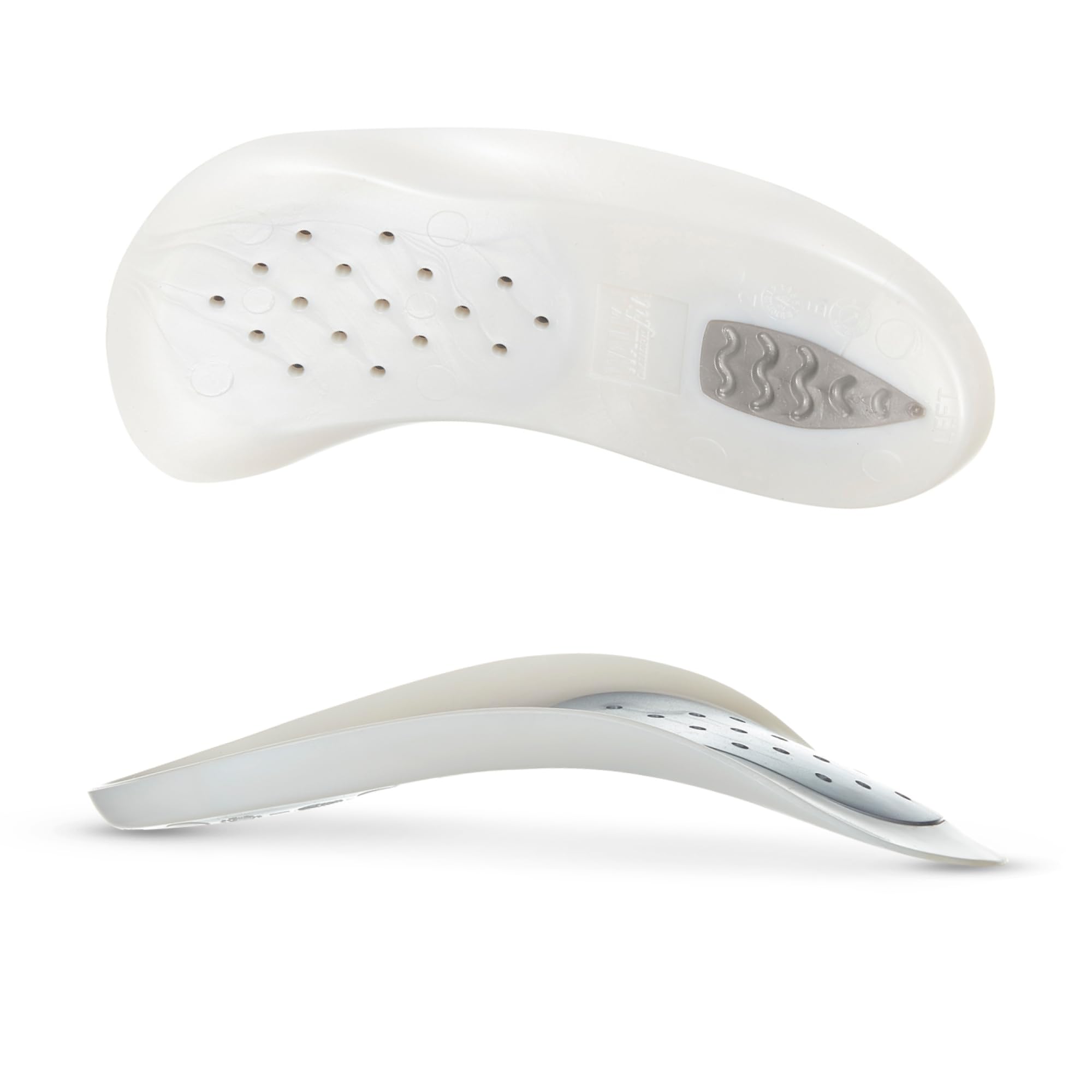
WalkFit Platinum offers something unique — a base orthotic with three interchangeable arch inserts (low, medium, high) plus a fourth reflexology massage insert, letting you experiment with arch height until you find the setting that best unloads your posterior tibial tendon. The base unit includes a gel-padded Bio-Lock heel cup that provides substantial shock absorption at heel strike, which matters because every hard landing sends vibration up the kinetic chain to the posterior tibial tendon insertion point.
Clinical study data from the manufacturer reports 99% of users experienced foot pain relief and 97% reported relief from knee and leg pain — figures that align with user reviews from military personnel and active individuals who found the highest arch setting corrected flat feet and improved posture over time. The rubberized construction holds its shape better than gel-only orthotics, and the 15-year market presence suggests a proven design.
Fit is a notable issue. Users with wide forefeet and narrow heels reported the design works well, but the orthotic can slide forward inside the shoe unless secured with a thin flat insole underneath. Some long-term users noted that newer versions use a gel heel layer that cracks after several months, unlike the original Phase4 design that lasted years. The break-in protocol is critical — starting at one hour per day and increasing gradually — or users risk severe arch soreness.
Why it’s great
- Interchangeable arch inserts allow precise height tuning
- Gel Bio-Lock heel cup absorbs heel strike shock
- Proven design with broad user satisfaction over 15 years
Good to know
- Newer gel heel layer may crack with extended use
- Can slide inside shoe; may need flat insole underneath
5. PowerStep Pinnacle Wool Orthotic Insoles (M 9-9.5 / W 11-11.5)
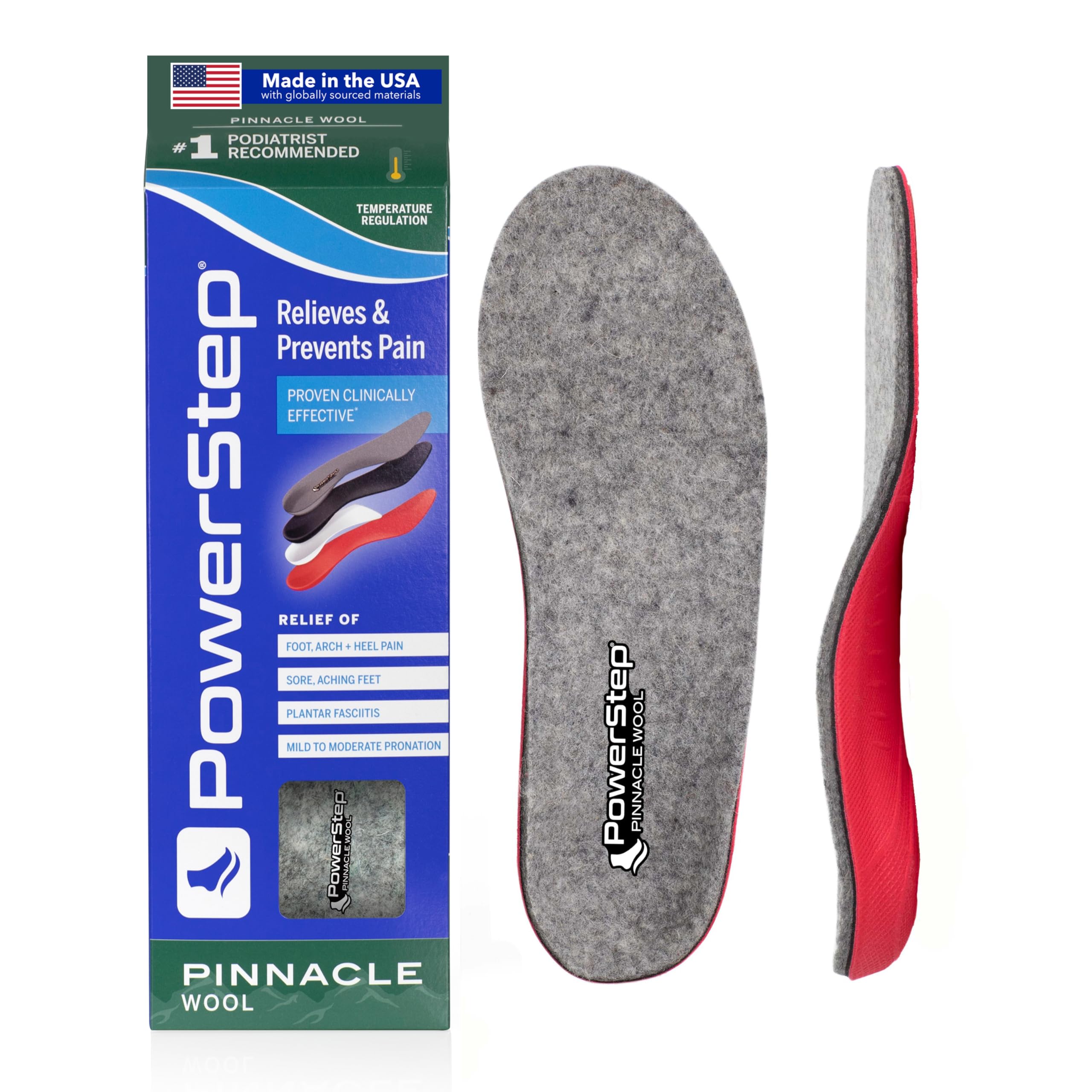
The PowerStep Pinnacle Wool model takes the same semi-rigid arch support shell from the standard Pinnacle and wraps it in a Merino wool top layer. For posterior tibial tendonitis sufferers who live in cold climates or wear boots during winter, the wool wicks moisture and provides thermal insulation without adding significant bulk — the arch height and stiffness remain identical to the standard version, so the corrective benefit for the posterior tibial tendon is preserved. Users with pronated ankles reported that the wool version still delivered the same gait-correcting support while keeping feet warm in sub-freezing conditions.
Physical therapists specifically recommend these rigid insoles for gait correction. The medium arch support is pronounced enough to guide the foot into neutral position, and the extra material thickness (from the wool layer) helps fill boots more snugly, improving heel hold during snowboarding and hiking. Customers in construction trades reported buying new sets every few months, rotating through multiple pairs of Red Wing and Thorogood boots, and found the quality consistent — especially for the cost compared to custom orthotics.
The wool does add slight thickness, which may make shoe fit snugger — users with tight-fitting sneakers may need to size up or use in lace-up boots only. The arch support, while firm, is still the same medium height as the standard Pinnacle, so those with very severe overpronation may need a higher-arched orthotic. Best for users who want the proven PowerStep support in a winter-ready package and already know that the medium arch profile works for their foot.
Why it’s great
- Same semi-rigid arch support as standard Pinnacle for tendon relief
- Merino wool wicks moisture and insulates in cold weather boots
- Consistent quality for repeat buyers in trades and outdoor work
Good to know
- Wool layer adds slight thickness; check shoe fit
- Medium arch may not suit severe overpronation
FAQ
How do insoles actually help posterior tibial tendonitis heal?
Can soft gel insoles help posterior tibial tendonitis?
How long does it take for orthotic insoles to relieve posterior tibial tendonitis pain?
Final Thoughts: The Verdict
For most users, the insoles for posterior tibial tendonitis winner is the PowerStep Pinnacle because its semi-rigid medial shell and deep heel cup provide the precise mechanical correction this condition requires, backed by decades of podiatric recommendation. If you need adjustable arch height to fine-tune tendon unloading, grab the SelectFlex Adjustable. And for cold-weather use where thermal comfort matters alongside corrective support, nothing beats the PowerStep Pinnacle Wool.