Few things are as stubborn as a keloid scar — that raised, thick tissue that refuses to fade, often leaving you frustrated with creams that simply don’t deliver. These tough scars form when the body produces excess collagen during healing, and they require a specific, clinically-backed approach that most drugstore lotions lack entirely.
I’m Emma — the founder and writer behind Baby Bangs. I’ve spent years analyzing dermatological treatment protocols to separate real scar therapy from marketing fluff, and I know exactly which silicone-based formulations actually bind to hypertrophic tissue.
This guide cuts through the confusion to present the absolute best products for keloid removal cream, focusing on medical-grade silicone, over-the-counter formulas, and full scar-management kits that deliver measurable flattening and color reduction with consistent use.
How To Choose The Best Keloid Removal Cream
Keloids are not ordinary scars — they grow beyond the original wound boundary and resist standard healing. Selecting an effective treatment requires understanding three core variables: active ingredient type, delivery format, and treatment duration. Here is what matters most.
Medical-Grade Silicone Is Non-Negotiable
The most robust clinical evidence supports silicone as the first-line treatment for hypertrophic and keloid scars. Silicone creates a protective hydration barrier that softens collagen fibers, reduces itching, and flattens raised tissue over time. Any credible keloid removal cream must list silicone (dimethicone, cyclomethicone, or polysiloxane) high on the ingredient list. Avoid products that rely solely on botanical oils without silicone — they lack the occlusive mechanism proven to remodel scar tissue.
Sheets Versus Gels: Location Decides
Silicone sheets provide sustained, 24-hour occlusion ideal for flat body areas such as the chest, back, or arms after surgery. They stick well and can be reused for days. Gels work better on curved surfaces like the ear, nose, or knuckles, and they dry invisibly under makeup. A high-quality gel should feel tacky briefly before setting — that tack phase is the silicone bonding to the skin. If a gel dries without any tack, it is likely too thin to create the occlusion needed for keloid reduction.
Complementary Ingredients That Matter
While silicone does the heavy lifting, added ingredients like Vitamin B5 (panthenol), Aloe Vera, and Snail Mucin Extract support moisture retention and cell turnover. Onion extract (Allium cepa) has mixed evidence but some users report improved texture. Avoid fragrance-heavy formulas — irritation can worsen the inflammatory cycle that feeds keloid growth.
Realistic Expectations For Old Scars
Keloids that have been present for years require patience. Visible improvement typically takes 8 to 12 weeks of daily, uninterrupted application. Flattening happens gradually; itching and redness usually resolve first. Products that claim to remove a mature keloid in two weeks should be treated with skepticism. Consistency, not speed, wins this battle.
Quick Comparison
On smaller screens, swipe sideways to see the full table.
| Model | Category | Best For | Key Spec | Amazon |
|---|---|---|---|---|
| Smith & Nephew CICA-Care | Silicone Sheet | Large flat body scars | 5″ x 6″ reusable sheet | Amazon |
| Rejuvaskin RejuvaSil | Silicone Gel | Face and curved areas | 30ml, fast-drying clear gel | Amazon |
| ScarAway Advanced Silicone Sheets | Silicone Sheet | Daily wear on joints | 1.5″ x 3″ strips, 8 per pack | Amazon |
| BASE LABORATORIES Piercing Keloid Duo | Gel + Oil Kit | Ear and nose piercing bumps | 2 oz gel + 0.5 oz oil drops | Amazon |
| Rvlaim Silicone Scar Cream | Silicone Gel | Post-surgery and acne scars | 1.7 fl oz, non-greasy formula | Amazon |
In-Depth Reviews
1. Smith & Nephew CICA-Care Self-Adhesive Silicone Gel Sheet

This is the medical-grade sheet that dermatologists have trusted for nearly two decades. The 5 x 6 inch size is generous enough to cover a long surgical scar or a patch of clustered keloids on the chest or back, and you can cut it down to fit smaller areas without losing adhesion. The self-adhesive silicone creates continuous occlusion that hydrates the scar bed and softens raised collagen fibers over time.
Each sheet stays in place for days, surviving showers and daily movement on flat surfaces. Patients report noticeable softening and flattening of hypertrophic tissue within 8 weeks of consistent wear. The transparent material blends reasonably well under clothing, though it remains visible on exposed skin. For old scars up to 30 years old, clinical data shows measurable improvement in thickness and color.
The main trade-off is adhesion on highly curved areas like the ear or knuckle — the sheet lifts more easily there. If your keloid sits on a joint or a small complex curve, a gel may hold better. For flat body surfaces, nothing in this price tier outperforms CICA-Care’s proven record.
Why it’s great
- Large reusable sheet reduces cost per use
- Clinically proven on scars up to 30 years old
- Strong adhesion through washing and movement
Good to know
- Not ideal for highly curved or boney areas
- Visible on exposed skin if worn openly
2. Rejuvaskin RejuvaSil Silicone Scar Gel
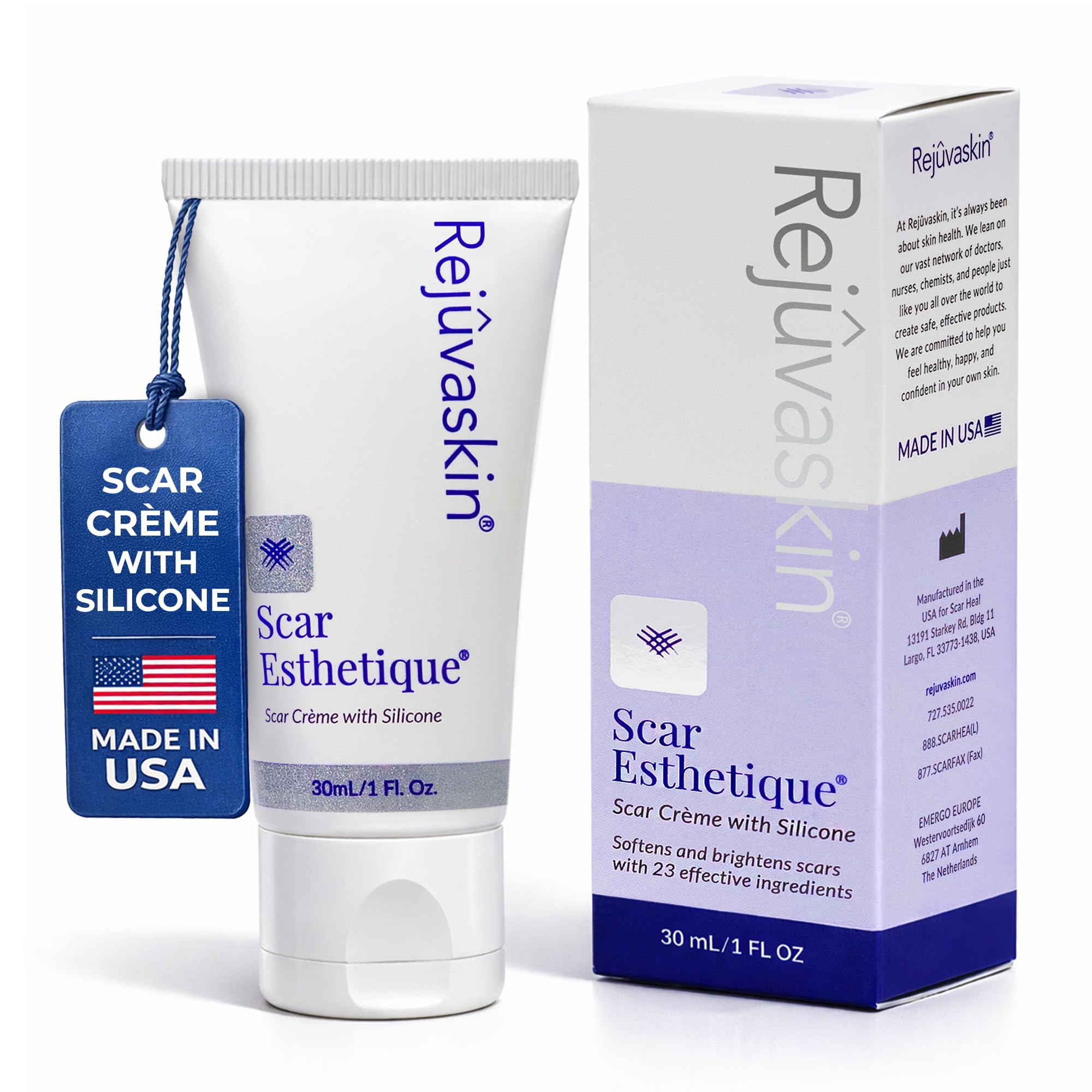
RejuvaSil is the go-to gel if your keloid sits on the face, ear, or any other awkward contour. The formula dries to an invisible, breathable film within two minutes, creating the occlusive silicone barrier needed to flatten raised tissue without looking greasy or shiny. This makes it the strongest choice for daytime use under makeup or sunscreen.
The 30ml bottle delivers roughly 90 applications when used twice daily on a small keloid, making it cost-effective despite the premium price tag. Silicone concentration is high enough to produce the tacky initial feel that signals proper bonding. Users treating surgical scars on the face report visible fading of redness and texture improvement within 6 to 8 weeks with disciplined daily use.
One limitation: because it is a gel, it does not provide the same physical compression that a sheet offers. For thick, rope-like keloids that stand more than 3 mm above the skin, a sheet combined with this gel may deliver faster results than the gel alone.
Why it’s great
- Dries clear and layers well under sunscreen or makeup
- High silicone content for effective occlusion on curves
- Extended 90+ uses per bottle reduces waste
Good to know
- Less physical compression than silicone sheets
- Needs daily reapplication for consistent results
3. ScarAway Advanced Silicone Scar Sheets

ScarAway uses the same medical-grade silicone technology trusted by plastic surgeons but packages it in smaller, discreet tan strips that blend better with medium skin tones. Each 1.5 x 3 inch sheet is designed for continuous wear up to 10 days, meaning you apply it once and leave it in place through showers and daily activity. This extended wear cycle reduces the chance of user error — a common reason scar treatments fail.
The 8-count pack provides roughly 80 days of treatment if you replace each sheet weekly. The tan color helps camouflage the strip on arms, legs, and chest, though it is still noticeable on very pale or very dark skin. ScarAway targets itching and redness first, with flattening becoming visible around the 4-to-8-week mark as the silicone hydrates and softens the collagen bundle.
Because the strips are smaller, they work best for linear keloids from cuts or surgical incisions. They cover less surface area than the CICA-Care sheet, so a large or wide keloid may require multiple strips placed side by side, which increases cost.
Why it’s great
- Extended 10-day wear reduces daily maintenance
- Tan color blends naturally on many skin tones
- Clinically supported for hypertrophic and keloid scars
Good to know
- Smaller sheets require multiple strips for wide scars
- Adhesion may weaken near day 10 in humid climates
4. BASE LABORATORIES Piercing Keloid Bumps Shrinking Duo

Base Labs addresses a specific pain point that many silicone-only products miss: the angry, red piercing bump that forms around nose, ear, or belly button piercings. The duo combines a 2 oz keloid gel with a 0.5 oz oil blend designed to soothe inflammation while the gel’s silicone-like occlusive layer flattens the bump. The gel includes Snail Mucin Extract and Vitamin B5 to support cell renewal, while the oil relies on Lavender, Turmeric, and Rosemary essential oils for antimicrobial and calming effects.
Users consistently report that the itching and tenderness around fresh piercing bumps resolves within the first two weeks. The gel is lightweight enough to apply around a jewelry stud without sticking to the metal, which is a practical advantage over sheets that cannot wrap tightly around a ring. The combo format lets you treat the bump with the oil during the day and seal it with the gel overnight for continuous moisture.
The main catch is that essential oils can irritate very sensitive skin if used more than twice daily. Patch test the oil on your inner arm before applying near a fresh piercing. Also, this duo relies more on natural ingredients than pure silicone, so it may work slower on dense, mature keloids compared to a medical-grade sheet.
Why it’s great
- Complete kit with gel and soothing oil for piercing bumps
- Lightweight gel won’t stick to piercing jewelry
- Reduces redness and discomfort within two weeks
Good to know
- Essential oils may irritate sensitive skin
- Less silicone concentration than clinical sheets
5. Rvlaim Silicone Scar Cream
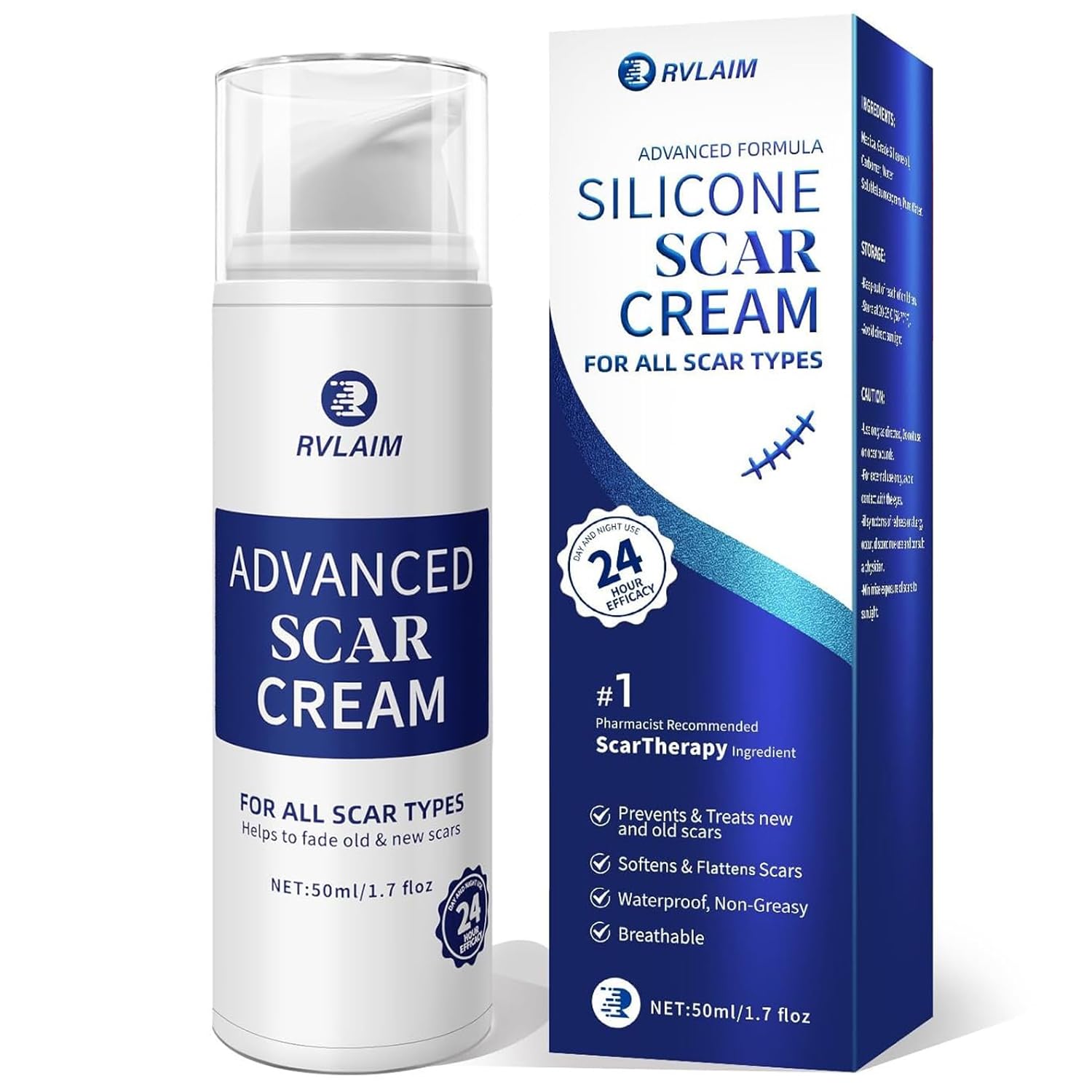
Rvlaim bridges the gap between budget-friendly and effective by delivering a silicone-based gel at a mid-range cost without leaving the oily residue common in lower-priced scar treatments. The 1.7 fl oz bottle lasts roughly two months with twice-daily application on a small keloid, and the fast-drying formula sets within 60 seconds, making it convenient for morning routines before sunscreen or clothing.
This cream works best on newer scars — post-surgical incisions, C-section lines, and recent acne scars — where the silicone can interrupt the early hypertrophic response before the scar fully raises. Users treating scars under 6 months old see color fading and texture smoothing faster than those tackling mature keloids. The formula excludes fragrance and common irritants, which lowers the risk of worsening inflammation on sensitive post-surgical skin.
For older, dense keloids, Rvlaim may need a longer trial period of 12 weeks before significant flattening occurs. Pairing it with a silicone sheet at night accelerates results. It also comes in a tube rather than a pump, which helps control dosage but requires careful squeezing toward the end.
Why it’s great
- Fast-drying, non-greasy formula works under makeup
- Fragrance-free — safe for sensitive post-surgical skin
- Effective at preventing new scars from raising
Good to know
- Slower results on old, dense keloid tissue
- Tube packaging can waste product near the end
FAQ
Can keloid removal cream completely erase a raised scar?
How is a keloid different from a hypertrophic scar?
Should I use a silicone sheet or a silicone gel for a keloid on my ear?
Can I use keloid cream on an open wound or fresh incision?
Final Thoughts: The Verdict
For most users, the best keloid removal cream winner is the Smith & Nephew CICA-Care Silicone Gel Sheet because it combines the largest reusable surface area with two decades of clinical validation at a cost that beats premium alternatives per treatment day. If you need invisible daytime treatment on the face or ear, grab the Rejuvaskin RejuvaSil Silicone Scar Gel. And for a fresh piercing bump that needs both soothing and flattening, nothing beats the BASE LABORATORIES Piercing Keloid Duo.