Kids’ glasses face a war on two fronts: the daily abuse of playground tumbles and backpack tosses, and the growing threat of digital eye strain from tablets and school computers. A pair that can’t handle both is a waste of money and a risk to your child’s comfort. The right frame or lens delivers impact resistance, a secure fit that actually stays on an active face, and verified blue-light filtration that protects developing eyes—all without looking like medical equipment.
I’m Emma — the founder and writer behind Baby Bangs. I’ve spent years filtering through optical labs and Amazon listings to separate the durable, vision-safe designs from the brittle plastics and cheap coatings that fade within weeks.
After comparing build materials, lens certifications, and real parent feedback across dozens of styles, this guide breaks down the most reliable options for finding the best kids glasses that pair real protection with everyday wearability.
How To Choose The Best Kids Glasses
Selecting eyewear for a child is different than picking a pair for yourself. Kids don’t consciously protect their glasses, and their visual systems are still developing. Here are the three factors that separate a smart buy from a frustrating one.
Lens Material Is Everything
Polycarbonate is the only lens material you should accept for children’s frames. It is impact-resistant up to ten times more than standard plastic or glass, and it blocks 100 percent of UV rays without needing an added coating. CR-39 plastic lenses are lighter but shatter far more easily under stress. If the product listing does not explicitly say “polycarbonate,” treat the lenses as a safety gamble for active kids.
Blue Light vs. UV Protection — Know the Difference
A pair marketed for screen use must filter high-energy visible blue light in the 400–450 nanometer range, typically between 20 and 40 percent. UV protection, on the other hand, should always be UV400 rated, meaning it blocks rays up to 400 nanometers. Some bulk sunglasses claim “UV400” but skip impact testing entirely. For daily classroom and tablet use, a blue-light blocking lens with a scratch-resistant coating covers both the digital and physical hazards a child faces.
Frame Fit and Durability
A frame that slides down a child’s nose every few minutes will end up in a backpack or on the floor. Look for adjustable nose pads, spring hinges that flex outward without breaking, and a bridge width that matches your child’s face. Spring-loaded temples reduce the risk of snapped arms during roughhousing. Materials matter too: flexible TR-90 nylon holds up better than standard acetate against bending and twisting.
Quick Comparison
On smaller screens, swipe sideways to see the full table.
| Model | Category | Best For | Key Spec | Amazon |
|---|---|---|---|---|
| Ray-Ban Ry1531 | Prescription Frame | Durable everyday Rx frames | Polycarbonate-ready frame | Amazon |
| Oakley OY8002 Crosslink XS | Prescription Frame | Sporty youth fit | 49mm lens width, 14mm bridge | Amazon |
| Spectra479 Kids | Blue Light | Screen-time protection | 47mm lens, 15mm bridge | Amazon |
| DefenderShield Kid Series | Blue Light | Anti-eye strain for gaming | Blue light blocking, purple frame | Amazon |
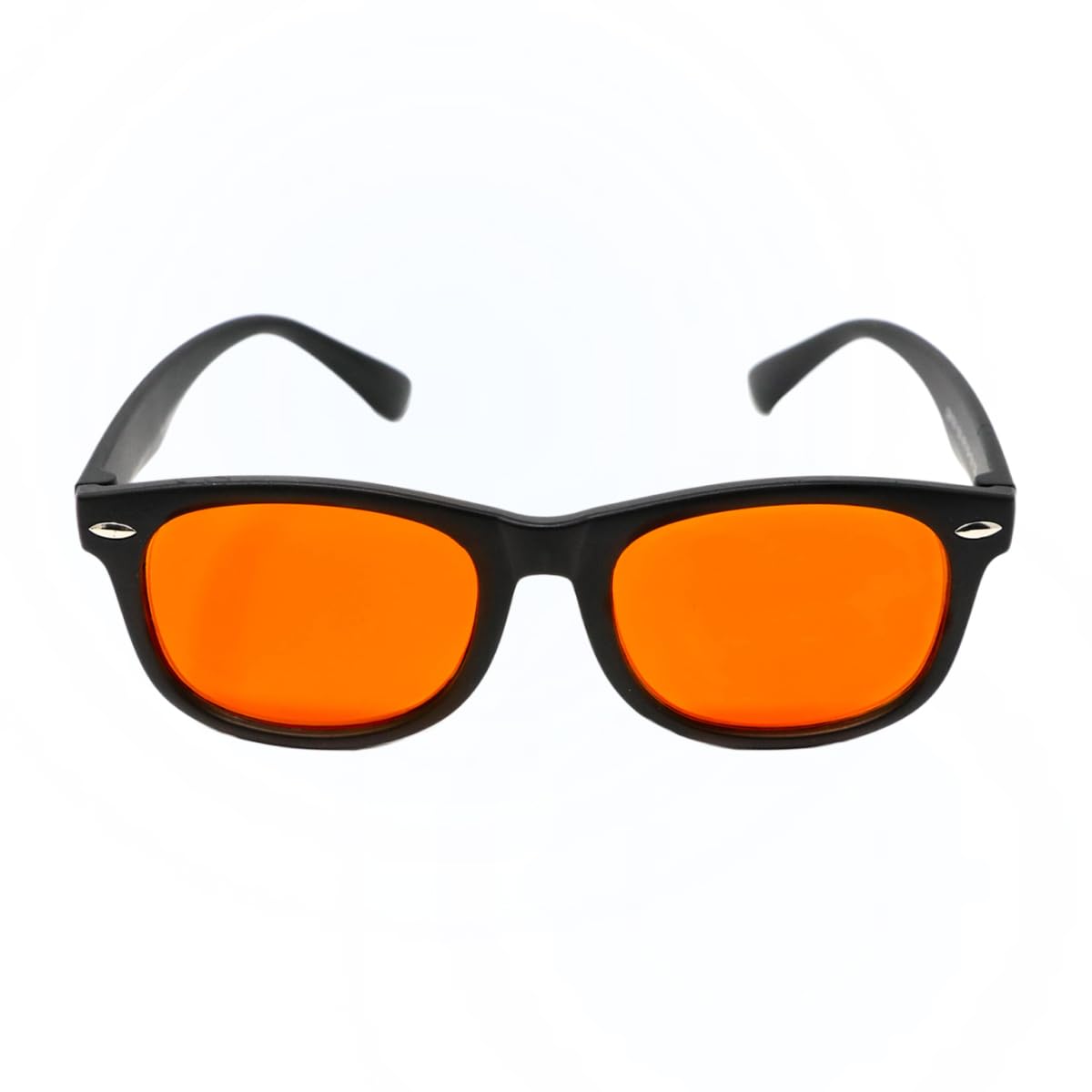
| Horus X Kids | Blue Light | Screen protection for boys and girls | Amber-tinted lenses | Amazon |
| Kanayu Safety Glasses | Safety Goggle | Lab, shop, and outdoor protection | Scratch and impact resistant | Amazon |
| Oleitodh Translucent Bulk | Sunglasses Bulk | Party favors and outdoor events | UV400 protection, 40-pack | Amazon |
In‑Depth Reviews
1. Ray-Ban Unisex-Child Ry1531 Square Prescription Eyeglass Frames
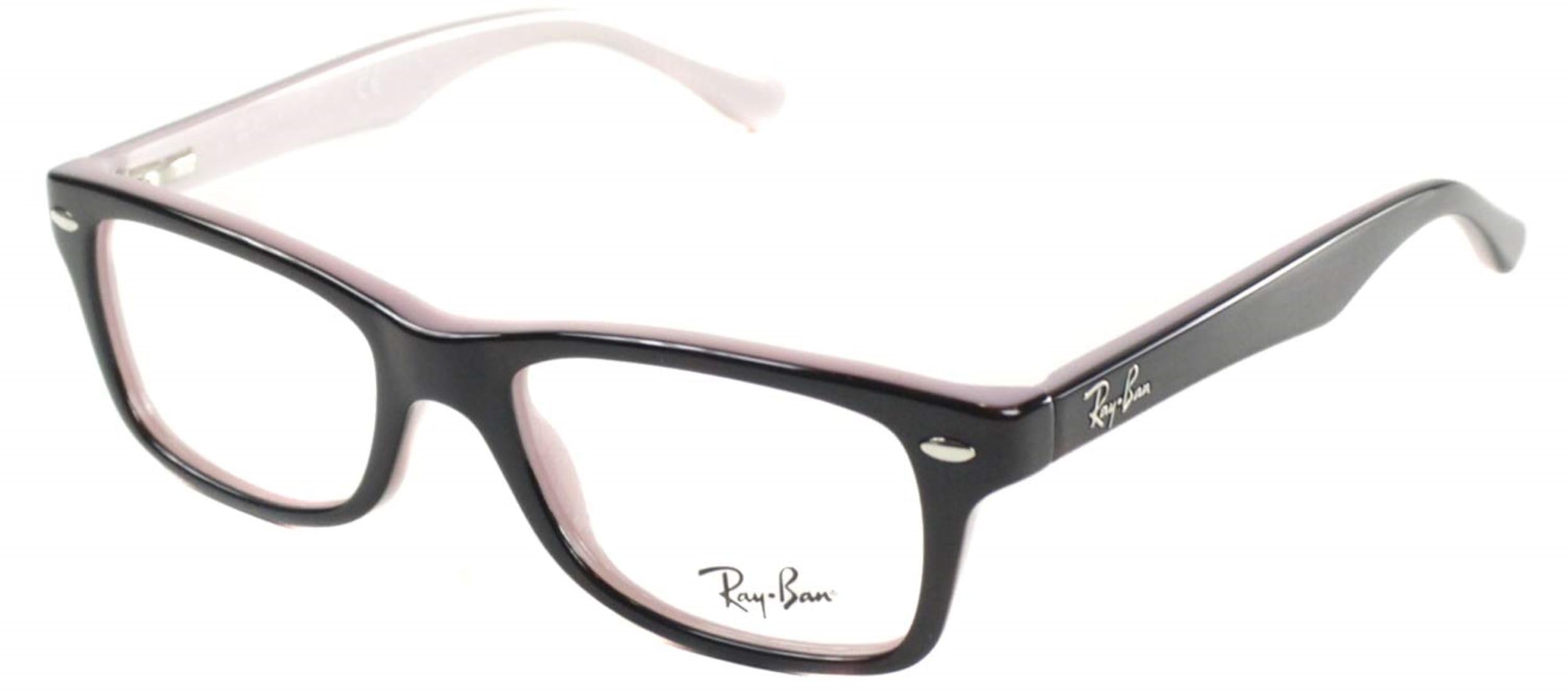
Ray-Ban’s Ry1531 pediatric frame brings the same acetate and metal hinge build quality found in their adult lines, scaled down for children. The square silhouette offers a classic look that fits both boys and girls, and the frame width accommodates the narrower face proportions of kids aged around 5 to 10. Because it’s designed as a prescription frame, an optician can fit polycarbonate or Trivex lenses without worrying about shoddy barrel hinges or weak temples.
The spring hinge assembly on this model provides roughly 15 degrees of flex outward, which drastically reduces the chance of a broken arm when a child pulls the glasses off with one hand. The adjustable nose pads allow a custom bridge fit, which is critical for keeping the lens centered over the pupil — not sliding down after every head turn. It is a premium unisex-child frame that holds up to the rough-and-tumble of school days better than any budget offering.
Parent reviewers consistently note that the frame survived multiple drops and even a few playground tramples without bending out of shape. The downside is that the frame alone does not come with lenses, so factor in the cost of a pediatric prescription lens install. For parents who already have a trusted optician, this is the frame that lasts until the next growth spurt forces a size upgrade.
Why it’s great
- Spring hinges reduce breakage from rough handling
- Adjustable nose pads for a custom fit on small faces
- True Ray-Ban build quality with pediatric sizing
Good to know
- Frame only — lenses must be added by an optician
- Higher price point than all-in-one kids’ glasses
2. Oakley Youth OY8002 Crosslink XS Square Prescription Eyewear Frames

The Oakley Crosslink XS is engineered for active youth who need a frame that stays put during sports and outdoor play. With a 49mm lens width, 14mm bridge, and 122mm temple arms, it fits older children and preteens more precisely than generic one-size-fits-all options. The O-Matter frame material is a proprietary nylon-based plastic that maintains flexibility without becoming brittle, even in cold weather.
Unobtainium ear socks on the temple tips increase grip as the child sweats, which is a feature borrowed directly from Oakley’s high-performance adult sport line. The frame is designed to accept prescription lenses, and the lens shape has enough vertical height — 30mm — to accommodate progressive or bifocal segments if needed. The non-polarized stock lenses are basic, but you can replace them with polarized or blue-light-blocking prescription lenses through any licensed optician.
The biggest compliment from parents is that these frames simply do not slide. The adjustable fit system at the temples lets you tighten or loosen the grip without tools. The trade-off is that the sporty styling leans toward a more athletic look, which may not suit children who want a classic or dressy appearance. For daily wear that doubles as sports eyewear, this is the most secure option in this list.
Why it’s great
- Unobtainium temple grips increase hold with sweat
- O-Matter frame resists flex damage and cold-weather brittleness
- Tool-free temple adjustment for a custom fit
Good to know
- Sporty aesthetic may not suit all styles
- Frame only — requires separate prescription lens purchase
3. Spectra479 Blue Light Blocking Glasses for Kids

Spectra479 positions its kids’ blue-light blockers as a dedicated screen-time tool rather than a general-purpose frame. The 47mm lens width is proportioned for children roughly ages 5 through 12, and the 15mm bridge sits securely on lower nose bridges without pinching. The lenses filter high-energy visible blue light in the 400–450nm range, which is the specific bandwidth linked to sleep disruption and eye fatigue after long screen sessions.
The frame itself is a lightweight acetate that feels solid in the hand but light enough that a child forgets they are wearing it. A zippered case is included, which is a small but important detail — loose glasses in a backpack get scratched within a week. The optical clarity of the lenses is noticeably better than the lowest-cost blue-light options; there is no significant color distortion or yellow tint that might interfere with schoolwork or tablet use.
Where the Spectra479 shines is in build consistency. Parent reviews praise the hinge alignment out of the box, with no wobble or misalignment. The main limitation is that these are not prescription frames — they are purely blue-light-blocking lenses meant for digital exposure. If your child does not need a prescription but spends three or more hours on screens daily, this is the most refined category-specific option available.
Why it’s great
- Precise blue-light filtration at the 400–450nm range
- Lightweight acetate frame with no significant color tint
- Includes a protective case for backpack storage
Good to know
- Not designed for prescription lenses
- Standard size may be too large for very young toddlers
4. DefenderShield Blue Light Blocking Glasses Kid Series
DefenderShield’s Kid Series is purpose-built for parents who want blue-light protection primarily for gaming, tablet use, and school computer time. The frame is available in a vibrant purple color that appeals to children who want their eyewear to look fun rather than medical. The lenses block roughly 90 percent of high-energy blue light while maintaining a relatively neutral visual tint that does not distort color perception too heavily.
The frame construction uses a flexible TR-90 material that bends rather than snaps when sat on or dropped, which is a realistic scenario for any household with young gamers. The temple arms have a slight curve behind the ear that helps the glasses stay on during active head movements. DefenderShield also includes a microfiber cleaning cloth, which is a practical addition since smudged lenses are a constant battle with kids.
The main drawback is that the purple frame color and thicker temples give the glasses a slightly bulky appearance on smaller faces. Some parents note that children under six find the arms a touch long. However, for the price point, this is a well-engineered entry into blue-light blocking that outlasts the ultra-cheap thin-wire alternatives you might find in discount stores.
Why it’s great
- Flexible TR-90 frame resists breaking from drops
- Curved temple arms improve grip during movement
- Neutral lens tint with strong blue-light filtration
Good to know
- Temple arms may be long for children under six
- Purple color option only — limited variety
5. Horus X Kids Blue Light Blocking Glasses

The Horus X Kids glasses use an amber-tinted lens to deliver blue-light blocking for children who spend significant time on tablets, computers, or gaming consoles. The amber tint is more pronounced than the neutral-tint options on this list, which means your child will see a warmer color profile while wearing them. This is not a flaw — the amber tint is actually more effective at blocking the shorter, higher-energy blue wavelengths that suppress melatonin production.
Frame construction is a lightweight plastic with spring hinges that provide a bit of give without snapping. The overall build is not as dense as the Ray-Ban or Oakley offerings, which is expected given the category, but it is still sturdy enough to survive a school day. The glasses come with a soft pouch for storage, though parents may want to upgrade to a hard case for backpack protection.
Where these glasses stand apart is the simplicity of the design. There are no logos, bulky hinges, or thick temples. For children who are sensitive to how they look, the minimal profile is a strong advantage. The trade-off is that the amber tint may not be suitable for classroom use where color-accurate vision is required for art or reading, so these are best reserved for screen-heavy after-school hours.
Why it’s great
- Amber lens provides strong blue-light filtration for evenings
- Minimalist frame design avoids a bulky appearance
- Spring hinges add durability without weight
Good to know
- Amber tint distorts color perception for classroom use
- Included pouch is not as protective as a hard case
6. Kanayu Kids Protective Safety Glasses Bulk
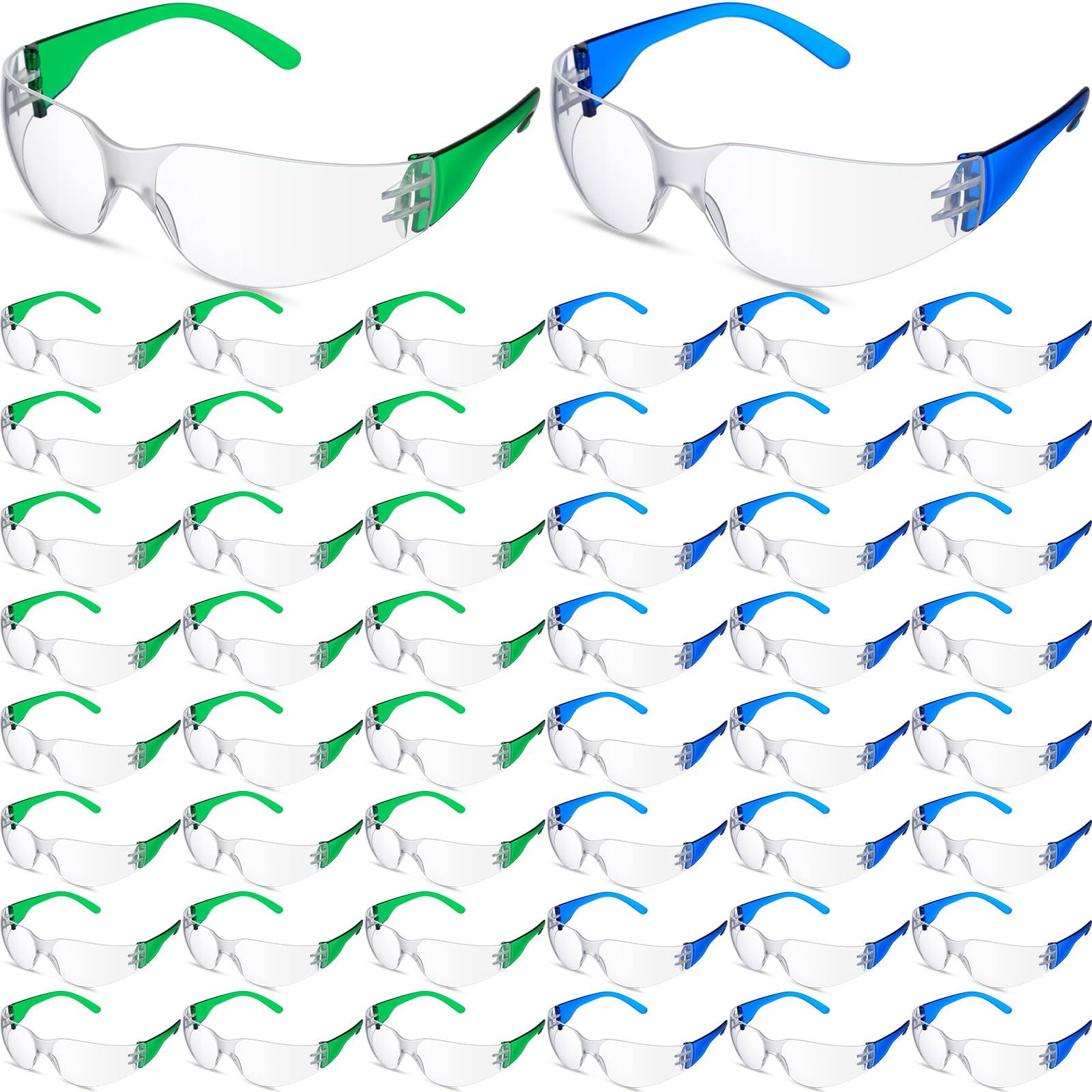
The Kanayu protective safety glasses are not for everyday fashion or screen use — they are a dedicated safety goggle designed for school science labs, woodworking projects, outdoor yard work, and any scenario where debris or chemical splash is a risk. The lenses are scratch and impact resistant, built to withstand a decent amount of force without cracking. The wraparound design provides side coverage that standard frames cannot match, protecting the periphery of the eye.
The frame is one-piece molded plastic with no hinges, which means there is nothing to break or bend out of alignment. The temple arms are adjustable in length, allowing the goggle to fit a range of head sizes from younger children to preteens. The strap-style version offers even more secure tension for high-motion activities. Ventilation channels along the top of the frame reduce fogging, which is a common complaint with fully sealed safety glasses.
These are sold in bulk quantities, making them a practical choice for classrooms, scouting groups, or parents who want spares for different activities. They are not appropriate for daily prescription wear because the lens curvature cannot easily accommodate custom corrective lenses. If your child needs eye protection for a specific task, this is the most durable option available, but it is not a replacement for their regular glasses.
Why it’s great
- Impact-resistant lens with side protection
- Hingeless one-piece frame eliminates breakage points
- Adjustable temple length fits various head sizes
Good to know
- Not designed for prescription or daily vision wear
- Wraparound style can feel bulky for extended use
7. Oleitodh Kids Translucent Sunglasses Bulk

The Oleitodh Translucent Sunglasses Bulk pack delivers 40 pairs of UV400-rated sunglasses in neon translucent colors, designed specifically for party favors, goody bags, classroom events, and outdoor group activities for children ages 3 to 8. Each pair offers full UV protection, which is essential for outdoor events where children will be exposed to direct sunlight for extended periods. The translucent frames come in a variety of bright colors that kids generally love.
The build quality is appropriate for the intended use case — these are lightweight, single-piece molded frames without adjustable nose pads or spring hinges. They are intended for occasional wear during events and not for daily use or rough play. The UV400 rating is legitimately verified in customer feedback, so parents can trust that the lenses are blocking harmful UVA and UVB rays rather than just tinting the view.
The limitation is obvious: these are not built to last beyond a few uses. The plastic arms are thin and prone to snapping if a child sits on them or shoves them into a crowded backpack. They also lack any blue-light blocking capability, so they are strictly outdoor sunglasses. For their intended party-and-playground role, the sheer value of a 40-pack with genuine UV protection makes them a no-brainer for group scenarios, but they are not a substitute for a single durable pair of daily glasses.
Why it’s great
- Genuine UV400 protection at a bulk price point
- 40 pairs cover a whole class or party group
- Fun neon translucent colors kids enjoy
Good to know
- Thin arms are not built for daily rough use
- No blue-light blocking or scratch-resistant coating
FAQ
Can I get prescription lenses fitted into non-prescription kids frames like the Spectra479?
What is the difference between UV400 and blue light blocking for children?
How often should I replace my child’s glasses as they grow?
Final Thoughts: The Verdict
For most users, the best kids glasses winner is the Ray-Ban Ry1531 because it combines proven build quality, spring hinges, adjustable nose pads, and true prescription readiness in a frame that survives daily school life. If you want dedicated screen-time protection with a lightweight fit and included case, grab the Spectra479. And for a sporty fit that stays locked during active play without sliding, nothing beats the Oakley Crosslink XS.