Every pivot, grapevine, and side-step in a Jazzercise class tests your shoe’s ability to grip the floor without locking your foot in place. A shoe designed for forward jogging or weightlifting forces your ankles to overcompensate during lateral movements, sapping energy and risking discomfort. The right shoe, by contrast, delivers a low-to-the-ground feel with a tread pattern that lets you slide on command and stop on a dime.
I’m Emma — the founder and writer behind Baby Bangs. I’ve spent years researching the biomechanics of dance-fitness footwear, analyzing outsole rubber compounds, midsole stack heights, and heel-to-toe drops to find which designs actually support multi-directional movement rather than fighting it.
A shoe built for Jazzercise needs a pivot point under the ball of the foot, a flexible forefoot, and enough lateral support to handle rapid direction changes without rolling an ankle. This guide breaks down the seven best options on the market today to help you find the pair that keeps you moving through every routine. I’m here to walk you through the best jazzercise shoes that actually deliver on all those promises.
How To Choose The Best Jazzercise Shoes
Jazzercise blends aerobics, dance, and strength training in one session. Your footwear needs to handle lateral slides, vertical jumps, and standing lunges without compromise. Here are the three specs that define a great Jazzercise shoe.
Outsole Tread and Pivot Point
The outsole is the single most important feature for a Jazzercise shoe. Look for a divided tread pattern or a circular pivot point under the ball of the foot. This allows your front foot to rotate freely during turns and grapevines while the heel stays planted. A solid, continuous tread pattern used in running shoes will fight your pivots and cause your foot to drag.
Midsole Cushioning and Stability
Too much cushioning makes you unstable during lateral movements and reduces ground feel. Too little cushioning leaves you sore after jump sequences. Aim for a mid-range stack height around 18–22 mm in the heel and a firm foam compound that doesn’t compress unevenly under side loads. A wider heel base adds stability during landing.
Forefoot Flexibility and Heel Security
A Jazzercise shoe must bend easily at the forefoot to allow toe-off during leaps and kicks. Rigid soles block natural foot motion and cause fatigue. At the same time, the heel counter should grip your heel snugly to prevent slipping when you change direction quickly. Combined, these two features keep your foot locked down but free to move at the front.
Quick Comparison
On smaller screens, swipe sideways to see the full table.
| Model | Category | Best For | Key Spec | Amazon |
|---|---|---|---|---|
| ZUMBA Air Stomp Remix II | Dance Fitness | High-impact aerobics | Arch support + impact-absorbing outsole | Amazon |
| Capezio Canvas Dance Sneaker | Dance | Precision footwork | Split-sole design for forefoot flexibility | Amazon |
| Ryka Candor | Cross Training | Multi-directional stability | Lateral support rails on midsole | Amazon |
| ZUMBA Air Stomp Classic 2.0 | Dance Fitness | Breathability and shock resistance | Non-slip sole + mesh upper | Amazon |
| Ryka Influence Cross Trainer | Cross Training | Budget-friendly versatility | Action rubber outsole for grip | Amazon |
| Bloch Women’s Omnia Shoe | Dance | Low-impact dance routines | Lightweight outsole with wedge heel | Amazon |
| Ryka Devotion XT 3 | Cross Training | Entry-level value | Flexible forefoot for pivots | Amazon |
In‑Depth Reviews
1. ZUMBA Shoes for Women, Air Stomp Remix II
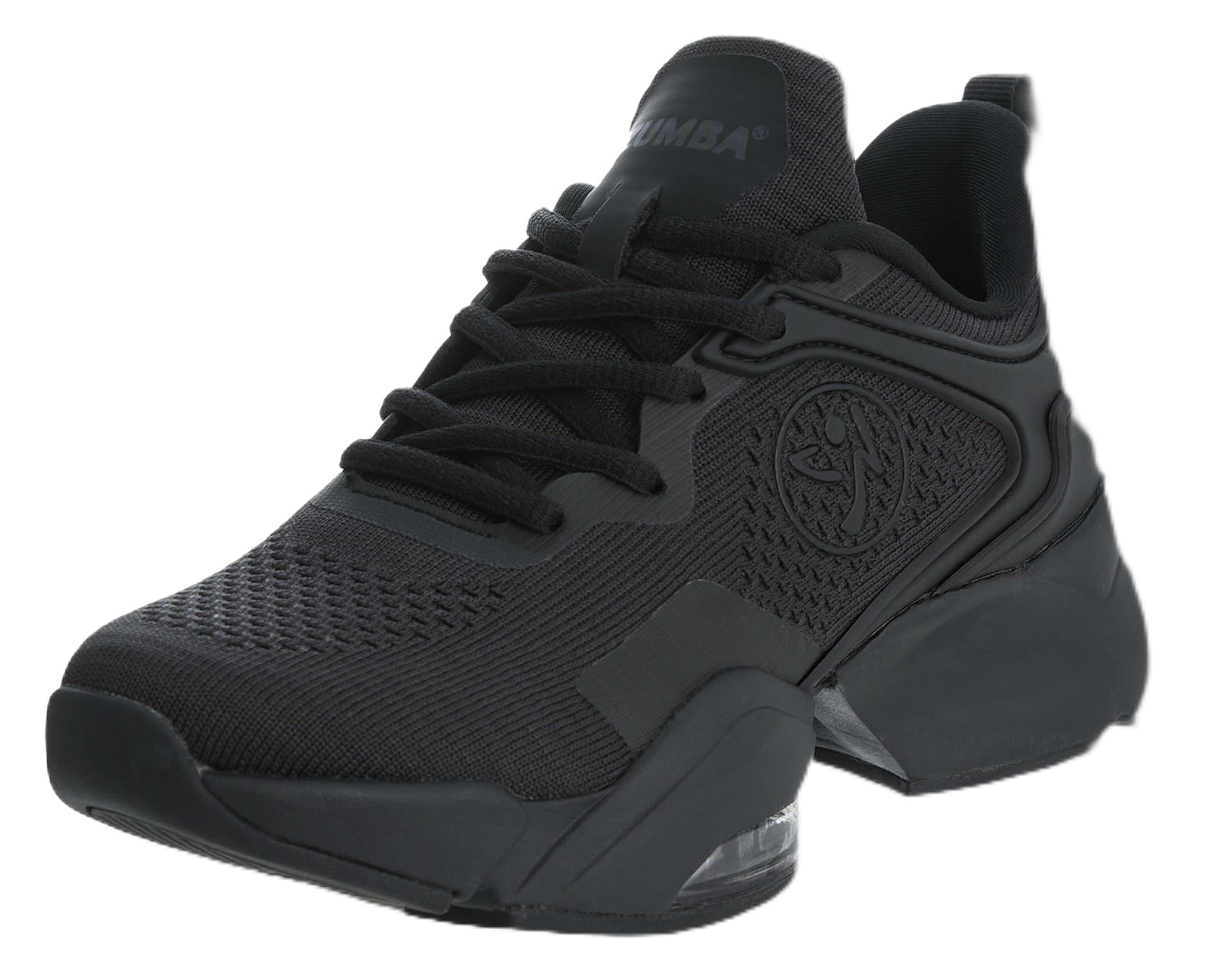
The ZUMBA Air Stomp Remix II is engineered specifically for dance fitness, not borrowed from running or training. The mesh upper is highly breathable, and the sole uses a multi-directional tread that gives you grip on lateral slides without locking you in place during pivots. The arch support is more pronounced than other dance shoes, which helps during extended standing work and lunges.
This shoe uses a foam insole with enhanced cushioning under the heel and forefoot, allowing you to absorb the shock of jump sequences without feeling the floor through the sole. The heel counter is firm and holds the foot securely, reducing the likelihood of heel slip during rapid kick routines. The lace-up system allows a custom fit through the midfoot, which is useful for narrow to medium feet.
One notable detail is the rubber outsole wrap at the toe, which protects the shoe during floor work and adds durability in the most abrasion-prone zone. The shoe runs true to size for most wearers, and the weight is light enough that you don’t feel dragged down during fast footwork. For a premium build that aims squarely at dance aerobics, this is the most complete package.
Why it’s great
- Excellent arch support for long classes
- Multi-directional tread handles slides and pivots
- Shock-resistant cushioning reduces joint fatigue
Good to know
- Heel cup may feel snug for wide feet
- Premium tier price point
2. Capezio Canvas Dance Sneaker

Capezio is a household name in dance footwear, and the Canvas Dance Sneaker brings that heritage to the studio. The defining feature here is the split-sole construction, which separates the forefoot sole from the heel sole. This creates a natural pivot point between the two sections, letting you turn and spin with much less resistance than a one-piece sole shoe.
The canvas upper is lightweight and conforms to the foot after a few wears, though it offers less structural lateral support than a synthetic mesh shoe. The block heel provides a stable base for landing jumps, and the closed-toe design protects your toes during floor work like lunges and knee drops. The lace-up closure allows reasonably precise fit adjustment across the instep.
Because the shoe is designed with dance in mind, the outsole is smooth enough to slide on wooden or vinyl studio floors without grabbing. This makes it excellent for choreography that requires foot glide, but less ideal for routines with heavy running or lateral sprinting where you need more traction. It works best for low-to-moderate impact Jazzercise sessions focused on footwork.
Why it’s great
- Split sole allows effortless pivots
- Lightweight canvas breathes well
- Trusted dance brand construction
Good to know
- Minimal lateral support for wide feet
- Outsole less grippy on high-traction floors
3. Ryka Candor
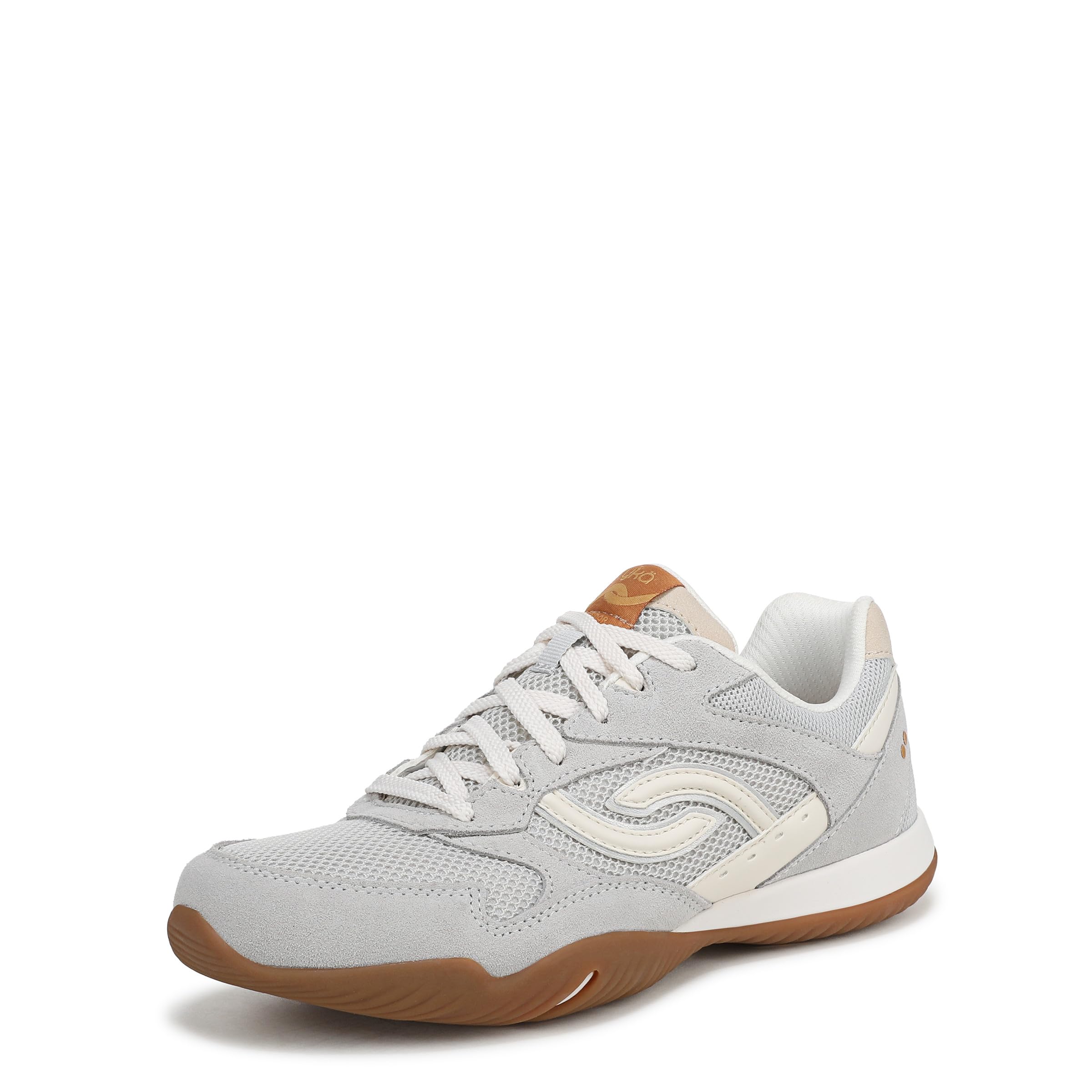
Ryka designs exclusively for women’s feet, and the Candor model carries that ergonomic focus into a cross-training silhouette. The midsole features visible lateral support rails that extend along the outside edge, resisting the inward roll that often happens during grapevine steps or side shuffles. This makes the Candor one of the more stable options on this list for multidirectional movement.
The outsole uses a dense rubber compound with a directional tread that provides good grip during forward motion and controlled release during pivots. The stack height is moderate, offering enough cushioning for jump landings without sacrificing the ground feel needed for balance-based moves. The heel-to-toe drop sits around 8 mm, which keeps your weight centered for lateral work rather than pitched forward.
The upper combines mesh with synthetic overlays that add structure without adding weight. The toe box is slightly wider than the ZUMBA models, accommodating feet that need more splay room. For Jazzercise classes that mix high-impact cardio with strength intervals, the Candor delivers a reassuring platform without feeling clunky.
Why it’s great
- Lateral support rails improve stability
- Balanced cushioning for mixed-impact workouts
- Wider toe box accommodates splay
Good to know
- Not as flexible in forefoot as dance-specific shoes
- Mid-range price
4. ZUMBA Shoes for Women – Air Stomp Classic 2.0
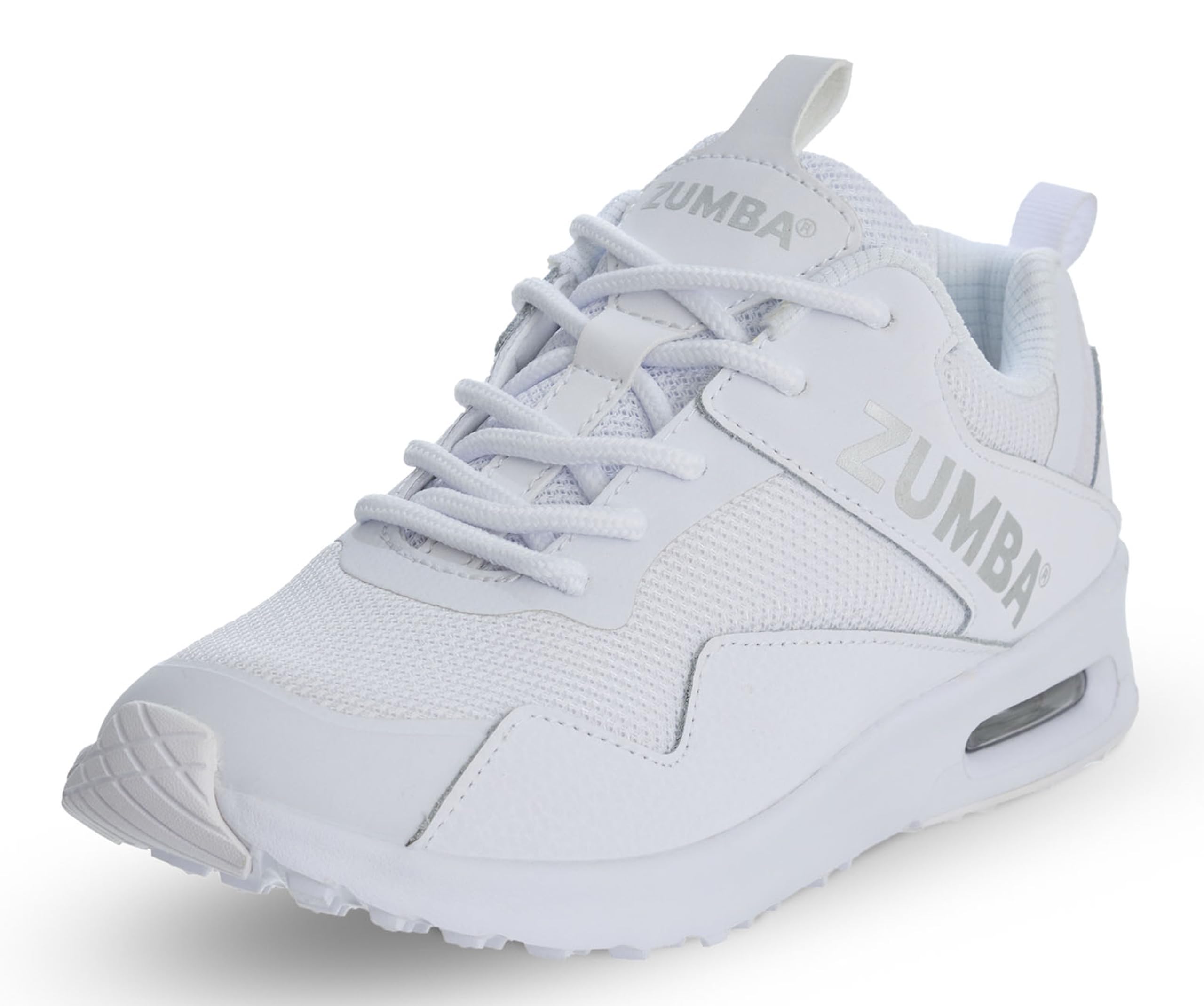
The Air Stomp Classic 2.0 is the less cushioned sibling of the Remix II, focusing on breathability and floor feel. The shoe uses a full mesh upper that vents heat rapidly, which is a noticeable advantage during back-to-back class sessions where your feet can overheat in synthetic trainers. The non-slip outsole uses a wave pattern that grips studio floors well during lateral slides.
The foam insole is removable, which allows you to swap in custom orthotics if needed. The flat heel and minimal heel-to-toe drop keep your foot in a natural position for dance moves, and the closed-toe design offers toe protection during floor-based exercises. The shoe is water-repellent treated, adding a layer of protection against spills or sweat absorption.
One trade-off is that the classic 2.0 offers less impact absorption than the Remix II, so if your Jazzercise class involves a high volume of jumping jacks or plyometric moves, you may feel the landing more acutely in the knees. The lace-up system with a midfoot strap helps secure the fit, though the shoe runs slightly narrow for wider foot shapes.
Why it’s great
- Highly breathable mesh upper
- Removable insole for orthotics
- Water-repellent finish
Good to know
- Less shock absorption for high-impact routines
- Runs slightly narrow
5. Ryka Women’s Influence Cross Trainer

The Ryka Influence Cross Trainer has been a staple in gyms for years, and its durable action rubber outsole provides dependable grip across multiple surfaces. The shoe is designed for general studio work, making it a versatile choice if your Jazzercise class also includes occasional treadmill or floor-strength components. The cushioning is generous for a cross trainer, sitting at the softer end of the spectrum.
The upper blends mesh and synthetic leather for a balance of breathability and structure. The heel counter is reinforced to prevent slip, and the lace system includes a third eyelet that lets you lock the heel down further for lateral movements. The shoe weighs around 1.6 pounds per pair, which is on the lighter side for a full-coverage trainer, reducing fatigue during fast footwork.
One concern for dedicated Jazzercise use is that the outsole lacks a distinct pivot point, meaning you may feel some resistance during spins and grapevine turns. The shoe works best for routines that emphasize linear movement or standing choreography rather than rapid directional changes. As a budget-friendly entry into dance-fitness footwear, however, it delivers solid value.
Why it’s great
- Durable action rubber outsole
- Good cushioning for mixed-impact workouts
- Lightweight construction
Good to know
- No dedicated pivot point for turns
- Best for linear movement routines
6. Bloch Women’s Omnia Shoe

Bloch’s Omnia Shoe brings a dancer’s approach to fitness footwear with a lightweight outsole and a subtle wedge heel that shifts weight slightly forward onto the ball of the foot — a posture that helps with balance during turns and relevés. The outsole uses a smooth, non-marking rubber that glides well on studio floors without leaving scuffs. The toe bumper is reinforced to protect against wear during floor stretches.
The upper is constructed from a textile-synthetic blend with reinforced lacing that distributes tension evenly across the instep. The double-knitted toe bumper adds structure to the front of the shoe, which helps during lunges and knee-down positions. The shoe runs true to size and the closure is a traditional lace-up system that allows a snug midfoot fit.
The Omnia is best suited for Jazzercise classes that lean toward the dance-choreography and low-impact side of the spectrum. The wedge heel can feel less stable during lateral sprinting or aggressive jump landings, and the outsole offers less traction than a dedicated training shoe. For dancers looking for a crossover option, however, the Omnia delivers familiar foot handling.
Why it’s great
- Lightweight outsole for easy footwork
- Smooth glide on studio floors
- Reinforced toe bumper for floor work
Good to know
- Wedge heel less stable for high-impact cardio
- Low traction outsole on certain surfaces
7. Ryka Devotion XT 3
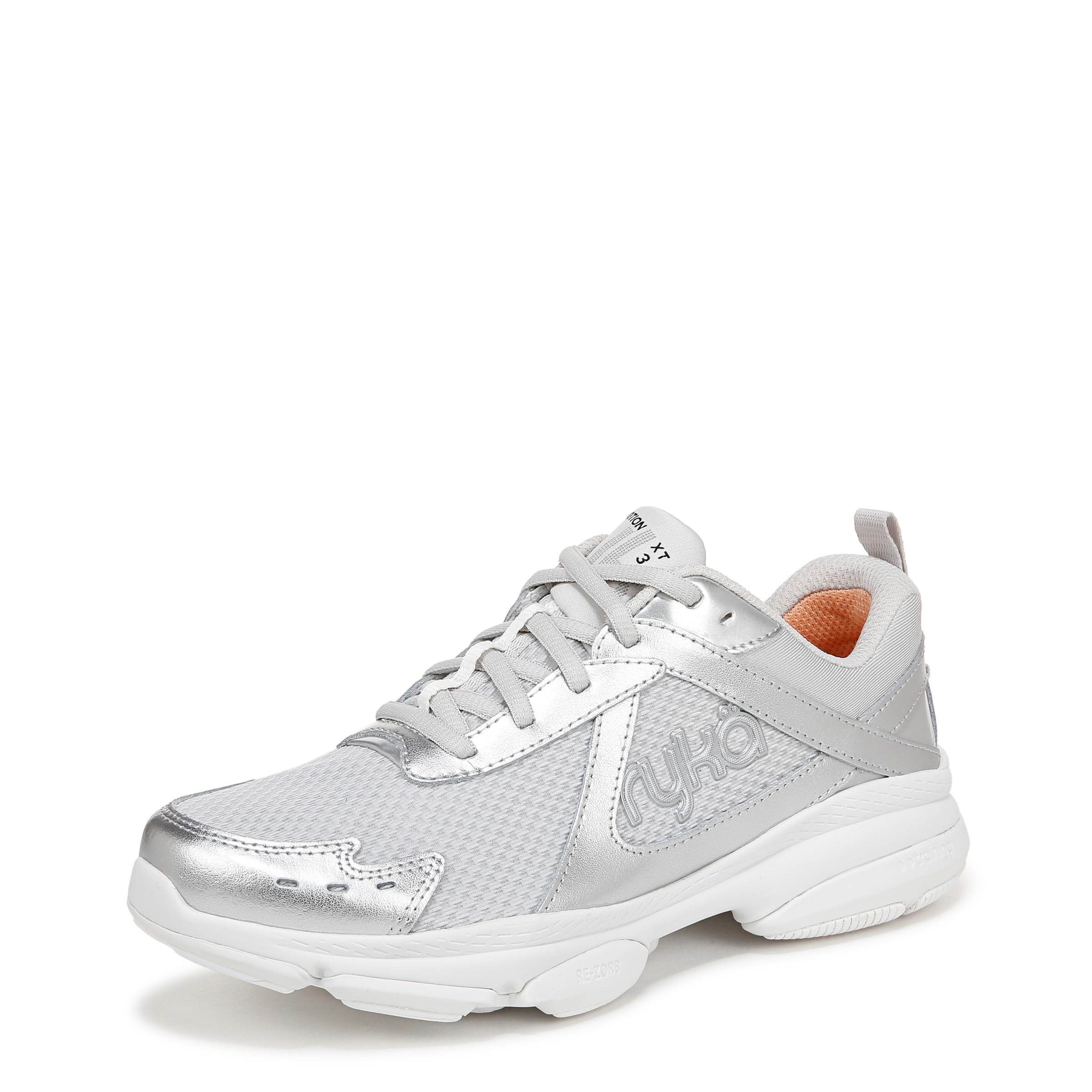
The Ryka Devotion XT 3 is the most accessible entry point into dance-fitness footwear. Its defining feature is a flexible forefoot that bends easily during toe-off and kicks, mimicking the natural motion of dance. The shoe uses a synthetic upper with perforated panels for airflow, keeping feet cooler than solid mesh alternatives during warm-up and cooldown phases.
The midsole offers basic cushioning that handles light-impact routines but compresses noticeably under repeated jump landings. The outsole is constructed with a diamond-shaped tread pattern that provides moderate grip without a dedicated pivot point. For beginners or occasional class attendees, this trade-off works well. The shoe is lightweight and won’t feel cumbersome during slower-paced choreography.
The fit is true to size with a standard width accommodating most foot shapes. The heel counter is padded but lacks the rigid structure of premium models, so some heel slip may occur during fast lateral movements. The Devotion XT 3 is a solid starting shoe for someone testing out Jazzercise before committing to a higher price point.
Why it’s great
- Flexible forefoot supports natural toe-off
- Very lightweight and easy to wear
- Budget-friendly entry point
Good to know
- Cushioning compresses under high-impact routines
- Heel slip possible during fast lateral moves
FAQ
Can I wear regular running shoes for Jazzercise?
How often should I replace my Jazzercise shoes?
What is the ideal outsole pattern for dance aerobics?
Final Thoughts: The Verdict
For most users, the best jazzercise shoes winner is the ZUMBA Air Stomp Remix II because it combines arch support, impact absorption, and a multi-directional tread pattern that handles both pivots and slides without compromise. If you want a split-sole design for effortless turning and precise footwork, grab the Capezio Canvas Dance Sneaker. And for a high-stability platform that excels during mixed-impact routines with strength intervals, nothing beats the Ryka Candor.