Every time your foot lands, your arch collapses inward, throwing your entire kinetic chain into chaos. That’s the reality of jogging with flat feet — a ride that turns every mile into a battle against overpronation, shin splints, and knee strain unless you have a shoe built to counter that collapse.
I’m Emma — the founder and writer behind Baby Bangs. I’ve spent years analyzing the biomechanics of flat-footed runners, dissecting medial posts, density maps, and lasting stability foams to separate the shoes that actually correct gait from those that just feel squishy in the store.
After reviewing dozens of options in the most competitive stability running segment, I’ve narrowed the field to the nine pairs that truly deliver. Whether you need a rigid guide rail or a denser foam ramp, this deep-dive on the best jogging shoes for flat feet will match your arch to the right platform.
How To Choose The Perfect Flat-Foot Jogger
Flat feet don’t just mean you lack an arch when standing — they mean the entire foot rolls inward during the gait cycle, forcing your knee and hip to compensate. The right jogging shoe does two things: it blocks that excessive pronation and it provides a dense, supportive platform that doesn’t collapse under load. Here’s what to check before you buy.
Guide Rails vs. Medial Posts
Traditional stability shoes use a firm piece of foam (the medial post) on the inner side of the midsole to resist arch collapse. Newer systems like Brooks’ GuideRails use a firmer foam ramp that extends from heel to toe without a hard, discrete post. For flat-footed joggers who need structure from the first step, guide rails tend to feel smoother over a long run, while posts offer a more aggressive correction for severe overpronation.
Foam Density & Midsole Thickness
A plush, high-stack foam feels luxurious in the store but offers zero pronation control for flat arches. Look for a dual-density midsole where the inner layer is noticeably firmer than the outer foam. This gives you the softness at the lateral edge and the rigidity under your arch that stops the foot from rolling past neutral.
Heel-to-Toe Drop
Flat-footed runners often benefit from a moderate drop of 8mm to 12mm. This slight forward tilt shifts your weight onto the forefoot and reduces the lever arm that collapses the arch during heel strike. Lower drops (4mm or below) put more strain on the Achilles and the arch itself, which can trigger plantar fasciitis in flat-footed joggers.
Quick Comparison
On smaller screens, swipe sideways to see the full table.
| Model | Category | Best For | Key Spec | Amazon |
|---|---|---|---|---|
| ASICS Gel-Kayano 31 | Premium | Severe overpronation | PureGEL + 4D Guidance System | Amazon |
| Brooks Adrenaline GTS 23 | Premium | Moderate to severe pronation | GuideRails holistic support | Amazon |
| Brooks Glycerin 23 | Premium | Plush comfort with light stability | DNA LOFT v3 cushioning | Amazon |
| Saucony Hurricane 24 | Premium | Long-distance stability | PWRRUN PB + Center Path Technology | Amazon |
| ASICS Gel-Kayano 32 (Women’s) | Mid-Range | Women’s arch geometry | FF BLAST PLUS ECO + PureGEL | Amazon |
| Mizuno Wave Sky 8 | Mid-Range | Smooth heel-toe transition | Mizuno Wave plate + Enerzy foam | Amazon |
| Saucony Guide 18 | Mid-Range | Reliable cushioning entry | PWRRUN + Center Path Technology | Amazon |
| New Balance Fresh Foam X 860 V14 | Mid-Range | Everyday jogging comfort | Fresh Foam X + medial post | Amazon |
| ASICS GT-1000 14 | Budget | Entry-level stability | LITETRUSS + AHAR outsole | Amazon |
In‑Depth Reviews
1. ASICS Mens Gel-Kayano 31
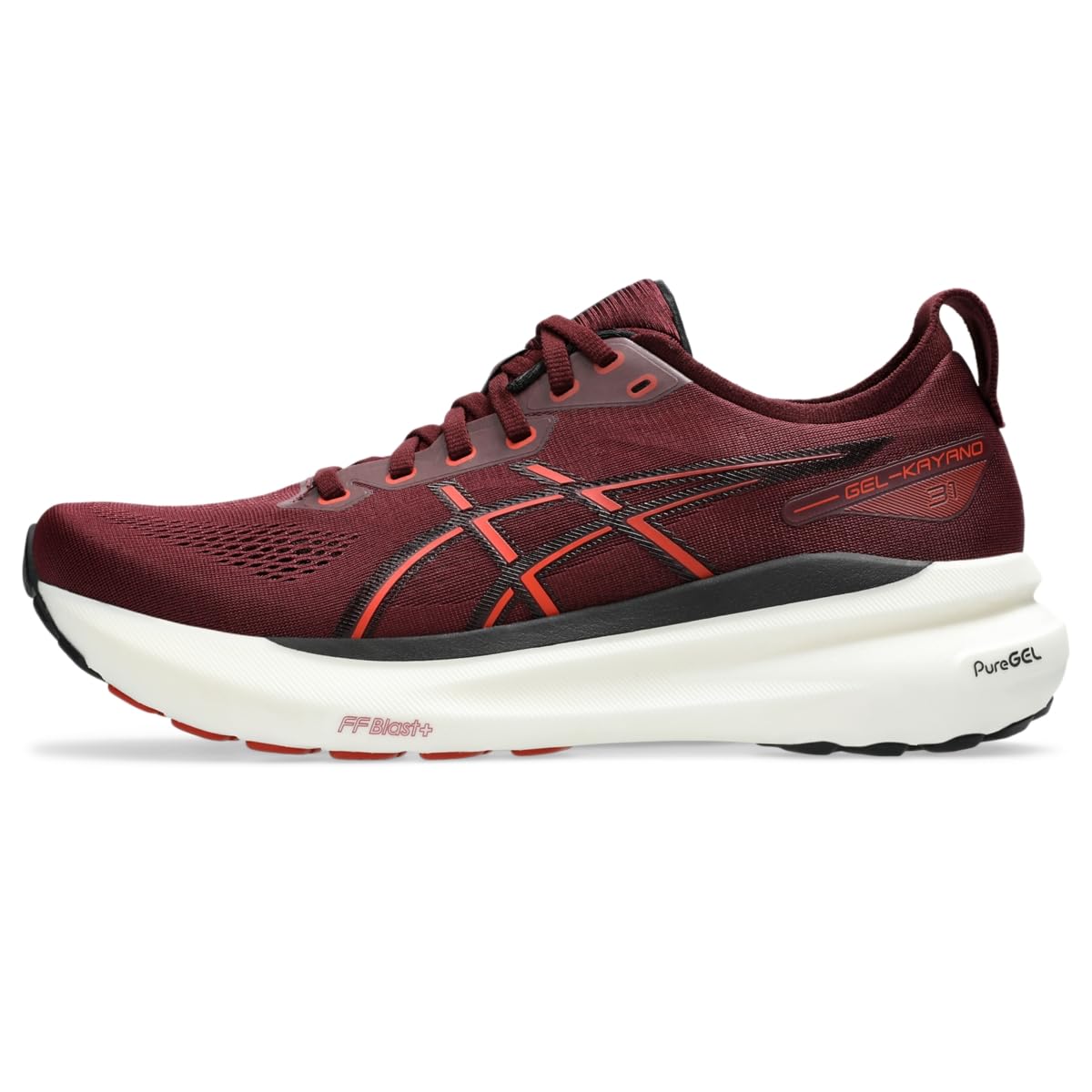
The Gel-Kayano 31 is ASICS’ most complete stability package for flat-footed joggers. Its 4D Guidance System uses a dynamic density ramp that stiffens under the arch during heel strike and softens at toe-off, so you get correction that adapts to your stride rather than a rigid block that fights you mile after mile.
PureGEL inserts in the heel and forefoot absorb impact without adding the mushy sink that makes flat arches work harder to stabilize. Combined with FF BLAST PLUS ECO foam, this shoe delivers a responsive ride that doesn’t bottom out even at the 10-mile mark, a critical trait for heavier runners who need sustained support under load.
The engineered mesh upper breathes well and locks the midfoot without pressure points, but the toebox runs slightly narrow — runners with wide flat feet should consider the 2E or 4E options. The outsole uses AHAR rubber with deep flex grooves that grip asphalt and dry trails with equal confidence.
Why it’s great
- 4D Guidance adapts to your gait live
- PureGEL delivers impact absorption without mush
- FF BLAST PLUS ECO stays responsive over long miles
Good to know
- Toebox is snug for wide feet out of the box
- Premium price reflects the advanced tech stack
2. Brooks Men’s Adrenaline GTS 23 Supportive Running Shoe

The Adrenaline GTS 23 is the benchmark for guide-rail stability. Brooks’ GuideRails system extends up into the heel cradle and wraps the medial side, allowing the foam to do the correction rather than a hard medial post. Flat-footed joggers report feeling cradled rather than blocked.
DNA LOFT v2 foam is softer than the previous version but retains a firm inner density wedge that resists arch collapse without the harsh edge of older stability shoes. The 12mm drop is ideal for flat arches — it shifts your stance forward and reduces the torque on the posterior tibial tendon during heel strike.
The engineered mesh upper is breathable and structured, with a padded heel collar that prevents slip. Some runners note the shoe runs a half-size short, so ordering up is recommended. The outsole is segmented for smooth transitions and holds up well on pavement over several hundred miles.
Why it’s great
- GuideRails cradle the foot without a hard post
- 12mm drop eases pressure on flat arches
- DNA LOFT v2 blends softness with medial density
Good to know
- Runs short — size up half a size
- Moderate stability suits daily jogging better than racing
3. Brooks Men’s Glycerin 23 Neutral Running Shoe
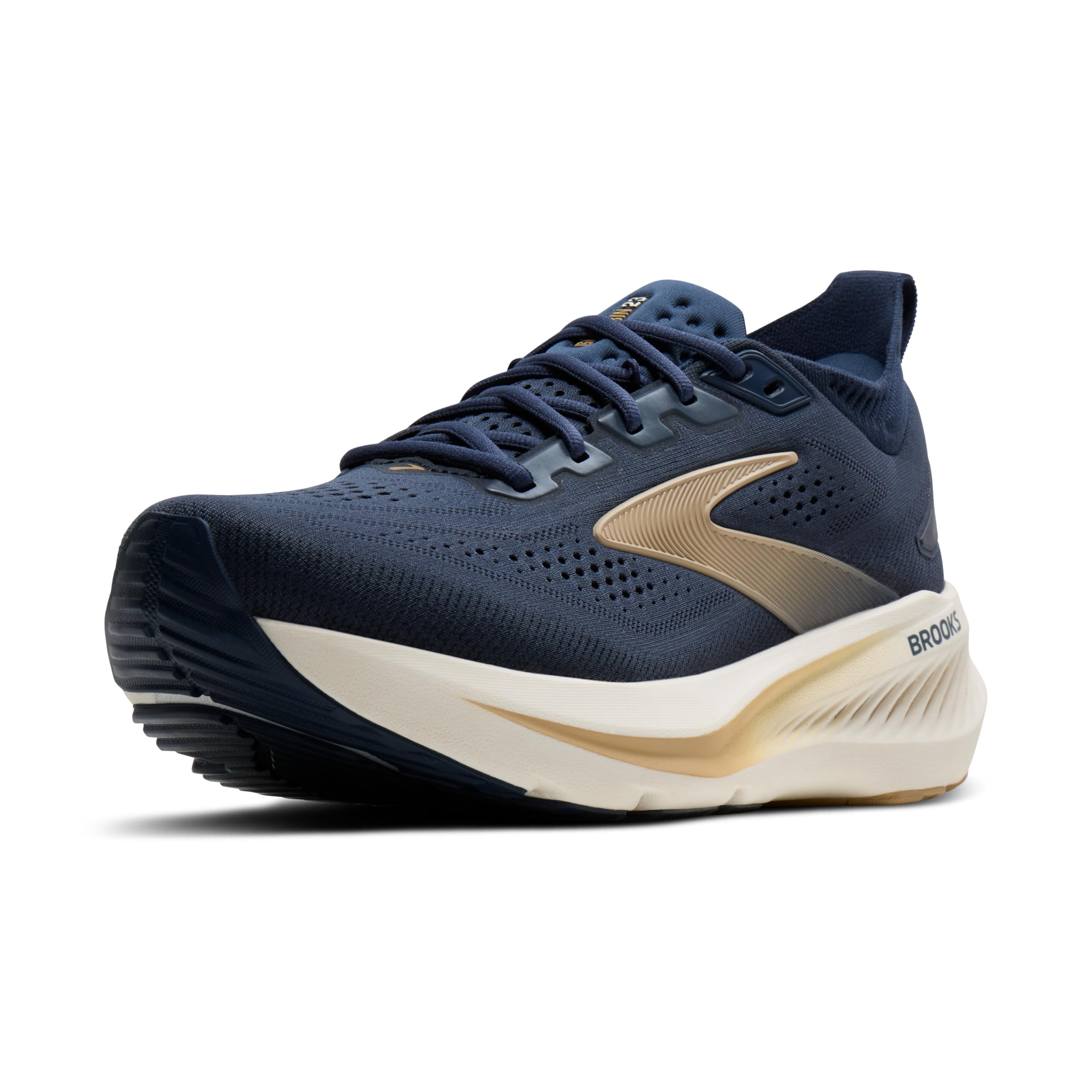
The Glycerin 23 is a neutral shoe, but it earns a spot on this list for flat-footed joggers who have only mild pronation and prioritize maximum cushion over rigid correction. DNA LOFT v3 foam is the softest in Brooks’ lineup — a nitrogen-infused compound that offers a cloud-like landing without sacrificing the durability needed for daily training.
For flat arches that don’t collapse severely, the Glycerin’s wide base and generous foam volume provide enough inherent stability to keep the foot aligned. The 10mm drop is moderate and works well with a forefoot or midfoot strike when your arch is naturally weak.
The upper is plush with a padded tongue and collar that eliminate lace bite, but the true sell is the ride itself — it absorbs shock so completely that shin splint sufferers find immediate relief. The trade-off is weight: this is not a lightweight trainer, and the soft foam lacks the snap for faster intervals.
Why it’s great
- Nitrogen-infused DNA LOFT v3 is supremely soft
- Wide base offers passive stability for mild pronators
- Plush upper eliminates hotspot irritation
Good to know
- Neutral — not enough structure for severe overpronation
- Heavier than stability counterparts
4. Saucony Men’s Hurricane 24 Sneaker
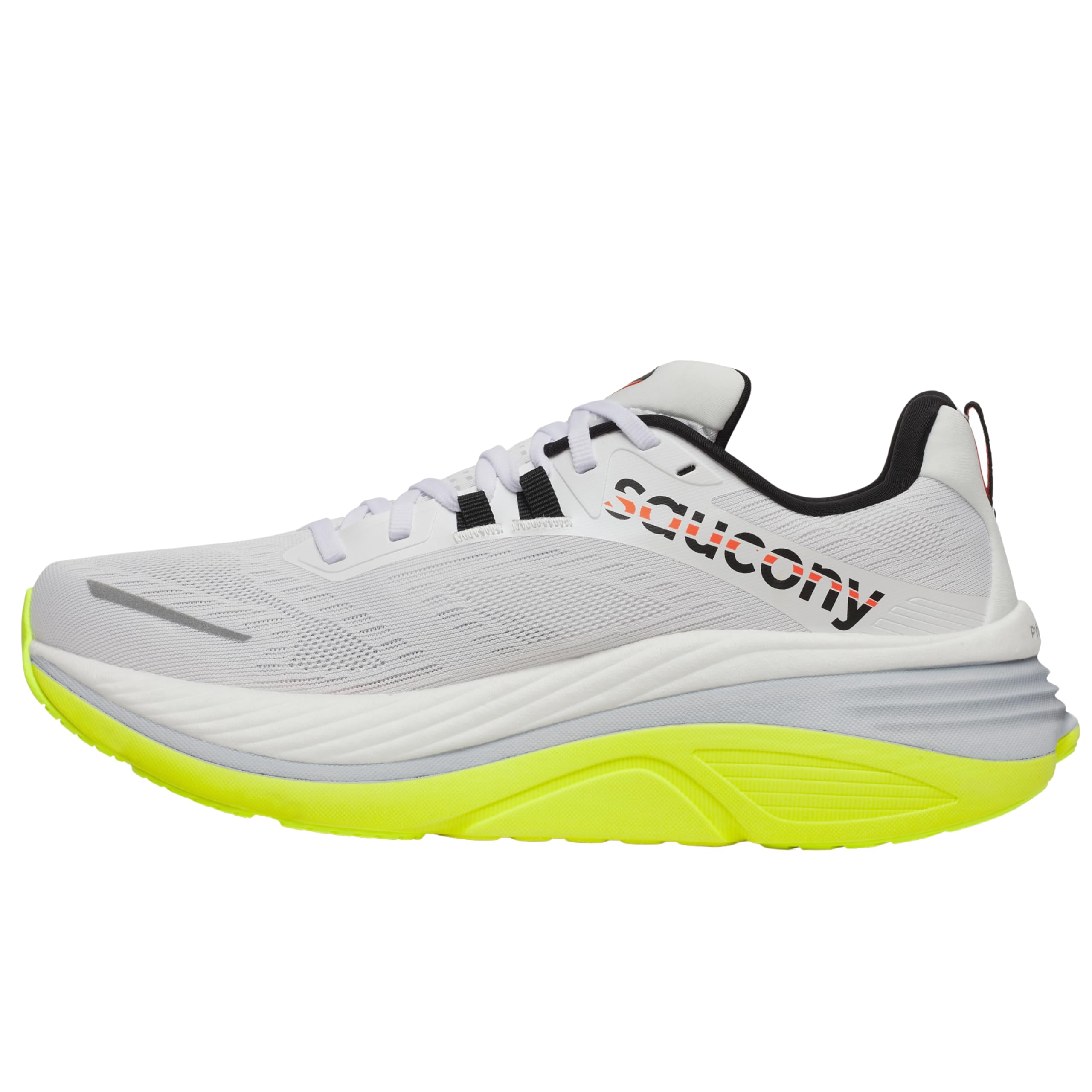
The Hurricane 24 is Saucony’s premium stability flagship, built for flat-footed runners who log serious weekly mileage. Its PWRRUN PB foam — a Pebax-based blend — is both lighter and more resilient than standard EVA, bouncing back stride after stride while Center Path Technology uses a wider medial shelf to keep your foot centered over the platform.
Unlike shoes that rely on a hard medial post, the Hurricane uses a full-length PWRRUN+ frame that is denser on the inner side and softer laterally. This creates a graduated transition that feels natural for moderate to severe overpronators who hate the clunky block sensation of traditional stability shoes.
The mesh upper is thin but supportive, with a structured heel counter that locks the rearfoot. At nearly 11 ounces, it’s not a speed-day shoe, but for easy long runs and recovery jogs where your arch needs unwavering support, the Hurricane 24 is the most durable stability shoe on this list.
Why it’s great
- PWRRUN PB foam is lightweight and highly resilient
- Center Path Technology creates a smooth stability curve
- Exceptional build durability for high-mileage training
Good to know
- Higher price reflects premium foam construction
- Weight makes it less suitable for tempo runs
5. ASICS Women’s Gel-Kayano 32 Running Shoes
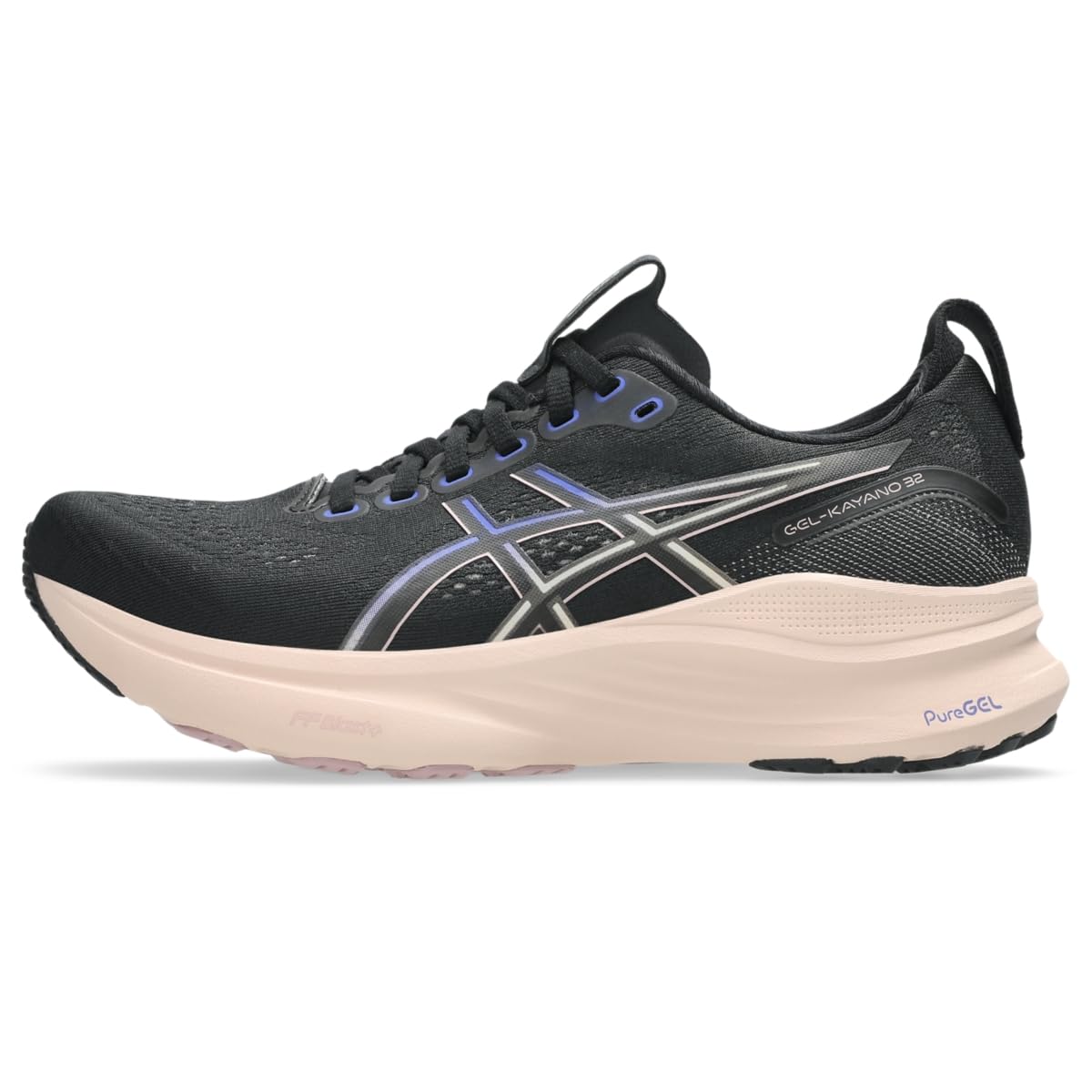
The women’s Kayano 32 is engineered specifically for the female foot geometry — narrower heel, higher instep, and a lower volume midfoot — which matters enormously for flat-footed women who often lose support in unisex or men’s lasts. FF BLAST PLUS ECO foam delivers a bouncy, responsive ride that maintains its density under the arch.
PureGEL units in the forefoot and heel absorb shock without the excess weight of traditional gel, while the 4D Guidance System adapts to pronation patterns specific to women’s lower limb alignment. The result is a shoe that corrects overpronation without feeling like it’s steering your foot.
The upper uses a soft, stretchy knit that wraps the foot securely, and the outsole features a women’s-specific flex groove pattern that accommodates a different push-off angle. Some flat-footed female runners note the arch feels high at first, but it settles after a short break-in period.
Why it’s great
- Women’s-specific last fits narrower heels and lower volume
- 4D Guidance adapts to female pronation biomechanics
- PureGEL provides impact protection without weight penalty
Good to know
- Arch support may feel aggressive before break-in
- Premium tier for a mid-range price point
6. Mizuno Men’s Wave Sky 8 Running Shoes
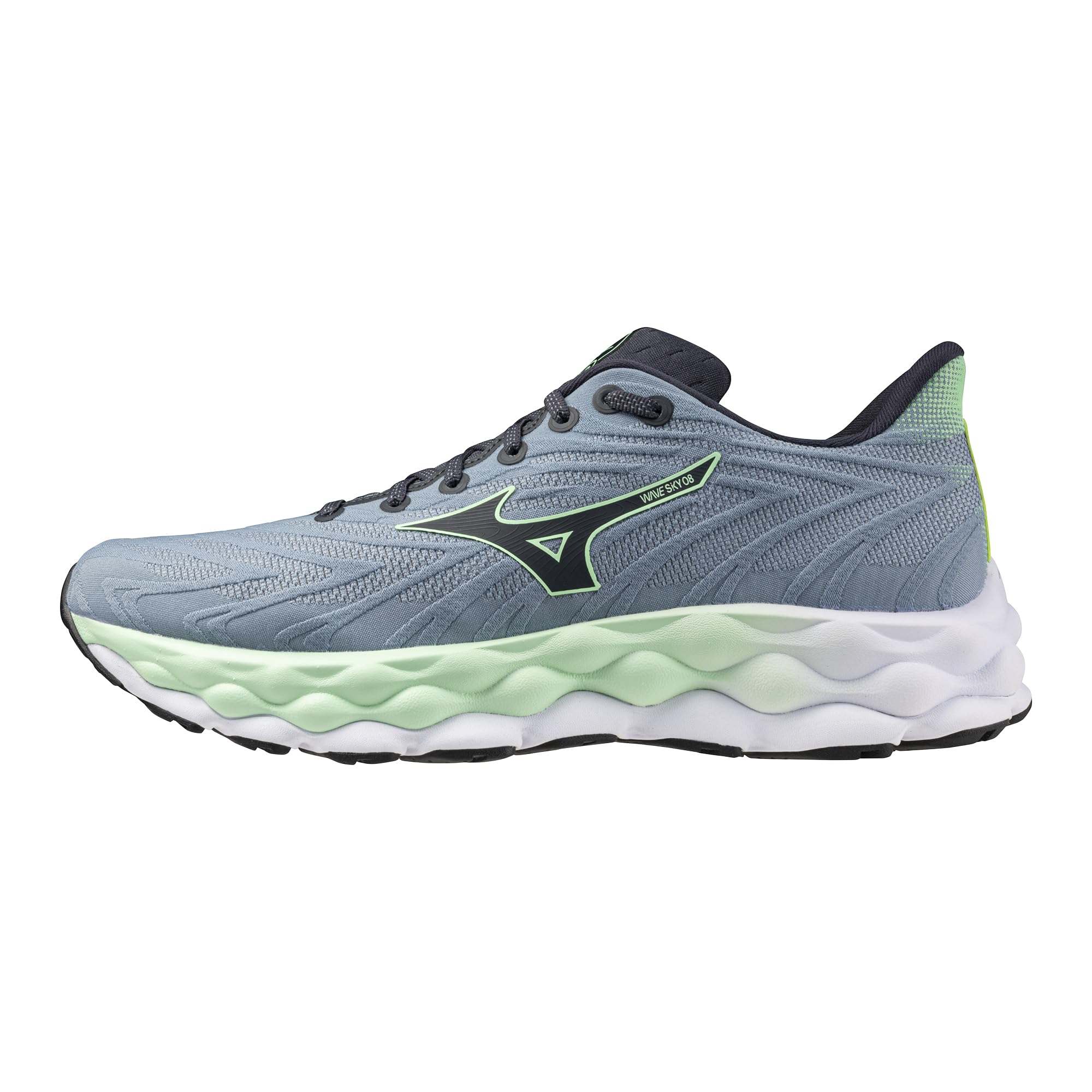
The Wave Sky 8 uses Mizuno’s signature Wave plate — a corrugated plastic insert that sits in the midsole and disperses impact across the full length of the shoe. For flat-footed joggers, this creates a smooth transition from heel to toe without the rigid break common in posted shoes.
Enerzy Core foam fills the center of the Wave plate, delivering a soft, energetic rebound that flat arches miss in traditional stability shoes. The combination of the plate and foam offers moderate pronation control — enough for mild to moderate overpronators who want a softer feel than the Kayano provides.
The upper is a knit mesh that offers good stretch in the forefoot, and the outsole uses X10 carbon rubber for durability on abrasive surfaces. The Wave plate does add a slight stiffness during the first few wears, but after a 10-mile break-in, the ride becomes the most fluid in this lineup.
Why it’s great
- Wave plate distributes impact for a smooth roll
- Enerzy Core foam provides springy rebound
- Fluid ride works well for mild to moderate pronation
Good to know
- Not enough structure for severe overpronation
- Wave plate requires break-in before feeling natural
7. Saucony Men’s Guide 18 Sneaker
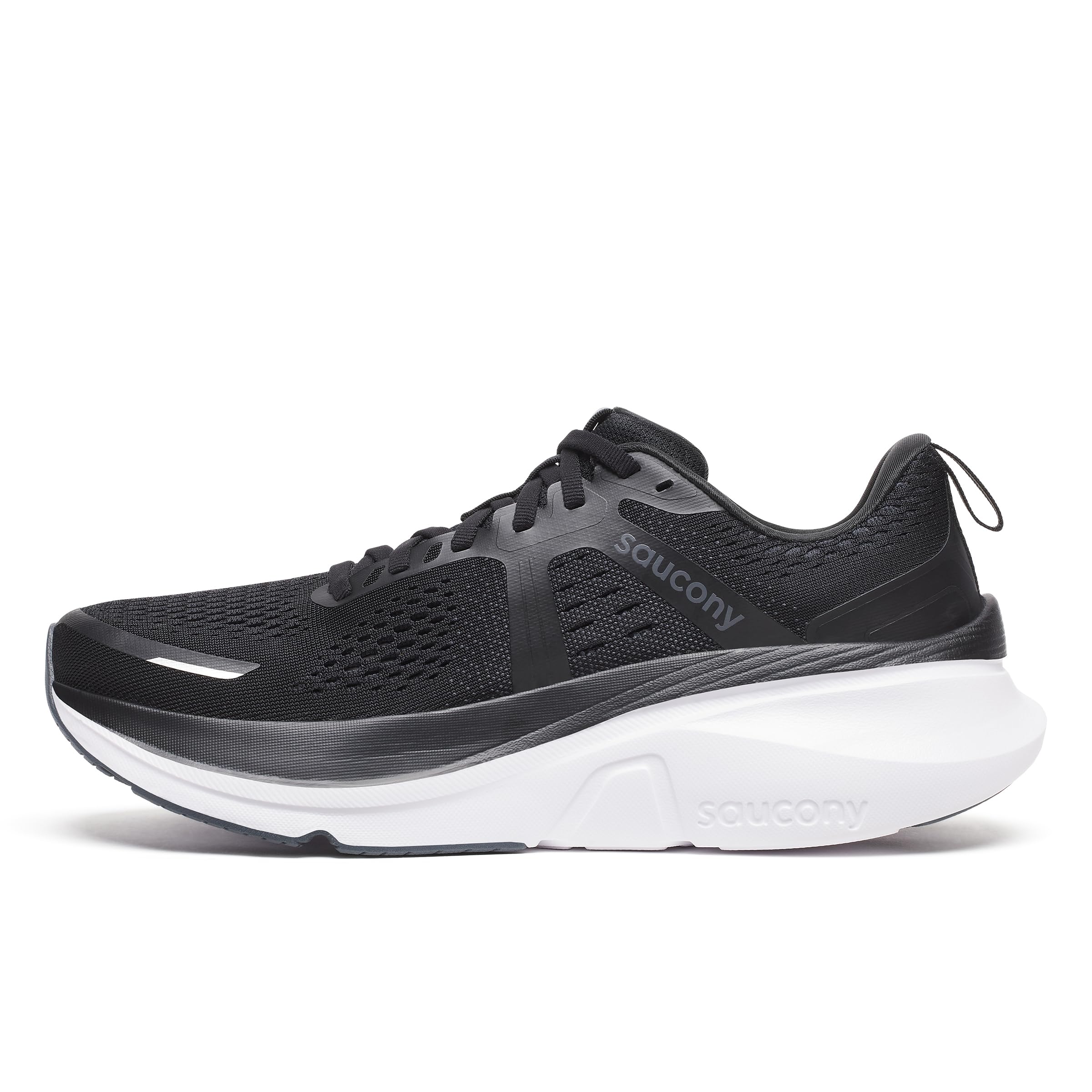
The Guide 18 is Saucony’s entry-level stability shoe, but it punches well above its price tier. Center Path Technology — the same medial shelf system used in the Hurricane — runs through the entire midsole, creating a wide, stable platform that resists arch collapse without the hard post feel of older budget stability shoes.
PWRRUN foam is firmer than the premium PWRRUN PB, but that firmness actually benefits flat-footed runners who need a dense base that doesn’t deform under load. The 8mm drop is the lowest in this review, which encourages a midfoot strike — ideal for flat arches because it reduces the ground-reaction torque that collapses the arch during heel strike.
The upper uses a ventilated mesh with a traditional lace closure that secures the midfoot easily. Runners with very wide feet report the toebox is accommodating. The outsole is a solid carbon rubber that holds up to daily pavement pounding without premature wear.
Why it’s great
- Center Path Technology delivers stability at a lower cost
- Firm PWRRUN foam resists deformation under flat arches
- 8mm drop promotes midfoot strike for pronation relief
Good to know
- Less cushioning than premium Saucony models
- Firm ride may feel harsh on long recovery jogs
8. New Balance Mens Fresh Foam X 860 V14
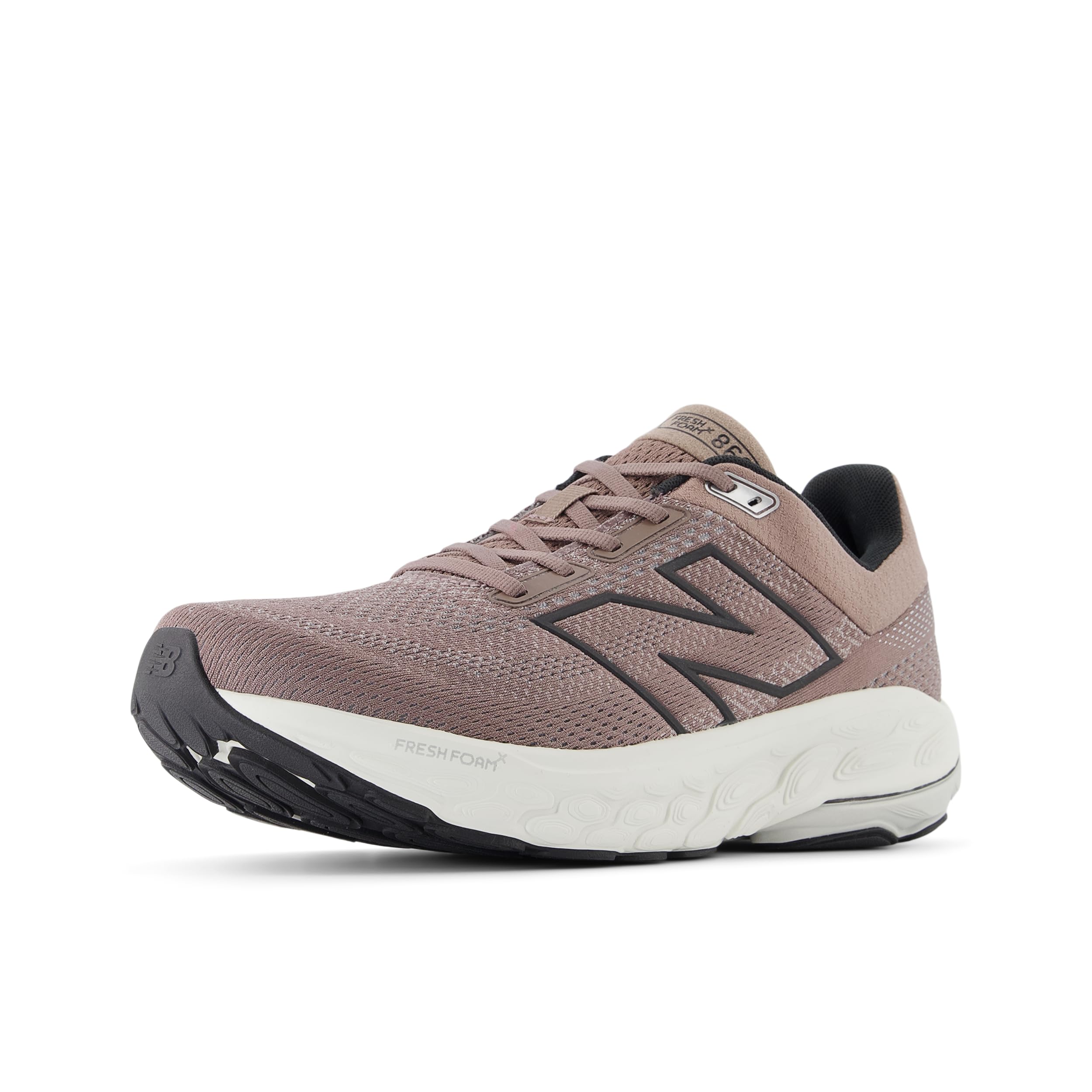
The 860 V14 is New Balance’s most consistent stability workhorse. Fresh Foam X is a plush, nitrogen-infused foam that feels softer than traditional EVA, but the shoe uses a discrete medial post — a firm piece of foam inserted under the arch — to prevent overpronation. This dual-density approach is ideal for flat-footed joggers who want a little give in the heel and a solid block inside.
The 10mm drop is a flat-foot-friendly sweet spot that reduces strain on the arch and Achilles. The upper features a bootie-style construction that hugs the midfoot without pressure points, and the heel counter is rigid enough to lock the rearfoot during fast toe-offs.
The outsole uses blown rubber in the forefoot for flexibility and a solid carbon rubber heel for durability. Some runners wish the arch post extended further forward into the forefoot, but for the mid-range price, the 860 V14 delivers reliable pronation control that beginners and experienced joggers alike can trust.
Why it’s great
- Fresh Foam X offers soft, nitrogen-infused cushion
- Discrete medial post provides reliable arch control
- 10mm drop is ideal for flat-footed biomechanics
Good to know
- Post doesn’t extend into forefoot for full-length support
- Bootie upper may feel snug for high-volume feet
9. ASICS Men’s GT-1000 14 Running Shoes
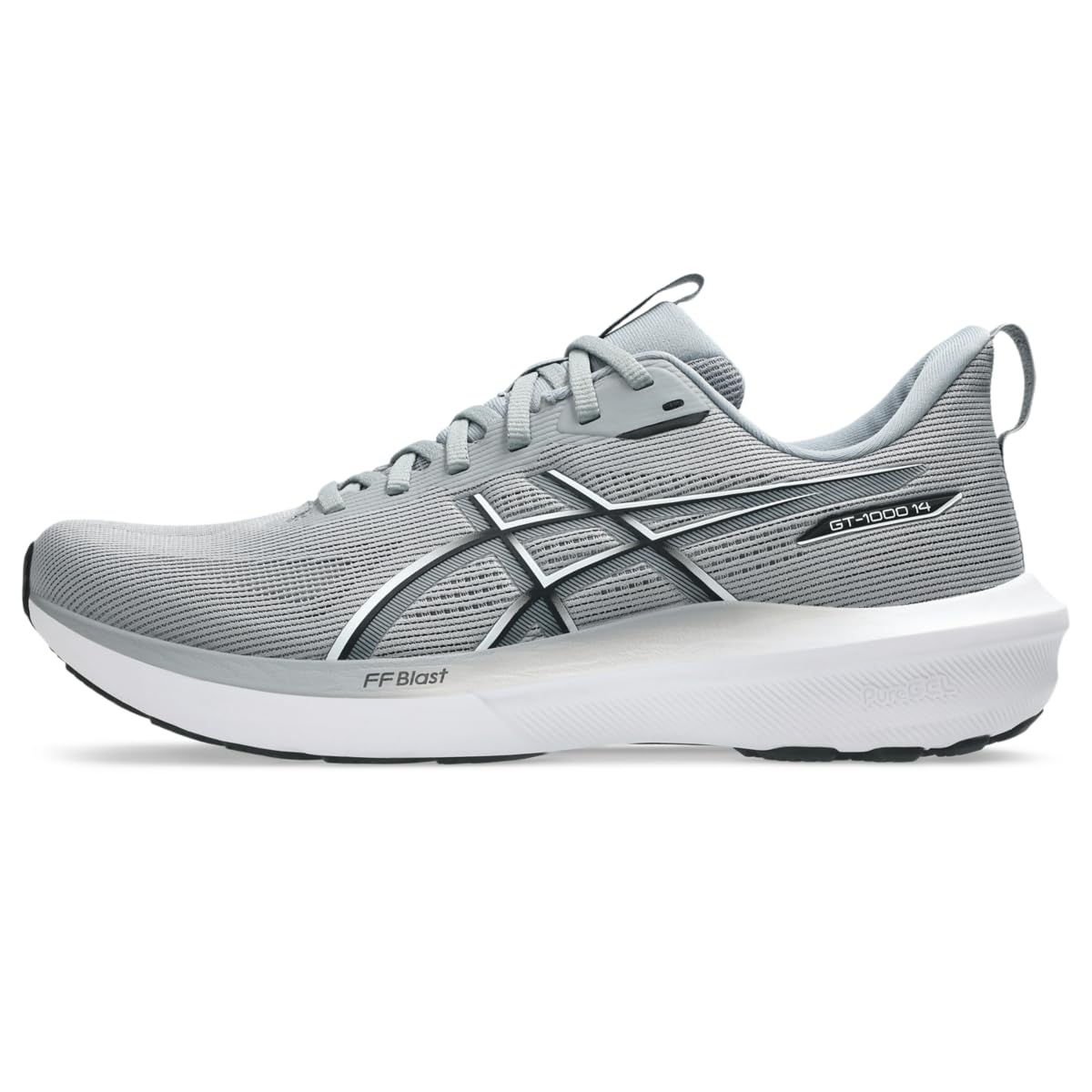
The GT-1000 14 is the most affordable stability shoe from ASICS that still provides genuine pronation control. Rather than a full medial post, LITETRUSS uses a denser foam block positioned under the arch that stiffens on impact to resist inward roll without adding the weight of a traditional post system.
The midsole uses FlyteFoam for a responsive, lightweight feel that doesn’t pack out as quickly as budget foams. While the stack height is lower than the Kayano’s, the 8mm drop encourages a natural forefoot strike that takes pressure off the collapsed arch. It’s a capable shoe for short to moderate jogging distances.
The upper is a standard engineered mesh that breathes adequately and the heel counter is basic but effective. The outsole uses AHAR rubber in high-wear zones. Runners with severe overpronation may find the LITETRUSS block too mild — this shoe is best for mild to moderate flat feet or as a budget backup to a premium stability shoe.
Why it’s great
- LITETRUSS offers genuine control at a budget price
- FlyteFoam is responsive and durable for its class
- 8mm drop aids natural pronation reduction
Good to know
- Mild stability — not for severe overpronation
- Lower stack height offers less impact protection
FAQ
Can I use a neutral running shoe if I have flat feet?
How long should a stability shoe last for flat-footed joggers?
Will a stability shoe make my arches stronger?
What drop is best for flat feet and plantar fasciitis together?
Final Thoughts: The Verdict
For most joggers, the best jogging shoes for flat feet winner is the ASICS Gel-Kayano 31 because its 4D Guidance System adapts to your gait live, its PureGEL cushion absorbs impact without mush, and the foam stays responsive over long distances. If you want a guide-rail system that cradles rather than blocks, grab the Brooks Adrenaline GTS 23. And for a budget-friendly entry into stability that still controls mild overpronation, nothing beats the ASICS GT-1000 14.