A child’s first real run down a groomed blue square is a milestone. The cold air, the snow spray, the sheer joy — it should never be interrupted by a helmet that shifts mid-turn or a buckle that digs in at the chin. The real test of a kids’ ski helmet isn’t a lab sticker; it’s whether your kid forgets they’re wearing it after the first five minutes. That balance of safety, warmth, and zero-fuss adjustability is what separates a daily driver from a one-trip rental.
I’m Emma — the founder and writer behind Baby Bangs. Over the last decade, I’ve dissected hundreds of helmet specs, compared impact certifications across brands, and watched how different shell constructions hold up after a full season of weekend warrior abuse from toddlers to tweens.
This guide breaks down the seven most reliable options on the market so you can choose the best kids ski helmet for your family’s mountain days without second-guessing the fit or the safety standards.
How To Choose The Best Kids Ski Helmet
A kids ski helmet has one job: absorb impact energy without adding so much weight that a child’s neck fatigues before lunch. But the market is flooded with buckets that barely pass basic drop tests and shells with fancy acronyms that parents don’t fully understand. Here is the short list of what actually separates a safe, comfortable helmet from a hard-plastic nuisance.
Shell Construction: In-Mold vs. ABS
In-mold helmets fuse a thin polycarbonate outer shell directly to the EPS foam liner. This bonds the two layers into one unit, which keeps weight low — critical for small necks — and allows the helmet to be designed with deeper ventilation channels. ABS helmets use a separate hard plastic outer cap bonded to an EPS liner. They are heavier and more durable against repeated knocks (think terrain parks or multiple siblings using the same helmet), but the added mass can cause fatigue on long days. For most kids under ten, an in-mold shell is the lighter, more comfortable choice.
Fit System: The Dial Makes the Difference
A helmet that wobbles when a kid shakes their head is a helmet that won’t stay positioned correctly during a fall. Look for a rear adjustment dial that tightens a 360-degree cradle around the occipital bone. This system, often branded as a “Snapfit” or “Adjustable Fit,” eliminates the need to over-tighten chin straps to compensate for a loose shell. Rotating the dial while the child is wearing the helmet is the single fastest way to confirm a proper fit.
MIPS and Rotational Impact Protection
Multi-directional Impact Protection System (MIPS) is a low-friction layer sandwiched between the foam and the inner liner. It allows the helmet to rotate slightly relative to the head during an angled impact, reducing the rotational forces transmitted to the brain. For kids, whose neck strength and muscle control are still developing, this added layer of protection is not just a premium add-on — it is a meaningful safety upgrade. If your budget allows, prioritize a MIPS-equipped model.
Quick Comparison
On smaller screens, swipe sideways to see the full table.
| Model | Category | Best For | Key Spec | Amazon |
|---|---|---|---|---|
| Giro Crue MIPS | Premium | Rotational impact safety | MIPS liner, in-mold shell | Amazon |
| Giro Spur | Premium | Toddler & youth fit | In-mold construction, 1.2 lbs | Amazon |
| SMITH Holt Jr. | Premium | All-season versatility | ABS shell, 14 vents, AirEvac | Amazon |
| OutdoorMaster Set | Mid-Range | Helmet + goggle value | 12 vents, dial fit, PC shell | Amazon |
| Smith Zoom Jr. | Mid-Range | Lightweight goggle fit | In-mold, Snapfit EV dial | Amazon |
| Odoland Set | Budget | Entry-level bundle | In-mold, 10 vents, goggles | Amazon |
| Comstock Helmet | Budget | Simple, low-cost shell | ABS shell, 10 vents, clip | Amazon |
In‑Depth Reviews
1. Giro Crue MIPS Ski Helmet

The Giro Crue MIPS brings the rotational impact protection that safety-conscious parents look for in a mid-range premium package. The in-mold construction keeps the weight low enough that a seven-year-old won’t complain by the third run, and the MIPS liner adds a layer that reduces rotational forces during an awkward fall on hardpack. The Roc Loc 5 fit system lets you dial in tension with one hand while the helmet is on the child’s head — no guesswork, no pinched fingers.
Ventilation is handled by a series of passive channels that pull warm air out without requiring manual open-close controls. The ear pads are removable for warmer spring skiing or for a quick wash after a season of sweaty use. The chin strap uses a standard buckle, not a Fidlock magnetic closure, so it feels familiar to kids who have worn bike helmets.
Fit range covers roughly 48-52 cm depending on the size option, which fits most elementary-age kids. This is the benchmark for parents who want MIPS without jumping to the -plus tier. It skips the goggle clip found on some competitors, so test goggle strap fit before committing.
Why it’s great
- MIPS layer for rotational impact protection
- Low in-mold weight reduces neck fatigue
- One-hand Roc Loc 5 dial for micro-adjustment
Good to know
- No integrated goggle retention clip
- Ear pads are not fully removable for warm weather
2. Giro Spur Kids Ski Helmet

The Giro Spur is built specifically for the smallest skiers — think three to six-year-olds with head circumferences around 47-51 cm. The in-mold polycarbonate shell bonded to EPS foam keeps the weight down to roughly 1.2 pounds, which is critical for a toddler whose neck muscles are still developing the endurance for a full day of skiing. The rear dial adjusts the fit snugly around the occipital bone without creating pressure points on the forehead.
Ventilation is managed through six fixed vents that channel airflow without allowing snow intrusion. The fleece-lined ear pads are warm enough for sub-20°F mornings and snap out when the sun comes out in the afternoon. The brim is low-profile, which helps small goggles sit flush without a gap at the bridge of the nose.
The Spur does not include MIPS, so if rotational protection is a non-negotiable, step up to the Crue. But for parents introducing a young child to the sport, the Spur offers a very low weight and a dial fit that practically eliminates helmet wobble.
Why it’s great
- Ultra-light in-mold design for small necks
- Fleece-lined ear pads for cold mornings
- Precise fit dial with low-bulk profile
Good to know
- No MIPS rotational protection layer
- Only six vents — less airflow than premium models
3. SMITH Holt Jr. Snow Helmet
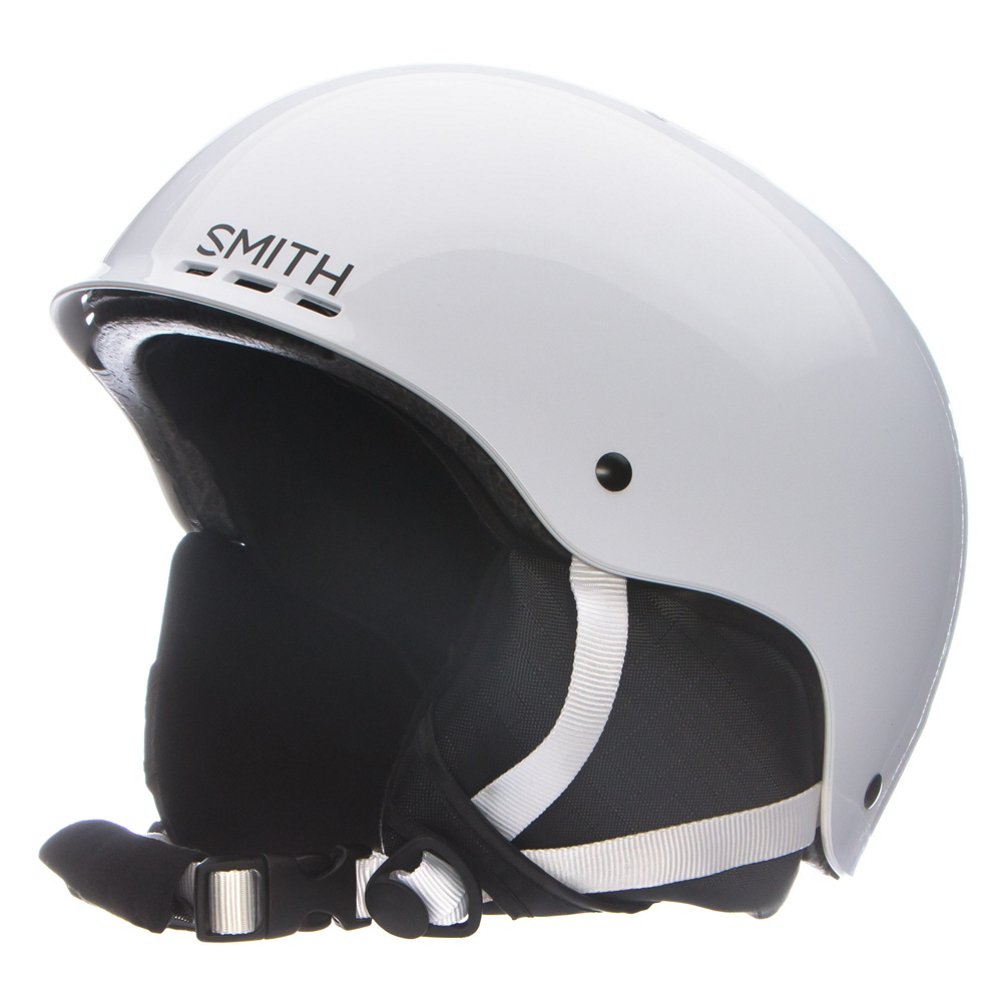
Smith’s Holt Jr. is the heaviest option on this list — the ABS outer shell adds noticeable mass compared to in-mold competitors — but that durability is intentional. The ABS cap withstands repeated impacts from terrain park features, tree branches, and the general abuse of a kid who drops their helmet from the chairlift. It carries ASTM F2040 and CE EN 1077 certifications, which cover both skiing and snowboarding use, plus a four-season rating for skatepark use in warmer months.
The AirEvac ventilation system pulls warm air from goggles to reduce fogging, and the 14 fixed vents provide steady airflow even when the sun is low. The adjustable dial operates smoothly with gloved hands, and the ear pads are removable for summer skate sessions. Fit ranges cover youth head sizes from roughly 50-55 cm depending on the size selected.
The weight penalty is real — expect around 1.4 pounds — which might tire a small child faster. But for an older kid (ages 8-12) who is skiing harder and growing into a larger helmet, the Holt Jr. offers multi-sport value that the in-mold options can’t match.
Why it’s great
- Durable ABS shell for multi-season abuse
- 14 vents plus AirEvac goggle fog reduction
- Four-season ASTM/CE certified
Good to know
- Heavier than in-mold helmets
- No MIPS layer
4. OutdoorMaster Kids Ski Helmet and Goggles Set
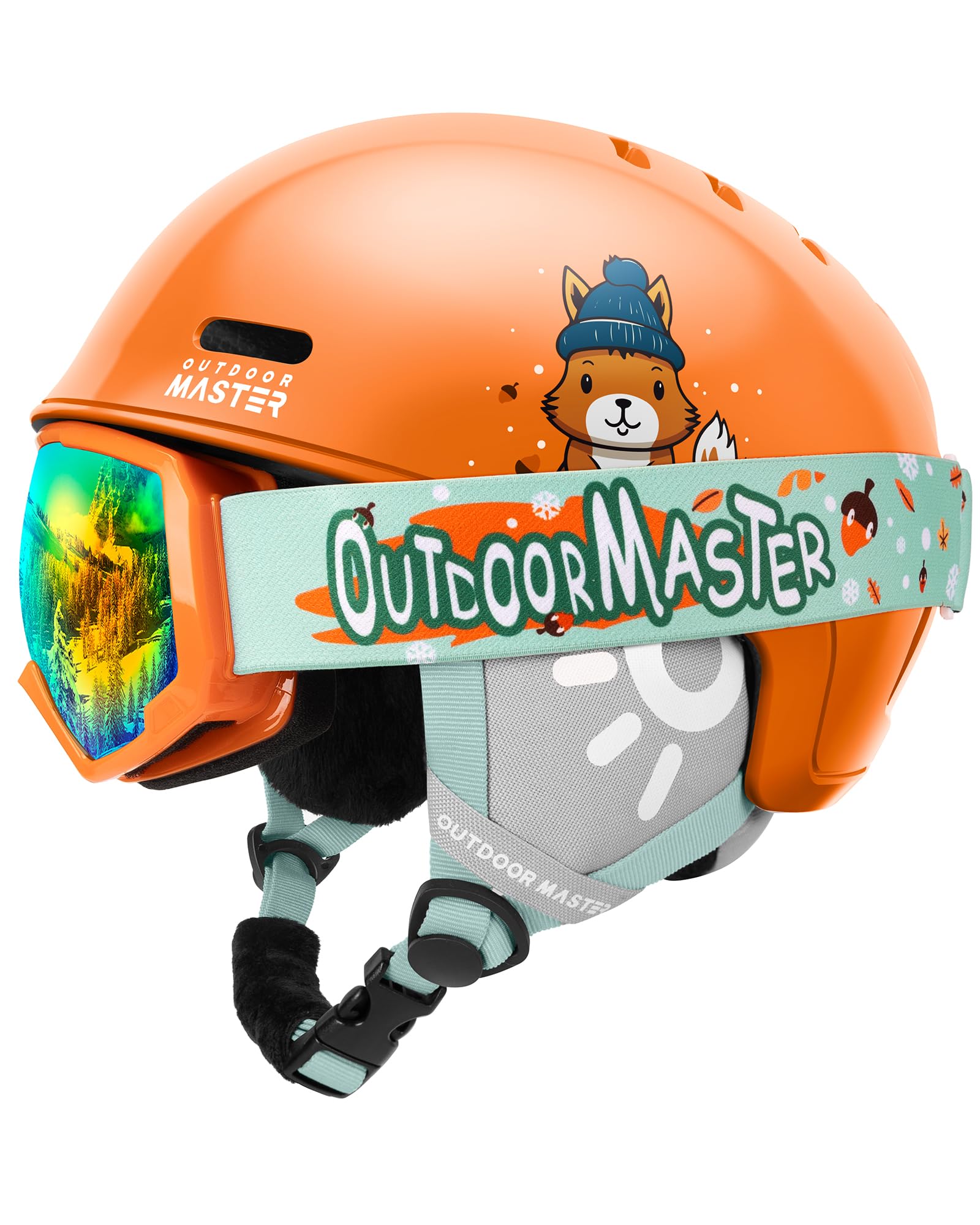
OutdoorMaster delivers a helmet and goggle bundle that punches above its mid-range price tag. The helmet uses a durable polycarbonate shell with EPS foam, and the 12 cooling vents keep airflow high even during active runs. The rear dial adjustment is smooth and provides enough range to accommodate a beanie underneath on frigid days. The included goggles use an anti-fog coated lens with UV400 protection, which is solid for bluebird days but may struggle in flat light conditions.
The buckle is a standard side-squeeze release that kids can operate independently. The ear pads are soft and removable, and the interior lining wicks moisture reasonably well. The goggle strap is wide with silicone gripper strips to prevent slipping against the helmet shell. Fit caps at roughly 52-54 cm depending on the size variant, making this best for ages 6-10.
The main compromise is the lack of a premium shell construction — this is a standard PC injection mold, not in-mold, so the helmet is slightly heavier than the Giro Spur. But for parents who want one box that covers both head and eye protection, this bundle saves the hassle of matching separate pieces.
Why it’s great
- Includes anti-fog UV400 goggles
- 12 vents for active cooling
- Smooth rear dial adjustment
Good to know
- Not in-mold construction — heavier shell
- Goggle lens not ideal for low-light conditions
5. Smith Zoom Junior Helmet
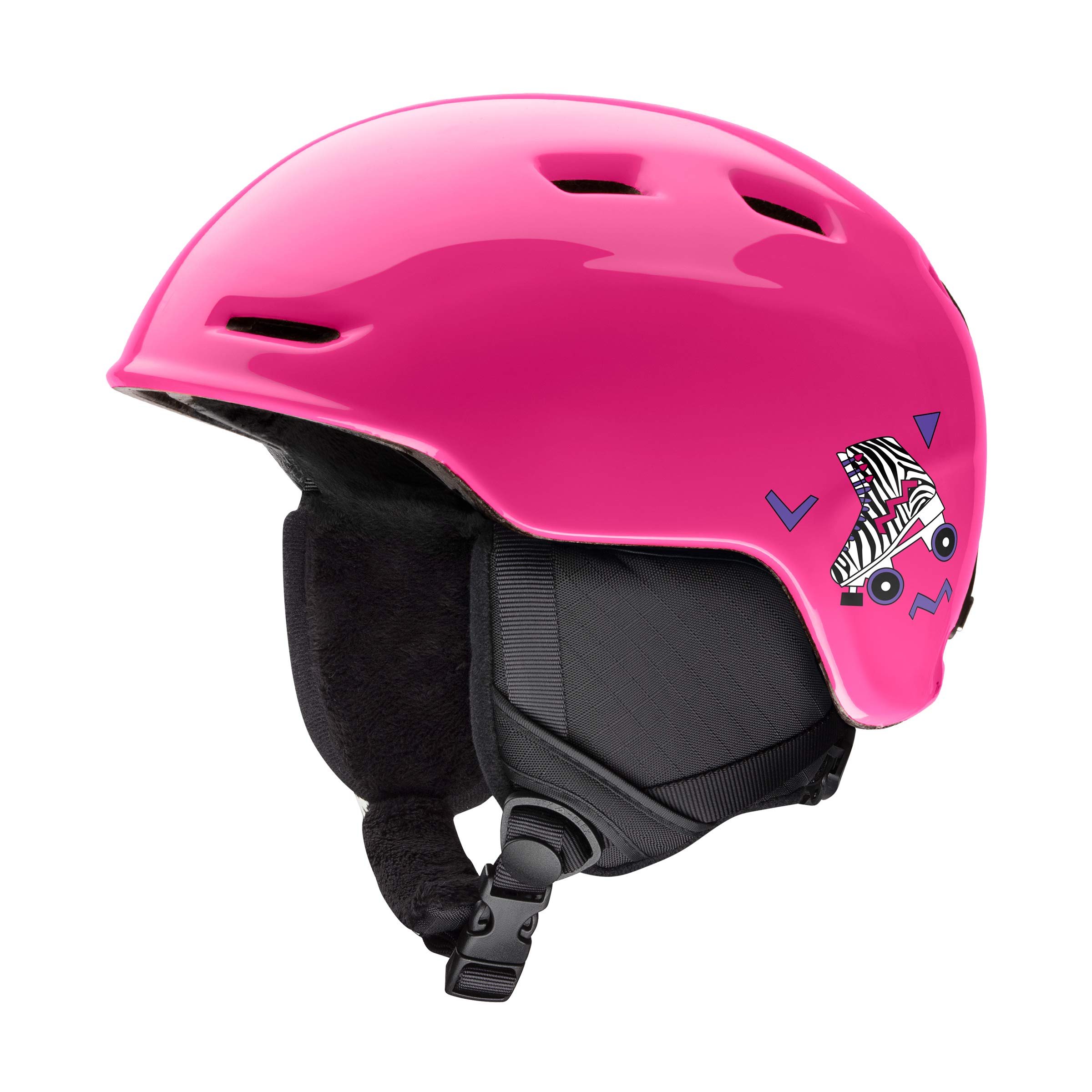
Smith’s Zoom Junior is an in-mold helmet designed with a clean, low-profile shape that mates seamlessly with Smith’s own goggle line. The Snapfit EV dial adjusts the fit in small increments, and the brim sits close to the brow so goggles slot in without a pressure gap.
Ventilation comes from several large fixed vents that direct airflow across the crown. The ear pads are built into the liner and are not easily removable, so this is primarily a cold-weather helmet. The chin strap uses a standard buckle, and the padding is thin but comfortable enough for all-day use. The fit range typically covers 48-52 cm for the junior size, with a youth size extending slightly larger.
The Zoom Jr. lacks MIPS and uses a simpler liner than the premium Holt Jr. from the same brand. But for a weight-conscious parent buying a first helmet for a child who is still building ski stamina, the low mass and excellent goggle compatibility make this a very comfortable daily choice.
Why it’s great
- Lightweight in-mold construction
- Excellent Smith goggle integration
- Snapfit EV dial for precise fit
Good to know
- Ear pads not removable
- No MIPS rotational protection
6. Odoland Kids Ski Helmet with Goggles Set

The Odoland set bundles a helmet and goggles at a price point that appeals to families outfitting multiple kids on a tight budget. The helmet uses in-mold construction, which is surprising at this tier, and the 10 vents provide adequate airflow for typical resort skiing. The goggles include an anti-fog coating and UV protection, and the adjustable strap keeps them secure against the helmet shell without sliding.
The dial fit system is functional but feels less refined than Smith or Giro dials — the clicks are a bit louder and the tension requires more turns to lock in. The interior padding is thin but fleece-lined for warmth, and the chin strap uses a standard buckle. The bundle includes a carry bag, which helps keep the goggle lens scratch-free during travel. Fit ranges from about 49-53 cm for the XS size, covering most kids from ages 6-10.
The goggle lens is not interchangeable, so flat-light days will be a challenge. The helmet also lacks any rotational impact protection. This is a capable entry-level solution for a family that skis a couple of weekends per year, but it won’t survive the daily abuse that a season pass family dishes out.
Why it’s great
- In-mold construction at a budget price
- Includes goggles and carry bag
- Anti-fog and UV goggle coating
Good to know
- Dial feels less precise than premium brands
- No MIPS or rotational protection
- Goggle lens struggles in flat light
7. Comstock Kids Ski & Snowboard Helmet

The Comstock helmet is a no-frills ABS shell with an EPS foam liner and 10 fixed vents. It includes a goggle retention clip on the back, which the Giro Crue and Spur lack, making it easier to secure goggle straps without them slipping off the back of the helmet. The dial adjustment is present but uses a simpler mechanism that provides a snug fit without the micro-adjustability of the Snapfit EV or Roc Loc systems.
The interior padding is a basic fleece-lined foam that traps heat well but lacks the moisture-wicking properties of premium liners. The ear pads are soft and fixed in place. The shell feels durable enough for light use — think a few family trips per season — but the plastic buckle and thin strap webbing suggest it won’t survive a full season of daily lessons. Fit options range from XS to M, covering roughly 48-55 cm head sizes.
The Comstock lacks any rotational impact system and the ABS shell adds weight compared to in-mold alternatives. This is a straightforward entry-level choice for parents who need a certified helmet at the lowest possible investment.
Why it’s great
- Includes goggle retention clip on the back
- ABS shell offers basic impact durability
- 10 vents provide decent airflow
Good to know
- Heavy ABS construction for the price
- No MIPS or rotational protection
- Basic padding and strap hardware
FAQ
What is the difference between MIPS and a standard EPS helmet?
How should a kids ski helmet fit for maximum safety?
Can my child use a bike helmet for skiing?
How often should I replace a kids ski helmet?
Final Thoughts: The Verdict
For most users, the best kids ski helmet winner is the Giro Crue MIPS because it combines lightweight in-mold construction with rotational impact protection at a price that undercuts premium alternatives. If you want the lightest possible shell for a toddler just starting out, grab the Giro Spur. And for a multi-sport helmet that survives skatepark summers and mountain winters, nothing beats the SMITH Holt Jr..