A kids helmet is the single most critical piece of safety gear for a young rider, yet most parents buy one that is either too heavy, poorly ventilated, or simply uncomfortable enough that the child refuses to wear it. The real test is not the sticker on the box, but how well the helmet stays on during a tumble over the handlebars.
I’m Emma — the founder and writer behind Baby Bangs. I’ve analyzed dozens of youth helmet models across price tiers, focusing on real-world fit tolerances, shell materials, and the ventilation patterns that actually keep a child’s head cool on a hot afternoon ride.
This guide breaks down the five best models available, scored on protection standards, adjustability range, and weight distribution. If you are hunting for the absolute best kids helmet that balances safety certification with a fit your child will actually tolerate, you have landed in the right place.
How To Choose The Best Kids Helmet
Buying a helmet for a child is not the same as buying one for an adult. Children’s head shapes vary more within a single age group, their neck muscles are weaker, and their willingness to tolerate an uncomfortable fit is effectively zero. The following three criteria will steer you toward a helmet that protects without becoming a battle.
The Fit System: Dial vs. Foam Pads
An adjustable dial system at the back of the helmet is the single biggest predictor of whether the helmet will stay snug after a few months of growth. Helmets that rely only on stick-on foam pads shift as the child runs, and they cannot compensate for the quarter-inch of head growth that happens over a single summer. Look for a 360-degree adjustment knob that tightens evenly around the full circumference.
Weight and Neck Load
A helmet that weighs more than about 10 ounces (roughly 280 grams) in a toddler size will cause the child to tip their head forward to compensate, leading to complaints and removal. Premium models use in-mold construction, bonding the polycarbonate shell directly to the EPS foam, which shaves weight without sacrificing impact absorption. Check the listed weight before purchase.
Ventilation That Actually Moves Air
Vent count is a marketing number. What matters is whether the vents are connected by internal air channels that pull hot air out the back while drawing cool air in through the front. A helmet with 14 small round holes can still trap heat if the channels are shallow. Look for elongated vents with deep, continuous routing.
Quick Comparison
On smaller screens, swipe sideways to see the full table.
| Model | Category | Best For | Key Spec | Amazon |
|---|---|---|---|---|
| Bilaki Kids Bike Helmet | Mid-Range + LED | Low-light visibility | 290g weight, 16 vents, LED light | Amazon |
| Retrospec Remi | Premium | Reflective strap safety | 11 air vents, washable pad, reflective strap | Amazon |
| Retrospec Scout Toddler | Mid-Range | Toddler multi-sport | 14 vents, built-in visor, 45-49cm | Amazon |
| Adjustable Youth Helmet | Budget | Color gradient style | Adjustable fit, multi-sport | Amazon |
| Roozo Youth Dirt Helmet | Specialty — Dirt Bike | Off-road / motocross | DOT certified, 1080g, full face | Amazon |
In‑Depth Reviews
1. Bilaki Kids Bike Helmet with LED Light
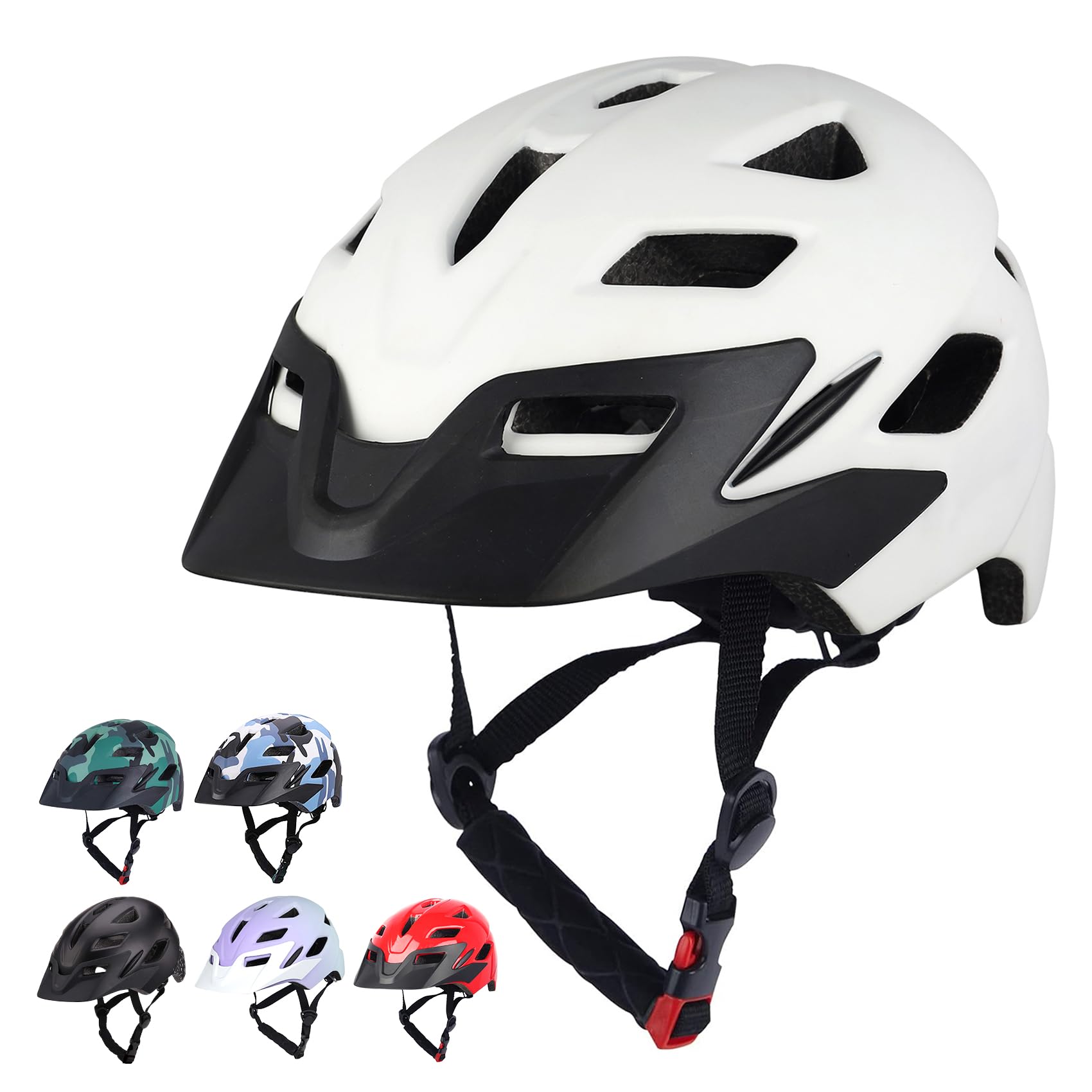
The Bilaki combines a polycarbonate outer shell with a thick EPS foam liner using in-mold construction, which keeps the helmet at just 290 grams — light enough that a young rider will forget they are wearing it. The 16 vents are connected by internal air channels that route hot air out through the rear, so the head stays dry even during long summer rides. The included LED light offers three flashing modes (steady, slow flash, fast flash), which adds a layer of visibility that matters when riding near dusk.
The fit system uses a 360-degree adjustable knob and side straps that tighten evenly around the full crown. Two sizes cover head circumferences from 48 cm up to 57 cm, which roughly maps to ages 2 through 12. The detachable visor clips on securely and provides shade without blocking peripheral vision. Weighing the safety features against the low weight and the LED integration, this is the most complete package for everyday cycling and scooting.
Parents report that the matte white finish hides scuffs better than glossy models, and the breathable foam liner is easy to remove for a quick rinse. The LED uses two small button batteries that are included, and the switch is firm enough to avoid accidental activation inside a backpack.
Why it’s great
- Ultra-light 290g in-mold construction reduces neck fatigue
- Three-mode LED light improves low-light safety without extra accessories
- Detachable visor offers sun and rain protection
Good to know
- LED batteries are not rechargeable; replacements are small coin cells
- The XS size tops out at 52 cm, so measure carefully for a growing 3-year-old
2. Retrospec Remi Kids Bike Helmet

The Retrospec Remi focuses on the details that matter most for daily use: 11 deep air vents that pull heat away from the crown, a built-in sun visor that is integrated into the shell rather than clipped on, and reflective straps that catch car headlights from a wider angle than a rear light alone. The EPS foam liner is covered with a washable interior pad that removes without tools, solving the hygiene problem that plagues kids helmets after a summer of sweaty rides.
The adjustable dial system at the back is easy for a parent to turn while the helmet is on the child’s head, and the side straps have a splitter that keeps the webbing flat against the ear. The shell is made from a durable PVC outer material that resists cracking if the helmet is dropped on concrete. The overall weight sits comfortably in the mid-range for the toddler size, though it is slightly heavier than the Bilaki due to the thicker shell.
One design detail that stands out is the low-profile rear coverage: the helmet extends lower on the back of the skull than many competitors, offering better protection for the occipital area during a backward fall. The matte finish resists scratches well, and the color options include several non-gendered schemes.
Why it’s great
- Reflective straps add 360-degree visibility beyond just the rear light
- Removable interior padding is machine-washable for easy cleaning
- Extended rear shell coverage protects the back of the skull
Good to know
- Slightly heavier than the lightest in-mold competitors
- No LED light included; you will need to add a clip-on light for dusk
3. Retrospec Scout Toddler Bike Helmet

The Scout is Retrospec’s dedicated toddler offering, sized specifically for heads between 45 and 49 centimeters. It uses an impact-absorbing EPS foam core inside a durable PVC outer shell, with 14 strategically placed vents that create a steady airflow channel from the forehead to the exhaust ports at the rear. The built-in sun visor is integrated directly into the shell molding, so there are no clips to break or lose during a tumble.
The adjustable dial system is small enough that a toddler’s head does not feel overpowered by the mechanism, and the chin strap uses a soft material that does not rub the skin raw. The interior padding is removable and washable, which matters because toddlers generate more sweat per square inch of scalp than older kids. The weight is well-distributed for the age group, and the low-profile design reduces the wobble effect when the child turns their head quickly.
The matte matcha bloom color option is an aesthetic departure from the usual neon or cartoon prints, and the foam liner has a clean, non-toxic finish. Parents note that the sizing runs slightly snug, so if your toddler is on the larger side of the 45-49 cm range, you may want to size up to the next model.
Why it’s great
- Built-in visor is molded into the shell, no separate clips to lose
- 14 vents with deep internal channels for active toddlers
- Removable washable padding keeps hygiene simple
Good to know
- Only available in one toddler size (45-49 cm)
- Sizing can be snug; measure head circumference before ordering
4. Adjustable Kids Bike Helmet (Color Gradient)

This no-frills helmet from a generic brand offers the basics: an adjustable fit system via a rear dial, a simple EPS foam liner, and a colorful gradient finish that appeals to kids who want something less blocky. The vent count is modest compared to the premium options, but the front-to-back channel design draws air across the crown effectively for casual riding around the neighborhood.
The outer shell uses a standard PVC material, and the weight is slightly higher than the in-mold competitors. The chin strap uses a simple buckle that clicks in and out easily, though the webbing can twist if not adjusted carefully. The helmet is intended for multi-sport use (cycling, skateboarding, scooter), and the low-profile shape clears the brim of most baseball caps when worn underneath in cold weather.
For a parent on a tight budget who needs a helmet that meets basic CPSC standards and includes an adjustable dial, this model gets the job done without extra frills. The gradient paint job is a unique visual selling point that some kids prefer over solid colors. Durability reports are mixed on the side-strap stitching after several months of daily use.
Why it’s great
- Budget-friendly entry point with dial-adjust fit
- Unique color gradient finish kids enjoy
- Multi-sport rated for cycling, scooter, and skateboard
Good to know
- Heavier than in-mold models due to standard shell construction
- Side strap stitching may wear faster than premium brands
5. Roozo Youth Dirt Bike Helmet DOT Certified

The Roozo is a completely different category of protection — a full-face motocross helmet certified to the DOT FMVSS-218 standard for off-road motorized use. The high-impact ABS shell covers the entire jaw and chin, and the dense EPS foam liner wraps fully around the skull. At 2.38 pounds (1080 grams), it is lighter than many full-face adult helmets, but the weight is still significant compared to open-face bicycle helmets. This is not a helmet for pedal bikes; it is for youth riders on dirt bikes, ATVs, or go-karts.
The kit includes anti-fog goggles and breathable gloves, making it a complete starter package for a young rider entering off-road motor sports. The ventilation system uses two top vents and a chin vent that pull air through the interior, but the cooling is less effective than open-face designs — this is the trade-off for full-face protection. The quick-release buckle operates with one hand, and the liner is removable for washing.
Fit ranges from X-small (49-50 cm) up to X-large (55-56 cm), which covers a similar age range as the bicycle helmets but for a different activity. The matte black finish is understated and will match most dirt bike gear. Parents should note that the goggles included are a basic set; serious riders may want to upgrade to a higher-contrast lens for bright trails.
Why it’s great
- DOT certified for off-road motorized use, not just bicycle safety
- Includes anti-fog goggles and gloves, ready to ride out of the box
- Lightweight for a full-face helmet at 1080 grams
Good to know
- Too heavy and hot for bicycle or scooter use
- Goggles are basic; upgrading to premium goggles improves trail vision
FAQ
How do I measure my child’s head for a helmet?
Can a kids bicycle helmet be used for skateboarding or scooters?
When should I replace a kids helmet?
Is a heavier helmet safer for kids?
Final Thoughts: The Verdict
For most users, the best kids helmet winner is the Bilaki Kids Bike Helmet with LED Light because it combines a featherlight 290-gram in-mold shell, 16 deep-channel vents, and a useful integrated LED at a reasonable price. If you want reflective strap visibility and a washable inner lining that withstands heavy sweat, grab the Retrospec Remi. And for off-road motorized use where full-face DOT certification is non-negotiable, nothing beats the Roozo Youth Dirt Bike Helmet.