A real trike needs to survive driveway tumbles, neighborhood curb hops, and the occasional “off-road” adventure through the park without wobbling apart. The wrong choice leaves a toddler frustrated and a parent constantly tightening loose bolts.
I’m Emma — the founder and writer behind Baby Bangs. I’ve spent years comparing wheelbase stability, pedal resistance, and seat adjustability across dozens of models to separate the rides that last from the ones that end up in a garage sale after three weeks.
Whether you are starting with an 18-month-old who needs a push handle or a 4-year-old ready to pedal solo, finding the right fit matters. This guide breaks down the seven best performing options to help you choose the ideal kids tricycle for every stage and terrain.
How To Choose The Best Kids Tricycle
A kids tricycle is not a one-size-fits-all purchase. The right choice depends on your child’s age, the surfaces you ride on, and whether you need parent-controlled features or full independence. Focus on these three factors before clicking buy.
Frame Material and Build Quality
Plastic frames keep weight low and cost down, but they flex under heavier toddlers and crack after repeated curb drops. Steel and carbon steel frames add a few pounds of heft but deliver stability on uneven pavement and last through a second sibling. Check the maximum weight rating — 55 pounds is a safe ceiling for most models up to age 5.
Adjustable Seat and Growth Range
A fixed seat strangles the lifespan of a trike. Look for an adjustable seat that spans at least three inches of range — ideally from around 15 inches to 19 inches off the ground. That range lets a 2-year-old reach the pedals comfortably and still fits a 4-year-old whose legs have grown. Models that convert between balance mode, pedal mode, and stroller mode extend usability even further.
Parent Push Handle vs. Independent Riding
Children under 2.5 years old lack the leg strength and coordination to pedal consistently. A trike with a detachable or telescoping push handle lets you steer and push while your child’s feet rest on a foldable footrest. Once your toddler learns to pedal, you can remove the handle for true independence. Verify the handle is stroller-height — about 36 to 40 inches — so you don’t hunch over during walks.
Quick Comparison
On smaller screens, swipe sideways to see the full table.
| Model | Category | Best For | Key Spec | Amazon |
|---|---|---|---|---|
| Radio Flyer Red Rider | Premium | Classic long-term durability | Steel frame, quiet ride wheels | Amazon |
| XPIY 3-in-1 Folding | Mid-Range | Balance-to-pedal transition | Carbon steel, foldable, 10 lb | Amazon |
| JMMD 8-in-1 | Premium | Parent-push strolling | 360° swivel seat, all-terrain wheels | Amazon |
| JMMD 7-in-1 | Premium | Multi-mode flexibility, canopy | Safety harness, wheel brakes | Amazon |
| KRIDDO 2-in-1 | Mid-Range | Early riders 18 months+ | Extended push handle, foldable footrest | Amazon |
| Fisher-Price Hot Wheels Tough Trike | Mid-Range | Rugged outdoor play | Wide wheelbase, off-road treads | Amazon |
| Umatoll Light-Up Wheels | Budget | Visual fun on pavement | Light up wheels, adjustable seat | Amazon |
In‑Depth Reviews
1. Radio Flyer Red Rider Trike
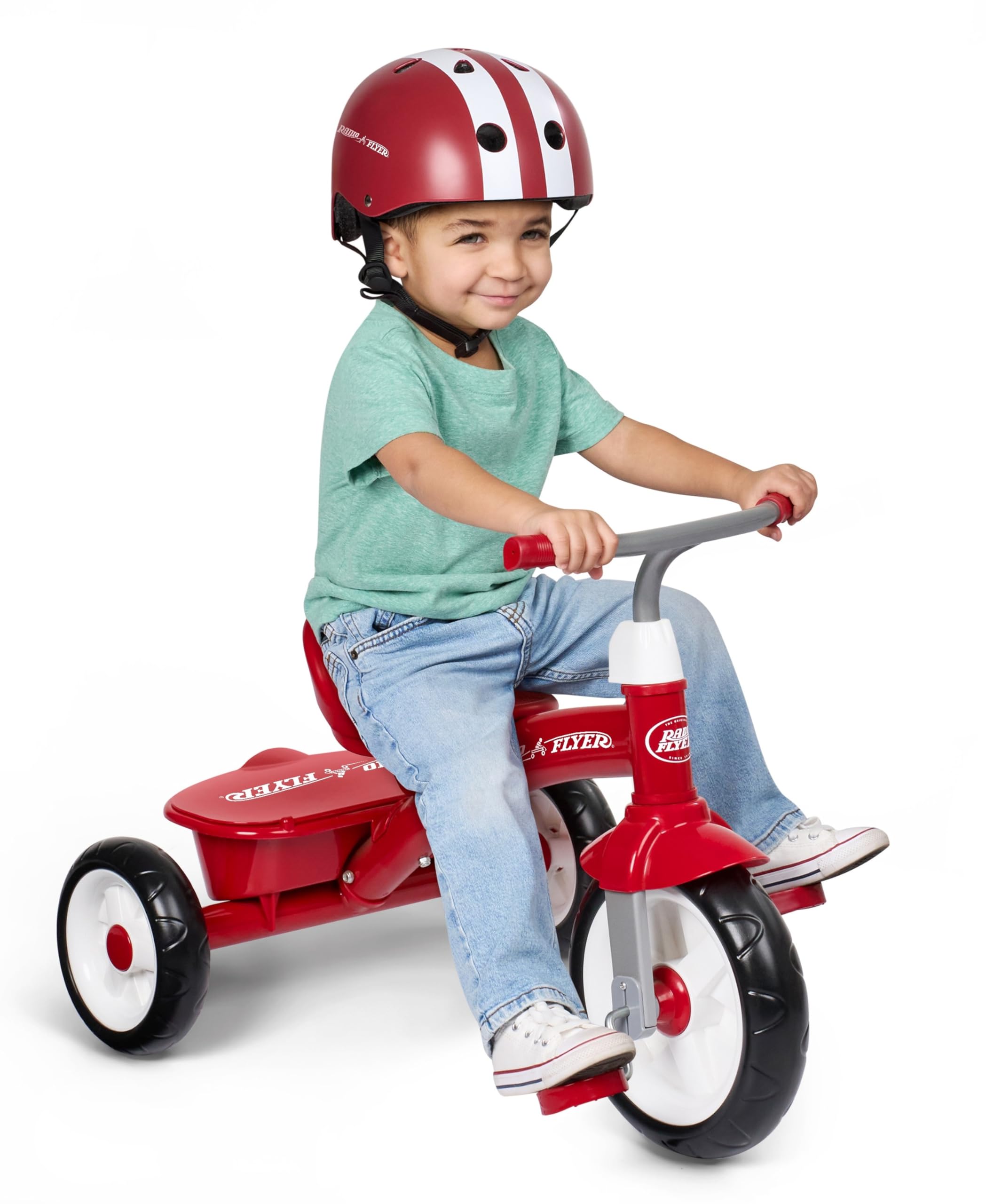
The Radio Flyer Red Rider is the benchmark for durability in the kids tricycle category. Its steel frame weighs nearly 10 pounds and stands up to daily outdoor use without flexing, while the quiet ride wheels keep the noise down during neighborhood loops. The adjustable seat spans from 2.5 to 5 years, giving you a solid growth window that cheaper plastic trikes cannot match.
The covered rear storage bin is a surprisingly useful addition — toddlers love hauling toys and snacks, and the easy-carry handle on the seat back makes lifting it over curbs or into the car painless. Assembly is straightforward, though you will need a wrench for the steel bolts. The comfort grip handlebars feel substantial in small hands and reduce hand fatigue on longer rides.
One trade-off: there is no parent push handle, so this is best suited for children who are already comfortable pedaling independently. If your child is under 2.5 years old and still building leg strength, a convertible model with a push bar might be a better starting point.
Why it’s great
- Steel frame provides genuine long-term stability
- Quiet ride wheels work well on pavement and sidewalks
- Storage bin and carry handle add practical daily value
Good to know
- No parent push handle — independent pedaling required
- Assembly takes about 20 minutes with included tools
2. XPIY 3-in-1 Folding Tricycle

The XPIY 3-in-1 covers three riding modes — balance bike, pedal-less foot scoot, and full pedal tricycle — which makes it a smart transitional tool for kids from age 2 to 5. The carbon steel frame keeps weight at 10 pounds without sacrificing rigidity, and the puncture-resistant EVA wheels roll smoothly over pavement and packed dirt without needing inflation.
Seat height adjusts from 15.7 to 18.5 inches, a range that fits shorter toddlers and still accommodates growth. The foldable design is a standout feature for families with limited trunk space — it collapses into a compact shape that slides into a closet or car trunk easily. Assembly takes under 10 minutes with the clear manual, and the handlebar grips are rubberized for wet hands.
The only catch is that the EVA wheels, while quiet and low-maintenance, do not absorb bumps as well as air-filled rubber tires. On cracked sidewalks the ride is a bit stiffer. The ASTM F963 and EN71 certifications provide peace of mind for parents concerned about heavy metals and choking hazards.
Why it’s great
- Three riding modes extend usability from 2 to 5 years
- Foldable frame simplifies storage and transport
- Puncture-proof EVA wheels require zero maintenance
Good to know
- EVA wheels transmit more vibration on rough terrain
- Maximum weight capacity is not listed — assume around 50 lb
3. JMMD 8-in-1 Tricycle Stroller
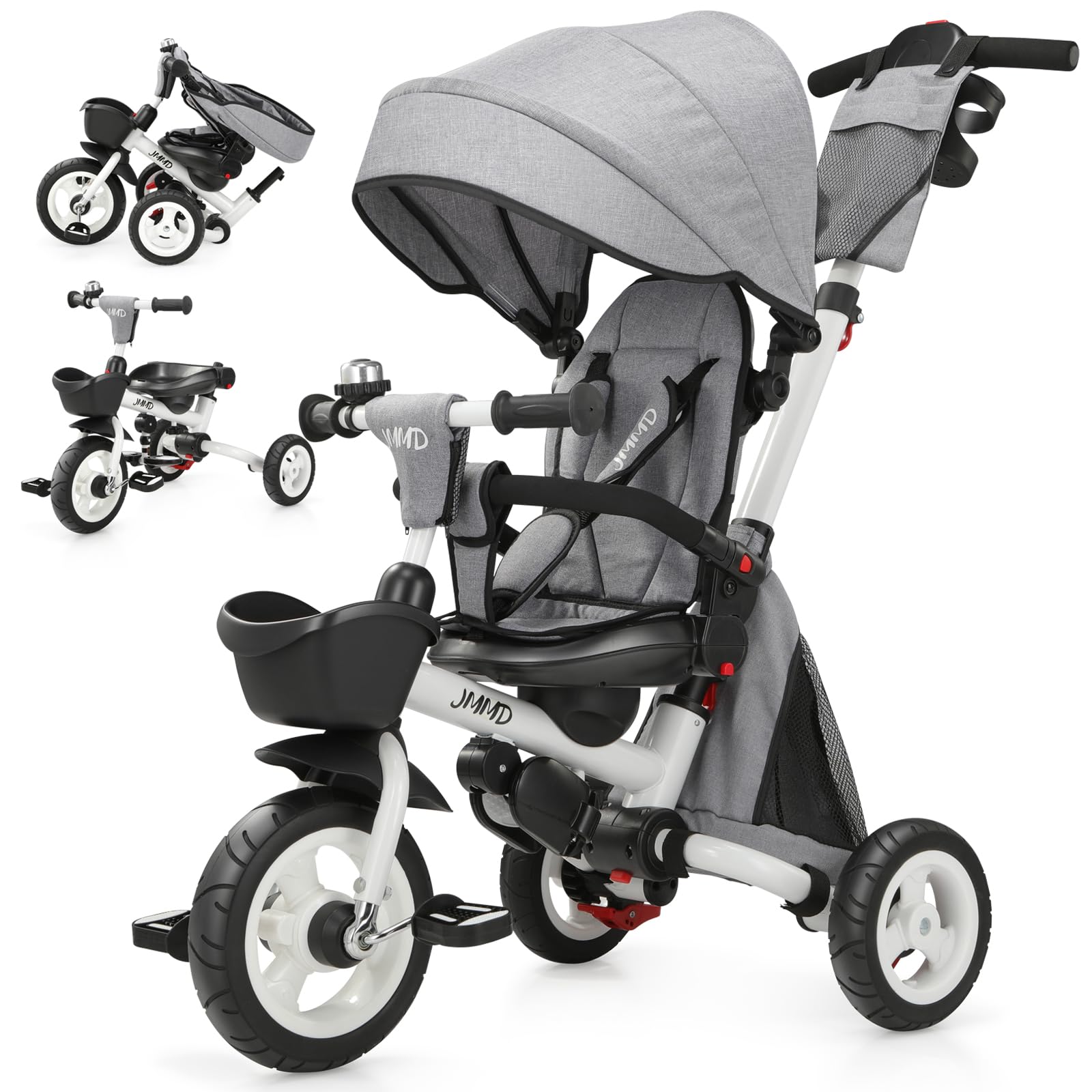
The JMMD 8-in-1 is the most feature-rich option for parents who want stroller-like control with trike independence. The 360-degree swivel seat lets you turn your child to face you during walks or forward for pedaling, and the reclining backrest allows napping toddlers to rest comfortably. All-terrain wheels with dual brakes give you precise stopping power on slopes and gravel paths.
The telescoping push handle adjusts to parent height, so you do not stoop, and the foldable footrest keeps small feet secure when your child is not pedaling. A detachable canopy provides sun protection, and the rear storage basket swallows diaper bags or picnic supplies. The safety harness is a five-point design, which is rare at this price tier and crucial for wiggly 18-month-olds.
The trade-off is size — this trike weighs more than typical models and takes up significant floor space even when folded. The many conversion modes also mean more parts to keep track of between transitions. For families who plan daily walks and want maximum versatility, the extra effort is worth it.
Why it’s great
- 360° swivel seat with recline supports naps on walks
- All-terrain wheels and dual brakes handle hills safely
- Five-point harness keeps smaller riders securely seated
Good to know
- Bulky footprint makes storage a challenge in small homes
- Multiple parts mean longer assembly and mode-switching time
4. JMMD 7-in-1 Foldable Trike

The JMMD 7-in-1 offers a similar convertible experience to its 8-in-1 sibling but in a more streamlined package. It includes a parent push handle, adjustable safety harness, wheel brakes, and a removable canopy — all packed into a foldable frame that collapses smaller than the 8-in-1 version. The canopy is UV-resistant and clips on and off without tools.
The adjustable seat and handlebar height accommodate children from 18 months to 5 years, and the wheel brakes lock both rear wheels independently for secure parking on slopes. Parents report that the push handle feels sturdy even when steering one-handed, and the footrest folds up out of the way once the child transitions to pedaling.
The main downside is that the 7-in-1 lacks the reclining backrest and swivel seat of the 8-in-1, so it is best for children who do not need to nap during walks. Assembly is moderate — expect 15 to 20 minutes. The pink color scheme is vivid and resists fading after months of outdoor storage.
Why it’s great
- Foldable design fits into compact car trunks and closets
- Removable canopy adds sun protection without bulk
- Independent wheel brakes improve safety on hills
Good to know
- No reclining seat option for napping children
- Assembly is moderate — requires focus to align parts
5. KRIDDO 2-in-1 Toddler Tricycle
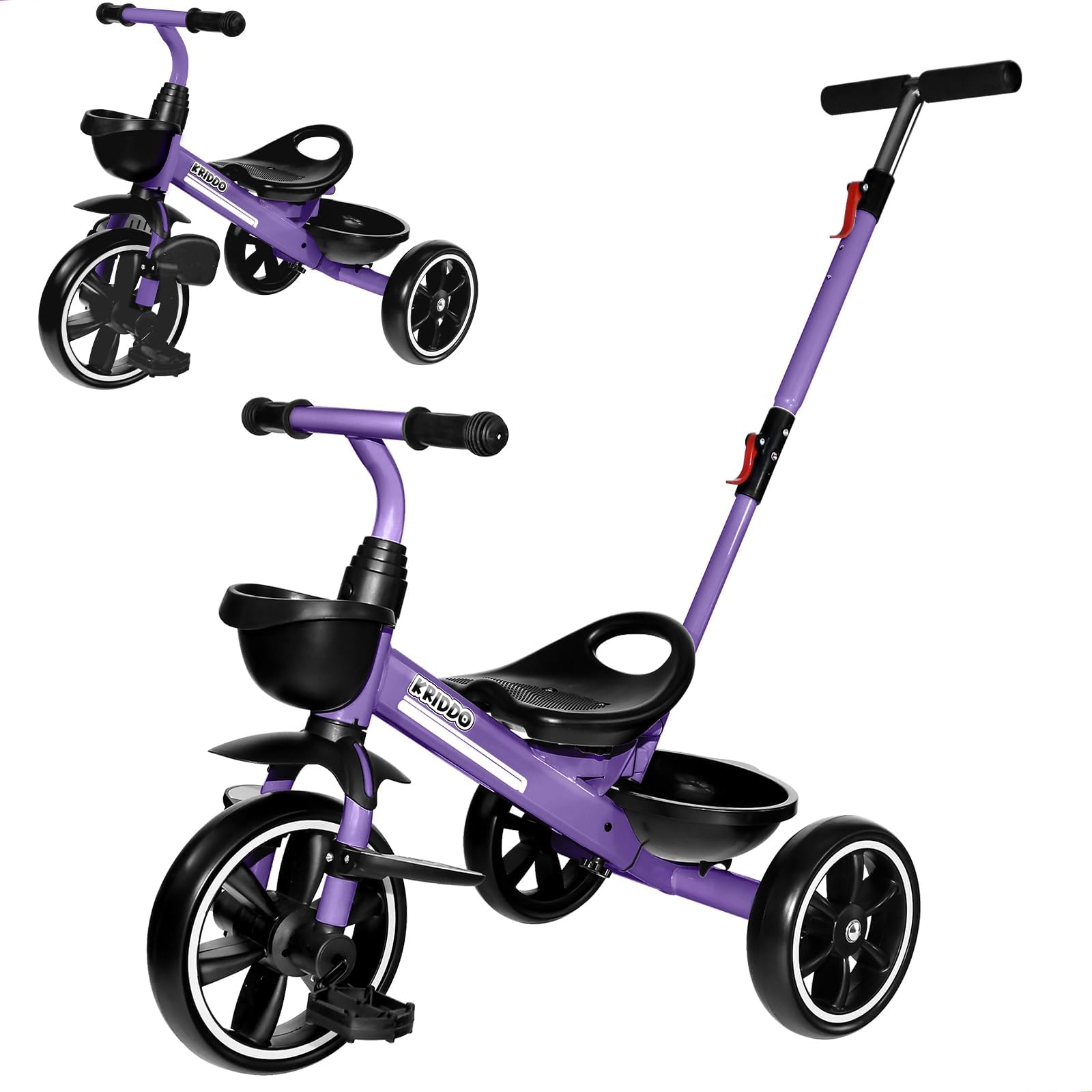
The KRIDDO 2-in-1 is built specifically for the youngest riders, starting at 18 months. The extended push handle reaches a comfortable parent height for steering, while the foldable front footrest gives small legs a stable place to rest when they are not pedaling. The transition from stroller mode to independent tricycle mode is tool-free — you pop off the handle and flip down the pedals.
The frame is a combination of heavy-duty plastic and steel, keeping weight manageable for parents to lift while still feeling sturdy when the child rides. The seat adjusts without tools via a quick-release lever, and the handlebar can be raised or lowered to match the child’s arm length. The purple color is bold and gender-neutral in a way that works well for either boys or girls.
The biggest limitation is the weight ceiling — this trike maxes out around 40 pounds, meaning most children will outgrow it before age 4. The wheels are plastic with rubber treads, so they slide on wet grass. For parents who want a dedicated first trike for a young toddler, the KRIDDO delivers a stable starting point.
Why it’s great
- Tool-free conversion between push and pedal modes
- Extended handle reaches parent height without stooping
- Foldable footrest keeps feet secure when not pedaling
Good to know
- Weight limit around 40 lb limits long-term use
- Wheels can slip on wet grass or loose gravel
6. Fisher-Price Hot Wheels Tough Trike

Fisher-Price teamed up with Hot Wheels to produce a trike that looks fast and handles rough terrain better than most. The wide wheelbase and chunky rubber treads grip loose dirt and pebbles without tipping, making it a solid pick for families with dirt driveways or gravel paths. The plastic frame is reinforced at stress points, and the 7.3-pound overall weight makes it easy for a 3-year-old to maneuver.
The secret storage compartment under the seat is a clever touch — lift the seat and stash snacks, small toys, or a water bottle inside. The large foot pedals are easy to find with uncoordinated toddler feet, and the handlebar grips have ridges that help sweaty hands stay on. The graphics are printed directly onto the plastic, so they do not peel off after a few weeks of sun exposure.
The trade-off is that the plastic frame, while durable for its weight class, flexes noticeably when a heavier child hits a bump at speed. The manufacturer recommends a maximum weight of 55 pounds, but hard cornering on asphalt feels less planted than a steel-framed competitor. Assembly snaps together quickly with no tools required for most steps.
Why it’s great
- Wide wheelbase and treaded tires excel on loose surfaces
- Hidden seat storage compartment keeps treasures secure
- Easy snap-together assembly with minimal tools needed
Good to know
- Plastic frame flexes under heavier riders at speed
- No parent push handle for younger toddlers
7. Umatoll Tricycle with Light-Up Wheels

The Umatoll Tricycle focuses on visual excitement — the wheels light up in bright colors as the child pedals, creating a visual reward that keeps toddlers motivated to keep moving. The frame is a mix of molded plastic and metal, keeping the overall weight low enough for a young child to steer independently. The seat adjusts to three positions, accommodating ages 2 to 5.
The light-up mechanism is motion-activated, so it glows during pedaling but shuts off when the trike stops, preserving battery life. The wheels are solid polyurethane, so there is no risk of flats, and they roll quietly on smooth pavement. The handlebar has a wrap-around pad for extra grip, and the pedals are textured to prevent slipping in wet conditions.
The main drawback is that the light-up wheels, while fun, produce a slight clicking sound when rolling, which can annoy parents during quiet evening rides. The plastic base is not as impact-resistant as steel, so crashing into curbs at speed may crack the shell around the wheel mounts. For casual driveway and sidewalk cruising, the Umatoll delivers high fun-per-dollar ratios.
Why it’s great
- Motion-activated light-up wheels motivate reluctant riders
- Three-position adjustable seat fits ages 2 to 5
- Solid wheels eliminate flat tire maintenance
Good to know
- Light-up wheels produce a low clicking sound in motion
- Plastic shell is less durable than steel on hard impacts
FAQ
What age is best to start using a kids tricycle?
Should I choose a trike with air-filled tires or solid wheels?
Is a parent push handle necessary for a 2-year-old?
Final Thoughts: The Verdict
For most families, the kids tricycle that strikes the best balance is the Radio Flyer Red Rider because its steel frame, quiet ride wheels, and adjustable seat deliver years of reliable use without gimmicks. If you want the most flexibility for your child’s growth, grab the XPIY 3-in-1 Folding Trike — it transitions from balance mode to pedal mode and folds flat for storage. And for maximum parent control with a baby who is not yet pedaling, nothing beats the JMMD 8-in-1 Tricycle Stroller, which turns a trike into a stroller with a swivel seat and full harness.