Kneeling on concrete, tile, or hardwood for hours leaves your knees bruised, aching, and vulnerable to long-term joint strain. The wrong pad slips, compresses flat after a week, or traps sweat until you can’t stand wearing it. A properly designed work knee pad absorbs impact at the patella, stays locked in place through repetitive motion, and lets you finish the job without wincing every time you stand up.
I’m Emma — the founder and writer behind Baby Bangs. I’ve spent over a decade analyzing personal protective equipment for tradespeople, flooring installers, and DIY renovators, parsing foam density charts, gel layer thicknesses, strap durability, and shell abrasion ratings so you don’t have to guess.
Whether you’re laying tile, framing a deck, or pulling weeds from a stone pathway, finding the right knee pads for working means balancing cushion thickness with surface grip, breathability with durability — and this guide cuts through the marketing to show you exactly which models deliver.
How To Choose The Best Knee Pads For Working
Picking the wrong knee pads means you’re back on Amazon ordering a replacement in six weeks — or worse, dealing with patellar tendonitis. Three factors separate a pad that lasts a season from one that lasts a day.
The Padding Stack: Gel, Foam, or Both?
Single-density foam compresses permanently under repeated load. A gel layer sandwiched between foam layers rebounds every time you stand up, dispersing the force across the full surface of the kneecap. For any job requiring kneeling more than thirty minutes, hybrid gel-and-foam padding is the baseline to accept.
Shell Design: Hard Cap vs. Soft Shell
Hard-shell pads (polypropylene or TPR caps) slide across smooth subfloors but protect against sharp debris on a construction site. Soft-shell pads (neoprene or leather) grip the floor and stay put during flooring work, but offer less puncture resistance. Match the shell to your surface — not the other way around.
Strap System: Single vs. Double Straps
A single elastic strap is fine for quick tasks: gardening, painting baseboards. Double straps — one wide strap above the calf, one quick-release below — prevent rotational shifting when you crawl sideways across joists or tile rows. Look for military-grade rivets at strain points if you’re twisting and reaching all day.
Quick Comparison
On smaller screens, swipe sideways to see the full table.
| Model | Category | Best For | Key Spec | Amazon |
|---|---|---|---|---|
| DEWALT Hard-Shell (DWST590013) | Premium Hard Shell | Rough construction & debris-heavy sites | 1680 denier fabric / rigid hybrid cap | Amazon |
| NoCry Professional Construction | Premium Gel + Foam | All-day kneeling with ankle support | Dual-layer gel + foam / lower lip | Amazon |
| DEWALT Flooring with Gel (DWST590014) | Mid Gel Hybrid | Flooring and tile installation | Gel zone / swiveling buckle | Amazon |
| NoCry Flooring with Gel | Mid Gel Hybrid | Floor-safe anti-slip leather | Extra-wide gel + thick foam | Amazon |
| TSE Safety Super Soft | Budget Soft Shell | Light gardening, painting, quick tasks | 0.5-inch neoprene padding | Amazon |
In‑Depth Reviews
1. DEWALT Hard-Shell with Gel (DWST590013)
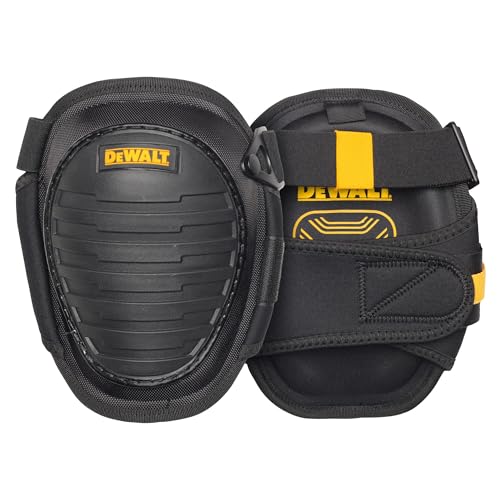
The shell on the DWST590013 is a rigid hybrid that stands up to repeated friction against concrete, gravel, and rough framing lumber. It uses 1680 denier fabric as the base — the same abrasion-resistant weave found in heavy-duty tool bags — so you can drag your knees across grit without wearing through in a season. The protective gel zone sits directly under the patella, a dense pocket designed to absorb the repeated micro-impact of hammering, drilling, or crawling sideways across studs.
The dual-strap system uses one extra-wide strap above the calf and a quick-release elastic strap below it, meaning the pad stays centered even when you pivot on one knee. Molded foam supports the edges so the cap doesn’t dig into your shin when you bend past 90 degrees. This is the pick for anyone who works on active construction sites, not finished floors.
The trade-off is that the hard cap doesn’t grip smooth subfloors well — on polished concrete or tile, it can slide a few inches when you shift weight. The swiveling buckle helps, but if your surface is slippery laminate, a soft-shell model will hold position better. Buy this when your main concern is debris protection and long wear life, not floor traction.
Why it’s great
- Rigid hybrid cap resists punctures and abrasion from sharp debris
- 1680 denier fabric outlasts standard nylon webbing
- Gel zone prevents compression bottom-out over long shifts
Good to know
- Hard shell slides on smooth finished floors
- No dedicated ankle support lip below the kneecap
2. NoCry Professional Construction Knee Pads
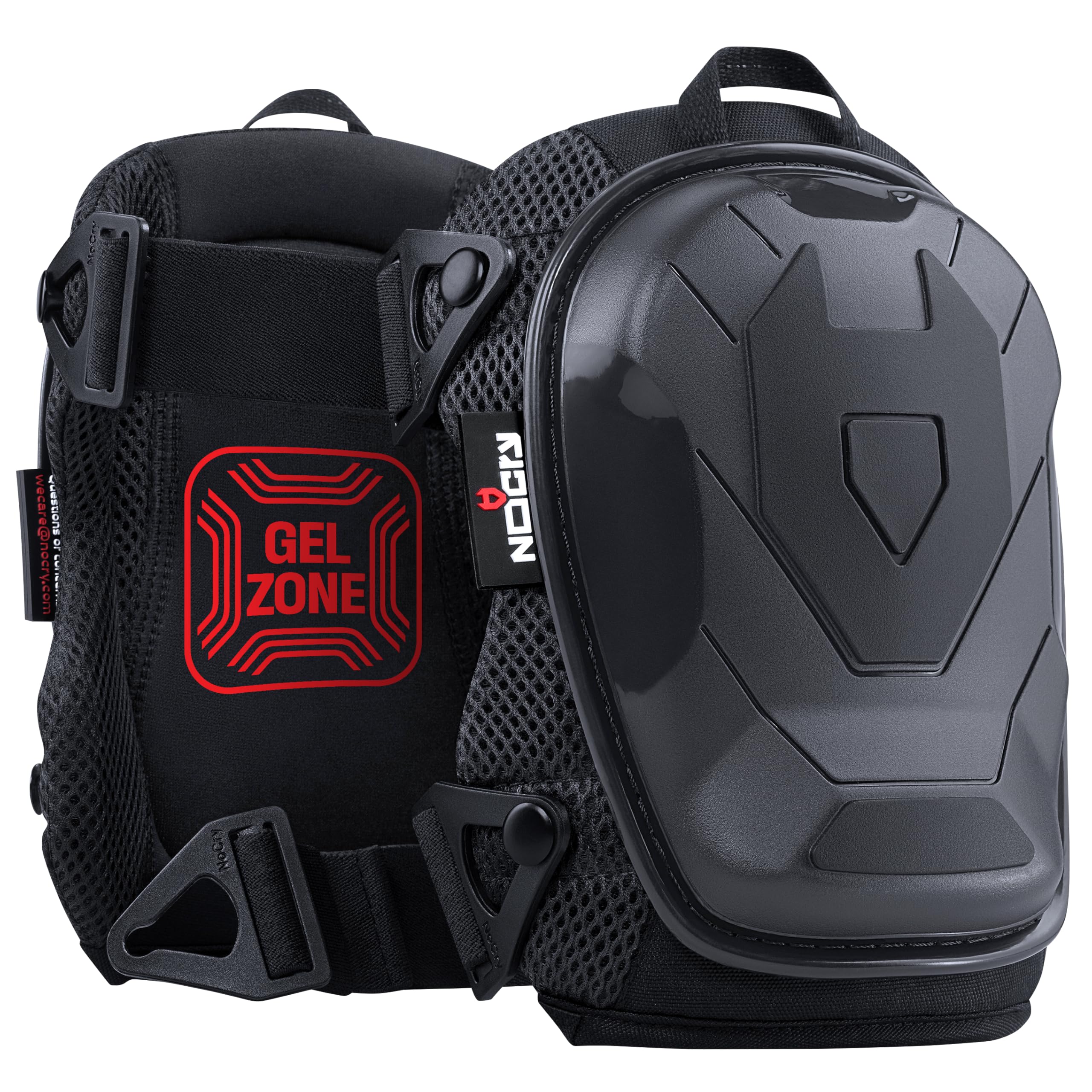
NoCry’s professional model solves two problems that most work pads ignore: ankle joint stress and backward slip. A molded lower lip extends past the kneecap to raise your ankle slightly when you squat, reducing the angle at the tibia and taking pressure off the Achilles tendon. This makes a measurable difference if you’re kneeling for three-plus hours without standing — common among carpet layers, tilers, and flooring crews.
The dual-layer cushion uses a gel insert topped with high-density foam, so the initial sink is soft but the pad doesn’t bottom out against concrete. The TPR anti-slip cap has a matte finish that grabs unfinished subfloors better than glossy plastic shells. Reinforced nylon threads stitch the major seams, and military-grade rivets anchor the strap attachment points — the straps themselves are elastic with slip buckles that allow micro-adjustments without rethreading.
Breathable polyester mesh lines the back panel, which matters more than most buyers realize. Soft-shell neoprene pads trap sweat against the skin; the mesh panel on the NoCry vents moisture during repetitive knee lifts. The one-size fits most adults, but users with very thick thighs may find the upper strap at its limit. Otherwise, this is the most balanced premium option for general contracting and flooring.
Why it’s great
- Ankle support lip reduces joint strain during extended kneeling
- Gel + foam hybrid doesn’t compress permanently after weeks of use
- TPR cap offers superior grip on unfinished subfloors
Good to know
- Upper strap may be tight for muscular thighs
- Mesh back collects dirt on muddy job sites
3. DEWALT Flooring with Gel (DWST590014)
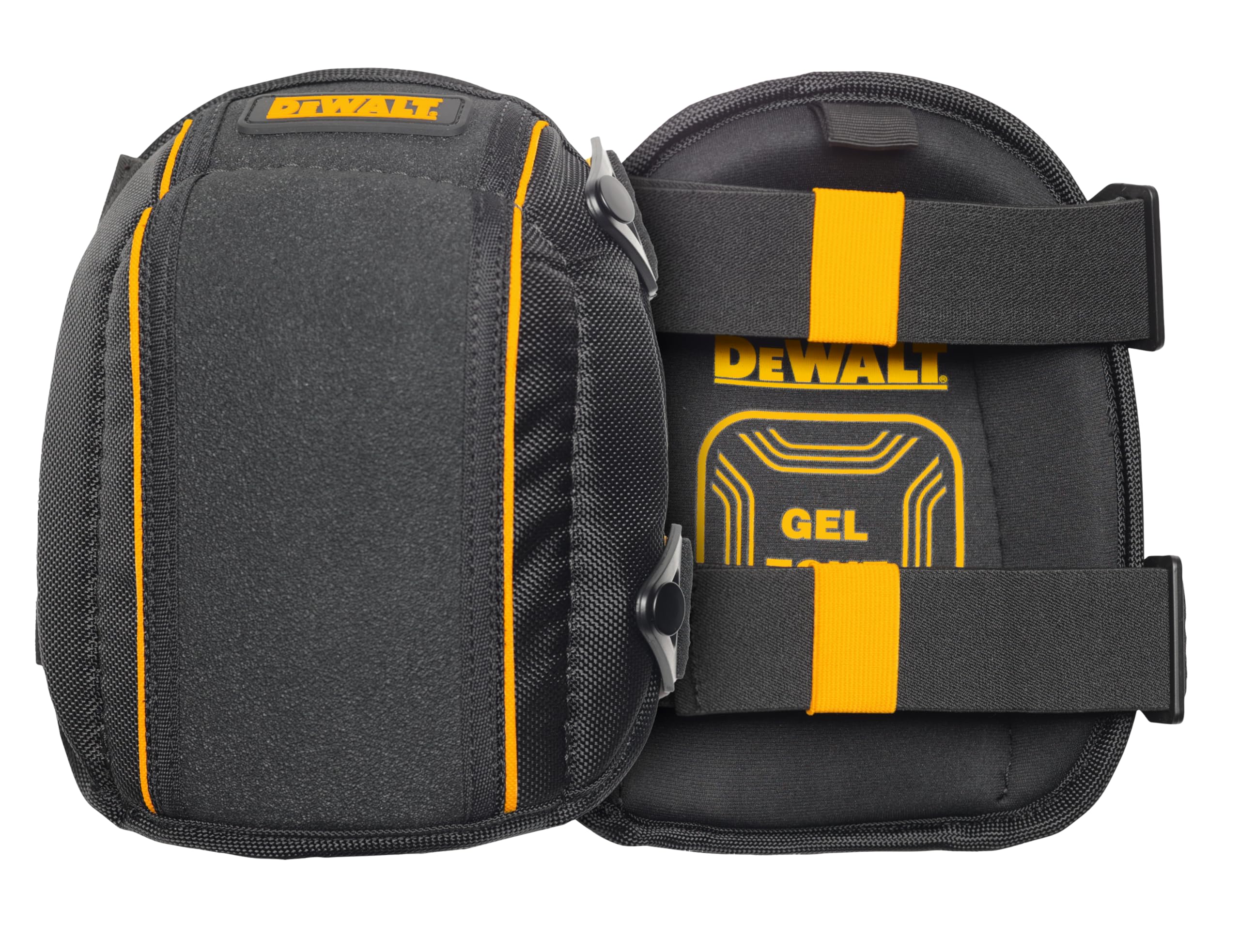
The DWST590014 is DEWALT’s soft-shell answer for flooring specialists. Instead of a hard cap, it uses high-density foam encased in 1680 denier fabric with a gel zone fused into the center. This design lets the pad conform to the floor surface rather than skid across it — critical when you’re butt-and-rolling across hardwood or vinyl planks and can’t afford your knee pads to drift mid-row.
Swiveling buckles connect the dual straps, allowing the pad to rotate with your knee instead of fighting natural leg movement. The quick-release elastic strap below the calf lets you pop the pads off during breaks without unbuckling the top strap each time. DEWALT specifically tuned the foam density for floor work — firm enough to prevent the kneecap from hitting the subfloor through the cushion, soft enough to stay quiet against laminate without scratching the finish.
The downside is the lack of a hard cap means no protection if you kneel on a stray nail, screw, or piece of sharp debris. These are for finished surfaces only — don’t wear them on a rough concrete slab that hasn’t been swept. The gel zone also sits slightly higher than on competitor models, so taller users should test the patella alignment before committing to a full workday.
Why it’s great
- Soft shell grips finished floors without scratching
- Swiveling buckles improve natural range of motion
- Quick-release strap makes on/off fast during breaks
Good to know
- No hard shell means no puncture protection from debris
- Gel zone placement may not align with every leg length
4. NoCry Flooring with Extra-Wide Gel & Thick Foam Cushion

NoCry’s flooring-specific pad uses an extra-wide gel cushion that spans the entire front of the knee, not just a centered patch. This is important when you’re working on hands and knees and your weight shifts forward onto the top of the shin — the wider cushion catches that surface contact and prevents the edge of the pad from digging into your skin. The thick foam backing adds secondary impact absorption for when you drop your full body weight down onto both knees.
The outer layer is anti-slip leather that creates friction against hardwood, vinyl, tile, and laminate without leaving scuff marks. This is the same type of leather used on high-end knee kickers for carpet stretching: it grabs the floor hard enough that you can push laterally without the pad sliding. Reinforced adjustable straps loop through military-grade rivets at the stress points where most budget pads tear after three months.
The fit leans slightly narrower than the professional NoCry model above, so users with larger calves or thighs may need to max out the strap length. There’s no ankle support lip, so if your knees ache specifically in the tendon below the kneecap, the Professional model is a better match. For pure floor-work stability at a mid-range investment, this is the most secure soft-shell option available.
Why it’s great
- Extra-wide gel cushion catches the full front of the knee and shin
- Anti-slip leather grips finished floors without leaving marks
- Military-grade rivets prevent strap failure at stress points
Good to know
- Narrow fit may not accommodate larger legs
- No lower ankle lip for extended kneeling support
5. TSE Safety Super Soft Work Knee Pads

The TSE Safety pads use a half-inch of neoprene padding wrapped in waterproof faux leather — a simple, lightweight design that suits short-duration tasks. Neoprene compresses faster than gel-and-foam hybrids, but for gardening, painting, or fifteen-minute kneeling intervals, it provides adequate comfort at a fraction of the investment. The waterproof outer layer wipes clean with a damp rag, so muddy garden soil and wet paint splatter don’t ruin them after one use.
A single hook-and-loop strap wraps behind the knee and fastens in front. This is quick to put on and take off, but it lacks the anti-rotation stability of a double-strap system. On smooth concrete, the neoprene shell grips reasonably well, but it will shift if you crawl sideways repeatedly. The padding is flexible and maintains its shape between uses — it won’t crack or flake like cheap foam pads that cost half as much.
These are not built for daily commercial use. The neoprene will lose rebound after three or four months of consistent eight-hour wear, and the single strap can loosen if you’re squatting and standing repeatedly. If your work involves all-day kneeling on hard floors, spend for a gel hybrid. If you need an inexpensive backup pair for the car or a weekend-around-the-house pad, these deliver perfectly usable protection.
Why it’s great
- Lightweight and flexible for short, casual work sessions
- Waterproof faux leather wipes clean easily after dirty jobs
- Single strap makes on/off fast without fuss
Good to know
- Neoprene compresses faster than gel hybrid padding
- Single strap allows rotation during sideways crawling
FAQ
Should I choose hard-shell or soft-shell knee pads for construction work?
How often should I replace work knee pads used daily?
Can knee pads cause circulation problems in my legs?
Final Thoughts: The Verdict
For most users, the knee pads for working winner is the NoCry Professional Construction Knee Pads because the gel-and-foam hybrid cushion, ankle support lip, and breathable mesh back provide the best balance of comfort and stability for all-day kneeling on mixed surfaces. If you want maximum debris protection on rough job sites, grab the DEWALT Hard-Shell (DWST590013). And for finished-floor work where grip and slide resistance matter most, nothing beats the NoCry Flooring with Extra-Wide Gel.