Every foot strike sends force up through your ankle and into your knee joint. When cartilage is compromised, the impact from a standard firm running shoe accelerates wear and triggers pain. The right shoe acts as a tuned damper — absorbing ground reaction force before it reaches your patella.
I’m Emma — the founder and writer behind Baby Bangs. I’ve spent years analyzing cushioning compounds, midsole stack heights, and medial post geometries to identify which running shoes genuinely offload the knee joint during a heel-to-toe gait cycle.
This guide breaks down the specific foam densities, support architectures, and drop ratios that matter. Here is the research-backed selection of the jogging shoes for bad knees that actually reduce tibial acceleration and keep you moving pain-free.
How To Choose The Best Jogging Shoes For Bad Knees
Knee pain during a run rarely comes from the knee itself — it comes from forces transmitted through the shoe. Three engineering parameters determine whether a shoe protects or punishes your patella and meniscus.
Stack Height and Midsole Compression
The vertical distance between your foot and the ground, measured in millimeters, dictates how much foam is available to absorb impact. For bad knees, look for a stack height of at least 28 mm in the heel and 22 mm in the forefoot. Thinner shoes transfer more shock directly to articular cartilage. The foam compound matters equally — nitrogen-infused EVA and PEBA (polyether block amide) offer greater energy return and longer-lasting softness than basic EVA.
Heel-to-Toe Drop and Patellar Load
Drop is the difference in millimeters between heel and forefoot height. A higher drop (10-12 mm) shifts impact toward the quadriceps and reduces patellofemoral compression — beneficial for runners with runner’s knee or patellar tendinopathy. A lower drop (4-6 mm) loads the calf and Achilles more. For joggers with bad knees, a minimum 8 mm drop is a safe baseline unless a physical therapist has advised otherwise.
Stability Features for Medial Knee Stress
If your knee caves inward during the stance phase (dynamic valgus), you need a shoe with a medial post or a wider guide rail. These features resist excessive pronation and reduce rotational torque on the medial collateral ligament. Neutral shoes work well for runners with neutral gait, but anyone with overpronation should prioritize a structured stability shoe like the Saucony Hurricane or New Balance 860.
Quick Comparison
On smaller screens, swipe sideways to see the full table.
| Model | Category | Best For | Key Spec | Amazon |
|---|---|---|---|---|
| Brooks Glycerin Stealthfit 22 | Neutral Max Cushion | Plush heel-to-toe transition | EVA foam, 10 mm drop | Amazon |
| ASICS Gel-Cumulus 27 | Neutral Daily Trainer | Balanced cushion for moderate miles | Rearfoot GEL, 8 mm drop | Amazon |
| Saucony Hurricane 24 (Women’s) | Stability Max Cushion | Overpronation with knee pain | PWRRUN PB, 10 mm drop | Amazon |
| Skechers Aero Burst | Neutral Lightweight | Responsive feel, moderate cushion | Ultra Go foam, 8 mm drop | Amazon |
| New Balance Fresh Foam X 860 V14 | Stability Daily Trainer | Structured support for flat arches | Fresh Foam X, 10 mm drop | Amazon |
| Orthofeet Relay Max Cushion | Orthopedic Max Cushion | Prescription-level joint protection | Orthotic insole, high stack | Amazon |
| Saucony Hurricane 24 (Men’s) | Stability Max Cushion | Heavy overpronator knee relief | PWRRUN PB, 10 mm drop | Amazon |
| Brooks Ghost 16 | Neutral Balanced Cushion | Smooth, consistent ride | DNA LOFT v3, 12 mm drop | Amazon |
| New Balance Fresh Foam X More V6 | Neutral Maximum Stack | Highest possible impact absorption | Fresh Foam X, 4 mm drop | Amazon |
In‑Depth Reviews
1. Brooks Glycerin Stealthfit 22
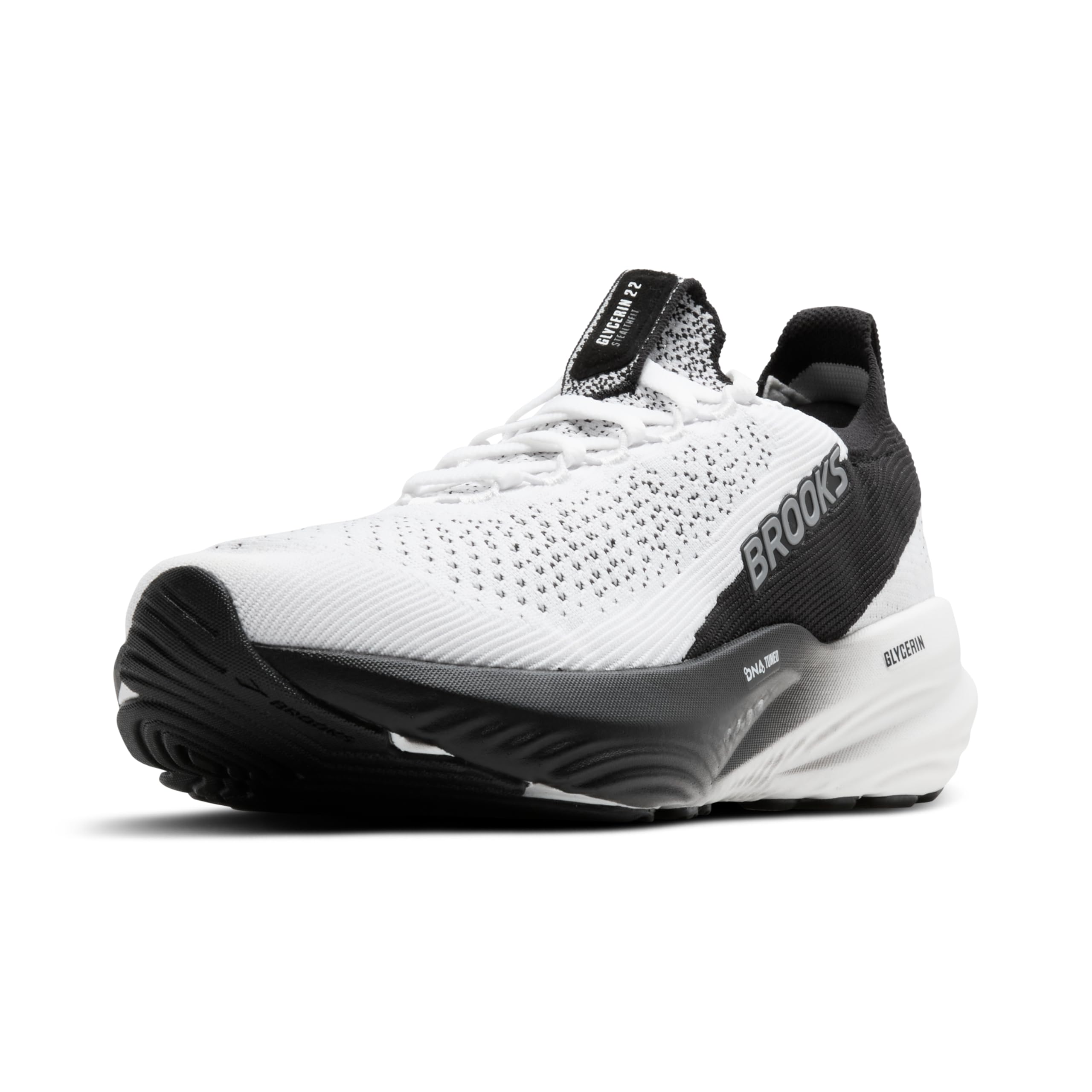
Brooks engineered the Glycerin Stealthfit 22 with their plush EVA foam formula that delivers a maximum cushioning level without sacrificing ground feel. The 10 mm drop shifts loading toward the quadriceps, reducing patellar tendon strain for runners with anterior knee pain. The Stealthfit upper wraps the midfoot securely, minimizing heel slip that can alter stride mechanics.
Testers consistently note the absence of harsh impact spikes during heel strike — the foam compresses progressively rather than bottoming out suddenly. This controlled deceleration is exactly what compromised knee cartilage needs. The outsole offers reliable traction on dry pavement and light gravel, though it is not designed for technical trails.
Runners with mild overpronation may still find enough inherent stability from the wide base, but those with significant medial collapse should pair this neutral shoe with a supportive insole. The Glycerin 22 sits at the top of the neutral max-cushion category for a reason — it prioritizes knee-friendly impact attenuation without turning the ride into a marshmallow.
Why it’s great
- Maximum EVA cushioning absorbs ground force before it reaches the knee
- 10 mm drop reduces patellofemoral compression during toe-off
- Stealthfit upper eliminates heel slippage that can torque the knee
Good to know
- Neutral platform — insufficient for heavy overpronators without an insert
- Upper has limited breathability in hot conditions
2. ASICS Gel-Cumulus 27
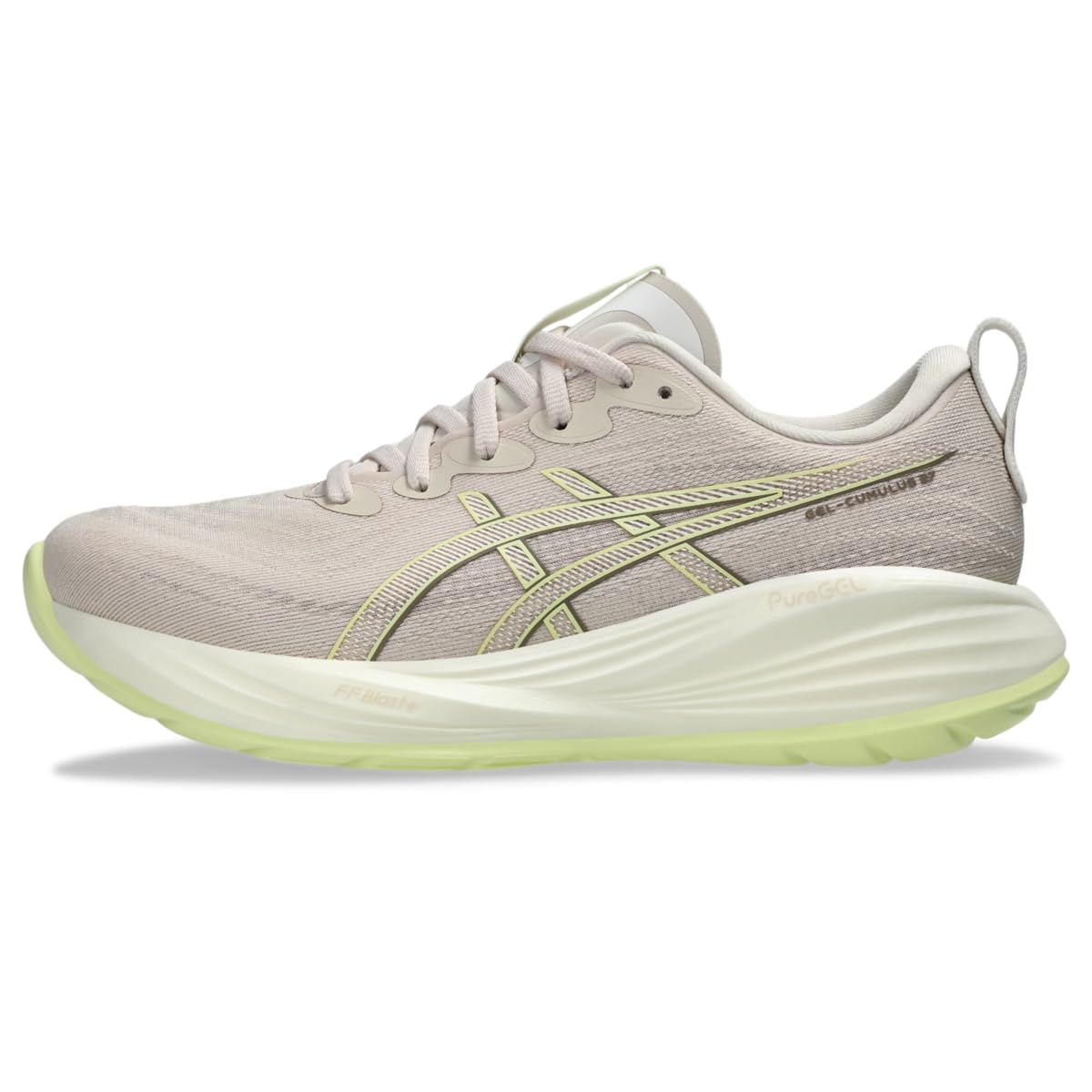
The Gel-Cumulus 27 sits as the lighter, more responsive sibling to ASICS’s max-cushion Nimbus. Its rearfoot GEL capsule sits directly under the calcaneus, dispersing impact at the exact moment of heel contact — the phase where most knee shock originates. The 8 mm drop provides a moderate load distribution that suits runners with mild patellar sensitivity.
The midsole uses a combination of FlyteFoam and FlyteFoam Blast+ to create a bouncy yet stable platform. This construction is beneficial for joggers who want some energy return rather than pure sink-in softness. The mesh upper is engineered for breathability and flexes naturally over the midfoot without creating pressure points near the ankle.
Where the Cumulus 27 shines is consistency — the foam does not degrade in feel after five miles, making it viable for longer training runs. The trade-off is a slightly firmer ride than the Brooks Glycerin, which some runners with severe bone-on-bone knee pain may find insufficient. It is best suited for those in the moderate mile range with intermittent knee discomfort.
Why it’s great
- Rearfoot GEL unit targets heel-strike impact directly
- Dual-density foam maintains consistent cushion over extended distances
- Lightweight build reduces fatigue that can worsen knee mechanics
Good to know
- Firmer than max-cushion models — may not suit severe knee pain
- Toe box runs slightly narrow for wider feet
3. Saucony Hurricane 24 (Women’s)
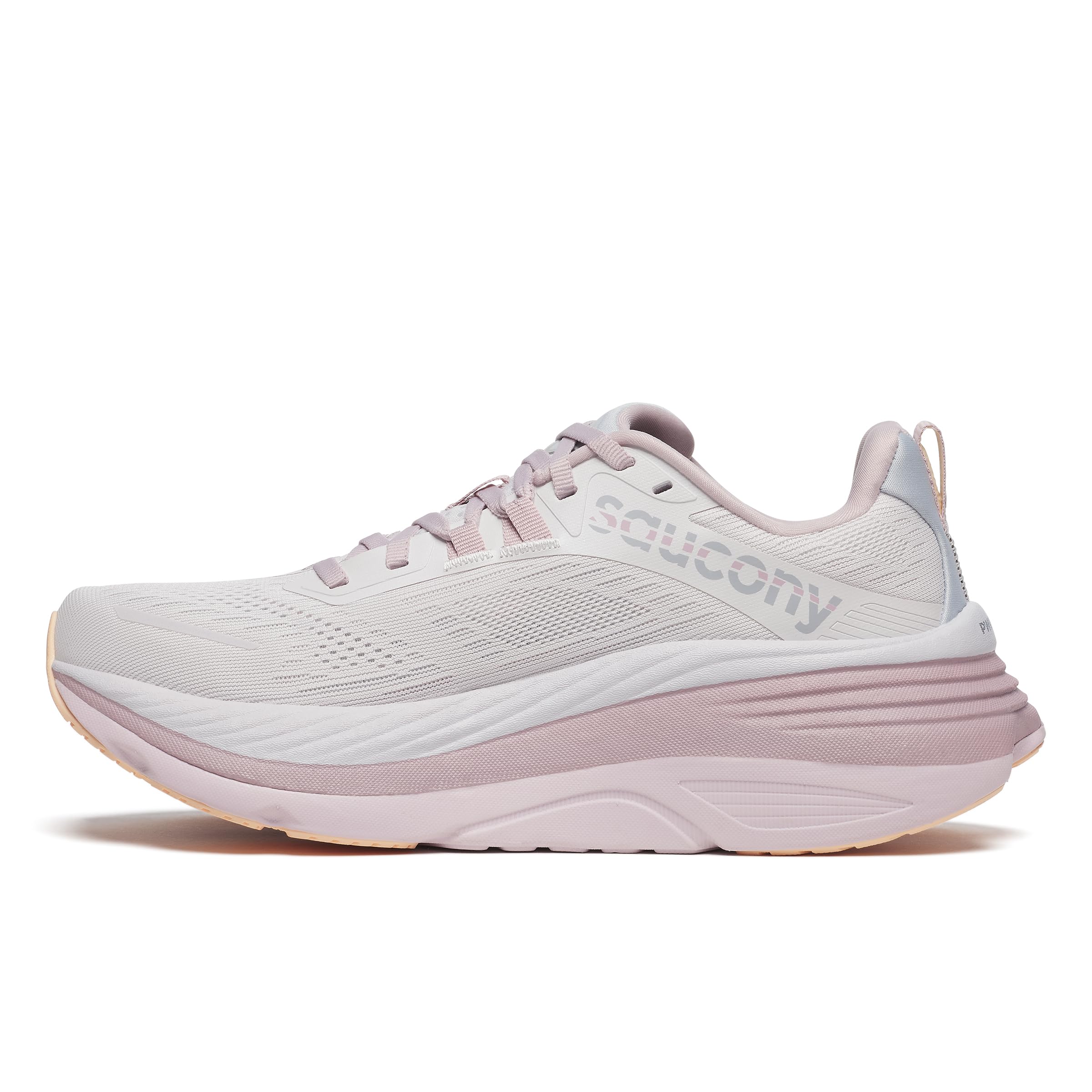
The Hurricane 24 is Saucony’s maximum-stability trainer, built with a medial post made from a firmer density of PWRRUN PB foam. This post provides resistance against the inward roll of the ankle during stance phase — the exact motion that transfers rotational stress to the medial knee ligament. The 10 mm drop complements the stability features by encouraging a heel-first landing pattern that is easier to control.
What sets the Hurricane apart is how it combines guidance with plushness. Many stability shoes feel like a block under the arch; the Hurricane 24 integrates its support seamlessly into the midsole so the ride remains smooth. The heel counter is rigid enough to lock the calcaneus in place, preventing any wobble that could torque the knee.
Runners with flat arches or a tendency toward dynamic valgus will feel the difference immediately — the shoe actively guides the foot through a more neutral path. The weight is noticeably higher than neutral trainers, but the joint protection payoff is significant. This is a purpose-built tool for overpronators with knee pain who have not found relief in neutral shoes.
Why it’s great
- Medial post reduces knee-torquing pronation effectively
- PWRRUN PB foam stays soft despite stability architecture
- Heel counter locks the rearfoot to prevent knee-wobble
Good to know
- Heavier than neutral trainers — may feel clunky for speedwork
- Upper lacks stretch for very high insteps
4. Skechers Aero Burst
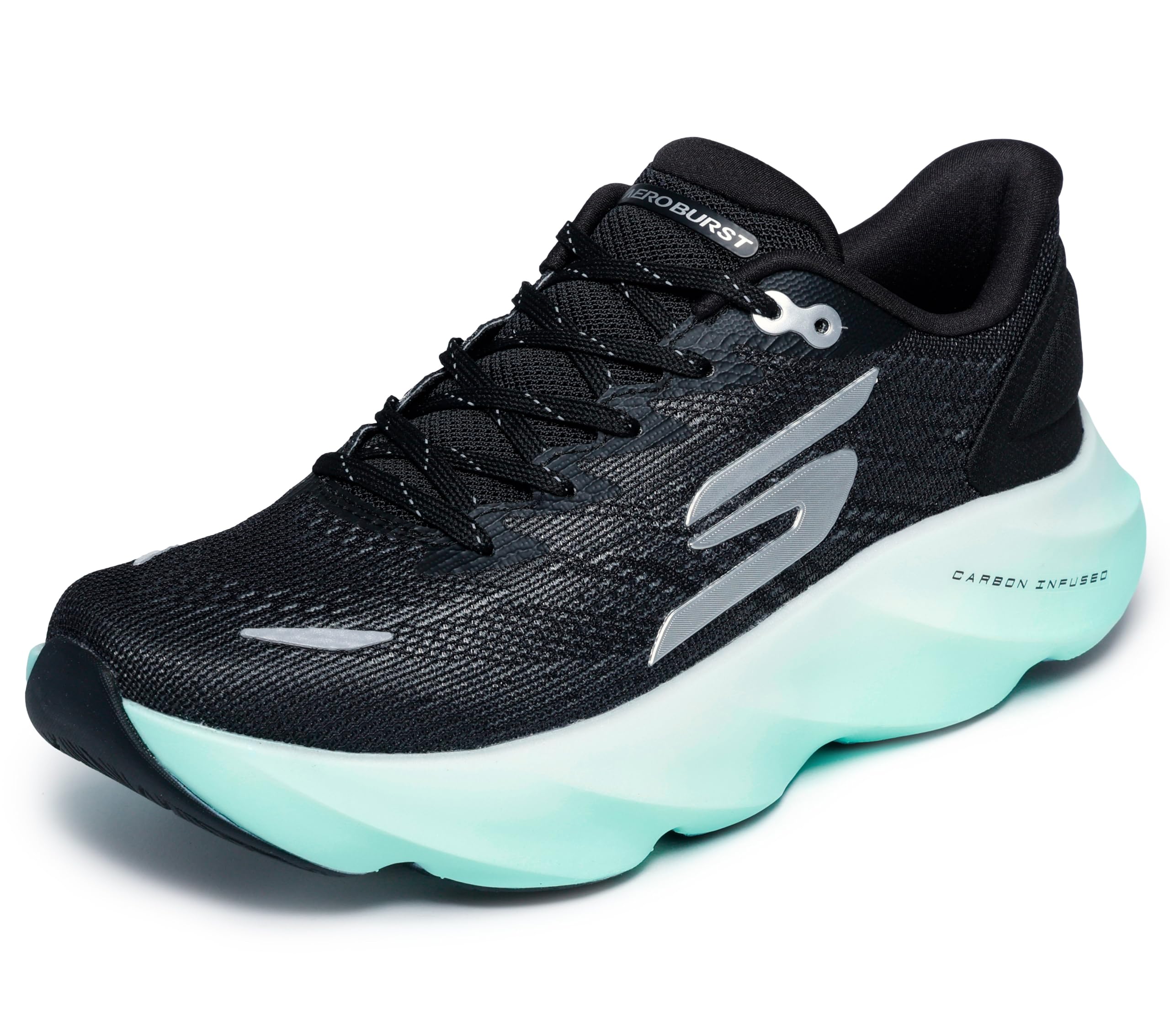
Skechers has quietly developed a legitimate cushioning platform in the Aero Burst. The Ultra Go foam midsole delivers a responsive yet well-damped ride that sits between the plushness of the Glycerin and the firmness of the Cumulus. The 8 mm drop offers a versatile load distribution, and the outsole rubber is generously placed under the heel and forefoot for consistent traction.
The upper uses a knit construction that adapts to foot shape without creating rigid hotspots. Runners with mild osteoarthritis report that the Aero Burst provides enough compression to reduce joint awareness during jogging without making them feel disconnected from the ground. The shoe is notably lighter than its stack height suggests.
For the price point, the Aero Burst delivers competitive cushioning performance. The main limitation is the absence of a stability post — this is unequivocally a neutral shoe. Overpronators will need to look elsewhere, but neutral-gait joggers seeking a lively, knee-friendly trainer will find the Aero Burst a compelling choice.
Why it’s great
- Ultra Go foam provides a balanced mix of soft and responsive
- Lightweight construction reduces stride fatigue
- Knit upper molds comfortably to various foot shapes
Good to know
- No medial stability support for overpronators
- Midfoot lockdown can feel loose for narrow feet
5. New Balance Fresh Foam X 860 V14
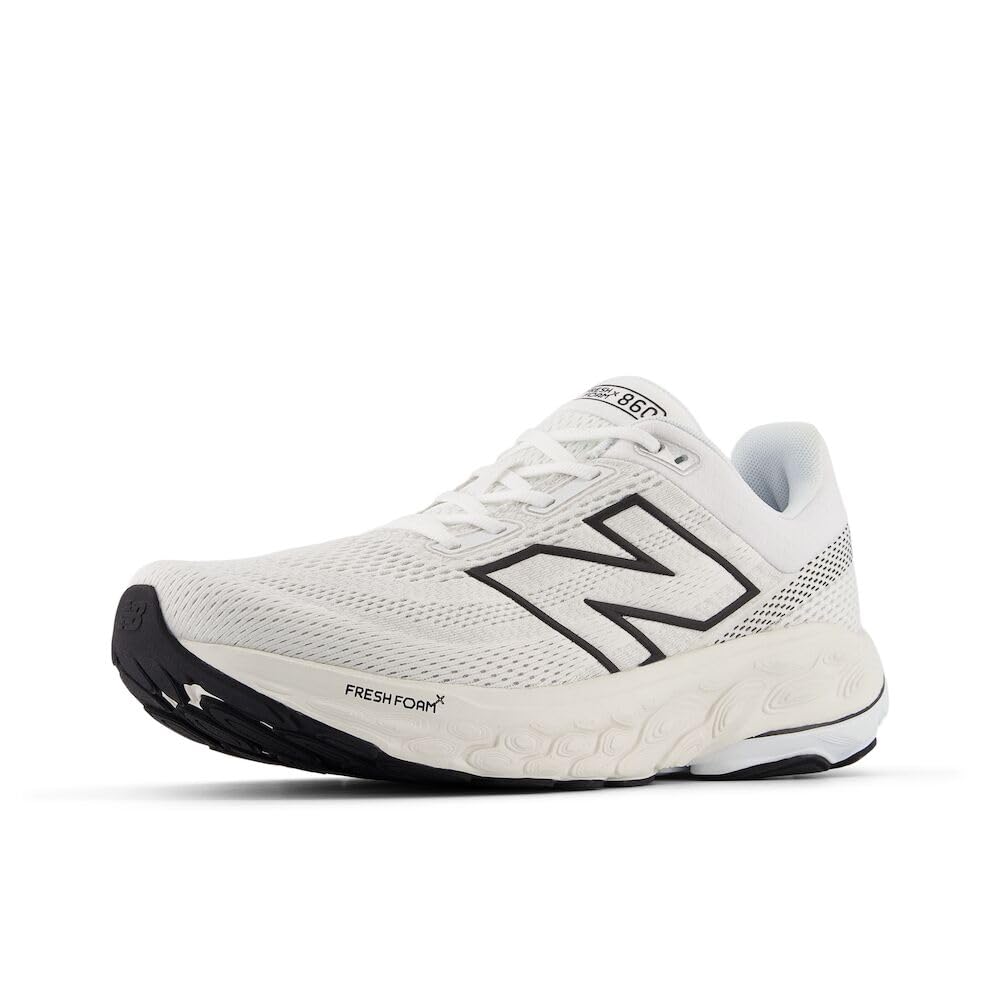
The 860 series has long been New Balance’s answer to the stability category, and the V14 iteration refines the formula with Fresh Foam X — a nitrogen-infused midsole that manages to stay soft while providing a medial wedge for pronation control. The 10 mm drop is standard for a stability shoe, offering the quad-dominant loading pattern that protects the patella.
The outsole features a blown rubber compound in the heel that adds durability and grip for road jogging. The upper uses a hypoknit material that is both breathable and structured, holding the foot firmly over the platform. Runners with flat feet or fallen arches appreciate how the 860 guides the foot without aggressive pressure under the arch.
Where the 860 V14 excels is its ability to serve runners who need stability but do not want a rigid, clunky feel. The Fresh Foam X is noticeably softer than previous-generation 860 midsoles, making it more knee-friendly for daily mileage. It is less premium than the Hurricane 24 in overall material feel, but it delivers reliable pronation control at a more accessible tier.
Why it’s great
- Nitrogen-infused Fresh Foam X combines softness with stability
- Medial wedge effectively controls overpronation
- Hypoknit upper provides secure midfoot lockdown
Good to know
- Upper material feels less premium than competing stability models
- Midsole softness may compress faster for heavier runners
6. Orthofeet Relay Max Cushion
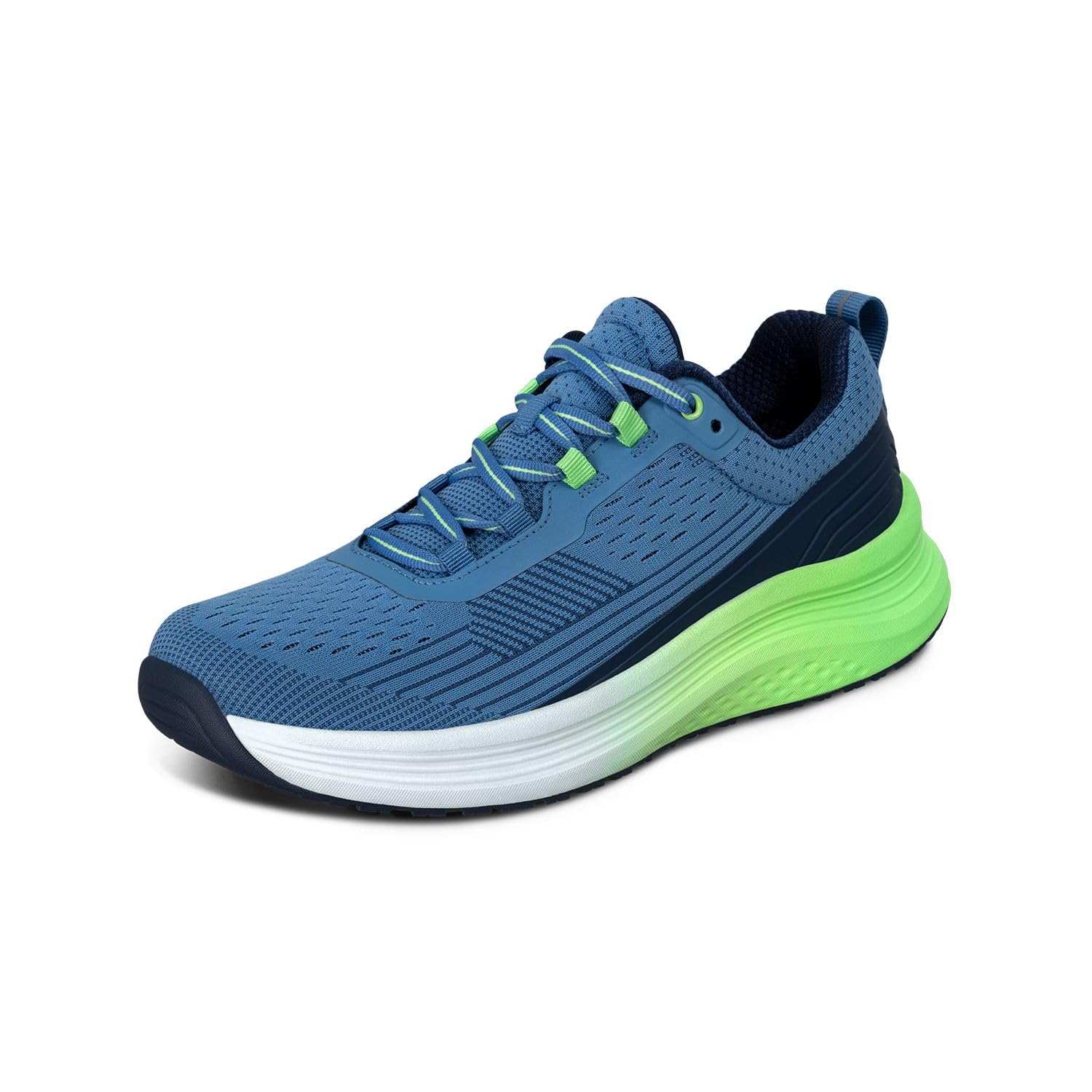
The Relay Max Cushion from Orthofeet approaches knee protection from an orthopedic angle rather than a pure running-shoe perspective. It includes a removable orthotic insole with metatarsal pads and a cushioned arch support, allowing users to customize the fit or swap in their own prescription orthotics. The high stack midsole is built from a proprietary foam that prioritizes shock absorption over energy return.
The outsole is wide and flat, creating a stable base that reduces ankle inversion — a common compensation pattern in runners with knee pain. The toe box is volumized, accommodating toe splay that helps distribute landing forces more evenly. This shoe is heavier than any other on this list, but the trade-off is a significant reduction in perceived impact at the knee.
Runners with diagnosed osteoarthritis, meniscus tears, or post-surgical knees will find the Orthofeet’s approach more reassuring than standard athletic foam. It is less suited for faster-paced jogging or interval work, as the cushioning compresses substantially and lacks rebound. For slow, recovery-paced jogging where knee protection is the sole priority, it is unmatched.
Why it’s great
- Removable orthotic insole accommodates custom prescription inserts
- Wide, flat base reduces ankle inversion and knee torque
- Maximum stack height absorbs high levels of ground impact
Good to know
- Heavy construction — not suitable for speed or tempo runs
- Cushioning lacks energy return; feels dead on toe-off
7. Saucony Hurricane 24 (Men’s)
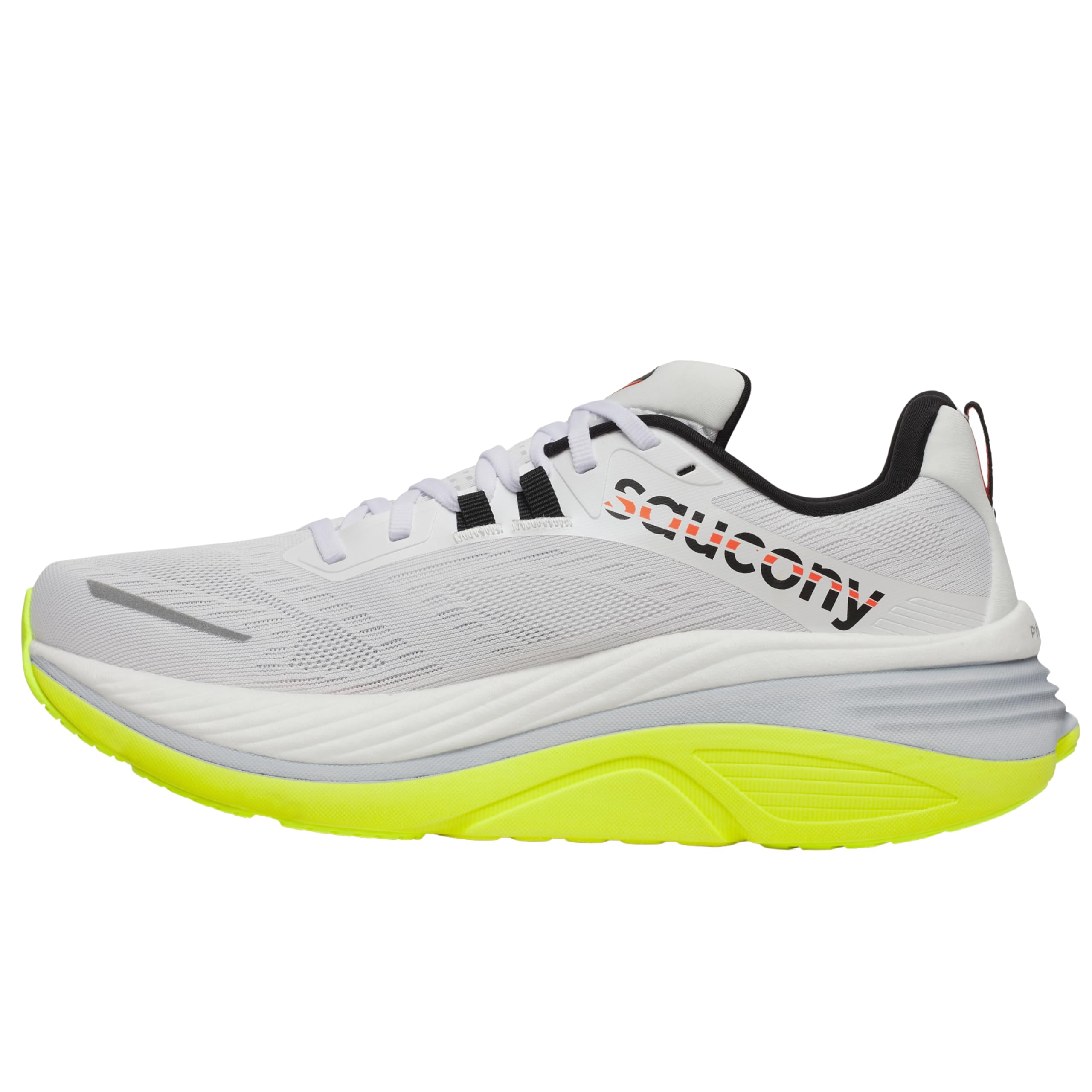
The men’s version of the Hurricane 24 carries the same stability architecture as the women’s — a medial post of denser PWRRUN PB foam that blocks inward knee collapse. The key difference in the men’s build is a slightly wider last through the midfoot and a more generous toe box to accommodate male foot anatomy. The 10 mm drop remains, maintaining the quad-dominant gait pattern that reduces patellar load.
The foam compound here is genuinely impressive for a stability shoe — it feels closer to a premium neutral trainer than to a rigid correction device. The transition from heel to toe is smooth, with no abrupt feel where the medial post begins. The heel counter is reinforced but not aggressive, avoiding the heel-slip that can alter knee angles mid-stride.
For heavier runners or those with significant pronation, the Hurricane 24 provides confidence that each foot strike will be guided into a safer alignment. The primary drawback is the weight — this is a substantial shoe that is best reserved for easy and recovery runs rather than fast turnover work. The protection for the medial knee, however, justifies the heft.
Why it’s great
- PWRRUN PB medial post effectively blocks knee-torquing pronation
- Wider last accommodates male foot anatomy through midfoot
- Heel-to-toe transition remains smooth despite stability features
Good to know
- Heavy shoe — not suited for faster-paced jogging
- Premium price point reflects the stability engineering
8. Brooks Ghost 16
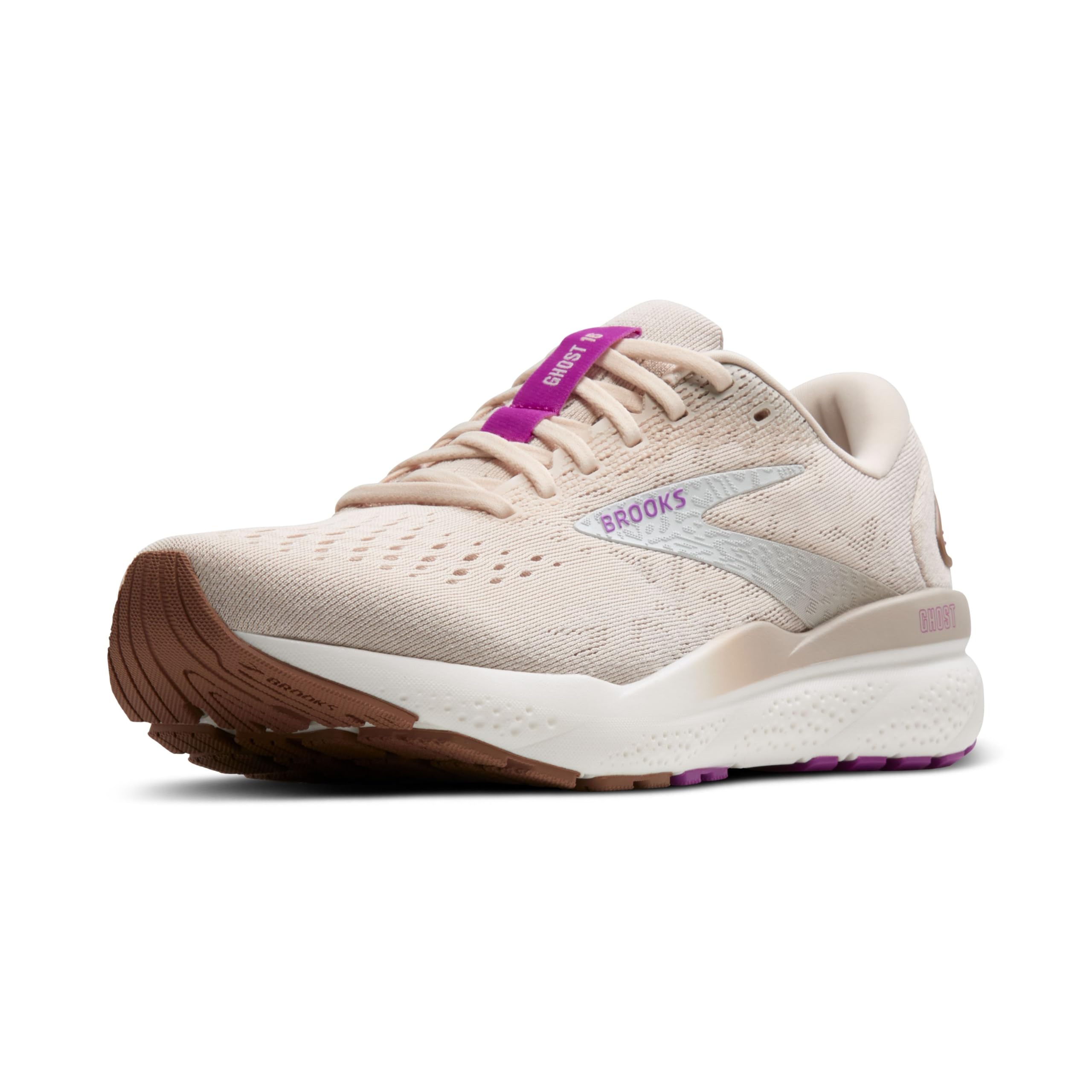
The Brooks Ghost 16 is the brand’s neutral workhorse, updated with DNA LOFT v3 foam that increases softness compared to the Ghost 15. The 12 mm drop is the highest on this list, making it the most aggressive option for offloading the patellar tendon — the higher drop shifts more work to the quadriceps and away from the kneecap. This is a meaningful detail for runners diagnosed with patellofemoral pain syndrome.
The midsole has a segmented crash pad under the heel that deforms independently, distributing landing forces over a larger surface area. This reduces the peak vertical ground reaction force that travels up the tibia into the knee joint. The upper is designed with 3D Fit Print technology that creates a structured yet soft containment around the heel and midfoot.
The Ghost 16 is not the plushest shoe on this list, but it strikes a carefully tuned balance — enough cushion to protect the knee, enough responsiveness to maintain a natural gait. Runners transitioning from a firmer shoe will appreciate the smoothness immediately. It is less protective than the Glycerin for severe joint pain, but for daily jogging with intermittent knee issues, it is a top-tier neutral choice.
Why it’s great
- 12 mm drop significantly reduces patellofemoral compression
- Segmented crash pad spreads heel-impact force across a wider area
- DNA LOFT v3 foam increases softness over previous Ghost version
Good to know
- Not as plush as max-cushion models for severe knee pain
- 12 mm drop may feel too high for runners accustomed to low-drop shoes
9. New Balance Fresh Foam X More V6
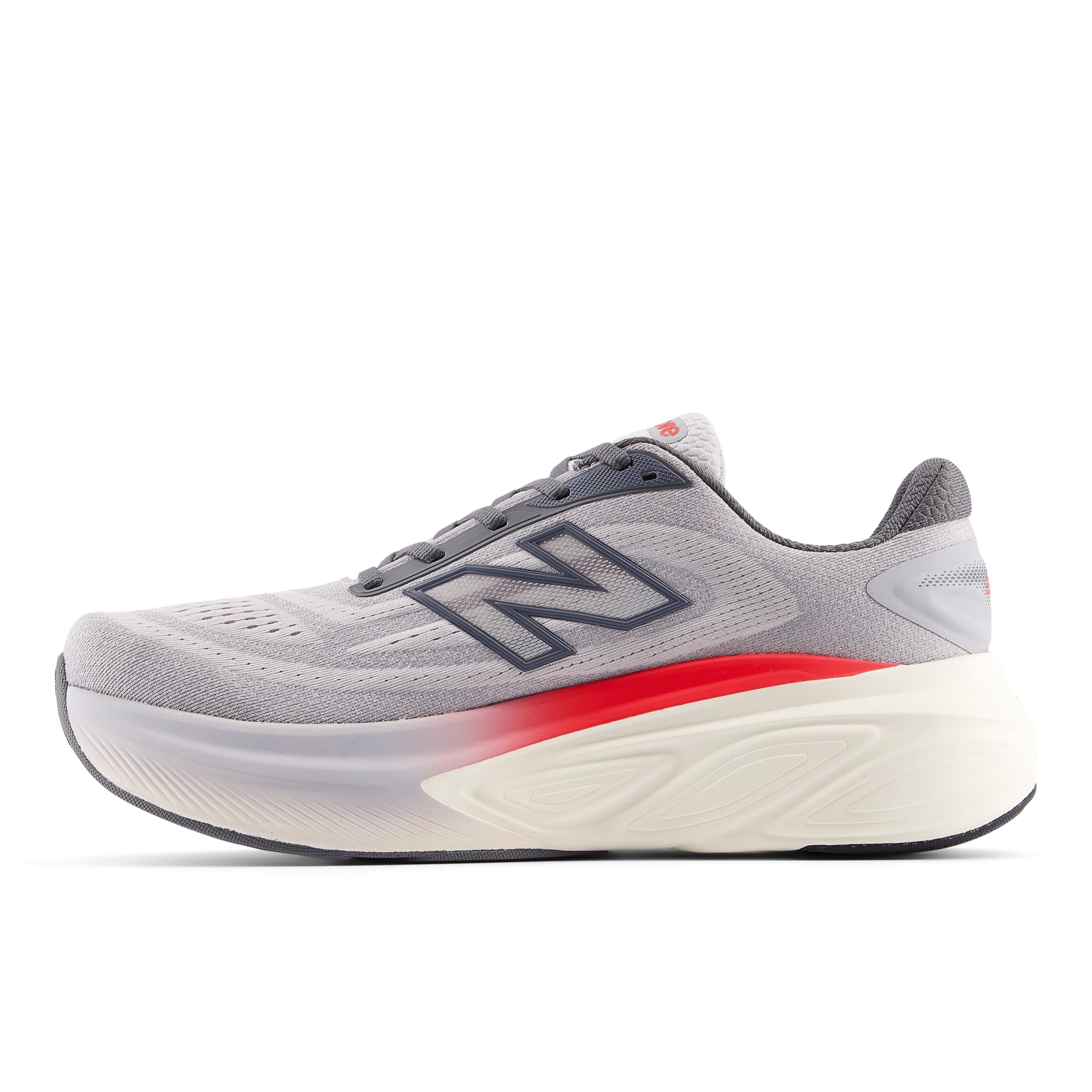
The Fresh Foam X More V6 takes stack height to its extreme — the highest amount of foam New Balance puts underfoot. For joggers with bone-on-bone knee arthritis or advanced degeneration, this level of vertical cushioning provides the greatest physical separation between the ground and the joint. The 4 mm drop is the lowest on this list, which shifts load toward the calf and Achilles rather than the quadriceps.
The midsole uses Fresh Foam X, a nitrogen-infused compound that is softer than the standard Fresh Foam but maintains structural integrity over miles. The outsole has generous rubber coverage that protects the foam and provides traction on paved surfaces. The upper uses a mesh material that is stretchy enough to accommodate foot swelling during longer jogs.
The low drop and extreme stack create a unique feel — runners report a sensation of running on a cloud, but the lack of heel elevation may aggravate patellar pain in individuals who need quad-dominant loading. This is a trade-off. The More V6 is best for slow, easy jogging where maximum sensory decoupling from the ground is the goal. It is not ideal for anyone who needs a higher drop to protect the kneecap.
Why it’s great
- Highest stack height provides maximum impact absorption
- Nitrogen-infused Fresh Foam X stays soft without packing out
- Generous outsole coverage improves durability on roads
Good to know
- 4 mm drop shifts load away from quads — may worsen patellar pain
- Extreme stack reduces ground feel and stability on uneven terrain
FAQ
Is a higher heel drop always better for bad knees?
Can jogging with bad knees make arthritis worse over time?
Should overpronators with bad knees always buy stability shoes?
How long do cushioned jogging shoes last for knee protection?
Final Thoughts: The Verdict
For most users, the jogging shoes for bad knees winner is the Brooks Glycerin Stealthfit 22 because its maximum EVA cushioning and 10 mm drop provide the safest combination of impact absorption and patellar offloading for neutral-gait runners. If you overpronate and need medial guidance, grab the Saucony Hurricane 24. And for joggers with bone-on-bone arthritis who want the highest possible stack height, nothing beats the New Balance Fresh Foam X More V6.