Every spoonful of cereal you offer your baby is a chance to support their rapid brain development, and iron is the non-negotiable mineral that makes it happen. Without adequate iron during the first year, your little one risks developmental delays that are hard to reverse. That is why picking the right iron-fortified baby cereal is a nutritional decision, not just a feeding convenience.
I’m Emma — the founder and writer behind Baby Bangs. I spend my days breaking down ingredient labels and cross-referencing feeding guidelines so parents don’t have to wade through the marketing noise alone.
Whether you are starting solids at four months or transitioning a toddler to heartier grains, this guide walks you through the best formulations on the shelf to find your ideal iron fortified baby cereal.
How To Choose The Best Iron Fortified Baby Cereal
Not all baby cereals are created equal. The difference between a cereal that supports healthy hemoglobin levels and one that mostly fills a belly comes down to iron type, grain source, and additive profile. Here are the three factors that separate a smart pick from a shelf sugar bomb.
Iron Form and Absorption
Check the ingredients list for the specific iron compound. Ferrous sulfate is the most bioavailable form commonly used in baby cereals, meaning your infant absorbs more of the mineral per spoonful. Electrolytic iron is also used but has lower relative absorption. If the label hides iron behind a generic “iron” listing, consider that a red flag.
Whole Grain Foundation and Texture
Single-grain rice cereal is a classic starter, but whole grain blends (oat, spelt, barley, wheat) provide more fiber and a gentler glycemic response. Look for “whole grain” as the first ingredient, not “rice flour” which can be higher in inorganic arsenic. Multi-grain mixes also introduce varied textures that help your baby practice chewing earlier.
Additives and Sugar Content
The best iron fortified baby cereal contains zero added sugar. Flavored varieties often sneak in cane sugar, fruit juice concentrate, or “natural flavors” that train a baby’s palate toward sweetness. Stick to plain cereals and add your own fruit purée if you want flavor. Also watch for artificial colors — they have no place in a baby’s bowl.
Quick Comparison
On smaller screens, swipe sideways to see the full table.
| Model | Category | Best For | Key Spec | Amazon |
|---|---|---|---|---|
| Earth’s Best Organic Multi-Grain | Premium | First solids at 4-6 months | 12 boxes, organic whole grain oat/spelt/barley | Amazon |
| Holle Organic 4-Grain | Premium | European biodynamic standards | Demeter & USDA organic, oat/spelt/corn/wheat | Amazon |
| Gerber Stage 2 Apple Banana Oatmeal | Mid-Range | On-the-go convenience | 16-pack tubs, no added colors or flavors | Amazon |
| Gerber Oatmeal & Barley Apple Cinnamon | Mid-Range | Toddler breakfast variety | 20% DV iron, 11g whole grains per serving | Amazon |
| Bob’s Red Mill Organic Brown Rice | Budget | Family bulk cooking | 4-pack, 24oz bags, gluten-free whole grain | Amazon |
In‑Depth Reviews
1. Earth’s Best Organic Multi-Grain Baby Cereal
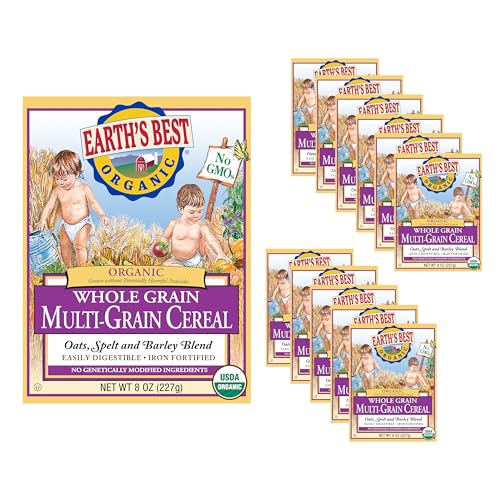
Earth’s Best delivers twelve 8-ounce boxes of organic whole grain oat, spelt, and barley flour fortified with iron — a trifecta that supports digestive variety while hitting the iron requirement for infants starting solids between 4 to 6 months. The absence of added sugar, artificial flavors, and GMOs means each serving is a clean slate you can mix with breast milk, formula, or water.
The multi-grain base provides more fiber and texture diversity than single-grain rice cereals, which helps your baby adapt to different mouthfeels earlier. Each box yields roughly 15 servings, so the 12-pack covers over two months of daily feedings without forcing you to restock weekly.
The powder mixes smoothly with minimal clumping when you whisk in warm liquid, and the neutral flavor takes well to fruit purées or yogurt stir-ins. For parents who prioritize clean organic sourcing and a long shelf life, this is the set-and-forget winner.
Why it’s great
- USDA Organic whole grains with no added sugar or preservatives
- Fortified with iron using a bioavailable form suitable for early solids
- Bulk 12-pack reduces per-serving cost and pantry trips
Good to know
- Contains gluten from spelt and barley; not suitable for gluten-sensitive infants
- Boxes are cardboard only — no resealable bag inside
2. Holle Organic Whole Grain 4-Grain Baby Cereal

Holle brings European farming rigor to the baby cereal aisle with a Demeter-certified biodynamic blend of oat, spelt, corn, and wheat — each grain grown under long-standing standards that go beyond basic USDA Organic requirements. The 6-pack includes six individual 8-ounce boxes, perfect for travel rotation or keeping one in the diaper bag.
This cereal is targeted at babies 6 months and older and contains no added sugar, artificial flavors, or preservatives. The Clean Label Project Purity Award adds an extra layer of transparency regarding heavy metal and pesticide residue testing, which matters when rice-based cereals have raised contamination concerns in recent years.
Preparation is straightforward: mix with your baby’s usual milk, formula, or water until smooth. The texture lands as a warm porridge that blends easily with fruit or vegetable purées. The only catch is the inclusion of wheat and gluten, so this is not an option for families avoiding those proteins.
Why it’s great
- Demeter Biodynamic certification ensures tighter pesticide and soil standards
- Clean Label Project Purity Award backs up ingredient transparency claims
- Four different whole grains introduce varied nutrients and textures
Good to know
- Contains wheat and gluten; unsuitable for celiac or wheat allergy diets
- Higher per-box cost than non-organic alternatives
3. Gerber Stage 2 Apple Banana Oatmeal Cereal Tubs
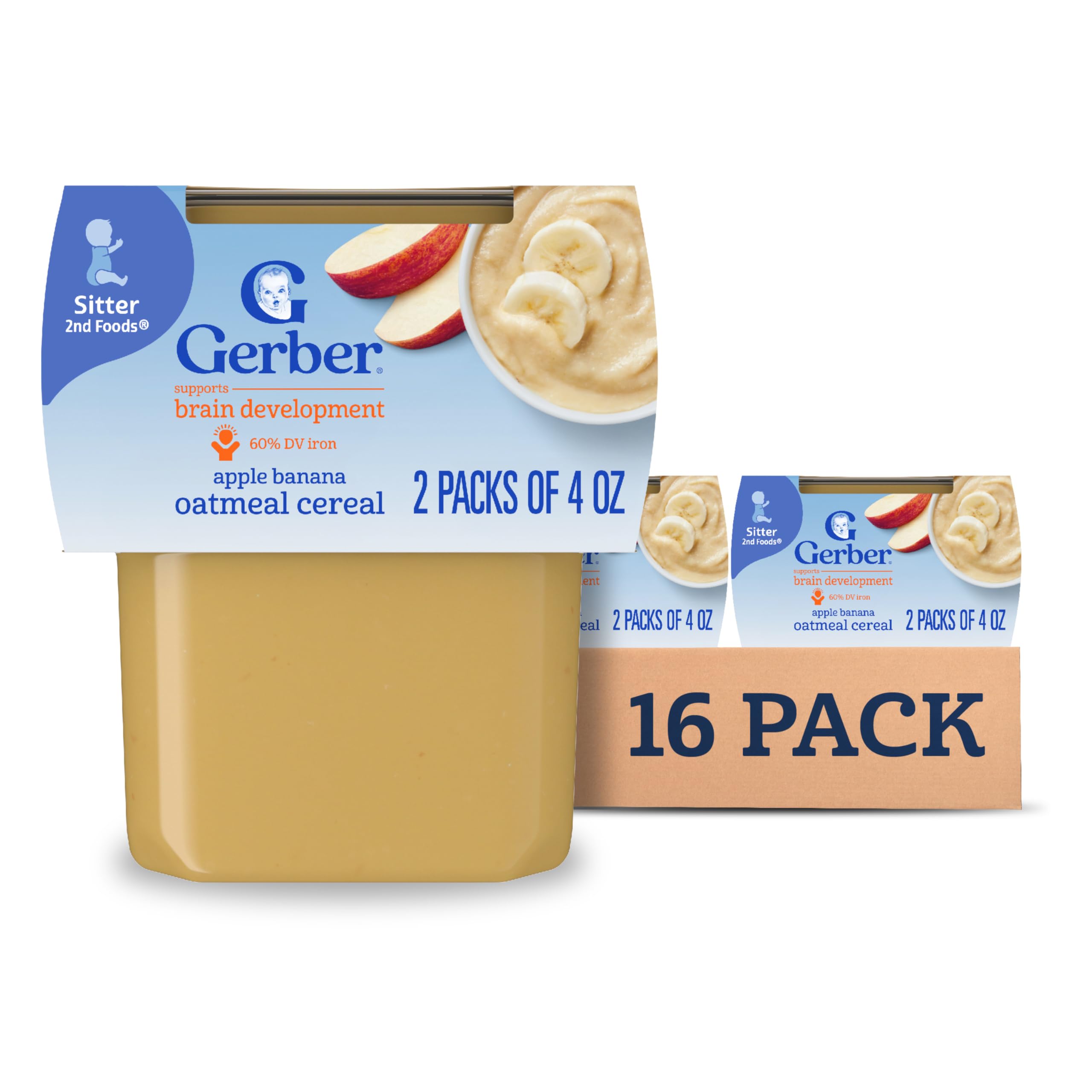
Gerber’s Stage 2 tubs skip the mixing step entirely — these are shelf-stable, ready-to-eat oatmeal blends with real apple and banana purée folded in. The 16-pack gives you a grab-and-go solution for travel, daycare lunches, or mornings when you cannot spare five minutes to prepare powder cereal.
Each tub is fortified with iron to support brain development, and Gerber keeps the additive list tight by avoiding added colors, artificial flavors, and high-fructose corn syrup. The texture is smooth with small soft oat pieces, appropriate for babies who have already mastered purees and are ready for slightly thicker consistencies.
The trade-off is that these are single-serving plastic tubs, which generate more waste than a bulk powder box. And because the fruit is already mixed in, you lose the flexibility to control sweetness or introduce plain cereal alongside your own purées. For pure convenience value though, these are hard to beat.
Why it’s great
- Zero prep required — twist off lid and serve
- Portable 16-pack ideal for stashing in diaper bags
- Iron fortified with no artificial colors or flavors
Good to know
- Plastic tubs create more waste than powder boxes
- Pre-mixed fruit sweetness limits flavor control
4. Gerber Oatmeal and Barley Apple Cinnamon Cereal
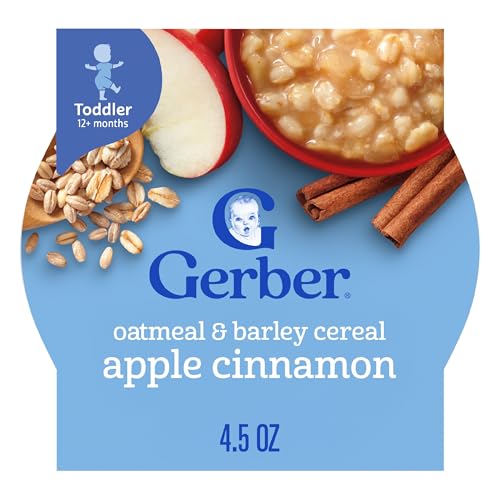
This Gerber blend targets the 12+ month crowd with a one-two punch of oatmeal and barley whole grains combined with apple cinnamon flavor. Each serving delivers 20% of the daily value of iron and 11 grams of whole grains, making it a more nutrient-dense breakfast option than most toddler instant oatmeal packets you will find in the adult aisle.
The cereal cooks in under five minutes — just add hot water or milk and stir. The apple cinnamon taste is noticeable but mild, and there are no GMO ingredients or artificial flavors in the mix. The 8-count box is sized realistically for a two-week morning rotation without taking over your pantry shelf.
Because this is formulated for older babies who can handle more texture, the cooked cereal has a thicker, heartier consistency than first-stage powders. Some parents report the cinnamon level is just right for toddlers who are starting to expect more flavor variety. If your child has moved past bland single grains, this is a smooth upgrade.
Why it’s great
- 20% DV iron per serving supports sustained toddler brain development
- Mix of oatmeal and barley provides 11g whole grains
- No GMOs, artificial flavors, or high sugar content
Good to know
- Contains gluten from barley; not for gluten-free diets
- Some toddlers may prefer plain cereal without cinnamon
5. Bob’s Red Mill Organic Brown Rice Hot Cereal
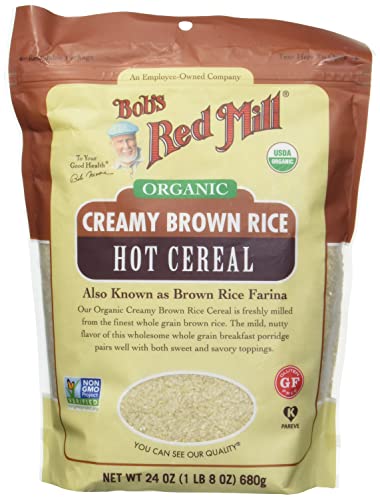
Bob’s Red Mill brings a 4-pack of 24-ounce bags of organic brown rice hot cereal, totaling 96 ounces for families who cook in bulk. This is not a baby-specific product, but its whole grain, gluten-free, vegan, and kosher credentials make it a viable base for homemade baby cereal if you are comfortable grinding the grains finer yourself or cooking to a very soft consistency.
The iron content here is not fortified — it comes naturally from the whole grain brown rice, which means the iron level is lower than in dedicated baby cereals. That distinction matters: if you rely on this as your baby’s primary iron source, you will need to supplement with iron-rich purées or a separate iron drop.
Sprinkle with your favorite toppings for a sweet or savory breakfast, or mix in fruit purée after cooking. The biggest advantage is cost per serving, which undercuts most baby-specific cereals by a wide margin. Just know you are trading away guaranteed iron fortification for that price break.
Why it’s great
- Organic whole grain brown rice, gluten-free and non-GMO
- Extremely low cost per serving for bulk families
- Vegan and kosher certified with no additives
Good to know
- Not fortified with iron — lower iron content than baby-specific cereals
- Requires cooking and may need grinding for younger infants
FAQ
At what age should I start iron fortified baby cereal?
Can I mix iron fortified cereal with breast milk instead of formula?
Why do some baby cereals have higher arsenic levels?
Final Thoughts: The Verdict
For most users, the iron fortified baby cereal winner is the Earth’s Best Organic Multi-Grain because it combines USDA Organic whole grains, fortification with a bioavailable iron source, and a bulk 12-pack that covers months of feeding without added sugar. If you want European biodynamic farming standards with third-party purity certification, grab the Holle Organic 4-Grain. And for pure no-prep convenience during travel or busy mornings, nothing beats the Gerber Stage 2 Apple Banana Oatmeal Tubs.