Tired of knee-high compression socks that slide down before lunch or pinch behind the knee? That constant readjustment isn’t just annoying — it means your socks stopped delivering the gradient pressure you paid for. A well-tapered cuff and a fabric that grips the calf without biting are the difference between all-day leg comfort and a midday bathroom break fix.
I’m Emma — the founder and writer behind Baby Bangs. I’ve spent years analyzing compression sock materials, pressure tolerances, and durability reports so you can find a pair that stays put and works.
This guide compares five top-rated models across fabric quality, pressure ratings, and real-world fit. If you’re looking for the best knee high compression socks, start here with the picks that actually hold their gradient and don’t bunch at the ankle.
How To Choose The Best Knee High Compression Socks
Picking a compression sock means sorting through pressure levels, fabric durability, and the dreaded “sock bite” behind the knee. Focus on these three factors to avoid the common frustration of socks that roll down or fail to deliver measurable relief.
Understand the mmHg Pressure Rating
This is the single most important spec. 15–20 mmHg is the standard for daily wear, travel, and athletic recovery — firm enough to reduce swelling without restricting movement. 20–30 mmHg steps up for medical recovery, varicose vein management, or long shifts on your feet. Anything above 30 mmHg requires a prescription in most cases. If you’re new to compression, start at 15–20 mmHg unless your doctor advises otherwise.
Check the Cuff Design and Fabric Blend
A knee-high sock lives or dies by its top band. A cuff that uses a wide silicone panel or a reinforced knit band stays anchored without digging in. Look for nylon-spandex blends for breathability and stretch memory — 100% cotton lacks the elasticity needed to maintain gradient pressure. Merino wool blends offer natural temperature regulation for cold environments, but they dry slower after washing.
Evaluate the Toe Seam and Heel Pocket
Flat, smooth toe seams prevent irritation during long wear — especially important for diabetics or those with neuropathy. A defined heel pocket also stops the sock from twisting around the ankle, which disrupts the compression gradient. Socks without a distinct left-right foot shape tend to rotate more during movement, creating pressure hot spots where you least want them.
Quick Comparison
On smaller screens, swipe sideways to see the full table.
| Model | Category | Best For | Key Spec | Amazon |
|---|---|---|---|---|
| Physix Gear Compression Socks | Mid‑Range | Daily wear & running recovery | 20–30 mmHg | Amazon |
| Wellow Knee High Compression Socks | Premium | Everyday comfort & swelling relief | 18–25 mmHg | Amazon |
| Bluemaple Copper Compression Socks | Mid‑Range | Medical & nursing shifts | 15–20 mmHg | Amazon |
| Merino Wool Compression Socks | Mid‑Range | Cold‑weather travel & hiking | 15–20 mmHg | Amazon |
| CHARMKING Compression Socks (8 Pair) | Budget | Multi‑pack variety for light use | 15–20 mmHg | Amazon |
In‑Depth Reviews
1. Physix Gear Compression Socks 20-30 mmHg

Physix Gear hits the sweet spot by delivering 20–30 mmHg compression in a single pair — a pressure level typically reserved for post-surgical or nursing-grade socks. The graduated design tapers from ankle to knee, creating consistent blood flow without a tourniquet feel behind the calf. The fabric uses a nylon-spandex blend that breathes better than cotton alternatives, making this a legitimate midday-to-dinner option for runners and nurses alike.
The toe seam is flat-stitched and doesn’t rub against the toes during long shifts. The heel pocket is well-defined, which prevents the sock from rotating around the foot as you walk. Some users with thicker calves report the cuff feels snug at the very top, but the wide knit band distributes pressure across more surface area than a narrow silicone strip, so it rarely leaves a red ring.
At this pressure level, expect a noticeable squeeze when you first put them on — that’s the gradient working. They’re machine washable and hold their shape after repeated cycles, though you should avoid fabric softener as it breaks down the elastic fibers over time.
Why it’s great
- True therapeutic-grade 20–30 mmHg compression without a prescription
- Flat toe seam and reinforced heel pocket for all-day wear
- Breathable nylon-spandex blend handles moisture better than cotton
Good to know
- Snug top band may feel tight for those with very large calf circumference
- Only one pair per purchase — not a multi-pack configuration
2. Wellow Knee High Compression Socks 18–25 mmHg
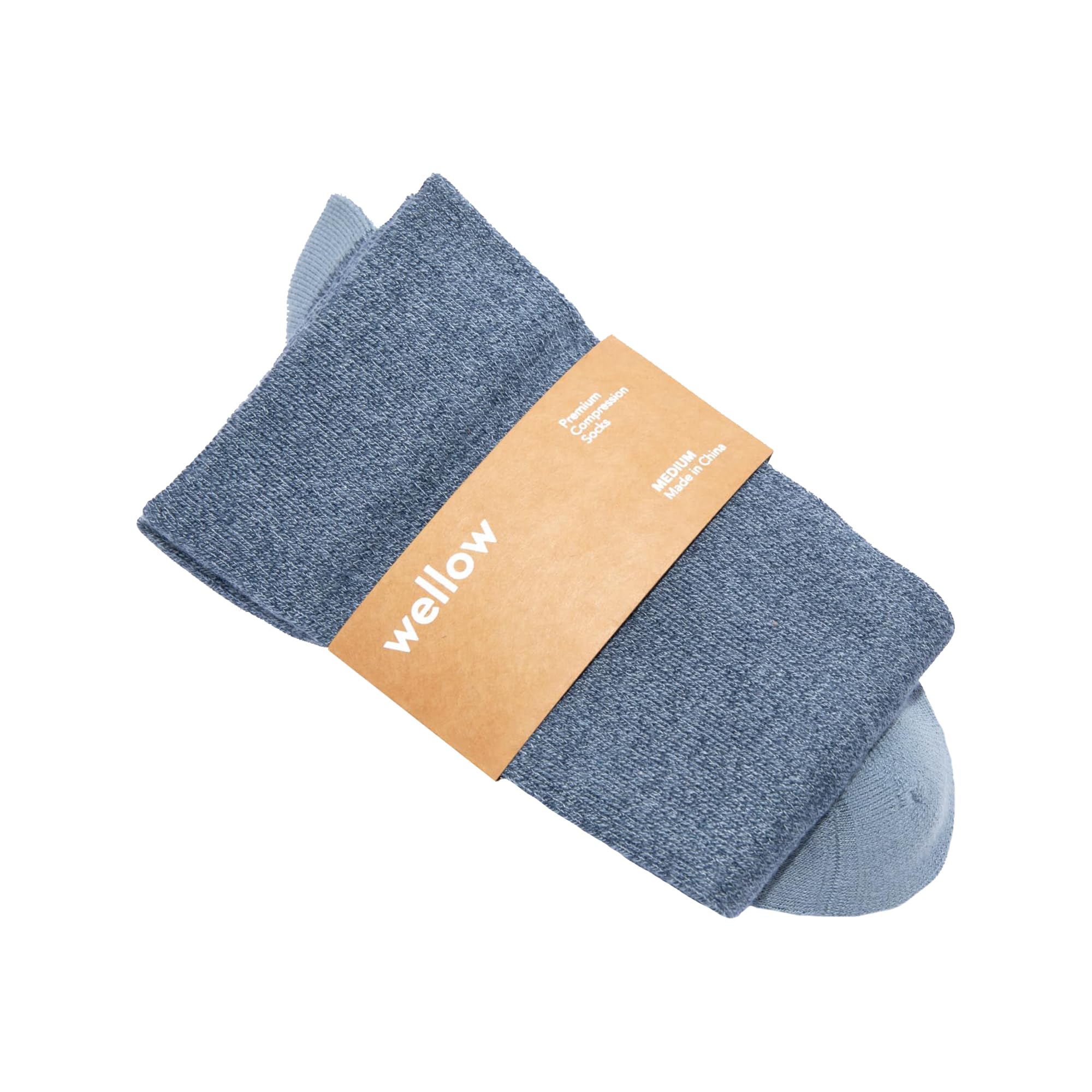
Wellow stands out by using bamboo viscose as its primary fiber — a material naturally softer than nylon and more breathable than cotton. The 18–25 mmHg pressure range sits between standard travel-grade and mild medical compression, making it ideal for desk workers, pregnant women, or anyone who needs subtle swelling relief without the military-grade squeeze. The fabric has a silky hand feel against the skin, and the moisture-wicking properties prevent that clammy sensation after hours of wear.
The cuff uses a self-adjusting knit band that grips the thigh without a silicone strip, so there is no sticky residue or skin pulling when you take them off. The toe area is seamless and the heel is anatomically contoured, reducing fabric bunching inside shoes. On the downside, the compression may feel too light for those accustomed to a firm 20–30 mmHg sock, and the single-unit count means you cannot rotate pairs throughout the week.
Bamboo viscose is less elastic than spandex blends, so these socks require gentle washing — air drying preserves the fiber integrity much better than a machine dryer cycle.
Why it’s great
- Bamboo viscose fabric is softer and more breathable than standard synthetics
- 18–25 mmHg hits the Goldilocks zone for everyday swelling management
- Silicone-free top band eliminates sticky residue issues
Good to know
- Compression level may feel too subtle for those used to 20–30 mmHg socks
- Single pair — you will want two for rotation
3. Bluemaple Copper Compression Socks 15–20 mmHg (6 Pack)

Bluemaple packs six pairs into a single purchase, each delivering 15–20 mmHg compression with copper-infused fibers marketed for odor control and antimicrobial properties. At this pressure level, these socks are best for light daily swelling, long flights, or standing shifts that don’t require medical-grade squeeze. The fabric blend includes spandex for stretch retention, which helps the socks hold their shape through multiple washes without bagging at the ankle.
The heel is not individually contoured — the socks are left-foot/right-foot symmetrical, meaning they can twist slightly if your gait is uneven. The toe seam is reinforced but sits a bit thicker than the Physix Gear or Wellow, so wearers with neuropathy or very sensitive toes may notice it after eight-plus hours. On the plus side, the six-pair count allows you to keep a rotation in your gym bag, office drawer, and travel luggage without washing mid-week.
Copper infusion is a marketing differentiator rather than a compression enhancer — you buy these for the quantity and the 15–20 mmHg baseline, not for any special medical benefit from the copper fibers.
Why it’s great
- Six pairs at a budget-friendly per-pair cost for easy rotation
- Copper infusion helps with odor control during sweaty days
- Consistent 15–20 mmHg compression without excessive tightness
Good to know
- Symmetrical foot design means no distinct heel pocket — can twist
- Toe seam is thicker than competitors, potential irritation for sensitive feet
4. Merino Wool Compression Socks 15–20 mmHg
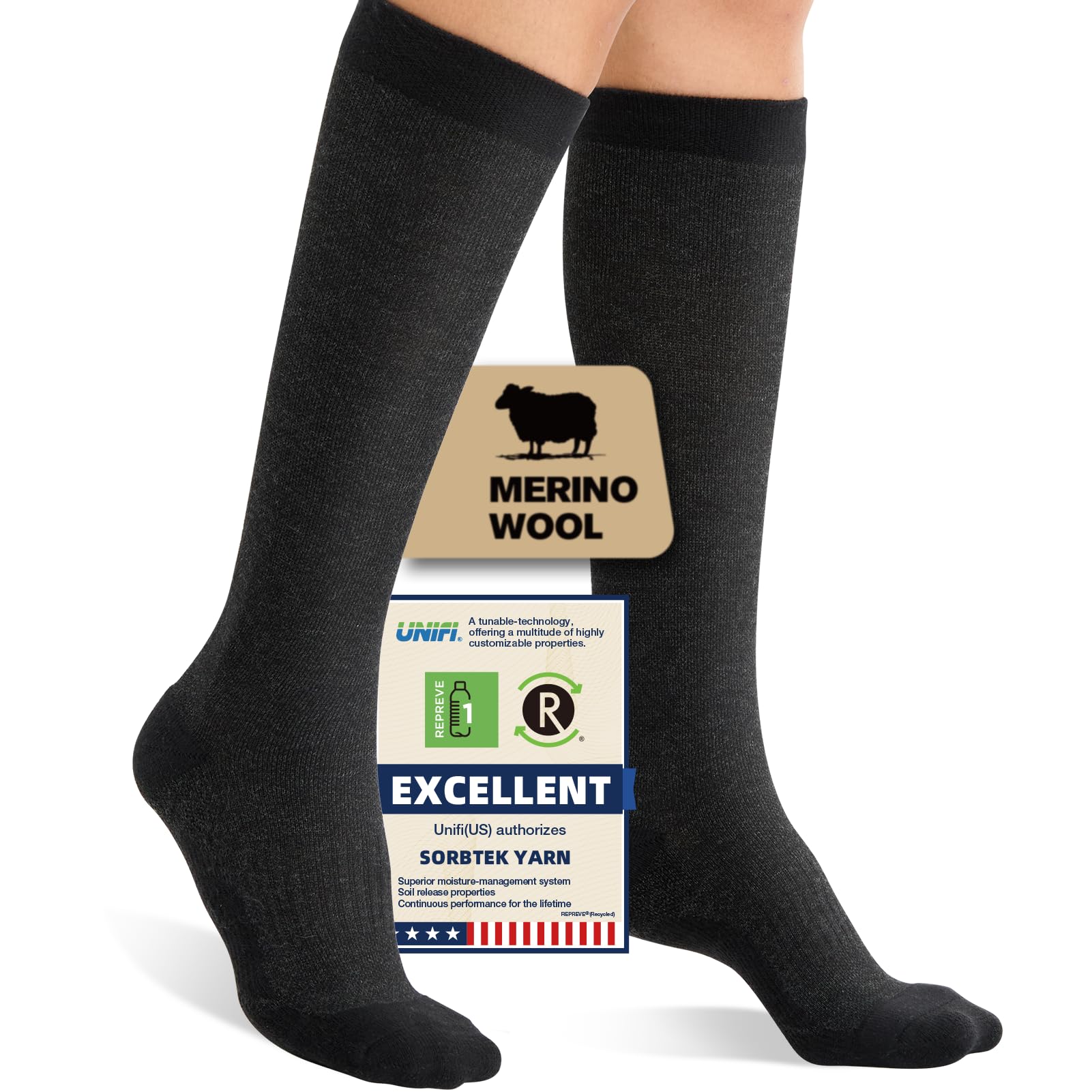
Merino wool brings natural temperature regulation and moisture management to the compression category, which is rare — most compression socks lean on synthetic blends that trap heat. At 15–20 mmHg, these socks hit the standard travel and light activity range, offering enough squeeze to reduce foot swelling during long flights or hikes in cold weather. The merino fibers wick sweat away from the skin and resist odor buildup even after multiple wears without washing.
The knit is thicker than typical nylon compression socks, so they feel more like a mid-weight hiking sock than a sheer medical garment. This warmth is a pro for cold climates but may feel too toasty in hot summer months. The toe seam is smooth but the thicker fabric means less precise feedback on the gradient pressure — you feel warmth more than you feel squeeze. The cuff uses a ribbed knit band that stays up well on average calves but may slip on very slender legs.
Merino wool is delicate — wash on gentle cycle and air dry to avoid felting or shrinking the fibers. If your priority is breathable warmth with light compression, this is the best option on the list.
Why it’s great
- Merino wool naturally regulates temperature and resists odor
- Thicker fabric suitable for cold-weather outdoor activities
- 15–20 mmHg provides firm but comfortable compression for travel
Good to know
- Wool fabric is too warm for hot climates or summer use
- Thicker material makes the gradient feel less pronounced than thin synthetics
5. CHARMKING Compression Socks 15–20 mmHg (8 Pairs)

CHARMKING delivers eight pairs at the lowest per-sock cost on this list, making it the entry-level choice for people who want to try compression without committing to a premium single pair. The 15–20 mmHg pressure rating covers basic airline travel, light swelling from sitting, or running errands — it will not provide the medical-grade squeeze of a 20–30 mmHg sock. The fabric blend is mostly nylon with spandex, which gives good four-way stretch but less breathability than merino or bamboo options.
The toe seam is flat but the socks lack a distinct heel pocket, meaning they can shift during activity. The top band uses a knit welt rather than silicone, which is comfortable but may roll down for users with very tapered calves.
The compression consistency across all eight pairs is acceptable for the tier, but individual socks can vary slightly in tightness due to manufacturing tolerance at this price point.
Why it’s great
- Eight pairs at an extremely low per-unit cost for bulk rotation
- 15–20 mmHg is suitable for light travel and daily use
- Comfortable knit welt band without silicone
Good to know
- No defined heel pocket — socks can rotate and bunch
- Compression feel may vary slightly between individual socks
FAQ
What does 15–20 mmHg actually feel like on the leg?
Can I wear knee high compression socks to sleep?
How do I measure my calf for the correct size?
Final Thoughts: The Verdict
For most users, the best knee high compression socks winner is the Physix Gear Compression Socks because they deliver genuine 20–30 mmHg therapeutic compression in a breathable, well-constructed design that stays put through a full shift. If you want a softer, more eco-friendly everyday sock, grab the Wellow Knee High Compression Socks with bamboo viscose fabric. And for a low-cost entry point or bulk rotation, nothing beats the Bluemaple Copper Compression Socks six-pack for the per-pair price.