A child’s first binocular set is rarely about magnification; it’s about unlocking the quiet thrill of spotting a cardinal in a bush or a distant tractor on a hillside. The market is flooded with flimsy plastic tubes that distort light and frustrate little eyes, turning a magical moment into a headache. The right pair needs to survive drops, deliver a crisp image, and fit comfortably on a small face without pinching.
I’m Emma — the founder and writer behind Baby Bangs. I’ve spent years dissecting children’s outdoor gear, analyzing lens coatings, rubber armoring, and weight distribution to separate durable, kid-friendly optics from the fragile novelties that collect dust.
This guide cuts through the noise to recommend only the most resilient and optically sound kids binoculars for curious minds who love bird watching, hiking, and backyard exploration.
How To Choose The Best Kids Binoculars
Not every pair labeled “kids binoculars” delivers a usable image. The difference between a cheap toy and a real optical tool comes down to prism quality, eye relief design, and overall build toughness. Here’s what matters most for your young explorer.
Optics That Actually Work
BAK4 Porro prisms with anti-reflective coatings produce bright, sharp images without the blurry edges common in budget toys. An 8×21 configuration — 8x magnification and a 21mm objective lens — offers a generous field of view and enough light gathering for daytime use, without being too powerful for unsteady hands.
Build Tough Enough for Real Play
Kids drop things. A fully rubber-coated body absorbs shocks from waist-height falls onto grass, gravel, or wooden decks. Look for a textured grip that stays secure in small, sweaty hands and an adjustable neck strap that prevents the binoculars from swinging wildly during a run.
Comfort and Safety for Young Faces
Soft rubber eyecups are non-negotiable for toddlers. They prevent scratches around the eye socket if the child bumps into the binoculars while looking up or down. Individual focus adjustments let each eye dial in independently, accommodating differences in vision without requiring adult help.
Quick Comparison
On smaller screens, swipe sideways to see the full table.
| Model | Category | Best For | Key Spec | Amazon |
|---|---|---|---|---|
| BLACKICE 8×21 | Mid-Range | Rough daily outdoor play | BAK4 Prisms, Rubber-Coated | Amazon |
| Hiboom 8-Set Bulk | Premium | Group or classroom use | Compass + Magnifying Glass | Amazon |
| Real Binoculars 8×21 | Mid-Range | Hiking and bird watching | High-Resolution Optics | Amazon |
| Compact Kids 8×21 | Premium | Family safari or travel | Lightweight Compact Build | Amazon |
| Little Experimenter Night Vision | Budget-Friendly | Indoor and low-light play | Built-in Flashlight | Amazon |
In‑Depth Reviews
1. BLACKICE 8×21 Kids Binoculars
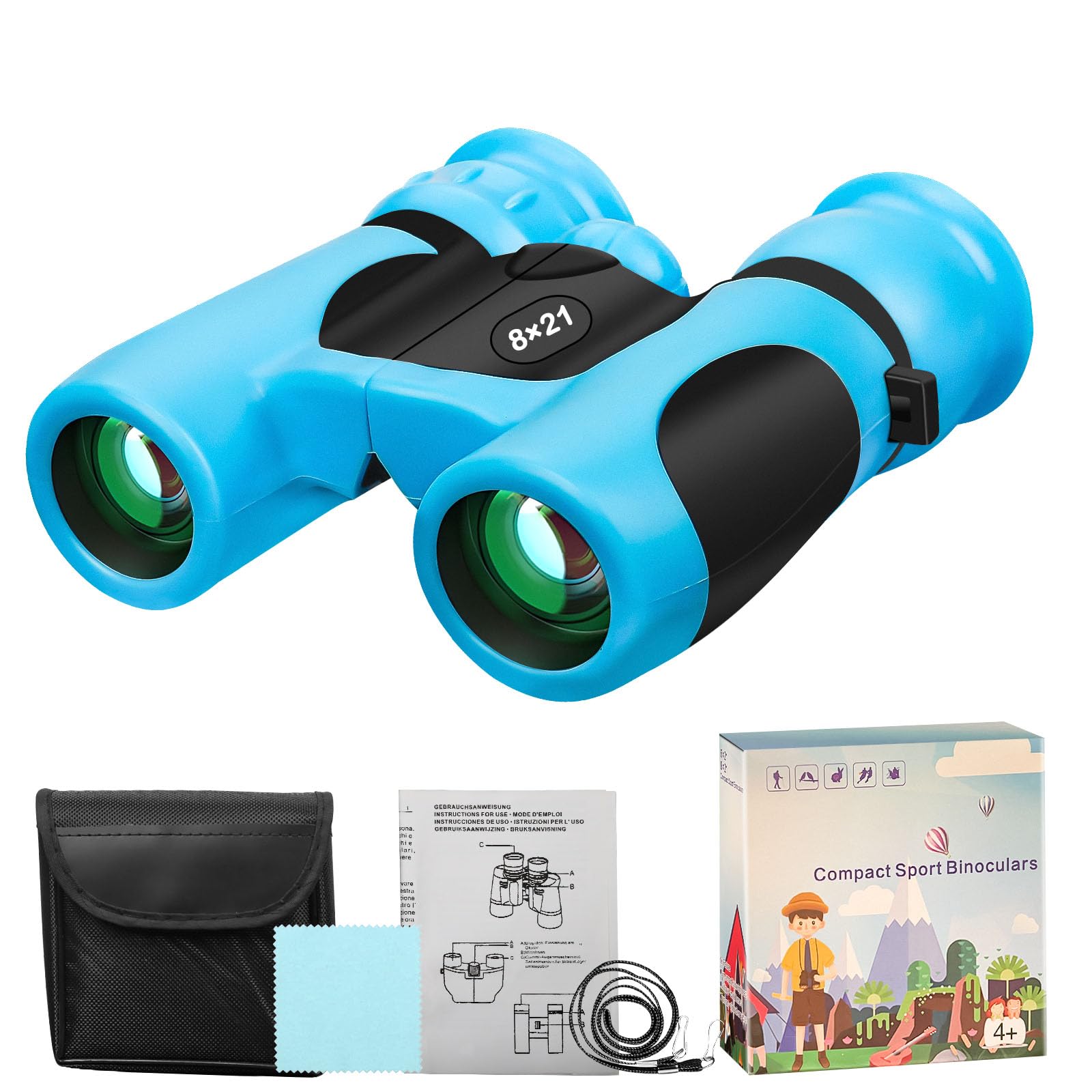
The BLACKICE 8×21 model stands out because it treats kids’ optics seriously without sacrificing durability. The fully rubber-coated body absorbs shock from waist-height drops, and the textured grip stays secure even when little hands are sweaty from a hike. BAK4 Porro prisms with a blue anti-reflective coating deliver noticeably brighter, sharper images than the plastic-lens alternatives in this price range.
Soft rubber surrounds the eyecups, creating a gentle barrier that prevents scratches if a child accidentally bumps the binoculars against their face. Individual diopter adjustments let each eye focus independently, which is a genuine win for kids whose vision differs between eyes. The 6.8-degree field of view is generous enough for tracking birds in flight without making the child feel dizzy.
The included soft carrying case, neck strap, and lens cloth round out a complete kit that truly is ready for outdoor exploration. The compact dimensions — 4.2 inches tall and just over half a pound — make it easy for a child to carry in a backpack without protest.
Why it’s great
- BAK4 prisms for sharp, bright images
- Fully rubber-coated for shock absorption
- Individual focus accommodates vision differences
- Includes carrying case and neck strap
Good to know
- Individual focus requires two adjustments per use
- Not suitable for low-light conditions
2. Hiboom 8-Set Kids Binoculars Bulk

The Hiboom 8-set is designed for the parent or teacher who needs to outfit multiple kids at once. Each pair is a compact folding design that collapses small enough to fit in a cargo pocket, with a built-in compass on the side and a small magnifying glass clipped to the neck strap. The 8×21 configuration delivers a consistent, usable image for daytime scouting missions around a campsite or nature trail.
The folding design reduces the risk of the bridge snapping during rough play, and the lightweight construction — roughly 3 ounces per pair — means a classroom set won’t weigh down a backpack. The compass adds a layer of navigation play that pairs naturally with scavenger hunt games and orienteering exercises.
Each set includes enough neck straps and lens cloths to go around, making distribution at a birthday party or scout meeting painless. The image quality won’t rival a premium single pair, but for group use the consistency and affordability of this bulk option make it a smart logistical choice.
Why it’s great
- Eight pairs in one purchase for group settings
- Folding design improves portability
- Includes compass and magnifying glass
Good to know
- Lower optical clarity than single mid-range options
- Compass is a novelty, not a precision tool
3. Real Binoculars for Kids 8×21

This pair markets itself as “real binoculars, not a toy,” and the optics back that up. High-resolution 8×21 lenses produce a crisp image with minimal chromatic aberration at the edges, making it a solid choice for a child who is serious about bird identification or stargazing. The compact body weighs around 10 ounces and fits easily into a small backpack side pocket.
The central focus wheel is smooth enough for small fingers to turn without excessive force, and the interpupillary distance adjustment accommodates the narrower faces of younger children. The rubber coating on the main body provides a decent grip, though it is less comprehensive than the full rubber armor on the BLACKICE model.
One notable design choice is the inclusion of a tripod mount adapter, which allows the binoculars to be secured on a mini tripod for steady viewing — a feature rarely found at this tier. For daytime hiking, bird watching, and general exploration, this is a capable tool that punches above its price bracket.
Why it’s great
- Smooth central focus wheel
- Tripod mount adapter for steady viewing
- Sharp, high-resolution daytime optics
Good to know
- Less shockproof than fully rubber-armored rivals
- Eyecups are not as soft as premium models
4. Compact Kids Binoculars 8×21

Engineered specifically for younger children who are still building arm strength, this 8×21 model weighs under 9 ounces and has a slim profile that fits easily into a lunchbox or small daypack. The compact build does not compromise the field of view; the 6.8-degree angle provides enough sweep for tracking squirrels or scanning a lake shoreline during a family safari.
The rubber armor offers moderate drop protection, and the textured finish helps small hands maintain a firm grip even in damp weather. The focus knob turns with light resistance, which reduces frustration for a 5-year-old who still developing fine motor control.
This pair is best suited for travel scenarios where weight and bulk matter most — airport trips, long car rides, or a day at a theme park. It also performs well as a first “real” binocular for a 3 or 4-year-old who has outgrown plastic pretend versions.
Why it’s great
- Ultra-lightweight for young children
- Compact enough for a small daypack
- Easy-to-turn focus knob
Good to know
- Less rugged than fully rubber-armored models
- Lens caps are prone to being lost
5. Little Experimenter Night Vision Binoculars

Designed with toddlers in mind, this model swaps traditional optical purity for a gimmick that young kids love: a built-in flashlight that turns the binoculars into a “night vision” tool. The red LED light is gentle enough not to disturb a child’s night vision and provides enough illumination for exploring a dark closet or backyard after sunset. The rubber face comfort ring reduces pressure around the eye socket, which is critical for children ages 3 to 5 who are still learning to hold objects steady.
The magnification is lower than the standard 8x, making it easier for unsteady hands to keep an image in frame. The body is made from impact-resistant plastic and can survive being dropped on a wood floor or carpet without cracking. The adjustable neck strap is wide enough to distribute weight comfortably across a young neck.
This is not the set for serious bird watching or distance viewing. The bulbous design also means it won’t fit in a standard backpack pocket. But as a first exploration tool for a preschooler who wants to feel like a real adventurer, the built-in light offers a sensory hook that keeps them engaged.
Why it’s great
- Built-in flashlight excites young explorers
- Soft rubber eyecup for sensitive faces
- Impact-resistant plastic body
Good to know
- Lower magnification limits distance viewing
- Bulky shape is hard to store in pockets
FAQ
What age group are these binoculars best for?
Can a 3-year-old use these without getting hurt?
What’s the difference between individual focus and center focus?
Final Thoughts: The Verdict
For most families, the kids binoculars winner is the BLACKICE 8×21 because its BAK4 prisms and full rubber armor deliver the best balance of optical clarity and durability for active play. If you need to outfit a classroom or scout troop, grab the Hiboom 8-Set for its bulk value and bonus compass. And for a toddler’s very first exploration tool, the Little Experimenter Night Vision with its built-in flashlight turns any shadow into an adventure.