The search for a genuinely effective serum often leads to the same dead end — formulas that feel heavy on the skin, pill under makeup, or deliver fragrance instead of results. Japanese serums take a different route: they focus on fermentation, multi-layer hydration, and barrier repair using ingredients like sake filtrate, rice bran, and ceramides that Western formulations rarely combine in a single dose.
I’m Emma — the founder and writer behind Baby Bangs. I’ve spent years breaking down the ingredient lists and clinical studies behind the skincare market’s most hyped categories, and Japanese serums consistently outperform their price tier in both absorption rates and long-term skin barrier improvement.
This guide cuts through the marketing fluff to evaluate five distinct formulas across mid-range and premium tiers. Whether you prioritize wrinkle prevention, deep hydration, or sensitive-skin safety, the right japanese serum can shift your entire routine from reactive maintenance to proactive skin health.
How To Choose The Best Japanese Serum
Japanese skincare philosophy prioritizes barrier integrity over aggressive exfoliation. When evaluating a Japanese serum, you want to look for formulations that build the skin’s natural moisture layer (the *kira-kira* glow) rather than stripping it to force brightness. The right serum should leave your skin feeling plumped and bouncy, not tight or sticky.
Fermentation as a Delivery System
Many top-tier Japanese serums use yeast ferment filtrates (sake, rice, black rice) because fermentation breaks down large molecules into smaller, absorbable peptides and amino acids. This means you get deeper penetration without the irritation common in acidic exfoliating serums. Look for terms like *Saccharomyces ferment filtrate* or *Aspergillus ferment* in the first three ingredients — that’s a signal the formula was built for bio-availability from the ground up.
Peptide and Ceramide Concentrations
Japanese anti-aging serums often combine peptides (like Acetyl Hexapeptide-8) with ceramides (Ceramide NP) at specific ppm ratios. A serum advertising 20,000 ppm Ceramide NP and 10,000 ppm Acetyl Hexapeptide-8 is delivering a substantial dose — enough to visibly smooth fine lines and repair the moisture barrier within three to four weeks of consistent use. Avoid serums where peptides appear after the preservative or fragrance in the INCI list.
Quick Comparison
On smaller screens, swipe sideways to see the full table.
| Model | Category | Best For | Key Spec | Amazon |
|---|---|---|---|---|
| ELEMIS Pro-Collagen Rose Micro Serum | Premium | Aging, sensitive, reactive skin | Dual-phase: marine + plant actives | Amazon |
| LeVaye Vitamin C Serum | Premium | Brightening & wrinkle prevention | 15% Vitamin C + Ferulic Acid + Peptides | Amazon |
| Haruharu Wonder Black Rice 2GF Ampoule | Mid-Range | Anti-aging & barrier repair | EGF + Black Rice Ferment | Amazon |
| 3% Hyaluronic Acid + Ceramide NP Serum | Mid-Range | Deep hydration & sensitive skin | 20,000 ppm Ceramide NP, single-use tubes | Amazon |
| TULA Brightening Treatment Drops | Mid-Range | Vitamin C brightening, dark spots | Vitamin C + probiotics | Amazon |
In‑Depth Reviews
1. ELEMIS Pro-Collagen Rose Micro Serum

ELEMIS combines marine and plant actives in a lightweight dual-phase formula that visibly reduces fine lines and wrinkles without the greasy film most anti-aging serums leave behind. The organic English Rose Oleo Extract actively calms reactive complexions, making this one of the few premium serums that works for rosacea-prone skin.
The micro-serum texture absorbs within seconds and layers cleanly under SPF or makeup — no pilling, no sticky residue. The 4.48 oz bottle delivers roughly 60 full-face applications, placing it at the higher end of the cost-per-use spectrum, but the ingredient quality (marine collagen precursors, plant-derived squalane) justifies the investment for anyone serious about long-term barrier repair.
Apply morning and evening with upward strokes. Results in fine-line reduction become noticeable around week three, with the skin feeling bouncier and visibly less reactive by week six.
Why it’s great
- Dual-phase delivers both water- and oil-soluble actives in one pump
- Safe for sensitive, reactive, and rosacea-prone skin
- Visible plumping effect without heaviness
Good to know
- Premium price point; budget buyers may prefer a single-active serum
- Rose scent may not suit fragrance-sensitive users
2. LeVaye Vitamin C Serum
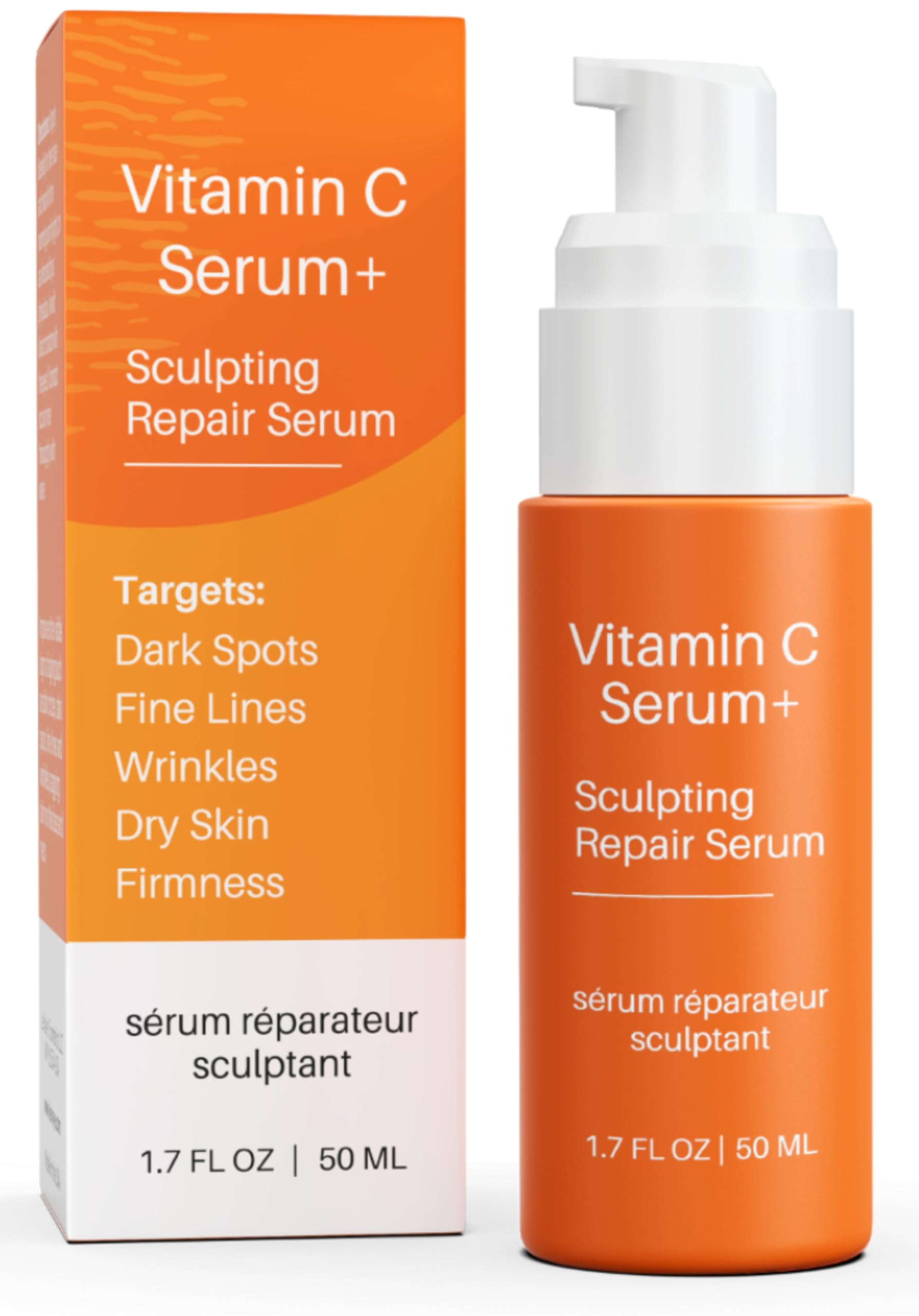
LeVaye packs 15% L-Ascorbic Acid alongside Ferulic Acid, Niacinamide, Hyaluronic Acid, Peptides, and Ceramides into a single serum — a stacked formula that targets wrinkles, fine lines, dark spots, enlarged pores, and dehydration with one application. The Ferulic Acid stabilizes the Vitamin C, preventing the oxidation that plagues many brightening serums within weeks.
The texture strikes a rare balance: potent enough to deliver visible brightening within two weeks (users report reduced sun spots and a more even tone), yet lightweight enough for daytime wear under makeup. The inclusion of Ceramides means this serum doubles as a barrier repair product, making it a strong multi-tasker for anyone with combination or aging skin.
Apply to dry skin in the morning before moisturizer. Storage in a cool, dark place extends the Vitamin C’s potency — the product comes in an opaque airless pump bottle that helps, but avoid leaving it in a steamy bathroom.
Why it’s great
- High 15% L-Ascorbic acid with Ferulic Acid for stability
- Six active categories in one bottle replaces multiple serums
- Niacinamide + Ceramides reduce irritation from Vitamin C
Good to know
- Vitamin C can tingle on very sensitive skin during first week
- Bottle size is 1 oz; heavy daily use finishes in about 3 months
3. Haruharu Wonder Black Rice Botanical 2GF Ampoule

Haruharu’s Black Rice 2GF Ampoule uses EGF (Epidermal Growth Factor) derived from black rice fermentation — a Japanese skincare technique that increases peptide bioavailability while avoiding the irritation of synthetic growth factors. The 1 oz bottle delivers a concentrated dose of anti-aging actives in a lightweight, almost watery texture that sinks in immediately without any stickiness.
EWG-Green certification means every listed ingredient meets strict toxicity and irritancy thresholds — rare for an ampoule containing active peptides. Users with combination and oily skin types report that this serum controls mid-day shine while keeping fine lines around the eyes and mouth visibly softened after a full month of use. The absence of fragrance, essential oils, and drying alcohols makes it safe for daily AM/PM application.
Layer it after toner and before moisturizer. The 30 ml bottle lasts roughly six to eight weeks with twice-daily use, making the cost-per-use exceptionally low for a peptide-rich formulation.
Why it’s great
- EWG-Green certified — no questionable additives
- Fermented black rice EGF for superior absorption
- Non-sticky, fast-absorbing; works under sunscreen and makeup
Good to know
- Watery texture may feel too thin for those who prefer thicker serums
- No SPF protection — must layer sunscreen on top
4. 3% Hyaluronic Acid Serum with Ceramide NP
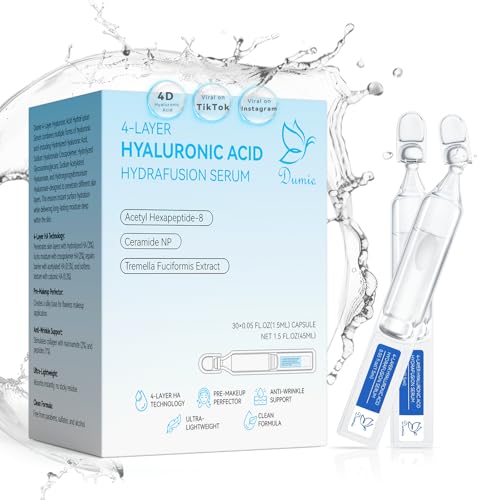
This Korean-Japanese hybrid formula leans into pure hydration science: 3% Hyaluronic Acid (using four molecular weight variants) paired with 20,000 ppm Ceramide NP and 10,000 ppm Acetyl Hexapeptide-8. The Tremella Fuciformis (mushroom) extract boosts surface hydration by up to 500%, delivering that “bouncy” feel Japanese skincare is known for without any greasy residue.
The single-use 1.5 ml tubes solve two problems: actives stay fresh (no oxidation from repeated pump exposure) and the serum is travel-friendly without risk of leaks. Each tube contains exactly one full-face application — no guessing, no waste. Users with eczema, rosacea, and general sensitivity report visible reduction in redness and flaking within two to three weeks of nightly use.
Apply one tube at night after cleansing. The ultra-lightweight texture layers well under heavier moisturizers for winter routines, or alone in humid climates.
Why it’s great
- 4-variant HA complex hydrates across multiple skin layers
- High 20,000 ppm Ceramide NP for serious barrier repair
- Single-use tubes preserve peptide and ceramide potency
Good to know
- 30 tubes per box creates daily packaging waste
- No Vitamin C or brightening actives — purely hydration-focused
5. TULA Brightening Treatment Drops

TULA’s approach combines Vitamin C with probiotics — a less common pairing in Japanese-inspired formulas but one that works well for anyone dealing with both dullness and mild breakouts. The probiotic component supports the skin’s microbiome while the vitamin C targets dark spots and uneven tone, making this serum effective for combination and acne-prone skin types that often react poorly to straight ascorbic acid.
The dropper bottle delivers a thin, milky fluid that spreads easily and dries to a satin finish. Users report visible brightening around the two-week mark, especially on post-acne marks and sun spots on the cheeks. The formula is free from parabens, sulfates, and phthalates, though the inclusion of several botanical extracts (turmeric, reishi) means patch-testing is wise for those with known plant allergies.
Apply 3–4 drops to clean, dry skin each morning before moisturizer. Avoid mixing directly with strong AHAs or retinols in the same layer to prevent irritation.
Why it’s great
- Probiotics + Vitamin C for both brightening and microbiome support
- Gentle enough for acne-prone skin, unlike some pure L-Ascorbic serums
- Fast-absorbing satin finish works as a makeup primer alternative
Good to know
- Botanical extract blend may trigger sensitivity in some users
- Only 1 oz per bottle; using 4 drops daily finishes in about two months
FAQ
Can I use a Japanese serum with retinol or vitamin C in the same routine?
How long does a Japanese serum take to show visible results?
What is the difference between an ampoule and a serum in Japanese skincare?
Final Thoughts: The Verdict
For most users, the japanese serum winner is the Haruharu Wonder Black Rice 2GF Ampoule because it delivers fermented EGF-peptide technology at an accessible price point with EWG-Green safety and zero fragrance. If you want dual-phase anti-aging for sensitive, reactive skin, grab the ELEMIS Pro-Collagen Rose Micro Serum. And for deep barrier repair and 48-hour hydration in a travel-friendly format, nothing beats the 3% Hyaluronic Acid + Ceramide NP Serum.