Finding an L-ascorbic acid serum that actually survives contact with air and light long enough to brighten your skin is the real battle. The pure form of vitamin C is notoriously unstable, quickly oxidizing into a useless (and sometimes irritating) orange liquid if the formula, packaging, or pH isn’t dialed in perfectly.
I’m Emma — the founder and writer behind Baby Bangs. I’ve spent years scrutinizing ingredient lists, stability testing protocols, and formulation science to separate genuinely active serums from the ones that are just tinted water in a dropper bottle.
This guide walks through the five best contenders on the market today. I’ll focus on what actually matters — concentration, stabilization technology, and packaging integrity — so you can finally find your ideal l-ascorbic acid serum without wasting money on formulas that degrade before their first use.
How To Choose The Best L-Ascorbic Acid Serum
Not all vitamin C serums are created equal, and the difference between a formula that transforms your skin and one that just sits on top is often invisible to the naked eye. You need to look past the marketing claims and check three critical factors that determine whether an L-ascorbic acid serum will actually work.
Concentration and pH: The Collagen Key
Effective L-ascorbic acid serums typically fall between 10% and 20% concentration. Below 10%, the collagen-stimulating benefits drop off significantly. Above 20%, irritation risk climbs without proportional gains. The formula must also be acidic — a pH between 2.5 and 3.5 is required for proper epidermal absorption. If a brand refuses to disclose the pH, assume it’s wrong.
Stabilization Partners: Ferulic Acid and Vitamin E
Pure L-ascorbic acid oxidizes on contact with oxygen. To extend its functional life, formulators pair it with antioxidants like ferulic acid and alpha-tocopherol (vitamin E). Ferulic acid stabilizes the vitamin C molecule and doubles its photoprotective effect when combined. A serum without these partners will turn orange within weeks, signaling degradation.
Packaging as Preservation
Light and air are the enemies of ascorbic acid. Opaque, airtight bottles — especially airless pumps — are a strong signal that the brand understands stability. Clear glass dropper bottles, while beautiful, expose the formula to repeated oxygen and UV exposure. If the serum comes in a transparent bottle, check whether it has an inner nitrogen flush or a sealed dropper system.
Quick Comparison
On smaller screens, swipe sideways to see the full table.
| Model | Category | Best For | Key Spec | Amazon |
|---|---|---|---|---|
| Brandefy Vitamin C | Clinical | Brightening + Collagen Boost | 15% L-Ascorbic + Ferulic + E | Amazon |
| Murad Vita-C Glycolic | Exfoliating | Texture + Even Tone | Gold-Stabilized C + Glycolic Acid | Amazon |
| Cocokind Vitamin C Glow | Sensitive | Gentle Brightening | Sea Grape Caviar + Azelaic Acid | Amazon |
| TruSkin Vitamin C Serum | Hydrating | Budget-Friendly Daily Use | L-Ascorbic + Hyaluronic Acid | Amazon |
| Leven Rose Brightening | Natural | Dry Skin Hydration | 100% Natural + Deep Hydrating | Amazon |
In‑Depth Reviews
1. Brandefy Vitamin C Face Serum 15% L. Ascorbic Acid

The Brandefy serum hits the clinical sweet spot with 15% pure L-ascorbic acid, then backs it up with 0.5% ferulic acid and vitamin E — the exact stabilization trio that prevents the molecule from oxidizing before it hits your skin. The pH is formulated to stay within the effective 2.5–3.5 window, meaning your skin actually absorbs the vitamin C rather than letting it sit on top as a potential irritant.
Regular users report visible brightening around the four-week mark, with dark spots from sun damage or old acne fading gradually. The formula is lightweight and absorbs fully within thirty seconds, making it a strong layering base under moisturizer and sunscreen. Because it’s made in the USA with transparent batch testing, you can trust the concentration listed on the bottle actually matches what you’re applying.
The packaging uses an opaque airless pump that prevents air from re-entering the chamber after each dose. This alone extends the serum’s active life significantly longer than dropper-style bottles. If you’re serious about getting results from your vitamin C, this is the formulation to beat.
Why it’s great
- Full stabilization stack (ferulic + vitamin E) prevents rapid oxidation
- Airless pump keeps the formula active for months
- 15% concentration is effective without causing irritation in most skin types
Good to know
- Higher price point than drugstore alternatives
- Only 1 oz of product per bottle
2. Murad Vita-C Glycolic Serum
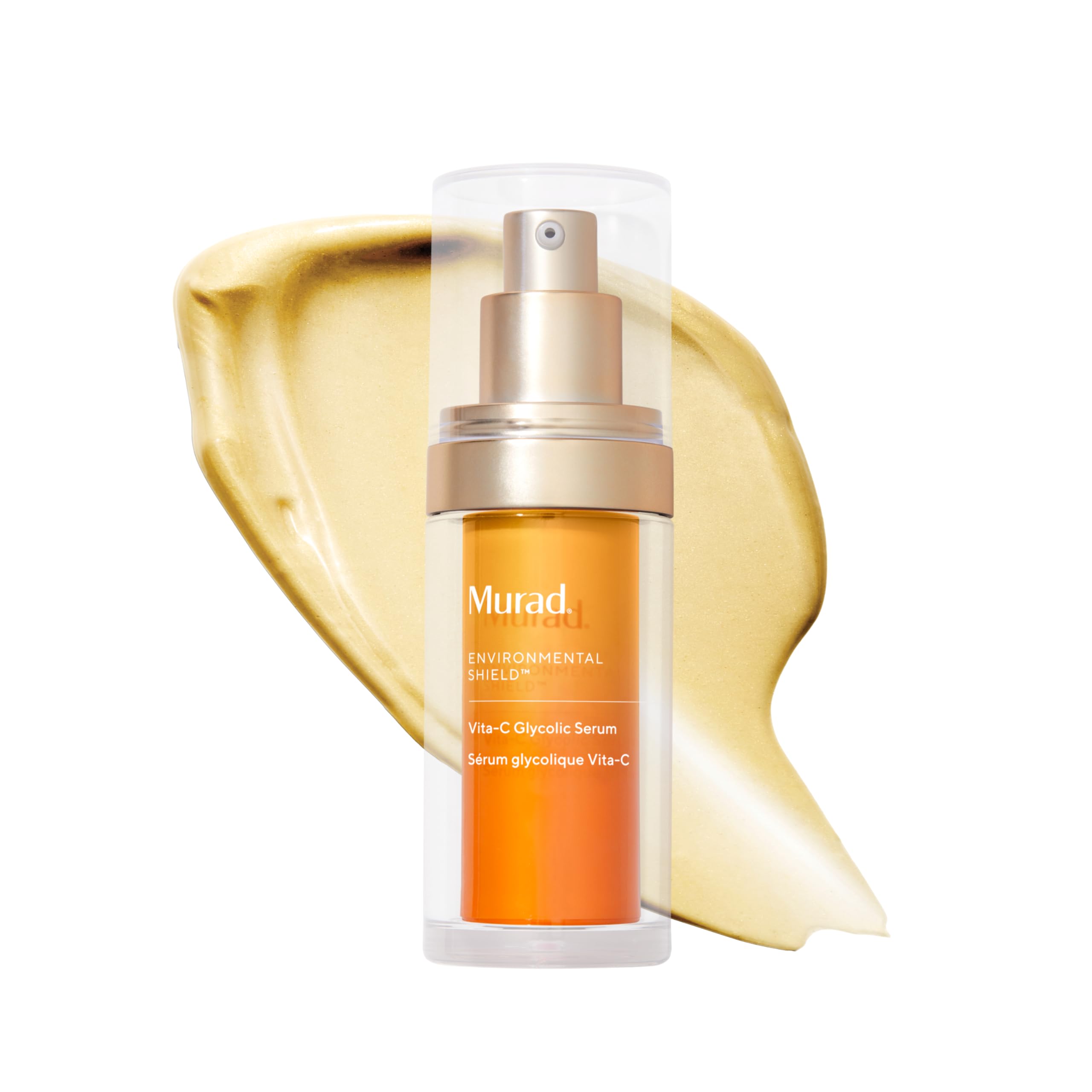
Murad takes a different approach by using gold-stabilized vitamin C, a technology that binds the ascorbic acid molecule to gold particles to improve penetration and slow oxidation. This serum combines that stabilized C with glycolic acid, an alpha-hydroxy acid that exfoliates the top layer of dead skin cells, creating a dual-action brightening and texture improvement effect that single-ingredient serums can’t match.
The glycolic acid component means you’re getting chemical exfoliation alongside vitamin C stimulation, so this serum works faster on pigmentation and uneven texture than a plain ascorbic acid formula. Users with rough or sun-damaged skin often see noticeable changes in skin smoothness within two weeks. The formula still includes vitamin E for additional stability and antioxidant support.
Because it contains an AHA, this serum increases sun sensitivity significantly — morning use demands rigorous SPF application. The gold-stabilization technology also makes this one of the more expensive options on the shelf, but for those who want exfoliation and brightening in one step, the investment pays off in reduced routine complexity.
Why it’s great
- Gold-stabilized C resists oxidation better than most powders or water-based forms
- Glycolic acid accelerates visible results on texture and discoloration
- Combines two key steps into one serum
Good to know
- Glycolic acid can cause stinging on sensitive or compromised skin
- Requires strict daily SPF usage
3. Cocokind Vitamin C Glow Serum

Cocokind builds their formula around a stable vitamin C derivative that is gentler on the skin barrier than pure L-ascorbic acid, making it a strong option for reactive or rosacea-prone complexions. They pair the C with sea grape caviar extract — a humectant that boosts water retention — and azelaic acid, which calms redness and evens tone without the peeling that comes with stronger exfoliants.
The texture is lightweight and sinks in quickly without any sticky residue, which is impressive given the hydrating ingredients. Users with combination or oily skin appreciate that it doesn’t trigger breakouts while still delivering a visible glow. The formula is fragrance-free, essential oil-free, and cruelty-free, appealing to the clean beauty crowd who refuse to compromise on ingredient safety.
Because this uses a stabilized C derivative instead of pure L-ascorbic, it may take longer to produce visible collagen remodeling. But for anyone whose skin cannot tolerate the typical pH of ascorbic acid serums, this trade-off is worth it. Store it in a dark, cool place — the brand recommends this explicitly because even stabilized C benefits from light avoidance.
Why it’s great
- Azelaic acid reduces redness and evens skin tone without irritation
- Sea grape caviar extract improves water retention in the skin
- Fragrance-free and safe for sensitive skin types
Good to know
- Stabilized C derivative is less potent than pure L-ascorbic acid
- Results on deep pigmentation may be slower
4. TruSkin Vitamin C Serum for Face
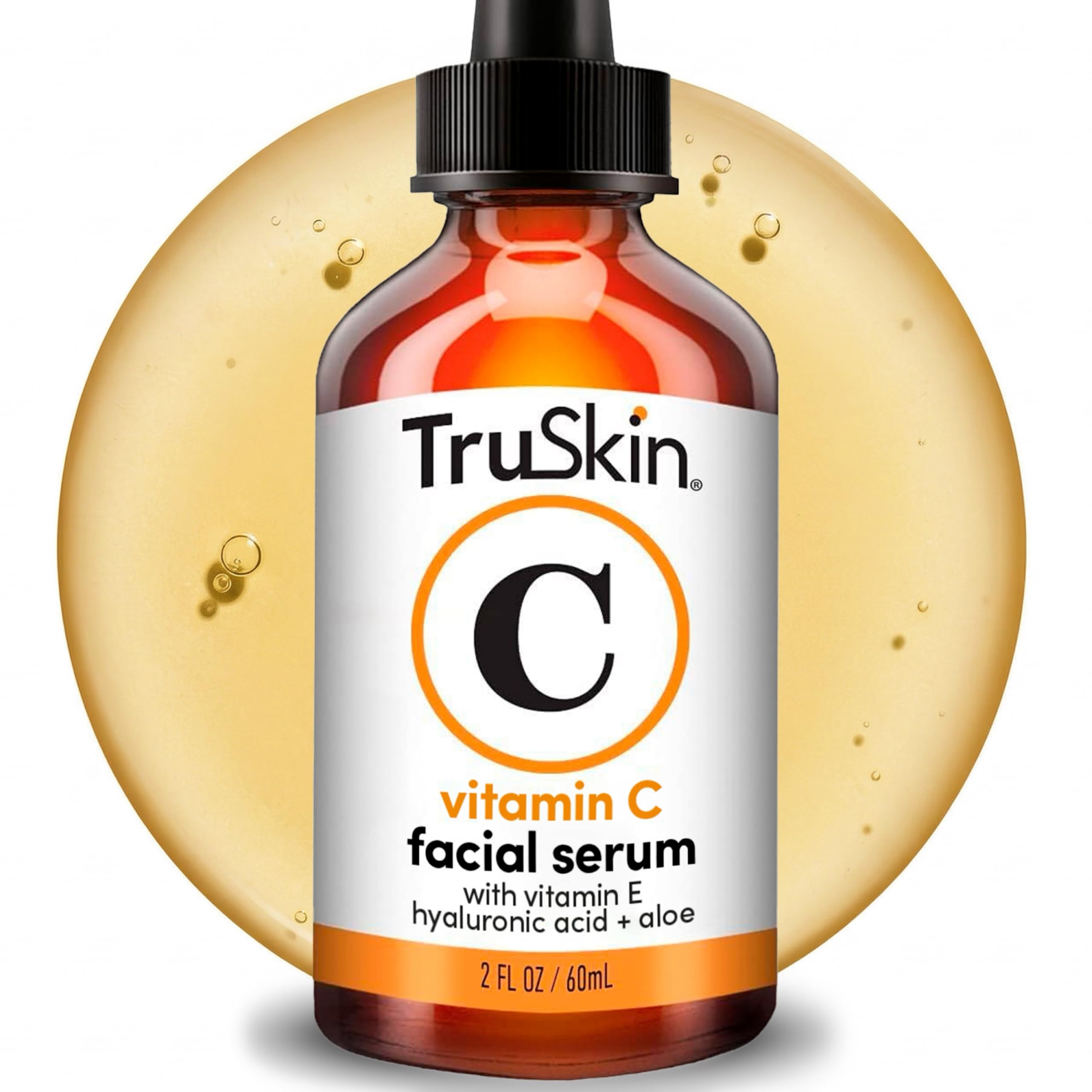
TruSkin’s formula pairs L-ascorbic acid with hyaluronic acid and vitamin E, creating a serum that both brightens and deeply hydrates. The hyaluronic acid pulls moisture into the skin while the vitamin C works on brightening, meaning you get two benefits in one application. This is especially useful for dry or dehydrated skin types that struggle with typical vitamin C serums that can feel tight or drying.
The price point is significantly lower than the clinical options, yet the formula includes the essential stabilization partners — vitamin E helps slow oxidation, though there is no ferulic acid in the blend. Users report the serum has a mild, pleasant scent and absorbs nicely without pilling under moisturizer. The 2 oz bottle also offers more product per purchase, extending the value.
However, the packaging is a clear glass dropper bottle, which exposes the formula to light and oxygen every time you open it. Users should expect to use this bottle within two to three months before the serum begins to yellow. If you are new to vitamin C or on a tight budget, this is a reasonable entry point, but be prepared to replace it more frequently than premium options.
Why it’s great
- Hyaluronic acid provides noticeable hydration alongside brightening
- Large 2 oz bottle offers strong value per use
- Gentle formula that works well for most skin types
Good to know
- Clear glass packaging allows light exposure that accelerates oxidation
- No ferulic acid means stabilization is less robust
5. Leven Rose Vitamin C Brightening Serum

Leven Rose approaches vitamin C from a 100% natural angle, combining the ascorbic acid with deeply hydrating botanical oils and butters. This serum is designed for dry or mature skin that needs significant moisture support alongside brightening. The oil-rich base helps the vitamin C penetrate while simultaneously addressing dehydration lines and flaking.
The formula is free from synthetic fragrances, parabens, and sulfates, appealing to the natural skincare devotee. Users with very dry skin report that this serum acts almost like a light moisturizer, reducing the need for a heavy cream on top. It absorbs well but does leave a slight dewy sheen that some people enjoy as a glow and others find a bit greasy.
The trade-off for the natural formulation is stability — without synthetic stabilizers like ferulic acid, this serum may oxidize faster than laboratory-formulated competitors. Store it in the refrigerator to extend its active life. For those who prioritize ingredient sourcing and texture over pure ascorbic acid concentration, this is a solid choice, but it is not the most potent brightener on this list.
Why it’s great
- Oil-rich base deeply hydrates dry and mature skin
- Free from synthetic preservatives and fragrances
- Acts as a lightweight moisturizer and serum in one
Good to know
- Natural formulation oxidizes faster than stabilized serums
- Dewy finish may feel heavy for oily skin types
FAQ
Why does my L-ascorbic acid serum turn yellow or orange?
Can I use an L-ascorbic acid serum with retinol?
How do I know if my serum has the right pH for absorption?
Final Thoughts: The Verdict
For most users, the l-ascorbic acid serum winner is the Brandefy Vitamin C Face Serum because it combines the clinically proven 15% concentration with a full stabilization stack (ferulic acid and vitamin E) and airtight packaging that actually preserves the formula. If you want exfoliation alongside brightening, grab the Murad Vita-C Glycolic Serum. And for sensitive skin that cannot tolerate the typical ascorbic acid pH, nothing beats the Cocokind Vitamin C Glow Serum.