The moment a toddler lifts both feet off the ground, the entire physics of parenting shifts. You watch them wobble, tilt, and then — for a split second — find a clean line of symmetry between the handlebars and the horizon. That micro-moment of independent balance is the whole point of a balance bike. But not every frame delivers that quiet click of confidence. Some tires skid on pavement, some seats slip mid-glide, and some cheap builds rattle loose after a week. The right bike eliminates those variables, turning every driveway and park path into a smooth learning lab for your two-to-five year old.
I’m Emma — the founder and writer behind Baby Bangs. I’ve tracked the kids riding gear market season after season, breaking down frame geometry, wheel composition, and adjustability ranges so you don’t have to decode the specs yourself.
After sorting through dozens of inline models and filtering by safety, durability, and real child-friendly design, I pulled together the seven builds that earn a spot in the conversation about the kids balance bike segment today. Every pick here passed a strict sniff test for material quality and growth range.
How To Choose The Best Kids Balance Bike
Buying a balance bike isn’t like picking a tricycle. The whole point is to teach dynamic equilibrium through gliding, so the frame geometry, wheel type, and adjustability range matter more than colorful decals or a brand name. Here are the three non-negotiable factors that separate a real learning tool from a toy that gathers dust in the garage.
Wheel Material: Air Rubber vs. EVA Foam vs. Solid Rubber
EVA foam wheels are lightweight and never puncture, but they slide sideways on wet pavement and wear flat after a few months of hard outdoor use. Solid rubber offers better grip but adds weight that a three-year-old has to drag. Real rubber air tires — the kind you inflate with a pump — provide the best traction, shock absorption, and roll resistance for gravel paths and grass. If your kid rides mostly on asphalt, EVA foam works fine. If they hit dirt trails or park curbs, prioritize pneumatic tires.
Frame Material and Weight Ceiling
Carbon steel frames dominate this category because they absorb vibration better than aluminum and support higher weight limits (most top out around 110 pounds). Iron frames are cheaper but rust faster and add unnecessary heft. A balance bike should weigh between 7 and 10 pounds — heavy enough to feel stable during a lean, light enough for a toddler to lift after a tumble. Check the stated maximum weight recommendation, not just the age range.
Adjustability Range and Tool-Free Mechanism
A fixed-height bike might fit your two-year-old today but force an awkward leg bend by age four. Look for a seat that adjusts from roughly 13 inches to at least 18 inches (measured from the ground to the top of the saddle). Handlebars should track the same growth arc. Tool-free quick-release clamps let you raise both in seconds as your kid grows, which is the difference between a bike that lasts one season and one that lasts three seasons.
Quick Comparison
On smaller screens, swipe sideways to see the full table.
| Model | Category | Best For | Key Spec | Amazon |
|---|---|---|---|---|
| KRIDDO (Front Light) | Premium | Night riders & wet terrain | Front headlight + fenders | Amazon |
| bicystar 14″ | Premium | Taller 3–6 year olds | Real rubber air tires | Amazon |
| SYNCFUN 12″ | Mid-Range | Travel & quick setup | Tool-free 1-min assembly | Amazon |
| Gotrax KS12 | Mid-Range | Visual fun & low light | LED lights + bell | Amazon |
| RIDYEE Moto-Style | Mid-Range | Customization & safety steering | Steering angle limiter | Amazon |
| KRIDDO Green | Value | Dual-bearing smooth glide | Dual-bearing wheels | Amazon |
| Umatoll UT201 | Budget | First bike on a budget | PU seat + TPE grips | Amazon |
In‑Depth Reviews
1. KRIDDO Kids Balance Bike (Front Light & Fenders)
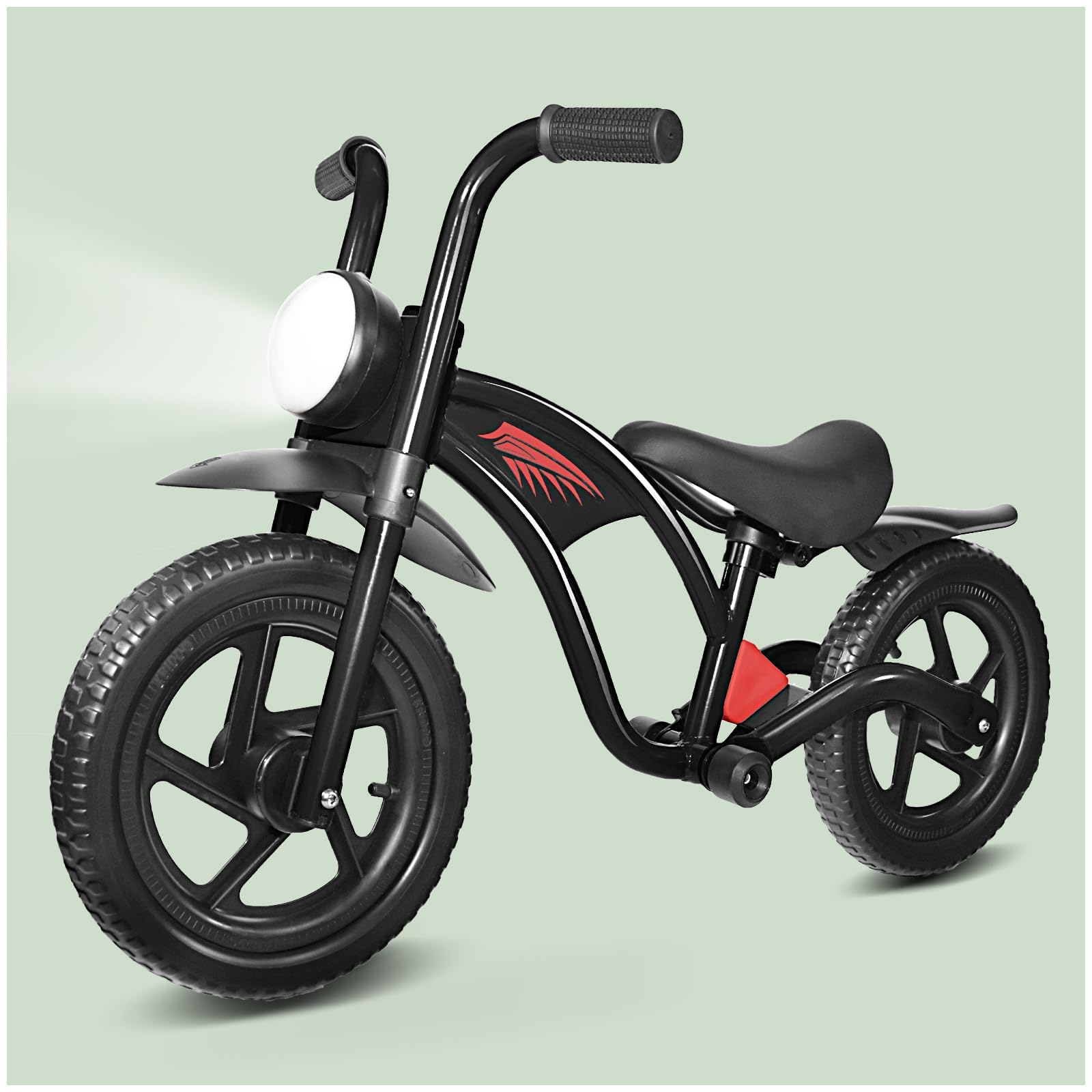
The KRIDDO premium build upgrades the category standard with a sealed-beam front headlight and full-coverage fenders — two features you rarely find at this weight class. The carbon steel frame pairs with upgraded EVA tires and a smoother bearing axle, reducing rolling resistance so your toddler can coast further with fewer pushes. The moto-inspired shock-absorption kit adds a thin urethane bumper under the seat that dampens sidewalk cracks without adding bulk.
The fenders are the real sleeper feature here. They block mud spray during damp morning rides and keep grit off the frame joint, which extends the bike’s usable life across multiple seasons. The seat and handlebar adjust without tools, covering riders from 14 to 18.5 inches of inseam. The front light runs on a button cell and throws enough beam for twilight driveway sessions, though it’s more about visibility than serious night riding.
Assembly takes about ten minutes with the included Allen wrench. The bike weighs roughly 9.9 pounds, which sits at the heavier end of the category but feels planted during fast glides. For parents who want mud protection, a real headlight, and smoother roll dynamics in one frame, this is the most feature-complete mid-range entry in the whole group.
Why it’s great
- Front light and fenders reduce mess and extend ride time into dusk
- Upgraded bearings deliver noticeably smoother coasting than basic hubs
- Shock-absorbing seat insert smooths out bumps
Good to know
- Heavier than some foam-tire competitors at nearly 10 pounds
- Button cell light will eventually need replacement
2. bicystar 14 Inch Toddler Balance Bike
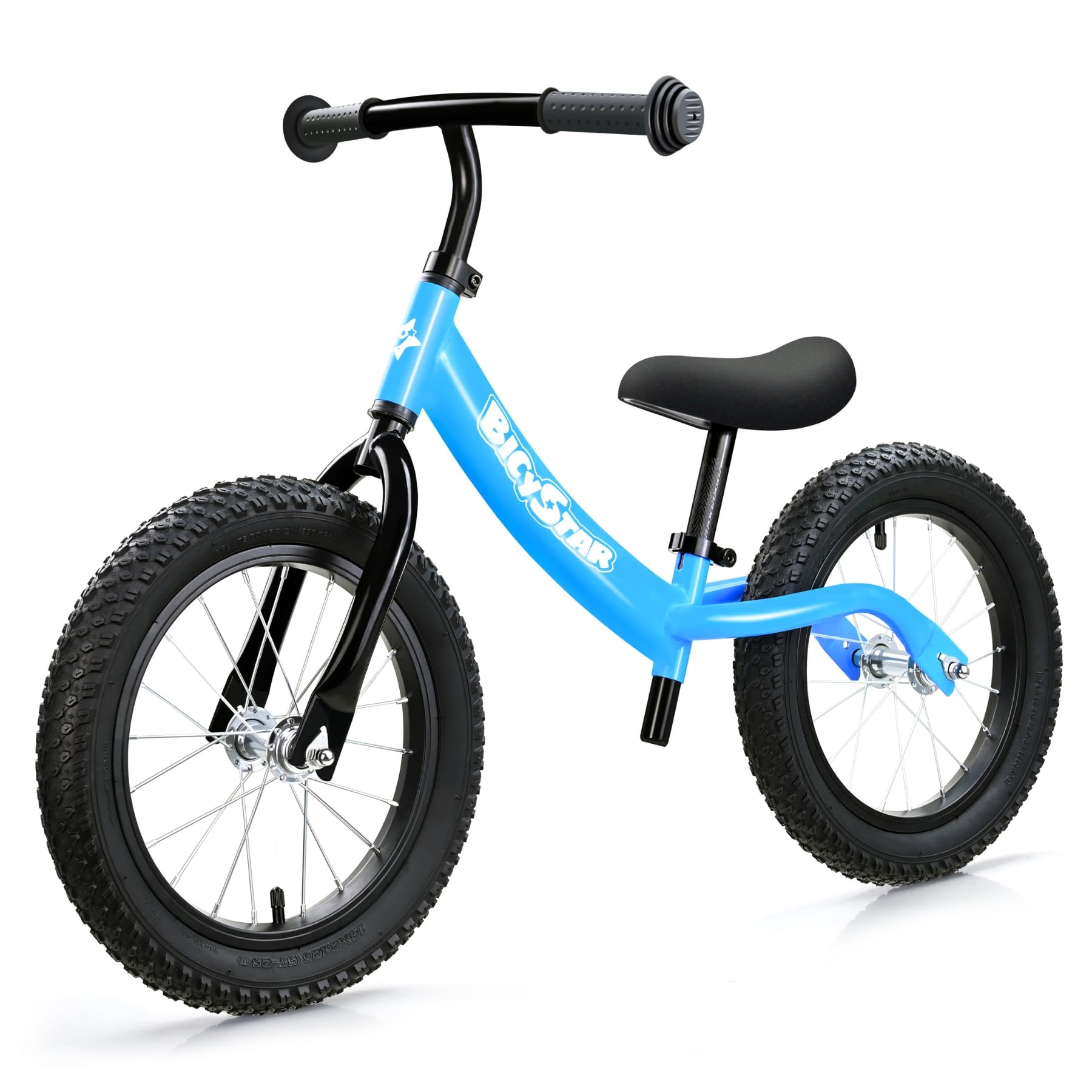
The bicystar stands apart because it uses real rubber air tires on a 14-inch wheel base — a rare spec in this category. Most balance bikes cap at 12-inch wheels with foam tires. The larger diameter rolls over twigs, grass, and uneven pavement with significantly less vibration transfer to the saddle. The inflatable tires require a pump but reward you with grip that foam simply can’t match on loose gravel or damp grass.
The seat slide adjusts from 13 to 21 inches, which pairs well with a 13.5 to 22-inch inseam range. That’s a wider adjustment window than any other bike on this list, meaning a kid who starts at age three can still ride comfortably at six. The handlebar rises to 24 inches, so there’s no awkward hunch-back posture for taller toddlers. The carbon steel frame handles up to 110 pounds, and the coaster brake adds a braking option that most balance bikes skip entirely.
At 8.5 pounds, it’s surprisingly light for a 14-inch frame. The included toolkit and straightforward instructions cut assembly to under 15 minutes. The eight-year frame warranty and two-year tire warranty signal genuine confidence in the build quality. If your child has long legs or you want real traction on mixed surfaces, this is the one bike that won’t feel outgrown next season.
Why it’s great
- Real rubber air tires provide superior grip over foam alternatives
- Widest seat-to-handlebar adjustment range for long-term use
- Coaster brake offers controlled stops for older riders
Good to know
- Requires a pump to inflate tires initially
- 14-inch wheels may feel large for very short 3-year-olds
3. SYNCFUN 12″ Toddler Balance Bike
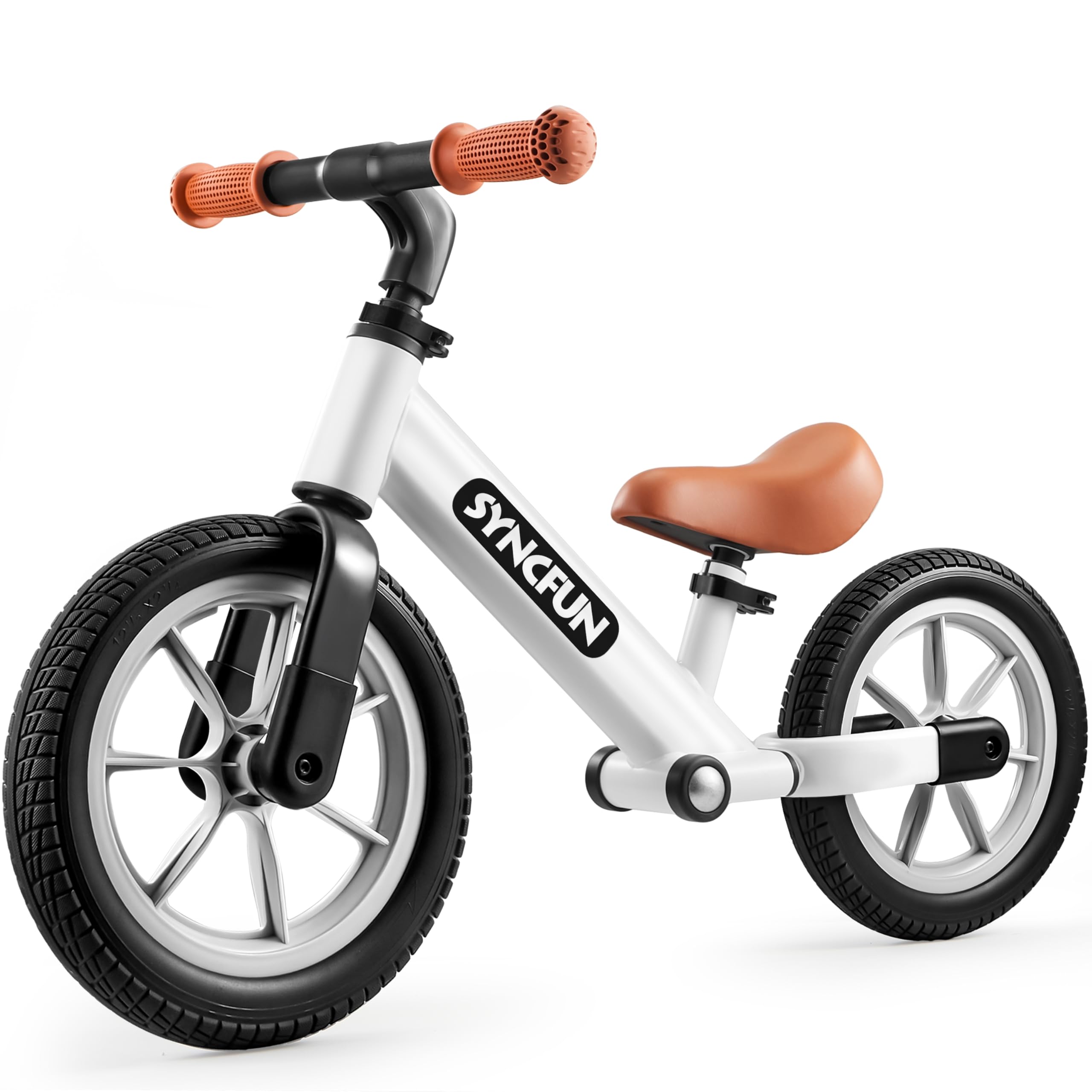
SYNCFUN built this 12-inch model around convenience. The handlebar and seat secure with twist knobs and quick-release clamps — no tools required, no lost bolts, no “I’ll assemble it later” procrastination. Assembly takes under one minute out of the box. That alone makes it a strong pick for impatient toddlers and busy parents who want to skip the four-step hex-wrench ritual.
The frame uses high-carbon steel with a dual suspension system that includes a shock-absorbing saddle and airless anti-slip tires. The ride feel is noticeably softer than rigid foam-only builds, though the 12-inch wheel size limits how fast the bike can roll over tall grass. The thickened PU seat offers more cushion than the basic plastic saddles found on cheaper models, which reduces the urge to stand up mid-glide.
Weight comes in at 8.3 pounds, and the included carry strap makes it easy to haul to the park. Caliper brakes add controlled stopping power that most entry-level bikes omit entirely. The four-piece accessory pockets integrated into the frame are a smart touch for storing a snack or small toy mid-ride. For parents who value speed of setup and carry portability above all else, this is the most friction-free option in the lineup.
Why it’s great
- Full tool-free assembly in under 60 seconds
- Dual suspension and padded seat smooth out bumps
- Included carry strap simplifies transport
Good to know
- 12-inch wheels limit performance on rough off-road terrain
- Accessory pockets are small and not weather-sealed
4. Gotrax KS12 Balance Bike with LED Light
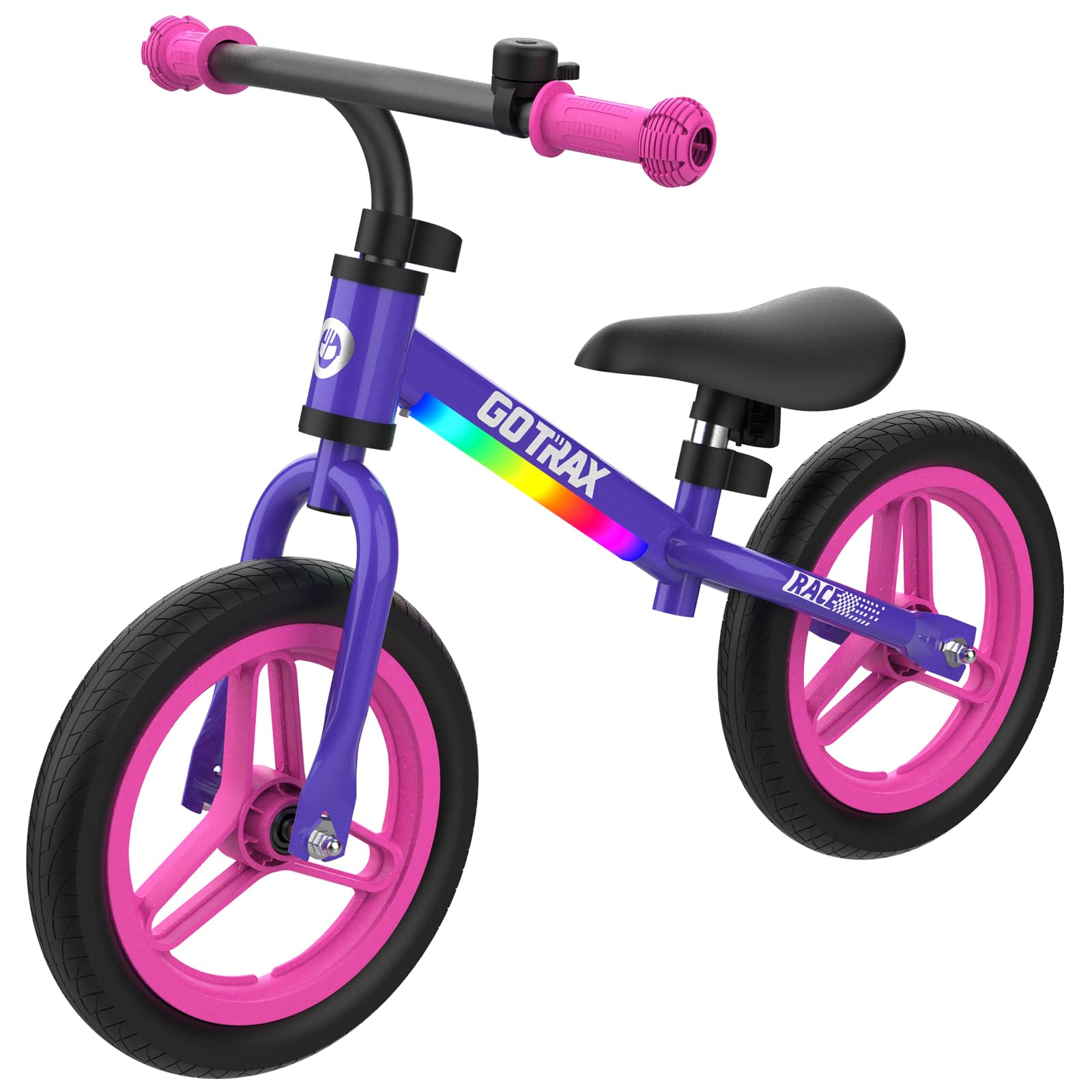
Gotrax pushes into the visual fun zone with integrated LED lights embedded in the frame, plus a handlebar bell that gives kids a classic auditory cue. The lights activate during motion and create a low-glowing trail effect that toddlers find magnetic. It’s a smart way to encourage evening rides when the streetlights just start to flicker, and the visibility bump adds a safety layer without requiring clip-on accessories.
Underneath the flash, the KS12 uses 12-inch EVA foam tires mounted on an iron frame. The iron construction is heavier than carbon steel — the bike weighs 8.6 pounds — but it holds a 110-pound maximum weight rating, which gives it longevity beyond the typical two-to-four age window. The seat adjusts from 16.5 to 18.3 inches, and the handlebar climbs to 26 inches, which is one of the tallest handlebar ranges in this roundup.
The thicker seat cushion and silicone handlebar grips improve comfort for longer rides, and the bell is mounted within easy thumb reach. Assembly is straightforward with the included tools, and Gotrax backs it with a one-year manufacturer warranty. If your child responds to visual stimulation and you want a bike that doubles as a low-light visibility tool, the LED integration makes this a standout choice.
Why it’s great
- Integrated LED lights boost visibility and add fun factor
- Tall handlebar range accommodates longer-limbed toddlers
- Thick cushioned seat and silicone grips for comfort
Good to know
- Iron frame is heavier than carbon steel alternatives
- EVA foam tires offer less traction than rubber
5. RIDYEE Toddler Balance Bike Moto-Style
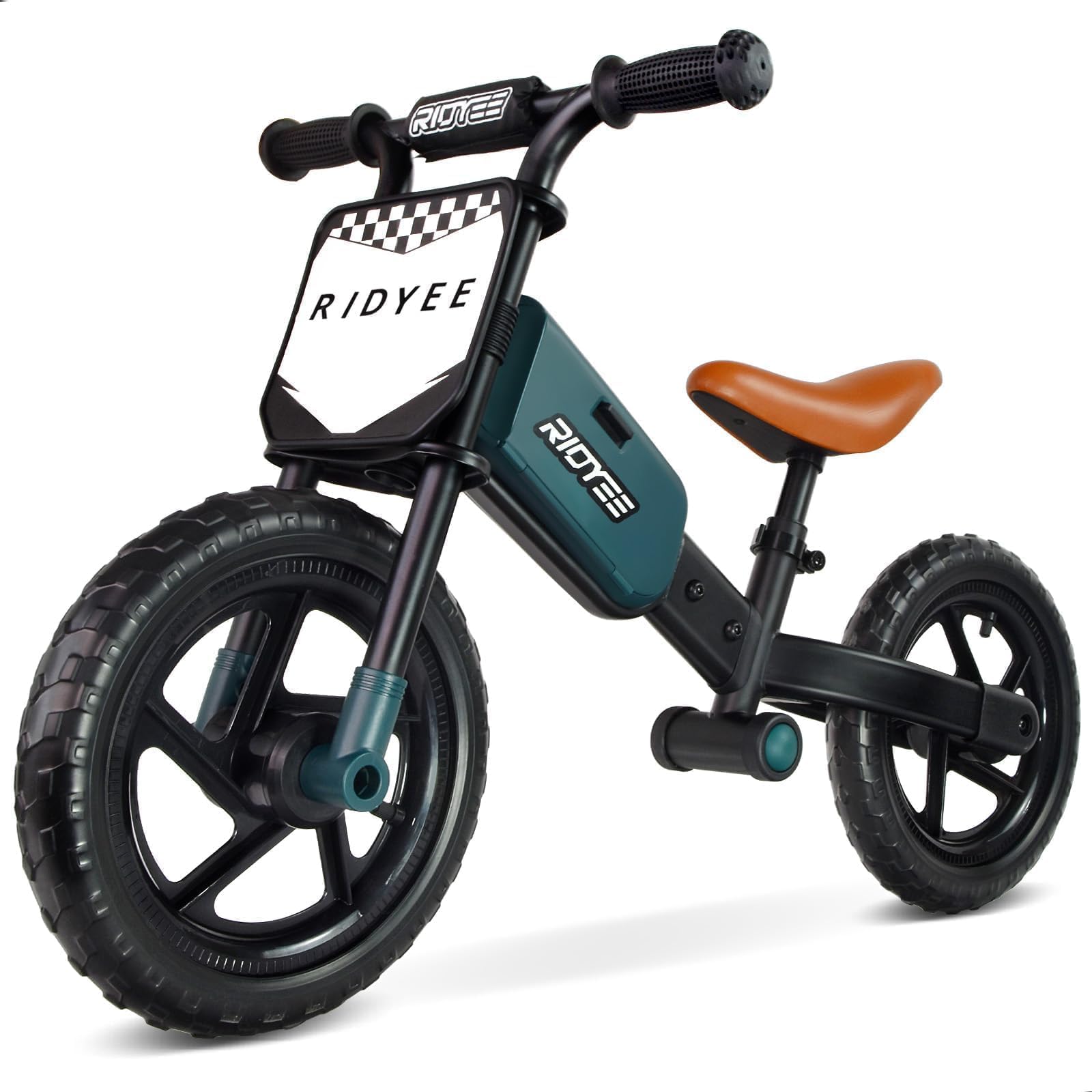
RIDYEE took visual cues from sand motocross bikes and built a frame that looks aggressive without adding unnecessary weight. The green sport colorway and racing-style frame geometry give it a premium appearance that stands out in a sea of pastel plastic. But the real engineering win is the steering angle limiter — a simple mechanical stop that prevents the handlebar from jackknifing sideways during a high-speed wobble or sudden drop.
The carbon steel frame pairs with a shock-absorbing seat and all-terrain EVA tires that handle pavement, grass, and packed dirt without puncturing. The seat adjusts from 13.4 to 15.8 inches without tools — a narrower range than some competitors, but appropriate for the targeted two-to-five age window. The included DIY name plate and sticker set lets kids personalize the front plate, which adds a layer of ownership that makes them more likely to ride daily.
Assembly is not required out of the box, which is rare in this category. The coaster brake gives older riders a foot-stomp stopping option, and the handlebar cover protects against scrapes during tumbles. The limited steering angle is especially helpful for parents who watch their toddler oversteer and tip sideways — this bike mechanically prevents that specific failure mode.
Why it’s great
- Steering angle limiter prevents jackknife crashes
- Comes fully assembled, ready to ride immediately
- DIY sticker plate encourages creative engagement
Good to know
- Seat height range is narrower than some alternatives
- EVA tires sacrifice some off-road grip versus air rubber
6. KRIDDO Toddler Balance Bike (Dual Bearing)
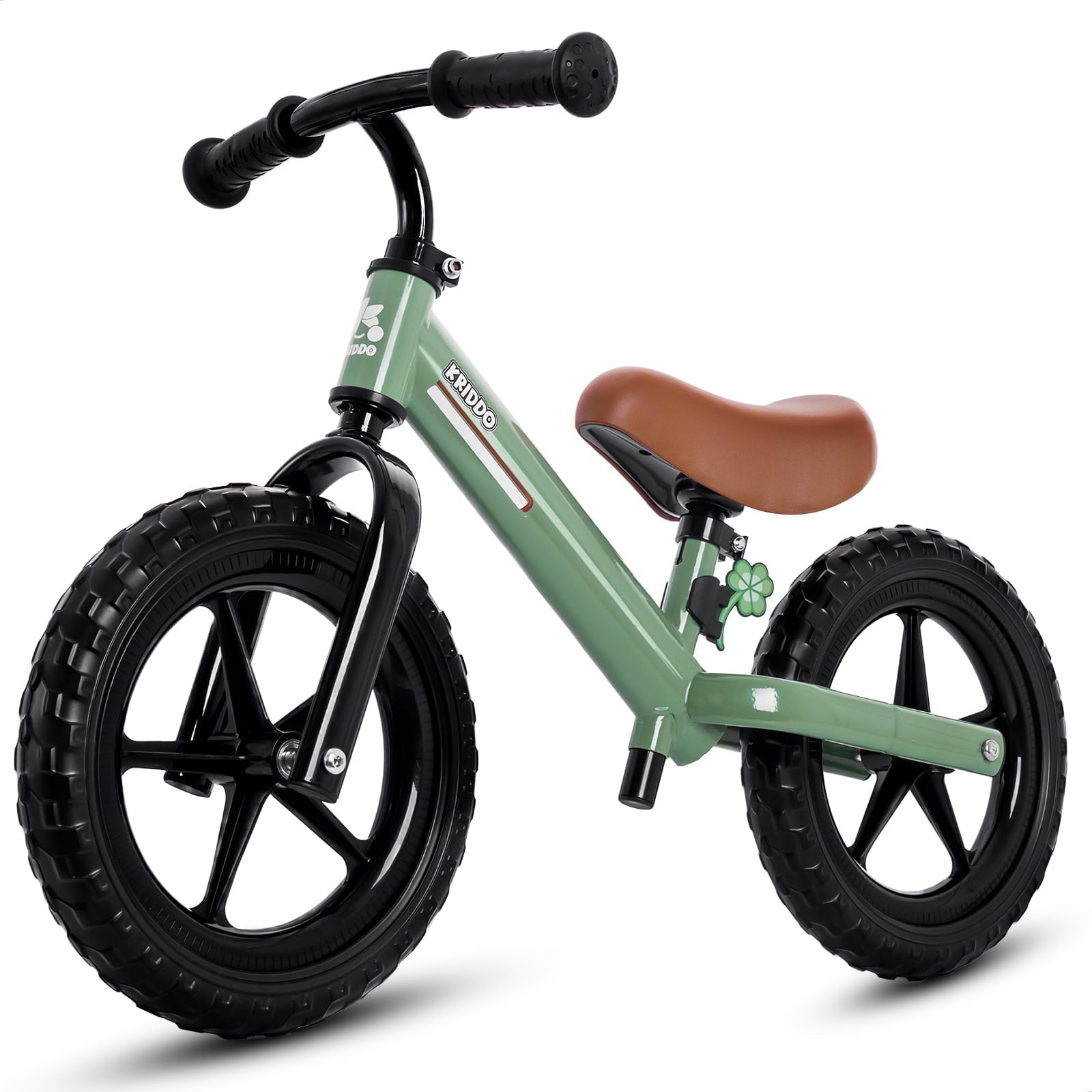
This KRIDDO model focuses on reducing rolling resistance through dual-bearing hubs — a feature typically reserved for premium pedal bikes. The bearings sit inside the wheel axles and allow the wheels to spin with less friction, which means your toddler can glide farther on each push. The difference is immediately noticeable when riding on polished concrete or smooth pavement: the bike coasts freely without the grinding drag of a basic bushing setup.
The 12-inch puncture-proof EVA tires work across grass, carpets, pavements, and wood floors without scratching indoor surfaces. The bike comes with two decorative plates — a flower and a clover — that attach under the seat, letting kids swap personality as they choose. The adjustable seat spans 14.17 to 18.5 inches, and the handlebar goes from 20.08 to 21.65 inches, covering the 2-to-5 age bracket comfortably.
The carbon steel frame keeps the weight manageable, and assembly requires basic tool work but takes under 20 minutes. For parents who want a bike that rolls with minimal effort and offers a touch of customization, the dual-bearing system makes this the most mechanically efficient value entry in the group. The only trade-off is the lack of a brake, which means speeds rely entirely on foot drag — fine for younger riders but limiting for older, faster gliders.
Why it’s great
- Dual-bearing wheels reduce friction for longer glides
- Interchangeable decorative plates add personalization
- Puncture-proof EVA tires work on multiple indoor and outdoor surfaces
Good to know
- No brake option limits speed control for older kids
- EVA tires can feel slippery on wet pavement
7. Umatoll Toddler Balance Bike UT201
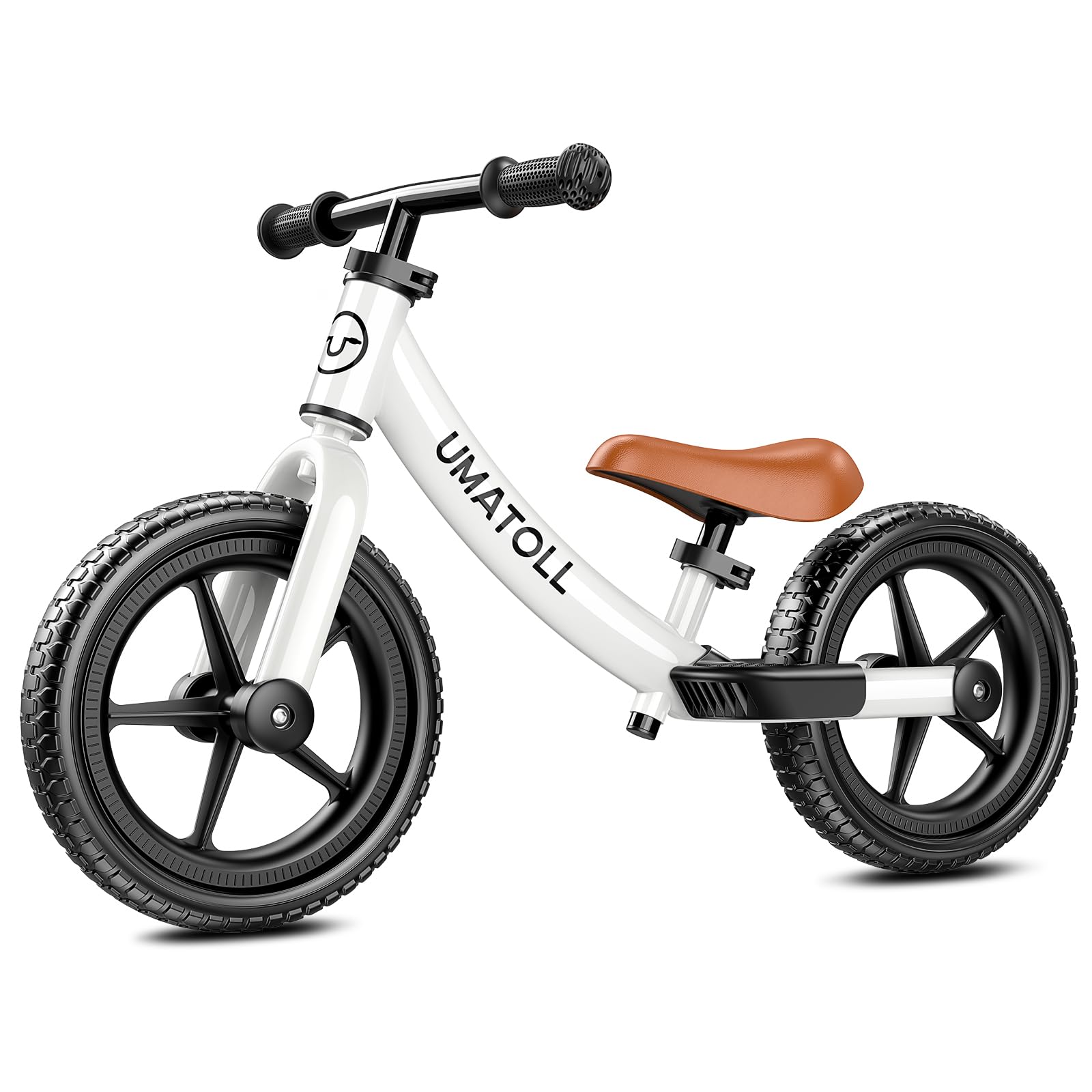
The Umatoll UT201 strips the category down to its essential function — a lightweight, adjustable frame that teaches balance without any unnecessary frills. The carbon steel frame uses a white glossy finish that resists scratches better than matte paint. The PU (polyurethane) seat offers a firm but comfortable sitting surface, and the TPE handlebar grips provide non-slip texture even with sweaty palms on hot summer rides.
The quick-release mechanism on both the handlebar and seat allows tool-free height changes as the child grows. The handlebar spans 19 to 20.9 inches, and the seat goes from 11 to 15.7 inches, covering the 18-month to 5-year window. The puncture-resistant tires never need inflation, which eliminates the blowout risk that air tires carry, though the trade-off is a slightly harder ride over bumpy terrain.
The under-seat footrest is a thoughtful inclusion at this price point — most budget bikes skip it entirely. It gives the toddler a place to park their feet during glides, which teaches the lifting motion required for eventual pedal bike transition. Assembly requires basic tools and takes around 15 minutes. For parents who want a no-nonsense, affordable entry point that still includes a footrest and adjustable saddle, this is the most stripped-down reliable option in the set.
Why it’s great
- Footrest supports proper gliding posture from the start
- PU seat and TPE grips offer solid comfort for the price
- Puncture-proof tires eliminate maintenance worry
Good to know
- No brake option limits speed control for older kids
- Minimum seat height of 11 inches may require slight adjustment for very short 18-month-olds
FAQ
At what age should I start my child on a balance bike?
How do I know if my child is ready to transition to a pedal bike?
Are foam tires really that much worse than air tires?
Should I get a 12-inch or 14-inch balance bike?
Do balance bikes need brakes?
Final Thoughts: The Verdict
For most users, the kids balance bike winner is the KRIDDO with Front Light and Fenders because it packs the most practical extras — headlight for visibility, fenders for cleanliness, and smooth-rolling bearings — into a carbon steel frame that stays stable during fast glides. If you want real rubber air tires that grip dirt and grass like a mountain bike, grab the bicystar 14-inch. And for a quick-assembly bike that goes from box to ride in under a minute, nothing beats the SYNCFUN 12-inch.