Finding a jacket that keeps you warm in sub-zero windchill without the bulk of a traditional parka is the core engineering challenge of cold-weather gear. The wrong choice means either shivering on the trail or sweating through a puffy layer that won’t compress into your pack.
I’m Emma — the founder and writer behind Baby Bangs. I’ve spent the last several seasons cross-referencing insulation types, fill weights, fabric deniers, and weatherproofing ratings to separate the truly warm-from-light from the marketing fluff.
After analyzing dozens of models based on warmth-to-weight ratios, weather resistance, and real-world durability, I’ve built a definitive guide to the lightweight winter jackets for extreme cold that actually deliver insulation without the weight penalty.
How To Choose The Best Lightweight Winter Jackets For Extreme Cold
The promise of a lightweight jacket that handles extreme cold sounds like a contradiction. The secret is in the specific combination of insulation technology, shell fabric, and design details that trap heat without adding ounces. Ignore these factors and you risk buying a jacket that either fails in single-digit temps or packs like a lead blanket.
Insulation Type: Down vs. Synthetic
Down offers the highest warmth-to-weight ratio of any insulation, measured in fill power (700-800+ is excellent). The catch is that standard down loses nearly all its insulating value when wet. Synthetic insulation like The North Face’s HEATSEEKER retains warmth when damp and dries faster, but typically weighs more for the same warmth level. For extreme cold in dry climates, high-fill-power down with a durable water-repellent (DWR) treatment is the clear winner. For wet, maritime cold, a quality synthetic fill is the more reliable choice.
Shell Fabric and Weather Resistance
A lightweight jacket’s shell must protect the insulation from wind and moisture. Look for a face fabric with a denier of 20 or higher for durability, paired with a non-PFC DWR finish to bead off snow and light rain. For true extreme cold, a jacket with a fully windproof membrane or a tightly woven Pertex or similar shell prevents convective heat loss, which is the fastest way to get cold in a light jacket.
Fit, Layering, and Hood Design
A jacket that fits too snugly compresses the insulation, reducing its loft and warmth. A regular or slightly relaxed fit allows for a mid-layer underneath without restricting movement. The hood should be helmet-compatible or at least large enough to pull over a beanie, with a stiffened brim or drawcords to keep snow and wind off your face. Features like an internal draft flap behind the zipper and secure hand pockets add warmth without significant weight.
Quick Comparison
On smaller screens, swipe sideways to see the full table.
| Model | Category | Best For | Key Spec | Amazon |
|---|---|---|---|---|
| Rab Neutrino Pro Hoody | Premium Down | Mountaineering & Extreme Cold | 800-Fill RDS Down, Pertex Microlight Shell | Amazon |
| Rab Electron Pro | Premium Down | Alpine Climbing & Cold Hikes | 800-Fill Down, Pertex Quantum Pro Shell | Amazon |
| The North Face McMurdo Parka | Premium Parka | Extreme City & Commuting | 600-Fill Down, DryVent Shell, DWR | Amazon |
| MARMOT Ithaca Jacket | Premium Down | All-Around Winter Warmth | 700-Fill Down Defender, Removable Fur Hood | Amazon |
| Carhartt Yukon Extremes Coat | Synthetic Insulated | Work & Heavy-Use Outdoor | Heavyweight Synthetic Insulation, Rugged Shell | Amazon |
| Eddie Bauer Boundary Pass Parka | Mid-Range Down | Cold Weather Daily Wear | StormRepel DWR, Down Insulation, Hooded | Amazon |
| Columbia Mens Delta Ridge II | Budget Down | Everyday Winter Layering | Down Insulation, Lightweight Shell | Amazon |
| The North Face Junction Insulated | Mid Synthetic | Active Commute & Mild Cold | 100g HEATSEEKER, Non-PFC DWR Finish | Amazon |
| Columbia Womens Delta Ridge II | Budget Down | Everyday Winter Layering | Down Insulation, Lightweight Shell | Amazon |
In‑Depth Reviews
1. Rab Men’s Neutrino Pro Hoody
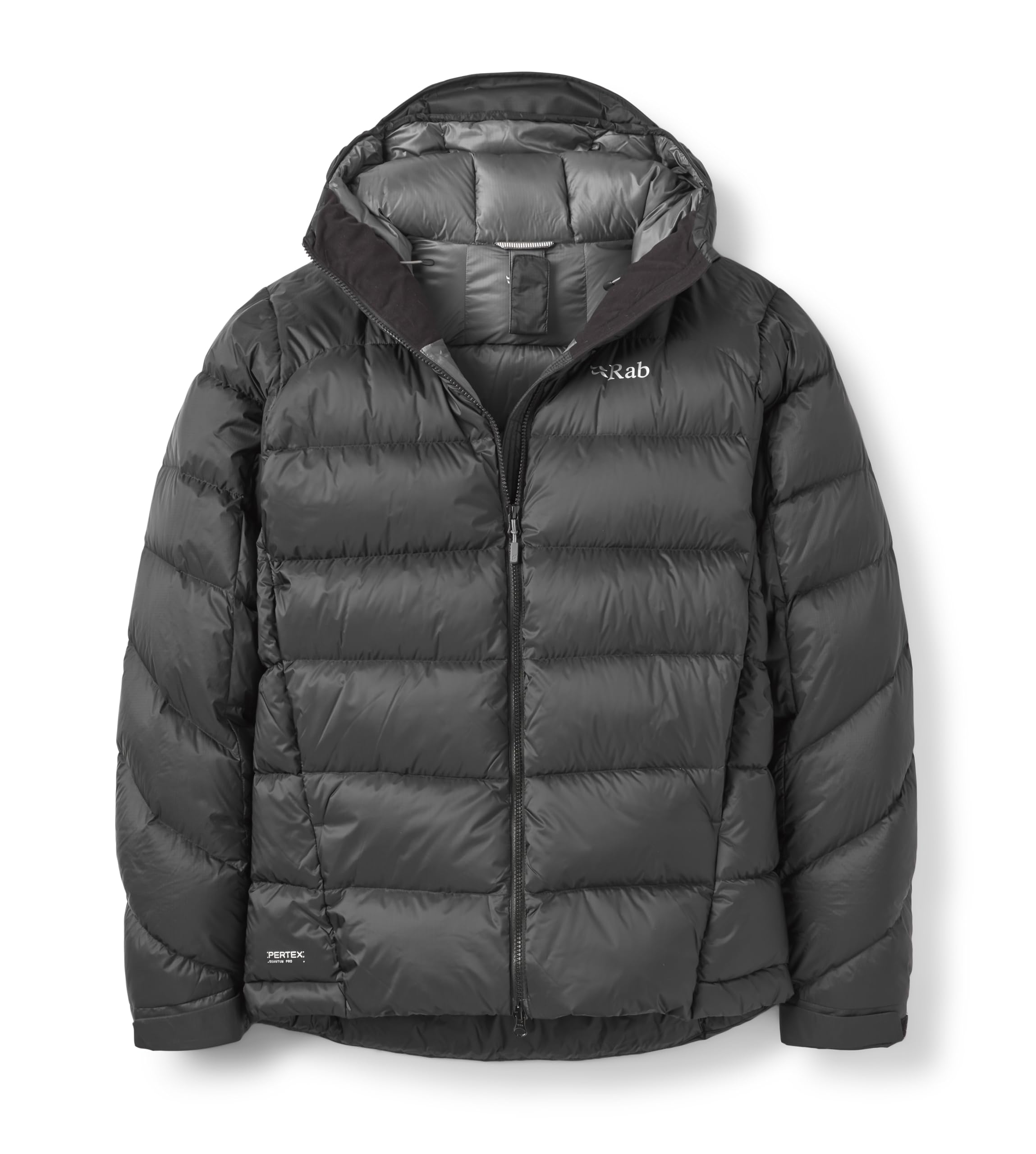
The Rab Neutrino Pro Hoody is a benchmark in the lightweight extreme-cold category, pairing 800-fill European goose down with a Pertex Microlight 20-denier shell. The total weight hovers around 1.3 pounds, yet the internal baffle design and high-loft down provide enough warmth for static belays in sub-zero conditions. The Pertex shell is highly wind-resistant and treated with a DWR finish that handles light snow and spindrift without wetting out the down.
The helmet-compatible hood with a wired brim is a standout for climbers and mountaineers, cinching down securely even in high winds. The fit is alpine-specific—trim enough to layer under a hardshell but not restrictive under a harness. Two Napoleon chest pockets keep a phone and GPS accessible, and the hem drawcord seals out drafts effectively. This is not a casual city jacket; it is a tool for serious winter expeditions.
The Neutrino Pro’s main trade-off is its lack of hand-warmer pockets, which some users miss in extreme cold. The 20-denier shell is also less abrasion-resistant than heavier fabrics, so it’s best used under a protective outer layer in rocky terrain. For a climber or backcountry skier who needs maximum warmth per ounce, this is a top-tier option.
Why it’s great
- Exceptional warmth-to-weight ratio with 800-fill down.
- Windproof Pertex Microlight shell handles alpine winds.
- Helmet-compatible hood with wired brim for visibility.
Good to know
- No external hand pockets for warming hands.
- Thin face fabric is less durable in abrasive terrain.
- Premium price point reflects its specialized alpine design.
2. Rab Men’s Electron Pro 800-Fill Down Hooded Jacket
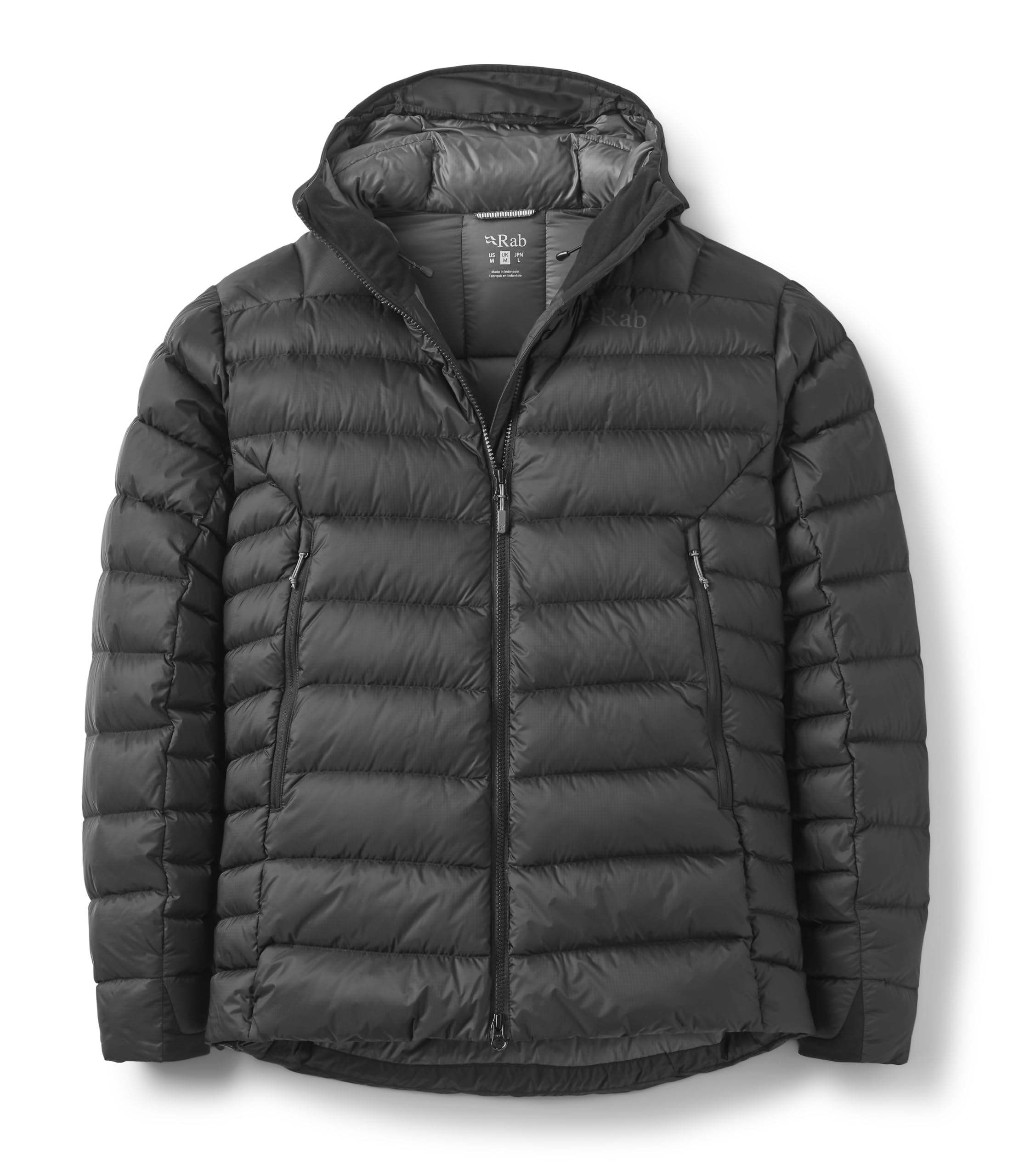
The Rab Electron Pro sits a step below the Neutrino Pro in outright warmth but adds features that make it more versatile for active alpine use. Its 800-fill down is combined with a Pertex Quantum Pro shell that’s slightly more breathable than the Microlight, making it better suited for high-exertion climbing approaches where you’re working hard and need to dump heat without soaking the down.
The jacket weighs just over a pound, and its stretch-woven side panels enhance mobility for reaching overhead holds. The hood is helmet-compatible with a stiffened peak, and the two-way front zip allows access to a harness or pack belt without fully opening the jacket. The internal stash pocket doubles as a stuff sack, compressing the jacket to about the size of a Nalgene bottle.
The Electron Pro’s limitations become apparent in truly static, extreme-cold conditions—it lacks the sheer loft of the Neutrino Pro for full-on belay duty. The stretch panels, while great for movement, are less insulated than the down-filled baffles, so you’ll need a good mid-layer for extended stops below freezing. For cold-weather climbing and fast-and-light missions, it’s a near-perfect choice.
Why it’s great
- Highly compressible for its warmth level, packs to pocket-size.
- Stretch side panels improve mobility and breathability.
- Pertex Quantum Pro shell balances wind resistance and breathability.
Good to know
- Less total loft than the Neutrino Pro for static extreme cold.
- Stretch panels can feel cool in very windy conditions.
- Sizing is trim; order up if layering over thick fleece.
3. The North Face Expedition Mcmurdo Parka
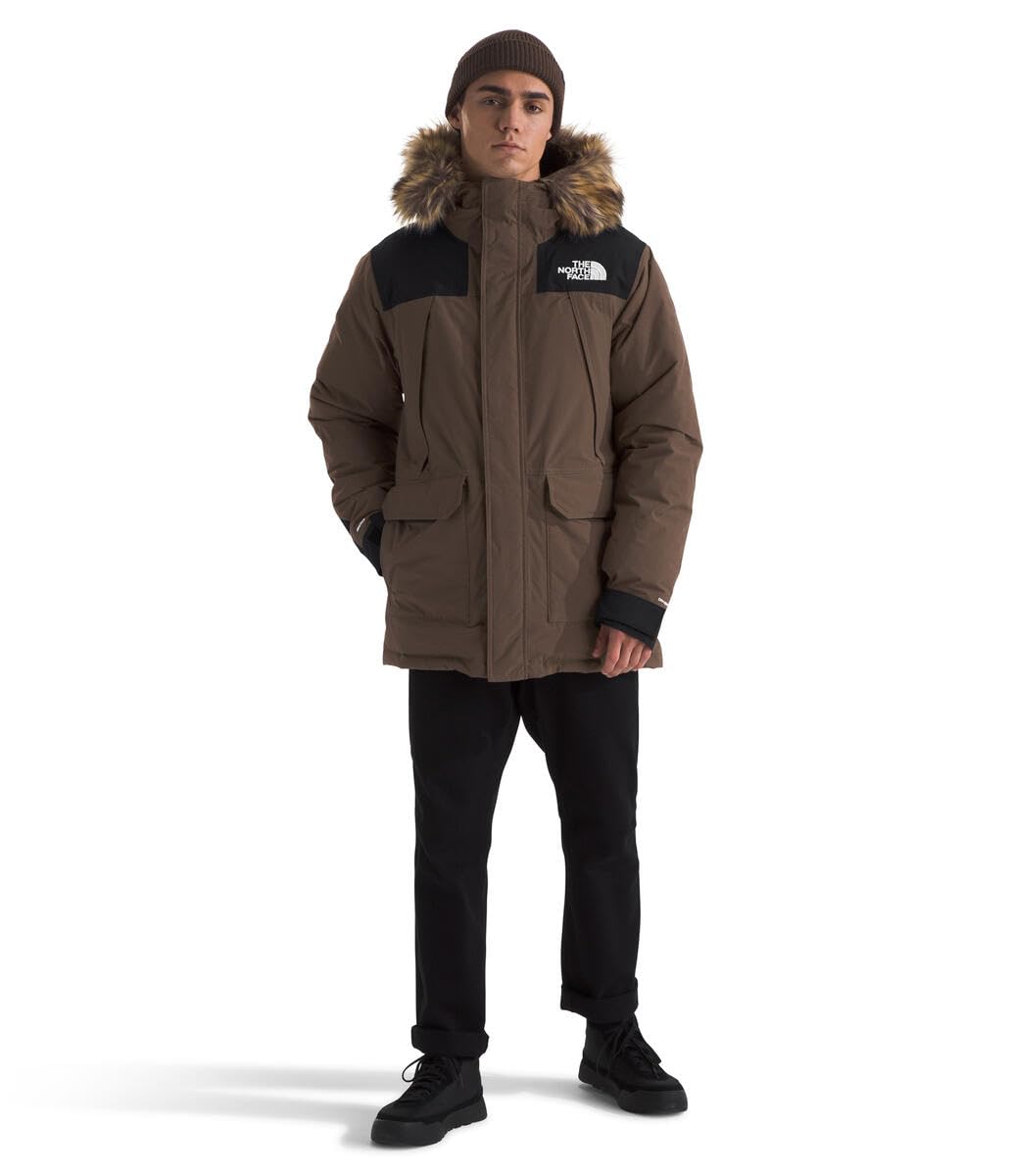
The McMurdo Parka from The North Face is a parka-length jacket that brings serious cold-weather protection to daily life without the full bulk of a belay jacket. It uses 600-fill goose down, which is a slightly lower fill power than the Rab options but is packed generously enough to provide excellent warmth. The DryVent outer shell is fully waterproof and windproof, a critical upgrade over mere DWR-treated jackets for wet, snowy urban winters.
This jacket is built for comfort in extreme city conditions: a removable faux-fur ruff on the hood blocks wind, internal rib-knit cuffs trap heat, and the relaxed fit allows for heavy layering underneath. The multi-pocket configuration includes fleece-lined hand pockets, a chest Napoleon pocket, and internal media pockets. The overall weight is moderate for a parka, but it’s significantly lighter than a traditional expedition-level coat.
The trade-off for the McMurdo’s urban focus is that it is less compressible and heavier than a dedicated belay jacket from Rab or Marmot. The 600-fill down also means a lower warmth-to-weight ratio than higher-fill options, so if you’re counting grams in a backpack, this isn’t the choice. For someone who lives in a cold city, commutes by foot, and needs reliable, all-day warmth, the McMurdo is a strong contender.
Why it’s great
- Fully waterproof DryVent shell for wet snow and rain.
- Removable faux-fur hood ruff provides excellent wind blockage.
- Multiple well-placed pockets for daily carry, fleece-lined hand pockets.
Good to know
- Heavier and less compressible than high-fill down jackets.
- 600-fill down has a lower warmth-to-weight ratio than premium options.
- Relaxed fit may feel bulky for some wearers.
4. MARMOT Ithaca Jacket
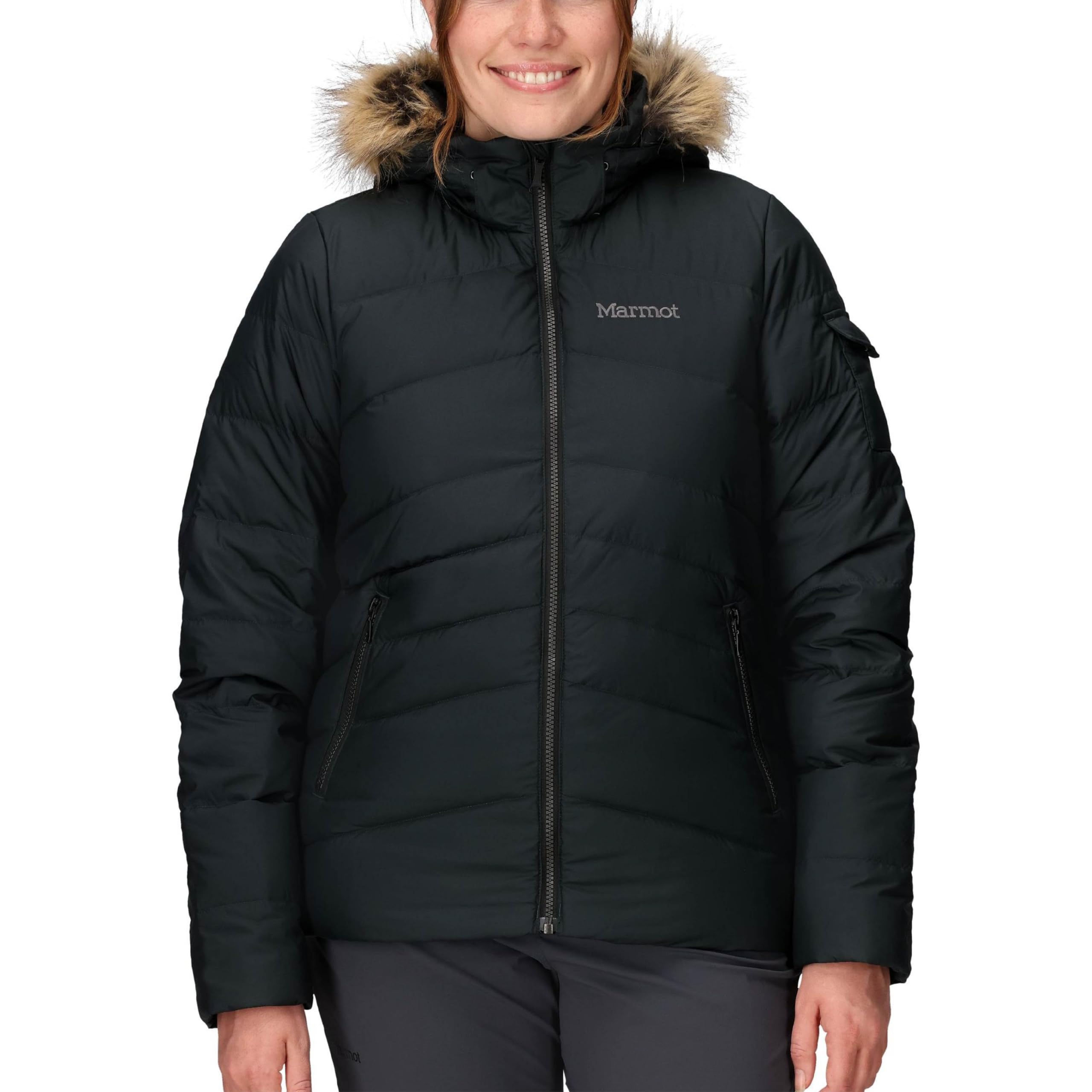
The Marmot Ithaca Jacket bridges the gap between a rugged outdoor jacket and a stylish winter coat. It features 700-fill duck down treated with Down Defender, a hydrophobic finish that helps the down resist moisture absorption for longer—a meaningful upgrade for anyone who encounters wet snow. The shell is a recycled polyester plain weave with a DWR finish, and the removable faux-fur hood trim adds a striking visual element while blocking wind.
Practical details are well-considered: zippered hand-warmer pockets, an interior zippered security pocket, a sleeve pocket for a transit pass or ski pass, and micro-fleece internal cuffs that lock in warmth. The zippered hood is removable, allowing the jacket to function as a cleaner city piece when the fur is detached. The fit is regular, accommodating a mid-layer without being baggy.
The Ithaca’s weight is moderate for its insulation level, and it doesn’t pack down as small as a dedicated mountaineering jacket. The Down Defender treatment extends the time before down becomes wet, but it’s not a substitute for a fully waterproof shell in sustained rain. For mixed terrain—urban commutes, ski lodge days, and cold walks—the Ithaca offers a compelling balance of warmth, look, and feature set.
Why it’s great
- Down Defender treatment adds moisture resistance to the down.
- Versatile style with removable faux-fur hood.
- Micro-fleece cuffs and multiple pockets for warmth and utility.
Good to know
- Not as compressible as lighter mountaineering jackets.
- Face fabric is durable but not fully waterproof.
- Faux fur may be unnecessary for some users.
5. Carhartt Men’s Yukon Extremes Loose Fit Insulated Coat

Carhartt’s Yukon Extremes Loose Fit Insulated Coat is the polar opposite of a lightweight down jacket—it is a heavy-duty synthetic coat designed for sustained exposure, active work, and harsh conditions. The insulation is a thick synthetic fill that retains warmth even when wet, a critical feature for anyone who works outdoors in snow, slush, or rain. The shell is rugged, abrasion-resistant, and treated with a water-repellent finish.
The loose fit is designed to go over multiple layers without restricting movement, and the coat features a three-piece hood, adjustable cuffs, and a storm flap over the zipper. The nylon lining makes layering easy over a hoodie or sweatshirt. It also includes multiple pockets, including fleece-lined hand warmer pockets and an inside map pocket. This coat is heavy; it is not intended for backpacking or climbing.
The Yukon Extremes’ primary drawback is its weight and lack of compressibility—it’s a bulky coat that dominates your trunk or locker. The synthetic insulation, while warm and reliable when damp, has a lower warmth-to-weight ratio than down. For a construction worker, rancher, or anyone spending hours in extreme cold while staying active, the durability and wet-weather reliability of this coat justify its presence here.
Why it’s great
- Exceptional durability and abrasion resistance for work environments.
- Synthetic insulation retains warmth when wet.
- Loose fit allows easy layering over heavy base layers.
Good to know
- Very heavy and not compressible.
- Lower warmth-to-weight ratio than down jackets.
- Not suitable for alpine climbing or pack-friendly use.
6. Eddie Bauer Men’s Boundary Pass Down Hooded Parka
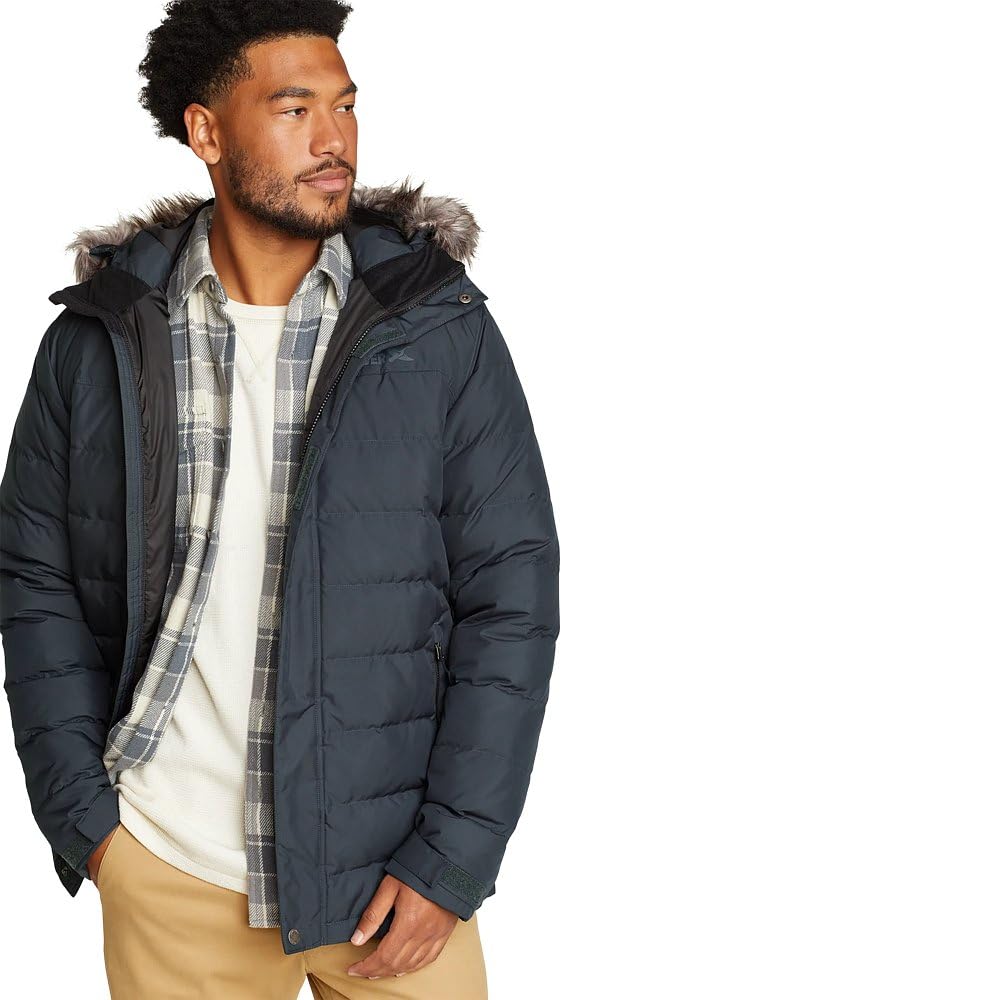
The Eddie Bauer Boundary Pass Down Hooded Parka is a well-rounded mid-range option that competes directly with the McMurdo but at a more accessible tier. It uses down insulation (likely 550-650 fill, consistent with Eddie Bauer’s standard StormDown) housed in a durable polyester shell with a StormRepel DWR finish. The parka cut provides extended coverage over the hips, which is a significant warmth advantage in extreme cold.
The hood is insulated and features a removable faux-fur ruff, and the interior includes a secure media pocket and glove-friendly zipper pulls. The fit is a modern regular silhouette that doesn’t look overly puffy, making it suitable for both outdoor use and daily wear. The jacket’s weight is moderate, and the down provides solid warmth for temperatures well below freezing.
Limitations include the lower fill power of the down compared to the premium options, which means a slightly lower warmth-to-weight ratio. The StormRepel DWR is adequate for light snow but will not keep you dry in a downpour. This parka is a great choice for the cold-weather commuter who needs reliable warmth without the premium price tag of a mountaineering brand.
Why it’s great
- Extended parka length provides excellent hip coverage and warmth.
- Removable faux-fur ruff and insulated hood.
- Durable shell with good DWR for snow and light rain.
Good to know
- Lower down fill power than premium mountaineering jackets.
- Not as packable as technical down jackets.
- DWR is adequate but not a waterproof membrane.
7. Columbia Mens Delta Ridge II Down Jacket

The Columbia Mens Delta Ridge II Down Jacket is a budget-friendly entry into the world of down insulation. It uses genuine down fill, which gives it a better warmth-to-weight ratio than similarly priced synthetic competitors. The shell is a lightweight polyester with a water-resistant finish, and the jacket includes Columbia’s signature drawcord-adjustable hem and elastic cuffs to seal out the cold.
The fit is regular and works well as a mid-layer under a hardshell or as a standalone piece for moderate cold. The jacket is compressible and packs into its own pocket, making it a convenient emergency layer for backpacking. For the price, it’s hard to beat the warmth offered by real down, and the Delta Ridge II is a solid choice for someone new to down jackets or on a limited budget.
The main compromise is in the fill quality and the shell’s durability. The down fill is likely lower-fill-power, meaning it’s heavier for the same warmth as premium jackets. The face fabric is thin and less wind-resistant than the Pertex shells on the Rab options. For extreme cold, this jacket functions best as a mid-layer under a more robust outer shell rather than as a standalone expedition coat.
Why it’s great
- Real down insulation at an accessible tier.
- Packs into its own pocket for easy storage.
- Adjustable hem and elastic cuffs help retain warmth.
Good to know
- Lower fill-power down is heavier for the warmth provided.
- Thin face fabric is less wind and abrasion resistant.
- Best used as a mid-layer or for milder cold, not extreme static cold.
8. THE NORTH FACE Men’s Junction Insulated Jacket
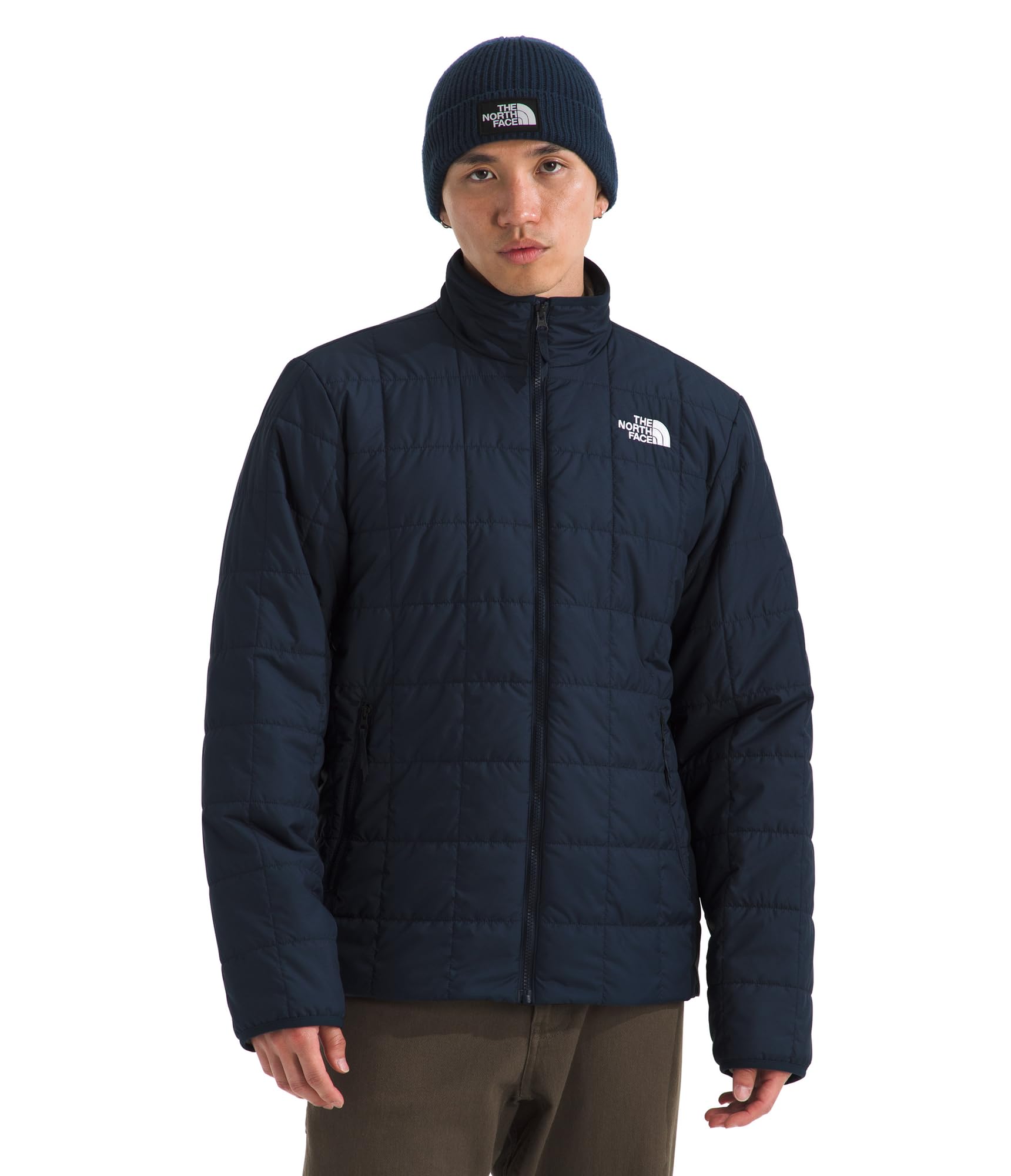
The North Face Men’s Junction Insulated Jacket takes a different approach from the down options, using 100g of HEATSEEKER synthetic insulation made from post-consumer recycled polyester. Synthetic insulation excels in wet conditions, maintaining its loft and warmth even when damp. The shell is a recycled polyester plain weave with a non-PFC DWR finish, aligning with North Face’s sustainability efforts.
The fit is a regular, athletic cut that works well for active users—commuting on foot, light hiking, or running errands. The jacket includes secure-zip hand pockets, stretch binding on the collar and cuffs, and an internal draft flap behind the front zipper. It is lightweight and packable enough to toss in a daypack, and the synthetic fill means you don’t have to panic if you get caught in unexpected precipitation.
The Junction’s 100g insulation is rated for cold weather, but it is not in the same league as 700-800-fill down for standing still in extreme sub-zero temperatures. It is an excellent active-wear jacket that manages moisture and provides consistent warmth, but for static use in severe cold, it requires a solid mid-layer and a windproof shell. It is positioned as a versatile, everyday option rather than an extreme-cold specialist.
Why it’s great
- Synthetic insulation retains warmth even when damp.
- Lightweight, packable, and great for active use.
- Non-PFC DWR finish and recycled materials are eco-conscious.
Good to know
- 100g insulation is not enough for static extreme cold without layering.
- Not as warm per ounce as a quality down jacket.
- Minimalist features, no helmet-compatible hood or internal stash.
9. Columbia womens Delta Ridge Ii Down Jacket
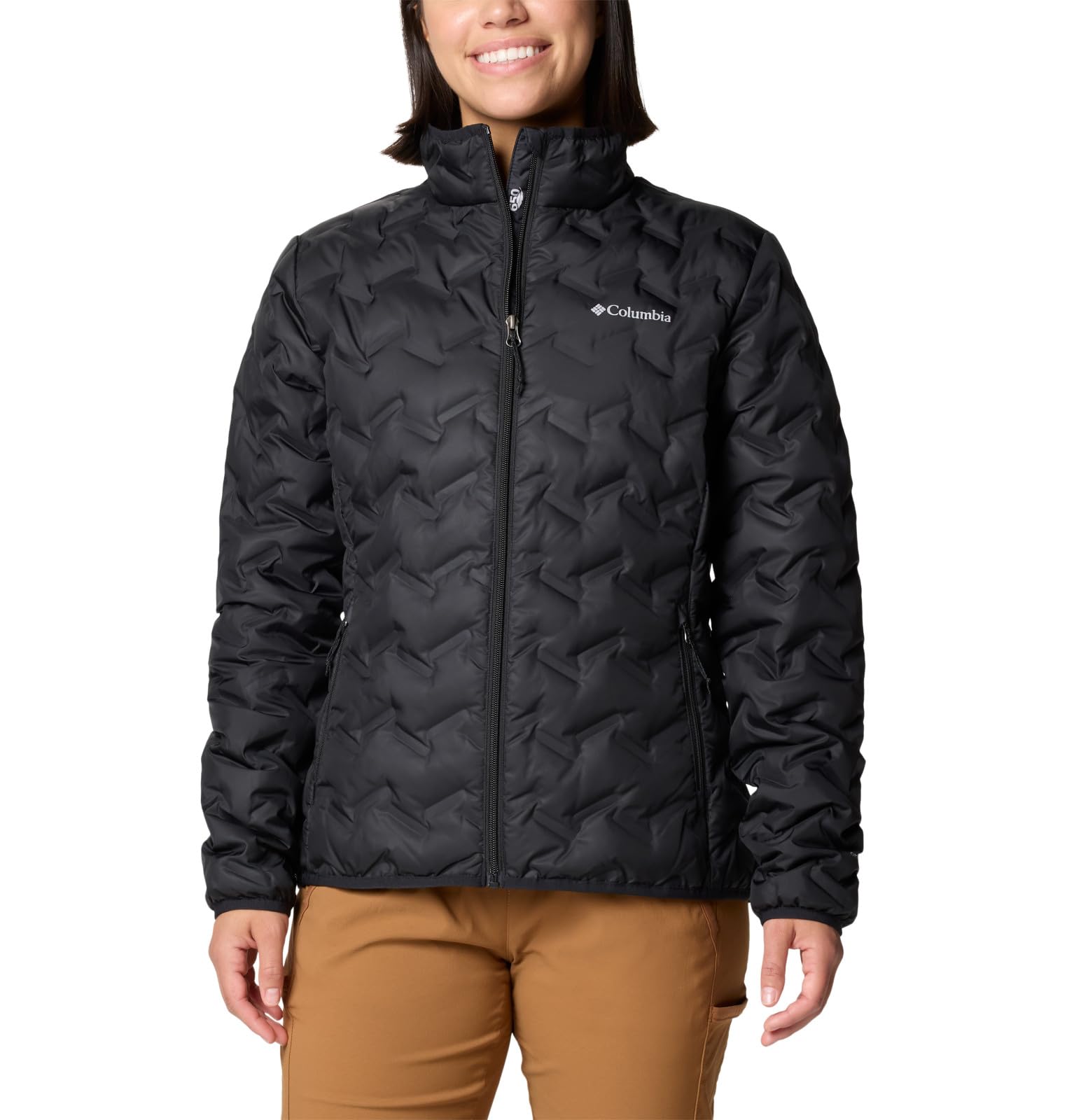
The Columbia Womens Delta Ridge Ii Down Jacket is the women’s-specific version of the Delta Ridge II, offering the same down insulation at a budget-friendly tier. It provides genuine down warmth in a lightweight, packable package that is ideal for layering. The shell is a simple polyester with a water-resistant coating, and the jacket includes a drawcord hem and elastic cuffs to keep the cold out.
This jacket is designed for everyday winter use—walking the dog, commuting, or as a travel layer. It compresses easily into its own hand pocket, making it a reliable backup for unpredictable weather. The women’s cut is tailored through the waist and hips, offering a better fit for female body shapes than unisex options.
Like the men’s version, the women’s Delta Ridge II uses a lower-fill-power down that is heavier per unit of warmth than premium fills. The face fabric is lightweight and offers limited wind resistance, so it performs best as a mid-layer under a hardshell for extreme cold. For the price, it is a functional entry into down insulation that meets basic warmth needs.
Why it’s great
- Women’s-specific cut for better fit and mobility.
- Down insulation provides good warmth for the weight at this tier.
- Packs into its own pocket for convenient carry.
Good to know
- Lower fill-power down results in heavier weight for the warmth.
- Thin shell is less wind-resistant than premium options.
- Best used as a mid-layer or for moderately cold conditions.
FAQ
What does fill power mean for a down jacket?
Can a lightweight jacket really handle extreme cold?
How do I know if a jacket is windproof enough for extreme cold?
Final Thoughts: The Verdict
For most users, the lightweight winter jackets for extreme cold winner is the Rab Neutrino Pro Hoody because it offers unmatched warmth per ounce with its 800-fill down and durable Pertex shell, making it the clear choice for serious mountaineering and extreme conditions. If you want a jacket better suited for active, high-exertion outings, grab the Rab Electron Pro. And for daily urban use with full weather protection, nothing beats the The North Face Expedition McMurdo Parka.