The red bumps, the endless sneezing, the mysterious rash that appears after you pull on a fresh t-shirt — when your skin reacts to laundry detergent, the culprit is almost always the same: lingering residues of fragrance chemicals or dye compounds that a standard rinse cycle never fully removes. Finding a detergent that actually eliminates these triggers without sacrificing cleaning power is the central challenge for anyone with contact allergies, eczema, or a histamine response to synthetic perfumes.
I’m Emma — the founder and writer behind Baby Bangs. I’ve spent years analyzing ingredient lists, third-party certifications, and clinical recommendations to separate the genuinely hypoallergenic formulas from the ones that just slap a “free and clear” label on a bottle of the same old irritants.
This guide breaks down five top performers in the laundry detergent for allergies space, comparing their formulas, certifications, and real-world load counts so you can stop guessing and start washing with confidence.
How To Choose The Best Laundry Detergent For Allergies
The wrong detergent leaves a chemical film on your clothes that interacts with sweat and body heat, triggering contact dermatitis or respiratory irritation. The right one removes stains, dissolves completely, and leaves zero irritant residue. Here are the three factors that separate a genuinely safe formula from a marketing claim.
Check the Certification, Not Just the Label
Any brand can print “free and clear” on its bottle. What matters is whether the formula has been verified by an independent body. Look for the EPA Safer Choice seal, the National Eczema Association (NEA) Seal of Acceptance, or a statement of recommendation from the National Psoriasis Foundation (NPF). Products with USDA Certified Biobased content also tend to skip the synthetic chemistry that causes reactions.
Prioritize Enzyme-Based Cleaning Over Surfactant Load
Traditional detergents rely on high concentrations of surfactants (the sudsing agents) to lift dirt, and surfactants are among the most common skin irritants in laundry chemistry. Enzyme-based detergents use protease, amylase, and lipase to break down protein, starch, and fat stains, which means they need far fewer surfactants to get the same result. For allergy households, enzymes are a net positive because they flush out more thoroughly in the rinse cycle.
Liquid Over Pods and Powder
Powder detergents often contain sodium carbonate and sodium silicate — both alkaline compounds that can cause contact irritation if they don’t dissolve fully. Pods come wrapped in polyvinyl alcohol (PVA) film, which dissolves in water but has been flagged for incomplete biodegradation in some wastewater systems. Liquid detergents dissolve instantly, rinse completely, and allow you to adjust the dose for smaller loads, which means less chemical exposure on your clothes.
Quick Comparison
On smaller screens, swipe sideways to see the full table.
| Model | Category | Best For | Key Spec | Amazon |
|---|---|---|---|---|
| All Mighty Pacs Free Clear | Pods | Households that value grab-and-go convenience | 60 loads per tub | Amazon |
| ECOS Free & Clear | Liquid | Eco-conscious buyers wanting plant-based cleaning | 100 loads per 100 fl oz | Amazon |
| all free clear Original Liquid | Liquid | Clinically recommended daily family use | 110 loads per 82.5 oz | Amazon |
| Tide PODS Free and Gentle | Pods | Power stain removal without perfume | 57 pods per tub | Amazon |
| Seventh Generation Free & Clear | Liquid | Maximum biobased content for sensitive skin | 90 loads per 135 fl oz | Amazon |
In‑Depth Reviews
1. all free clear Original Liquid Laundry Detergent

This is the standard-setter for a reason. The all free clear Original formula is the most frequently recommended laundry detergent by dermatologists, allergists, and pediatricians for patients with contact allergies, and it carries the EPA Safer Choice certification — meaning the entire surfactant system has been screened for human-health and environmental toxicity. At 110 loads per bottle, it also offers the best per-load value in this roundup.
The formula uses biodegradable surfactants instead of enzymes, which makes it a safer bet for households where someone has a rare enzyme sensitivity. It rinses completely at any water temperature, including cold, which reduces the odds of residue buildup on synthetic fabrics like polyester and nylon — fabrics that tend to trap uncompromising detergents. The absence of any fragrance, dye, or optical brightener means zero chemical after-smell on your clothes.
One tradeoff: the stain-fighting power is adequate for everyday dirt and body oils but will struggle with set-in grass or blood stains that an enzyme-based detergent would break down more aggressively. For families dealing primarily with sweat, dust, and pollen allergens, this is a non-issue. For anyone who also needs to remove heavy food stains, you may need to pretreat.
Why it’s great
- Backed by dermatologist, allergist, and pediatrician recommendations
- EPA Safer Choice certified with biodegradable surfactants
- Rinses completely in cold water with no fragrance residue
Good to know
- Enzyme-free formula is gentler but less potent on protein-based stains
- Bottle cap can be slippery when wet, making dosing less precise
2. ECOS Laundry Detergent Liquid Free & Clear

ECOS Free & Clear stands out for its plant-powered enzyme formula that integrates a built-in fabric softener — a rare combination in the allergy-friendly segment. The formula is pH-balanced, dermatologist-tested, and certified by the EPA Safer Choice program, so you get the piece of mind that comes with verified low-toxicity chemistry. Each 100-fluid-ounce bottle handles roughly 100 loads, positioning it as a solid mid-range option in terms of cost per wash.
The inclusion of enzymes (protease, amylase, and lipase) means this detergent outperforms most free-and-clear liquids on stain removal, especially for grass, tomato sauce, and food-based marks. The built-in fabric softener also means you can skip dryer sheets — which are often coated with fragrances and softening chemicals that can irritate sensitive skin. The factory runs on 100% renewable energy and holds TRUE Platinum Zero Waste certification, so the environmental footprint is genuinely light.
On the downside, some users with extreme chemical sensitivities (particularly those with multiple chemical sensitivity syndrome) report that the faint natural-plant smell — which fades completely during the rinse — still triggers mild reactions during the initial pour. This is rare but worth noting if you react to even trace botanical extracts. The bottle is also relatively large and can be awkward to handle with wet hands.
Why it’s great
- Enzyme-based cleaning handles food and grass stains effectively
- Built-in fabric softener eliminates need for scented dryer sheets
- TRUE Platinum Zero Waste factory with carbon-neutral production
Good to know
- Mild plant scent during pouring may bother extreme chemical sensitivities
- Large bottle shape makes precise pouring without drips harder
3. Tide PODS Ultra Oxi Free and Gentle

Tide PODS Ultra Oxi Free and Gentle is the only product on this list that combines a hypallergenic, dye-free and perfume-free formula with an oxidizing stain booster (sodium percarbonate) that converts into hydrogen peroxide during the wash. This gives it a measurable edge on set-in stains compared to the other free-and-clear options here. It holds the NEA Seal of Acceptance and is also recommended by the National Psoriasis Foundation, a double endorsement that is rare in the detergent aisle.
The pod format eliminates all dosing guesswork — each pac contains exactly the right amount of concentrated detergent for a standard load, and the PVA film dissolves completely in any water temperature, including cold. The Oxi chemistry is especially effective at breaking down biological stains (blood, grass, sweat) and helping to lift pollen and pet dander particles that are trapped in fabric fibers. If your primary allergy trigger is outdoor pollen or animal dander, this is the detergent that removes those proteins most aggressively.
The obvious limitation is the pod count: 57 loads per tub compared to the 110 loads you get from a bottle of all free clear liquid. The per-load cost is higher, and you can’t adjust the dose for small or lightly soiled loads. The PVA wrap, while water-soluble, has faced scrutiny from environmental groups regarding its biodegradation rate in wastewater treatment plants, which matters if you’re also trying to minimize your ecological footprint.
Why it’s great
- NEA and NPF double endorsement for sensitive skin and psoriasis
- Oxi booster removes protein-based allergens and tough set-in stains
- No-dose-needed pod format eliminates measurement errors
Good to know
- Higher per-load cost than liquid alternatives
- PVA pod wrap is not fully biodegradable in all water systems
4. Seventh Generation Free & Clear Liquid Laundry Detergent
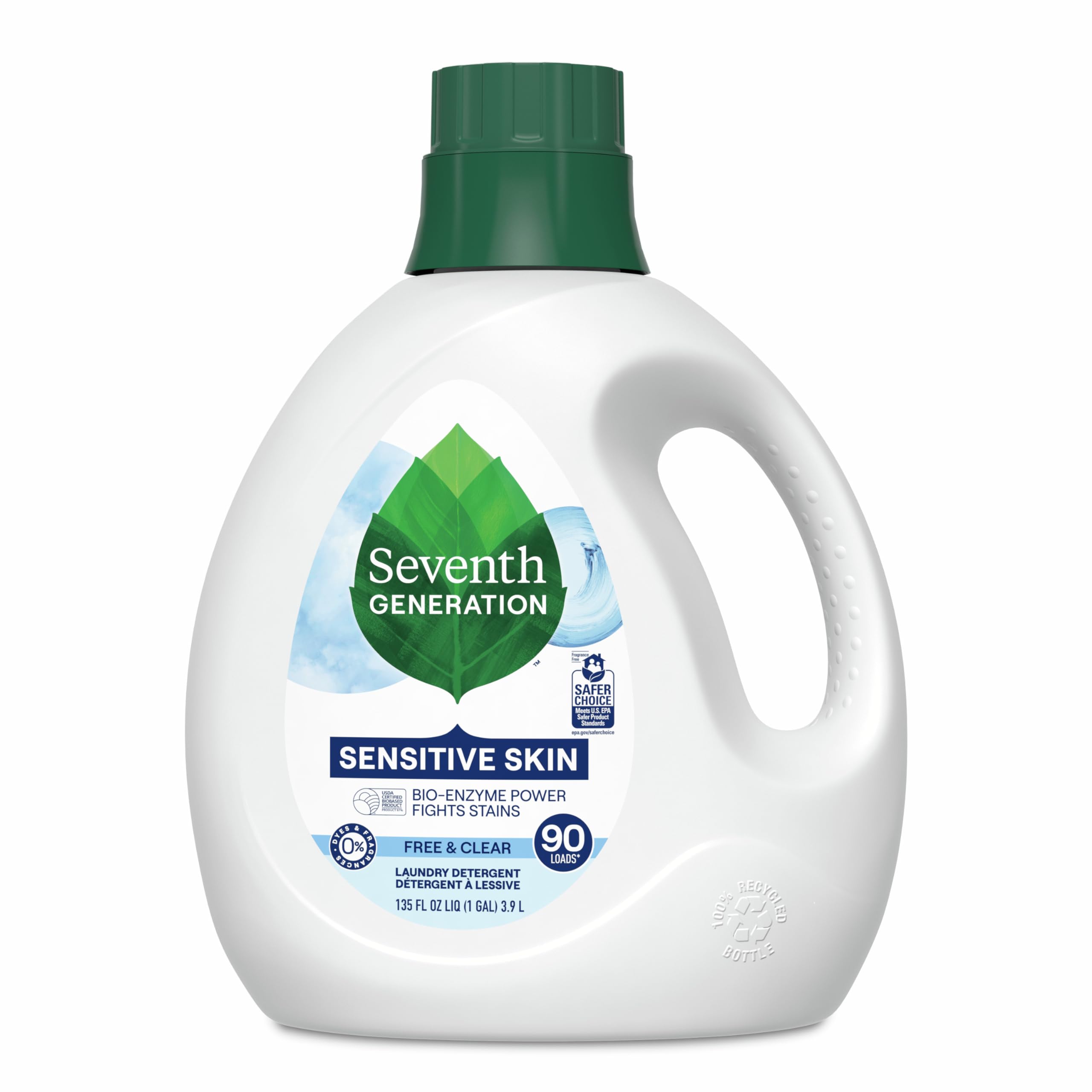
Seventh Generation Free & Clear sets a new bar for transparency: the formula is USDA Certified 97% biobased, meaning the active cleaning ingredients are derived from renewable plant resources rather than petroleum-based surfactants. For allergy households that also prioritize reducing petrochemical exposure, this is the cleanest formulation in the lineup. The liquid is free of dyes, fragrances, and artificial brighteners, and it’s labeled hypoallergenic for sensitive skin.
The enzyme-rich formula — protease, amylase, and mannanase — tackles the same stain categories as ECOS but adds mannanase, which breaks down food gums and thickeners often found in ketchup, salad dressing, and baby food. That makes it a particularly smart choice for families with young children whose laundry sees a steady stream of food-based accidents. The 135-ounce bottle yields around 90 loads of HE laundry, and the detergent works effectively in both hot and cold cycles without leaving visible residue.
The concentration level is slightly lower than some competitors, so you need to use a larger volume per load to get the same cleaning power — that’s why the bottle is big but only delivers 90 loads. The bottle itself is made from 100% post-consumer recycled plastic (PCR), which is a nice sustainability touch, but the large jug can be cumbersome to store in smaller laundry spaces.
Why it’s great
- USDA Certified 97% biobased with no petroleum-derived surfactants
- Mannanase enzyme targets food-based stains other formulas miss
- Bottle made from 100% post-consumer recycled plastic
Good to know
- Requires larger dose per load, reducing total load count
- Large bottle shape is bulkier to store than other options
5. All Mighty Pacs Free Clear Laundry Detergent

All Mighty Pacs Free Clear brings the same core free-and-clear chemistry as the all free clear liquid but in a pre-measured pac format. Each pac is 100% free of perfumes and dyes, and the brand maintains its #1 dermatologist-recommended status across both the liquid and pac lines. For anyone who wants the clinical recommendation without having to measure liquid from a bottle, these pacs provide an entry-level convenience option at a reasonable per-pac cost.
The cleaning performance mirrors the liquid version: it handles everyday dirt, body oils, and common allergens like grass and tree pollen effectively, but it lacks the enzyme or oxidizing boosters found in the Tide or ECOS options. That makes it perfectly adequate for households where the primary concern is avoiding chemical irritation rather than tackling heavy stains. It’s safe for all HE and standard machines, and the pac dissolves completely in any water temperature — cold included — without leaving sticky residue in the machine’s dispenser drawer.
The biggest downside is environmental: the pacs come in a plastic tub with a child-resistant lid, generating more packaging waste than a single bottle of liquid detergent. The PVA pod wrap, like Tide PODS, raises the same microplastic concerns in wastewater. Additionally, you can’t adjust the dose for smaller loads, which means you’re using a full pac every time regardless of how many items you’re washing.
Why it’s great
- #1 dermatologist-recommended brand in a no-measure pac format
- Dissolves completely in cold water without residue
- Works well for everyday dirt and common outdoor allergens
Good to know
- Less effective on set-in stains compared to enzyme-rich formulas
- Plastic tub packaging generates more waste than liquid bottles
FAQ
Can I use fabric softener with a hypoallergenic detergent?
Does washing in hot water remove more detergent residue?
How often should I clean my washing machine when using allergy detergent?
Final Thoughts: The Verdict
For most users, the laundry detergent for allergies winner is the all free clear Original Liquid because it carries the broadest clinical endorsement (dermatologists, allergists, and pediatricians) and delivers the most loads per bottle with a zero-residue formula that works in any water temperature. If you want enzyme-powered stain removal with a built-in fabric softener, grab the ECOS Free & Clear. And for the most aggressive removal of biological stains and outdoor allergens in a convenient pod, nothing beats the Tide PODS Ultra Oxi Free and Gentle.