Sliding across a waxed floor in clunky rubber soles is a recipe for a pulled hamstring and a missed beat. The right pair of line dancing shoes needs a suede or split-suede outsole that lets your foot pivot freely while still gripping for those sharp heel stops and toe taps. After analyzing seven serious contenders built specifically for the dance floor—not the county fair—the focus narrows to one question: which boot or shoe lets you slide, shuffle, and stomp without thinking about your feet?
I’m Emma — the founder and writer behind Baby Bangs. I have spent over a decade dissecting dance footwear construction, breaking down outsole materials, heel geometries, and shank stiffness across hundreds of western, salsa, and character shoe models.
A dedicated line dancing shoes pair replaces stiff rubber with a smooth suede forefoot that allows controlled spins, and a cushioned insole that absorbs the shock of repetitive heel strikes during hours of choreographed routines.
How To Choose The Best Line Dancing Shoes
Line dancing demands a shoe that balances three opposites—grip for stopping, slide for turning, and cushion for absorbing heel drops. A casual western boot with a thick rubber lug sole will stick to the floor and twist your knee. A true line dance shoe uses a suede forefoot patch to break friction only when you pivot, with a smooth leather or synthetic upper that keeps your foot secure during lateral slides.
Outsole Material: Suede vs. Leather vs. Rubber
Suede is the gold standard for dance floors because the nap creates a predictable friction zone—enough to stop a heel slide, but loose enough to allow a 180-degree spin without lifting the foot. Full leather outsoles feel too slick on waxed wood, while rubber soles grab aggressively and can cause stutter steps during weight transfers. Many line dance boots combine a suede forefoot with a leather or stacked leather heel block for the best balance.
Heel Height and Block Shape
A low block heel between 1 and 2 inches is the sweet spot for line dancing. A heel this height shifts your weight slightly forward onto the balls of your feet, making toe taps and heel drops feel natural, while the wide block base prevents wobbling during side steps. Higher stiletto or tapered heels destabilize the ankle during quick direction changes; flat soles lack the forward pitch that helps with the heel-toe rhythm of many line dance patterns.
Quick Comparison
On smaller screens, swipe sideways to see the full table.
| Model | Category | Best For | Key Spec | Amazon |
|---|---|---|---|---|
| Urban Step Dance Line Shoes | Dance Boot | Spins & sliding | Suede sole boot design | Amazon |
| Prescott Suede Sole Line Dancing Salsa Boots | Dance Boot | Warm-ups & long sessions | Suede outsole, tall shaft | Amazon |
| Bloch Splitflex T-Strap Character Shoe | Character Shoe | Precision footwork | Suede forefoot, T-strap | Amazon |
| Capezio Student Footlight Dance Shoe | Character Shoe | Budget practice | Leather outsole, heel 1.5″ | Amazon |
| Rollda Cowboy Boots (Knee-High) | Western Boot | Style + dance blend | Pointy toe, chunky heel | Amazon |
| Bandkos Cowboy Boots Mid Calf | Western Boot | Aesthetic line dancing | Block heel, embroidered | Amazon |
| Jeossy Womens Cowgirl Ankle Booties | Western Bootie | Entry-level practice | Low heel, zipper closure | Amazon |
In‑Depth Reviews
1. Urban Step Dance Line Shoes Suede Sole Boot

The Urban Step boot is built specifically for the dance floor, not the ranch. Its full suede outsole delivers that friction-split second you need for clean 360-degree spins without lifting your foot—a critical advantage when you are chaining turns in a fast line dance. The boot shaft rises high enough to warm up calf muscles during long practice sessions, which reduces the risk of cramping during repetitive heel lifts.
The heel is a low stacked block that sits squarely under the calcaneus, so weight transfers from one foot to the other feel stable. Unlike western boots with tapered leather heels that catch on the floor during slides, the Urban Step’s block heel glides and stops predictably. The upper uses a soft synthetic leather that conforms to the midfoot without excessive rubbing, even during a two-hour session.
One design trade-off is the lack of a reinforced shank—the boot is designed for flexibility to allow easy pointing and flexing of the foot. Dancers who prefer a stiffer arch support for heel-heavy stomps may want to add an insole. But for pure spin performance and floor feel, this boot hits the mark for intermediate to advanced line dancers.
Why it’s great
- Full suede outsole for controlled spins.
- Low block heel stabilizes side steps.
- Tall boot shaft warms up calf muscles.
- Flexible sole allows easy foot articulation.
Good to know
- Lacks a hard shank for aggressive heel stomps.
- Might require a break-in period for the shaft.
2. Prescott Suede Sole Western Style Line Dancing Boots
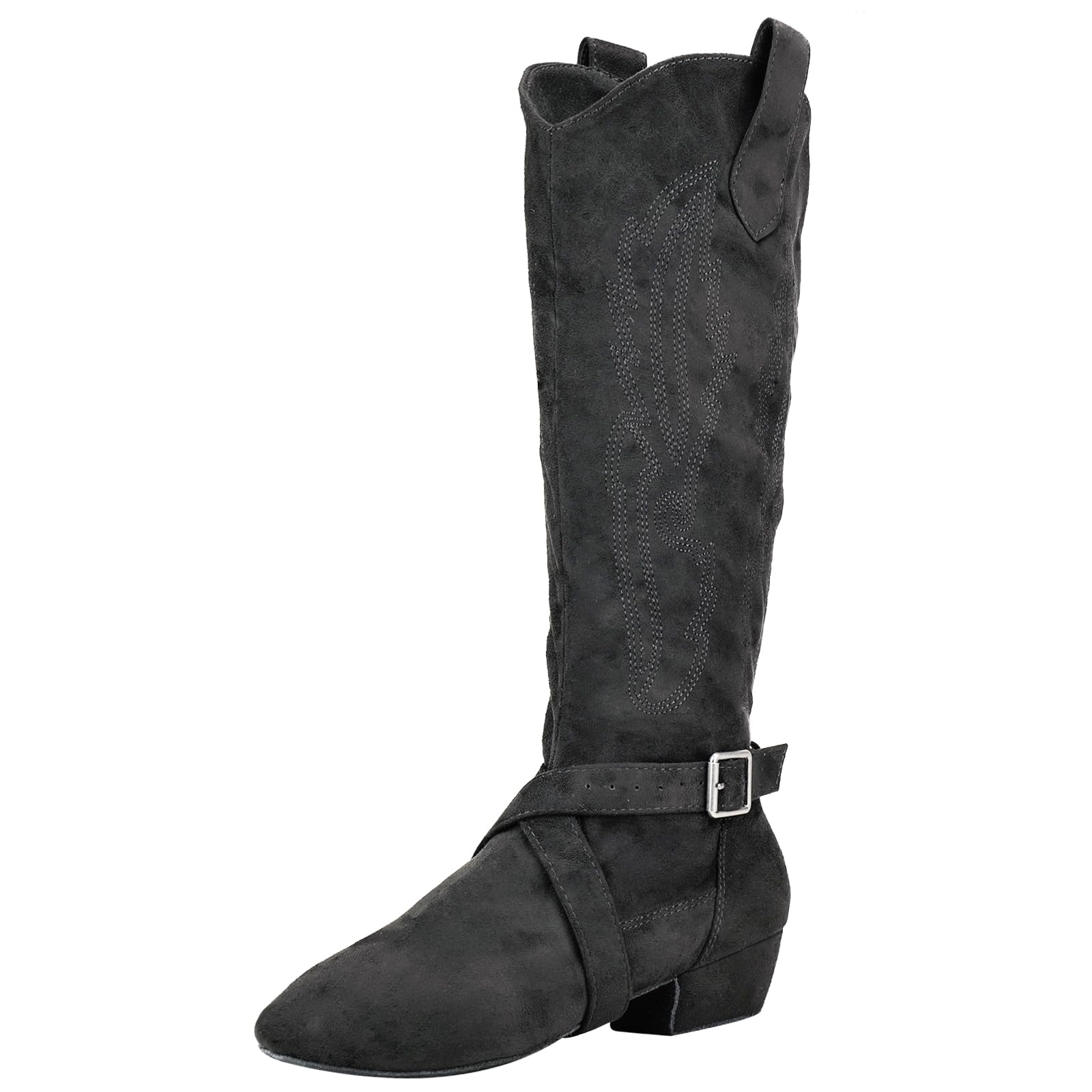
The Prescott boot takes the suede sole concept and wraps it in a tall western boot silhouette that rises high on the calf. For line dancers who practice in air-conditioned studios, the extra coverage keeps the lower leg warmer and reduces stiffness during the first 20 minutes of practice. The suede outsole extends the full length of the footbed, providing a consistent slide surface from heel to toe.
The block heel is slightly higher than a traditional character shoe, about 1.75 inches, which tilts the dancer’s weight forward onto the metatarsal heads—the ideal position for rapid toe taps and ball-change steps that appear in most line dance routines. The heel also features a slightly concave profile on the back edge, which helps it slide cleanly rather than catching on uneven floorboards during a heel click.
Dancers with wide feet will appreciate that the toe box is more generous than typical western boots. The Prescott runs true to size for medium widths, but there is no half-size option, so dancers between sizes may need to size up and wear a thicker sock. The shaft opening is wide enough to fit over leggings or skinny jeans without feeling restrictive.
Why it’s great
- Tall shaft provides calf warmth and support.
- Suede outsole runs entire foot length.
- Generous toe box fits wider feet.
- Concave heel edge slides smoothly.
Good to know
- No half sizes available.
- Shaft may feel tall for short legs.
3. Bloch Women’s Splitflex T-Strap Character Shoe

The Bloch Splitflex uses a split-sole construction with a suede forefoot patch and a leather heel section. This design lets the ball of the foot articulate independently from the heel, which is exactly what you need for the grapevine and jazz box steps common in line dancing. The T-strap wraps high over the instep, locking the foot in place so the heel does not lift inside the shoe during rapid side shuffles.
The cushioned insole is more substantial than most dance character shoes—Bloch uses a memory foam layer that compresses under the metatarsal heads and springs back between moves. This makes a real difference during a two-hour workshop where you are stomping through 20 different routines. The heel is a 1.5-inch stacked block covered in leather, which offers a predictable slide on properly waxed floors.
One consideration is the open toe area. The Splitflex is a T-strap character shoe, so the toe is pointed but enclosed—more like a classic character pump than a boot. Dancers who need ankle coverage for warmth during long sessions may prefer a boot silhouette. But for pure foot articulation and spin precision, the Bloch has the tightest construction of any shoe in this lineup.
Why it’s great
- Split-sole suede forefoot for clean pivots.
- Memory foam insole absorbs heel shock.
- T-strap provides secure heel lock.
- Predictable leather heel block for slides.
Good to know
- No ankle coverage for cold studios.
- Narrower toe box than western boots.
4. Capezio Womens Student Footlight Dance Shoe

The Capezio Student Footlight is the budget-tier entry that has been a student staple for two decades. It uses a full leather outsole rather than suede, which means the slide feel is more slippery on a fresh waxed floor but less forgiving on a dusty surface. For a beginner who is still learning weight transfers—where you do not yet need the micro-control of a suede forefoot—the leather outsole is perfectly adequate.
The heel is a 1.5-inch block made of stacked leather, a classic Capezio design that distributes weight evenly and does not wear down quickly. The shoe is a traditional character pump shape with a pointed toe and a low-cut collar. The fit is narrow compared to western boots, which helps with control but may feel restrictive if you have wide feet or bunions.
The insole is a standard foam layer, not the cushioned memory foam found in the Bloch. For casual weekly classes that last an hour or less, it provides plenty of comfort. But for all-day workshops, you may feel the hard floor through the sole after the third hour. The biggest advantage is the price—this shoe lets you enter line dancing without a heavy investment, and it is durable enough to last a full season of beginner class.
Why it’s great
- Affordable entry into dance-specific footwear.
- Classic leather outsole for predictable slide.
- Stacked leather heel block is durable.
- Lightweight and easy to pack.
Good to know
- Leather outsole is less spin-friendly than suede.
- Minimal arch support for long sessions.
5. Rollda Cowboy Boots Knee-High Embroidered Western Boots
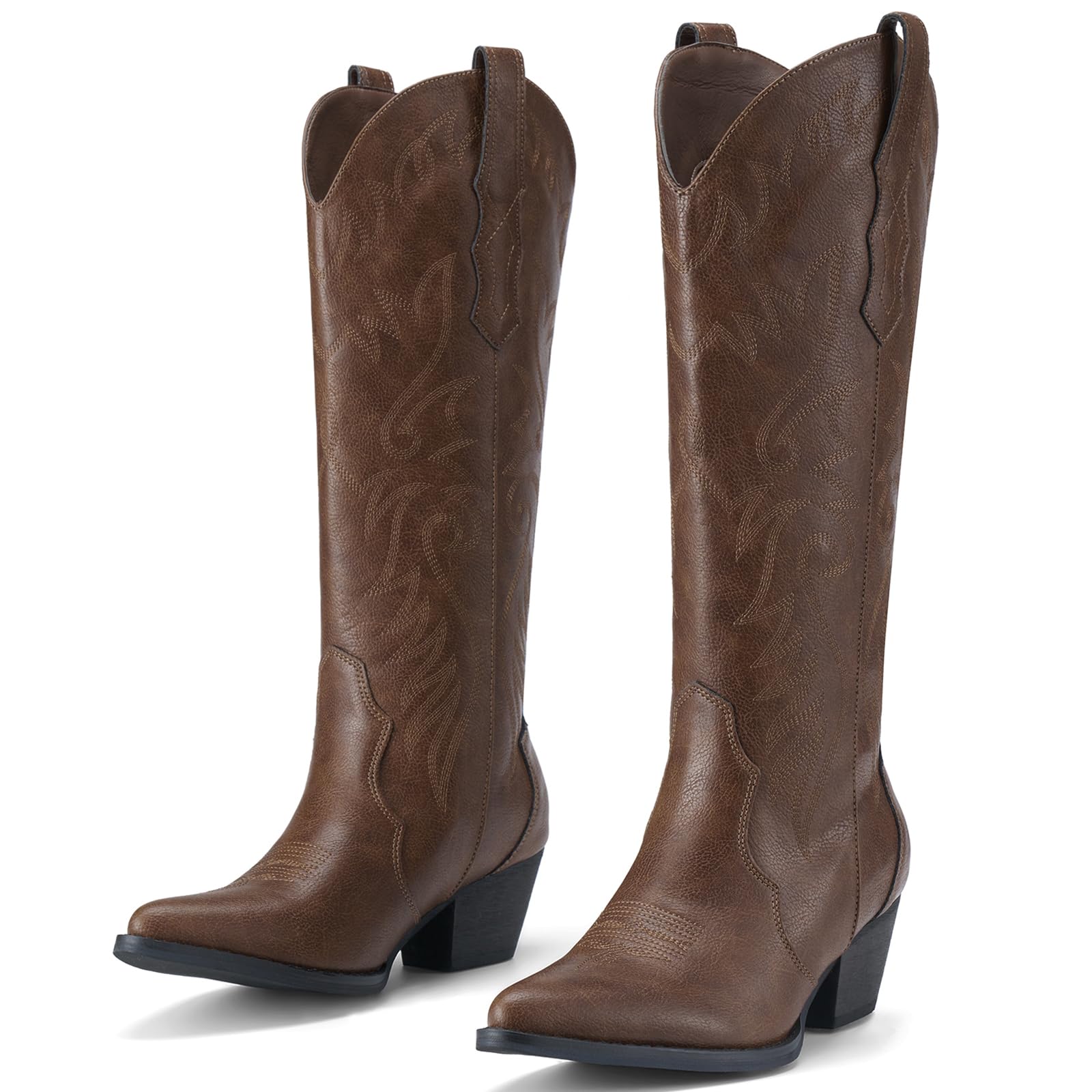
The Rollda boots lean heavily into western aesthetic while trying to accommodate dance floor functionality. The chunky block heel, about 1.5 inches, is the right height for line dancing and provides stable weight transfer. The pointy toe helps with foot placement cues—you can feel exactly where your toe points during heel switches, which is useful for beginners learning foot positioning.
The outsole is synthetic leather, not suede. On a waxed wood floor, this boot will grip more than slide, which means spins require you to lift the ball of the foot to turn. For practiced dancers who do not rely on pivot slides, this is manageable. But anyone doing multiple 360-degree spins in a row will feel the resistance and may need to adjust their technique.
The knee-high shaft is made from a flexible faux leather that accommodates a wider calf without gaping. The embroidery is rich and stands out in a dimly lit dance hall. For the line dancer who wants to look the part while still having a block heel for stability, the Rollda delivers on appearance at a mid-range cost that undercuts many branded western boots.
Why it’s great
- Chunky heel provides stable weight transfer.
- Pointy toe helps with foot placement.
- Knee-high shaft fits wider calves.
- Authentic western embroidery design.
Good to know
- Synthetic outsole grips on waxed floors.
- Less spin-friendly than suede soles.
6. Bandkos Cowboy Boots Mid Calf Embroidered Boots
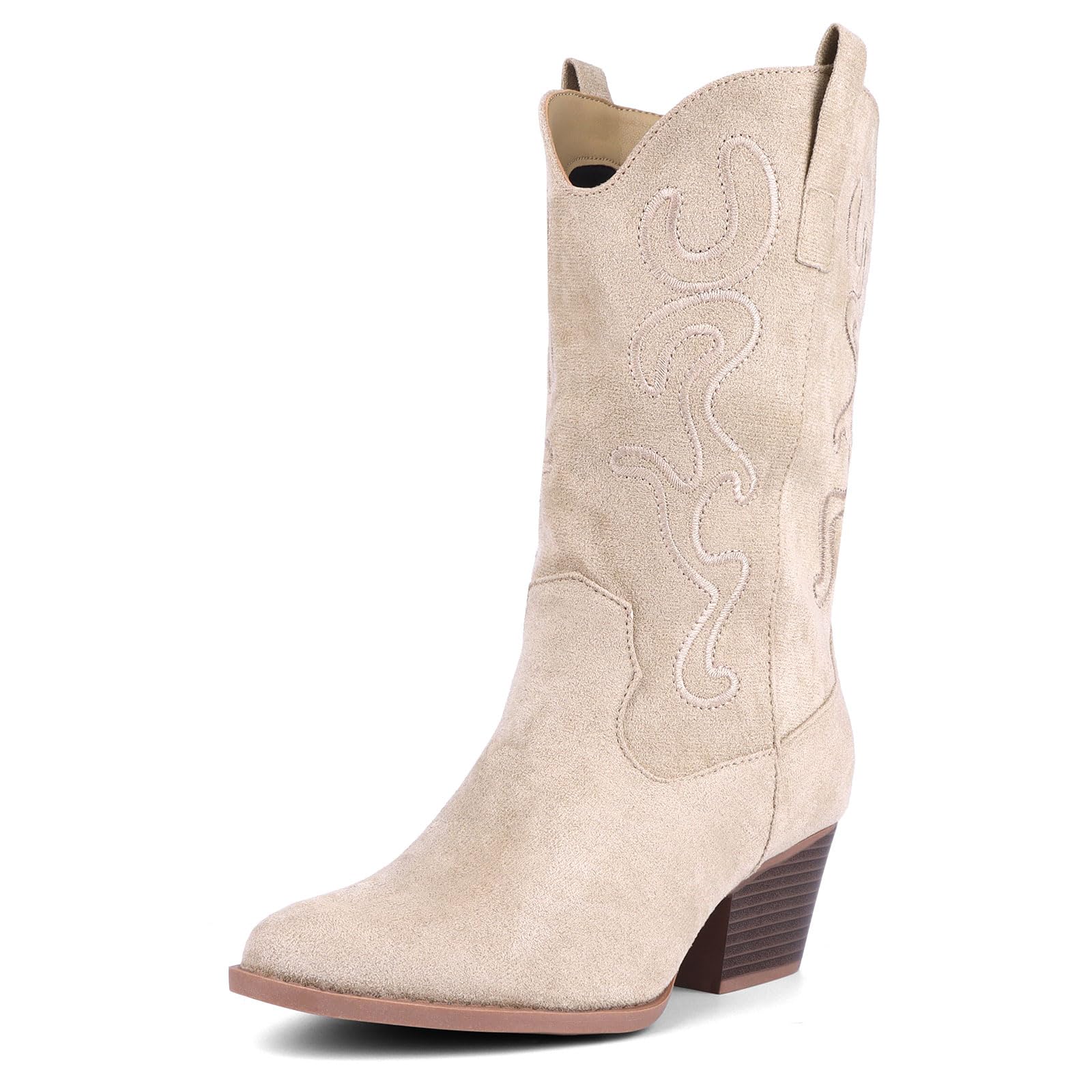
The Bandkos boot sits at the mid-calf height, which is a practical length for dancers who want a boot silhouette without the restriction of a tall knee-high shaft during high kicks. The block heel is low and wide, around 1.25 inches, making it one of the most stable options in the budget range. The outsole is a synthetic rubber blend, which is a compromise—it offers more grip than suede and less slide than leather.
The embroidery is detailed and covers the upper shaft, giving it a classic cowgirl look that fits western-themed line dance events. The toe box is a rounded square shape, wider than the Rollda pointy toe, which gives the toes more room to spread during lateral slides. This is a meaningful advantage for dancers with wider forefeet who find pointy boots painful after 30 minutes.
The insole is thin and removable, so you can swap in a cushioned orthotic if you need more shock absorption. The boot uses a full side zipper, which makes the band easy to get on and off—a detail that is surprisingly rare among budget western boots. For casual social line dancing where appearance matters as much as performance, the Bandkos strikes a decent balance between cost and aesthetics.
Why it’s great
- Mid-calf shaft allows unrestricted leg lift.
- Wide squared toe box for comfort.
- Full side zipper for easy on/off.
- Detailed embroidery for western events.
Good to know
- Rubber outsole lacks spin capability.
- Thin insole needs replacement for longer use.
7. Jeossy Womens Cowgirl Ankle Booties

The Jeossy booties are the most affordable option in this lineup and suit the absolute beginner who is testing whether line dancing is a passing hobby or a habit. The outsole is a textured rubber with a minimal tread that will not damage a dance floor but offers high grip. That means no spinning—but when you are learning the box step and the electric slide, you are not spinning anyway. The low block heel, under an inch, keeps your foot nearly flat, which slows the learning curve for weight transfers.
The square toe is wider than many western booties, reducing pressure on the outer toes during repetitive side steps. The zipper on the inner side is full length, making these boots easy to take off between rounds. The synthetic leather upper is soft and requires almost no break-in time, which helps new dancers avoid the blisters that come with stiff leather western boots.
The insole is a thin foam sheet that compresses quickly. For a 45-minute beginner class, it works fine. For a full evening of social dancing, expect your heels to feel the floor. The biggest limitation is the lack of suede and the low heel profile—once you progress beyond basic patterns, you will want a shoe that lets you pivot and slide. But as a test pair, the Jeossy booties let you start dancing today.
Why it’s great
- Low price makes it a risk-free starter.
- Wide square toe for comfortable fits.
- Soft upper requires no break-in.
- Easy zipper closure for quick changes.
Good to know
- Rubber outsole prevents all pivoting.
- Insole compresses quickly over longer sessions.
FAQ
Can I wear regular western boots for line dancing?
What does a full suede outsole do differently than a suede patch?
Why is a block heel better than a stiletto for line dancing?
Final Thoughts: The Verdict
For most dancers, the line dancing shoes winner is the Urban Step Suede Sole Boot because its full suede outsole and low block heel give you the spin freedom and stability needed for intermediate to advanced choreography without the premium price tag of a Bloch. If you want the precision of a split-sole suede forefoot with a cushioned insole for all-day workshops, grab the Bloch Splitflex T-Strap. And for casual social dancers who prioritize western boot aesthetics over technical floor performance, nothing beats the Bandkos Mid Calf Boots for their wide toe box and stable block heel at an entry-level price.