That sharp, burning jolt from your lower back down your leg can turn your bed into a battleground. When every shift in sleep position reignites the sciatic nerve, relief isn’t a luxury — it’s the difference between a restorative night and a miserable one. The right leg pillow stops that pain at its source by keeping your hips and spine neutrally aligned, so the nerve isn’t compressed while you sleep.
I’m Emma — the founder and writer behind Baby Bangs. I’ve spent years analyzing sleep accessories and ergonomic supports, comparing contour angles, foam densities, and material certifications to find what actually delivers measurable relief for sciatica sufferers.
A dedicated pillow placed between or under your legs maintains the precise spacing and elevation your lumbar spine needs to unload the sciatic nerve root. This guide breaks down the essential specs and design features to help you choose the best leg pillow for sciatica that matches your sleep position and body mechanics.
How To Choose The Best Leg Pillow For Sciatica
Not every contoured cushion will offload your sciatic nerve. The wrong height or shape can torque your pelvis, worsening the pinch. Focus on these three criteria before you add one to your cart.
Sleep Position Defines Shape
Side sleepers need a pillow thick enough to fill the gap between the knees without the top leg dropping toward the mattress. That gap is roughly the distance from your hip bone to the mattress surface, measured parallel to the floor. If the pillow is too thin, the top knee falls and the hip rotates, tightening the piriformis against the sciatic nerve. Back sleepers, on the other hand, should use a wedge under the knees to maintain a neutral lumbar curve and reduce disc pressure on the nerve root. A flat rectangular pillow between the legs won’t fix sciatica caused by a herniated disc at L4-L5.
Foam Density and Certification
Memory foam that rebounds in under three seconds cradles the leg without letting it sink all the way to the mattress. Look for CertiPUR-US certification — it guarantees the foam is free of heavy metals, formaldehyde, and ozone-depleting substances. A leg pillow you use every night needs to hold its shape for at least one to two years. Low-density foam (below 2.5 pounds per cubic foot) collapses under the weight of the leg after a few months, turning what was support into a useless pancake.
Cover Material and Care
The cover does more than look clean. A bamboo-derived cover or a polyester blend with an air-layer knit pulls heat away from the skin, which matters because dense memory foam traps heat. OEKO-TEX Standard 100 certification on the cover means no irritating chemicals near your skin during eight hours of contact. A removable zippered cover that survives machine washing at least fifty times without pilling is a practical necessity for anyone with allergies or night sweats.
Quick Comparison
On smaller screens, swipe sideways to see the full table.
| Model | Category | Best For | Key Spec | Amazon |
|---|---|---|---|---|
| Ruqmuis Knee Wedge | Wedge | Back sleepers needing elevation | 23.6″L x 18.9″W x 7.9″H | Amazon |
| itcozy Leg Elevation | Wedge | Reading, rest, post-surgery | Soft memory foam wedge | Amazon |
| Jakoola 3-Height Wedge | Adjustable Wedge | Custom height preference | 6/8/10-inch adjustable | Amazon |
| Momcozy Knee Pillow | Contour | Side sleepers & pregnancy | 110° & 45° contour surfaces | Amazon |
| Bedluxe Knee Wedge | Wedge | Multi-position use | Dual side pockets | Amazon |
| 5 STARS UNITED Knee Pillow | Contour | Side sleeping alignment | Memory foam between-legs | Amazon |
| Knee Pillow for Side Sleepers (B0F1K1YMD5) | Contour | Budget side-sleep relief | Carrying strap + cover | Amazon |
In‑Depth Reviews
1. Ruqmuis Knee Wedge Pillow

The Ruqmuis wedge hits the full 8-inch height that back sleepers often need to lift the knees above the hips and decompress the lumbar discs. The CertiPUR-US certified polyurethane foam sits at a density that resists flattening after repeated nightly use, and the 23.6-inch width accommodates leg movement without the foot dropping off the edge mid-sleep.
The OEKO-TEX certified polyester cover breathes well enough to prevent heat buildup, and the machine-washable zippered cover makes maintenance simple. Users recovering from lower spine disc issues report that the 7.9-inch incline unloads the sciatic nerve route more effectively than a standard bed pillow folded in half.
One limitation: the soft firmness rating means the foam compresses noticeably under heavier body types, so taller users above 6 feet may find the support insufficient for full leg elevation during extended use.
Why it’s great
- Full 8-inch incline for proper lumbar decompression
- CertiPUR-US and OEKO-TEX certified for safety
- Wide surface prevents leg from sliding off
Good to know
- Soft density may bottom out under heavier users
- Requires 24-48 hours for full expansion out of box
2. itcozy Leg Elevation Pillow
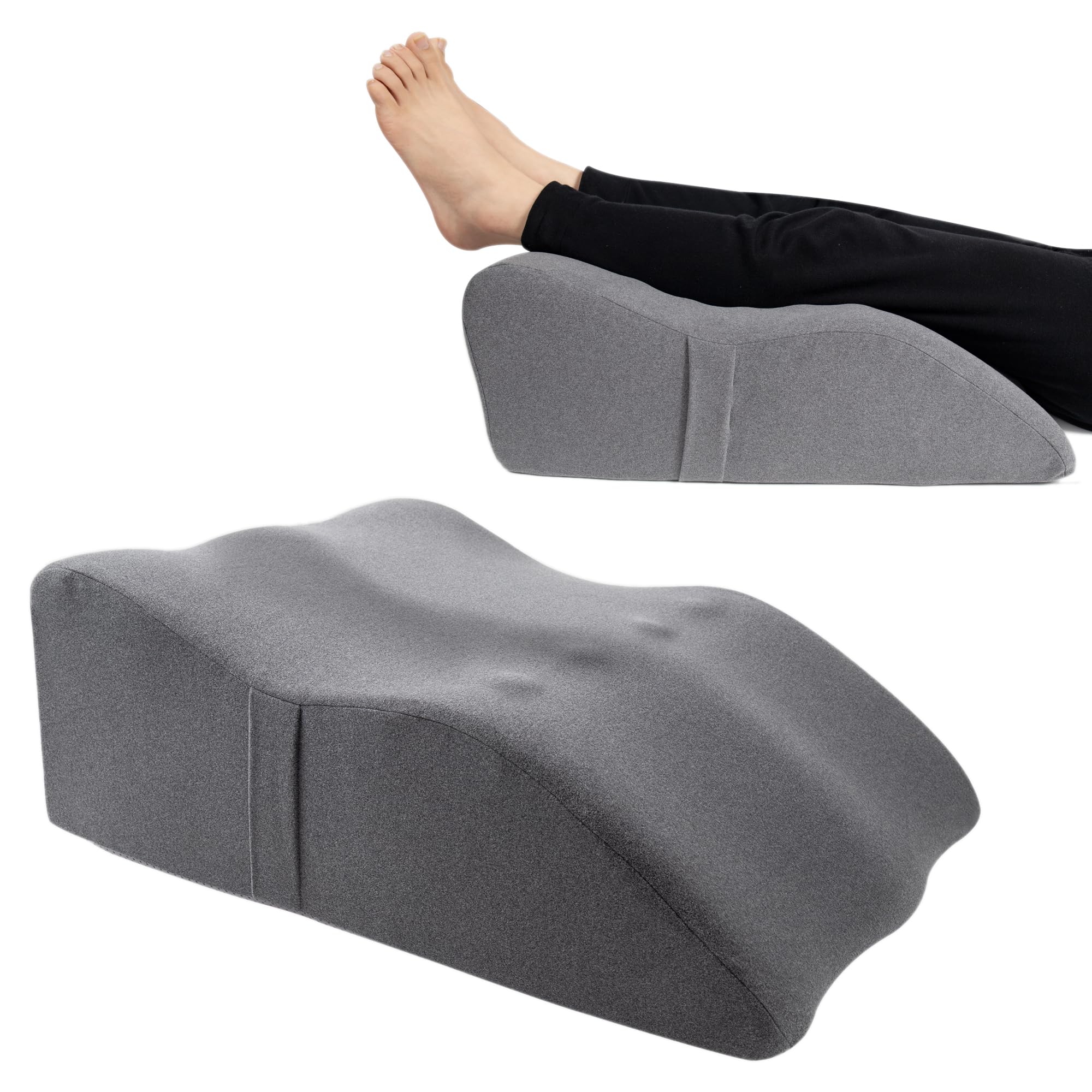
The itcozy wedge uses a soft memory foam top layer that contours to the calf and heel, reducing the pressure points that often accompany hard foam wedges. The sloped design works for both knee elevation during sleep and leg elevation for swelling after a long day on your feet. Its surface area is generous enough to support both legs simultaneously up to the mid-thigh.
The removable cover is machine-washable, and the foam core holds its shape without permanent indentation after months of nightly use. Users who pair this wedge with a therapeutic pillow set for sciatica and lower back pain find the gentle incline sufficient to shift the pelvic angle and reduce nerve tension.
On the downside, the wedge is not adjustable — you get a single fixed height. If the angle is too steep or too shallow for your specific anatomy, there’s no internal layer to remove, so measurement before buying is essential.
Why it’s great
- Soft memory foam reduces heel pressure points
- Generous width supports both full legs
- Washable cover simplifies hygiene
Good to know
- Fixed incline — not adjustable for user height
- Memory foam may feel warm without breathable topper
3. Jakoola 3-Height Leg Elevation Wedge

The Jakoola stands apart because its internal foam block sits inside a cover with three built-in height settings — 6, 8, and 10 inches — letting you dial in the exact elevation that opens your lumbar curve. The memory foam top layer sits over a high-density foam base, so you get contouring without bottoming out. The non-slip gray fabric on the bottom keeps the wedge from sliding when you adjust your sleeping position.
Three integrated handles reposition the wedge easily with one hand, which matters when moving from side-sleep to back-sleep mid-night. The cover is machine-washable, and the 24-inch length accommodates taller users without their calves hanging past the edge. Post-surgery reviewers and those with sciatica from L4-L5 compression report that the ability to switch heights between uses — reading at 6 inches and sleeping at 10 — gives them real flexibility.
The trade-off is bulk: the 10-inch height makes storage under a low bed frame impossible, and the wedge is heavier than a standard between-legs pillow, so it’s not portable for travel.
Why it’s great
- Three height settings for precise lumbar decompression
- Non-slip base prevents shifting during sleep
- 24-inch length fits tall users completely
Good to know
- Bulky and heavy — not travel-friendly
- Requires full 24-hour expansion before use
4. Momcozy Knee Pillow for Side Sleepers
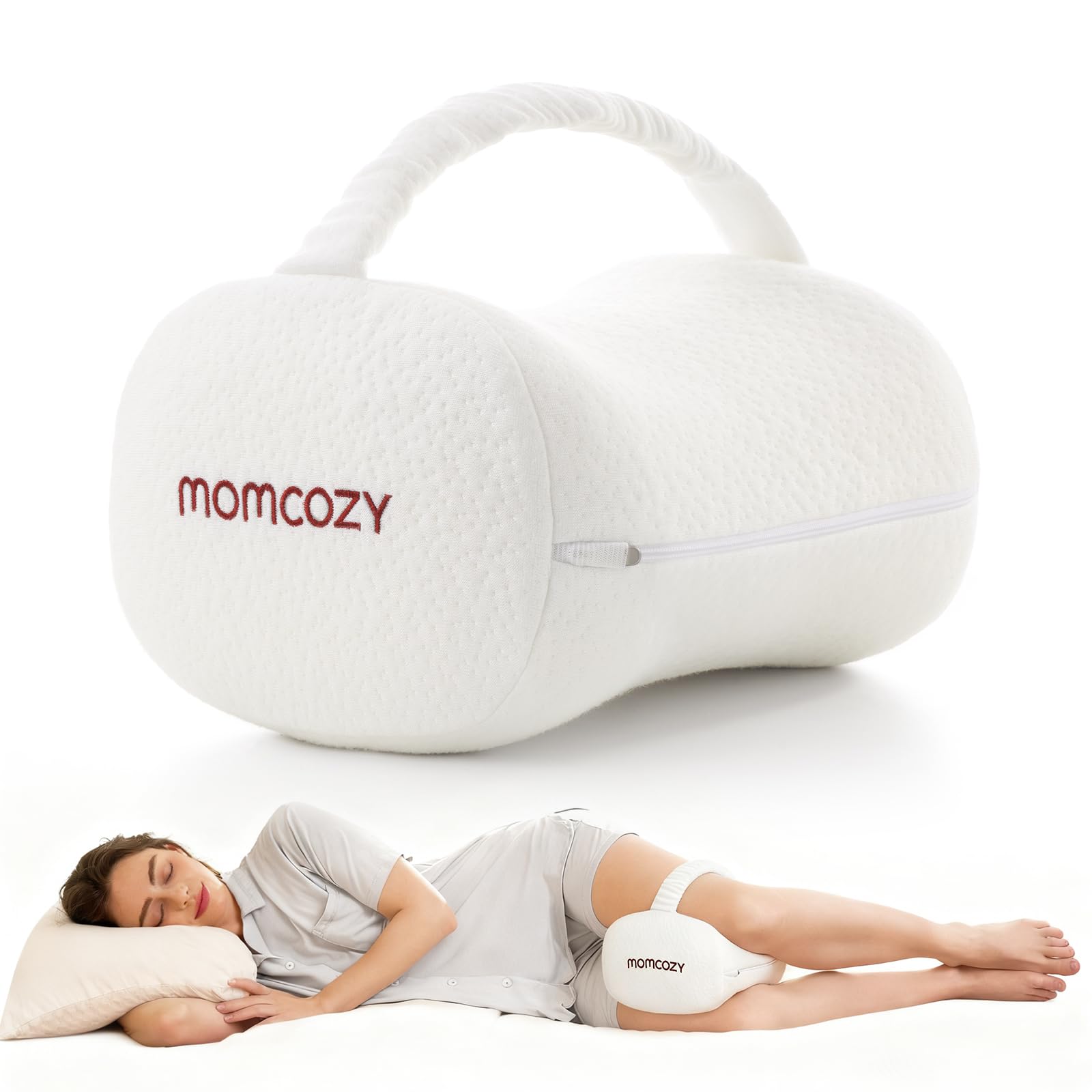
The Momcozy pillow targets the specific problem side sleepers face: your top leg dropping into hip adduction, which stretches the piriformis and compresses the sciatic nerve. Its rectangular contour shape offers two distinct surfaces — a 110-degree angled side and a 45-degree incline — so you can choose the spacing that matches your hip width. The adjustable elastic strap wraps around your thigh to keep the pillow locked in place through toss-and-turn nights.
The cover material blends 70% polyester with 30% viscose derived from bamboo, creating a fabric that wicks moisture and feels cool against the skin. The zipper-hiding pocket eliminates the pinch risk that cheaper pillows introduce. Users who experience sciatica triggered by hip rotation report that the strap prevents the pillow from migrating, maintaining consistent spacing regardless of how much they move.
A few users note that the strap tension can feel restrictive overnight if cinched too tight, and the pillow’s overall length is shorter than some between-leg designs, which may leave the lower knee unsupported for very tall individuals.
Why it’s great
- Adjustable strap prevents pillow migration during sleep
- Bamboo-blend cover stays cool and is OEKO-TEX certified
- Pinch-free zipper concealment for safety
Good to know
- Strap can feel tight if over-tightened
- Shorter length may not fully support tall users’ knees
5. Bedluxe Knee Wedge Pillow

The Bedluxe wedge uses CertiPUR-US certified pure memory foam that contours to the shape of the lower leg without a hard rebound. The 23.6 x 18.9 x 7.9-inch dimensions give it a flat top surface large enough to support both knees side by side, and dual side pockets let you store a phone or TV remote within reach during recovery time on the couch. The knitted air-layer outer cover pulls heat away from the foam, making extended lounge sessions more comfortable.
Users recovering from post-surgery knee or hip pain appreciate that the wedge works for both leg elevation and lumbar or upper back support by simply rotating the block. The manufacturer notes that full expansion can take 24 to 48 hours, and the 7.9-inch height is a fixed angle — it’s not adjustable for users who need a steeper or shallower incline.
The one catch is size: the wedge is relatively large for a single-purpose pillow, and users shorter than 5-foot-3 may find the height too aggressive for their leg anatomy, potentially overextending the knee joint.
Why it’s great
- Dual side pockets for convenience during recovery
- CertiPUR-US certified memory foam for safe use
- Versatile — works for knees, lumbar, or back support
Good to know
- Fixed 7.9-inch height not adjustable
- May be too tall for users under 5’3″
6. 5 STARS UNITED Knee Pillow for Side Sleepers
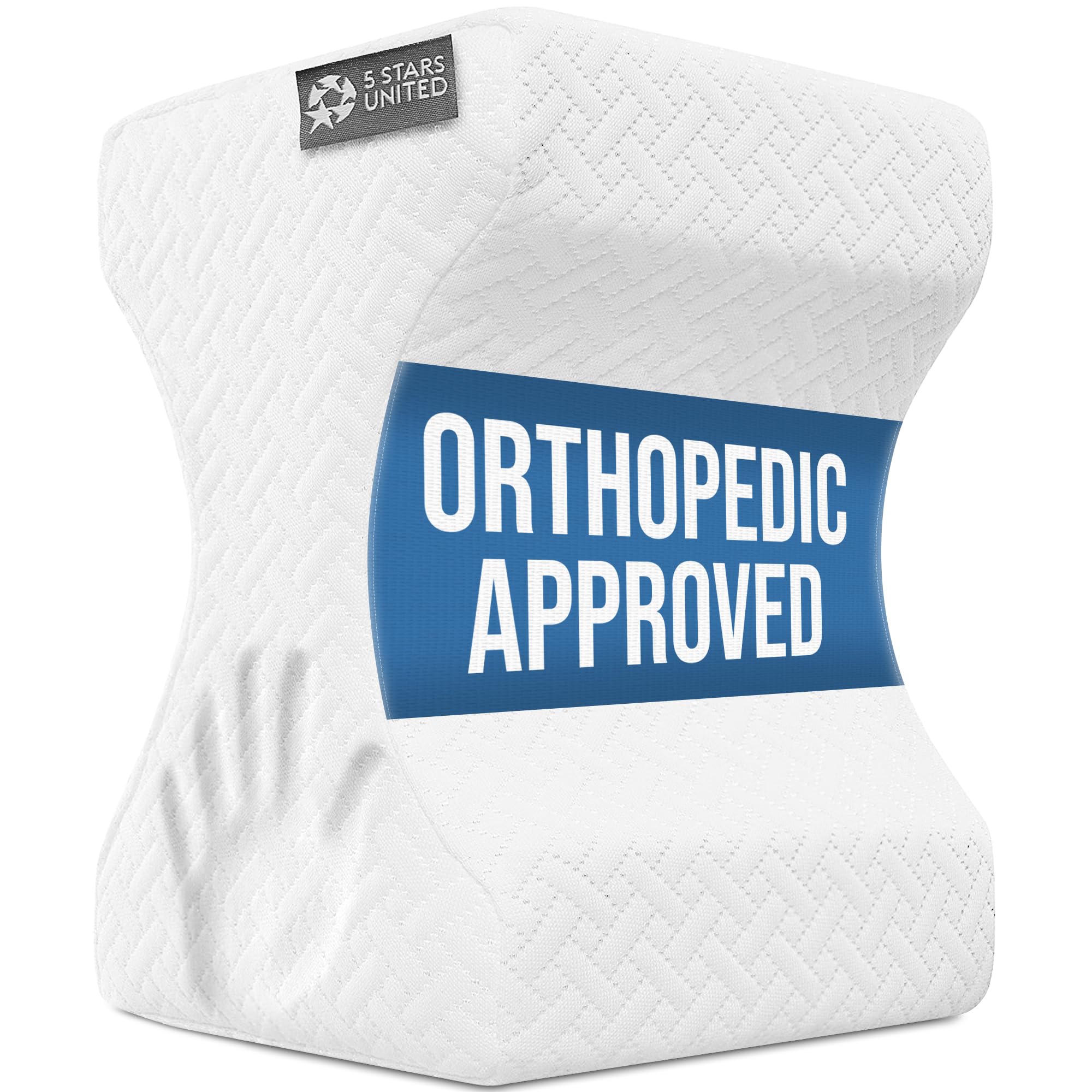
This pillow is a straightforward memory foam block designed for between-knee placement during side sleep. The dense foam holds a consistent height that keeps the top hip from rolling into internal rotation, a common trigger for sciatic flare-ups. The rectangular shape fits between the thighs comfortably without forcing the knees into an unnatural splay, and the cover zips off for machine washing.
The foam density is firm enough to prevent bottoming out under moderate leg weight, yet it still conforms slightly to the curvature of the inner knee for a snug fit. Reviewers who tried stacking standard bed pillows before switching to this dedicated one note that the difference in hip alignment is immediately noticeable in the morning.
One common complaint: the pillow lacks any strap or contour groove to keep it centered during the night, so motion-heavy sleepers may wake up with the pillow kicked across the bed. The white cover also shows stains quickly, requiring frequent washing.
Why it’s great
- Firm memory foam holds hip alignment for side sleepers
- Removable zippered cover for easy machine washing
- Simple, proven design that works for most body types
Good to know
- No strap or groove — pillow shifts during movement
- White cover shows dirt and requires frequent wash cycles
7. Knee Pillow for Side Sleepers (B0F1K1YMD5)
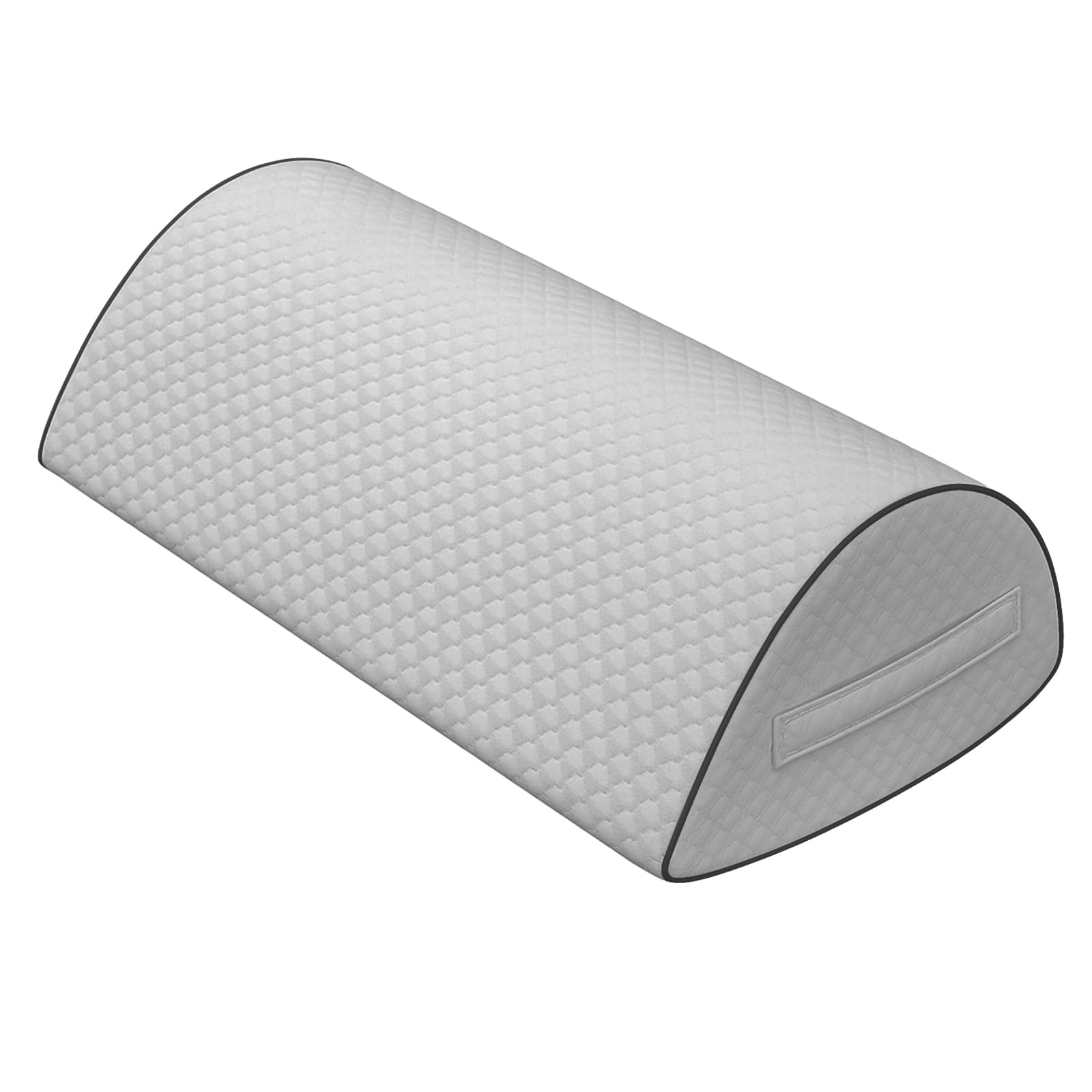
This entry-level knee pillow delivers the essential between-legs support format at a lower cost without completely sacrificing foam quality. The memory foam core is dense enough to maintain consistent height through a full night’s sleep, and the included carrying strap adds a layer of convenience for travel or moving the pillow between the bed and the couch. The machine-washable cover simplifies hygiene without requiring any special care routine.
For side sleepers who experience mild sciatica triggered by hip drop during sleep, this pillow fills the anatomical gap and reduces hip rotation. The price point makes it an accessible trial option for someone unsure whether a dedicated leg pillow will actually relieve their nerve pain.
Where it falls short: the foam density is noticeably lower than mid-range options, meaning it will develop permanent compression depressions faster — typically within six to eight months of nightly use. The cover fabric is also thinner, which may not hold up to repeated washing as well as a thicker knit or bamboo blend.
Why it’s great
- Affordable entry point to test between-legs support
- Carrying strap makes it easy to transport
- Washable cover keeps nightly hygiene simple
Good to know
- Lower foam density compresses faster with nightly use
- Thinner cover may not survive frequent machine washing
FAQ
Should I use a between-legs pillow or a wedge for sciatica?
What is the ideal memory foam density for a leg pillow used every night?
Can a leg pillow worsen my sciatica?
Final Thoughts: The Verdict
For most users, the leg pillow for sciatica winner is the Momcozy Knee Pillow because its adjustable strap, dual-angled contour, and OEKO-TEX certified bamboo-blend cover deliver targeted alignment without shifting during sleep. If you prefer back-sleeping and want adjustable height control, grab the Jakoola 3-Height Wedge. And for a premium wedge with certified foam safety and a wide supportive surface, nothing beats the Ruqmuis Knee Wedge Pillow.