Melasma isn’t a simple dark spot — it’s a stubborn, hormonal pigment pattern that laughs at generic fade creams. Most brighteners were designed for post-acne marks; melasma demands ingredients that block melanocyte overproduction at the enzymatic level, not just surface exfoliation. The wrong formula can worsen the contrast, making patches appear more pronounced.
I’m Emma — the founder and writer behind Baby Bangs. I’ve spent the last three years analyzing ingredient matrices, pH stability data, and clinical trial evidence for melasma-specific lighteners to separate real formulations from marketing fluff.
Whether you’re managing mask-related discoloration or long-standing dermal melanosis, the right cream targets tyrosinase without disrupting your barrier. This guide breaks down five potent formulas to help you find the most effective lightening cream for melasma that matches your skin’s tolerance and your visible results timeline.
How To Choose The Best Lightening Cream For Melasma
Melasma sits deeper in the dermis than typical sunspots, which means surface exfoliation alone — think glycolic peels or retinol serums — often fails. You need ingredients that cross the stratum corneum intact and chemically disrupt the melanogenesis cascade. Three critical filters separate effective formulas from wasted tubes.
Ingredient Stacking: More Than One Pathway
Single-ingredient creams (kojic acid alone, for example) plateau because melasma uses multiple receptor pathways. Look for pairing: tranexamic acid to block plasmin-induced melanocyte activity combined with niacinamide to interrupt pigment transfer to keratinocytes. Azelaic acid and arbutin further suppress tyrosinase transcription. A formula that hits three or more points in the cascade produces visibly shorter fade times.
Concentration Transparency Over Proprietary Blends
Brands that hide percentages behind “active complex” language are avoiding accountability. Effective melasma creams disclose at least one key ingredient percentage (e.g., 2% arbutin, 4% niacinamide, 15% active complex). This number tells you if the dose meets the clinical thresholds proven in melanocyte-inhibition studies. Undisclosed concentrations are often too low to produce visible fading.
Intact Skin Barrier Compatibility
Melasma-prone skin is often reactive to inflammation, and inflammation worsens pigmentation. A cream must fade without stripping. Avoid high-pH formulas (above 6.0) that compromise the acid mantle. Emollient bases with ceramides, panthenol, or squalane preserve barrier integrity while actives work. If a cream burns on application, it will likely darken the treated area after two weeks.
Quick Comparison
On smaller screens, swipe sideways to see the full table.
| Model | Category | Best For | Key Spec | Amazon |
|---|---|---|---|---|
| TOSOWOONG Dark Spot 35 | Mid-Range | High active percentage without irritation | 35% active blend incl. 2% arbutin | Amazon |
| DOMINAS Tranexamic Acid Corrector | Premium | Clinically measured spot reduction | 49.74% spot reduction in 4 weeks | Amazon |
| TOUCH Radiance Cream | Mid-Range | Multi-area melasma coverage | 15% active complex (4-actives) | Amazon |
| Dr. Shah Advanced Discoloration Serum | Premium | Sensitive skin with retinoid blend | 5-actives: retinol + kojic + TXA | Amazon |
| Clinique Even Better Clinical Serum | Premium | Vitamin C brightening plus soothing | Vitamin C + CL3020 complex | Amazon |
In‑Depth Reviews
1. TOSOWOONG Dark Spot 35 Fade Cream
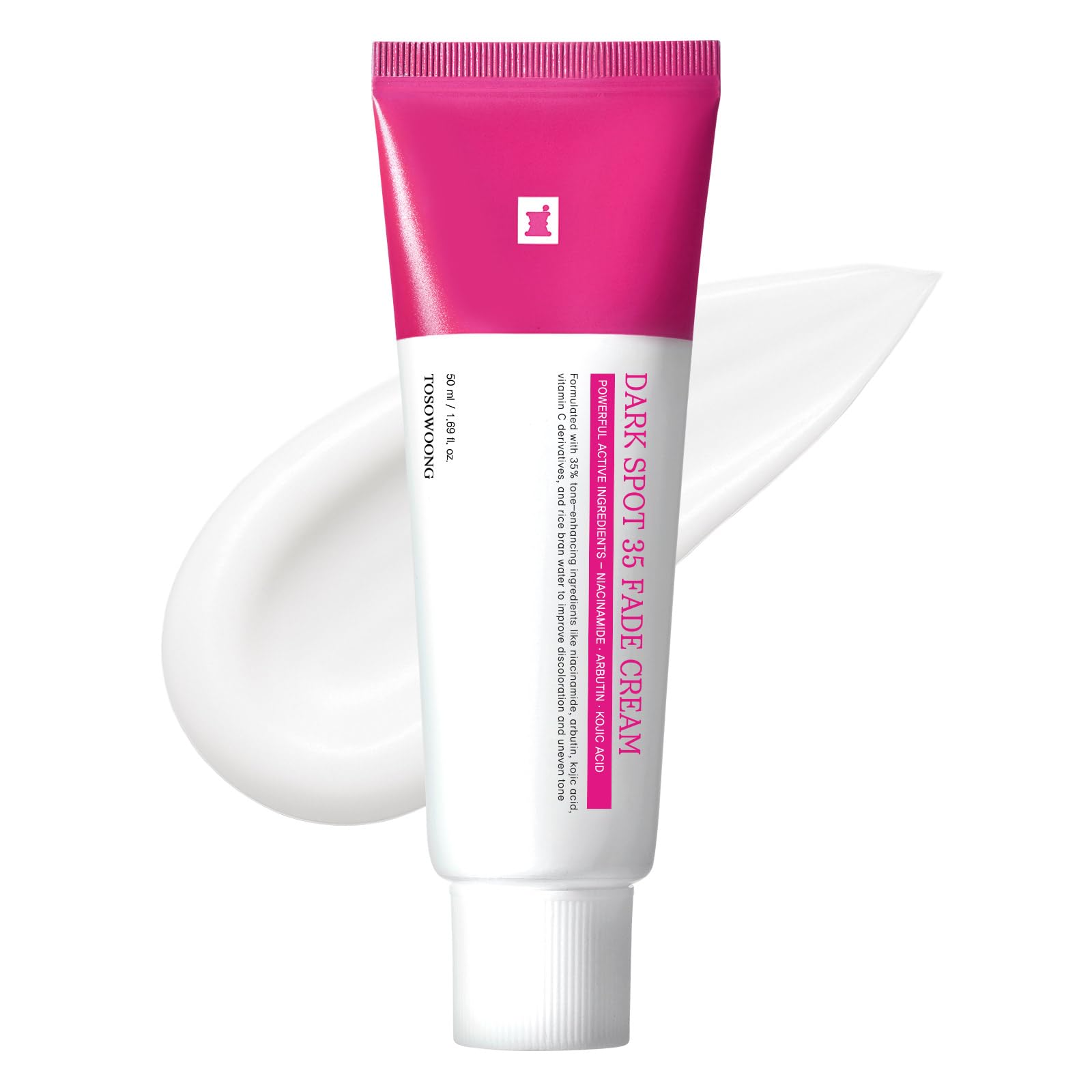
TOSOWOONG delivers what most melasma creams promise but rarely achieve: transparency on percentage. The 35% active blend includes 31% rice bran water for gentle brightening plus 2% arbutin and 2% niacinamide — both at clinically effective thresholds. Kojic acid rounds out the tyrosinase blockade, making this one of the densest multi-pathway formulas available at this tier.
The lightweight, unscented texture absorbs in under thirty seconds with zero white cast, making it practical for daytime wear under sunscreen — a non-negotiable for melasma management. Dermatologically tested at an irritation index of 0.0, which means even those with reactive melasma-prone skin can apply without barrier damage.
It’s formulated for face, neck, underarms, inner thighs, and knees, which makes it versatile if your melasma extends beyond the typical cheek-forehead pattern. The tube packaging preserves ingredient stability better than jars exposed to air and light.
Why it’s great
- Disclosed percentages (2% arbutin, 2% niacinamide) meet clinical efficacy thresholds
- Irritation index of 0.0, safe for reactive melasma skin
- Multi-area application without separate body products
- Fast-absorbing, daytime-friendly finish under SPF
Good to know
- Rice bran water base may not suit those with fermented-ingredient sensitivity
- Requires consistent twice-daily application for visible fade around week 4
2. DOMINAS Tranexamic Acid Dark Spot Corrector Cream

DOMINAS brings institutional weight to the melasma conversation — developed by Tai Guk Pharm, a Korean pharmaceutical company with 68 years of skin science. Their clinical data is concrete: 49.74% visible reduction in dark spots after 4 weeks in a 22-woman study, with 100% of participants reporting observable pigment fading.
The mechanism relies on tranexamic acid (TXA) at a concentration sufficient to inhibit plasmin-driven melanocyte activation, niacinamide for transfer interruption, and polydatin — an antioxidant derived from 150g of root extract per dose — to suppress UV-induced melanogenesis. Adenosine and bakuchiol handle barrier repair without the purging that pure retinol can trigger in melasma skin.
The 1.76 oz cream follows a two-step regimen: apply, warm palms, press for deep absorption. This ritual ensures deeper penetration into the dermal layers where melasma resides. The texture is richer and better suited for nighttime use or dry skin types.
Why it’s great
- Clinically measured 49.74% spot reduction at 4 weeks with published data
- Triple-pathway approach: TXA, niacinamide, polydatin
- Bakuchiol replaces retinol for melanin-sensitive skin
- Deep absorption protocol maximizes dermal penetration
Good to know
- Richer texture may feel heavy for oily or combination skin in humidity
- Premium category; active concentration per ounce is higher but so is per-use cost
3. TOUCH Radiance Cream with Niacinamide, Kojic Acid, Tranexamic Acid & Azelaic Acid

TOUCH packages four proven melanin inhibitors — niacinamide, kojic acid, tranexamic acid, and azelaic acid — into a single 2-ounce cream without filler ingredients. The 15% active complex is competitive for the mid-range tier, and the absence of synthetic fragrances, parabens, and drying alcohols makes it a clean option for extended melasma management.
Azelaic acid is an underrated addition here; it blocks tyrosinase activity while also calming the inflammatory component that often exacerbates melasma patchiness. This makes the cream suitable for cases where pigmentation flares alongside redness or barrier sensitivity. The fast-absorbing base works for face, neck, elbows, underarms, and knees, as noted by the brand.
The fragrance-free formulation ensures no volatile compounds trigger incidental irritation. For melasma that spans multiple body areas — common in hormonal patterns — this one tube approach simplifies compliance and cost.
Why it’s great
- Four distinct melanin inhibitors in one formula for pathway redundancy
- Azelaic acid adds anti-inflammatory support for reactive melasma
- Fragrance-free, non-comedogenic, and paraben-free for long-term use
- One product suitable for full-body pigmentation management
Good to know
- 2-ounce jar format exposes cream to air with each use; consider using a clean spatula
- Some users with very deep melasma may need a higher percentage of tranexamic acid for faster results
4. Remedy for Dark Spots — Advanced Discoloration Correcting Serum by Dr. Shah
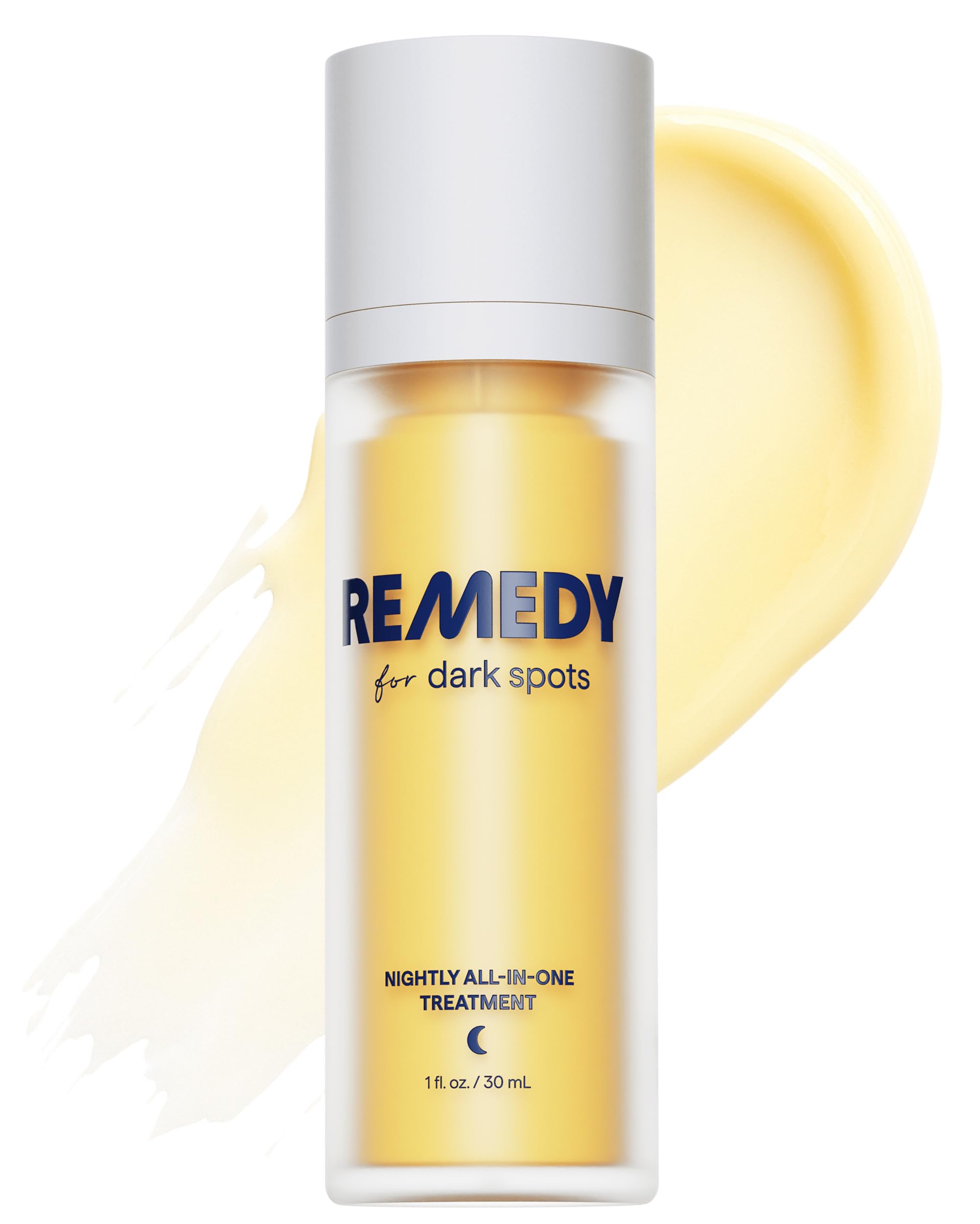
Dr. Shah’s formula is unique in this set because it combines retinoid-stimulated cell turnover with four melanin-blocking agents — retinol, kojic acid, tranexamic acid, niacinamide, and mandelic acid — in a serum format designed for sensitive, melasma-prone skin. Retinol is often excluded in melasma protocols because of irritation risk, but at the proper concentration and with buffering agents, it accelerates the shedding of pigmented keratinocytes.
The inclusion of mandelic acid, an alpha-hydroxy acid with larger molecular weight than glycolic, provides gentle surface exfoliation without the stinging that triggers post-inflammatory hyperpigmentation in darker skin tones. This makes the serum viable for Fitzpatrick skin types IV and V, where melasma is most prevalent.
Fragrance-free and formulated without common irritants. The 1 fl oz bottle is compact but concentrated — a few drops cover the full face. Best applied at night due to retinol photosensitivity.
Why it’s great
- Retinol accelerates pigmented cell turnover while brighteners block new melanin
- Mandelic acid exfoliates gently for deeper Fitzpatrick skin types
- Five active agents target every stage of melanogenesis
- Fragrance-free and formulated for sensitive skin
Good to know
- Retinol content requires strict AM sunscreen use or melasma may worsen
- 1 fl oz provides roughly 30–40 uses at full-face coverage
5. Clinique Even Better Clinical Dark Spot Clearing Vitamin C Face Serum
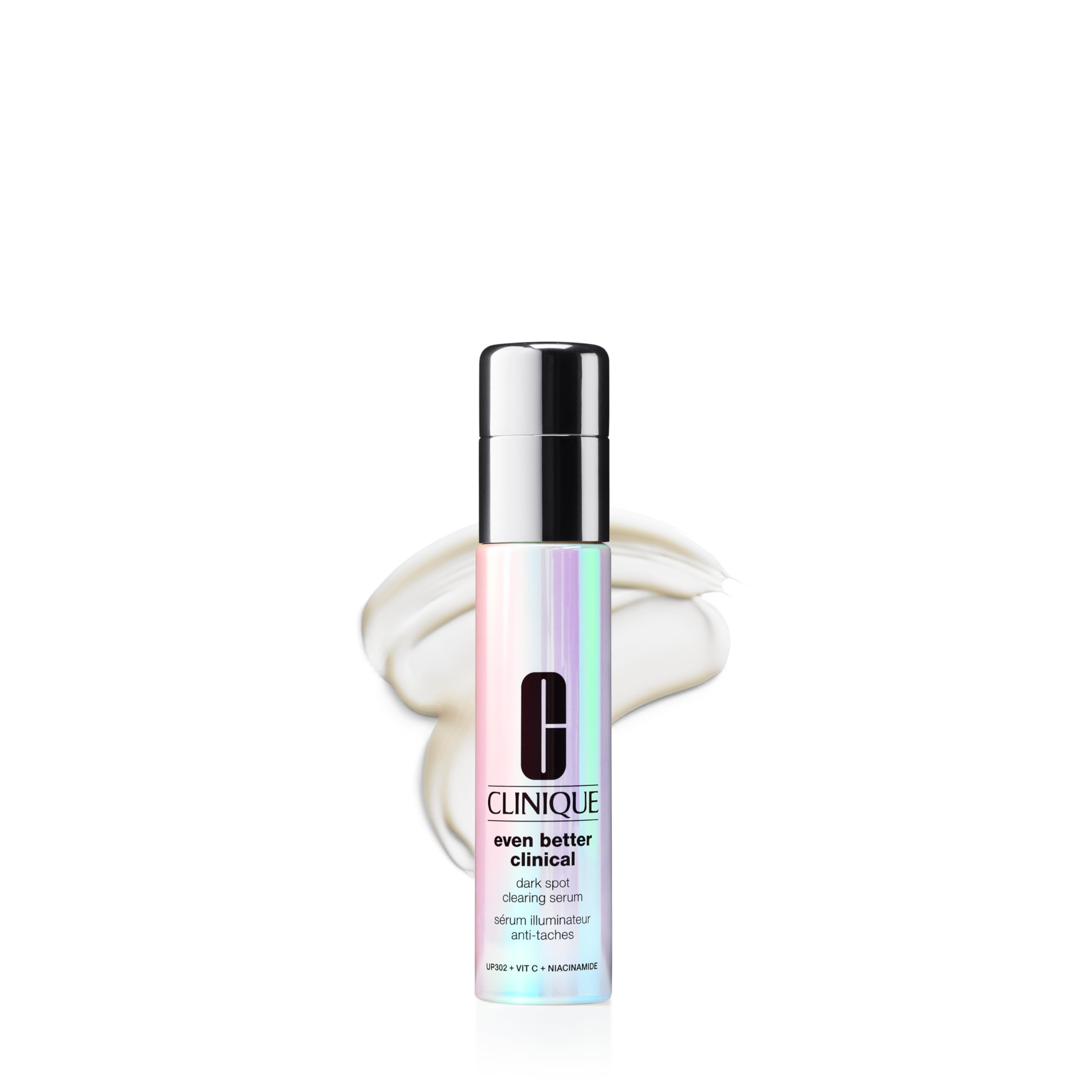
Clinique’s entry uses vitamin C paired with their proprietary CL3020 complex — a blend of salicylic acid, acetyl glucosamine, and mulberry extract designed to interrupt melanin production at the cellular level. Vitamin C works as an antioxidant shield against UV-induced oxidative stress, which is a primary trigger for melasma flare-ups.
The serum texture is lightweight and silicone-free, making it appropriate for layering under moisturizer and sunscreen during AM routines. Clinique’s allergy-tested, 100% fragrance-free standard is useful for melasma skin that reacts to botanical oils and essential oil blends commonly found in natural brighteners.
For existing melasma, this serum’s strength lies in prevention — maintaining an even tone once a stronger TXA or kojic cream has done the initial fading. It doubles as a maintenance phase product for long-term pigment suppression.
Why it’s great
- Vitamin C provides antioxidant protection against oxidative melasma triggers
- CL3020 complex tackles melanin at multiple transfer points
- Lightweight texture layers seamlessly under SPF
- Clinique allergy-testing reduces risk of reactive flare-ups
Good to know
- Better suited as maintenance product after initial fading phase
- Lacks direct tyrosinase inhibitors like arbutin or TXA
FAQ
Can lightening cream for melasma make my patches darker?
How long before I see visible fading from a melasma cream?
Final Thoughts: The Verdict
For most users, the lightening cream for melasma winner is the TOSOWOONG Dark Spot 35 Fade Cream because its disclosed 35% active blend delivers rapid visible fading without irritation. If you want clinically measured data and deep dermal penetration, grab the DOMINAS Tranexamic Acid Corrector. And for multi-body melasma with anti-inflammatory support, nothing beats the TOUCH Radiance Cream.