The right lifting belt for CrossFit must survive burpees, box jumps, and heavy cleans in the same session — a challenge most traditional powerlifting belts fail because they lock you into a single position. A belt built for the sport needs to provide rigid intra-abdominal pressure for max lifts while allowing the freedom to move through dynamic, high-rep metcons without digging into your ribs or restricting your hip hinge.
I’m Emma — the founder and writer behind Baby Bangs. I’ve spent years analyzing the biomechanics and construction specs of functional fitness belts, comparing material density, buckle systems, and width-to-mobility ratios across dozens of models so you don’t have to guess which one actually fits a WOD.
Whether you’re chasing a new snatch PR or grinding through a heavy thruster ladder, the lifting belt for crossfit you choose directly affects your core stability, rep speed, and recovery between rounds.
How To Choose The Best Lifting Belt For CrossFit
CrossFit is unique because it blends pure strength work — squats, deadlifts, and overhead presses — with high-intensity movements like pull-ups, double-unders, and wall balls. A belt that works for one half of that equation can sabotage the other. Here’s what matters most.
Width and Thickness: The Mobility vs. Support Trade-Off
Most hardcore powerlifting belts are 10mm thick and 6 inches wide, designed to create a wall of steel around your midsection. In CrossFit, that same rigidity will prevent you from getting into a proper overhead position and will bruise your ribs during a set of 30 cleans. A 4-inch wide belt with a thickness between 5mm and 6mm is the standard for functional fitness use. It provides enough structure to brace against during heavy singles but remains flexible enough to allow a full range of motion in your hips and torso when you move.
Closure System: Prong, Lever, or Self-Locking
A traditional double-prong buckle gives you a classic feel with positive lock-in, but it forces you to choose a hole before the lift — if you need to loosen the belt between a deadlift and a set of pull-ups, you have to completely undo it. Lever belts offer quick micro-adjustment but are heavy and less forgiving for varied WOD positioning. Self-locking hook-and-loop hybrids (like the Element 26 Hybrid) let you dial tightness continuously without stopping, which is a distinct advantage in a timed workout where you transition between exercises rapidly.
Material: Leather vs. Nylon vs. Hybrid
Genuine leather belts offer the most rigid feedback and are required for certain powerlifting federations, but they take time to break in and can be stiff during the first weeks. Nylon and Cordura belts (like 2POOD) are lighter, breathable, and dry fast after sweat-soaked sessions — they also roll up easily for storage. Hybrid designs try to blend the best of both worlds: a leather core for stability with a nylon- or velcro-based fastening system for adjustability. For CrossFit specifically, a 100% leather belt is viable if you prioritize max lifting, but a hybrid or high-quality nylon belt often provides more versatility across a full workout.
Competition Legality
If you plan to test your lifts in a CrossFit competition, an official weightlifting meet, or a powerlifting event, check whether the belt is sanctioned by USA Weightlifting, USPA, or CrossFit’s own rules. Some belts are explicitly designed for functional fitness and are marked as “CrossFit-compliant” or “Olympic weightlifting approved.” The 2POOD is the official belt of CrossFit and USA Weightlifting, making it a no-brainer for serious competitors, but several leather options from DMoose and Dark Iron also receive approval from key federations.
Quick Comparison
On smaller screens, swipe sideways to see the full table.
| Model | Category | Best For | Key Spec | Amazon |
|---|---|---|---|---|
| Element 26 Hybrid Leather | Premium Hybrid | Rapid WOD transitions | Self-locking micro-adjust | Amazon |
| 2POOD 4″ Weightlifting Belt | Premium Nylon | Competition & high-rep metcons | Cordura nylon + WODclamp | Amazon |
| Dark Iron Fitness Genuine Leather | Premium Leather | Heavy squats & deadlifts | Double-prong buckle | Amazon |
| Bear KompleX APEX | Mid-Range Nylon | Lightweight WOD mobility | Stow-n-Go rollable design | Amazon |
| Nike Unisex Strength Training Belt | Mid-Range Nylon | All-around gym versatility | Low-profile 4″ width | Amazon |
| DMoose Fitness Genuine Leather | Budget Leather | Entry-level powerlifting support | 5mm suede leather | Amazon |
| ProFitness 5mm Leather | Budget Leather | Value-focused lifters | 5mm thick leather | Amazon |
In‑Depth Reviews
1. Element 26 Hybrid Leather Weight Lifting Belt
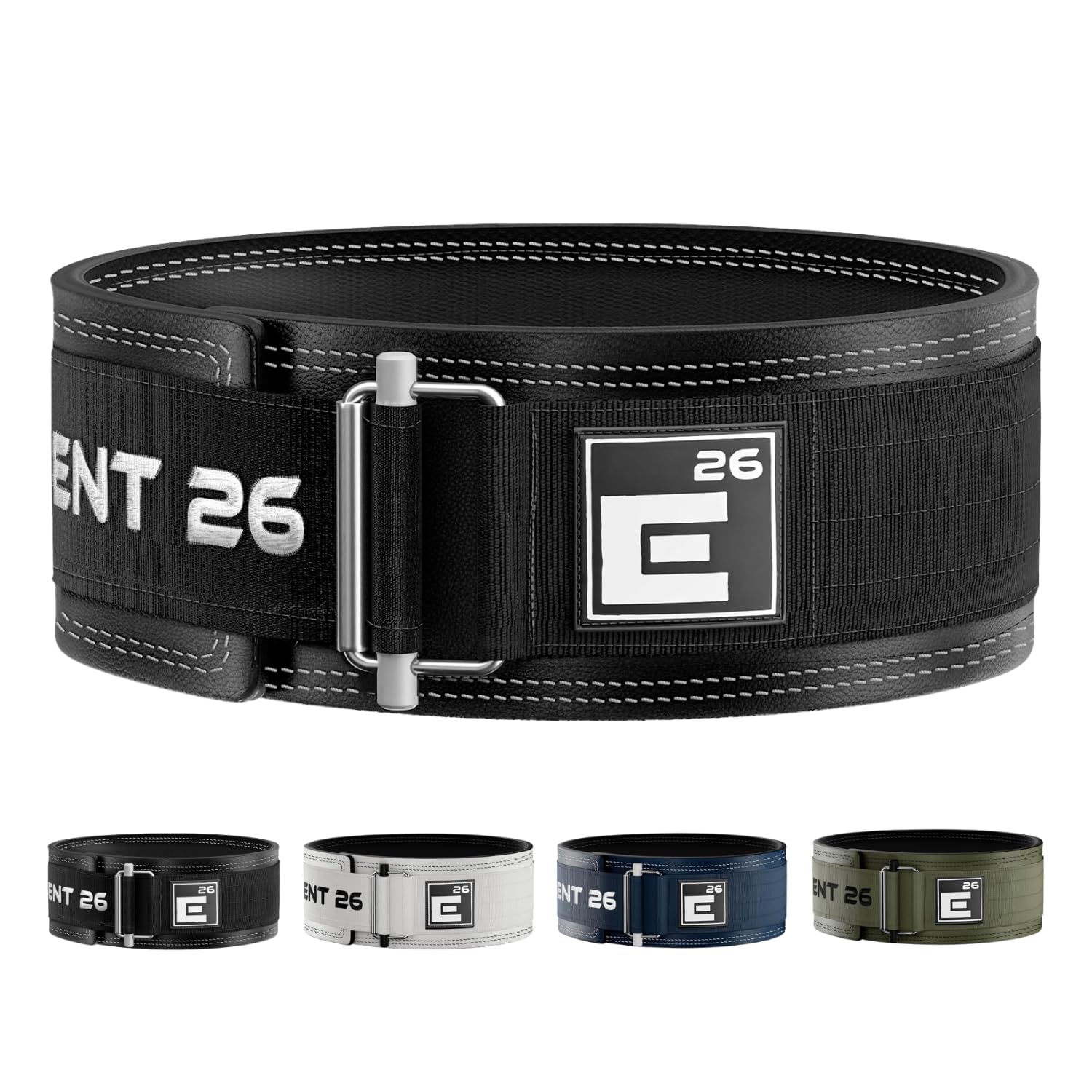
The Element 26 Hybrid is the most category-specific belt in this roundup because its patented self-locking system solves the central CrossFit problem: you need one tightness for a heavy clean and a looser setting for the ensuing box jumps. The hybrid construction layers a full-grain leather core for stability with a nylon-based hook-and-loop closure that gives you unlimited micro-adjustment — you can cinch down or release in under two seconds without undoing the belt. Designed by a Doctor of Physical Therapy, the belt’s 4-inch width and tapered profile keep it from impinging your hip crease during the catch position of a snatch.
In metcons, the leather does add a small amount of stiffness compared to a full-nylon belt, so there is a brief break-in period of about 3-5 sessions. Once settled, the belt maintains position without riding up during pull-ups or toes-to-bar. It is approved for use in Olympic lifting and functional fitness competitions, and the lifetime warranty backs the build quality. The closure system uses a secondary security strap — the WODclamp-style mechanism — so you never worry about the belt slipping mid-lift. For athletes who train both strength and conditioning in the same hour, this is the most versatile option on the market.
The included carrying pouch is a nice bonus for gym bags, but the real value is the dual-material design. You get the rigid intra-abdominal pressure feedback of a leather belt with the convenience of a nylon quick-release, which means fewer breaks between exercises in a timed workout. The self-locking mechanism also eliminates the “wrong hole” problem of prong belts where you’re stuck between two settings.
Why it’s great
- Self-locking closure provides micro-adjustment on the fly between WOD movements
- Hybrid leather core + nylon outer balances rigid support with breathing flexibility
- Universal competition approval and lifetime warranty
Good to know
- Short leather break-in period before it fully conforms to your body
- Slightly thicker profile than pure nylon belts, may feel warm in very hot gyms
2. 2POOD 4″ Weightlifting Belt
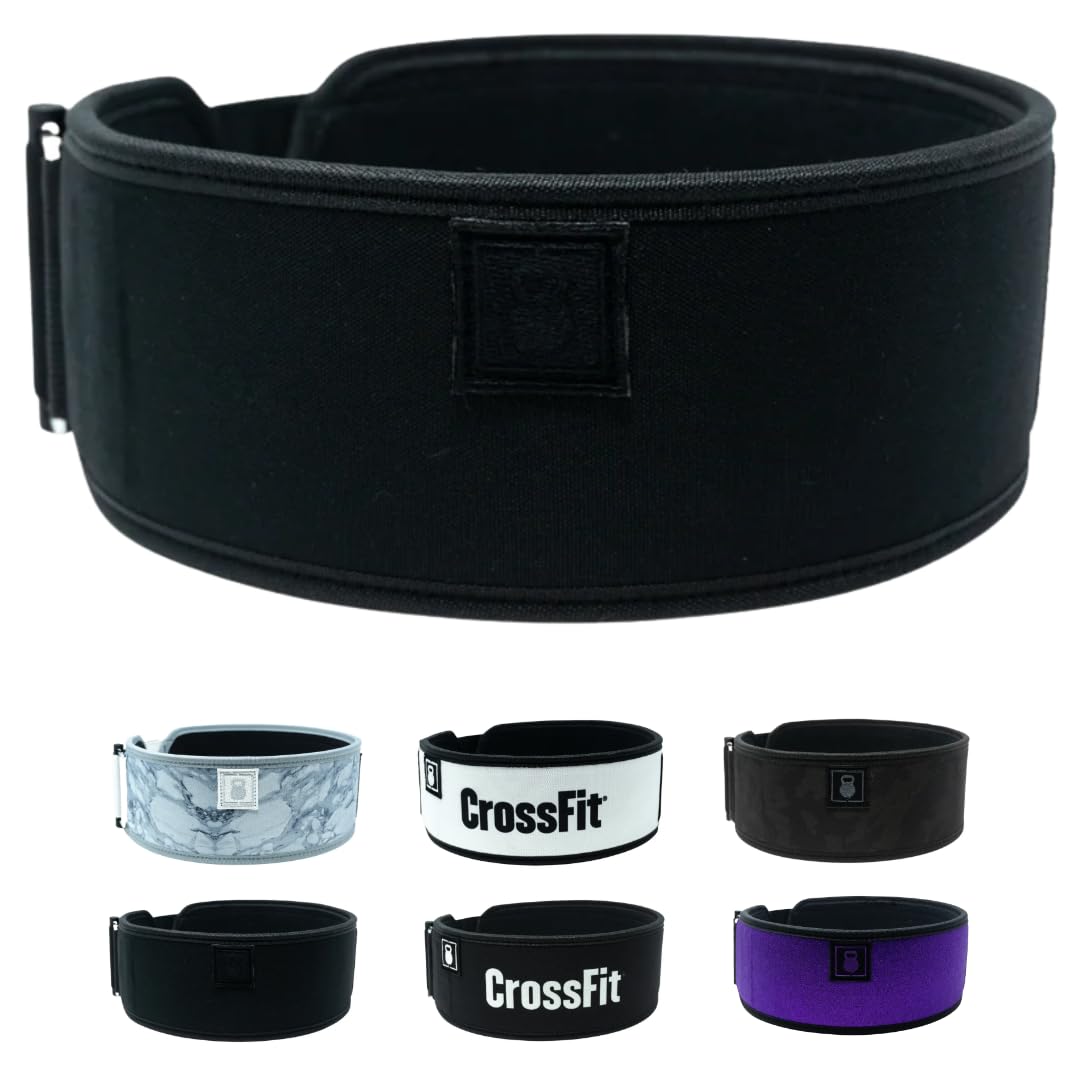
The 2POOD belt is the official training partner of both CrossFit and USA Weightlifting, which tells you immediately who it is built for. It uses Cordura nylon — the same abrasion-resistant fabric used in tactical gear — so it handles chalk, sweat, and bar knurling without fraying or absorbing moisture. The WODclamp is a secondary locking mechanism that sandwiches the velcro overlap, preventing the belt from popping open during max-effort lifts or when you’re bouncing between a clean and a set of burpees. The 4-inch width is uniform around the entire circumference, providing even support across your lower back and abdomen.
What separates 2POOD from budget nylon belts is the velcro quality. The hook material is densely packed and engages the loop surface fully across two overlapping zones, so the belt does not “creep” looser during a heavy front squat. The unisex sizing runs from XXS to XL, and the belt fits true to waist measurement based on your navel line. It is also USPA compliant for powerlifting meets if you ever cross over into strength sport. Because it is made from nylon rather than leather, it rolls up into a compact cylinder for storage and dries in minutes after a sweaty session.
The main trade-off is that Cordura nylon, while durable, does not provide the same proprioceptive feedback as a rigid leather belt. Some experienced lifters miss the feeling of “pushing against” a solid wall during a deadlift. The velcro closure also makes a loud ripping sound when you remove it between exercises, which can be distracting in a quiet gym. For CrossFit athletes who prioritize speed, mobility, and competition-readiness, this is still the gold standard.
Why it’s great
- Official belt of CrossFit and USA Weightlifting with full competition approval
- WODclamp secondary lock prevents velcro separation under max load
- Cordura nylon is sweat-resistant, quick-drying, and easy to roll up
Good to know
- Nylon feels less rigid than leather for heavy single-rep max attempts
- Velcro release is loud and may disturb others between lifts
3. Dark Iron Fitness Genuine Leather Weightlifting Belt
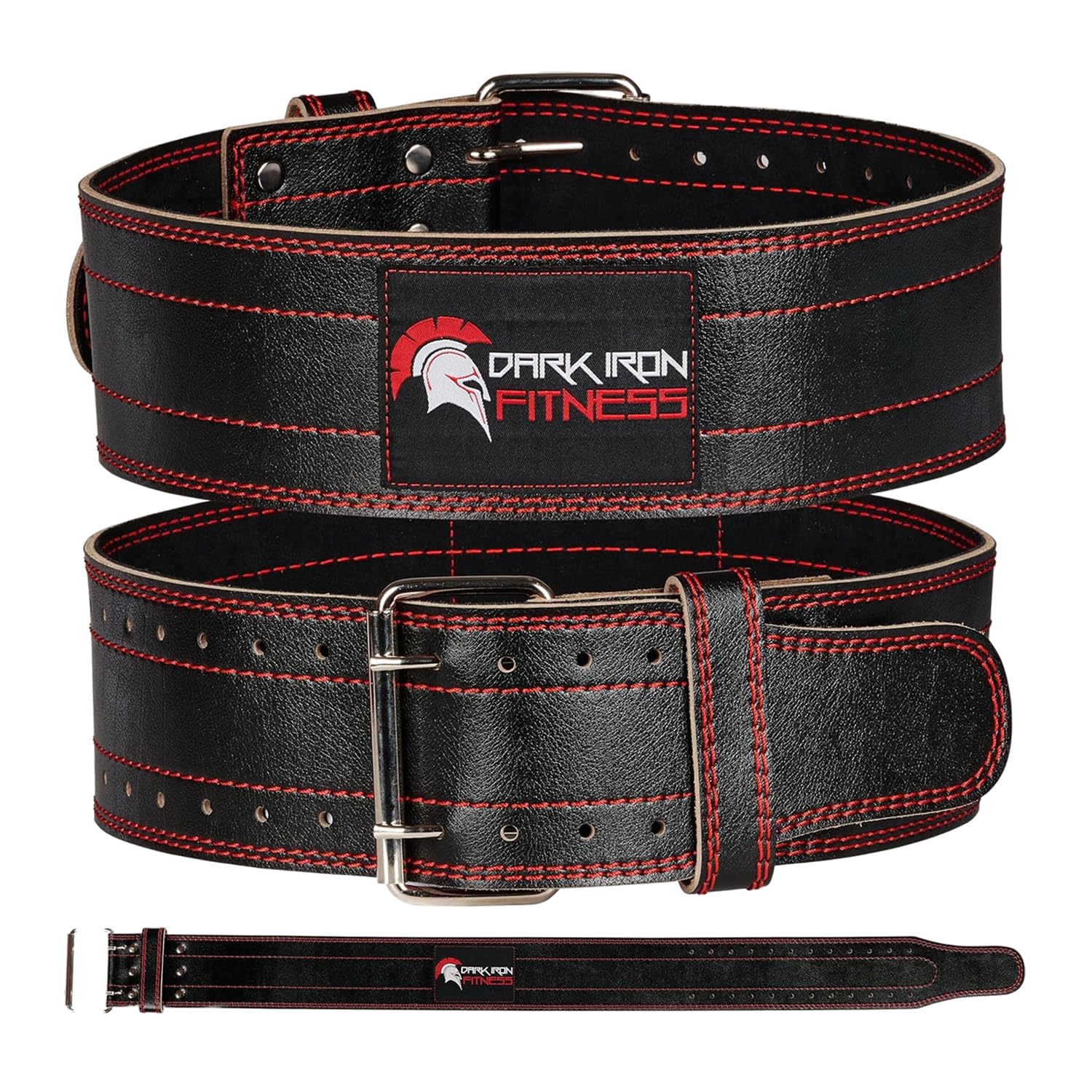
Dark Iron Fitness builds its belt from 100% genuine leather with double-row reinforced stitching along the entire edge, creating a structure that does not soften or sag over years of use. At 5mm thick and 4 inches wide, it hits the perfect CrossFit midpoint — rigid enough to brace against for a 1RM squat, but not so bulky that it interferes with the bottom position of an overhead squat. The double-prong buckle uses two independent metal prongs that engage separate holes, distributing the load and preventing the belt from rotating around your waist during rotational movements like cleans or snatches.
The sizing range is industry-leading: from an XS (22-25 inches) up to XL (44-49 inches), so athletes with proportionally smaller or larger torsos can find a match. The 12 adjustment holes are spaced at 1-inch intervals, giving you more granular fit options than the standard 8-hole layout. The included keeper loop secures the excess belt length so it does not flop against your side during box step-ups or burpees. Dark Iron also offers color options (black with red stitching or white with black stitching) for those who want a clean gym aesthetic.
The double-prong system does require a small amount of effort to engage and disengage — you cannot micro-adjust mid-WOD without pulling the belt off entirely. For athletes who do heavy strength work followed by a separate conditioning segment, this is fine. For those who mix strength and conditioning in AMRAP format, the prong system delays your transitions. Over time, the leather develops a patina and memory of your body shape, making it more comfortable than the first few workouts.
Why it’s great
- Full-grain leather with double stitching holds shape for years without sagging
- Double-prong buckle distributes tension evenly and prevents rotation during Olympic lifts
- Exceptionally wide size range from 22 to 49 inches
Good to know
- Prong closure does not allow quick micro-adjustment between exercises
- Leather requires a break-in period of several workouts before maximum comfort
4. Bear KompleX Premium Leather APEX Weightlifting Belt
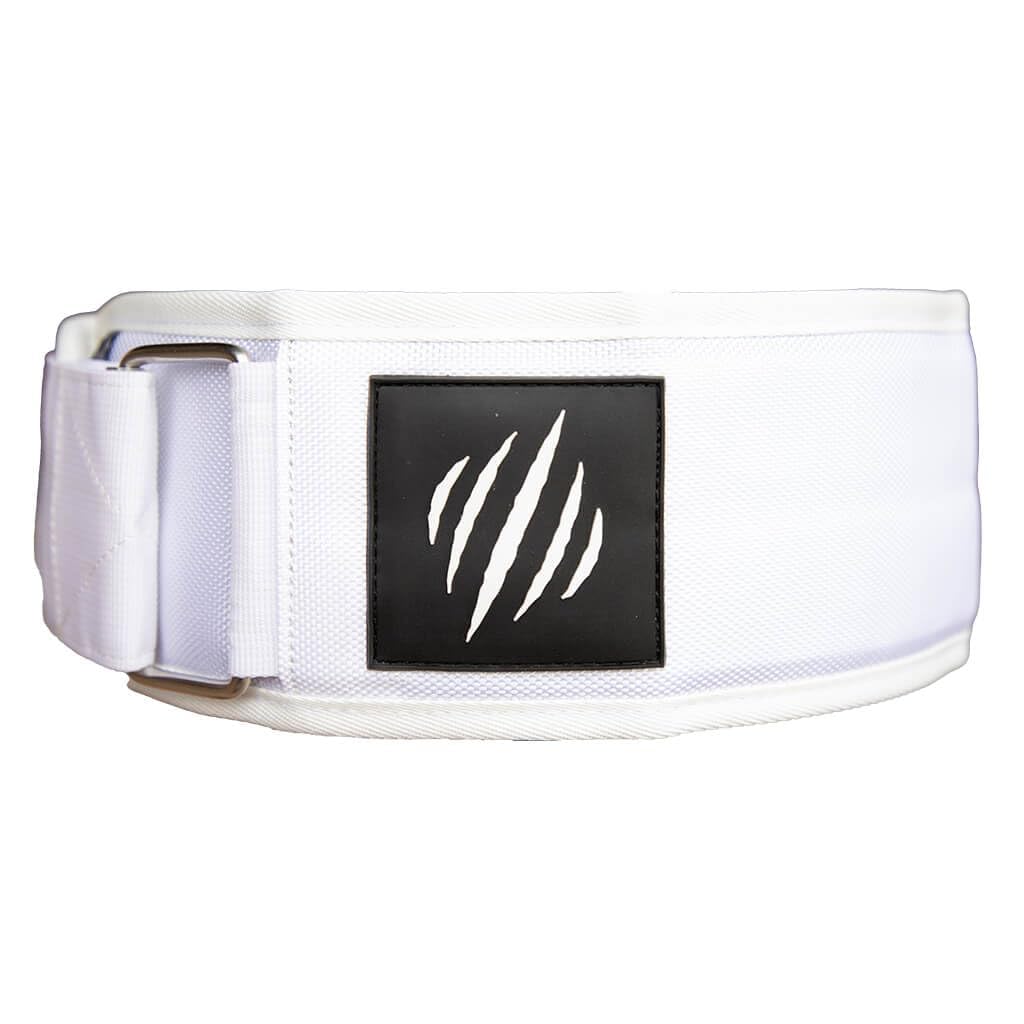
The Bear KompleX APEX is built around the “Stow-n-Go” philosophy — it is designed to be worn for heavy lifts and then immediately left on through pull-ups, rope climbs, and cardio without causing discomfort. The belt uses a continuous nylon loop construction with a low-profile buckle, meaning there is no bulky prong or lever mechanism digging into your stomach when you bend forward. At 4 inches wide throughout, it provides consistent support across the lumbar region and abdomen, and the thin nylon profile allows you to get into full hip extension for kettlebell swings and toes-to-bar without restriction.
Bear KompleX markets the APEX as a belt that forces better body mechanics — specifically, it cues you to lift with your legs rather than your back during deadlifts and clean pulls. The buckle closure is a quick-release system that allows you to tighten or loosen the belt without fully removing it, which is useful for complex WODs that alternate between pulling and pressing movements. The belt rolls up into a cylinder small enough to fit in a gym bag’s side pocket, making it one of the most portable options here. The material is machine-washable, though you should air-dry it to preserve the webbing integrity.
Because the APEX is made from nylon rather than leather, it does not generate the same level of rigid intra-abdominal pressure that experienced powerlifters rely on for maximal squatting. The buckle system, while convenient, is not as securely locked as a double-prong or self-locking mechanism — on extremely heavy loads (500+ pound deadlift), you may feel the belt shift slightly. For the typical CrossFit athlete who works in the 200-400 pound range across squats and deadlifts, the APEX provides ample support while prioritizing WOD transition speed.
Why it’s great
- Stow-n-Go design lets you keep the belt on through pull-ups, rope climbs, and gymnastics
- Quick-release buckle allows micro-adjustment between lifting and cardio segments
- Highly portable and machine-washable for frequent CrossFit use
Good to know
- Nylon flexes more than leather, reducing feedback for maximum-effort lifts
- Quick-release mechanism may slip slightly under extreme loads above 500 pounds
5. Nike Unisex Adult Strength Training Belt

The Nike Strength Training Belt represents the broad-appeal end of the lifting belt spectrum: it uses a foam-padded core wrapped in breathable mesh fabric, making it the most comfortable option for athletes who want support without feeling encased in stiff leather. The 4-inch width is consistent and the buckle closure uses a traditional prong, but the material’s flexibility means the belt conforms to your body shape immediately with zero break-in. This is not a belt for setting powerlifting world records, but it is perfect for CrossFit athletes who need core support for 80% effort lifts while still being able to breathe deeply during burpees and rowing intervals.
The unisex sizing covers a wide range, and the belt’s lightweight construction (~8 ounces) makes it almost unnoticeable when you’re not actively bracing against a load. The mesh outer layer wicks sweat away from the skin, which helps prevent chafing during long, sweat-drenched metcons. The nylon webbing straps feel secure under moderate loads, and the buckle is sized to fit standard gym belt loops if you want to wear it outside your shorts. For the budget-conscious athlete who wants a name brand without paying a premium, Nike delivers a solid baseline product that will handle most CrossFit workouts without complaint.
The trade-off for that comfort is structural rigidity. The foam padding compresses under heavy loads, meaning you lose intra-abdominal pressure feedback as you go heavier. For a 185-pound athlete cleaning 225 pounds, this belt works fine. For a 225-pound athlete squatting 405 pounds, the belt will feel too soft to provide meaningful bracing. Additionally, the foam core can compress permanently over time, especially if you store it crushed in a gym bag. It is best viewed as an entry-level or backup belt for daily WODs rather than a primary belt for strength-focused cycles.
Why it’s great
- Foam-padded mesh construction offers immediate comfort with zero break-in
- Lightweight and breathable for extended wear through multi-movement WODs
- Trusted Nike brand at an accessible mid-range price point
Good to know
- Foam lacks the rigidity needed for maximal strength lifts above 85% 1RM
- Core compression over time reduces support, especially with frequent use
6. DMoose Fitness Weight Lifting Belt
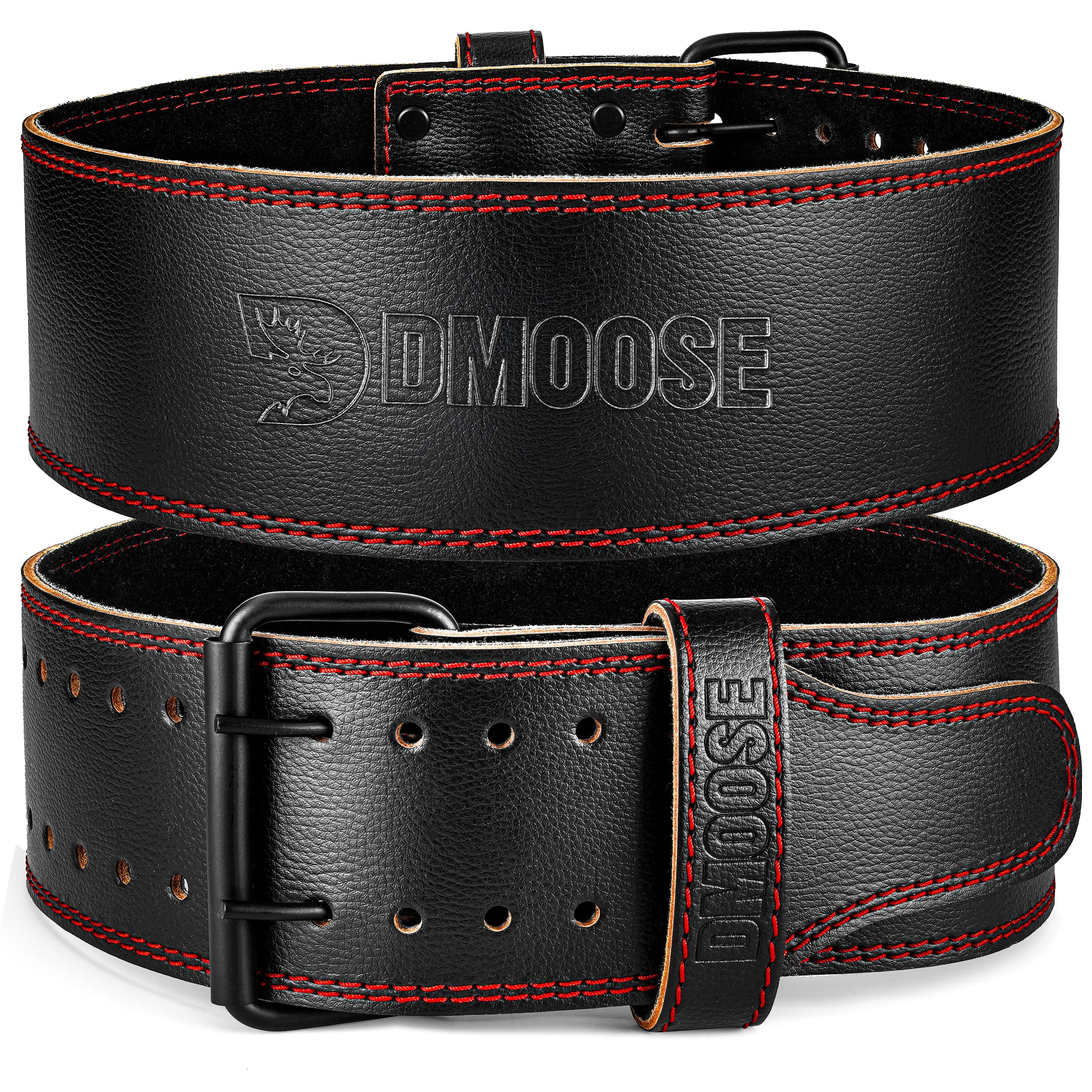
The DMoose belt brings genuine suede leather construction at a price point that rivals flimsy nylon entry-level belts. The 5mm thickness and 4-inch lumbar pad provide meaningful spinal support for squats, deadlifts, and overhead pressing without the cost of premium leather brands. The double-prong coated buckle resists corrosion from sweat, and the 10 adjustment holes at 1-inch intervals give you a decent range of fit customization. DMoose also includes a compact carry bag — a thoughtful addition since most budget belts skip the storage accessory.
The suede leather is softer to the touch than the full-grain leather used by Dark Iron, meaning it conforms to your body faster out of the box. The trade-off is that suede does not hold its rigidity as long over years of heavy use — expect the leather to develop a flexible feel after about 12-18 months. The belt is USPA and IPL approved, so if you decide to enter a powerlifting meet, this belt will pass gear check. The sizing chart on the product page should be double-checked before ordering, as some users report the belt runs slightly large relative to the listed waist measurements.
For CrossFit athletes on a tight budget who still want a leather belt for strength days, DMoose delivers the essential functions without cutting corners on the closure mechanism or width. The suede material does absorb more sweat than coated leather, so you should air it out after each session to prevent odor buildup. It is not the best choice for athletes who train exclusively in humid or non-air-conditioned gyms, as the leather can feel sticky and take longer to dry than synthetic options.
Why it’s great
- Affordable genuine suede leather makes advanced support accessible at a budget-friendly price
- USPA/IPL approved for competition use, surprising for this price tier
- Includes carry bag for easy transport and storage between sessions
Good to know
- Suede leather softens faster than full-grain, reducing long-term rigidity for max lifts
- Size runs slightly large — verify waist measurement against sizing chart before ordering
7. ProFitness 5mm Leather Weight Lifting Belt

The ProFitness belt is the most accessible entry point for athletes who want a leather lifting belt but are not ready to invest in a premium model. Built from 5mm thick leather with a 4-inch width, it matches the core specifications of belts costing significantly more. The single-prong buckle is simple and effective, and the leather, while not top-grain suede, provides decent structural support for moderate weight loads. This belt works well for a 135-pound athlete learning to squat or a beginner CrossFitter who needs basic back support during foundational strength cycles.
The main limitation is in the buckle hardware and stitching. The single-prong design means all the tension is held by one metal tooth, and while it is adequate for everyday use, it does not offer the same redundancy as a double-prong system on heavier loads. The stitching along the edges is single-row, which is more susceptible to fraying if you abuse the belt or store it improperly. Over time, the single row of stitching can pull apart at the stress points near the buckle, especially if you train heavy deadlifts multiple times per week. The leather itself is stiff out of the box and takes longer to break in than suede options.
For the price, the ProFitness belt gives you a genuine leather product that will support a full year of consistent CrossFit training if you take care of it. Use it for strength-focused days and consider it a stopgap as your loads increase. The belt does not include a carry bag or any accessories, and the sizing options are more limited than the competition. If you find yourself outgrowing its support capacity within a few months, that is normal — you are simply ready to move up to a mid-range or premium belt with thicker leather and a more robust closure system.
Why it’s great
- Genuine 5mm leather at the most accessible entry price point available
- Standard 4-inch width suits beginners learning squat and deadlift mechanics
- Lightweight and simple design without unnecessary bulk for casual CrossFit use
Good to know
- Single-prong buckle and single-row stitching limit long-term durability under heavy loads
- Stiff leather requires significant break-in time and has no carry bag included
FAQ
Should I get a 4-inch or 6-inch belt for CrossFit?
Can I wear a lifting belt for pull-ups and gymnastics?
How tight should a CrossFit lifting belt be?
Do I need a leather belt for CrossFit or is nylon fine?
Final Thoughts: The Verdict
For most users, the lifting belt for crossfit winner is the Element 26 Hybrid Leather because it bridges the gap between rigid leather support and rapid nylon adjustability, letting you tighten for a clean and loosen for box jumps in seconds without unbuckling. If you want competition-grade speed and breathability, grab the 2POOD 4″ Belt. And for the heaviest squat and deadlift cycles where raw stability trumps mobility, nothing beats the Dark Iron Fitness Genuine Leather.