A dull blade that slips against sinew and fat is more than frustrating — it is a safety hazard. A dedicated meat knife must separate muscle fibers cleanly with a single draw, not crush the tissue and lose precious juices. The right steel geometry and handle balance turn a messy chore into a fluid, predictable motion.
I’m Emma — the founder and writer behind Baby Bangs. I have spent years cross-referencing steel chemistries, edge retention data, and handle ergonomics to find kitchen tools that justify their spot in a busy cook’s drawer.
Every knife below earned its place based on real-world geometry that minimizes drag and maintains bite over long prep sessions. After sifting through dozens of profiles, I have narrowed the field to the most reliable options for any home cook serious about their craft. You are reading the definitive guide to the knife to cut raw meat.
How To Choose The Best Knife To Cut Raw Meat
Selecting a knife for raw meat involves more than picking a sharp blade. You must match the blade profile to the protein, the steel hardness to your sharpening routine, and the handle to your grip style. Miss one factor and you will fight the cut every time.
Blade Profile and Purpose
Boning knives (5–6 inch blades) excel at maneuvering around joints and separating meat from bone. Chef knives (8 inch blades) offer a broad cutting surface for slicing steaks and breaking down larger roasts. Curved fillet knives are better suited for fish. Pick the shape that matches your most frequent raw meat task.
Steel Hardness and Edge Retention
Hardness measured in HRC (Rockwell Hardness Scale) determines how long the edge stays sharp under pressure. A rating of 58-62 HRC is ideal for raw meat: soft enough to sharpen easily, hard enough to resist rolling against bone. Knives under 55 HRC will dull noticeably after breaking down a single chicken.
Handle Material and Safety
Raw meat prep involves slippery fingers. A textured, non-slip handle made from Santoprene, glass-filled nylon, or thermoplastic rubber provides superior control compared to smooth metal or polished wood. A full tang (metal extending through the handle) also improves balance and prevents the blade from loosening over time.
Quick Comparison
On smaller screens, swipe sideways to see the full table.
| Model | Category | Best For | Key Spec | Amazon |
|---|---|---|---|---|
| Shun Classic 6″ Boning/Fillet | Premium | Delicate poultry & fish | VG-MAX core, 16° edge | Amazon |
| WÜSTHOF Classic 5″ Boning | Premium | Precision boning, red meat | High-carbon steel, forged | Amazon |
| Mercer Genesis M20206 6″ Boning | Mid-Range | Versatile home butchering | Taper-ground high-carbon edge | Amazon |
| Sunnecko 8″ Chef Knife | Mid-Range | All-purpose meat & veg prep | High-carbon steel, 12-15° edge | Amazon |
| Mercer BPX Breaking 8″ | Mid-Range | Breaking down primal cuts | High-carbon German steel | Amazon |
| Victorinox Fibrox 5″ Boning | Budget | Everyday trimming & deboning | Narrow blade, 5-inch length | Amazon |
| ROCOCO Meat Cleaver | Budget | Slicing & dicing boneless meat | 60±2 HRC stainless steel | Amazon |
In‑Depth Reviews
1. Shun Classic 6″ Boning/Fillet Knife

The Shun Classic 6″ Boning Knife is a marriage of Japanese metallurgy and ergonomic thought. Its VG-MAX core, clad in 68 layers of Damascus steel, reaches a hardness that holds a 16-degree edge through repeated contact with cartilage and small bones. This geometry allows the blade to glide rather than push, reducing torn fibers and preserving the integrity of the meat.
The D-shaped Pakkawood handle is contoured to fill the palm naturally, providing a secure grip even when your hands are slick with fat. The 6-inch length offers enough reach for deep boning work inside a chicken cavity or around a pork shoulder. Shun’s handcrafted assembly in Japan ensures each blade is finished with a mirror polish that reduces friction during slicing.
This is not a knife for hacking through large primal cuts or frozen product. It is designed for deliberate, precise separation of muscle from bone. The edge is brittle at high hardness, so it should never encounter bone directly. Use it for fillets, deboning thighs, and trimming silverskin, and it will outperform nearly any stamped alternative on the market.
Why it’s great
- VG-MAX core delivers exceptional edge retention
- 68-layer Damascus cladding reduces sticking
- Comfortable D-shaped Pakkawood handle
Good to know
- Not suitable for heavy chopping or bone contact
- Requires hand washing and careful drying
2. WÜSTHOF Classic 5″ Boning Knife
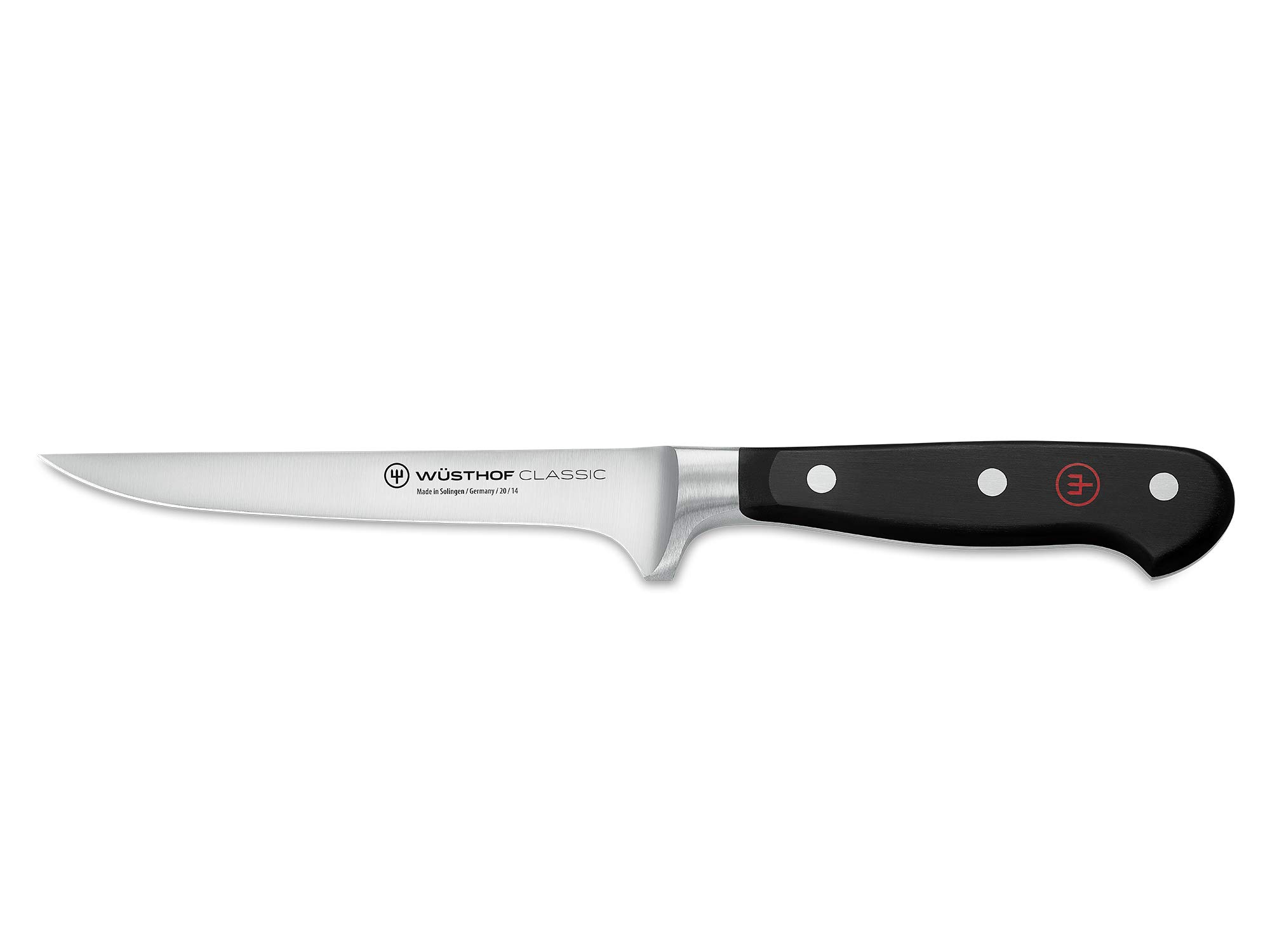
WÜSTHOF’s Classic 5-inch Boning Knife represents the German forged tradition at its most practical. Forged from a single block of high-carbon stainless steel, the full-tang construction provides a balanced weight that settles naturally into a pinch grip. The blade is stiff enough to push through dense muscle yet narrow enough to trace around ackee joints.
The triple-riveted handle offers a stable grip, though the polished synthetic material is less aggressively textured than competitors like the Mercer Genesis. The 5-inch length is slightly shorter than average, which improves control for intricate work such as deboning a leg of lamb or trimming a beef tenderloin. WÜSTHOF’s Precision Edge Technology maintains a consistent angle along the entire cutting surface.
Made in Solingen, Germany, this knife carries a reputation for longevity. The high-carbon stainless steel resists staining and corrosion when wiped down after use. It is a premium investment for the cook who wants a single boning blade that will outlast a decade of weekly meal prep.
Why it’s great
- Precision forged full tang for perfect balance
- High-carbon stainless resists rust
- Consistent edge angle from factory
Good to know
- Handle can feel slippery when wet
- Shorter length limits use on large roasts
3. Mercer Culinary Genesis 6″ Flexible Boning Knife

The Mercer Culinary Genesis 6-inch Flexible Boning Knife punches well above its position in the lineup. Precision-forged with high-carbon German steel, the taper-ground edge delivers a balance of sharpness and durability that handles daily butchering without frequent steeling. The Santoprene handle is textured and ergonomically contoured, providing one of the best wet-grip experiences in this price bracket.
Flexibility is the key differentiator here. The blade bends just enough to follow the contours of a bone cavity, making it ideal for deboning chicken thighs or filleting fish. It is less stiff than the German traditionals, so it won’t excel at heavy breaking tasks, but for precision removal of fat and sinew, it outperforms many more expensive options.
Mercer designed this knife for professional kitchens, meaning it is built to withstand repeated sharpening and daily abuse. The full tang and triple-rivet construction keep the blade stable in the handle. For the home cook looking to upgrade from a stamped blade, the Genesis represents a significant leap in performance without the premium price tag.
Why it’s great
- Excellent non-slip Santoprene handle
- Taper-ground edge stays sharp longer
- Good flexibility for boning and filleting
Good to know
- Not ideal for heavy breaking tasks
- Hand wash recommended to preserve edge
4. Sunnecko 8″ Chef Knife

The Sunnecko 8-inch Chef Knife is a versatile workhorse for cooks who want one blade to handle raw meat, vegetables, and fruit prep. Hand-sharpened to a 12-15 degree angle per side, this blade cuts with aggression that rivals more expensive Japanese gyutos. The high-carbon stainless steel core provides a hardness around 60 HRC, holding its edge through a full week of meal prep.
The Pakkawood handle is both elegant and functional. Its ergonomic contour fills the hand naturally, and the steel bolster adds forward balance that supports a pinch grip. The included PVC sheath protects the edge during storage, a thoughtful addition for cooks who travel with their knives. The laser-etched pattern on the blade reduces food adhesion.
This knife excels at slicing raw meat against the grain for steaks and stir-fry strips. The 8-inch length provides enough reach for large roasts while maintaining maneuverability. It is not specialized for boning work, but as a primary meat-slicing tool, it offers outstanding performance for its bracket.
Why it’s great
- Ultra-sharp 12-15° edge glides through meat
- Comfortable Pakkawood handle reduces fatigue
- Includes sheath for safe storage
Good to know
- Not designed for deboning or bone contact
- Hand wash only to protect wood handle
5. Mercer BPX Breaking Butcher Knife 8″

The Mercer BPX 8-inch Breaking Butcher Knife is purpose-built for splitting, stripping, and cutting large cuts of raw meat. The high-carbon German steel blade is precision-forged and ice-hardened for increased strength, making it capable of handling primal cuts and heavy trimming sessions. The mirror-polished finish allows meat to release cleanly without dragging.
The textured glass-reinforced nylon handle provides a secure grip even in greasy conditions. It is contoured to reduce hand fatigue during long breaking sessions. Unlike a boning knife, this blade is stiff and substantial, designed to push through thick muscle and separate large sections of a carcass.
This knife is best suited for cooks who regularly break down whole birds, large roasts, or primal cuts into portion-sized pieces. It is less effective for delicate boning work near joints. The edge is durable but will need honing after heavy use. Mercer recommends hand washing to preserve the mirror finish.
Why it’s great
- Ice-hardened German steel for strength
- Mirror finish reduces meat drag
- Comfortable textured non-slip handle
Good to know
- Too stiff for fine boning work
- Not dishwasher safe
6. Victorinox Fibrox 5″ Boning Knife

The Victorinox Fibrox 5-inch Boning Knife is the default recommendation for cooks who need a reliable blade without a large investment. The extra-narrow blade is designed for detailed trimming and maneuvering around bones. Swiss-made from stamped stainless steel, it arrives sharp and holds a serviceable edge for routine home use.
The Fibrox handle is the standout feature. The textured thermoplastic rubber provides a secure grip that does not become slick when wet, and the ergonomic shape fits most hand sizes comfortably. Victorinox claims dishwasher safety, but hand washing will prolong the edge life. The 5-inch length is ideal for chicken, fish, and small roasts.
This is not a knife for heavy breaking or hard chopping. The stamped construction is lighter and less durable than forged alternatives. However, for the cook who debones a few chickens per week and wants a sharp, safe tool that does not require careful maintenance, the Fibrox delivers exceptional value.
Why it’s great
- Outstanding non-slip Fibrox handle
- Lightweight and easy to maneuver
- Dishwasher safe for easy cleaning
Good to know
- Stamped blade dulls faster than forged
- Narrow blade limits heavy tasks
7. ROCOCO Meat Cleaver Knife
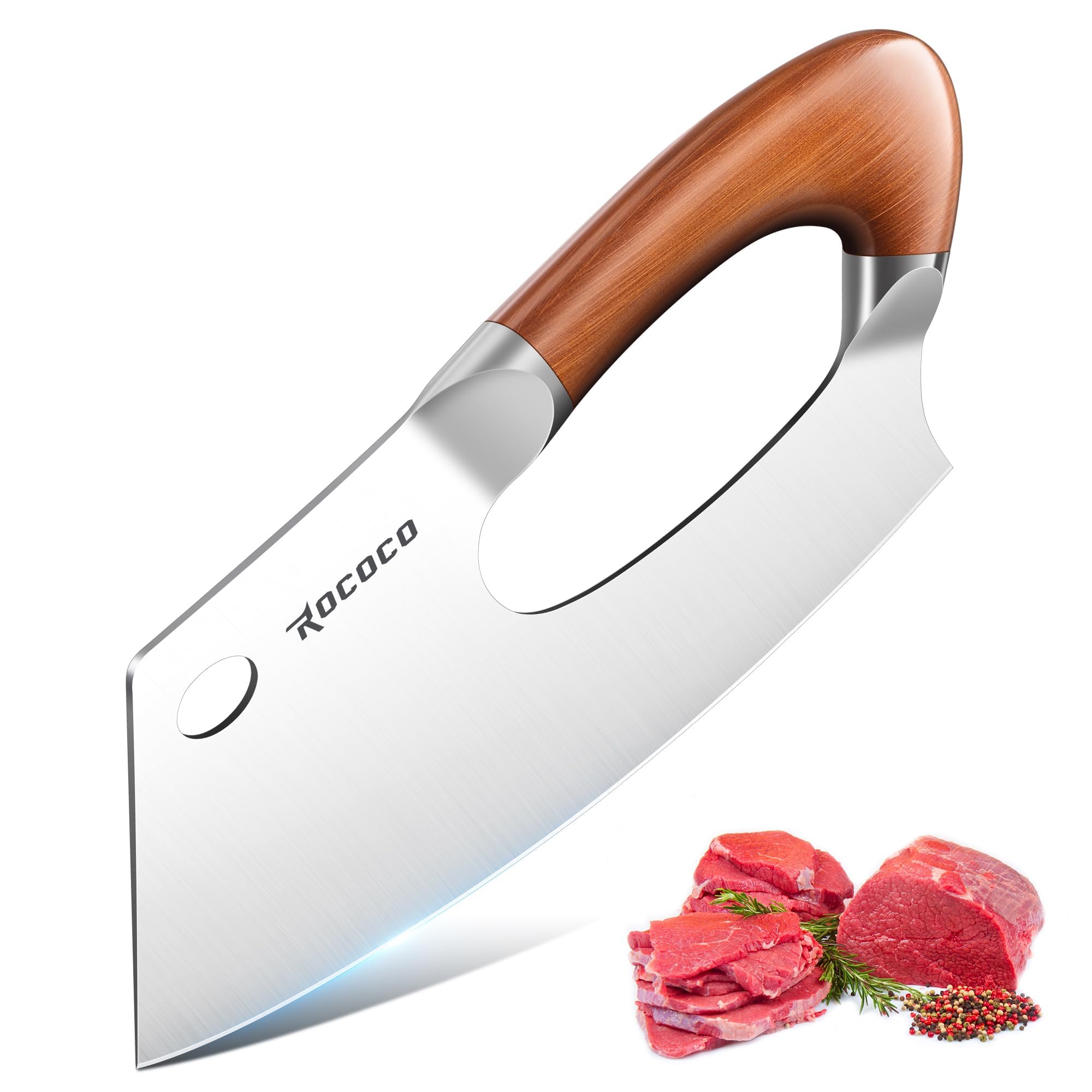
The ROCOCO Meat Cleaver Knife takes a unique approach to raw meat cutting with its curved cleaver profile and labor-saving bronze handle. The hand-polished 15° V-shaped edge minimizes cutting resistance, allowing the knife to glide through boneless meat without crushing the fibers. The stainless steel blade is heat-treated to a hardness of 60±2 HRC, offering good edge retention.
The upcurved handle shifts the grip forward, shortening the force distance for better power transmission. The ergonomic oval shape is seamless with the blade, providing a balanced feel that reduces wrist fatigue during prolonged prep. The bronze finish adds visual distinction, though the blade itself is silver stainless steel.
ROCOCO specifies this knife is not intended for bone contact. It is best suited for slicing, dicing, and mincing boneless meat, vegetables, and fruit. The handle design is non-traditional and may take getting used to for cooks accustomed to standard chef knife ergonomics. Hand washing is required to maintain the blade and handle.
Why it’s great
- High 60±2 HRC hardness for edge retention
- Ergonomic handle reduces strain
- Unique cleaver shape for smooth slicing
Good to know
- Cannot be used on bones
- Handle shape may feel unusual initially
FAQ
What is the best blade shape for cutting raw meat?
Should I buy a flexible or stiff boning knife?
How often should I sharpen a raw meat knife?
Can I use the same knife for raw meat and vegetables?
Final Thoughts: The Verdict
For most users, the knife to cut raw meat winner is the Mercer Culinary Genesis 6″ Flexible Boning Knife because it combines professional-grade forged construction, an exceptional non-slip handle, and the right flexibility for both poultry and red meat at a fair price. If you want the unmatched edge retention of Japanese steel, grab the Shun Classic 6″ Boning Knife. And for the cook who needs one blade to break down primals and slice steaks, nothing beats the Mercer BPX Breaking Butcher Knife 8″.