The search for a winter jacket that doesn’t feel like a sleeping bag is the central conflict of cold-weather dressing. You need genuine warmth without the bulk that turns a commute into a waddle, and that demands a precise balance of shell fabric, insulation type, and fill weight.
I’m Emma — the founder and writer behind Baby Bangs. I’ve spent years analyzing insulation R-values, denier shell fabrics, and packability ratios so you don’t end up shivering under a puffy that was never intended for real winter air.
Whether you’re navigating a city commute or hitting a trail, the right lightweight jacket for winter needs to lock in heat while stowing into a bag the size of a football, a balance most brands completely miss.
How To Choose The Best Lightweight Jacket For Winter
Most people grab the first puffy they see on a rack, but a true winter-weight lightweight jacket is a carefully engineered system. You need to evaluate three pillars: insulation type, weather protection, and packability.
Down vs. Synthetic: Which Retains Heat When Wet?
Down offers the highest warmth-per-gram, but loses almost all insulating value when damp. Synthetic fibers like Thermoball, Heatsseeker, or PrimaLoft continue trapping air pockets even when soaked. For wet winter climates, synthetic is the safer bet; for dry cold, down wins on compressibility.
Weather Resistance: The Shell Fabric and DWR
A lightweight jacket’s outer fabric is typically a 10D to 20D ripstop nylon or polyester. Lower denier numbers pack smaller but tear easier. Look for a non-PFC DWR finish — it beads water off the face fabric, preventing the insulation from wetting out during light snow or drizzle.
Fit and Features That Prevent Heat Loss
A winter jacket must seal warmth in. Check for internal draft flaps behind the zipper, stretch binding on cuffs and collar, and a drop-tail hem. An attached hood with a cinch cord adds ounces but eliminates the single biggest heat leak — an unprotected neck.
Quick Comparison
On smaller screens, swipe sideways to see the full table.
| Model | Category | Best For | Key Spec | Amazon |
|---|---|---|---|---|
| Arc’teryx Cerium Hoody | Down Insulated | Climbing & Alpine Use | 850-fill goose down | Amazon |
| Mountain Hardwear Ghost Whisperer/2 | Down Insulated | Ultralight Backpacking | 800-fill down, 10D shell | Amazon |
| Rab Electron Pro 800-Fill | Down Insulated | Mountaineering & Cold Climates | 800-fill down, Pertex shell | Amazon |
| The North Face Aconcagua 3 Hooded | Synthetic Insulated | Everyday City Winter | 600-fill down, 100g insulation | Amazon |
| Columbia Powder Lite II Jacket | Synthetic Insulated | Budget Winter Commute | Thermarator synthetic insulation | Amazon |
| Eddie Bauer Cirruslite Down Parka II | Down Insulated | Women’s Daily Warmth | 650-fill down, storm flap | Amazon |
| Columbia Voodoo Falls 590 Turbodown | Down Blend | Mid-Layer or Mild Winter | 590-fill down, water resistant | Amazon |
| Orolay Lightweight Packable Down | Down Insulated | Budget Packable Puffer | Stand collar, quilted nylon | Amazon |
| The North Face Junction Insulated | Synthetic Insulated | Value Sustainable Warmth | 100g Heatsseeker, recycled shell | Amazon |
In‑Depth Reviews
1. Arc’teryx Cerium Hoody, Men’s Down Jacket
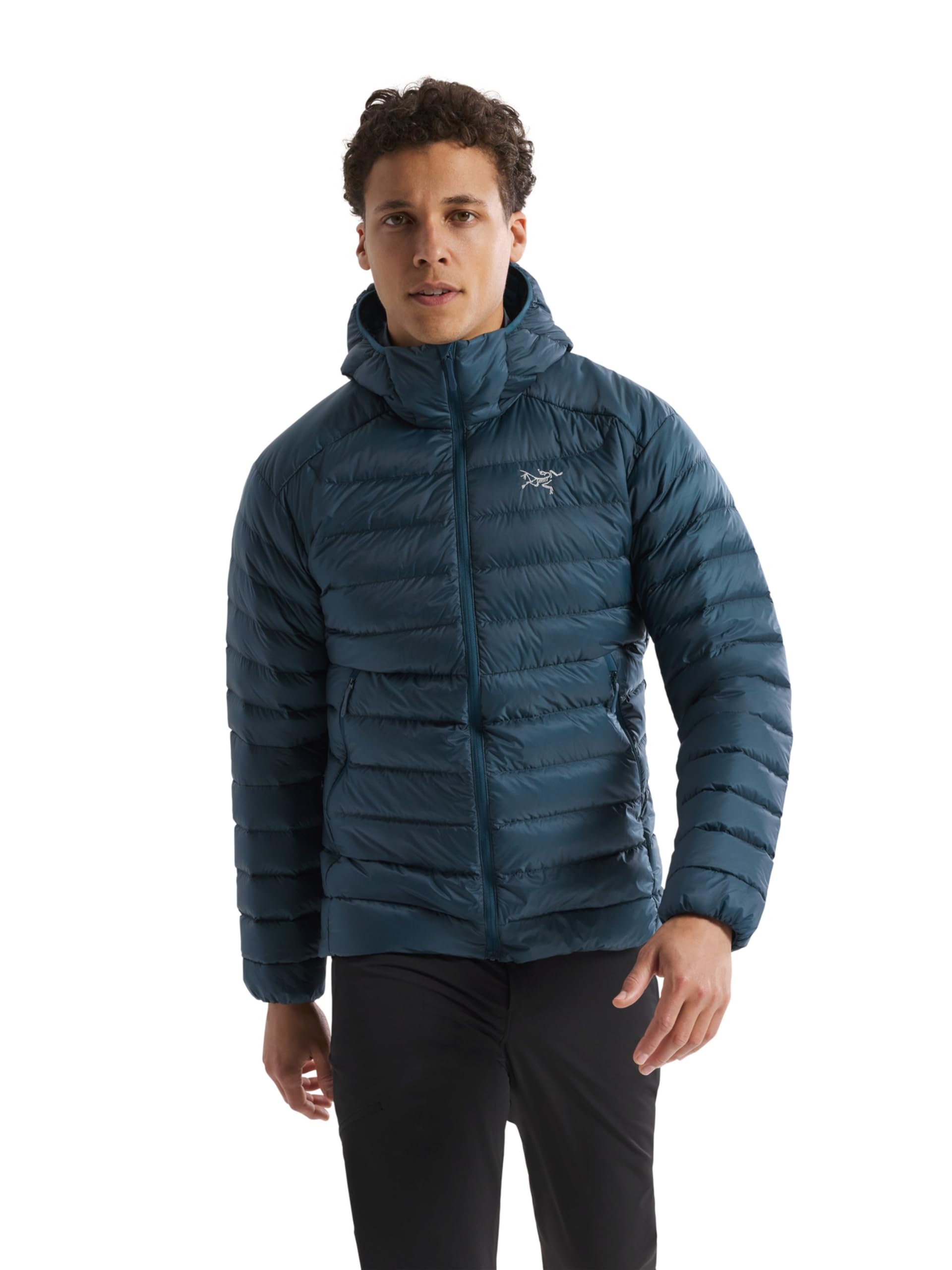
The Arc’teryx Cerium Hoody represents the pinnacle of lightweight winter insulation. Packed with 850-fill goose down, it offers an extraordinary warmth-to-weight ratio that packs down to nearly nothing, making it the ideal piece for alpine missions where every gram counts.
The outer shell uses an Arato 10D nylon ripstop that’s remarkably light yet durable for its denier, while a DWR treatment handles light moisture. The down is treated to resist damp, and Coreloft synthetic insulation is strategically placed in the cuffs and underarms where sweat accumulates.
Fit is trim and athletic — this is not a baggy shell. The insulated hood fits under a helmet, and the hem cinch seals warmth effectively. For climbers, backpackers, or anyone facing serious cold in a packable form, this is the gold standard.
Why it’s great
- 850-fill down delivers unmatched warmth per gram
- Packs into its own pocket for easy stowage
- Synthetic insulation in high-moisture zones
Good to know
- Premium price reflects the top-tier materials
- Trim fit may be too snug for layering over thick fleece
2. Mountain Hardwear Men’s Ghost Whisperer/2 Jacket

The Mountain Hardwear Ghost Whisperer/2 is the benchmark for ultralight packability, tipping the scales at well under 10 ounces for most sizes. It uses 800-fill RDS-certified goose down, which compresses smaller than any synthetic ever could, making it a non-negotiable piece for fast-and-light backpackers.
The 10D x 10D ripstop nylon face fabric is whisper-thin, which saves weight but means you need to be cautious around sharp objects. The jacket uses a micro-stitch baffle construction that prevents down migration without adding bulk or weight.
It’s best used as an active mid-layer under a hardshell when temps drop below freezing, or as a standalone piece for brisk fall days. A zippered chest pocket doubles as a stuff sack. This is not a belay parka — it’s a precision tool for weight-obsessed users.
Why it’s great
- Extremely low weight for an 800-fill down jacket
- Packs down to a small fist-sized bundle
- RDS-certified ethical down
Good to know
- Thin shell fabric is prone to tearing on rough surfaces
- Not insulated for static use in deep winter
3. Rab Men’s Electron Pro 800-Fill Down Hooded Jacket
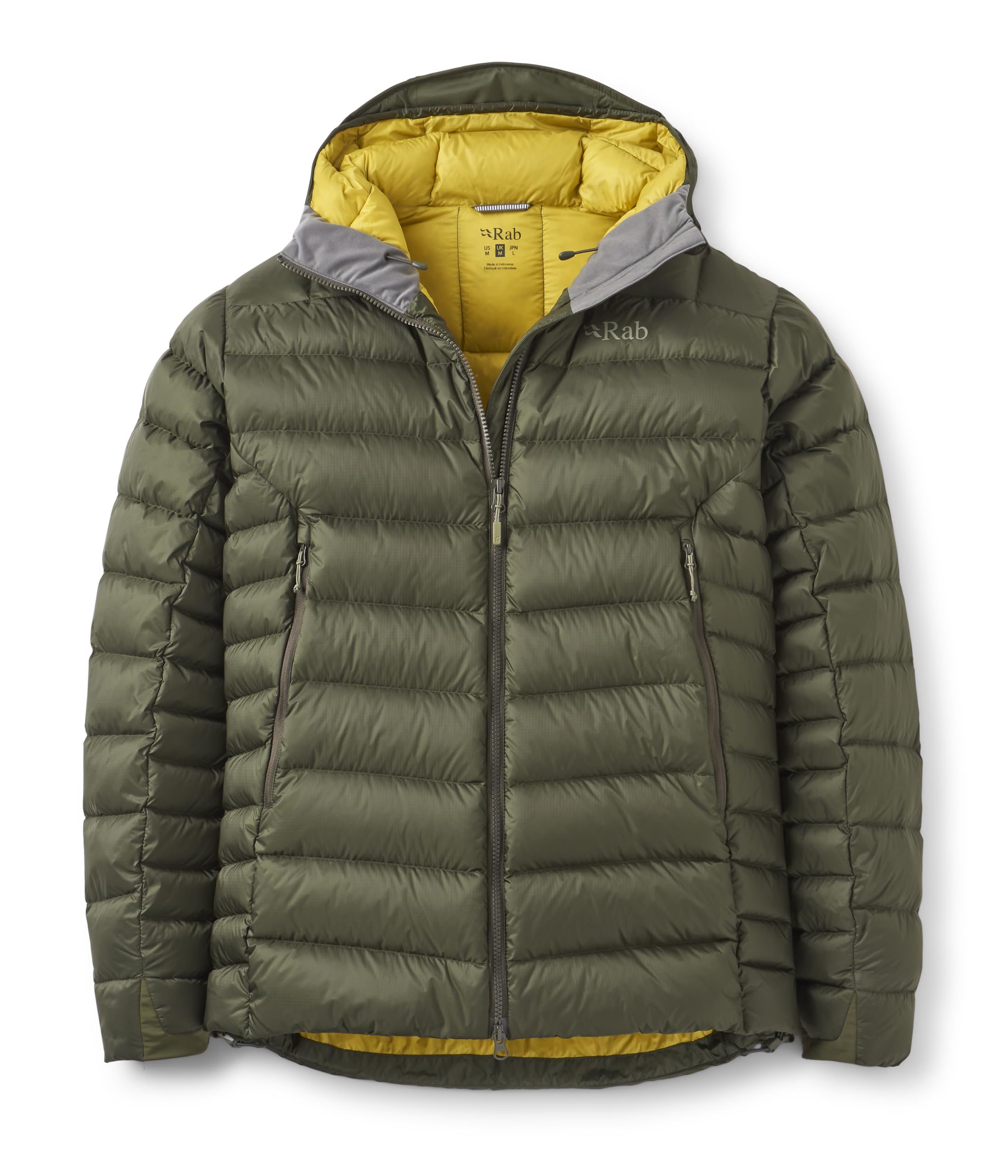
The Rab Electron Pro is built for climbers and mountaineers who need a warm layer that can handle high-exertion stops in sub-freezing conditions. With 800-fill European goose down housed in a robust Pertex Quantum Pro shell, it offers better weather resistance than most ultralight jackets without a significant weight penalty.
The box-wall baffle construction minimizes cold spots and maximizes loft, while the helmet-compatible hood with a stiffened peak sheds snow effectively. A two-way YKK zipper bentone allows a harness or climbing belt to be worn underneath.
It’s roomier through the chest and shoulders than the Arc’teryx Cerium, making it a better choice for static belays where you need to layer over a thick base and mid-layer. The 1.16-pound weight is noticeable compared to the Ghost Whisperer but feels justified by the warmth and durability.
Why it’s great
- Pertex Quantum Pro shell resists light snow and wind
- Box-wall baffles prevent down shifting
- Helmet-compatible hood with wired peak
Good to know
- Heavier than pure ultralight competitors
- Fit is generous, not trim
4. The North Face Men’s Aconcagua 3 Hooded Jacket
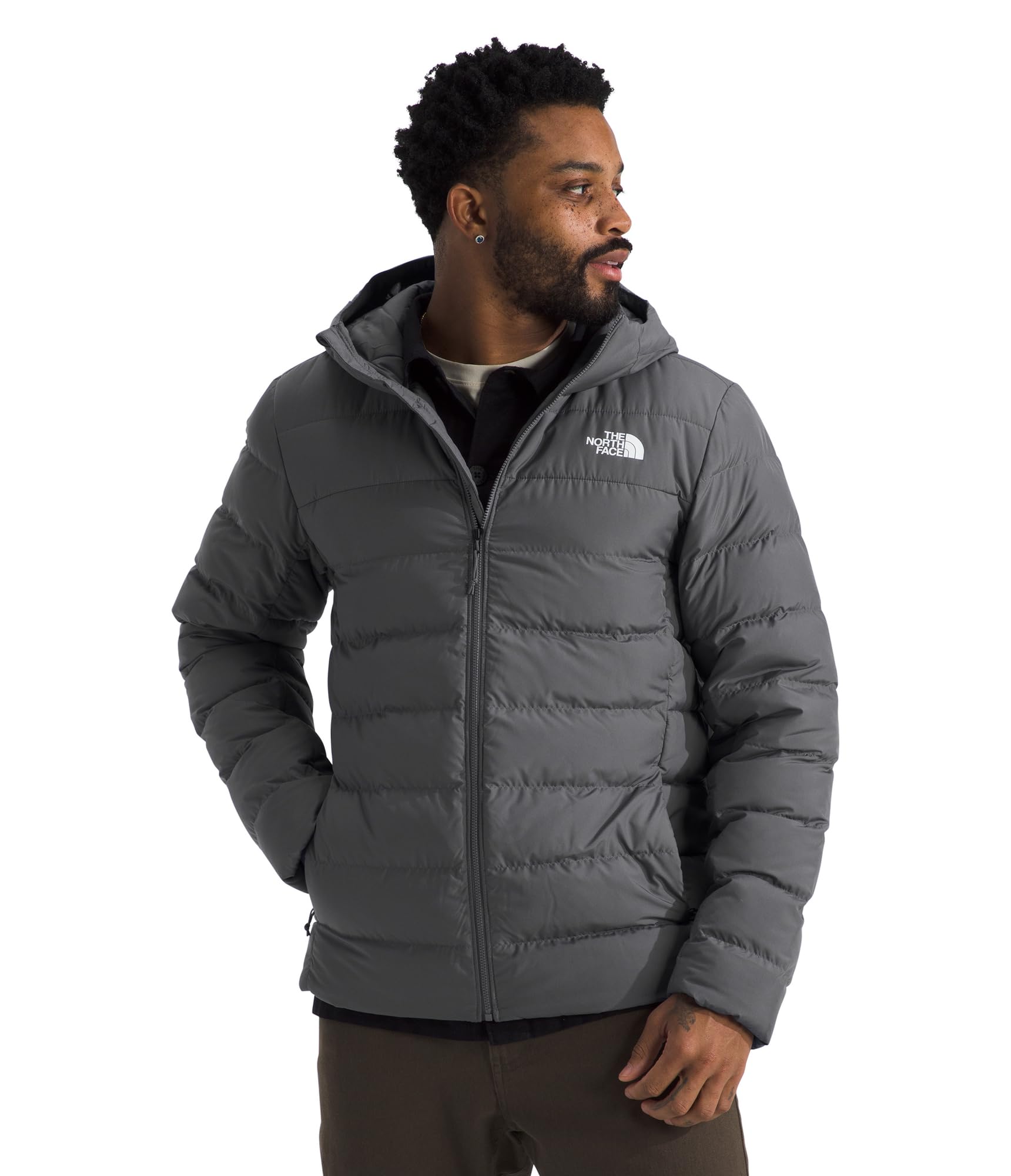
The North Face Aconcagua 3 is a hybrid design that blends 600-fill down with 100g Heatseeker synthetic insulation in the hood and underarms. This combination offers a good balance of packability for a daily winter jacket, with synthetic backup in moisture-prone zones.
The shell uses a recycled polyester ripstop with a non-PFC DWR finish, making it a more sustainable choice without sacrificing water beading. The attached three-piece hood with a cinch cord fits comfortably over a beanie and seals out drafts.
This jacket lives comfortably in the city-to-mountain crossover zone — warm enough for a commuter train yet compressible enough for a day pack. The zippered hand pockets are fleece-lined, which is a nice touch for cold hands. It’s not meant for high alpine belays, but it handles 95% of winter needs.
Why it’s great
- Hybrid down/synthetic design for wet conditions
- Recycled shell with non-PFC DWR
- Three-piece hood with cinch cord
Good to know
- 600-fill down packs larger than 800-fill
- Not as warm for static use below 20°F
5. Columbia Men’s Powder Lite II Jacket
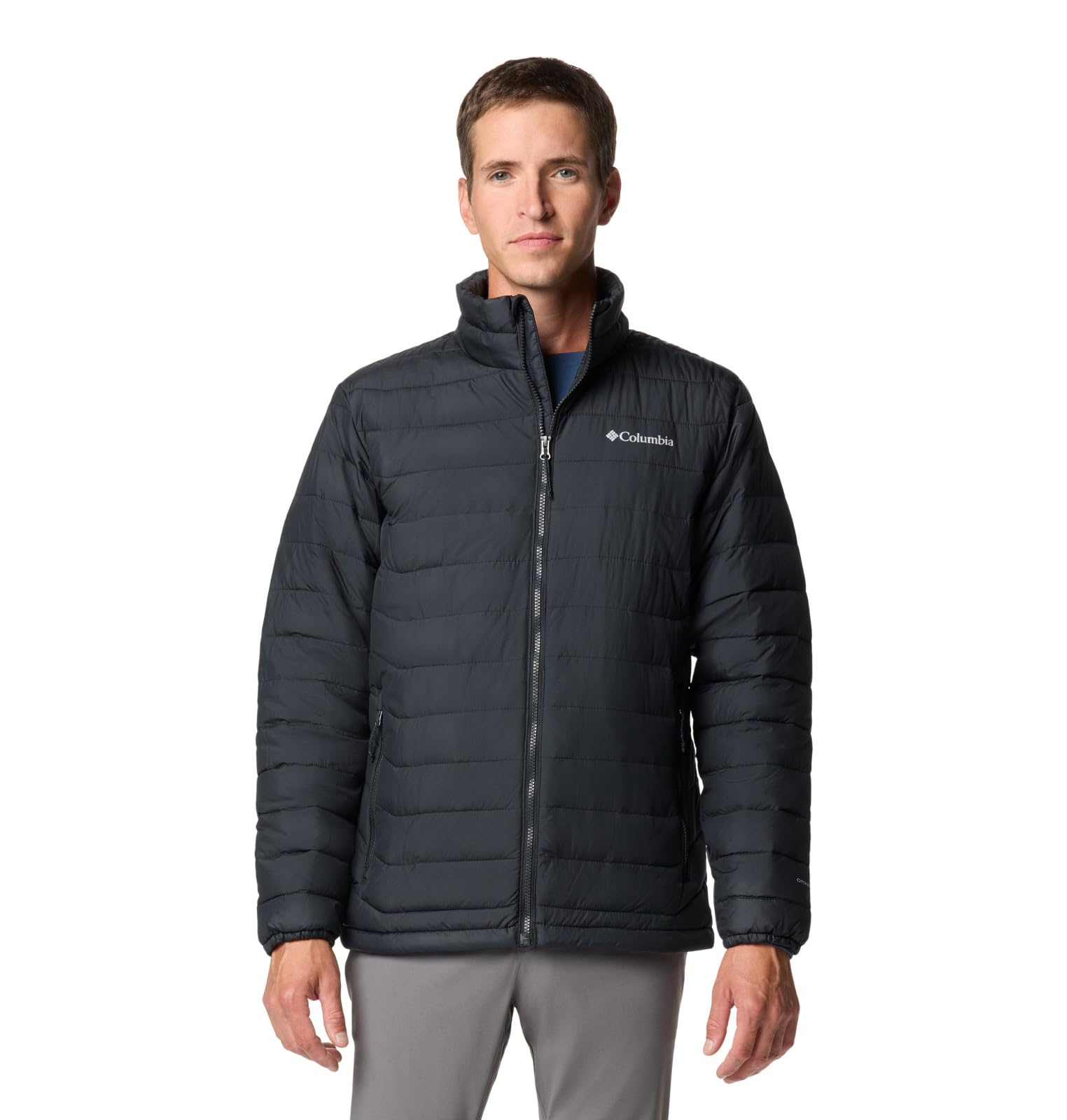
The Columbia Powder Lite II Jacket is a proven budget-friendly synthetic option that has been a staple for years. It uses Columbia’s Thermarator synthetic insulation along with an Omni-Heat reflective lining, which bounces body heat back to you instead of letting it escape through the fabric.
The shell is a water-resistant polyester that handles light snow and drizzle, and it features a zippered chin guard that prevents the top zipper from contacting your face. The drawcord hem adjusts to seal in warmth, and the zip hand pockets include a media port for earphone cords.
It’s not the most compressible jacket on this list – synthetic insulation bulks up quickly – but it’s a reliable cold-weather companion that won’t break the bank. For a daily driver through a wet winter, the synthetic insulation outperforms cheaper down options when damp.
Why it’s great
- Thermarator synthetic insulation stays warm when wet
- Omni-Heat reflective lining boosts warmth
- Affordable, reliable daily winter coat
Good to know
- Not very packable for its warmth level
- Fit runs slightly boxy
6. Eddie Bauer Women’s Cirruslite Down Parka II
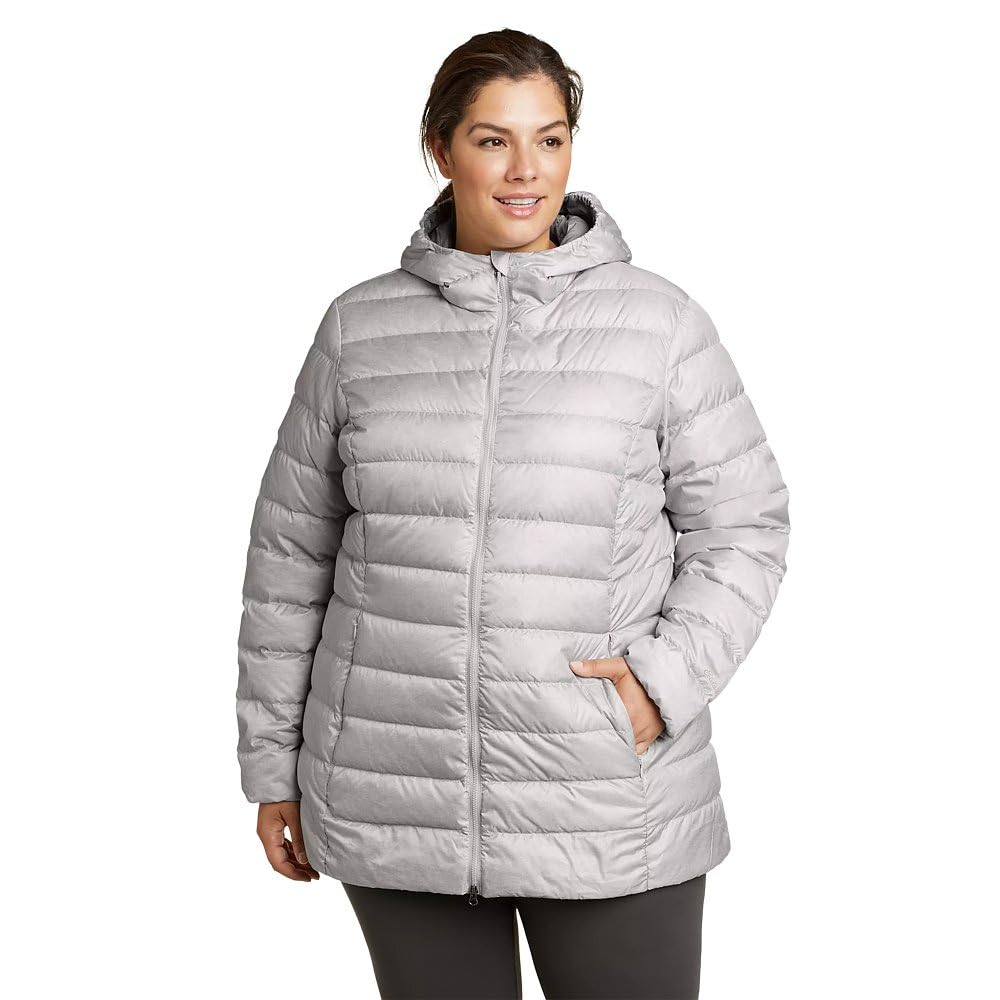
The Eddie Bauer Cirruslite Down Parka II delivers a longer silhouette that covers the hips — a detail that matters for women who find standard jackets ride up in cold weather. It’s stuffed with 650-fill down, which is respectable for everyday warmth and keeps the overall weight manageable.
Key design features include a storm flap behind the front zipper, which acts as a wind barrier, and an adjustable waist for a customized fit. The down is treated with a water-repellent finish, which adds some resilience against light snow.
It compresses into its own zippered hand-warmer pocket, making it reasonably packable for a parka. This is a solid choice if you want a style-forward winter coat that still performs in the 20-30°F range without feeling like a floppy anorak.
Why it’s great
- Longer parka cut covers hips and lower back
- Water-repellent down plus storm flap
- Packs into its own pocket
Good to know
- 650-fill is less warm per gram than higher fills
- Not ideal for wet conditions despite DWR
7. The North Face Women’s Junction Insulated Jacket
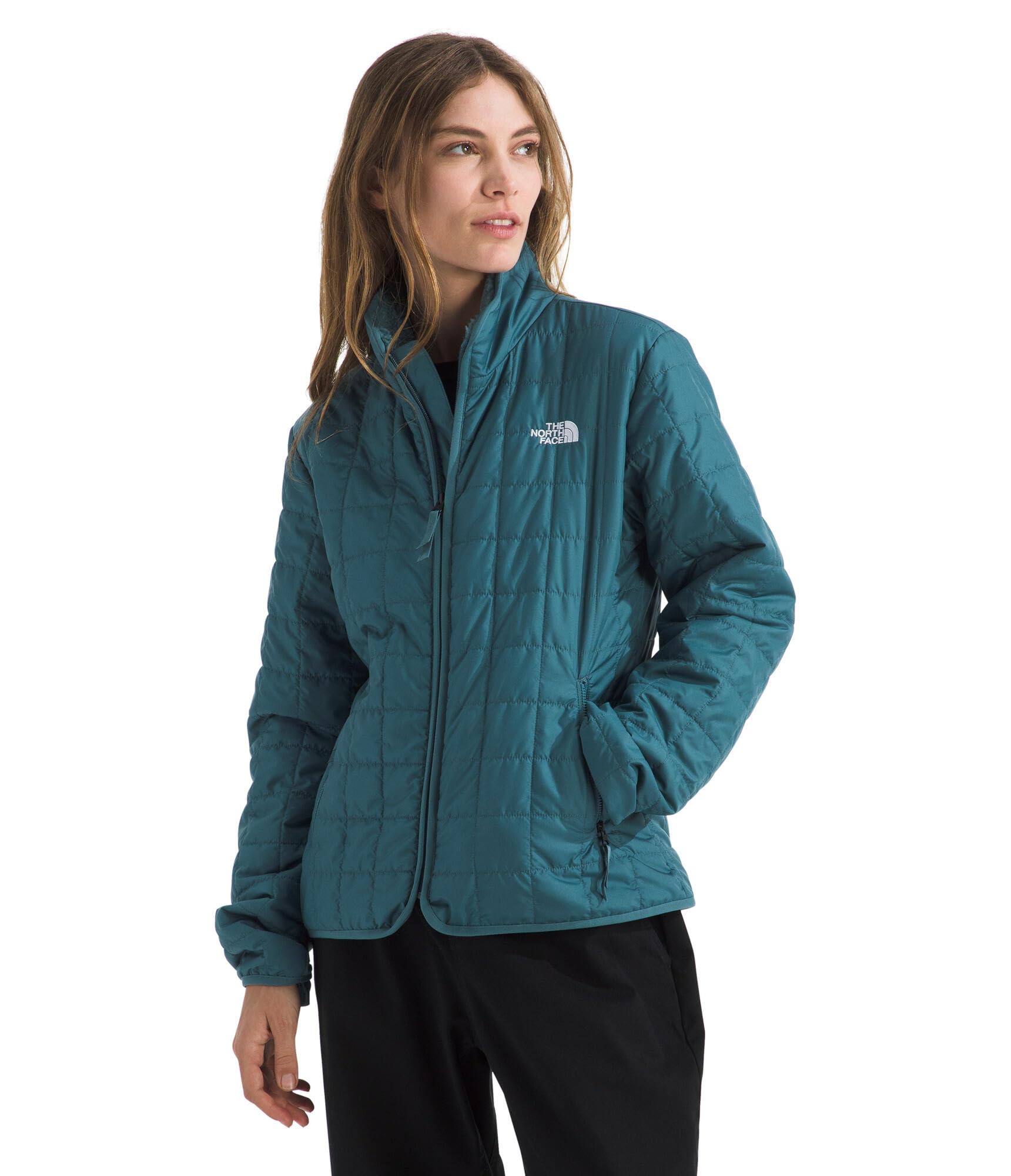
The North Face Women’s Junction Insulated Jacket is built around 100g of Heatsseeker Eco synthetic insulation made from post-consumer recycled polyester. That weight of insulation is substantial for a lightweight jacket, trapping a lot of air while compressing reasonably well.
The fabric is a 100% recycled polyester plain weave with a non-PFC DWR finish, which beads water effectively without the environmental baggage of traditional chemical finishes. An internal draft flap behind the exposed front zipper provides an extra layer against wind.
It includes secure-zip hand pockets, stretch binding on the collar and cuffs, and an internal locker loop at the back of the neckline. For those prioritizing sustainability without sacrificing performance, this jacket hits a sweet spot — and the 100g insulation makes it viable for true winter conditions.
Why it’s great
- 100g Heatsseeker synthetic insulation is genuinely warm
- Recycled polyester shell with non-PFC DWR
- Internal draft flap blocks wind
Good to know
- Not as packable as down alternatives
- Fit is regular, not athletic
8. Columbia Women’s Voodoo Falls 590 Turbodown II Jacket
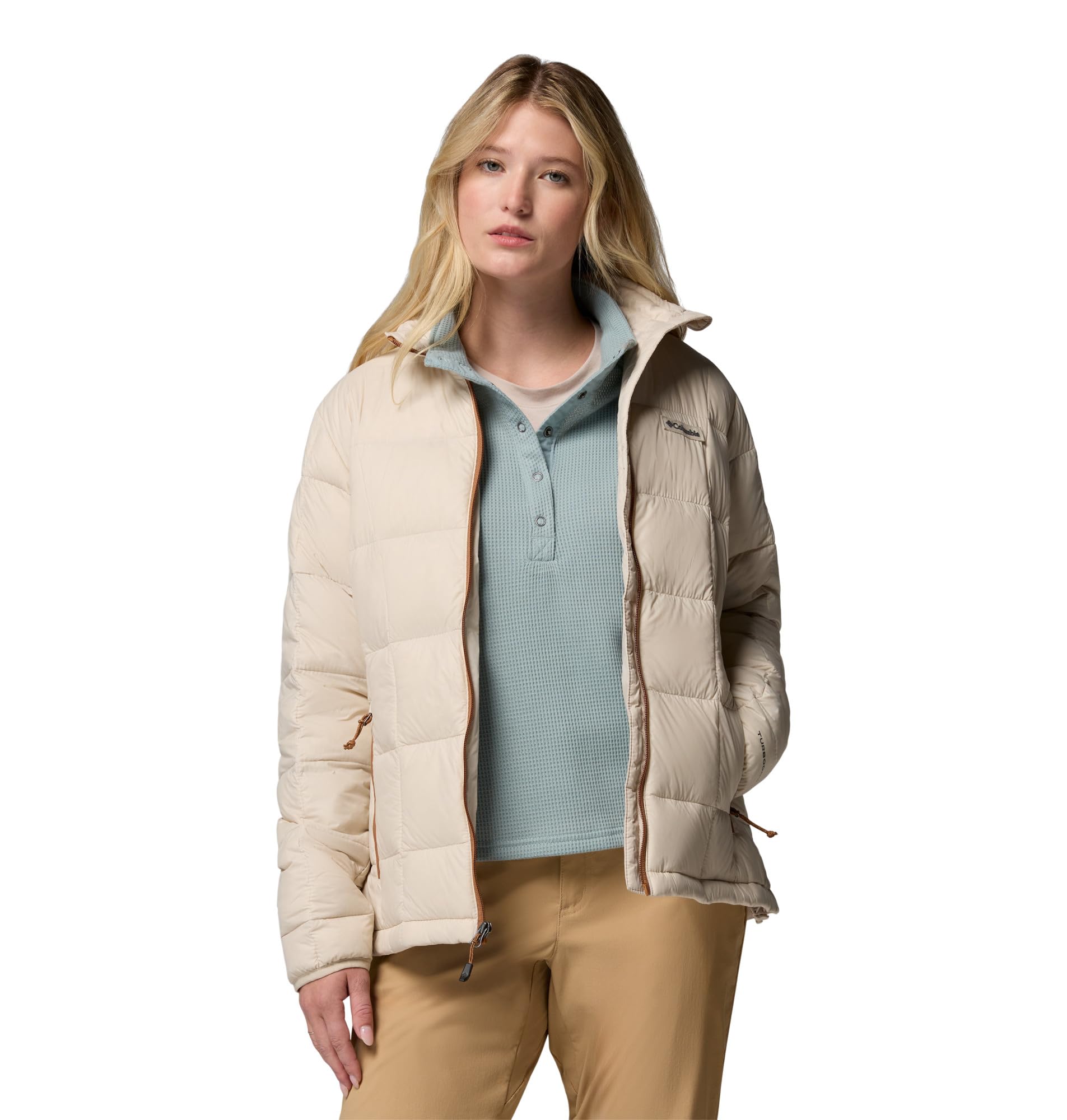
The Columbia Voodoo Falls 590 Turbodown II Jacket offers a down fill at an accessible price point. The 590-fill power is on the lower end for down, meaning it needs more lofting material to achieve similar warmth to a higher-fill jacket, but it still outperforms budget synthetics in compressibility.
The shell includes a water-resistant finish that handles light snow, and the quilted stitching keeps the down evenly distributed. It has a zippered chest pocket and hand pockets, plus a drop-tail hem for extra back coverage.
Where this jacket shines is as an insulating mid-layer under a waterproof shell. On its own, it’s comfortable in mild winter temps (around freezing), but it lacks the fill density for serious cold. It’s a budget-friendly entry point into down without the premium packability of higher-fill models.
Why it’s great
- Affordable down jacket option
- Good compressibility for the price
- Drop-tail hem adds coverage
Good to know
- 590-fill down requires more jacket to stay warm
- Not as packable as higher-fill models
9. Orolay Women’s Lightweight Packable Down Jacket Quilted Puffer Coat

The Orolay Lightweight Packable Down Jacket is an entry-level puffer that prioritizes affordability over advanced spec sheets. It features a quilted nylon shell with a stand collar that provides some neck protection, and it packs into a small stuff sack for travel.
The down fill is not explicitly rated by fill power, so warmth is harder to quantify, but user reports suggest it handles temperatures around freezing when active. The regular fit allows easy layering over a sweater or fleece.
For the price, this is a functional piece for mild winter days or as a backup jacket in a travel bag. It won’t match the warmth or packability of premium down jackets, but it offers decent performance for someone dipping their toes into lightweight winter gear.
Why it’s great
- Very budget-friendly down puffer
- Packs into included stuff sack
- Stand collar blocks light wind
Good to know
- Unrated down fill — warmth is a question mark
- Not durable enough for heavy use
FAQ
What fill power should I look for in a lightweight winter jacket?
Is synthetic insulation as warm as down for winter?
Can I wear a lightweight down jacket as my only winter coat?
Final Thoughts: The Verdict
For most users, the lightweight jacket for winter winner is the Arc’teryx Cerium Hoody because it single-handedly solves the warmth-versus-bulk equation for everything from alpine missions to city commutes. If you want an ultralight packable option that disappears into a day bag, grab the Mountain Hardwear Ghost Whisperer/2. And for a budget-friendly synthetic that handles wet winter days, nothing beats the The North Face Junction Insulated Jacket.