You clock in ready to move, but ten minutes on a wet floor leaves your feet soaked and your shoes feeling like bricks. That’s the daily reality when work shoes prioritize waterproofing over weight — or worse, skip waterproofing altogether. The right pair stops puddles at the sole while letting you move swiftly through a shift.
I’m Emma — the founder and writer behind Baby Bangs. I’ve spent years breaking down work footwear specs, cross-referencing slip ratings, waterproof membranes, and insole densities to find the shoes that actually perform without slowing you down.
This guide focuses on construction, grip, and long-hour comfort so you can confidently pick the best lightweight waterproof work shoes for your daily route.
How To Choose The Best Lightweight Waterproof Work Shoes
The market is full of boots claiming waterproof and shoes claiming lightweight, but finding both in one package requires decoding the construction. Here are the four pillars that separate a soggy slog from a dry stride.
Waterproof Membrane Technology
Not all waterproofing feels the same. A non-breathable rubber layer keeps water out but turns your foot into a steam room. Membrane-based systems like Columbia OutDry or Toray use a hydrophilic layer that blocks liquid water while allowing vapor to escape. For lightweight work shoes, a bonded membrane inside a mesh upper typically shaves ounces compared to thick PVC or full-grain leather linings.
Weight and Cushioning Balance
A lightweight work shoe under 14 ounces per shoe reduces leg fatigue during walking-heavy shifts. But featherlight shoes often skimp on midsole foam density, sacrificing shock absorption on concrete or tile. Look for EVA or polyurethane midsoles with at least a 40-45 Shore C durometer — soft enough for comfort, firm enough to resist bottoming out by lunchtime.
Slip Resistance and Outsole Design
Wet work environments demand outsoles with deep, multi-directional lugs spaced to channel water away from the contact patch. ASTM F1677-96 Mark II ratings at or above 0.5 in the oily-wet test are the benchmark. Avoid shallow tread patterns with tight spacing — they hold water instead of displacing it.
Safety Toe Types and Weight Impact
Composite toes save 30-40% weight over steel while meeting ASTM F2413-18 impact standards. Many lightweight waterproof shoes now use a carbon-fiber or fiberglass composite cap. This keeps the shoe under 2 pounds per shoe while still protecting against falling objects. Steel is near-impenetrable but adds noticeable heft that compounds over a 10-hour shift.
Quick Comparison
On smaller screens, swipe sideways to see the full table.
| Model | Category | Best For | Key Spec | Amazon |
|---|---|---|---|---|
| Timberland PRO Titan EV | Premium | Maximum protection on heavy job sites | Composite toe, 4.21 lb per shoe | Amazon |
| Carhartt FA5016 Sneaker Boot | Premium | All-day standing on hard floors | Cushion midsole with rubber wrap | Amazon |
| Columbia Konos TRS Outdry | Premium | Traction on slick outdoor surfaces | OutDry membrane + Adapt Trax outsole | Amazon |
| Skechers Tanzier Rain Shoe | Mid-Range | Everyday rain protection with a sneaker feel | Seam-sealed waterproof membrane | Amazon |
| HEYDUDE Wally Work CT | Mid-Range | Lightest composite toe option | Composite toe, water-repellent upper | Amazon |
| Columbia Strata Trail Low | Mid-Range | Dry hiking-style commute on light work days | Omni-Tech waterproof, 10 oz per shoe | Amazon |
| Skechers Respected Swamper | Budget | Entry-level waterproof for light duty | Memory foam insole, rubber outsole | Amazon |
In‑Depth Reviews
1. Timberland PRO Titan EV 6 Inch Composite Safety Toe Waterproof
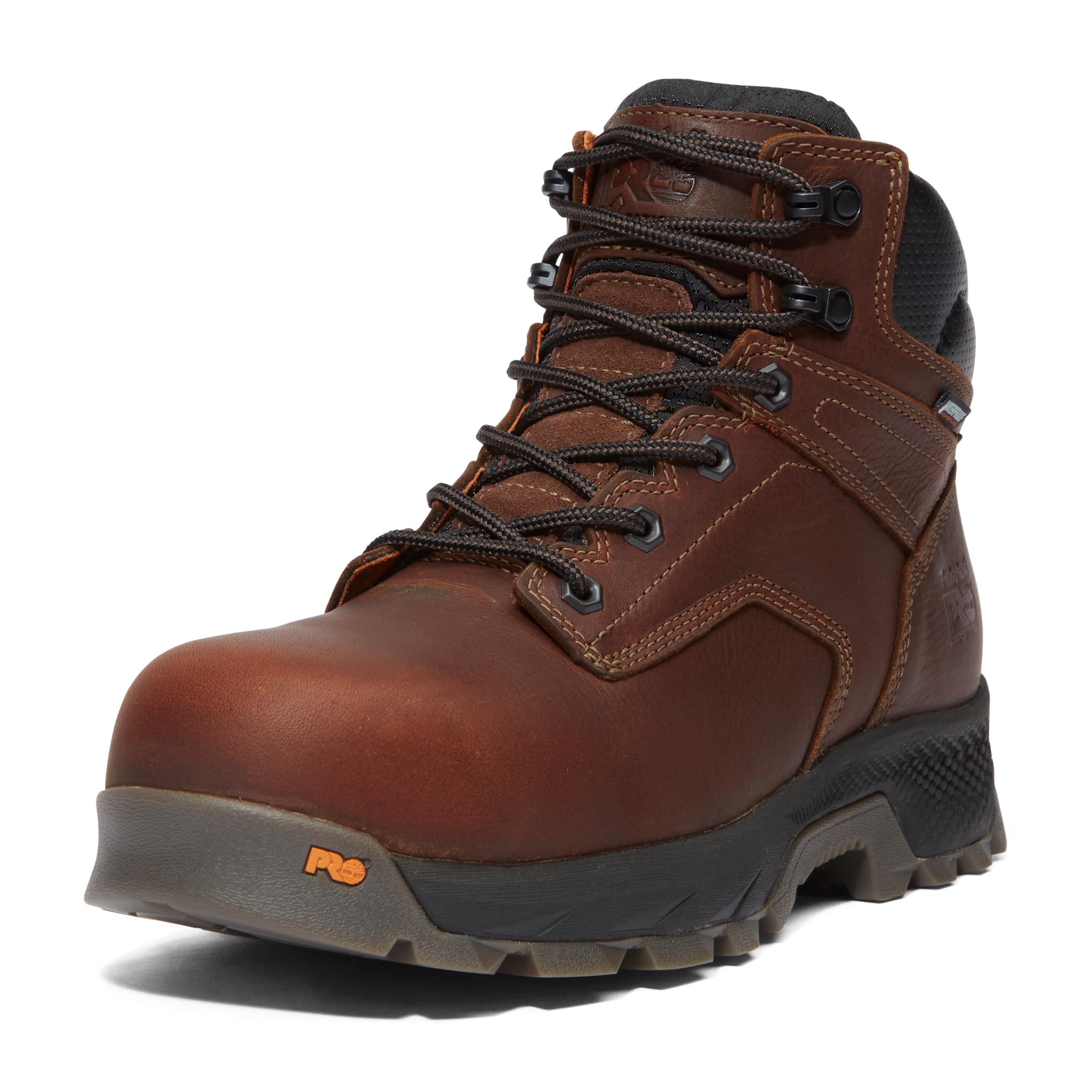
The Timberland PRO Titan EV sits at the premium end for a reason — it merges a composite safety toe that meets ASTM I/75 C/75 standards with a sealed waterproof construction that handles standing water without leaking. The 4.21-pound weight per shoe is heavier than typical sneaker-style options, but the trade-off buys you a puncture-resistant plate and an anti-fatigue technology midsole that returns energy on every step. This is a serious tool for construction, warehouse, or industrial environments where falling debris and wet concrete are daily realities.
The upper blends leather and abrasion-resistant mesh, giving it a longer lifespan than all-mesh competitors. The rubber outsole features deep self-cleaning lugs that bite into mud and gravel. On hard flooring, the heel cup and arch support keep your foot stable, though some users note the 6-inch collar requires a short break-in period before it loosens around the ankle.
Traction is consistent on oily metal surfaces and wet pavement, making it reliable even outside pure job-site contexts. The integrated composite toe adds noticeable stiffness across the toe box, which may take a few shifts to feel natural. If your day involves ladders, pallets, or pouring rain, the Titan EV justifies every ounce with protection and grip.
Why it’s great
- Composite toe meets ASTM impact standards while saving weight over steel
- Anti-fatigue midsole reduces leg ache on 10-hour shifts
- Puncture-resistant plate adds safety on debris-strewn sites
Good to know
- At 4.21 pounds per shoe, it’s heavier than low-cut waterproof sneakers
- Ankle collar feels stiff for the first few wears
2. Carhartt Footwear FA5016 Lightweight Sneaker Boot
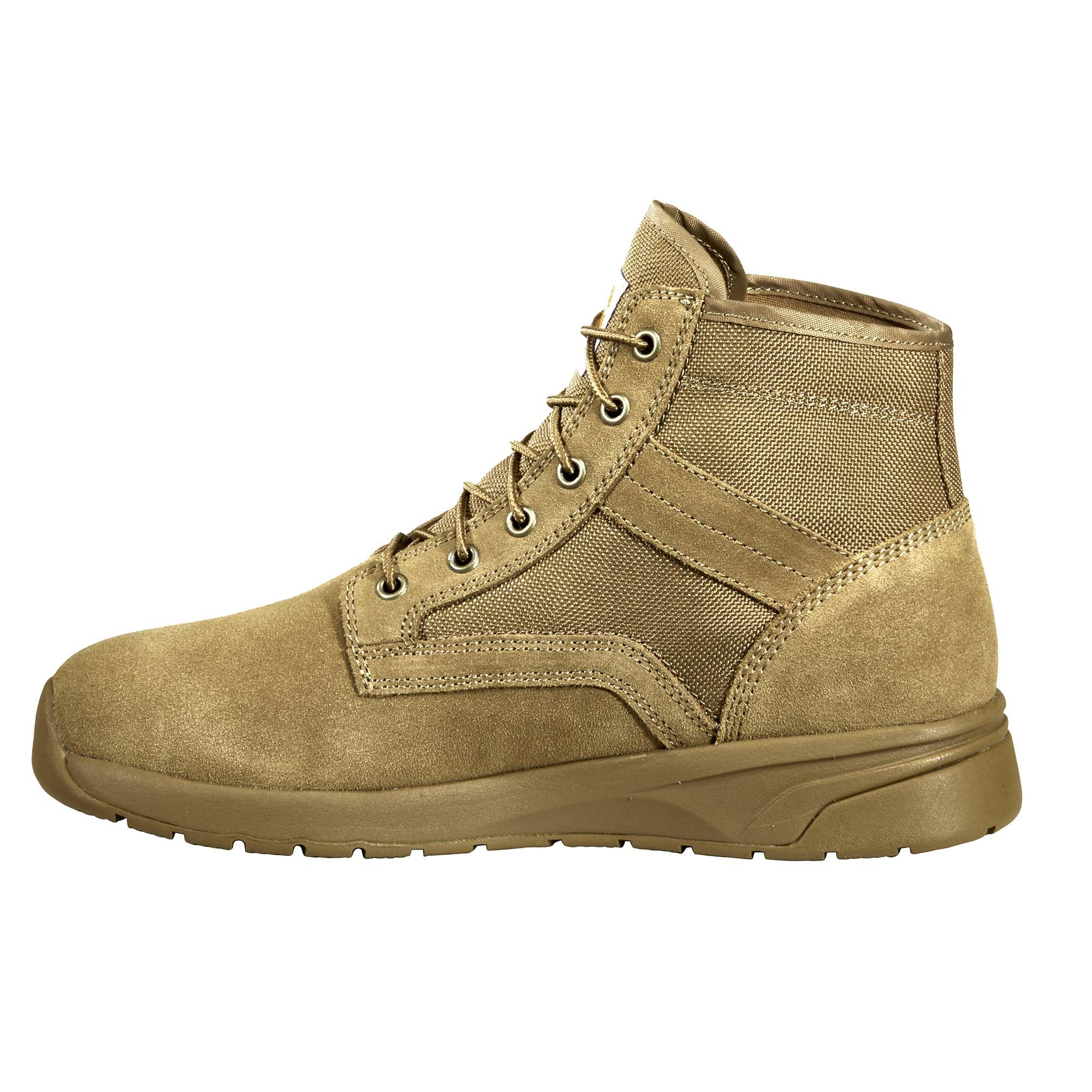
Carhartt built the FA5016 for workers who spend entire shifts on concrete or tile. The sneaker boot silhouette keeps weight low enough to feel like athletic footwear, while the rubber toe cap and heel overlay add durability where it matters most. The cushion midsole absorbs shock effectively, and the waterproof membrane stays reliable through repeated wet-floor exposure without making the shoe feel clammy.
The rubber outsole uses a lug pattern that channels water outward, reducing hydroplaning risk on slick kitchen or warehouse floors. The interior has a removable insole with decent arch support for flat-footed wearers. Break-in is minimal — the mesh-and-synthetic upper flexes naturally from the first wear. Some wearers note the toe box runs slightly narrow, so sizing up a half-size helps if you plan to wear thick socks.
It lacks a safety toe, so it won’t satisfy job sites requiring impact-rated footwear. But for electricians, maintenance techs, or retail leads who need dry feet and zero foot fatigue, this is a strong mid-premium choice. The all-black aesthetic also passes most uniform requirements without looking like a clunky boot.
Why it’s great
- Plush midsole reduces impact on hard indoor surfaces
- Quick break-in with flexible synthetic upper
- Waterproof membrane stays breathable in warm conditions
Good to know
- No safety toe or puncture-resistant plate
- Runs narrow in the toe area, consider sizing up
3. Columbia Women’s Konos TRS Outdry
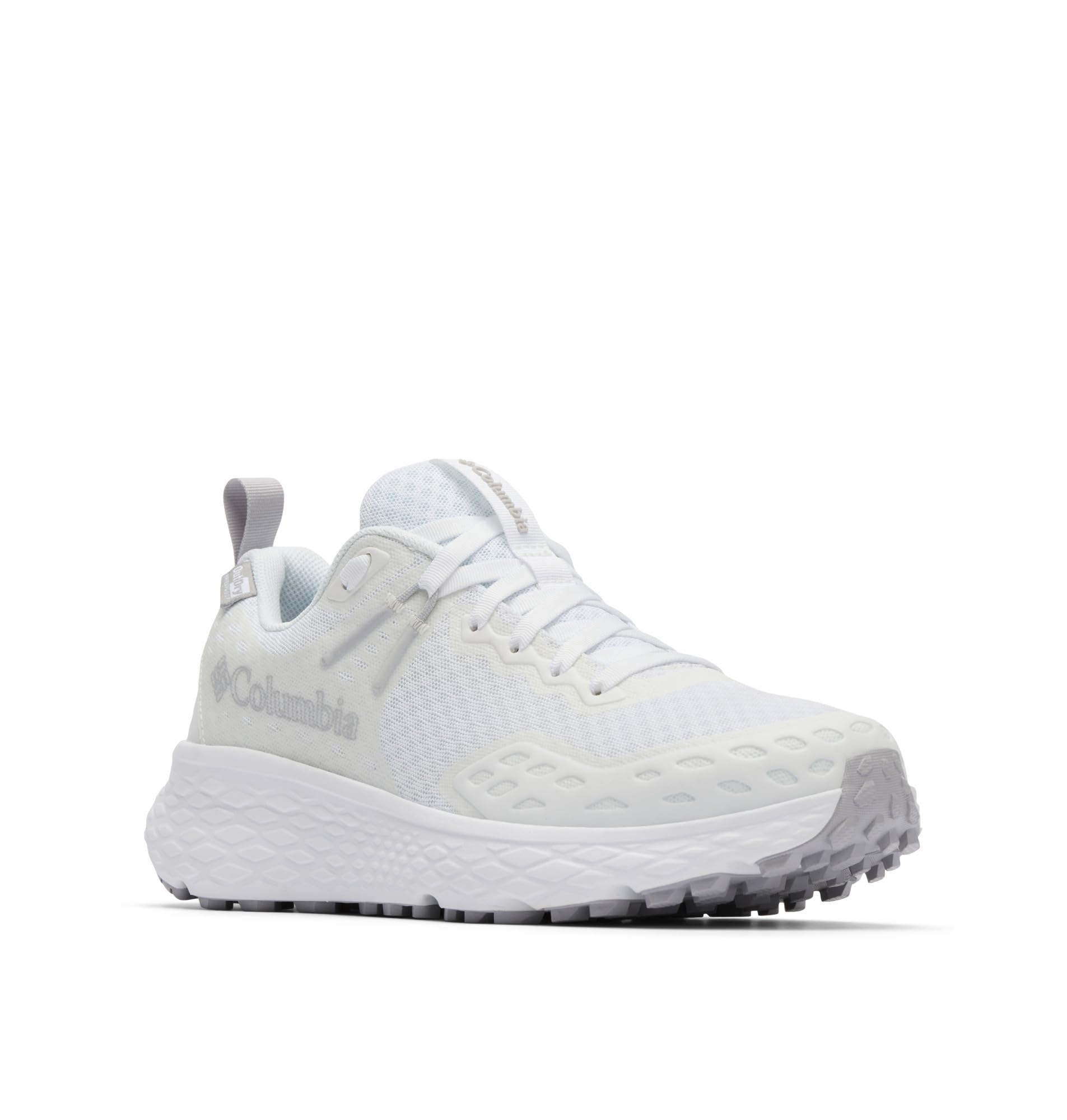
Columbia’s OutDry membrane is bonded directly to the upper, eliminating the separate bootie layer that can shift and bunch. This results in a noticeably lighter shoe — under 12 ounces per shoe — while maintaining full waterproof integrity. The Konos TRS combines that membrane with an Adapt Trax outsole featuring multi-directional lugs that bite into wet grass, mud, and loose gravel. It is listed under the men’s department on Amazon but fits as a unisex trail-oriented work shoe.
The midsole uses Columbia’s Techlite+ foam, which offers decent rebound for a lightweight shoe. On mixed terrain — think parking lot to muddy trench — the transition feels stable thanks to the heel brake lugs. The upper is largely mesh with welded overlays, so it breathes better than boot-leather hybrids, but the mesh is less resistant to abrasive job-site surfaces like concrete edges or sharp gravel.
This shoe excels for landscape workers, surveyors, or field techs who spend part of the day outside on uneven ground. It lacks a safety toe, so it’s best suited for environments where impact protection isn’t required. The OutDry membrane is bonded at the full height of the collar, so standing water up to 2 inches won’t seep in through the tongue gusset.
Why it’s great
- OutDry bonded membrane eliminates water entry through the tongue
- Adapt Trax outsole provides aggressive grip on wet terrain
- Very lightweight for a waterproof shoe — under 12 ounces
Good to know
- Mesh upper is less abrasion-resistant against rough surfaces
- No safety toe rating for impact hazards
4. Skechers Men’s JDW Respected Tanzier Rain Shoe

The Tanzier Rain Shoe from Skechers is a mid-range option that nails the everyday waterproof work shoe formula: a seam-sealed membrane keeps water out, a slip-resistant rubber outsole handles wet floors, and the memory foam insole delivers noticeable step-in comfort. At roughly 2.91 pounds per pair, it’s one of the lighter waterproof entries that still uses a full rubber outsole wrap for durability.
The upper combines synthetic leather overlays at the toe and heel with a breathable mesh body, giving it a dressier look than most work sneakers. The outsole lugs are shallow but wide-spaced, which works well on smooth wet floors like hospital corridors or restaurant kitchens. On loose gravel or mud, the traction drops off — this shoe is optimized for indoor or paved outdoor surfaces.
It lacks a safety toe, so it won’t meet OSHA requirements for heavy industrial zones. The arch support is moderate — wearers with high arches may want to swap in an orthotic. The seam-sealed waterproof construction holds up to rain and mopped floors but isn’t designed for submersion. For hospitality, janitorial, or light warehouse use, the Tanzier is a solid mid-range pick that keeps feet dry without weighing them down.
Why it’s great
- Memory foam insole provides immediate comfort for long standing shifts
- Seam-sealed membrane blocks moisture entry effectively
- Lightweight construction ideal for jobs requiring frequent walking
Good to know
- Not suitable for submersion or deep puddles
- Shallow lugs lose grip on loose or uneven terrain
5. HEYDUDE Men’s Wally Work CT
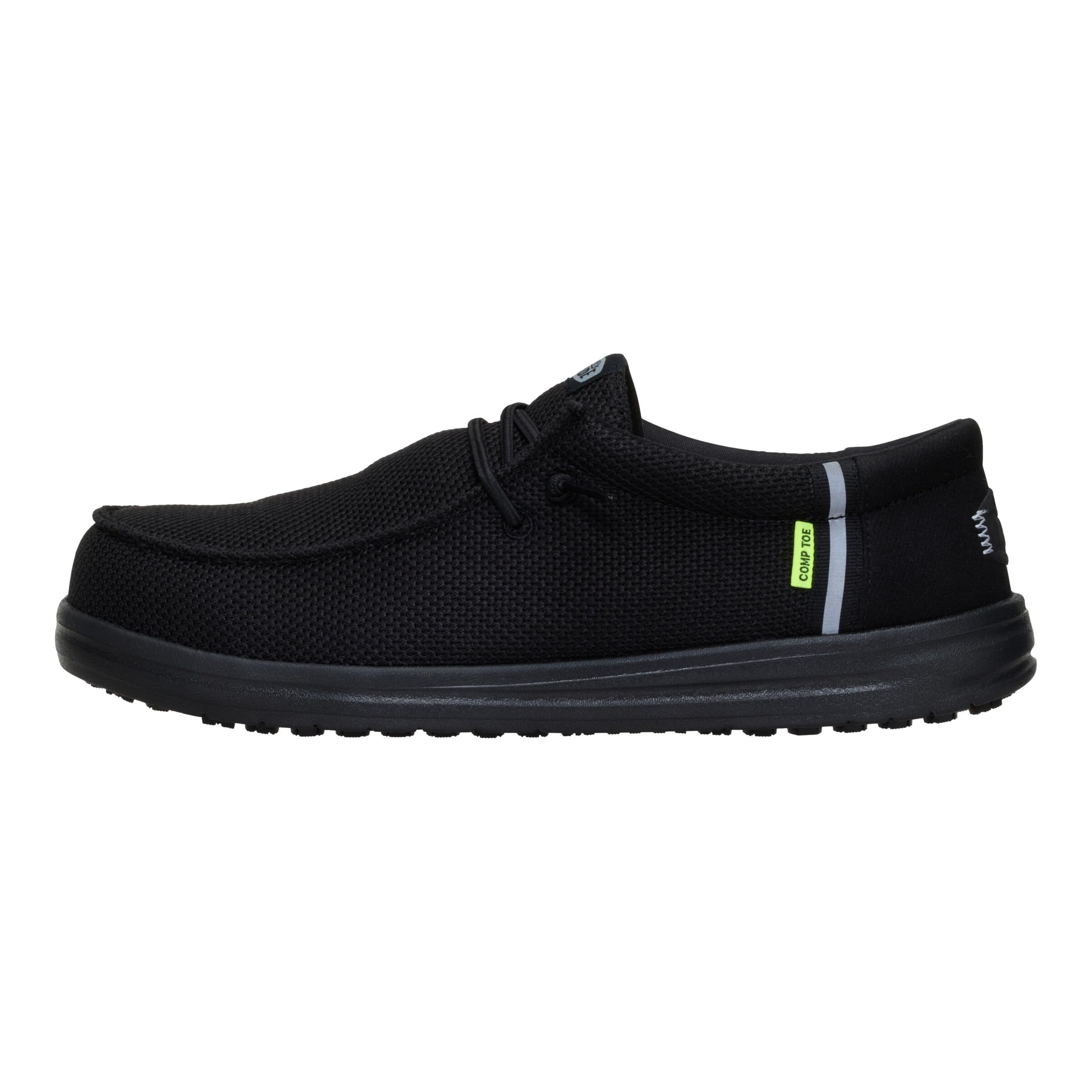
HEYDUDE’s Wally Work CT brings a fresh approach to lightweight waterproof work shoes by pairing a water-repellent fabric upper with a metal-free composite toe. The result is a shoe that feels closer to a casual loafer than a work boot while still providing ASTM-rated toe protection. The slip-resistant outsole uses a flex groove pattern that moves naturally with walking, reducing calf fatigue compared to stiff-soled safety boots.
The insole is removable and cushioned, with moderate arch support suited for flat to average arches. The water-repellent treatment keeps light rain and splashes out, but it’s not a sealed waterproof membrane — sustained exposure to standing water will eventually soak through. The composite toe is noticeably slimmer and lighter than typical steel or even other composite designs, which makes this an excellent choice for light manufacturing, warehouse receiving, or delivery roles where you’re constantly stepping in and out of a vehicle.
Mesh panels in the upper improve breathability, a rare feature in safety-toe waterproof shoes. The shoe is also machine washable, which is practical for jobs that involve dirt, dust, or food debris. The trade-off is that the water-repellent coating diminishes with washing and may need reapplying. If your work environment involves shallow puddles but not submerged conditions, and you prioritize minimal weight and a flexible feel, the Wally Work CT is the lightest composite-toe option in this guide.
Why it’s great
- Composite toe is exceptionally lightweight and low-profile
- Flexible outsole reduces fatigue during walking-heavy shifts
- Machine washable for easy cleaning after messy jobs
Good to know
- Water-repellent treatment not equivalent to a sealed membrane
- May not hold up to full submersion or heavy rain exposure
6. Columbia Men’s Strata Trail Low Waterproof Hiking Shoes
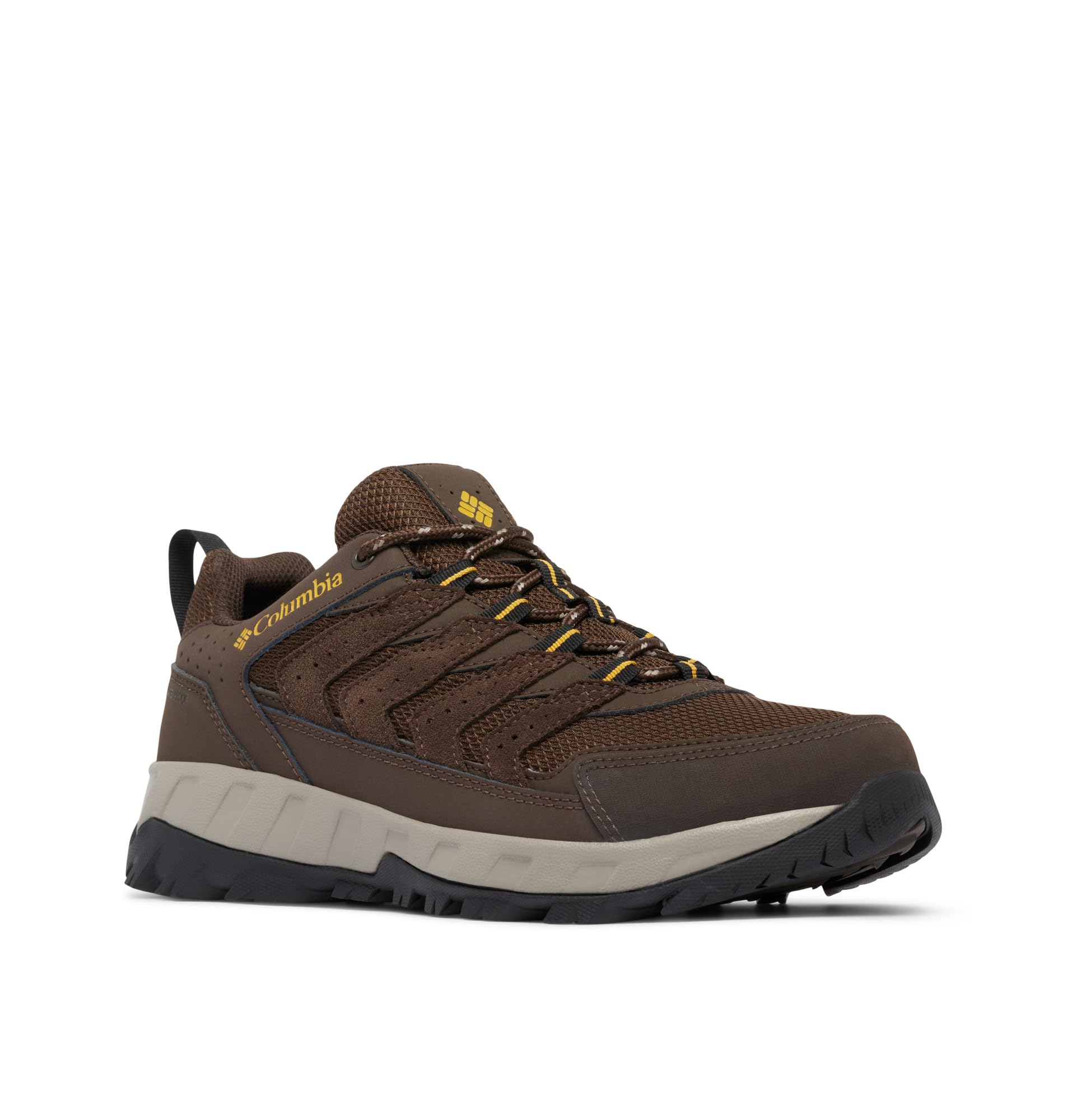
Columbia’s Strata Trail Low is a lightweight waterproof hiker that doubles as a solid work shoe for light-duty outdoor roles. The Omni-Tech membrane provides a reliable moisture barrier without the bulk of a boot, keeping feet dry through wet grass, light rain, and damp trails. At roughly 10 ounces per shoe, it’s the lightest fully waterproof option in this roundup, which makes it ideal for roles like groundskeeping, trail maintenance, or outdoor event setup where you need to cover ground quickly.
The non-marking Omni-Grip outsole uses chevron-shaped lugs that dig into soft soil and shed mud effectively. On wet pavement or smooth concrete, the traction is adequate but not as high as the Adapt Trax found on Columbia’s Konos model. The midsole has moderate cushioning suitable for 4-6 mile walking days, though workers on hard floors may want more foam density for sustained comfort.
This shoe has no safety toe or puncture protection, so it’s best for environments where impact risks are low. The low-cut collar allows easy ankle movement and doesn’t restrict motion when kneeling or crouching. For anyone who needs a truly ultralight waterproof shoe for mixed indoor/outdoor light work, this is the featherweight champion in the lineup.
Why it’s great
- Omni-Tech membrane delivers reliable waterproofing at a very low weight
- Omni-Grip outsole sheds mud and provides good trail traction
- Low-cut collar allows free ankle movement
Good to know
- No safety toe or puncture-resistant protection
- Cushioning is moderate — less ideal for all-day concrete standing
7. Skechers Men’s Jdm Respected Swamper
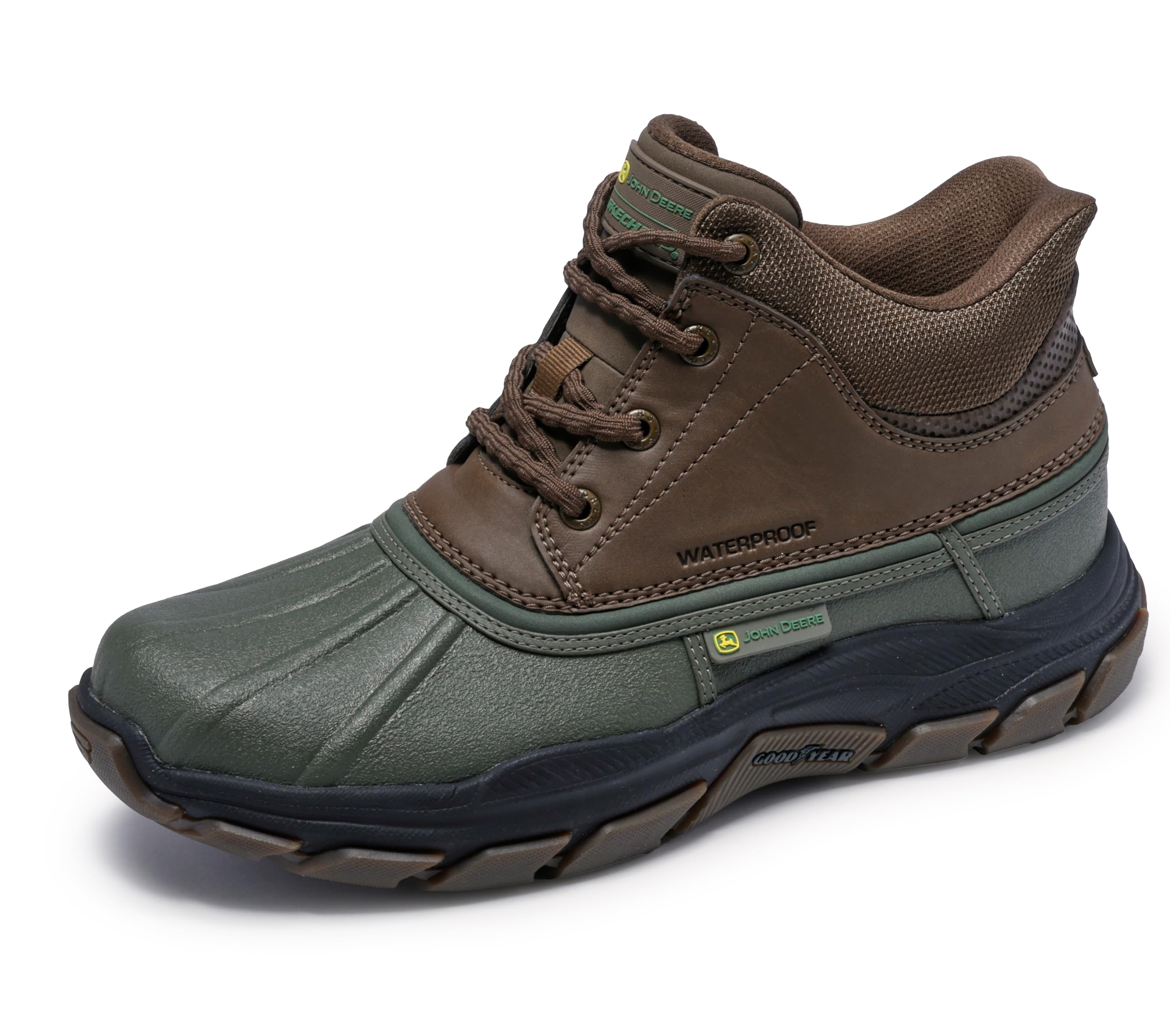
The Skechers Respected Swamper is the entry-level pick in this guide — a no-frills waterproof shoe designed for light-duty indoor environments where budget is the primary constraint. It features a memory foam insole that beds in quickly and a rubber outsole with a simple tread pattern suitable for dry or slightly damp floors. The upper is a synthetic mesh that resists splashes but lacks a sealed membrane, so sustained exposure to puddles will eventually let moisture through.
The midsole is basic EVA with minimal rebound, which means comfort drops noticeably after the 4-hour mark on hard surfaces. It’s best suited for short shifts, part-time roles, or as a backup pair when your primary work shoes are drying out. The shoe runs true to size and requires virtually no break-in, which is a plus if you need something ready out of the box.
It lacks any safety toe rating or ASTM slip certification, so it won’t meet formal job site PPE requirements. But if you work in a restaurant, retail store, or office environment where you occasionally need to walk through a wet entryway or bathroom spill, the Respected Swamper keeps your socks dry for the price of a casual sneaker. Just don’t expect it to hold up to heavy rain or long hours on concrete.
Why it’s great
- Memory foam insole provides comfortable step-in feel with no break-in
- Very affordable entry point for basic waterproof protection
- Lightweight and easy to pack as a backup shoe
Good to know
- No sealed waterproof membrane — splash protection only
- Minimal midsole cushioning for extended standing shifts
FAQ
How do composite toes compare to steel for lightweight work shoes?
Can a lightweight waterproof shoe really keep my feet dry all day?
What kind of outsole pattern works best on wet floors?
Are lightweight waterproof work shoes safe for heavy industrial sites?
Final Thoughts: The Verdict
For most users, the lightweight waterproof work shoes winner is the Timberland PRO Titan EV because it combines a composite safety toe with a sealed waterproof membrane and a puncture resistant plate in a package that remains lighter than traditional steel-toed boots. If you want the absolute lightest weight for walking-heavy shifts without losing toe protection, grab the HEYDUDE Wally Work CT. And for a versatile, trail-ready waterproof shoe that handles mixed terrain at a very low weight, nothing beats the Columbia Konos TRS Outdry.