Lecithin supplements are a dense source of phospholipids—compounds your cells need to maintain membrane integrity, support nerve signaling, and shuttle fat-soluble nutrients through your bloodstream. The problem is that raw lecithin is bitter, gritty, and nearly impossible to measure consistently from bulk powder, which is why nearly every serious buyer reaches for standardized softgels or capsules that deliver a known dose of phosphatidylcholine per serving.
I’m Emma — the founder and writer behind Baby Bangs. I’ve spent years tracking supplement manufacturing standards for purity, shell-life stability, and label accuracy at the capsule level so you don’t have to compare hundreds of SKUs on your own.
Whether you are seeking cognitive support, liver function help, or a clean fat emulsifier for your daily diet, this guide walks through the only specs that matter for selecting the absolute best lecithin supplement for your specific needs.
How To Choose The Best Lecithin Supplement
Not every lecithin capsule is equal in source purity or phosphatidylcholine density. Buyers often fixate on the serving size number (1,200 mg vs 2,400 mg) without verifying that the active phospholipid content matches that figure. You need to examine three specific factors to match the capsule to your health routine.
Soy vs Sunflower Source
Soy lecithin is the most common and typically higher in total phospholipid content per gram, though it raises concerns for those avoiding soy. Sunflower lecithin is extracted without chemical solvents, making it the cleaner option for sensitive stomachs or anyone wanting to dodge potential GMO soy contamination. Both sources can deliver phosphatidylcholine; the difference is allergen profile and extraction method.
Dose and Phospholipid Density
A 1,200 mg softgel is a standard maintenance dose; a 2,400 mg capsule delivers a concentrated amount for users needing higher choline intake. Look for “naturally occurring phosphatidylcholine” on the label—this means the lecithin hasn’t been stripped of its core active compound during processing. A supplement that lists only “lecithin” without a phosphatidylcholine percentage often contains less bioavailable filler.
Third-Party Testing and GMP Manufacturing
Lecithin softgels are a dietary supplement, not a drug, so purity depends entirely on the manufacturer. Certified GMP facilities with in-house lab testing for stability, potency, and heavy metals are the minimum standard. A Non-GMO verification adds an extra layer of trust, especially for soy-based capsules where cross-contamination risk is higher.
Quick Comparison
On smaller screens, swipe sideways to see the full table.
| Model | Category | Best For | Key Spec | Amazon |
|---|---|---|---|---|
| Carlyle Lecithin 2400mg | High-Dose Soy | Daily potency in fewer pills | 2,400 mg per softgel | Amazon |
| Jamieson Lecithin | Standard Soy | Everyday nerve support | 1,200 mg, 100 capsules | Amazon |
| NOW Foods Lecithin 1200mg | Certified Soy | GMP assured, brain support | 1,200 mg, 200 softgels | Amazon |
| Nature’s Truth Ultra Soy Lecithin | Value Soy | Budget-friendly maintenance | 1,200 mg, 120 softgels | Amazon |
| 365 Sunflower Lecithin | Sunflower | Solvent-free, soy-free | 1,200 mg, 90 capsules | Amazon |
In‑Depth Reviews
1. Carlyle Lecithin Supplement | 2400mg | 240 Softgel Capsules

Carlyle packs 2,400 mg of soy lecithin per quick-release softgel, providing the highest single-capsule phospholipid density in this lineup. For anyone who wants a potent choline boost without swallowing multiple pills per meal, this bottle delivers that concentration with a simple one-capsule serving. The soy source is Non-GMO verified and guaranteed free of gluten, wheat, yeast, lactose, and artificial sweeteners.
With 240 capsules per bottle, a single tub lasts over four months at the standard serving, making this a strong value-to-volume choice for daily consistency. Carlyle’s in-house manufacturing follows GMP standards, which ensures the 2,400 mg label matches real content through stability and potency testing. The softgel shell is efficient for those who prefer a smooth gelatin capsule over larger dense tablets.
This is not the option for anyone avoiding soy entirely—the sunflower alternative is better for that need. Meanwhile, if you are tracking milligrams and want the highest per-pill potency in a mainstream brand, Carlyle’s formula deserves the top spot.
Why it’s great
- 2,400 mg per softgel reduces number of daily pills
- Non-GMO and free of common allergens and preservatives
- Extended supply with 240 capsules per bottle
Good to know
- Formulated with soy lecithin, not sunflower
- Higher dose may be more than needed for mild maintenance
2. Jamieson Lecithin Capsule
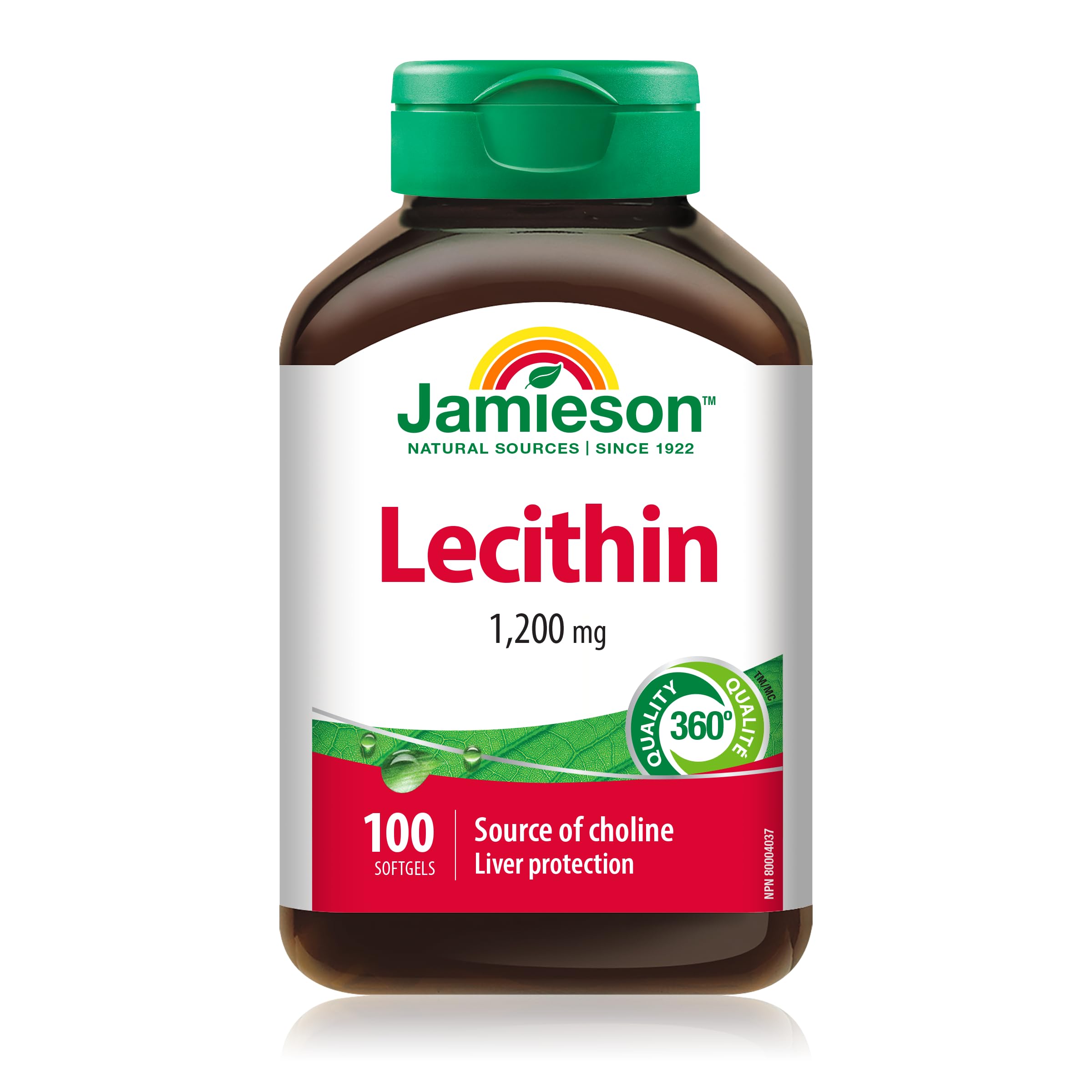
Jamieson’s lecithin capsules deliver 1,200 mg of soy lecithin in a trusted Canadian brand formulation. This is a classic standard-dose option for users who want a predictable daily intake without the higher 2,400 mg jump that some may find too strong or who simply prefer a lower per-pill load. The 100-capsule count works well for a three-month trial period.
As a non-prescription supplement manufactured by Biovita/Jamieson, the brand has a long reputation for straightforward labeling and quality control in the natural products space. The capsules are odorless, which helps for those who dislike the natural earthy smell of bulk lecithin powder. The soy base is standard, but Jamieson does not emphasize Non-GMO or organic verification on the primary labeling.
This bottle is a reliable entry-level pick for someone new to lecithin supplementation or for a user who divides their dosage across multiple smaller capsules through the day. The price per pill is slightly higher than the Carlyle or NOW options when calculated on a per-milligram basis, but the brand trust factor offsets the premium for many buyers.
Why it’s great
- Trusted long-standing supplement manufacturer
- Odorless softgels for a clean intake experience
- Standard 1,200 mg dose good for beginners
Good to know
- Soy source not explicitly confirmed as Non-GMO
- Smaller 100-count bottle compared to competitors
3. NOW Foods Lecithin 1200 mg with naturally occurring Phosphatidyl Choline, 200 Softgels

NOW Foods specifications stand out in this category because the label explicitly notes “with naturally occurring Phosphatidyl Choline”—a distinction that informs the buyer exactly which phospholipid they are getting rather than relying on a vague lecithin blanket claim. Each 1,200 mg softgel retains the choline-rich fraction that supports nerve and brain function, which is the reason most users seek lecithin in the first place.
The 200-count bottle makes this one of the largest shelf-stable supplies in the mid-range price tier, delivering nearly seven months of maintenance dosing at the standard two-capsule-per-day recommendation. NOW’s GMP Quality Assured certification is backed by in-house ISO/IEC-accredited laboratories, meaning the potency and stability are tested against real standards rather than just claim-based.
Founded in 1968 and still independent, NOW Foods carries a reputation for consistent batch-to-batch quality in soy-based supplements. The soy source is Non-GMO and the softgels are free of gluten, milk, and artificial preservatives. This bottle is the go-to choice for anyone wanting a laboratory-backed, large-supply standard-dose lecithin.
Why it’s great
- Explicitly lists naturally occurring phosphatidylcholine
- 200 softgels per bottle—excellent supply duration
- GMP certified with ISO/IEC accredited lab testing
Good to know
- Soy-based, not suitable for soy-free diets
- Standard 1,200 mg dose requires two capsules for high intake
4. Nature’s Truth Ultra Soy Lecithin 1200 mg | 120 Softgels
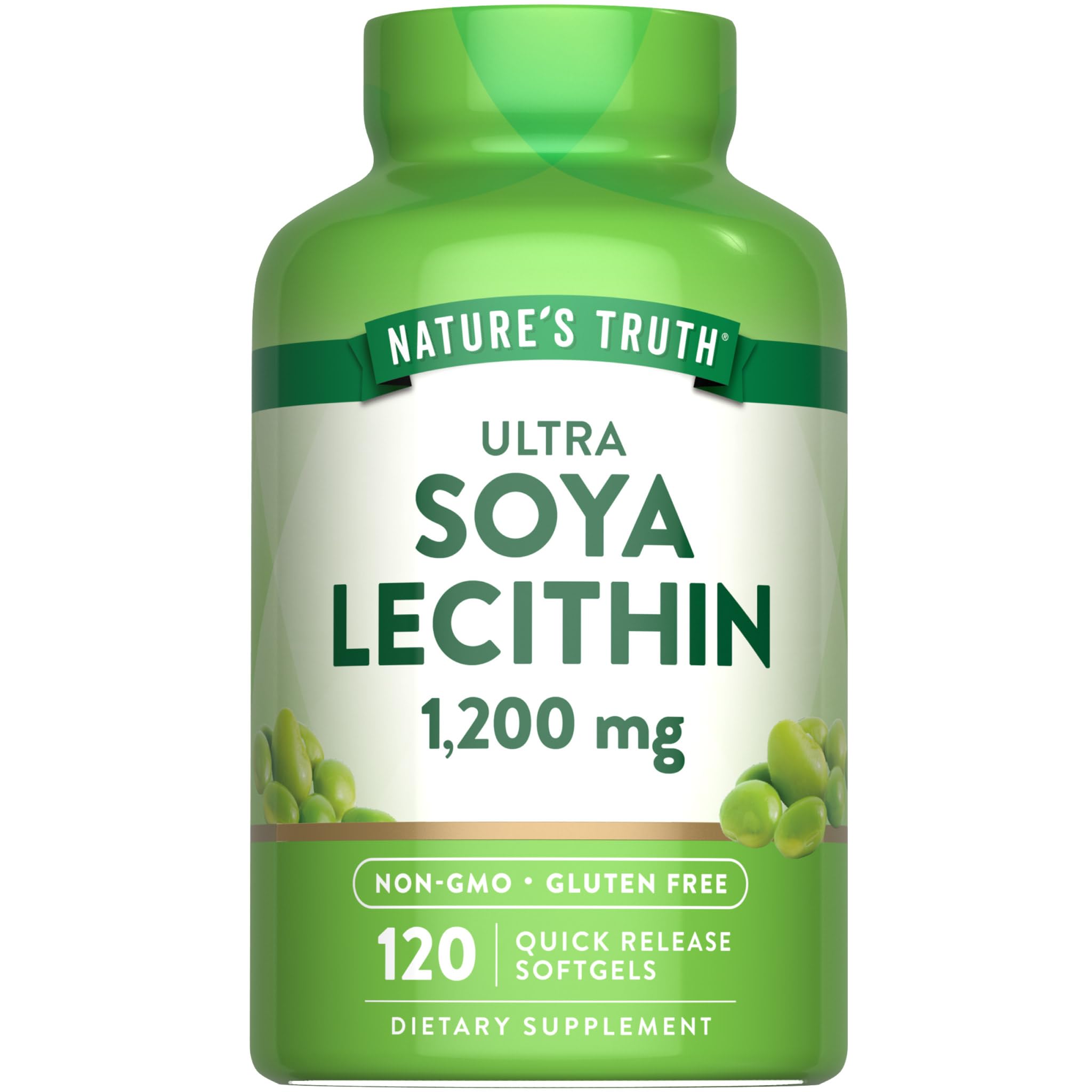
Nature’s Truth positions this as an “Ultra” formulation, though the 1,200 mg dose per serving is standard across the category. The real draw here is the value packaging—120 softgels at a low entry point that makes starting a lecithin routine financially easy. Each softgel delivers a natural source of choline and inositol, two compounds that support cell membrane flexibility and lipid metabolism.
The brand emphasizes transparency in its free-from list: gluten, wheat, yeast, milk, lactose, artificial color and flavor, sweeteners, and preservatives are all absent. Nature’s Truth operates under three generations of vitamin manufacturing heritage, which adds traceability for buyers who want a brand with retail shelf history rather than a digital-only label.
The softgel is quick-release, meaning it breaks down faster than some denser lecithin capsules. For users who prefer a lower per-bottle investment or who want to test how their digestive system responds to soy lecithin before committing to a 200-count container, this bottle is the lowest-risk entry.
Why it’s great
- Very affordable entry point for lecithin supplementation
- Quick-release softgels for fast breakdown
- Wide free-from list includes artificial all additives
Good to know
- Only 120 softgels per bottle—smaller supply
- No explicit label of phosphatidylcholine percentage
5. 365 by Whole Foods Market, Sunflower Lecithin, 90 ct
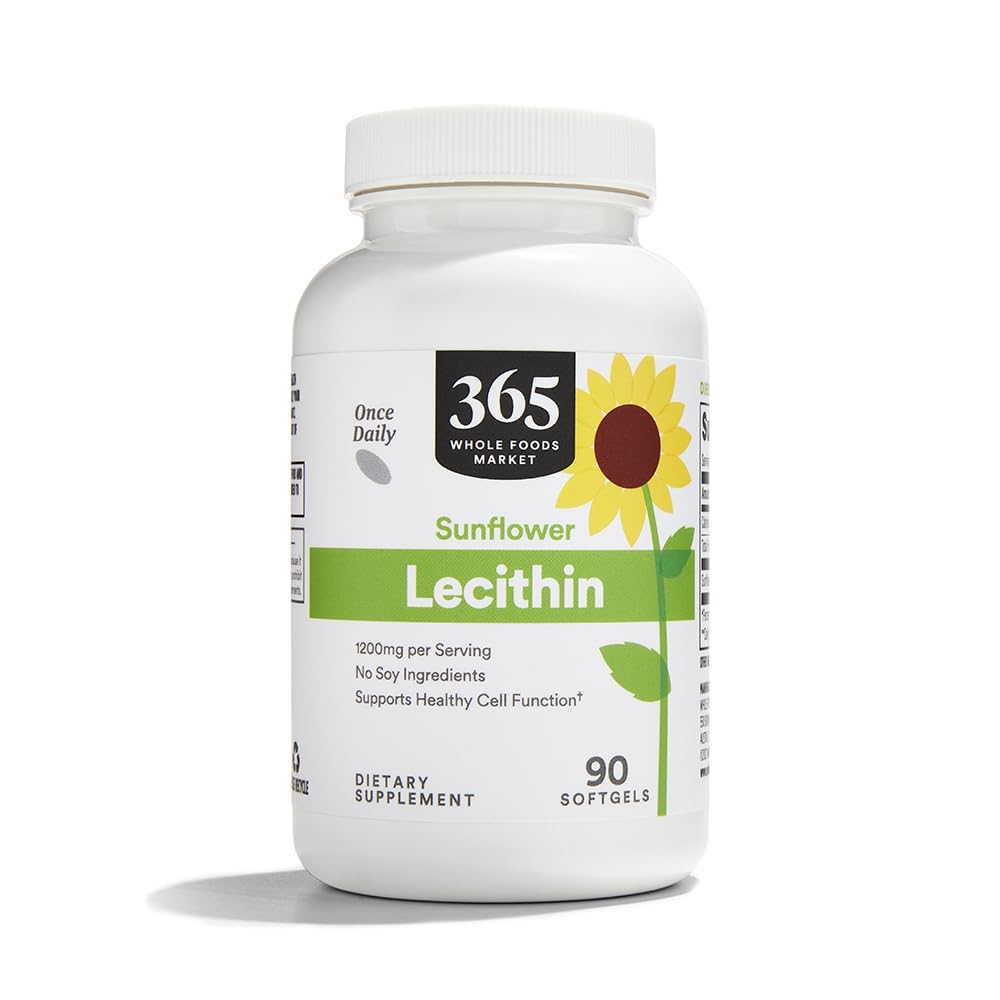
Whole Foods Market’s 365 brand makes this sunflower lecithin capsule the only non-soy option in this roundup. For anyone who avoids soy due to allergy, hormonal concerns, or a preference against hexane-extracted ingredients, sunflower lecithin is extracted mechanically without chemical solvents, retaining a cleaner phospholipid profile. Each 1,200 mg capsule supports healthy cell function without introducing soy protein residue.
The 90-count bottle is the smallest supply among these five products, which means more frequent repurchasing. However, the purity advantage—free from artificial ingredients and backed by Whole Foods Market’s rigorous quality standards—makes the shorter supply acceptable for those who prioritize a soy-free, solvent-free lecithin source. The sunflower base also tends to be milder on the stomach for sensitive individuals.
If you are committed to avoiding soy in your supplement stack, this is the only bottle that delivers a clean sunflower lecithin in softgel form from a widely available national brand. The trade-off is fewer capsules per purchase and a slightly lower potency density compared to soy-based 2,400 mg options.
Why it’s great
- Sunflower lecithin—no soy, no chemical solvent extraction
- Free from artificial ingredients
- Whole Foods brand quality standards
Good to know
- Small 90-count bottle requires frequent repurchasing
- Standard 1,200 mg dose, not high-potency
FAQ
Is soy lecithin or sunflower lecithin better for a lecithin supplement?
How much lecithin should I take per day for cognitive support?
Final Thoughts: The Verdict
For most users, the best lecithin supplement winner is the Carlyle Lecithin 2,400 mg because it combines the highest single-capsule potency with Non-GMO sourcing and a 240-count supply that lasts months. If you want a lab-verified standard dose with explicit phosphatidylcholine labeling, grab the NOW Foods Lecithin 1,200 mg. And for a soy-free, solvent-free formula, nothing beats the 365 Sunflower Lecithin.