A single stubborn dark spot can make you feel like your entire complexion is off. The Korean beauty approach to correcting discoloration relies on layered, multi-targeting ingredients like niacinamide, tranexamic acid, and stabilized vitamin C — but navigating the dozens of serums claiming to erase hyperpigmentation requires knowing exactly which formula your skin type can handle.
I’m Emma — the founder and writer behind Baby Bangs. I’ve spent over a decade analyzing the raw ingredient decks and clinical study data behind the most popular K-beauty brightening serums, separating marketing fluff from formulations that actually deliver measurable melanin inhibition.
After evaluating each product’s active concentrations, delivery systems, and real-world compatibility for sensitive skin, I’ve narrowed the market down to the five formulas that genuinely deserve your attention. This is your complete guide to finding the best korean dark spot corrector for your specific pigmentation concerns and skin tolerance.
How To Choose The Best Korean Dark Spot Corrector
Dark spot correction is a game of ingredient potency versus skin barrier tolerance. The wrong formula — too strong, too acidic, too many irritants — can worsen post-inflammatory hyperpigmentation (PIH) by triggering more inflammation. Here are the three non-negotiable factors you must evaluate before picking a serum.
Active Ingredient Type and Concentration
The heavy hitters in K-beauty brightening are niacinamide (typically 5%–20%), tranexamic acid (TXA), glutathione, and vitamin C derivatives. Niacinamide works by inhibiting melanosome transfer to skin cells, while TXA blocks plasmin activity that stimulates melanin production. Glutathione acts as an antioxidant that shifts melanin production toward lighter pheomelanin. A formula combining two or three of these gives you multi-pathway coverage against stubborn spots. Pure L-ascorbic acid is rare in Korean formulas due to instability; look for ascorbyl glucoside or liposome-encapsulated vitamin C instead.
Skin Sensitivity and Barrier Support
High-concentration actives can cause stinging, redness, or purging, so soothing ingredients like Centella Asiatica (cica), allantoin, and houttuynia cordata are critical. If you have reactive or rosacea-prone skin, a 5% niacinamide with TXA is safer than a 20% niacinamide serum. Check that the formula is fragrance-free and alcohol-free to avoid compounding irritation.
Texture and Routine Compatibility
A serum that pills under sunscreen or moisturizer renders itself useless for daytime wear. Gel-like, non-sticky textures absorb faster and layer cleanly. If you wear makeup, a tacky finish can cause foundation to separate. Consider your climate and skin type — gel serums suit humid environments and oily skin, while slightly thicker ampoules work better for dry or dehydrated complexions.
Quick Comparison
On smaller screens, swipe sideways to see the full table.
| Model | Category | Best For | Key Spec | Amazon |
|---|---|---|---|---|
| MISSHA Vita C Plus | Premium Ampoule | Aging skin with spots and loss of firmness | 33% liposome-encapsulated vitamin C + collagen | Amazon |
| JUMISO 20% Niacinamide | Mid-Range Serum | Stubborn PIH and oily, congested skin | 20% niacinamide + TXA + glutathione | Amazon |
| Celimax Pore+Dark Spot | Mid-Range Gel | Sensitive skin needing hydration and pore care | 5% niacinamide + 3% TXA + Melazero V2 | Amazon |
| SeoulCeuticals Kojic Acid Serum | Budget-Friendly | First-time brightening users on a tight budget | Kojic acid + alpha arbutin + glycolic acid | Amazon |
| Innisfree Green Tea Enzyme | Premium Brightener | Daily brightening with gentle enzymatic exfoliation | Green tea enzyme + vitamin C + niacinamide | Amazon |
In‑Depth Reviews
1. MISSHA Vita C Plus Spot Correcting & Firming Ampoule

The standout feature here is the 33% Vita C Liposome Formula — a delivery system that encapsulates 99% pure vitamin C within lipid bilayers, dramatically improving stability and penetration depth compared to standard ascorbic acid serums that oxidize within weeks. This means the vitamin C actually reaches the basal layer where melanocytes produce pigment, rather than sitting on the surface and oxidizing. Combined with hydrolyzed collagen and tranexamic acid, this ampoule tackles both dark spots and the loss of firmness that often accompanies aging-related hyperpigmentation.
MISSHA formulated this without artificial fragrances, colors, parabens, sulfates, or alcohol — a clean profile that reduces the risk of barrier disruption. The texture is a lightweight, slightly viscous ampoule that absorbs within 30 seconds and layers seamlessly under sunscreen. Clinical testing backs the brightening claims, with users reporting visible fading of sun spots and post-inflammatory marks within four to six weeks of consistent AM use.
It is important to introduce this slowly if your skin is unaccustomed to active vitamin C — start with two to three nights per week before moving to daily morning use. Pairing it with a mineral sunscreen (SPF 30+) is non-negotiable because the collagen component increases photosensitivity slightly.
Why it’s great
- Liposome encapsulation prevents oxidation and boosts delivery to deeper skin layers
- Collagen adds firming benefits that most brightening ampoules lack
- Alcohol-free and fragrance-free — safe for reactive skin when introduced gradually
Good to know
- Slightly thicker consistency may feel tacky under heavy moisturizers in humid climates
- Requires gradual introduction to avoid initial purging for vitamin C beginners
2. JUMISO 20% Niacinamide Dark Spot Serum

A 20% niacinamide concentration places this serum firmly in the high-strength category — most K-beauty brighteners cap out at 10–15%. JUMISO pairs this potent B3 dose with tranexamic acid (TXA) and glutathione, creating a triple-action approach that targets melanin synthesis at the tyrosinase enzyme level, melanosome transfer, and antioxidant protection simultaneously. Clinical data from the brand shows up to a 27.7% improvement in skin clarity appearance and a 20% reduction in visible redness within two weeks of daily use.
The formula also includes a Triple Centella Complex (asiaticoside, madecassic acid, asiatic acid) to calm the barrier, which is crucial because 20% niacinamide can cause stinging or flushing in unaccustomed skin. Texturally, it is lightweight and non-sticky, making it a strong candidate for the “glass skin” layering routine. It serves well as a pore-refining step because niacinamide at this concentration visibly tightens enlarged pores and regulates sebum production throughout the day.
If you have never used niacinamide above 10%, patch test for three days before full-face application. The high percentage can trigger a transient warm sensation, which typically subsides after the first week. Avoid layering this with strong exfoliating acids in the same routine to prevent over-sensitization.
Why it’s great
- Triple brightening stack (niacinamide + TXA + glutathione) covers multiple melanin pathways
- Centella complex protects the skin barrier from high-niacinamide irritation
- Oil-control benefits make it ideal for combination and oily skin types
Good to know
- 20% niacinamide is aggressive for first-time users — 5% starters should build tolerance first
- May cause transient warmth or tingling for the first few applications
3. Celimax Pore+Dark Spot Brightening Serum
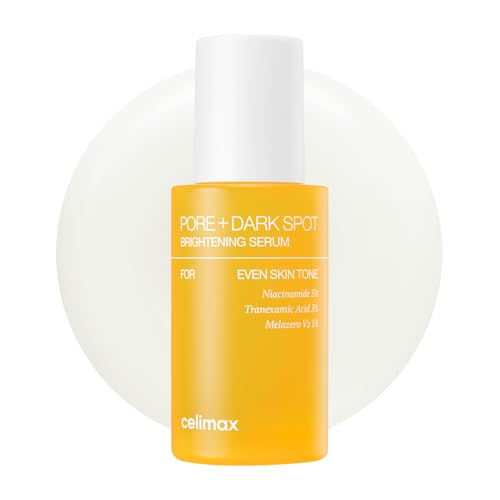
Celimax takes a gentler approach to hyperpigmentation correction by using 5% niacinamide and 3% tranexamic acid, then adding Melazero V2 — a proprietary brightening complex that inhibits melanin formation without the irritation potential of higher-percentage actives. This makes it the safest entry point for sensitive or reactive skin that reacts poorly to strong brighteners. The gel-like texture absorbs instantly with zero stickiness, which is rare for a formula containing both niacinamide and hyaluronic acid.
The inclusion of vegan hyaluronic acid, houttuynia cordata, and allantoin means this serum doubles as a hydrating step — particularly valuable for those whose dark spots result from post-acne inflammation where the skin barrier is already compromised. Backed by 10 clinical trials, the brand reports measurable improvements in moisture retention, pore size reduction, and overall complexion evenness within two weeks. The fragrance-free, hypoallergenic formulation passed dermatological testing on sensitive subjects.
Because the active percentages are moderate, you can use this serum both AM and PM without risk of over-exfoliation or purging. Layer it under a moisturizer or sunscreen without worrying about pilling. The main trade-off is that stubborn, deeply pigmented sun spots may take longer to fade compared to a 20% niacinamide or vitamin C alternative.
Why it’s great
- Gentle enough for rosacea-prone or easily irritated skin without sacrificing brightening efficacy
- Gel texture sinks in quickly and layers cleanly under makeup or SPF
- Pore-minimizing and hydrating benefits in a single serum
Good to know
- Lower niacinamide percentage means slower visible results for deep pigmentation
- Not ideal for users who want aggressive, fast-acting brightening
4. SeoulCeuticals Korean Skin Care Kojic Acid Serum
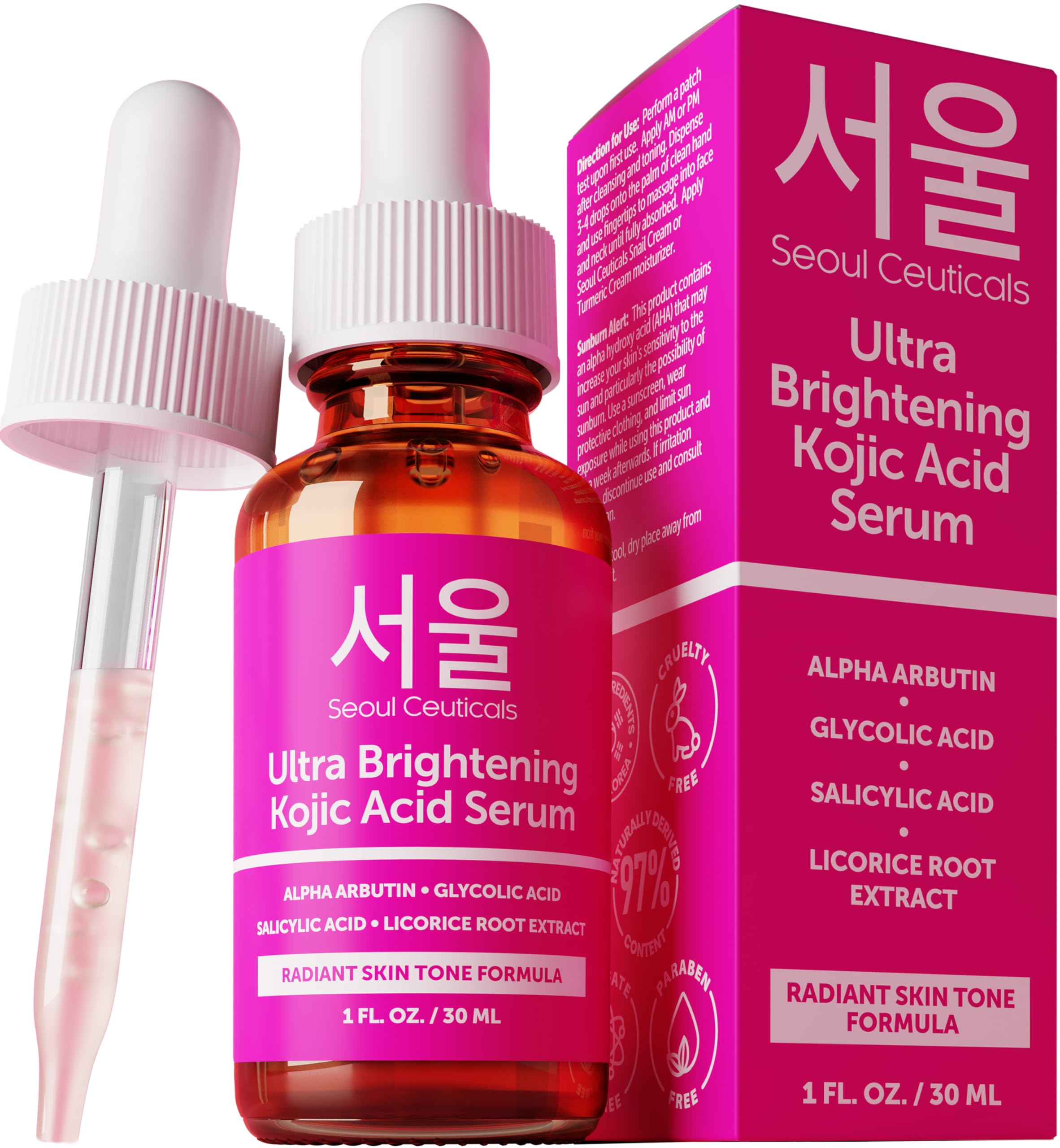
SeoulCeuticals uses kojic acid as its primary brightening agent, which works by chelating copper ions required for tyrosinase activity — essentially starving the melanin production enzyme of a critical cofactor. Alpha arbutin provides a secondary depigmenting mechanism, while glycolic and salicylic acids offer chemical exfoliation to accelerate the shedding of pigmented surface cells. This combination creates a dual-action approach: chemical exfoliation on the surface plus melanin inhibition at the source.
The presence of glycolic acid (an AHA) at an undisclosed concentration means this serum doubles as a gentle resurfacing treatment. This can speed up dark spot fading, but it also introduces photosensitivity risk — daily sunscreen use is mandatory, and users with sensitive skin may find the AHA component irritating if applied too frequently. The 1-ounce bottle is smaller than competitors, which reflects the budget-friendly positioning, but the active ingredient stability is decent for a non-liposome formulation.
Avoid using this serum in the same routine as other exfoliating acids or retinol to prevent barrier stripping. If you have active acne lesions, the salicylic acid can help clear pores, but the glycolic acid may sting on broken skin. Start with every-other-night application and monitor for any stinging or redness before increasing frequency.
Why it’s great
- Kojic acid + alpha arbutin provide a melanin-inhibition mechanism different from vitamin C or niacinamide
- Glycolic acid accelerates visible surface fading through chemical exfoliation
- Salicylic acid helps clear clogged pores that cause post-acne marks
Good to know
- AHAs require careful introduction — daily use can compromise sensitive skin barriers
- Smaller 1-oz bottle compared to competitors’ 1.35-oz standard size
5. Innisfree Green Tea Enzyme Vitamin C Serum

Innisfree differentiates this serum with a patented green tea-derived enzyme that provides gentle enzymatic exfoliation alongside vitamin C and niacinamide — a combination that smooths skin texture while fading dark spots. The enzyme breaks down desmosomes between dead skin cells without the stinging associated with glycolic acid, making it suitable for daily AM/PM use even on sensitive skin. Clinical self-assessment data from a 4-week study on 32 women aged 20–49 reported visible fading of sun spots and post-breakout marks within 7 days.
The formula includes tangerine peel extract for additional antioxidant protection and hyaluronic acid to maintain hydration during exfoliation. Texture-wise, it is a lightweight, fast-absorbing liquid that suits both oily and combination skin types. The finish is dewy but not greasy, and it layers well under makeup without causing pilling. Innisfree uses standard vitamin C (likely ascorbyl glucoside for stability rather than pure L-ascorbic acid) to minimize oxidation concerns.
Because enzymatic exfoliation is milder than chemical acids, this serum works well as a daily brightener that does not require a rest day. However, the brightening effect on deeply entrenched melasma or old hyperpigmentation is more gradual — expect visible results in three to four weeks rather than two. Pair it with a moisturizing toner in dry climates to counteract any slight tightening from the enzyme activity.
Why it’s great
- Enzymatic exfoliation delivers surface smoothing without the sting of AHAs
- Clinical data supports visible brightening within 7 days for most users
- Dewy finish that works well as a makeup primer step
Good to know
- Slow-acting on deep, old hyperpigmentation compared to higher-concentration serums
- Enzyme activity can cause slight tightness if not paired with sufficient hydration
FAQ
Can I use a Korean dark spot corrector with retinol in the same routine?
How long does it take for a niacinamide serum to fade dark spots?
Should I use a dark spot corrector in the morning or at night?
Final Thoughts: The Verdict
For most users, the best korean dark spot corrector winner is the MISSHA Vita C Plus Ampoule because its liposome-encapsulated vitamin C delivers stable, deep-penetrating brightening while collagen addresses the skin laxity that often accompanies pigmentation concerns. If you want a high-strength niacinamide that also refines pores, grab the JUMISO 20% Niacinamide Serum. And for sensitive skin that needs gentle enzymatic exfoliation with gradual brightening, nothing beats the Innisfree Green Tea Enzyme Vitamin C Serum.