Pulling a heavy deadlift or grinding through a heavy squat changes the game when your lower back has a solid wall to push against. The wrong belt leaves you either pinched, unable to breathe, or shifting mid-lift — and that’s when form breaks. A good lifting belt doesn’t just squeeze; it gives your core something rigid to brace against, letting you generate more intra-abdominal pressure safely. Without that predictable wall of support, your spine takes the load it was never meant to handle alone.
I’m Emma — the founder and writer behind Baby Bangs. I’ve spent years digging into the biomechanics of strength gear, comparing leather thicknesses, buckle systems, and tapered vs. straight-cut designs to find what actually protects a lifter’s back under a heavy bar.
Whether you’re a powerlifter grinding toward a new 1RM or a weekend warrior looking for reliable back support, choosing from the lifting belts for men on the market means matching your specific lift style to the right construction material, thickness, and closure system for the job.
How To Choose The Best Lifting Belts For Men
Picking the right belt is not about picking the most expensive option or the one your gym buddy uses. It is about matching your specific lifts, your body mechanics, and your priority — whether that is rigid support for maximal lifts or versatile adjustability for varied workouts. Here are the three factors that separate a solid belt from one that gets left in the locker room.
Material and Thickness: Leather vs. Nylon
Genuine leather belts, typically ranging from 5mm to 10mm thick, provide the stiff, unyielding wall necessary for heavy squats and deadlifts. The thicker the leather, the more support it offers, but also the longer it takes to break in. A 10mm belt gives maximum rigidity for 1RM attempts, while a 5mm or 7mm belt offers a good balance for general strength training. Nylon belts are softer, more flexible, and much more comfortable for dynamic lifts like Olympic lifts or CrossFit, but they do not provide the same level of passive resistance for maximal bracing.
Closure System: Prong, Lever, and Self-Locking
A double-prong buckle is the standard for leather belts. It is reliable and allows for micro-adjustments, but can be slow to take on and off between sets. Lever systems are faster and provide a very secure fit, but they lack fine-tuned adjustability — you either fit the pre-set hole or you don’t. Self-locking systems, like those from Element 26, use a ratcheting mechanism that offers infinite adjustability and a very secure hold, but they are more complex mechanically. Your choice depends on whether you value speed, adjustability, or bulletproof simplicity.
Width and Taper: Uniform vs. Tapered
A 4-inch uniform-width belt (same width all the way around) provides the most support for your lower back during squats and deadlifts, but can be uncomfortable during the set-up for a deadlift or when performing Olympic lifts. A tapered belt (wider in the back, narrower in the front) allows for better hip flexion, making it more comfortable for deep squats and the starting position of a deadlift. For powerlifting, a 4-inch uniform belt is the standard; for general training or Olympic lifting, a tapered design is often preferred.
Quick Comparison
On smaller screens, swipe sideways to see the full table.
| Model | Category | Best For | Key Spec | Amazon |
|---|---|---|---|---|
| Fitgriff Classic | Leather | Entry-Level Value | 5mm thickness, double prong | Amazon |
| Iron Bull Strength | Leather | Competition Powerlifting | 7mm thickness, tapered | Amazon |
| Element 26 Hybrid | Leather/Nylon | Versatile Adjustability | Self-locking, hybrid design | Amazon |
| Dark Iron Fitness | Leather | Mid-Range Training | 5mm thickness, double prong | Amazon |
| Iron Infidel Lever | Leather | Heavy Squat Performance | 10mm thickness, lever buckle | Amazon |
| Schiek Sports 2006 | Nylon | Dynamic / Olympic Lifts | 6-inch width, padded | Amazon |
| Stoic Powerlifting | Leather | Serious Back Support | 6mm thickness, non-tapered | Amazon |
In‑Depth Reviews
1. Iron Bull Strength 7mm Leather Weight Lifting Belt
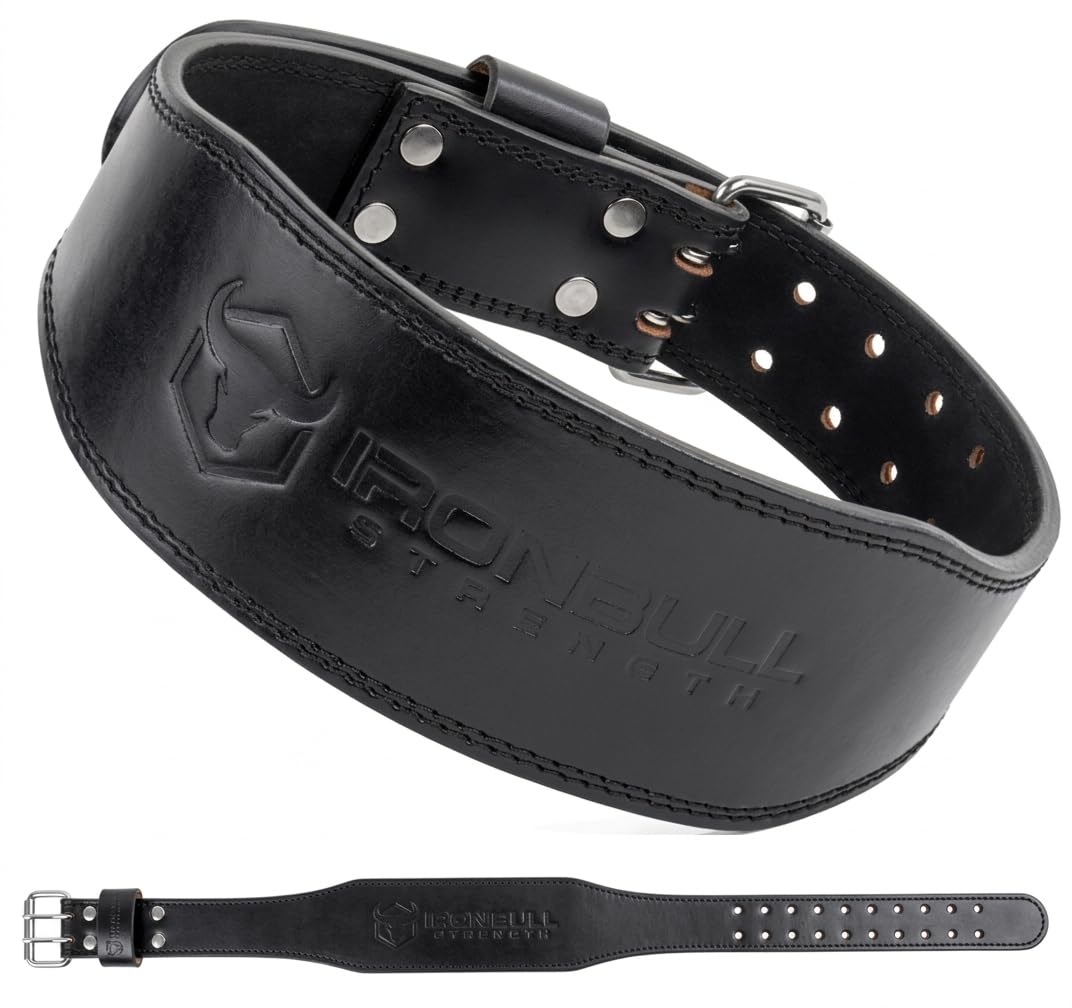
This belt is built for lifters who plan to step on a platform. The IPF approval is not just a sticker — it means the 7mm thickness and tapered 4-inch design meet competition standards for powerlifting, which also makes it a reliable choice for heavy gym work. The A-grade leather and single-piece core construction eliminate uneven spots that can cause pressure points during a heavy squat.
The double roller steel buckle with a black coating feels solid under tension, and the double stitching adds a layer of confidence for repeated maximal pulls. The 7mm thickness sits in the sweet spot — stiff enough to brace against but flexible enough to not feel like you are wearing a cast. It takes a few sessions to break in fully, but once it molds to your body, the fit becomes very consistent.
The tapered design is a smart touch for deadlifts and cleans, giving your hips room to move without the belt edge digging into your ribs. The lifetime warranty against manufacturing defects from Iron Bull Strength is a strong signal that this is built for long-term use rather than seasonal swapping.
Why it’s great
- IPF, USAP, USPA approved for competition
- Single-piece A-grade leather ensures even thickness
- Double roller buckle and stitching for durability
Good to know
- Requires a break-in period of 5-10 sessions
- Size by waist measurement, not pants size
2. Element 26 Hybrid Leather Weight Lifting Belt
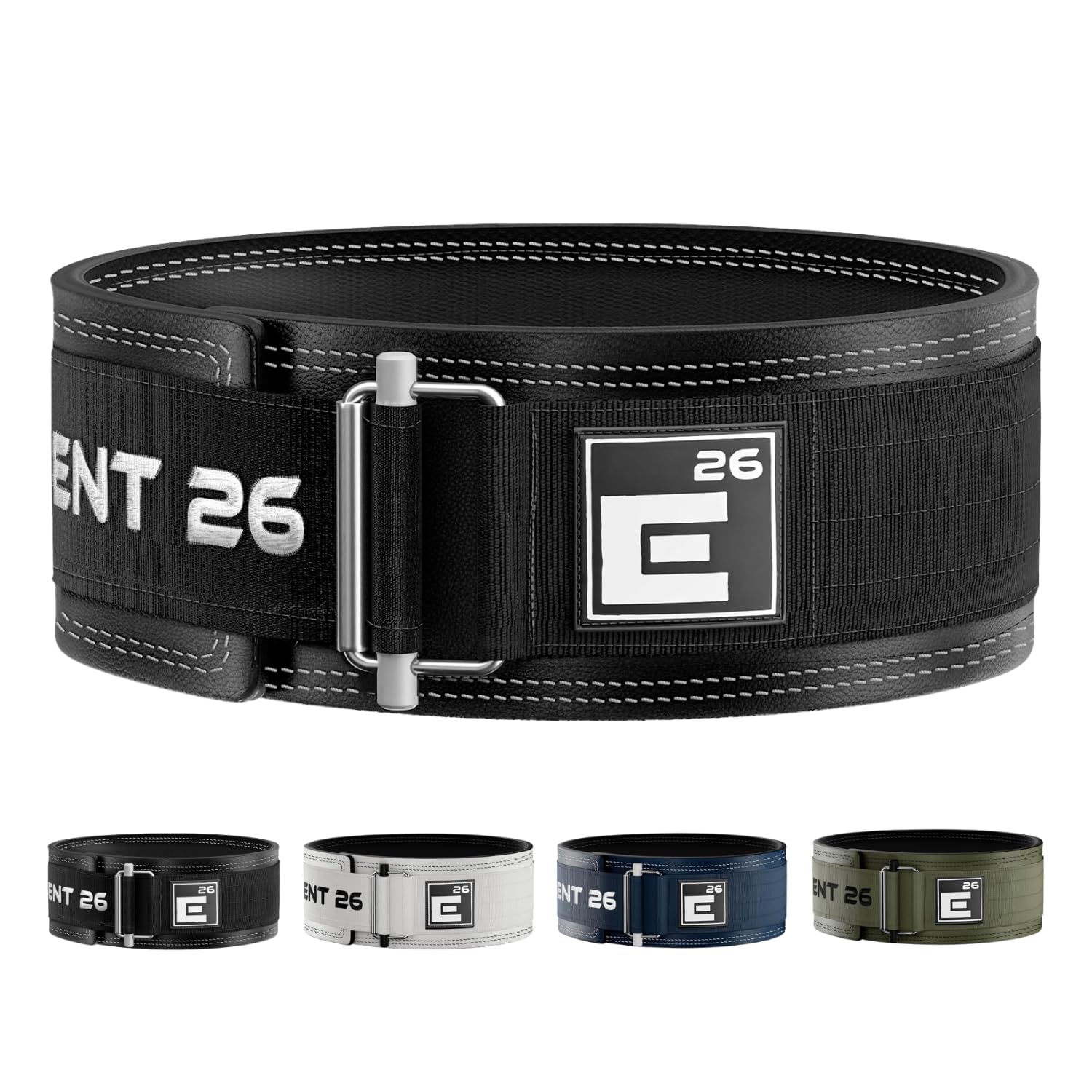
This belt solves the biggest annoyance of traditional leather belts: finding the exact right hole for a tight brace. The patented hybrid construction uses a self-locking nylon strap core wrapped in leather, giving you the rigid feedback of a leather belt with the infinite micro-adjustability of a nylon one. You can dial in tension down to the millimeter, which matters when you want a different tightness for a squat versus an overhead press.
Designed by a Doctor of Physical Therapy, the belt is optimized for intra-abdominal pressure generation rather than just squeezing. The self-locking mechanism feels secure — there is no risk of it popping open mid-lift like a worn prong buckle can. It is also competition-approved for Olympic lifting and functional fitness, so you can use it across different sports.
The combination of leather panels and a nylon central track means the belt is slightly lighter than a full leather 10mm model, and it breathes better during long training sessions. The lifetime warranty backs the premium construction. The only trade-off is that the self-locking mechanism is more complex than a simple prong, so there is more to potentially maintain over a decade of use.
Why it’s great
- Infinite adjustability for a perfect brace
- Hybrid design combines leather stability with nylon comfort
- Competition approved and lifetime warranty
Good to know
- Self-locking mechanism is more complex than a prong buckle
- Not as stiff as a 10mm solid leather belt
3. Dark Iron Fitness Genuine Leather Weightlifting Belt
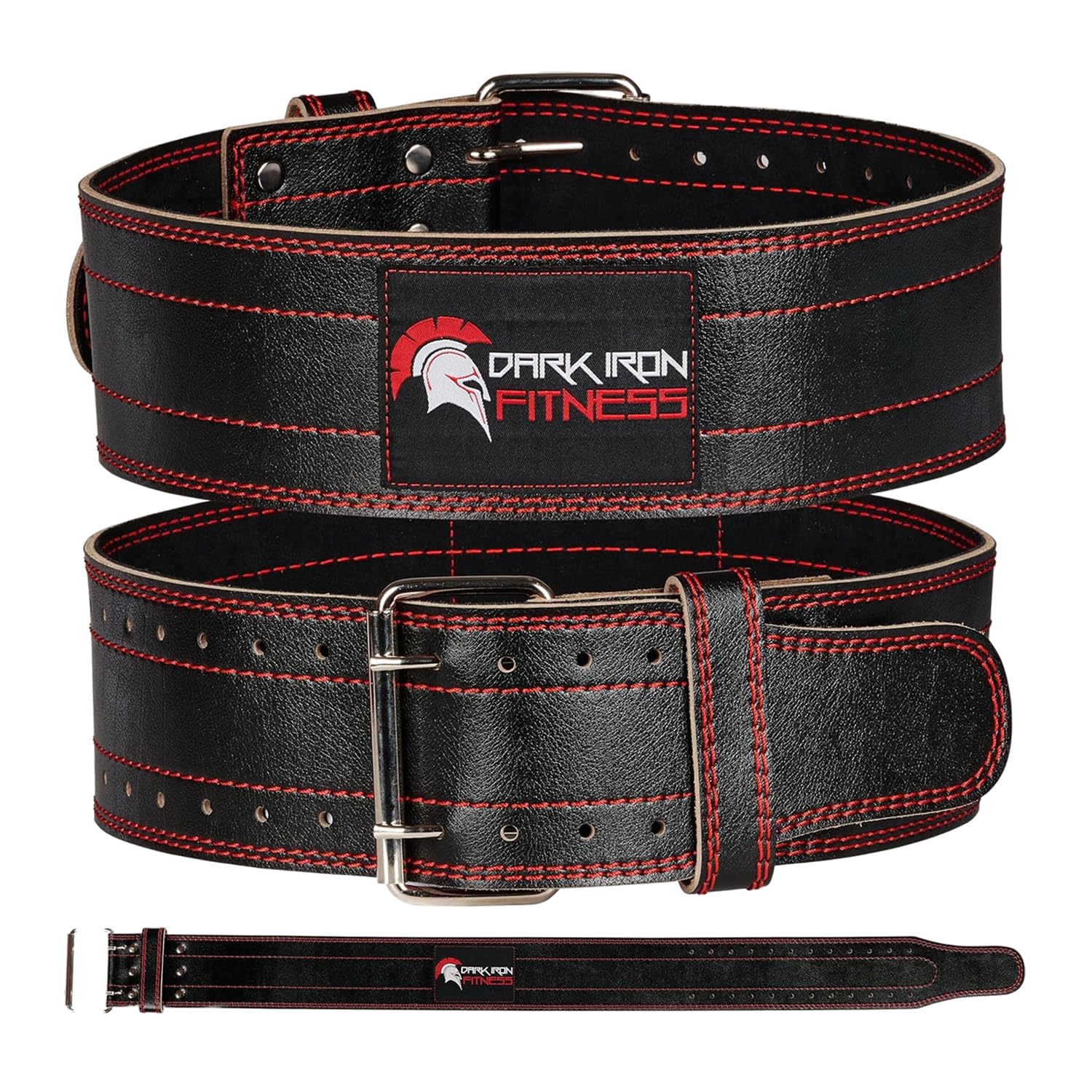
Dark Iron delivers a genuine leather belt at a price point that undercuts many competitors without cutting corners on the essentials. The 5mm thickness provides a solid wall for bracing while still being flexible enough for a relatively short break-in period. The double-prong buckle and double-row stitching give it the durability needed for consistent squat and deadlift sessions.
What sets this belt apart for general training is the wide size range — XS to XL covers waists from 22 to 49 inches, and the 12 adjustment holes at 1-inch intervals allow for a very precise fit compared to most 5-hole belts. This is especially useful if you are bulking or cutting, as you can move to the next hole without losing support. The keeper loop secures the excess belt end so it doesn’t flap around during a set.
The belt is 4 inches wide, providing uniform support, though some lifters may find it less comfortable for deep squats or deadlifts compared to tapered models. The red stitching on black leather gives it a clean, classic look that fits in any gym setting. For someone starting with a leather belt or looking for a reliable workhorse, this is a strong mid-range option.
Why it’s great
- 12 adjustment holes for a precise fit
- Genuine leather at a very accessible price
- Wide size range covers most lifters
Good to know
- 5mm thickness is less rigid than 7mm models
- Not tapered, may limit hip mobility for some deadlifters
4. Iron Infidel Lever Weight Lifting Belt

If your goal is maximum rigidity for heavy squats, the 10mm thickness of this belt provides the stiffest wall of support in this roundup. The premium leather is dense and takes time to break in, but once it does, the belt offers near-zero flex under load. The steel lever buckle allows for very fast entry and exit between sets — a major advantage when your warm-up sets climb fast and you do not want to waste time threading a prong.
The 4-inch uniform width distributes pressure evenly across the lower back and abdomen, which is ideal for maintaining a solid brace during a 5RM squat. The lever design means the fit is fixed once set, so you get consistency across every rep. This is a belt for lifters who know their exact waist measurement at the sticking point and want a predictable, repeatable setup session after session.
The sleek “1776” pattern on the black leather gives it a distinct look. The trade-off with a lever belt is that you cannot adjust the tightness mid-session without a tool, so you need to be confident in your initial sizing. It is best suited for lifters who prioritize squat and deadlift performance over dynamic or Olympic-style training.
Why it’s great
- 10mm thickness provides maximum support
- Steel lever buckle for fast, consistent fit
- Durable premium leather construction
Good to know
- Long break-in period due to thick leather
- Cannot adjust tightness mid-session without a tool
5. Schiek Sports 2006 Nylon Weight Lifting Belt

This belt breaks the mold of the leather-centric market. At 6 inches wide, it provides the most back coverage of any belt in this list, distributing pressure across a larger surface area. The nylon construction is comfortable and flexible, making it a popular choice for lifters who perform a mix of dynamic exercises, such as clean and jerks, snatches, or high-rep CrossFit workouts where a stiff leather belt would be restrictive.
The closure system combines a hook-and-loop strap with an additional buckle for double security. This allows you to get a snug fit without relying on pre-set holes, and you can easily loosen or tighten it between sets. The padded interior adds comfort for high-rep work, though the padding does compress over time. The nylon is also quieter than leather and does not require a break-in period.
For serious powerlifting, the 6-inch width can interfere with the deadlift start position, and the nylon does not provide the same rigid bracing surface as a 7mm or 10mm leather belt. This is a specialized tool for lifters who prioritize mobility and versatility over maximal core resistance. It is also a solid choice for anyone with back sensitivity who needs softer support for general strength work.
Why it’s great
- 6-inch width provides excellent back coverage
- Nylon is flexible and comfortable for dynamic movements
- Double closure system for a secure fit
Good to know
- Not stiff enough for maximal squat/deadlift support
- 6-inch width can be too wide for short torsos
6. Stoic Powerlifting Belt

Stoic takes a purist approach to belt construction. This belt uses vegetable-tanned full-grain sole leather with a full 6mm thickness and no inner suede padding. The result is a belt that doesn’t hide its core — you can see the raw leather edge, which is a hallmark of high-end material selection. The non-tapered 4-inch width provides uniform support for the entire torso, which is preferred by many powerlifters for squat and deadlift work.
The single-prong buckle is ultra-heavy duty at 2mm thick, paired with a seamless roller that distributes tension evenly across the belt tongue. The nylon stitching is thick and reinforced. Because there is no suede layer to compress, the belt’s support remains consistent over years of use without softening too much. It does require a dedicated break-in period of several sessions to mold to your body.
The lack of a taper means it can be less comfortable for Olympic lifts or during the bottom of a deep squat for lifters with shorter torsos. This is a specialist tool for the lifter who wants an uncompromising, traditional powerlifting belt that prioritizes material quality and long-term durability over quick comfort or adjustability.
Why it’s great
- Vegetable-tanned full-grain sole leather for uncompromising quality
- Non-tapered design for maximum back support
- Ultra-heavy 2mm single-prong buckle
Good to know
- Long break-in period
- Not ideal for dynamic or Olympic lifts due to lack of taper
7. Fitgriff Classic Weight Lifting Belt

Fitgriff offers a genuine cowhide leather belt that serves as a reliable entry point for lifters who want to experiment with a leather belt without making a large investment. The 5mm three-layer construction provides enough rigidity for moderate weight training and back support, while the double-prong buckle and solid rivets give it a durable feel for its class. It comes with instructions on how to properly use the belt to generate intra-abdominal pressure, which is helpful for beginners.
The design is inspired by old-school lifting belts, using a classic 4-inch width that works for general gym use. The leather is softer out of the box than thicker belts, meaning the break-in period is very short — you can get a decent fit within a couple of sessions. It also includes a 2-year guarantee, which is a solid commitment for a budget-friendly leather product.
At 5mm, the belt is less stiff than premium options, so experienced powerlifters may find it flexes too much under a heavy bar. The double-prong system works well, though the leather may stretch slightly over time, requiring you to use a tighter hole. It is a good choice for general fitness, light to moderate strength training, or as a backup belt for travel.
Why it’s great
- Genuine leather construction at an accessible price
- Short break-in period
- Includes usage instructions for proper bracing
Good to know
- 5mm thickness flexes under very heavy loads
- Leather may stretch slightly over extended use
FAQ
How tight should a lifting belt be for a heavy squat?
Is a 10mm leather belt always better than a 5mm belt?
Can I wear a lifting belt for deadlifts?
How do I know what size lifting belt to buy?
Final Thoughts: The Verdict
For most users, the lifting belts for men winner is the Iron Bull Strength 7mm Leather Belt because it delivers a perfect balance of competition-grade support, manageable break-in time, and durable construction at a mid-range price. If you want infinite adjustability and a hybrid design for varied lifts, grab the Element 26 Hybrid Belt. And for heavy squats where nothing less than maximum rigidity will do, the Iron Infidel 10mm Lever Belt is the uncompromising choice for your 1RM attempts.