Whether you’re recovering from a sunburn, battling seasonal dryness, or managing a chronic skin condition, the wrong lotion can sting, leave a greasy film, or fail to actually stop the flaking. Your goal is a formula that both soothes actively peeling areas and reinforces the lipid matrix beneath to prevent the next round of shedding.
I’m Emma — the founder and writer behind Baby Bangs. I’ve spent years cross-referencing dermatologist-formulated ingredients against real user outcomes in the peeling-skin space, focusing on healing agents, barrier-repair ratios, and non-stinging application.
Whether you need a heavy-duty ointment after a burn or a lightweight gel for post-procedure healing, finding the right lotion for peeling skin comes down to understanding how occlusion, humectants, and anti-inflammatory botanicals work together rather than guessing at trendy ingredient lists.
How To Choose The Best Lotion For Peeling Skin
Not every moisturizer supports active repair. When skin is peeling, it lacks the structural lipids to hold water and fight off bacteria. The right product needs to deliver three functions: humectant attraction, emollient softening, and occlusive sealing. You’ll want to check for ingredients that mimic the skin’s own lipid composition, such as ceramides, fatty acids, and cholesterol, rather than simply relying on water-based hydration that evaporates within an hour.
Focus on Barrier-Repair Complexes
Ingredients like panthenol (pro-vitamin B5), madecassoside, and ceramides are clinically studied for accelerating epidermal recovery. Panthenol converts to pantothenic acid in the skin, boosting fibroblast proliferation and reducing inflammation. Madecassoside, a centella asiatica derivative, calms redness while stimulating collagen synthesis. A formula carrying two or more of these agents is better equipped to handle ongoing peeling than a single-ingredient emollient.
Texture and Absorption Matter
Peeling skin is often hypersensitive. Thick ointments can tug at loose flakes when applied, causing further irritation. Conversely, water-gel textures absorb rapidly without disturbing fragile layers. Your choice should match the root cause: a petrolatum-based barrier works well for dry, cracked hands but may be too heavy for facial peeling after a chemical peel or retinol use.
Quick Comparison
On smaller screens, swipe sideways to see the full table.
| Model | Category | Best For | Key Spec | Amazon |
|---|---|---|---|---|
| CeraVe Daily Moisturizing Lotion | Premium | Long-term barrier support | 3 essential ceramides + MVE delivery | Amazon |
| La Roche-Posay Cicaplast Gel B5 | Premium | Post-procedure repair | 21% glycerin + 5% panthenol | Amazon |
| HEMPZ Triple Moisture Body Moisturizer | Mid-Range | Nourishing dry, crepey skin | Hempseed oil + shea butter | Amazon |
| Aquaphor Healing Ointment | Mid-Range | Intensive occlusive healing | Water-free petrolatum barrier | Amazon |
| Medline Remedy Phytoplex | Budget-Friendly | Affordable everyday moisturizer | No mineral oil; breathable formula | Amazon |
In‑Depth Reviews
1. CeraVe Daily Moisturizing Lotion
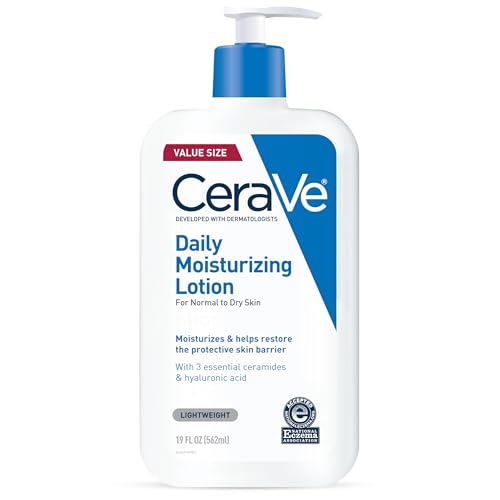
CeraVe uses Multivesicular Emulsion (MVE) technology to release ceramides gradually over 24 hours, which is critical when the skin barrier is flaking and needs sustained repair rather than a one-time moisture hit. The lightweight texture means you can reapply on peeling areas without pilling, and the inclusion of hyaluronic acid pulls water into the upper layers without the sting that heavier acids can cause on raw skin.
What sets this lotion apart for peeling skin is its National Eczema Association Seal of Acceptance. This certification signals that the formula has been reviewed for safety on compromised barriers. The ceramide ratio (1, 3, and 6-II) mirrors the lipid profile found naturally in healthy skin, helping rebuild the glue that holds skin cells together and prevents further peeling.
Because it’s non-comedogenic and oil-free, this works equally well on the body and face. Users recovering from retinol-induced flaking or mild sunburn report that it soothes without the greasy feeling many barrier creams leave behind. It’s a long-term maintenance product that performs best when used consistently twice daily.
Why it’s great
- MVE delivery provides hydration for a full 24 hours
- NEA Seal of Acceptance for compromised skin
- Fragrance-free, allergy-tested, non-comedogenic
Good to know
- Lightweight texture may not be occlusive enough for severe cracking
- Bottle design makes it harder to get the last few ounces out
2. La Roche-Posay Cicaplast Gel B5

La Roche-Posay designed Cicaplast Gel B5 for situations where skin needs protective repair: post-laser, post-stitches, and — crucially — for chapped, cracked, or peeling barriers. The gel base means zero tugging on sensitive flakes during application. With 21% glycerin and 5% panthenol, it creates a humid microclimate over damaged areas, which speeds cellular regeneration without the suffocating feel of petrolatum.
Madecassoside, the key active from centella asiatica, has been shown in clinical trials to reduce erythema and increase collagen density in healing wounds. Combined with a mineral complex of copper, zinc, and manganese, this formula provides the trace elements necessary for enzymatic repair processes that simple moisturizers overlook. The thermal spring water base also adds a calming, anti-irritant effect.
This gel is best used as a targeted treatment rather than a whole-body lotion. Apply a thin layer to actively peeling patches after cleansing, and avoid mixing with heavy occlusives that could block the breathable film. It dries down with a slightly velvety finish, making it wearable under makeup or during the day on exposed hands.
Why it’s great
- High glycerin and panthenol content for active barrier repair
- Breathable gel texture won’t disturb fragile skin
- Mineral complex supports enzymatic wound healing
Good to know
- Small 1.35 oz tube; not economical for full-body use
- Can pill if applied over thick creams or oils
3. HEMPZ Triple Moisture Body Moisturizer
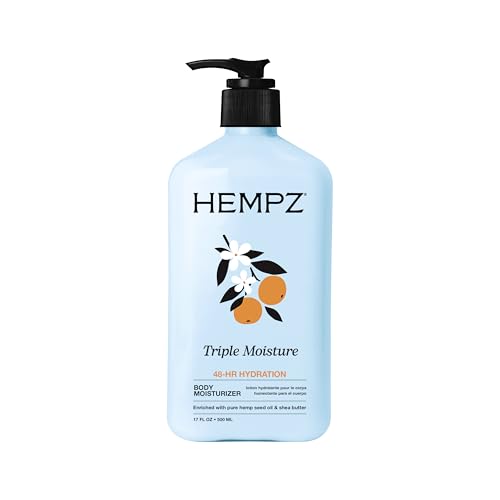
HEMPZ takes a different approach by focusing on oil-based nourishment rather than occlusion. Hempseed oil provides a balanced ratio of omega-6 and omega-3 fatty acids that studies show can reduce transepidermal water loss in chronic dry skin. Combined with shea butter and sweet almond oil, this cream delivers a nutraceutical-rich film that supports elasticity in crepey, peeling body skin.
The whipped texture absorbs into the skin without leaving a heavy residue, which is important when peeling areas need reapplication throughout the day. Vitamins A, C, and E add antioxidant protection against environmental stressors that can slow down barrier repair. Apple fruit extract provides additional mineral support for mature or sun-damaged skin that tends to peel in sheets.
This product is 100% vegan and cruelty-free, but does contain natural fragrance components from fruit extracts. If you have open cracks or raw patches, the slight scent might cause minor irritation. Best suited for general body peeling, such as after a mild sunburn or in winter dryness, rather than open wounds or post-procedure recovery.
Why it’s great
- Rich fatty acid profile from hempseed and almond oils
- Lightweight whipped texture for comfortable reapplication
- Vegan, cruelty-free, and paraben-free
Good to know
- Natural fruit extracts may cause mild stinging on raw skin
- Not occlusive enough for severely cracked or fissured skin
4. Aquaphor Healing Ointment

Aquaphor is the benchmark for petrolatum-based barrier repair. Unlike lotions that add moisture, this water-free ointment works by sealing existing hydration into the skin, preventing evaporation that worsens peeling. It’s designed specifically for dry, cracked, and compromised skin, creating a semi-occlusive film that still allows oxygen exchange — a feature that distinguishes it from pure petroleum jelly.
The formulation includes panthenol, glycerin, and bisabolol (chamomile-derived) to calm inflammation while the petrolatum base physically shields the skin from irritants and bacteria. For severely peeling hands, feet, or lips, this is the product that can fix the cycle in one to two nights of heavy application. It also works as a healing accelerator on minor wounds and chafed areas where the skin has lost its top layer.
However, the greasy texture means it’s not ideal for day use on the face or areas that come into contact with clothing. Most users apply it thick before bed and cover with cotton gloves or socks. If you need a non-sticky daytime option, combine a thin layer of Aquaphor over a lighter humectant like the CeraVe lotion for dual action.
Why it’s great
- Water-free formula creates a powerful occlusive seal
- Contains panthenol and bisabolol for calming
- Clinically proven to restore skin barrier in dry conditions
Good to know
- Very greasy; best used overnight or on small areas
- Not suitable for those who prefer scent-free, lightweight lotions
5. Medline Remedy Phytoplex Nourishing Skin Cream
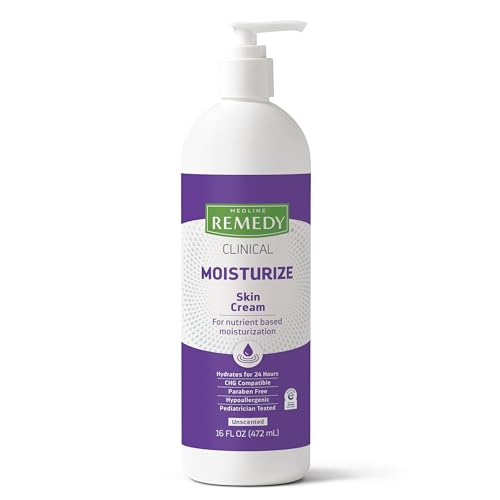
Medline’s Remedy Phytoplex cream offers a cost-effective alternative to premium barrier moisturizers, formulated without mineral oil or petrochemicals. The base uses safflower oleosomes and carrageenan — a seaweed-derived thickener that provides moisture-binding polysaccharides. This makes it breathable enough for use on hands and face while still delivering a protective film that reduces flaking.
The Phytoplex complex adds botanical extracts and essential fatty acids to support natural barrier function. It absorbs readily without a greasy residue, which is critical when you need to reapply throughout the day on peeling knuckles, elbows, or lips. The unscented nature means it won’t aggravate sensitive noses or broken skin.
Where this cream falls short is in occlusive power. For cases where the skin barrier is severely compromised — deep cracks, post-surgical peeling, or chronic fissures — the lighter formulation won’t provide the same repair acceleration as a petrolatum-based or high-panthenol product. It’s best suited as an everyday maintenance cream for mild to moderate peeling, especially for users with sensitive, reactive skin that can’t tolerate heavy ointments.
Why it’s great
- Free from mineral oil and petrochemicals
- Absorbs quickly with no greasy feel
- Affordable and fragrance-free for sensitive skin
Good to know
- Light texture may not be heavy enough for severe peeling
- Safflower oleosome base can feel thin for some users
FAQ
Can I use a regular body lotion on peeling skin?
Should I apply lotion to wet or dry peeling skin?
How often should I moisturize when my skin is peeling?
What ingredient should I avoid if my skin is peeling from a chemical peel?
Final Thoughts: The Verdict
For most users, the lotion for peeling skin winner is the CeraVe Daily Moisturizing Lotion because it combines three essential ceramides with MVE sustained-release technology, providing round-the-clock barrier repair without irritation. If you need targeted repair for post-procedure peeling or cracked patches, grab the La Roche-Posay Cicaplast Gel B5. And for severe, persistent peeling that requires overnight occlusion, nothing beats the Aquaphor Healing Ointment.