Ichthyosis vulgaris isn’t dry skin that a squirt of basic body lotion can fix. This genetic condition means your skin’s natural shedding cycle is delayed, so dead cells pile up into visible scales that crack and flake, leaving you with a perpetual battle against tightness, itch, and a rough texture that standard moisturizers simply can’t penetrate. You need a formula built to chemically exfoliate while simultaneously locking in moisture — a dual-action approach that targets the root of the scaling, not just the surface symptoms.
I’m Emma — the founder and writer behind Baby Bangs. After analyzing ingredient decks, pH profiles, and dermatological studies across dozens of products marketed specifically for this genetic scaling disorder, I can show you exactly which lotions deliver enough urea or lactic acid to actually soften the bonds holding dead skin together.
This guide breaks down the five best options for managing the scales, itch, and barrier weakness of ichthyosis vulgaris, from budget-friendly drugstore staples to potent exfoliating formulas designed for severe cases. Here is your complete analysis of the best lotion for ichthyosis vulgaris available right now.
How To Choose The Best Lotion For Ichthyosis Vulgaris
Selecting a lotion for this condition requires moving past generic “dry skin” marketing. You need to evaluate the type and concentration of active ingredients because ichthyosis vulgaris involves a defect in filaggrin production, which means your skin can’t hold water or shed dead cells normally. The wrong lotion just sits on top; the right one chemically loosens scales and replenishes the barrier.
Keratolytic Agents — Urea and Lactic Acid
These are the active workhorses. Urea at 10% or higher gently dissolves the intercellular glue that holds dead scales together, allowing them to shed instead of piling up. Lactic acid (also around 10%) provides similar exfoliation while attracting water to the skin. A product without at least one of these ingredients at a therapeutic concentration is unlikely to make a meaningful dent in moderate to severe scaling.
Barrier Repair Components
Exfoliation alone strips the skin further if you don’t replace the lipids. Look for ceramides, niacinamide, or shea butter in the formula to rebuild the compromised barrier after the scales loosen. CeraVe products excel here because they always include three essential ceramides that mimic the skin’s own lipid structure.
Irritant-Free Formulation
Ichthyosis-affected skin is vulnerable to stinging and inflammation. Fragrance, essential oils, dyes, and preservatives like parabens or methylisothiazolinone can trigger contact dermatitis on top of the existing scaling. Stick to products explicitly labeled fragrance-free, allergy-tested, and ideally holding the National Eczema Association Seal of Acceptance for an extra layer of safety verification.
Quick Comparison
On smaller screens, swipe sideways to see the full table.
| Model | Category | Best For | Key Spec | Amazon |
|---|---|---|---|---|
| Dermal Therapy Alpha Hydroxy Lotion | Premium | Heavy scaling & keratosis pilaris | 10% Urea + 10% Lactic Acid | Amazon |
| Aderma Exomega Control Balm | Premium | Sensitive, redness-prone skin | Emollient balm with Rhealba Oat | Amazon |
| CeraVe Daily Moisturizing Lotion | Mid-Range | Daily maintenance & mild scaling | 3 Essential Ceramides + HA | Amazon |
| CeraVe Anti Itch Lotion | Mid-Range | Itch relief & minor irritation | 1% Pramoxine HCl + Ceramides | Amazon |
| QV Intensive Ointment | Budget | Ultra-dry patches, preservative-free | Preservative & Water Free Balm | Amazon |
In‑Depth Reviews
1. Dermal Therapy Alpha Hydroxy Lotion – 10% Urea + 10% Lactic Acid

This is the closest you can get to a prescription-grade topical for ichthyosis without a script. The dual keratolytic punch of 10% urea and 10% lactic acid works synergistically: urea hydrates while dissolving the corneocyte bonds that cause scaling, and lactic acid provides gentle chemical exfoliation plus additional humectant draw. The result is a non-greasy lotion that visibly reduces flake buildup within a few days of consistent use — unlike occlusive balms that only soften scales without actually removing them.
The formulation was developed by Ph.D. scientist Dr. Parashu Singh and has been manufactured in Canada for over 30 years, which speaks to its stability and dermal tolerance. It’s completely fragrance-free and non-comedogenic, so it won’t clog pores on areas like the arms and legs where ichthyosis tends to concentrate. I recommend applying it immediately after a shower while the skin is still slightly damp to maximize penetration of the actives.
One important note: because this lotion contains both a high urea percentage and an alpha hydroxy acid, it can cause a mild stinging sensation on broken or freshly scratched skin. Start with every-other-day application if you have active fissures, then increase to daily use once the barrier improves. For severe, plateaued scaling, this is the product that will move the needle furthest.
Why it’s great
- Two keratolytic agents (10% urea + 10% lactic acid) target the root cause of scale buildup
- Absorbs quickly without leaving a white film or sticky residue
- Backed by 30 years of Canadian dermatological manufacturing
Good to know
- May sting on open or irritated skin patches
- Requires daily, consistent application to see full results
- Premium pricing compared to basic drugstore lotions
2. Aderma Exomega Control – Emollient Body Balm

Aderma’s Exomega Control balm takes a fundamentally different approach from the Dermal Therapy lotion. Rather than chemically exfoliating, this product focuses on barrier reinforcement and inflammation reduction using Rhealba Oat, a patented extract from young oat shoots grown in France that has demonstrated anti-inflammatory and anti-pruritic properties in clinical settings. For ichthyosis patients whose skin is red, irritated, and reactive in addition to being scaly, this balm provides immediate soothing that a straight keratolytic can’t match.
The texture is a rich balm rather than a thin lotion, which means it sits on the skin longer and provides prolonged occlusion — useful for locking in moisture overnight or on exposed areas like the shins where scales tend to be thickest. It’s free from fragrance and contains no preservatives that could trigger additional irritation. Customers consistently report visible reduction in redness and a decrease in scratching behavior, which indirectly helps the skin heal by reducing trauma.
However, this product does not contain urea or lactic acid. If your main complaint is thick, adherent scales that won’t shed, you will likely need to pair it with a keratolytic product like the Dermal Therapy lotion or layer it over a urea cream to get the exfoliation you need. This is the best choice for the “itch and redness” component of ichthyosis vulgaris, not the “scale removal” component.
Why it’s great
- Rhealba Oat extract actively calms redness and reduces itch sensation
- Rich balm texture provides long-lasting occlusion for severely dry patches
- Preservative-free and fragrance-free for hypersensitive skin
Good to know
- Contains no keratolytic agents — won’t aggressively remove existing scales
- Consistency may feel too heavy for some daytime use
- Premium-priced relative to its ingredient concentration
3. CeraVe Daily Moisturizing Lotion
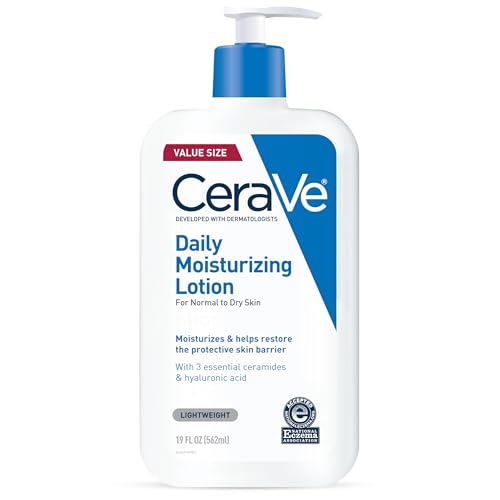
If you have mild ichthyosis vulgaris or you’re looking for a post-shower maintenance lotion to use on days you aren’t applying a keratolytic treatment, this CeraVe lotion is the gold standard for barrier support. It uses MVE (Multivesicular Emulsion) delivery technology to release ceramides 1, 3, and 6-II gradually over 24 hours, which is critical for a condition where the skin’s natural lipid production is compromised from the start. The inclusion of hyaluronic acid adds humectant pull without making the formula heavy.
This lotion holds the National Eczema Association Seal of Acceptance, which means it’s been independently reviewed for safety on compromised skin. It’s completely fragrance-free, oil-free, and non-comedogenic. Many ichthyosis patients find they can use this on their face as well as their body without stinging, which is rare among drugstore moisturizers. The 19-ounce bottle provides generous volume for full-body application, making it economical for daily use.
The limitation is obvious: this is not a treatment lotion. It contains no urea, no lactic acid, and no other keratolytic agents. If you have thick, visible scales on your lower legs or arms, this product will keep the surrounding skin hydrated but will not reduce the scaling itself. Use it as your everyday moisturizer between stronger treatments to maintain barrier health and prevent the skin from drying back out.
Why it’s great
- MVE technology delivers ceramides for 24-hour hydration
- NEA Seal of Acceptance confirms safety for compromised skin
- Lightweight, non-greasy texture works on face and body
Good to know
- No keratolytic ingredients — won’t remove existing scales
- May not be rich enough for severe, plateaued dryness
- Pump bottle can be difficult to fully empty
4. CeraVe Anti Itch Moisturizing Lotion with Pramoxine Hydrochloride

Itch is often the most disruptive symptom of ichthyosis vulgaris — the constant urge to scratch that leads to fissures, bleeding, and secondary infection. This CeraVe lotion addresses that specific need by including 1% pramoxine hydrochloride, a topical anesthetic that numbs superficial nerve endings in the skin to provide rapid relief. The clinical data is compelling: the manufacturer reports that 100% of study participants experienced relief from even their most severe itch within two minutes, with effects lasting up to eight hours.
Beyond the anesthetic, the formula contains the same three essential ceramides found in the standard CeraVe lotion, plus niacinamide to help calm inflammation. This means you’re getting itch relief and barrier repair in a single application, which is more efficient than layering a separate anti-itch cream under your moisturizer. The lightweight texture absorbs quickly and doesn’t interfere with subsequent keratolytic treatments if you’re combining products.
Be aware that pramoxine is a temporary measure — it relieves the sensation of itching but doesn’t treat the scaling that causes the itch. For lasting improvement, you need to pair this with a urea or lactic acid product that reduces the physical buildup of scales. Also note that consistent use of topical anesthetics can sometimes cause skin sensitivity over time, so reserve this for flare-ups or nighttime use when the urge to scratch is strongest.
Why it’s great
- 1% pramoxine HCl provides clinical-grade itch relief within minutes
- Contains ceramides and niacinamide for concurrent barrier repair
- HSA and FSA eligible, NEA Seal of Acceptance
Good to know
- No exfoliating ingredients — treats symptoms, not root cause
- Anesthetic effect may diminish with prolonged daily use
- Smaller 16-ounce bottle compared to standard CeraVe options
5. QV Intensive Ointment

The QV Intensive Ointment is the stripped-down, no-compromise option for people whose skin reacts to even the minimal preservatives in standard creams. It is completely water-free and preservative-free, which means it cannot support bacterial growth and therefore doesn’t require any chemical stabilizers that might sting a compromised barrier. It’s an anhydrous balm that functions as a pure occlusive — it seals moisture in and prevents transepidermal water loss better than any lotion-based product on this list.
Dermatologically tested for eczema, psoriasis, and specifically ichthyosis, this ointment is as bare-bones as it gets. It contains no fragrance, no color, no lanolin, and no common irritants. The texture is thick and waxy, which makes it ideal for spot-treating the driest areas — elbows, knees, shins, and heels — where the stratum corneum is thickest and scales are most stubborn. Many users find it indispensable for overnight use under cotton gloves or socks.
The trade-off is that this is purely a sealant, not a treatment. It will not exfoliate scales, hydrate the deeper layers of the epidermis, or deliver any active ingredients. For ichthyosis vulgaris, it works best as a final layer applied over a keratolytic lotion or a hydrating serum. If you apply it alone to thick scales, it may soften them temporarily but won’t reduce their thickness. It’s a strong complement to a treatment routine, not a standalone solution.
Why it’s great
- Zero preservatives and zero water — won’t sting even the most reactive skin
- Maximum occlusivity locks in moisture for hours
- Specifically indicated for ichthyosis on the label
Good to know
- Contains no keratolytic or humectant ingredients
- Thick, greasy texture not suitable for daytime or broad coverage
- Best used as a spot treatment or overnight occlusive layer
FAQ
Can I use a standard body lotion for ichthyosis vulgaris?
How often should I apply a urea lotion for ichthyosis?
What’s the difference between a keratolytic lotion and an emollient balm?
Final Thoughts: The Verdict
For most users, the best lotion for ichthyosis vulgaris winner is the Dermal Therapy Alpha Hydroxy Lotion because its dual 10% urea and 10% lactic acid formula directly targets the core problem of scale retention while providing deep hydration. If your skin is primarily red, itchy, and reactive rather than heavily scaled, grab the Aderma Exomega Control Balm for its proven anti-inflammatory Rhealba Oat. And for those who need a daily barrier-maintenance lotion that won’t sting even the most sensitive skin, nothing beats the CeraVe Daily Moisturizing Lotion for its ceramide-rich, NEA-approved formula.