Deciphering the best liver spot remover goes far beyond picking the cheapest bottle on a drugstore shelf. The real battle is between targeted ingredients like Tranexamic Acid, Kojic Acid, and stabilized Vitamin C, each attacking hyperpigmentation through a different biochemical pathway. Without understanding which active your specific spot type responds to, you risk weeks of wasted application and zero visible change.
I’m Emma — the founder and writer behind Baby Bangs. I’ve spent over a decade analyzing ingredient decks and clinical studies in the skincare and wellness space, separating marketing fluff from formulations that actually deliver measurable fade to sun spots, melasma, and post-inflammatory marks.
After reviewing serums, soaps, and leave-on exfoliants that target epidermal melanin, the right pick comes down to pairing your skin’s tolerance with a proven depigmenting agent. This guide to the best liver spot remover breaks down each formula’s mechanism so you can stop guessing and start fading.
How To Choose The Best Liver Spot Remover
Liver spots are stubborn collections of melanin often triggered by cumulative UV exposure, not a reflection of your liver’s health. The formula you choose must either suppress melanin production at its source or accelerate the shedding of pigmented cells. Understanding the three main active categories — melanin inhibitors, antioxidants, and chemical exfoliants — is the first step toward a targeted solution.
Match the Active to Your Spot’s Depth
The depth of pigmentation dictates the active you need. Superficial spots respond well to Tranexamic Acid, which blocks the plasmin pathway that triggers melanocyte activity. Deeper or more persistent spots often need Kojic Acid, a tyrosinase inhibitor that prevents melanin formation at the enzymatic level. Vitamin C (L-ascorbic acid) works as an antioxidant that interrupts the oxidation chain reaction and brightens overall tone, making it ideal for maintenance and prevention rather than aggressive spot removal.
Check the pH and Formulation Stability
Active stability matters more in this category than any other. L-ascorbic acid oxidizes rapidly when exposed to light and air, turning amber and losing efficacy — an opaque, airtight bottle is non-negotiable. Kojic Acid and Tranexamic Acid are more forgiving, but their efficacy still hinges on being formulated at the correct pH to penetrate the stratum corneum. A serum that feels sticky or pills under moisturizer often indicates a suboptimal delivery system that won’t reach the pigmented cells.
Pair with Daily Sunscreen for Results
UV exposure reactivates melanocytes faster than most topicals can suppress them. Using a liver spot remover without daily SPF 30 or higher is like mopping the floor while the faucet is still running. The visible fading timeline of 4 to 8 weeks only holds true when the skin is shielded from the very stimulus that created the spots in the first place. If you skip sunscreen, you will never fully clear the hyperpigmentation, regardless of the serum you choose.
Quick Comparison
On smaller screens, swipe sideways to see the full table.
| Model | Category | Best For | Key Spec | Amazon |
|---|---|---|---|---|
| LATORICE Tranexamic Acid Serum | Mid-Range | Targeted melanin suppression | 1.7 Fl Oz / Tranexamic Acid | Amazon |
| CeraVe Vitamin C Serum | Mid-Range | Daily brightening and barrier support | 10% L-ascorbic Acid | Amazon |
| VALITIC Kojic Acid Soap Bars | Budget-Friendly | Body-wide hyperpigmentation | 5 Pack Bar / Kojic Acid Blend | Amazon |
| Innisfree Green Tea Enzyme Serum | Premium | Fast visible brightening within days | Vitamin C + Green Tea Enzyme | Amazon |
| Paula’s Choice 2% BHA Exfoliant | Premium | Surface exfoliation of aged spots | 2% Salicylic Acid | Amazon |
In‑Depth Reviews
1. LATORICE Tranexamic Acid Serum
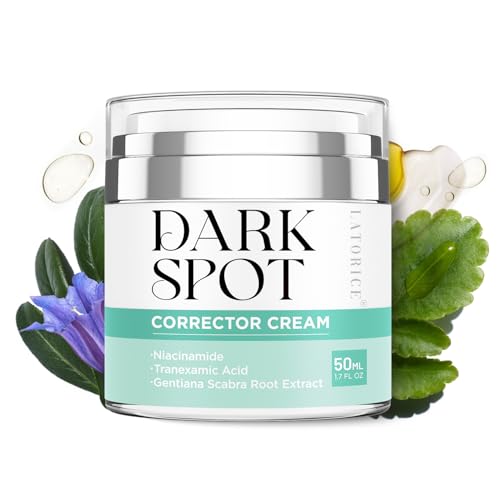
The LATORICE serum goes straight after the root cause of stubborn liver spots by using Tranexamic Acid, a synthetic derivative of lysine that blocks the plasmin pathway responsible for activating melanocytes. This makes it uniquely suited for spots that feel deep or resistant to typical brightening serums. The 1.7-ounce bottle delivers a full 8-week supply at a single daily application, and the formula is gentle enough for all skin tones without the irritation risk some stronger acids carry.
Where this serum stands apart is its compatibility with sensitive skin types. Unlike Vitamin C or Retinol formulations that can sting or peel when used long-term, Tranexamic Acid is well-tolerated even on compromised barriers. The texture is lightweight and absorbs quickly without leaving a tacky residue, which matters when you’re layering it under moisturizer or sunscreen in the morning.
The manufacturer emphasizes pairing this with daily SPF to lock in results. Consumer feedback notes visible softening of spot edges around week 4, with fuller fading between 6 to 8 weeks. The only tradeoff is that Tranexamic Acid works primarily on melanin production — it doesn’t exfoliate surface pigmentation, so you may want to pair it with a gentle chemical exfoliant for faster results.
Why it’s great
- Targets melanocyte activity at the source, not just surface pigmentation.
- Very gentle on sensitive and reactive skin types.
- Fast-absorbing texture that layers well under other products.
Good to know
- Does not exfoliate dead skin cells — works best combined with a gentle exfoliant.
- Results visible at 4 weeks minimum; requires consistent daily use.
2. CeraVe Vitamin C Serum

CeraVe’s entry into the brightening serum space is anchored by 10% pure L-ascorbic acid, the most biologically available form of Vitamin C. This concentration hits the sweet spot — strong enough to inhibit melanin oxidation and stimulate collagen, but low enough to avoid the stinging and irritation common with 15% and 20% formulations. The addition of Hyaluronic Acid and three essential ceramides (1, 3, 6-II) means this serum also restores barrier lipids while it fades discoloration.
The lightweight gel texture absorbs fully into the skin without leaving a greasy film, which is a practical detail for morning use under makeup or mineral sunscreen. CeraVe’s protective packaging is another smart design choice — the pump bottle limits air exposure, helping to keep the Vitamin C stable and preventing that telltale orange oxidation that renders many serums useless after a few weeks.
Where it falls slightly short for targeted spot removal is its all-over approach. Rather than delivering a concentrated dose directly onto the pigmented spot, the serum spreads evenly across the entire face. This makes it excellent for overall skin tone and texture improvement but less effective for isolated, dark liver spots compared to a targeted serum or a dedicated tyrosinase inhibitor.
Why it’s great
- Dermatologist-backed formulation with proven barrier-supporting ceramides.
- Stable packaging design keeps Vitamin C from oxidizing prematurely.
- Gentle enough for daily AM use and sensitive skin.
Good to know
- Lower potency means slower visible results on deep, isolated spots.
- Not a targeted spot treatment — brightens the entire face evenly.
3. Innisfree Green Tea Enzyme Vitamin C Serum

The Innisfree serum distinguishes itself by combining Vitamin C with a patented Green Tea-derived enzyme that provides dual-action brightening and gentle enzymatic exfoliation. The brand’s own 4-week clinical study reported visible fading of dark spots — including sun spots and post-breakout marks — in as little as 7 days, with continued improvement over the full month. This speed sets it apart from most serums in this category, which typically require 4 to 8 weeks for measurable change.
The formula leverages niacinamide alongside the Green Tea enzyme to further inhibit melanin transfer, while tangerine peel extract and hyaluronic acid add antioxidant defense and hydration. The texture is a lightweight serum that absorbs quickly without stickiness, making it suitable for both morning and evening use. The brand recommends layering with sunscreen in the AM to protect the brightening progress.
The key consideration here is that a clinical study’s self-assessment portion means some results are based on participant perception rather than objective measurement. Also, Green Tea-derived enzymatic exfoliation is milder than chemical exfoliants like BHA, so very dense or thick liver spots may need a stronger accelerating agent alongside this serum for full clearance.
Why it’s great
- Clinically shown results visible within the first week of daily use.
- Gentle enzymatic exfoliation removes surface pigmentation while Vitamin C works deeper.
- Lightweight, non-sticky texture fits easily into any AM/PM routine.
Good to know
- Clinical self-assessment data may be less rigorous than independent tests.
- Mild exfoliation level may not be enough for thick, established liver spots without a booster.
4. Paula’s Choice 2% BHA Liquid Exfoliant
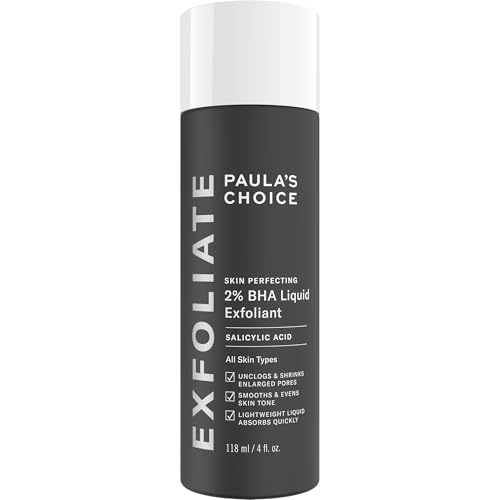
The Paula’s Choice 2% BHA is not a direct melanin inhibitor, but it holds a critical role in the liver spot removal process. Beta Hydroxy Acid (salicylic acid) is oil-soluble, meaning it penetrates deep into the pore lining and accelerates the shedding of pigmented, damaged skin cells on the surface. This makes it an essential step for spots that feel textured or raised, as it physically removes the layers of keratinized cells that hold the melanin deposit.
Beyond spot fading, this leave-on exfoliant smooths fine lines, refines enlarged pores, and balances overall skin texture. The formula is fragrance-free, non-abrasive, and designed for daily use on all skin types — including sensitive skin, provided you start slowly. It does not contain any brightening actives like Vitamin C or Kojic Acid, so its role is purely exfoliative rather than melanin-suppressive.
The main limitation is that BHA does nothing to prevent new melanin from forming. If you use it alone without a melanin-inhibiting serum, you are simply removing the top layer of pigment while melanocytes continue producing more underneath. For best results, pair it as a step between cleansing and your brightening serum, allowing the BHA to clear the path for the active ingredients to penetrate deeper.
Why it’s great
- Directly exfoliates surface pigmentation, revealing clearer skin below.
- Oil-soluble formula penetrates inside pores for deep cell turnover.
- Fragrance-free formulation suitable for daily use on most skin types.
Good to know
- Only removes existing pigment — no mechanism to prevent new melanin formation.
- Needs to be paired with a melanin inhibitor or brightening serum for lasting results.
5. VALITIC Kojic Acid Dark Spot Soap Bars
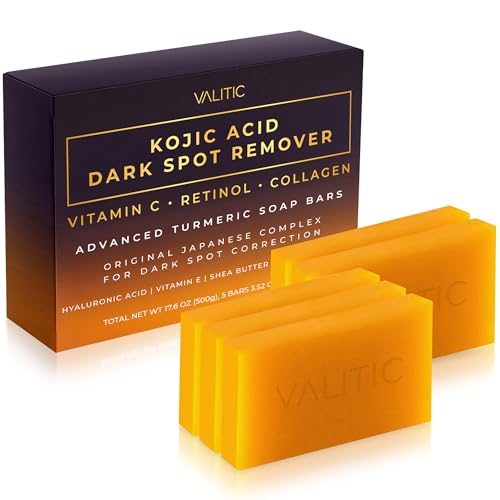
The VALITIC soap bars take a completely different approach by using Kojic Acid — a natural tyrosinase inhibitor derived from fungi — to prevent melanin formation at the enzyme level. This soap is a wash-off product, not a leave-on treatment, which means the active exposure time is limited to about 20 to 30 seconds of massage before rinsing. The inclusion of Retinol, Collagen, Turmeric, and Hyaluronic Acid in the formulation attempts to compensate for the short contact time with a broader ingredient cocktail.
The primary advantage of this soap bar format is its ability to cover large body areas efficiently. Liver spots on the chest, shoulders, arms, or back are difficult to treat with a serum because the surface area is large and serums become cost-prohibitive. A single bar lasts several weeks of daily use across the entire body, making it a cost-effective entry point for widespread or diffuse hyperpigmentation.
The real-world limitation is that wash-off actives are inherently less effective than leave-on serums for deep, established spots. The Kojic Acid needs more time on the skin to significantly inhibit tyrosinase, and rinsing after a quick lather reduces its bioavailability. The bars also contain a strong fragrance and essential oil components that can irritate sensitive facial skin, so they are best reserved for body use where the skin is thicker.
Why it’s great
- Affordable way to treat hyperpigmentation across large body areas.
- Contains Kojic Acid, a proven tyrosinase inhibitor, plus Retinol and Turmeric for multitargeting.
- 5-pack provides several months of consistent body treatment.
Good to know
- Wash-off format limits ingredient contact time and overall efficacy on deep spots.
- Contains fragrance and essential oils — better suited for body than sensitive facial skin.
FAQ
How long does a liver spot remover take to show visible results?
Can I use a liver spot remover on body areas like my hands and chest?
Is it safe to use a BHA exfoliant with a brightening serum?
Does Kojic Acid soap really work on established liver spots?
Final Thoughts: The Verdict
For most users, the best liver spot remover winner is the LATORICE Tranexamic Acid Serum because it directly suppresses melanocyte activity at the source while being gentle enough for daily use across all skin tones. If you want overall brightening plus barrier support in a single step, grab the CeraVe Vitamin C Serum. And for body-wide hyperpigmentation coverage on a budget, nothing beats the VALITIC Kojic Acid Soap Bars for cost-effective daily maintenance.