That post-long-run ache in your calves and quads is more than soreness — it’s micro-damage and fluid buildup that can cut your next workout short if you don’t clear it fast. A purpose-built massage gun designed for runners targets those dense, overworked leg muscles with enough amplitude and stall force to break up deep-tissue knots without bouncing off bone or bruising the periosteum.
I’m Emma — the founder and writer behind Baby Bangs. I’ve analyzed stall force ratings, motor torque curves, and battery chemistry across more than 40 percussive therapy devices to identify the models that actually survive repeated use on runner-specific muscle groups.
Whether you’re chasing a half-marathon PR or just trying to walk the next day, the right tool makes recovery predictable and fast. That’s why I built this guide to the massage gun for runners that actually delivers real stall force where your legs need it most.
How To Choose The Best Massage Gun For Runners
Not every percussion gun works on runner legs. The muscles that propel you mile after mile — gastrocnemius, soleus, vastus medialis, hamstring group — are dense, fibrous, and often deep. A weak gun that stalls at the first knot or a gun with too little amplitude will just buzz your skin and leave the trigger point untouched. Here’s the short list of what runners must check before buying.
Stall Force and Amplitude
Stall force is the amount of pressure the motor can resist before it stops percussing. For runners, stall force of at least 40 lbs is the floor — your calves alone can generate that kind of tension. Amplitude, measured in millimeters, is the depth of each tap. A gun delivering less than 10 mm of amplitude will struggle to reach the deep fascia of the quad and glute. Look for motors that advertise both high stall force (45+ lbs) and amplitude in the 10–12 mm range.
Attachment Selection and Material
Runner-specific guns need a mix of broad attachments for large muscle groups and pointed ones for trigger points. A standard ball head works for quads and glutes, but the bullet and fork heads are what you reach for when the soleus or peroneals knot up after hill repeats. Plastic heads can crack under high stall force — metal heads (aluminum alloy) dissipate heat better and last longer, especially if you plan to pair them with cold therapy.
Battery Life and Charging Standard
If you travel for races or train away from home, battery life and charging convenience are non-negotiable. Guns with 3–6 hours of real-world runtime let you go a week between charges. USB-C PD fast charging means you can top up from a power bank at the start line or in the car. An auto-off timer (10–15 minutes) prevents motor overheating and battery degradation, which matters when you’re using the gun daily.
Weight and Ergonomics
A gun you dread picking up won’t get used. Sub‑2‑pound guns with an ergonomic, rounded handle allow one-handed operation on hard-to-reach spots like the lower back and glute. Balanced weight distribution reduces wrist fatigue during a 10‑minute recovery session. The grip material also matters — silicone or textured rubber prevents slipping when your hands are sweaty post-run.
Noise Level
Runners often use massage guns early in the morning or late at night. A gun that operates at or below 45 dB is quiet enough to use while watching TV or when others are asleep. Standard ball heads and dampener attachments can further reduce percussive noise without sacrificing depth.
Quick Comparison
On smaller screens, swipe sideways to see the full table.
| Model | Category | Best For | Key Spec | Amazon |
|---|---|---|---|---|
| Bob and Brad A2 Pro | Mid-Range | Deep leg pain with heat/cold | 45 lbs stall force, 10.5 mm amplitude | Amazon |
| Ekrin Bantam Mini | Mid-Range | Race day travel and portability | 1.1 lbs, 6 hr battery | Amazon |
| RENPHO Active+ Thermacool | Mid-Range | Hot/cold therapy on quads | 45 lbs stall force, USB-C | Amazon |
| ROOFTREE R20 | Premium | Pro-level stall force for heavy legs | 60 lbs stall force, 12 hr battery | Amazon |
| TheraGun Mini (3rd Gen) | Premium | Quiet, ultra-portable daily carry | 15.87 oz, 180 min battery | Amazon |
| Hyperice Hypervolt 2 Pro | Premium | Full pro recovery with app guidance | 90W motor, 5 speed settings | Amazon |
| RENPHO Active 2 | Budget | Entry-level runner recovery | 3200 RPM, 5 heads, metal housing | Amazon |
In‑Depth Reviews
1. Bob and Brad A2 Pro
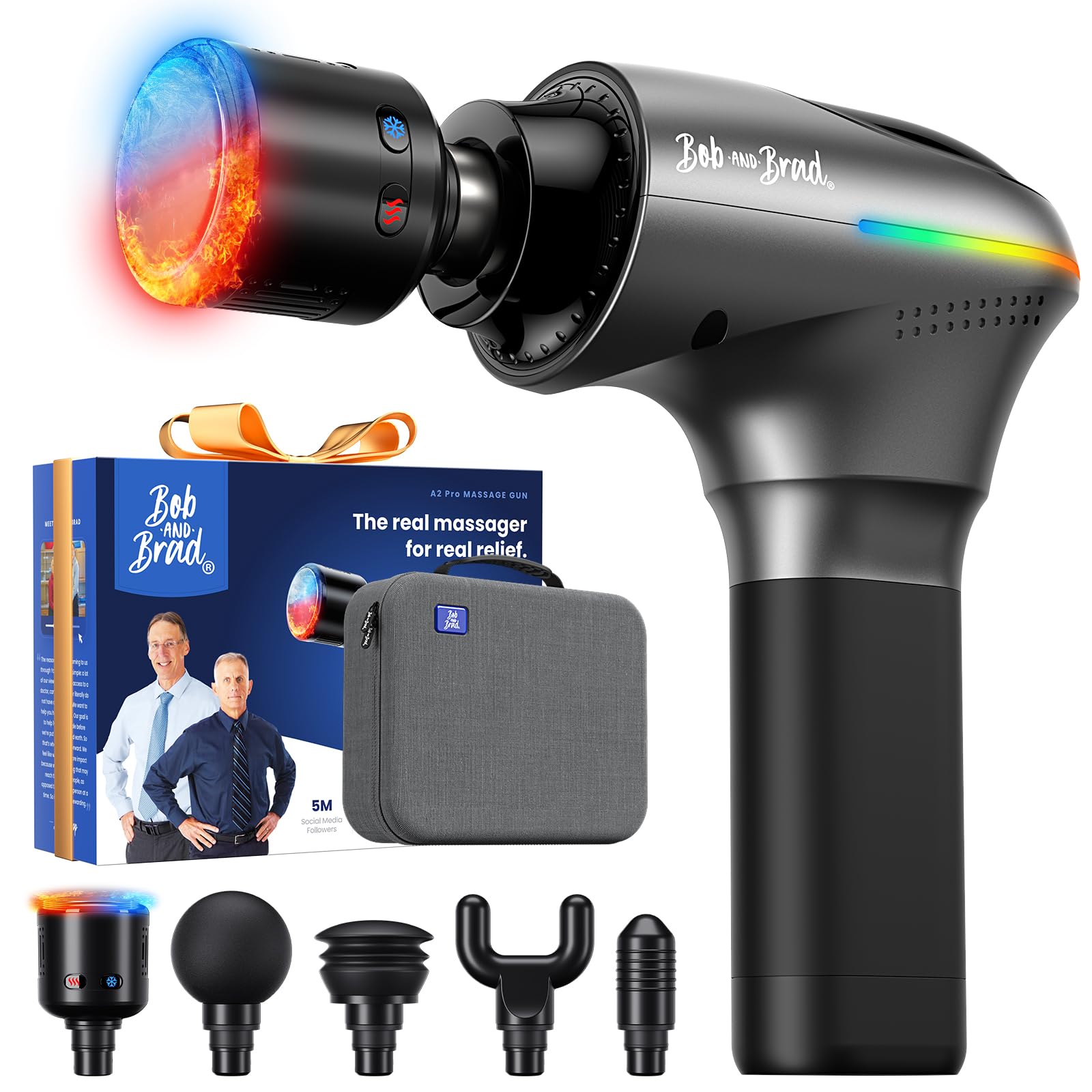
The Bob and Brad A2 Pro is purpose-built by physical therapists who understand runner anatomy. Its 45 lbs of stall force and 10.5 mm amplitude mean you can lean into a knotted calf or quad without the motor stalling — a common failure in cheaper guns. The ability to switch between rapid heating (104–113°F) and precise cooling (50–59°F) makes it a dual-purpose tool for both pre-run activation and post-run inflammation control. Runners dealing with shin splints or chronic hamstring tightness will appreciate the targeted heat option that softens fascia before percussion.
The smart LED pressure sensor is a standout for new users — it glows to tell you when you’re pressing too hard, reducing the risk of bruising delicate gastrocnemius tendons. With five speed settings ranging from 2000 to 3200 RPM, you can dial in a light tap for the Achilles or full force for the glutes. The 4000 mAh battery with USB-C PD fast charging keeps the gun running for weeks of daily use, and the 1.6 lb weight with an anti-slip silicone grip makes one-handed operation on the lower back effortless.
The included carrying case holds all six attachments, including the air cushioning head for sensitive joints and the U-shaped head for the spine and Achilles. The 2-year warranty and FSA/HSA eligibility lower the financial barrier for runners who want a professional-grade device without the professional price tag. It’s the single most versatile recovery tool on this list for the dedicated runner.
Why it’s great
- 45 lbs stall force delivers deep tissue penetration without stalling
- Heat/cold head adapts to pre-run warmup and post-run recovery
- Smart sensor prevents over-pressing on sensitive tendons
- FSA/HSA eligible with a full 2-year warranty
Good to know
- Heated head adds 0.3 lbs to the overall weight
- App connectivity is basic — no guided workout routines
2. Ekrin Athletics Bantam Mini

The Ekrin Bantam Mini is the runner’s travel companion — it weighs just 1.1 lbs and fits in a hydration vest pocket or carry-on without a second thought. Despite its compact form, it delivers 2000 to 3200 RPM, enough to handle post-run quad and calf work. The slim, ergonomic handle allows a natural grip, and the 6-hour battery means a full week of daily 15-minute sessions between charges. Runners who race out of town or train on the road will value the USB-C charging and included travel case.
With four interchangeable attachments, the Bantam covers the basics: ball head for glutes, bullet for trigger points, flat for general use, and fork for the spine and Achilles. Users report the noise level is noticeably lower than full-size guns, making it a good choice for hotel rooms or early-morning sessions. The lithium-ion battery retains its capacity well over multiple charge cycles, and the automatic 15-minute shutoff prevents motor strain during extended use.
Where the Bantam falls short is stall force — it cannot match the 45–60 lbs of larger units. Runners with extremely dense quad tissue or chronic deep knots may find it underpowered for the heaviest work. But for mid-run loosening, post-race maintenance, and portability, it punches well above its weight class. It’s the ideal secondary gun for a runner who already owns a heavy hitter.
Why it’s great
- Ultra-light 1.1 lb design fits in a run pack
- 6-hour battery easily lasts a race weekend
- USB-C charging compatible with power banks
Good to know
- Lower stall force struggles with very dense leg tissue
- Only four attachments — no heat/cold option
3. RENPHO Active+ Thermacool
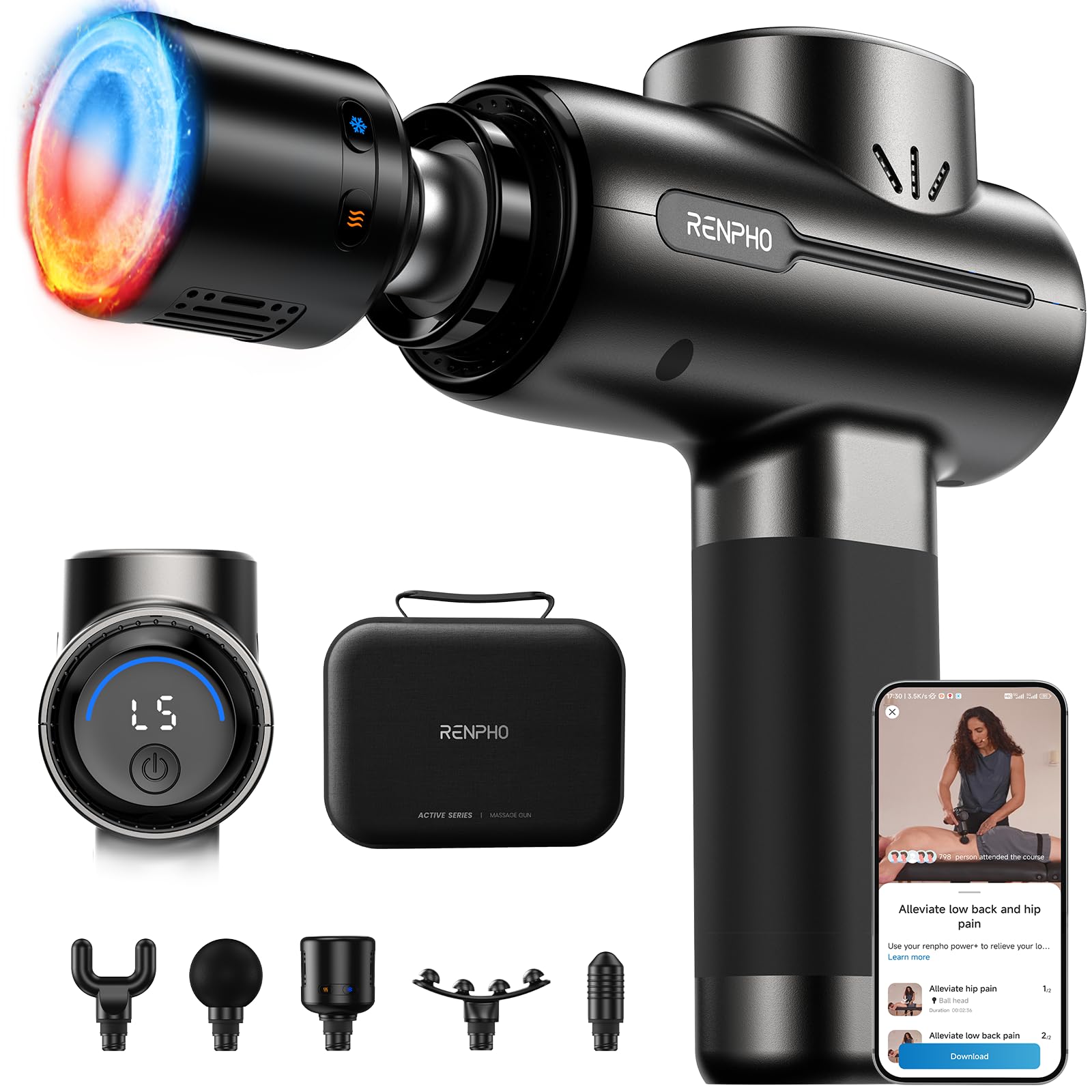
The RENPHO Active+ Thermacool brings a heat and cold head to the mid-range price segment, giving runners a dual-zone recovery tool without jumping to the premium tier. Its high-torque brushless motor delivers up to 45 lbs of stall force, putting it on par with the Bob and Brad A2 Pro for raw power. The four adjustable temperature settings on the thermal head allow precise control — cold for acute shin splints or hot for chronic hamstring tightness. The LED display keeps you informed of both speed level and remaining battery, so you never get caught mid-session with a dead gun.
At just 1.68 lbs and a slim 7.44-inch profile, the Thermacool is easy to maneuver around the knee and ankle. The five-speed range covers everything from a gentle warmup tap to deep percussion for the glutes. USB-C charging is a welcome standard, and the included travel case keeps the five heads organized. The motor noise is low enough for late-night sessions without disturbing sleepers — measuring around 45 dB at the highest speed.
What holds the Thermacool back is the lack of force-sensing guidance — there is no LED indicator to tell you when you’re pressing too hard, which increases the bruising risk for new users. The app control with video-guided courses is also still underdeveloped compared to the Hyperice ecosystem. But for the runner who wants hest/cold therapy and solid stall force in a single mid-range device, this is a strong contender.
Why it’s great
- 45 lbs stall force equals premium-tier power
- Heat/cold head with four temperature levels is rare at this price
- LED display shows battery percentage clearly
Good to know
- No force sensor to prevent over-pressing
- App guidance is basic compared to Theragun/Hyperice
4. ROOFTREE R20
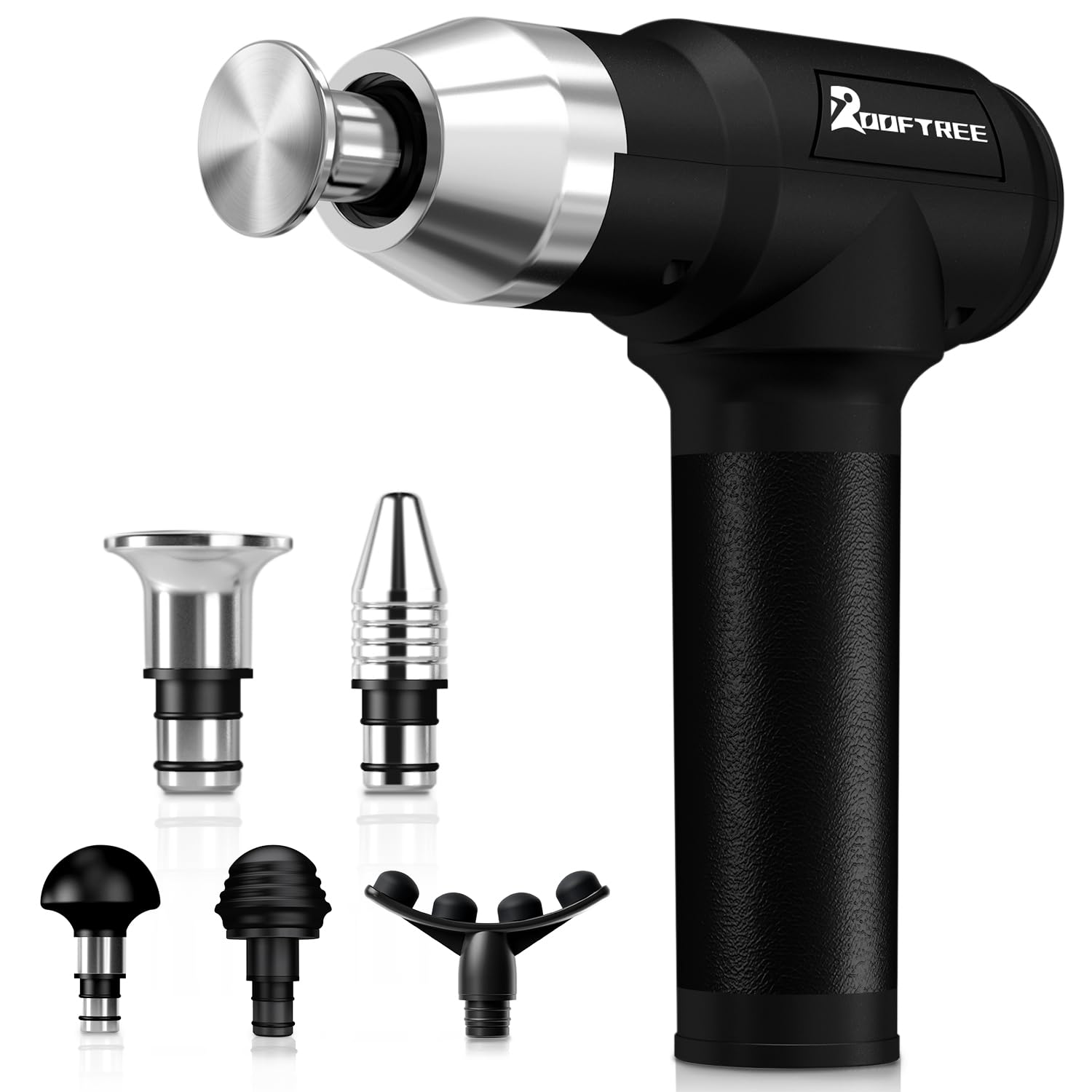
The ROOFTREE R20 is built for the runner who treats recovery with the same intensity as training. Its 60 lbs of stall force and 12 mm amplitude are among the highest figures in the sub‑ range — enough to drive through the densest quad and glute tissue without hesitation. The 90W brushless motor spins up to 3600 RPM, and the aircraft-grade aluminum alloy heads dissipate heat effectively during extended sessions. Runners who combine high mileage with heavy strength work will find the R20 capable of addressing both deep and superficial trigger points.
The battery life is the standout number here: up to 12 hours on a full charge, which translates to two weeks of daily use or a week of intensive work on multiple body parts. The automotive-grade battery cells offer better longevity than standard lithium-ion packs, and the inclusion of five specialized metal heads gives you the flexibility to treat everything from the plantar fascia to the upper traps. The ergonomic non-slip grip reduces wrist fatigue during 10‑minute sessions, and the noise level stays in the 35–50 dB range depending on speed.
Downsides are the 2.03 lb weight — it’s noticeably heavier than the Bantam or Thermacool — and the lack of a smart pressure sensor. Users need to develop feel to avoid over-pressing. The industrial design also isn’t as refined as the Hypervolt or Theragun, but the raw performance per dollar is hard to beat for the serious runner.
Why it’s great
- 60 lbs stall force handles the densest leg muscles
- 12-hour battery outlasts any other gun in this guide
- Aluminum alloy heads are durable and heat-resistant
Good to know
- 2.03 lbs is heavier than many runner-focused options
- No pressure sensor or app connectivity
5. TheraGun Mini (3rd Gen)
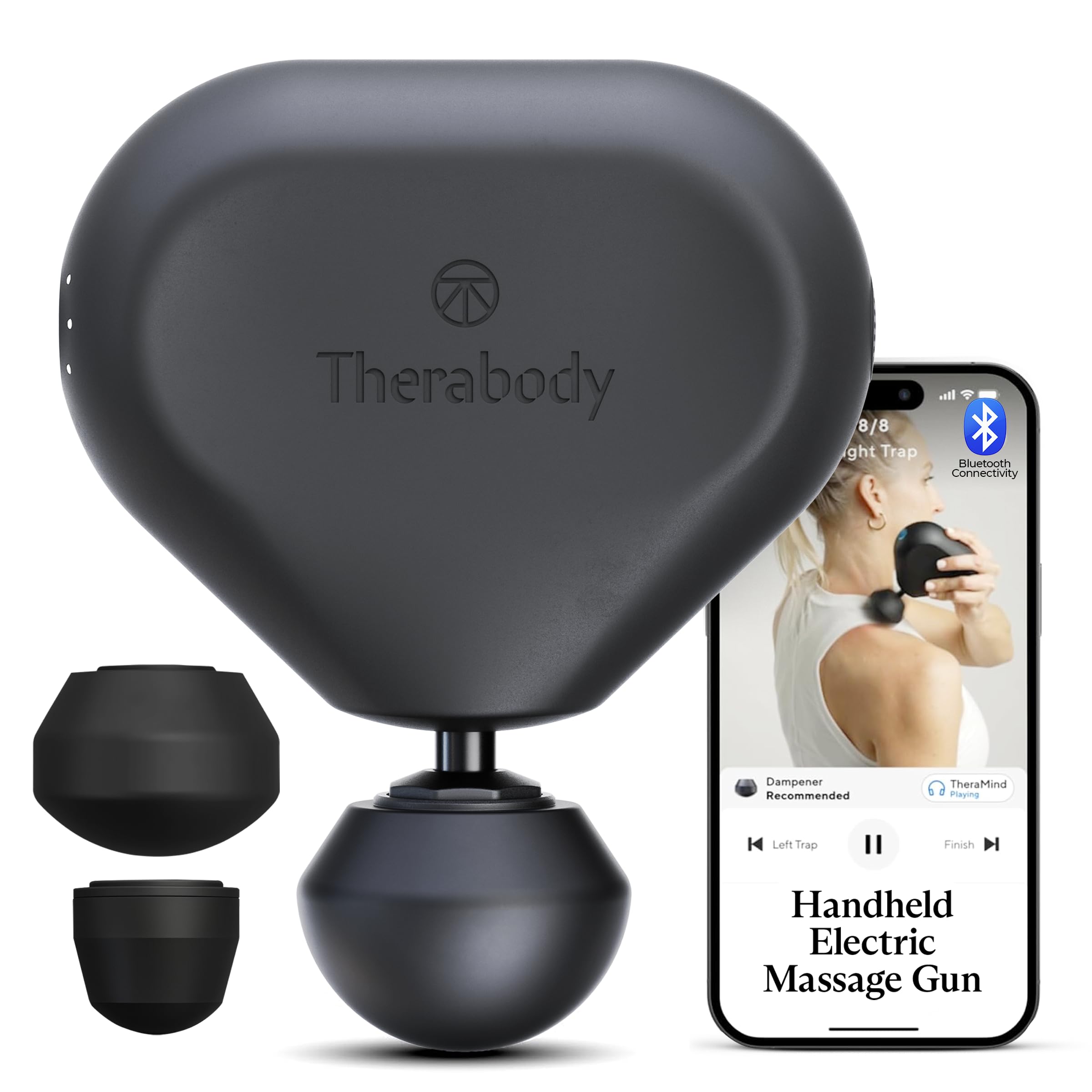
The TheraGun Mini (3rd Gen) is 30 percent smaller and lighter than the original, weighing just 15.87 ounces — light enough to toss in a tote bag or even a large jacket pocket. For runners who travel for races or commute to group runs, this is the ultimate packable recovery tool. The patented percussive therapy delivers circulation-boosting massage with three adjustable speeds, and the dampener attachment specifically targets tender or sensitive areas like the Achilles and peroneals. The ergonomic, rounded handle fits naturally in the palm with a non-slip texture.
The Bluetooth connectivity with Coach by Therabody sets the Mini apart — the app uses your goals, daily activity, and health data from your wearable to create personalized recovery recommendations. Runners can follow guided routines designed for specific issues like plantar fasciitis or sciatica, taking the guesswork out of which attachment to use and for how long. The battery lasts up to 180 minutes, and USB-C charging is TSA-compliant for flights.
At the premium price bracket, you expect more raw power — the Mini’s stall force is sufficient for daily maintenance but cannot match the 45–60 lbs of the Bob and Brad A2 Pro or ROOFTREE R20. Runners with very deep chronic knots may find it insufficient for heavy-duty work. It also includes only three attachments, limiting the range of treatments compared to six-head competitors. But for the runner who values portability, app guidance, and brand heritage, the Mini is the best compact choice available.
Why it’s great
- Ultra-portable 15.87 oz design fits any bag
- Bluetooth app creates personalized recovery routines
- Dampener head protects sensitive tendons and bone
Good to know
- Lower stall force limits deep tissue work
- Only three attachments included
6. Hyperice Hypervolt 2 Pro

The Hypervolt 2 Pro is Hyperice’s most powerful percussion device, driven by a 90W high-torque motor that provides deep-penetrating relief across five speed settings. The Quiet Glide technology keeps operational noise impressively low — around 45 dB at the highest setting — so you can use it pre-race in the corral or post-run at home without disturbing others. The five interchangeable heads (fork, ball, cushion, flat, bullet) cover every runner muscle group from the glutes to the plantar fascia. The ergonomic handle with a rubberized grip reduces vibration transfer to the hand, allowing longer sessions without numbness.
Bluetooth connectivity with the Hyperice app unlocks guided warmup and recovery routines from professional athletes and coaches. The automatic speed adjustment feature adapts the percussion rate based on the pressure you apply, which is a clever safety feature for runners new to percussive therapy. The LED light band on the handle indicates battery status and speed setting at a glance. The included hard-shell case keeps everything organized for travel.
The Hypervolt 2 Pro sits at the top of the price range, and the accessory ecosystem is limited compared to Theragun — replacement heads and batteries are proprietary and expensive. The 2.6 lb weight is the heaviest in this guide, which can be fatiguing for sustained one-handed use on the lower back. Runners on a tighter budget can get comparable stall force from the Bob and Brad A2 Pro at a fraction of the cost. But if you want the best integration between hardware and software with proven clinical backing, the Hypervolt 2 Pro is the gold standard.
Why it’s great
- 90W motor provides premium stall force and depth
- Quiet Glide technology is genuinely quiet even at high speeds
- Bluetooth app with guided routines from pro athletes
Good to know
- 2.6 lbs is heavy for extended one-handed use
- Proprietary accessories and charging cable
7. RENPHO Active 2
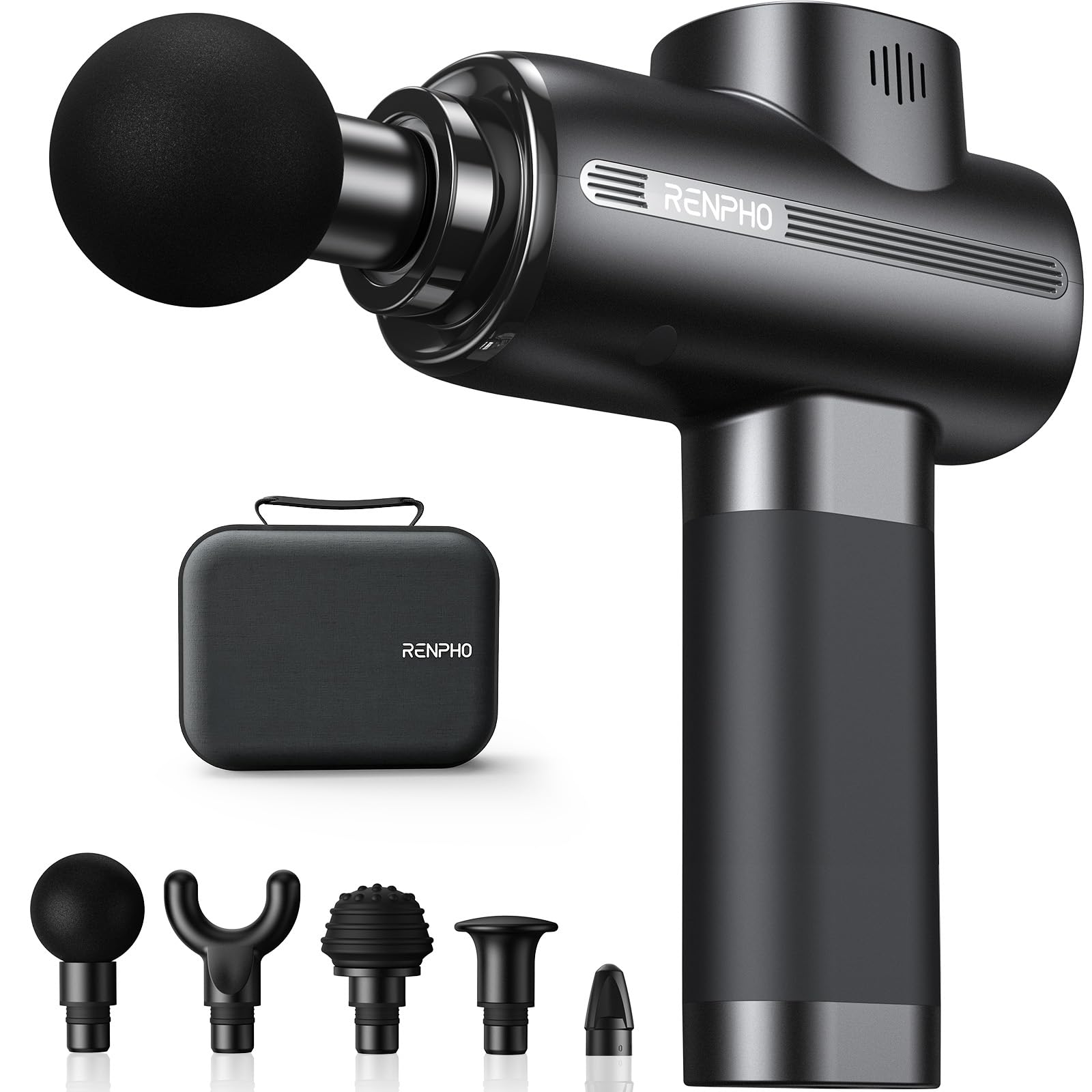
The RENPHO Active 2 is the entry-level option for runners who want a legitimate percussive tool without a large investment. Its premium metal housing and brushless motor deliver up to 3200 RPM with five adjustable speed settings — enough to handle the average post-run calf and quad soreness. The ergonomic grip allows comfortable one-handed operation on the lower back and glutes, and the 40 dB noise level is quiet enough for apartment use. The inclusion of a heating/cooling head (a feature typically reserved for more expensive models) adds surprising value for temperature therapy.
The battery life supports 1–2 weeks of regular use, and the USB-C charging with both A-C and C-C compatibility means you can charge from any adapter or power bank. The five-head kit covers the major muscle groups: ball for large areas, bullet for trigger points, flat for general use, fork for spine and Achilles, and U-shaped for neck and joints. The 10-minute auto-off protection prevents motor overheating, which is a critical durability feature for daily use.
The stall force is not published, and real-world testing suggests it falls below the 40 lb threshold — meaning you cannot lean into dense knots as aggressively as with the A2 Pro or R20. The plastic housing on the attachments is less durable than metal, especially if you use the heat/cold function frequently. Runners with deeply embedded quad or hamstring knots may find it underpowered. But as a starter gun for new runners or those on a budget, the Active 2 delivers a solid recovery experience with a few premium touches.
Why it’s great
- Metal housing and brushless motor at an entry-level price
- Heating/cooling head included — rare at this level
- Ultra-quiet 40 dB operation
Good to know
- Stall force not listed and likely below 40 lbs
- Plastic attachments may wear faster than metal
FAQ
Can a massage gun help prevent shin splints in runners?
How long should a runner use a massage gun on each muscle group?
Is a higher stall force always better for runner recovery?
Final Thoughts: The Verdict
For most users, the massage gun for runners winner is the Bob and Brad A2 Pro because it combines 45 lbs of stall force with heat/cold therapy and a smart pressure sensor in a mid-range package that punches far above its weight. If you want compact portability for race-day travel, grab the Ekrin Bantam Mini. And for heavy-duty deep tissue work that can keep up with high-mileage training, nothing beats the ROOFTREE R20 with its 60 lbs of stall force and 12-hour battery.