Cutting calories doesn’t mean cutting out the baked goods you love — but the wrong flour swap can ruin texture, taste, or blood sugar goals. The key is finding a low-calorie flour that behaves like the real thing without the carb load.
I’m Emma — the founder and writer behind Baby Bangs. I’ve spent years analyzing ingredient labels, testing baking performance, and comparing nutritional profiles to separate the kitchen-worthy options from the gimmicks.
After digging through dozens of products, I’ve narrowed it down to the five most reliable choices. Whether you’re baking bread, pancakes, or cookies, this guide to the best low-calorie flour options will help you pick the perfect bag for your pantry.
How To Choose The Best Low-Calorie Flour
Not all low-calorie flours are created equal. The wrong pick can leave you with dense, crumbly textures or a bitter aftertaste. Focus on three key areas to get it right the first time.
Ingredient Base: Wheat vs. Legume vs. Grain
The base ingredient determines everything — taste, texture, and how the flour behaves in the oven. Wheat-based low-carb flours (like Carbalose) mimic all-purpose flour best because they start with real wheat and strip out non-fiber carbs. Legume-based flours (lupin, chickpea) are naturally higher in protein and fiber but have distinct flavors that work better in savory dishes or heavily flavored sweet bakes. Whole grain alternatives like barley flour bring fiber but still pack moderate calories — better as a partial substitute than a full swap.
Net Carbs and Fiber Content
A low-calorie flour’s real value is in its net carb count (total carbs minus fiber). This number tells you how much the flour will spike blood sugar and contribute usable calories. Premium options like lupin flours deliver 1 net carb per serving with massive fiber content. Check the serving size (typically 30 to 50 grams) and calculate the net impact per tablespoon in your recipe. If the label shows more than 10g net carbs per serving, it’s not truly low-calorie.
Recipe Substitution Ratio
Some low-calorie flours swap 1:1 with regular flour; others need liquid adjustments or binders like xanthan gum. Wheat-based low-carb flours usually match the volume and hydration needs of standard all-purpose flour. Legume flours often absorb more moisture, so you may need to add eggs or extra liquid. Always check the brand’s recipe recommendations before committing to a 5-pound bag — trial and error gets expensive fast.
Quick Comparison
On smaller screens, swipe sideways to see the full table.
| Model | Category | Best For | Key Spec | Amazon |
|---|---|---|---|---|
| Carbalose All-Purpose Low-Carb Flour | Wheat-based | Direct 1:1 swap for all-purpose flour | 2.2 lb resealable pouch | Amazon |
| Spicy World Barley Flour | Whole grain | High-fiber partial wheat substitute | 4 lb bag, USA grown | Amazon |
| Kaizen Lupin Flour | Legume-based | Keto baking with minimal net carbs | 12g protein per serving | Amazon |
| Yupik Organic Chickpea Flour | Legume-based | Gluten-free batter and savory baking | USDA Organic, 2.2 lb | Amazon |
| Aviate Lupini Flour | Legume-based | High protein, low calorie, keto snacks | 16 oz, 40% protein | Amazon |
In‑Depth Reviews
1. Carbalose All-Purpose Low-Carb Flour (2.2 lb Resealable Pouch)
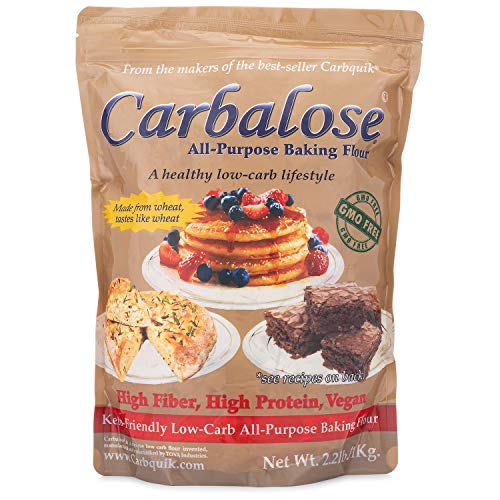
Carbalose solves the biggest complaint about low-carb flours: texture. Because it’s made from wheat with most non-fiber carbohydrates removed, it behaves almost identically to standard all-purpose flour in yeast doughs, biscuits, and cakes. You get the familiar crumb structure without the blood sugar spike — a 90% reduction in net carbs per serving is nothing to ignore.
The 2.2 pound resealable pouch keeps the flour fresh between bakes, which matters because low-carb flours can go stale faster than conventional ones. It works as a direct 1:1 substitute in most recipes, so you don’t need to relearn hydration ratios or add extra binders. That convenience alone makes it the easiest entry point for anyone new to low-calorie baking.
Users consistently report that family members can’t tell the difference in cookies, pancakes, and pizza dough. If you want one bag that does everything and tastes like the real thing, this is your pick.
Why it’s great
- 1:1 substitution ratio for standard all-purpose flour
- Made from real wheat, delivers authentic taste and texture
- Resealable pouch extends freshness
Good to know
- Contains gluten, not suitable for gluten-free diets
- Requires careful storage away from moisture
2. Spicy World Barley Flour – 4 lb (64oz) Bag

Spicy World’s barley flour is a whole grain option that adds serious fiber to your bakes without the high cost of specialty legume flours. Grown and packaged in the USA, this 4-pound bag delivers reliable quality for everyday use. Barley’s natural nutty flavor works well in hearty breads, pancakes, and muffins.
The trade-off is gluten strength — barley contains gluten, but less than wheat, so this flour won’t rise as high on its own. The brand recommends blending it with wheat flour for yeast-risen recipes. As a partial substitute, you can replace up to 30% of your regular flour with barley flour to cut calories while boosting fiber content significantly.
It’s raw and all-natural with zero additives. If you’re looking for a budget-friendly way to gradually lower the calorie density of your baked goods without a jarring flavor shift, this bag earns a spot in your pantry.
Why it’s great
- Large 4-pound bag offers excellent value per serving
- High dietary fiber content supports digestive health
- Mild, nutty flavor complements most baked goods
Good to know
- Produces dense texture unless blended with wheat flour
- Contains gluten, not safe for celiac diets
3. Kaizen Lupin Flour 2lbs
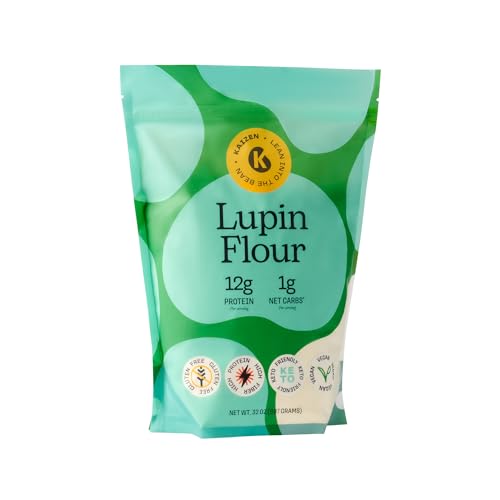
Kaizen Lupin Flour takes the low-calorie concept to extremes: just 1 net carb per serving with 12 grams of plant protein. Made from lupini beans, this flour is naturally gluten-free, keto-friendly, and vegan. It’s double the protein of almond flour, making it a nutrient powerhouse for anyone counting macros.
The texture is finer than chickpea flour but requires recipe adjustments — lupin flour absorbs significantly more liquid than wheat or almond flour. You’ll need to increase eggs or water in most recipes to avoid a dry, crumbly result. It works brilliantly in cookies, pasta dough, and lasagna sheets where you want a firm, structured bake.
The 2-pound bag is smaller than some competitors, but the potency means a little goes a long way. If you’re serious about low-carb, high-protein baking and don’t mind tweaking your recipes, Kaizen delivers unmatched nutritional density.
Why it’s great
- 1g net carbs per serving, ideal for strict keto
- 12g protein per serving, double almond flour
- Gluten-free and vegan certified
Good to know
- Requires extra liquid or eggs in recipes
- Legume taste may be noticeable in delicate bakes
4. Yupik Organic Chickpea Flour, 2.2 lb (35.2 oz)

Yupik’s chickpea flour is a solid all-rounder for gluten-free, low-calorie cooking. It’s USDA Organic, non-GMO, and sulfite-free — certifications that matter if clean sourcing is a priority. This finely ground garbanzo bean flour works best in batters, flatbreads, socca, and savory pancakes where its mild earthiness adds character.
Nutritionally, chickpea flour is higher in protein and fiber than white flour, with fewer calories per cup. It’s not as low-carb as lupin options (roughly 18g net carbs per 1/4 cup), but it delivers a more familiar baking experience. The fine grind means fewer lumps in batter compared to coarser chickpea flours on the market.
The 2.2-pound bag is a convenient size for regular gluten-free bakers. If you want a versatile organic flour that handles both sweet and savory recipes without a steep learning curve, this is a reliable daily driver.
Why it’s great
- USDA Organic and Kosher certified
- Fine grind produces smooth batters
- Good source of plant protein and iron
Good to know
- Higher net carb count than lupin or wheat-based low-carb flours
- Distinct chickpea flavor can overpower delicate desserts
5. Aviate Lupini FLOUR – 16 Ounces
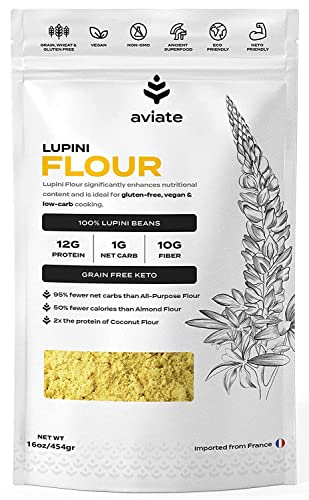
Aviate Lupini Flour is another lupin-based contender, and it brings impressive numbers: 40% protein, zero grams of added sugar, and a rich mineral profile including potassium and magnesium. The 16-ounce bag is smaller than other options, but that makes it a smart trial size if you’re new to lupin flour and want to test before buying bulk.
The flour is completely grain-free and gluten-free, ideal for keto and vegan diets. It contains 36% of your daily fiber per serving, which supports satiety and steady blood sugar. In recipes, it behaves similarly to Kaizen — expect high absorbency and the need for extra moisture, especially in cakes and muffins.
Aviate highlights the prebiotic benefits of lupin, which adds a gut-health angle to your baking. If you want maximum protein and fiber with minimal calories, and you’re willing to experiment with recipe ratios, this little bag packs serious potential.
Why it’s great
- 40% protein content per serving
- Zero added sugars, grain-free, gluten-free
- Prebiotic fiber supports gut health
Good to know
- Small 16-ounce bag requires more frequent restocking
- High absorbency means trial-and-error in new recipes
FAQ
Can I substitute low-calorie flour 1:1 in any recipe?
Which low-calorie flour tastes most like regular white flour?
Do I need to add xanthan gum when using gluten-free low-calorie flours?
Final Thoughts: The Verdict
For most users, the low-calorie flour winner is the Carbalose All-Purpose Low-Carb Flour because it offers the smoothest transition from regular flour — 1:1 substitution, real wheat taste, and 90% fewer carbs per serving. If you want maximum protein and minimal net carbs for strict keto baking, grab the Kaizen Lupin Flour. And for an organic, gluten-free everyday option that handles batters and savory dishes with ease, nothing beats the Yupik Organic Chickpea Flour.