Nothing ruins a powder day faster than a cold core that never warms up. The wrong base layer turns the lift ride into a fifteen-minute shiver, saps your energy by the third run, and leaves you cutting the day short.
I’m Emma — the founder and writer behind Baby Bangs. I’ve spent years parsing fabric weights, Merino micron counts, and moisture-wicking construction to separate marketing hype from gear that actually performs when the chairlift stops in a blizzard.
This guide breaks down the strongest options available now so you can confidently choose your next long underwear for skiing based on real material specs, not brand slogans.
How To Choose The Best Long Underwear For Skiing
Picking a base layer for skiing requires balancing three variables: fabric composition, fabric weight, and fit. Each variable changes how well the garment manages sweat, retains heat, and moves under your shell. Ignoring any one of them leads to a cold, clammy, or restrictive day on the mountain.
Fabric: Merino Wool vs. Synthetic vs. Blend
Merino wool is the gold standard for skiing because it absorbs moisture vapor without feeling wet, insulates even when damp, and naturally resists odors after multiple days in a ski trip rotation. Pure synthetics such as polyester or nylon wick faster but hold body odor and lose insulation value when wet, making them better suited for high-output touring where you dry layers overnight. Blends — typically Merino wrapped around a nylon core — offer the best of both: the soft touch and odor resistance of wool with the durability of synthetic fibers against pack straps and frequent wash cycles.
Fabric Weight: Lightweight, Midweight, or Heavyweight
Fabric weight is measured in grams per square meter (GSM). Lightweight (150–190 GSM) works for spring skiing or high-exertion skinning where overheating is the real enemy. Midweight (200–250 GSM) is the most versatile choice for resort skiing between 20°F and 35°F — warm enough for the chairlift but breathable during aggressive carving. Heavyweight (260–400 GSM) is reserved for sub-zero days at Northern resorts or skiers who run extremely cold. Choosing the wrong weight is the most common mistake beginners make, leading to sweat-soaked insulation on warm days or shivering on cold ones.
Fit: Fitted vs. Relaxed
A fitted base layer sits flush against the skin to trap a thin layer of warm air and move moisture directly from your skin to the fabric. A relaxed cut leaves air gaps that defeat the wicking mechanism and can bunch under a mid-layer, causing pressure points inside your ski boots and under your shell. For skiing, always choose a fitted cut — a base layer should feel like a second skin, not a pajama shirt.
Quick Comparison
On smaller screens, swipe sideways to see the full table.
| Model | Category | Best For | Key Spec | Amazon |
|---|---|---|---|---|
| Icebreaker Men’s 175 Everyday LS Crew | Midweight | Everyday resort skiing | 175 GSM Merino | Amazon |
| Smartwool Men’s Classic Thermal Merino Bottom | Midweight | Athletic-fitted warmth | 200 GSM Merino | Amazon |
| Icebreaker Men’s 175 Everyday Leggings | Midweight | Reliable bottom layer | 175 GSM Merino | Amazon |
| MERIWOOL Mens Heavyweight 400g Thermal Shirt | Heavyweight | Deep cold & below-zero | 400 GSM Merino | Amazon |
| LAPASA Womens Merino Base Layer Set | Midweight | Women’s complete set | Light/Midweight Merino | Amazon |
| Merino Wool Half Zip Midweight Sweater | Midweight | Added neck warmth | Midweight Merino blend | Amazon |
| Merino.tech 100% Merino Wool Base Layer Shirt | Midweight | Budget-friendly Merino | 100% Merino wool | Amazon |
In‑Depth Reviews
1. Icebreaker Men’s 175 Everyday Long Sleeve Crew Shirt

Icebreaker’s 175 Everyday Crew hits the sweet spot of weight and affordability for resort skiers. At 175 GSM, it’s a true midweight layer — warm enough for most chairlift rides down to 15°F but not so thick that you overheat on a sunny groomer run. The fabric is 100% Merino wool sourced from New Zealand, which gives it the soft handle and natural stretch that synthetic blends often lack against the skin.
The fitted cut is what separates this from casual base layers. It sits flush across the shoulders, chest, and arms without pulling or gaping, so your mid-layer and shell move independently rather than binding. The flatlock seams reduce friction under a pack strap or ski bib, a detail that becomes obvious after six consecutive hours on the hill.
Longevity is the only watchpoint. Pure Merino at this weight can develop pilling under heavy abrasion from backpack straps or harsh detergent cycles. Use a gentle wool wash and lay it flat to dry, and the shirt will hold its shape for multiple seasons of weekend skiing.
Why it’s great
- True fitted cut prevents fabric bunching under shell layers
- 175 GSM weight balances warmth and breathability for most ski days
- Flatlock seams eliminate chafe points on long days
Good to know
- Pure Merino requires gentle washing to avoid pilling
- Limited color options compared to blended competitors
2. Smartwool Men’s Classic Thermal Merino Base Layer Bottom
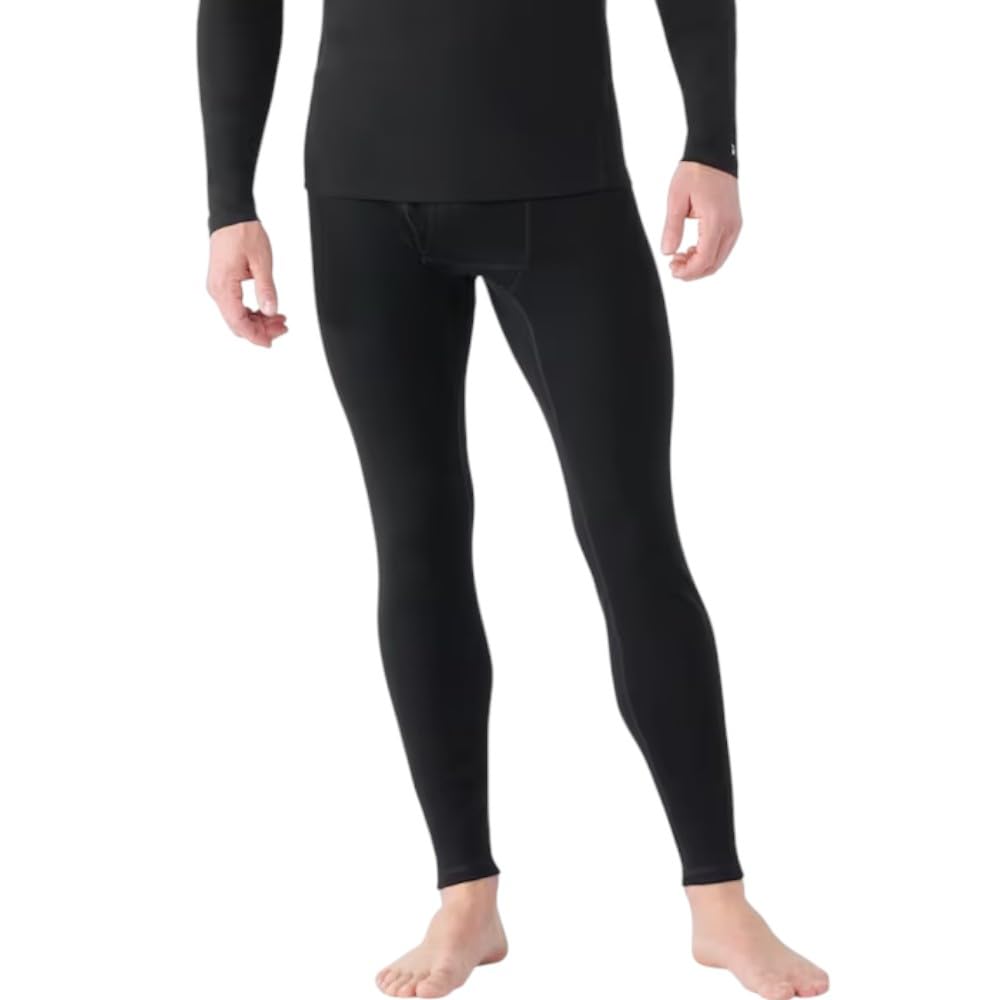
Smartwool’s Classic Thermal Bottom moves the needle to 200 GSM, giving you a slightly denser weave that traps more still air against the legs. This matters most on the lift where your lower body sits stationary and loses heat faster than your core. The nylon core wrapped in Merino gives the fabric more tensile strength than a pure wool knit, making it less prone to tearing when you pull it over ski boots or kneel to click into bindings.
The athletic fit is tighter through the thigh and calf than Icebreaker’s 175 bottom, which some skiers prefer for a compressed feel under tight ski pants. The elasticized waistband lays flat under a bib or pant waistband without digging in, a small ergonomic win that reduces mid-day adjustments.
The only tradeoff is reduced breathability at high output. If you skin uphill in these for more than 20 minutes, the denser weave retains more moisture than a lightweight option. For pure downhill resort skiing, this is a negligible compromise given the warmth payoff.
Why it’s great
- 200 GSM delivers noticeable warmth advantage on cold lifts
- Nylon-Merino blend holds up better to abrasion and stretching
- Flat waistband sits comfortably under bibs and ski pants
Good to know
- Denser knit breathes less during high-exertion climbing
- Higher price point than midweight alternatives
3. Icebreaker Men’s 175 Everyday Cold Weather Wool Base Layer Leggings

If you already own the Icebreaker 175 crew top, the matching leggings complete a predictable, consistent system. At 175 GSM with the same 100% Merino construction, these leggings perform identically to the top — warm enough for moderate cold, breathable enough for active turns, and soft enough to wear all day without itching. The gusseted crotch is a deliberate design choice that prevents the fabric from pulling when you squat into an athletic skiing stance.
The length is worth noting: these run slightly longer than many competitors, which helps keep the leg hem tucked into ski socks rather than riding up. The elastic at the ankle is light but sufficient to hold the fabric in place inside tall boot liners.
The same pure-Merino care requirements apply. Machine washing on cold and air drying will keep the fibers intact, but throwing them in a hot dryer shrinks the length by a noticeable margin. Size up if you are between sizes and prefer a relaxed leg.
Why it’s great
- Gusseted crotch prevents ride-up during dynamic skiing motions
- Extra leg length stays tucked inside ski socks
- Matches perfectly with Icebreaker 175 top for a full system
Good to know
- Pure Merino shrinks if dried with heat
- 175 GSM may feel thin for sub-10°F days
4. MERIWOOL Mens Base Layer 100% Merino Wool Heavyweight 400g Thermal Shirt

At 400 GSM, the MERIWOOL Heavyweight is a serious piece of cold-weather artillery. This is not a layer for sunny spring après — it is built for below-zero mornings and exposed ridges where the wind cuts through everything else. The fabric thickness is roughly double that of a standard midweight layer, creating a dense fleece-like interior that traps heat aggressively.
The fit leans toward relaxed rather than compression-style. This accommodates the thick knit without restricting arm movement during pole planting, but it also means the fabric takes up more volume under a shell. Skier who wear a trim-fitting jacket may need to check that their shell still zips comfortably with this layer underneath.
The biggest downside is that 400 GSM Merino dries slowly. If you sweat heavily on a warm-up run, the shirt can stay damp through lunch. Reserve this for genuinely cold days (below 10°F) and consider a lighter layer for mixed-temperature conditions.
Why it’s great
- 400 GSM provides extreme warmth for sub-zero conditions
- Relaxed fit allows full range of motion for skiing
- 100% Merino with no synthetic content means zero plastic feel
Good to know
- Takes a long time to dry if saturated with sweat
- Bulky under trim-fitting ski shells
5. LAPASA Womens 100% Merino Wool Base Layer Set Lightweight & Midweight
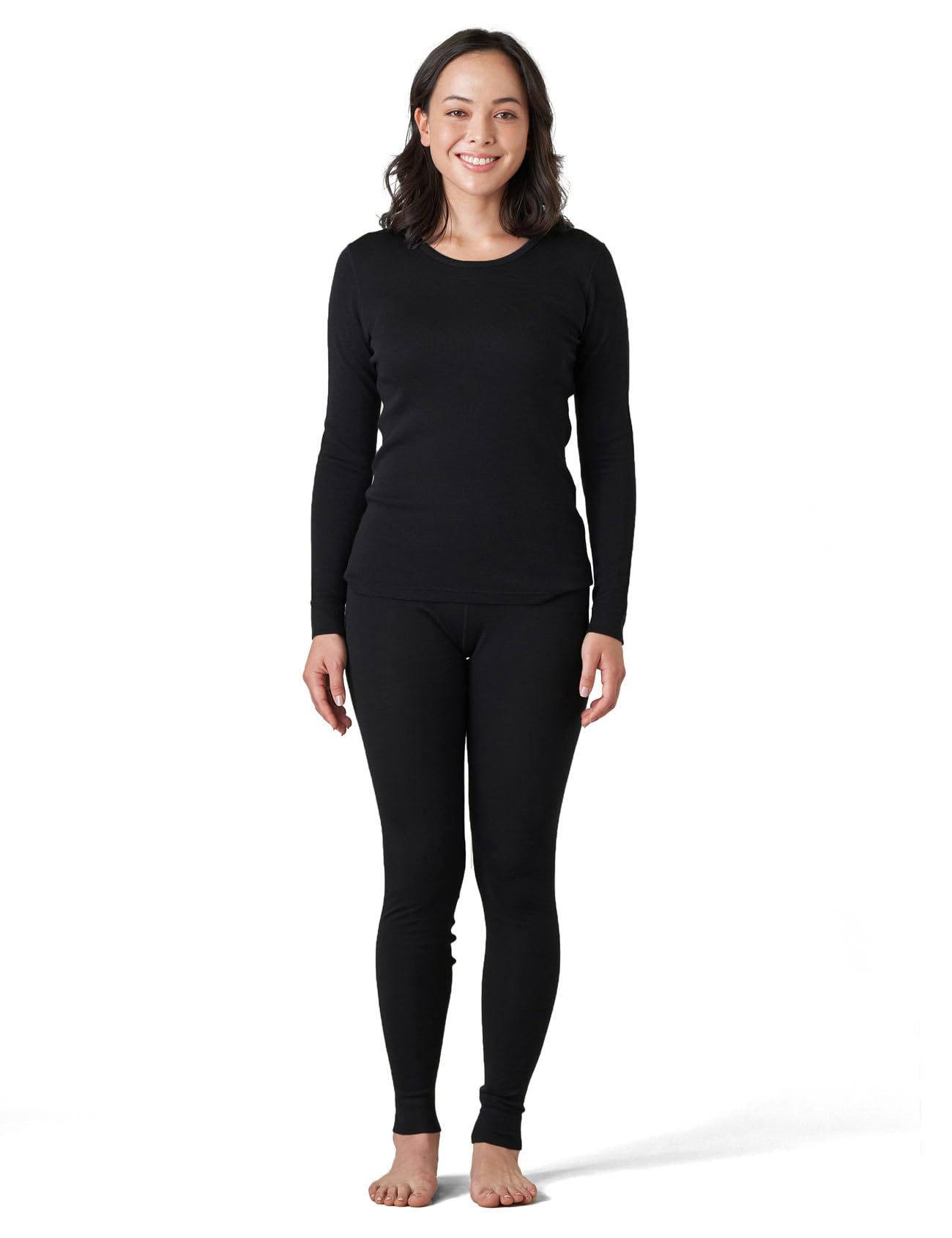
LAPASA’s set solves the two-piece shopping headache with a coordinated top and bottom in either lightweight or midweight fabric. The midweight option at roughly 200 GSM lands in the same performance zone as Icebreaker’s 175 but with a slightly looser drape across the torso. Women who prefer a base layer that does not compress their bust and hips will find the cut more accommodating than some aggressively fitted Merino brands.
The waistband on the bottoms uses a wider elastic panel that stays put without rolling, a common complaint on lower-priced base layer sets. The stitching is flatlock throughout both pieces, reducing the risk of chafing at the underarm and inner thigh during all-day skiing. The fabric is 100% Merino, so it shares the same natural odor resistance and softness as premium single-piece competitors at a lower combined cost.
The tradeoff is that the tops run slightly shorter in the torso. Tall women may find the shirt pulls out of their pants during aggressive forward leans. Layering the hem into your ski pants or bib helps, but a longer cut would make this a stronger recommendation for taller frames.
Why it’s great
- Complete top-and-bottom set matches perfectly out of the box
- Wider waistband stays rolled firmly in place
- 100% Merino offers natural breathability and odor control
Good to know
- Torso length runs short on taller women
- Lightweight option may be too thin for deep winter skiing
6. Merino Wool Half Zip Midweight Sweater

The half-zip design sets this layer apart from crew-neck base layers. The zipper lets you dump heat quickly on the ascent or when the sun breaks through, then zip up to the chin when the wind picks up on a traverse. The collar sits high enough to cover the neck without needing a separate buff, which simplifies packing on multi-day ski trips.
The midweight fabric uses a Merio blend rather than 100% pure wool, giving it a smoother finish against the skin and faster drying times after washing. The shoulders and elbows have reinforced stitching that resists wear from backpack straps and repeated arm motion during pole plants. The fit is athletic through the chest and waist without being compression-tight.
The downside of the half zip is the bulk of the zipper placket under a mid-layer. Some skiers find the zipper creates a stiff ridge that presses against their chin when fully zipped. Layering a thin neck gaiter over it solves this, but it is an extra piece of gear to carry.
Why it’s great
- Half zip offers on-the-fly temperature regulation
- High collar protects neck without a separate buff
- Reinforced stitching increases durability in high-wear areas
Good to know
- Zipper placket can feel stiff against the chin when fully zipped
- Blend fabric may not feel as soft as 100% Merio
7. Merino.tech 100% Merino Wool Base Layer Mens Shirt

Merino.tech offers 100% Merino wool at a price that undercuts the major outdoor brands by a significant margin. The fabric weight sits around 180–200 GSM, placing it solidly in the midweight zone suitable for resort skiing down to about 15°F. For skiers on a tight budget who still want natural fiber performance, this shirt hits the right note.
The cut is slightly looser than Icebreaker or Smartwool, which makes it more comfortable for casual wear but less effective as a precision base layer. The extra fabric can bunch at the armpits and lower back when you hinge forward into a ski stance. The stitching is flatlock through the main seams, though the density of the stitching is not as tight as premium brands — expect some edge fraying after frequent machine washes.
The biggest cost saving comes from the fabric sourcing rather than construction quality. The Merino comes from a standard commercial grade rather than the ultra-fine 17.5-micron wool used by premium competitors, so the fabric feels slightly coarser against bare skin. Most skiers will not notice it over a mid-layer, but it is noticeable on the first dry wear.
Why it’s great
- 100% Merino wool at a fraction of premium brand cost
- Midweight GSM suits most resort skiing conditions
- Flatlock stitching reduces chafe risk despite lower price
Good to know
- Relaxed cut bunches under tight ski shells
- Standard-grade Merino feels less soft against bare skin
- Stitching may fray faster than premium competition
FAQ
Can I wear cotton long underwear for skiing?
How tight should ski base layer fit?
Is a 400 GSM base layer too warm for most skiing?
Final Thoughts: The Verdict
For most skiers, the long underwear for skiing winner is the Icebreaker Men’s 175 Everyday Crew because its 175 GSM Merino delivers the best warmth-to-breathability ratio for the widest range of resort temperatures. If you need a dedicated cold-weather bottom, grab the Smartwool Classic Thermal Bottom for its 200 GSM durability. And for the rare sub-zero day at a Northern mountain, nothing beats the MERIWOOL 400g Heavyweight Shirt for raw insulation power.