If you catch yourself asking people to repeat themselves in quiet rooms or struggle to hear soft conversations without the room feeling blasted by sound, standard hearing aids can feel like overkill. Low-gain models are designed specifically for mild hearing loss—they amplify the frequencies you need without the overwhelming boost that makes a quiet dinner feel like a stadium event. These devices bridge the gap between hearing clearly and preserving your natural acoustic environment.
I’m Emma — the founder and writer behind Baby Bangs. I’ve spent years analyzing the audio engineering behind over-the-counter hearing aids, from digital signal processing to feedback cancellation algorithms, to help match the right hardware to specific hearing profiles.
After reviewing dozens of models, the options that matter most balance targeted amplification with smart noise management. The very best low-gain hearing aids deliver clear speech without the heavy boost that distorts everything else around you.
How To Choose The Best Low-Gain Hearing Aids
Not every mild hearing loss is the same, and a one-size-fits-all boost rarely works. The goal of a low-gain device is to restore missing frequencies without masking the natural soundscape of your environment. Here’s what to focus on when comparing models.
Channel Count and Frequency Fine-Tuning
More digital channels allow the processor to break down sound into finer slices. A 2-channel device may only separate high and low frequencies, while 4 or more channels enable precise adjustments in the speech-critical range (500 Hz to 4000 Hz). For mild loss, you don’t need a massive gain curve—you need targeted amplification where your audiogram dips.
Feedback Management and Whistling Control
Low-gain devices can still whistle if the seal is poor or the algorithms are weak. Look for models with active feedback cancellation, not just basic suppression. Phase-cancellation technology eliminates the oscillation before it becomes audible, which is critical when you’re amplifying softer sounds that an open fit might otherwise leak.
Noise Reduction vs. Speech Preservation
Aggressive noise reduction can mute the very sounds you want to hear, like a friend’s voice in a cafe. The best low-gain aids use multi-band compression to reduce background hum while preserving speech transients. A quiet-mode setting that lowers the noise floor without flattening conversation is a hallmark of a well-tuned device.
Fit and Comfort for All-Day Wear
Mild loss often means you’ll wear the aids intermittently throughout the day, so comfort is paramount. Receiver-in-canal (RIC) designs sit lighter behind the ear, while dome tips in multiple sizes prevent the occlusion effect that makes your own voice sound boomy. A device that irritates your ear canal will end up in a drawer.
Quick Comparison
On smaller screens, swipe sideways to see the full table.
| Model | Category | Best For | Key Spec | Amazon |
|---|---|---|---|---|
| Lexie B2 Plus | Premium | Personalized audiogram-based tuning | 4 environment programs + custom profiles | Amazon |
| ELEHEAR-Beyond Pro | Premium | Speech clarity with music mode | VocClear 2.0, 8ms latency | Amazon |
| AuraLink | Premium | AI-powered adaptive noise filtering | Bluetooth 5.4, IP68 | Amazon |
| Vivtone Xpure 2.0 | Mid-range | Smartphone app-based fine-tuning | Receiver-in-Canal design | Amazon |
| ELEHEAR-Beyond | Mid-range | AI noise cancellation for seniors | 50dB max gain, 4 scene modes | Amazon |
| Nova Hearing Aids | Mid-range | Long battery life with moisture protection | 80-hour battery, dryer compartment | Amazon |
| Hearing Aids (NVBOTY) | Mid-range | Simple 5-level volume control | 43dB±5dB gain, 100hr total | Amazon |
| Vivtone Lucid508 | Mid-range | Auto on/off with tinnitus masking | 41dB peak gain, 125hr backup | Amazon |
| TTQ OTC | Budget | Entry-level 2-in-1 headset and hearing aid | 38dB gain, 60hr case total | Amazon |
In‑Depth Reviews
1. Lexie B2 Plus Powered by Bose
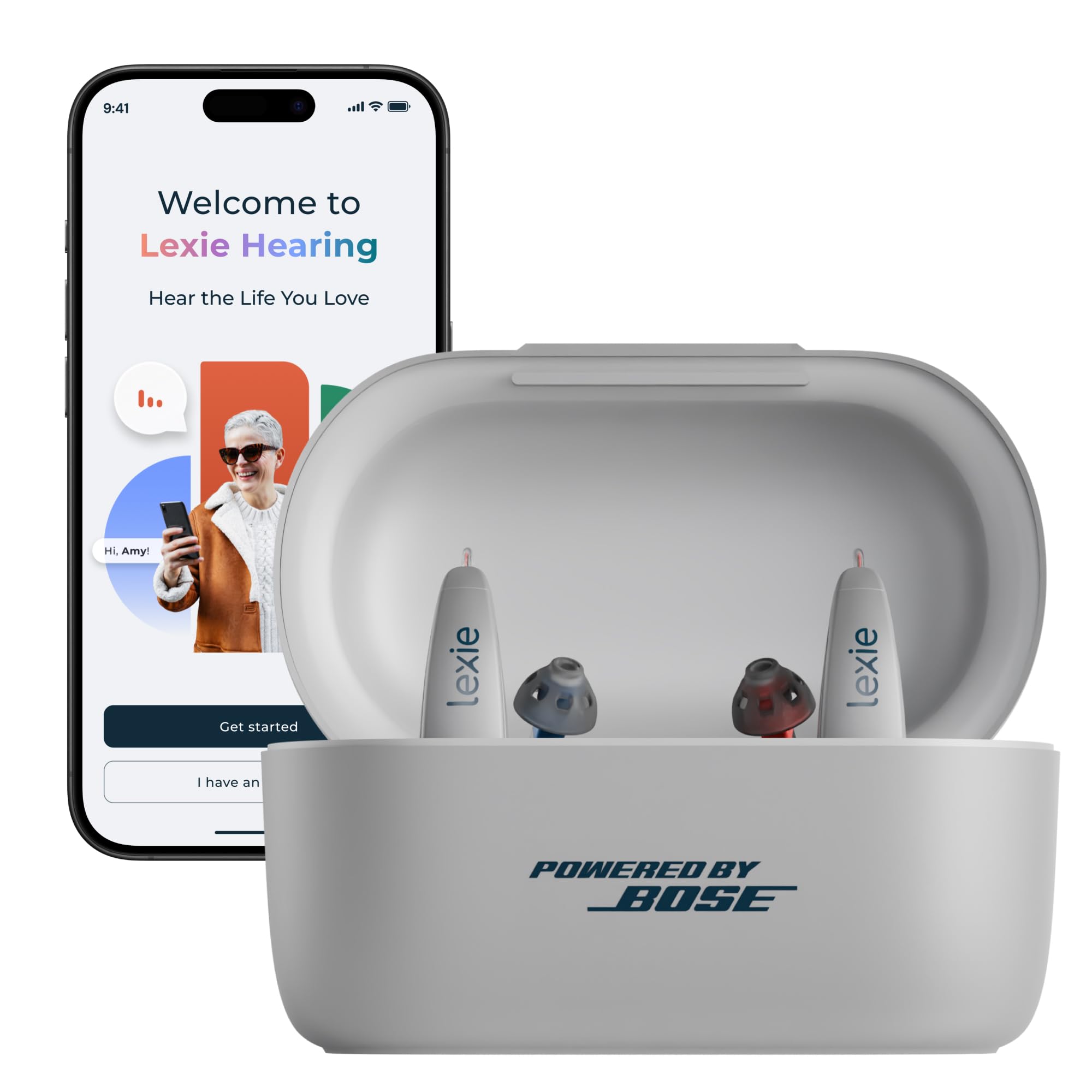
The Lexie B2 Plus brings Bose’s audio engineering into the low-gain conversation. Its self-fitting system guides you through an in-app hearing test, then builds a personalized profile that targets your specific frequency gaps instead of applying a blanket boost. This approach is ideal for mild loss, where over-amplification creates more problems than it solves.
The Powered by Bose algorithms handle feedback management, impulse noise reduction, and wind management without requiring manual tweaking. You get four environment programs out of the box, and the app allows you to create up to ten custom ones. The wireless charging case is a practical upgrade over USB-only models, keeping the aids ready with less wear on charging ports.
Lifetime customer support from Lexie Experts adds a layer of reassurance that most OTC brands don’t match. The 45-day check-in helps you refine your settings during the adjustment period. For a low-gain device that adapts to your hearing curve rather than forcing a generic profile, this is the most complete package available.
Why it’s great
- Audiogram-based self-fitting avoids over-amplification
- Bose algorithms provide excellent feedback and wind management
- Wireless charging case adds convenience
Good to know
- Higher investment than entry-level options
- App dependency for full customization
2. ELEHEAR-Beyond Pro
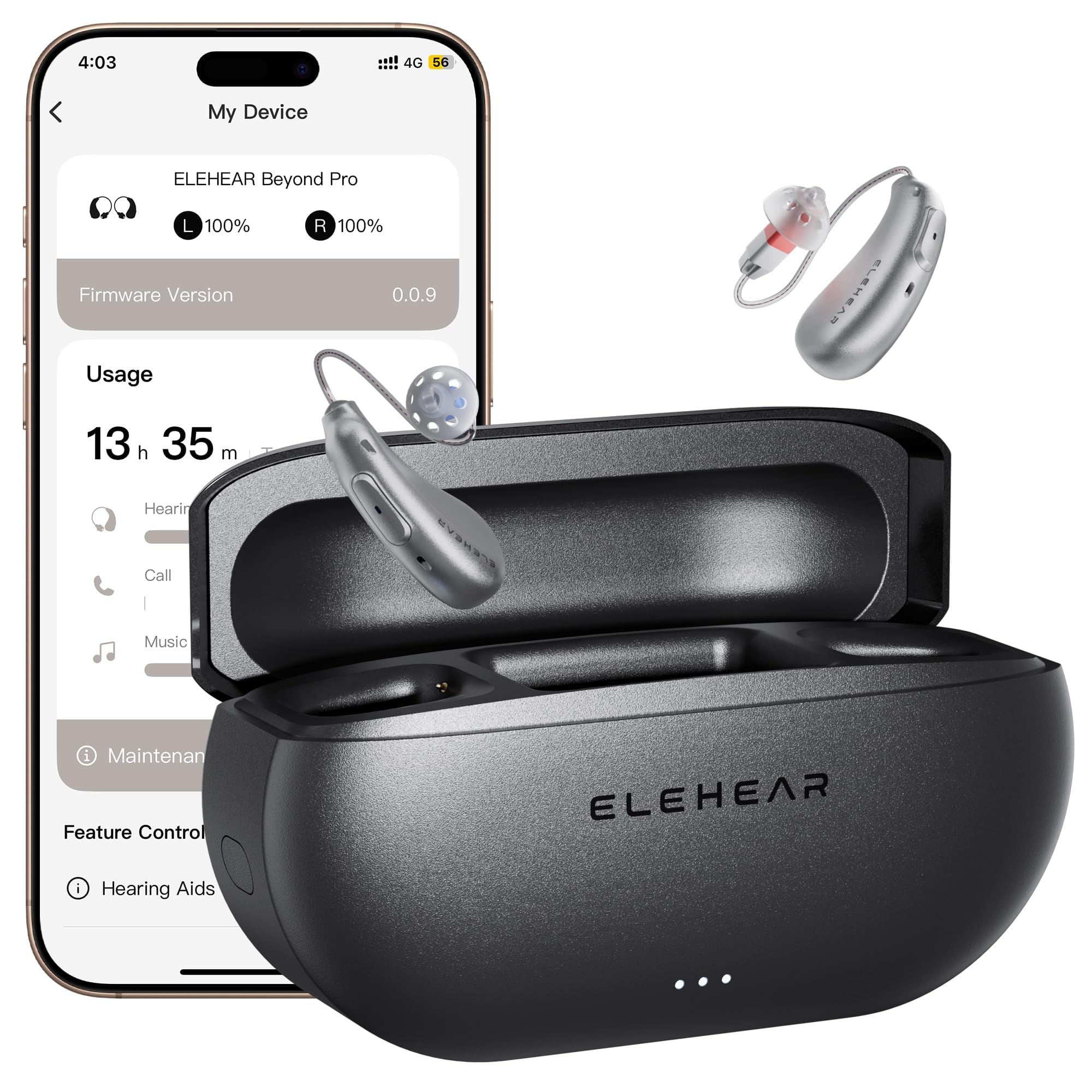
The Beyond Pro uses VocClear 2.0 to boost speech clarity by 30 percent while extending high-frequency detail up to 8500 Hz. For users with mild high-frequency loss who still want to enjoy music without distortion, the dedicated music mode is a standout feature. Ultra-low 8ms latency means no perceptible delay between sound and amplification, preserving natural timing in conversation.
Fast charging delivers 6 hours of use from a 15-minute charge, which is practical for users who forget to dock their aids overnight. The 20-hour single-charge runtime covers full-day wear, and the case provides four additional charges. The Receiver-in-Canal design keeps the bulk behind the ear, with multiple dome sizes to prevent the occlusion effect.
Real-time AI translation for 11 languages is an unexpected bonus for travelers, though it’s not a core hearing function. The companion app is well-organized, allowing frequency and directionality adjustments without digging through menus. For someone who wants premium sound quality in a low-gain device, this is a strong contender.
Why it’s great
- Exceptional speech clarity with minimal distortion
- Fast charge feature is highly practical
- Music mode reveals detail standard aids miss
Good to know
- AI translation is a niche add-on
- App learning curve for new users
3. AuraLink Bluetooth Hearing Aids
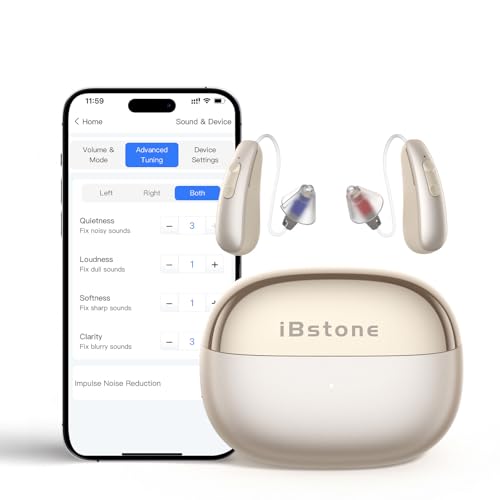
The AuraLink from iBstone is built around adaptive intelligence that continuously adjusts sound processing based on your environment. Its real-time tailoring is particularly effective for low-gain scenarios, where the device can dial back amplification when noise levels drop, preventing that hollow or overly sensitive feeling. The companion AuraFit app includes a hearing check to create a personalized sound profile.
Bluetooth 5.4 ensures stable, low-power streaming for phone calls and music, with lower latency than older versions. The IP68 rating means sweat, rain, and dust won’t compromise performance, making this a durable option for active users. The UV-sanitizing charging case adds a hygiene layer that’s rare at this level.
Professional recognition from clinicians and selection for a US cognitive health study add credibility. The lifetime US-based customer support is responsive. If you want a low-gain aid that learns from your listening habits and withstands daily wear, the AuraLink delivers sophisticated adaptive processing in a rugged package.
Why it’s great
- Adaptive AI reduces over-amplification in quiet environments
- IP68 durability for active lifestyles
- UV sanitizing case promotes hygiene
Good to know
- App setup required for optimal tuning
- Premium price tier
4. Vivtone Xpure 2.0

The Vivtone Xpure 2.0 is built around a Receiver-in-Canal design that minimizes distortion and feedback, making it a natural fit for low-gain applications. The companion app allows precise volume and frequency fine-tuning, so you can dial in exactly the amount of boost needed for your specific audiogram without overshooting into uncomfortable territory.
Bluetooth streaming for phone calls and music works with both iOS and Android, and the sound quality is clean enough for regular headphone use. The 24-hour battery life on a single charge covers a full day, and the charging case provides a week of standby power—handy for users who don’t wear aids every hour. Multiple preset modes for quiet, noisy, and outdoor environments help match the gain to the situation.
Real-human phone support is available for troubleshooting, which reduces frustration during setup. The Xpure 2.0 is designed for users who want control over their hearing profile but don’t need the highest gain levels. If you prefer app-based customization rather than fixed programs, this is a well-executed mid-range option.
Why it’s great
- RIC design reduces feedback at lower gain levels
- App-based tuning matches personal hearing curve
- Good battery life with week-long case backup
Good to know
- App required for full functionality
- No wireless charging case
5. ELEHEAR-Beyond

ELEHEAR’s standard Beyond model uses VocClear AI to boost speech clarity by 17 percent while cutting 24 dB of background noise. For low-gain users, this means you can hear conversation in a moderately noisy cafe without the device cranking up the entire soundscape. The four tailored scene modes—selected via the app—let you switch between quiet, noisy, outdoor, and music profiles.
The 20-hour single-charge runtime is solid, and the 15-minute quick charge gives 6 hours of use for those who need a rapid top-up. With 50 dB maximum gain, it has headroom for users whose loss may progress, but the AI noise cancellation keeps the default experience comfortable for mild loss. The champagne gold finish is subtle and less clinical than standard beige or gray.
Nine dome sizes ensure a snug fit, which is critical for preventing feedback at lower gain settings. The app interface is intuitive, allowing volume and frequency adjustments without confusion. For a mid-range device that balances smart noise management with user-friendly controls, the Beyond is a reliable daily driver.
Why it’s great
- AI noise reduction preserves speech without over-boosting
- Quick charge feature is useful for busy days
- Multiple dome sizes improve fit and reduce feedback
Good to know
- Maximum gain may be overkill for very mild loss
- App required to access all scene modes
6. Nova Hearing Aids
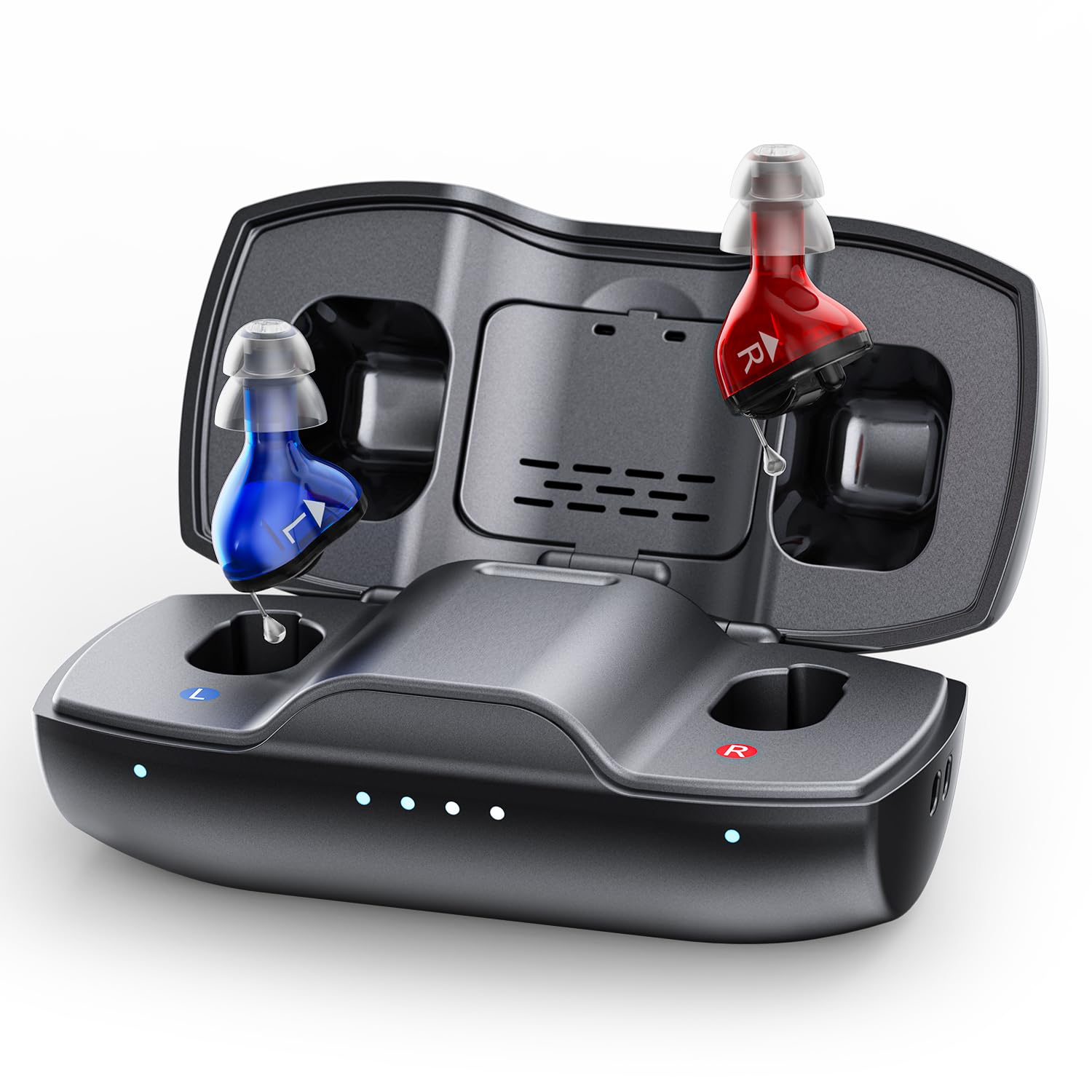
Nova distinguishes itself with an 80-hour battery life from a 1.5-hour charge—an impressive endurance that reduces charging anxiety for users who forget to dock their aids. The charging case includes a built-in moisture-proof compartment to dry the devices overnight, extending their lifespan and preventing moisture-related sound degradation.
Multi-channel digital processing delivers clean sound without hiss or echo when paired with the correct eartip. Three hearing modes (Quiet, Noisy, Outdoor) cover common environments, and the single-button control adjusts volume and mode without confusion. The anti-loss lanyard keeps the charging case from wandering off in a bag or pocket.
iBstone’s reputation for US-based customer support adds confidence, and the included manual is detailed enough for first-time users. For someone who values battery endurance and device longevity over extensive app features, the Nova provides reliable low-gain amplification with practical extras.
Why it’s great
- Exceptional 80-hour battery life from fast charge
- Built-in dryer compartment protects electronics
- Simple one-button operation for seniors
Good to know
- No Bluetooth streaming
- Larger charging case due to dryer feature
7. Hearing Aids (NVBOTY)
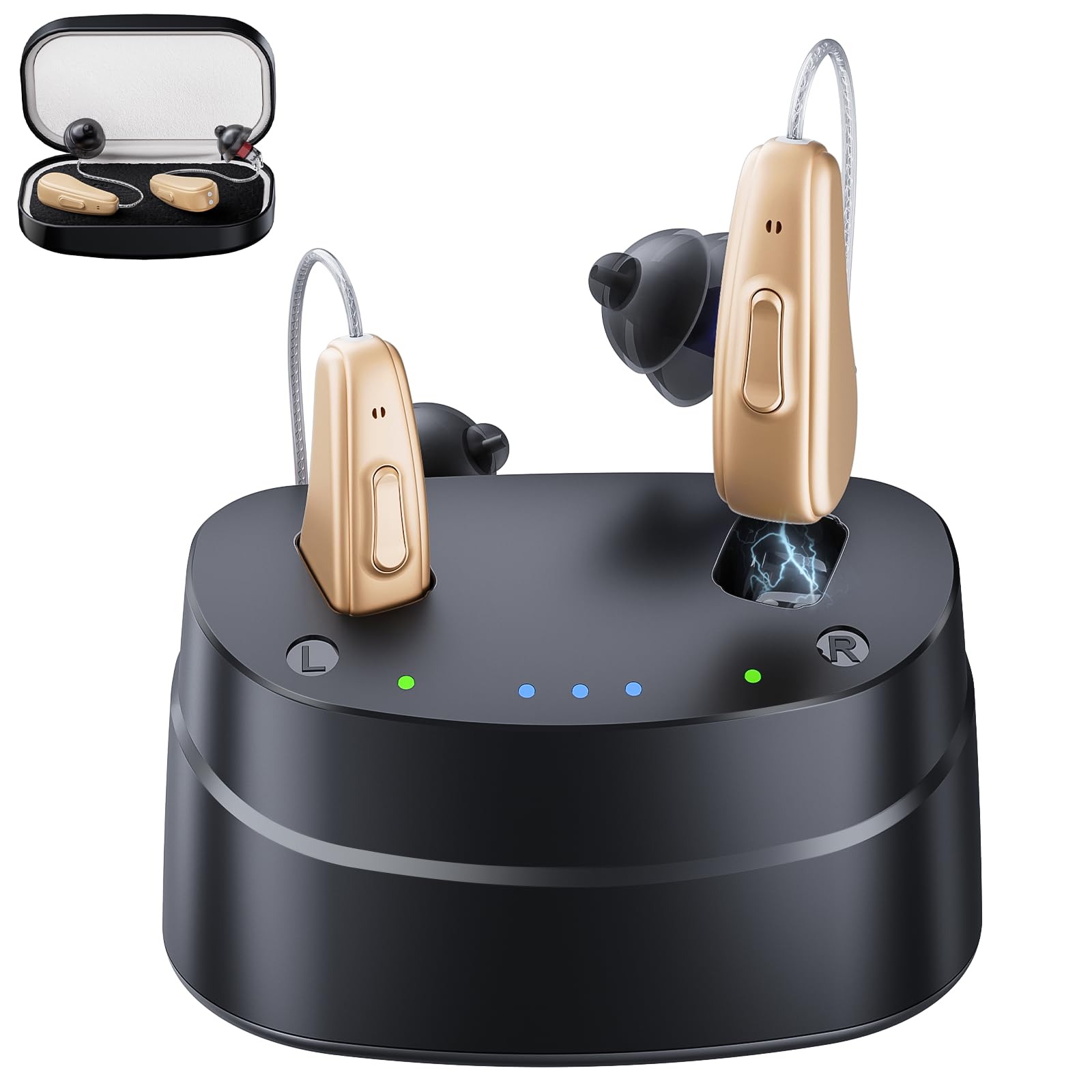
This NVBOTY model keeps things straightforward with a 5-level button volume control and a smart memory function that recalls your last setting. The 43 dB gain offers moderate amplification suitable for mild loss, while the active noise cancellation chip reduces background hum without aggressive filtering that mutes speech. It’s a no-frills approach that works when you just need a bit more volume in quiet settings.
The charging case delivers up to 100 hours of total listening time, with the aids lasting 25 hours per charge. Three eartip sizes help achieve a comfortable seal, and the compact case slips into a pocket or small bag. The carrying case adds protection for travel or daily storage.
Operation is straightforward—hold the volume button to power on, click to adjust. For users who find smartphone apps overwhelming or unnecessary, this tactile control scheme is a plus. It lacks Bluetooth and advanced features, but for a budget-friendly entry into amplified hearing, it covers the basics without fuss.
Why it’s great
- Simple button volume control with memory recall
- Good total battery life with charging case
- Compact and portable design
Good to know
- No Bluetooth or app support
- Limited to basic noise reduction
8. Vivtone Lucid508
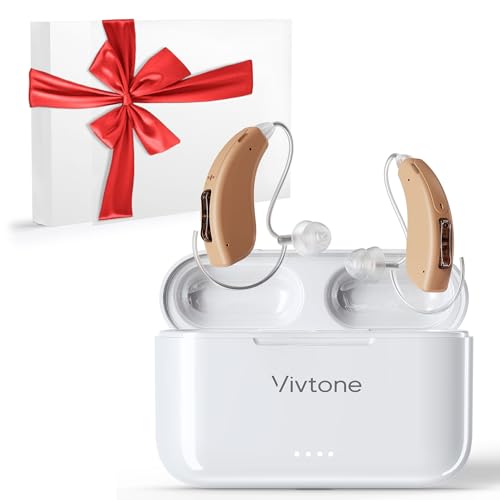
The Lucid508 makes daily use effortless with auto-on/off when you remove or insert the aids from the charging case—no fumbling with tiny buttons. Peak gain of 41 dB suits mild to moderate loss, and the quiet/noisy/tinnitus masking modes give you three distinct listening profiles without needing an app. The tinnitus masking feature is a welcome addition for users who experience ringing alongside hearing loss.
Fast charging in 2 hours yields 25 hours of use, and the case provides four additional full charges for 125 hours of backup power. The beige color and compact behind-the-ear design keep the profile discreet. Medical-grade materials improve comfort for extended wear.
Included accessories like the anti-loss lanyard and clip add practical value. 24/7 customer support is available by phone, email, or text. For users who want a low-maintenance, set-and-forget device that includes tinnitus relief, the Lucid508 delivers a well-rounded feature set at a mid-range price.
Why it’s great
- Auto-on/off eliminates daily button pressing
- Tinnitus masking mode for dual benefit
- Excellent backup battery from charging case
Good to know
- No Bluetooth connectivity
- Limited to three fixed sound modes
9. TTQ OTC Hearing Aids
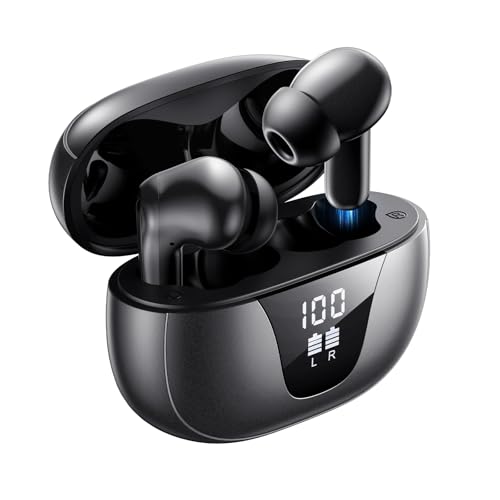
The TTQ OTC functions as both a hearing aid and a Bluetooth headset, allowing you to stream music and calls through the same device. With 38 dB gain, it targets the lower end of mild loss, making it suitable for users who need minimal amplification. The 2-in-1 feature means you can leave your earbuds at home and use the hearing aids for daily audio needs.
The rechargeable case provides about 60 hours of total use, with 5.5 hours per charge. Three levels of noise reduction adjust the balance between speech and background sound. The compact size (0.14 oz) keeps the aids light enough for extended wear without ear fatigue.
Three sizes of earcaps help achieve a basic fit. The single touch area on the side controls volume and noise cancelling, which simplifies operation. For someone dipping their toes into amplified hearing who also wants Bluetooth audio, the TTQ offers an inexpensive hybrid solution—though the sound processing is less refined than dedicated hearing aids.
Why it’s great
- Functions as both hearing aid and Bluetooth headset
- Very lightweight at 0.14 oz
- Simple touch controls for basic adjustments
Good to know
- Lower gain may not suit all mild loss profiles
- Sound processing less sophisticated than dedicated aids
FAQ
What gain level is considered low for hearing aids?
Can I use low-gain hearing aids for severe hearing loss?
Do low-gain hearing aids need a professional fitting?
Will low-gain hearing aids eliminate background noise completely?
Final Thoughts: The Verdict
For most users, the low-gain hearing aids winner is the Lexie B2 Plus because its self-fitting system builds a personalized amplification curve that avoids the over-boost trap common in fixed-profile devices. If you want app-based precision tuning and Bluetooth streaming, grab the Vivtone Xpure 2.0. And for the best blend of adaptive AI and durability, nothing beats the AuraLink.