Migraines demand more than just a dark room and water — they call for a specific mineral protocol. The form of magnesium you choose determines whether you get headache relief or gastrointestinal distress.
I’m Emma — the founder and writer behind Baby Bangs. I’ve spent months cross-referencing clinical studies on migraine prophylaxis with the actual supplement labels found on Amazon to separate the effective chelates from the marketing hype.
This guide breaks down the only two magnesium types proven to reduce migraine frequency and explains why glycinate dominates the discussion. Here is the definitive magnesium type for migraines guide built for real-world results.
How To Choose The Best Magnesium Type For Migraines
Migraine sufferers have a unique problem: their nervous system is hypersensitive to triggers, and their gut is often slow to absorb the mineral they need most. Picking the wrong magnesium salt creates a cycle of poor absorption followed by bowel urgency — the opposite of what you want. Focus on chelate form, serving size, and purity testing.
Chelate Form Determines Absorption And Tolerance
Magnesium must be bonded to a carrier molecule to cross intestinal membranes. The amino acid glycine provides the highest bioavailability with the lowest laxative threshold — ideal for daily migraine use. Citrate is more water-soluble but draws water into the colon, which can trigger loose stools at the doses required for migraine prevention (typically 300–400 mg elemental magnesium). Oxide is cheap but poorly absorbed and nearly useless for neurological benefits.
Elemental Magnesium Content Versus Total Magnesium
Labels listing “Magnesium Glycinate 1,000 mg” are referring to the total compound weight, not the active mineral. Look for the phrase “elemental magnesium” in the Supplement Facts panel. A therapeutic migraine dose requires 300–400 mg of elemental magnesium, which typically translates to 2–3 capsules of a well-formulated glycinate product. Products that hide a 100 mg elemental serving behind a 500 mg capsule are weak.
Third-Party Testing For Purity And Potency
Heavy metals like lead and arsenic accumulate in cheap mineral sources and aggravate migraine conditions. Brands that submit to independent lab testing and publish results ensure you are not paying for a contamination risk. Look for certificates of analysis (COA) or statements confirming third-party lab testing for purity and potency.
Quick Comparison
On smaller screens, swipe sideways to see the full table.
| Model | Category | Best For | Key Spec | Amazon |
|---|---|---|---|---|
| Micro Ingredients Mg Glycinate 400mg | Glycinate | Daily migraine prevention | 400 mg elemental per 3 caps | Amazon |
| NOW Mg Glycinate with BioPerine | Glycinate | Enhanced absorption | 180 veggie caps + BioPerine | Amazon |
| Pure Mg Glycinate 1,000mg + Vit C | Glycinate | High dose in fewer pills | 1,000 mg glycinate + vitamin C | Amazon |
| NOW Foods Mg Glycinate 240 Tabs | Glycinate | Long-term supply | 240 tablets, USA made | Amazon |
| UpNourish Mg Citrate 1120mg | Citrate | Bowel regulation | 1,120 mg citrate per serving | Amazon |
In‑Depth Reviews
1. Micro Ingredients Pure Magnesium Glycinate 400mg Per Serving, 240 Capsules
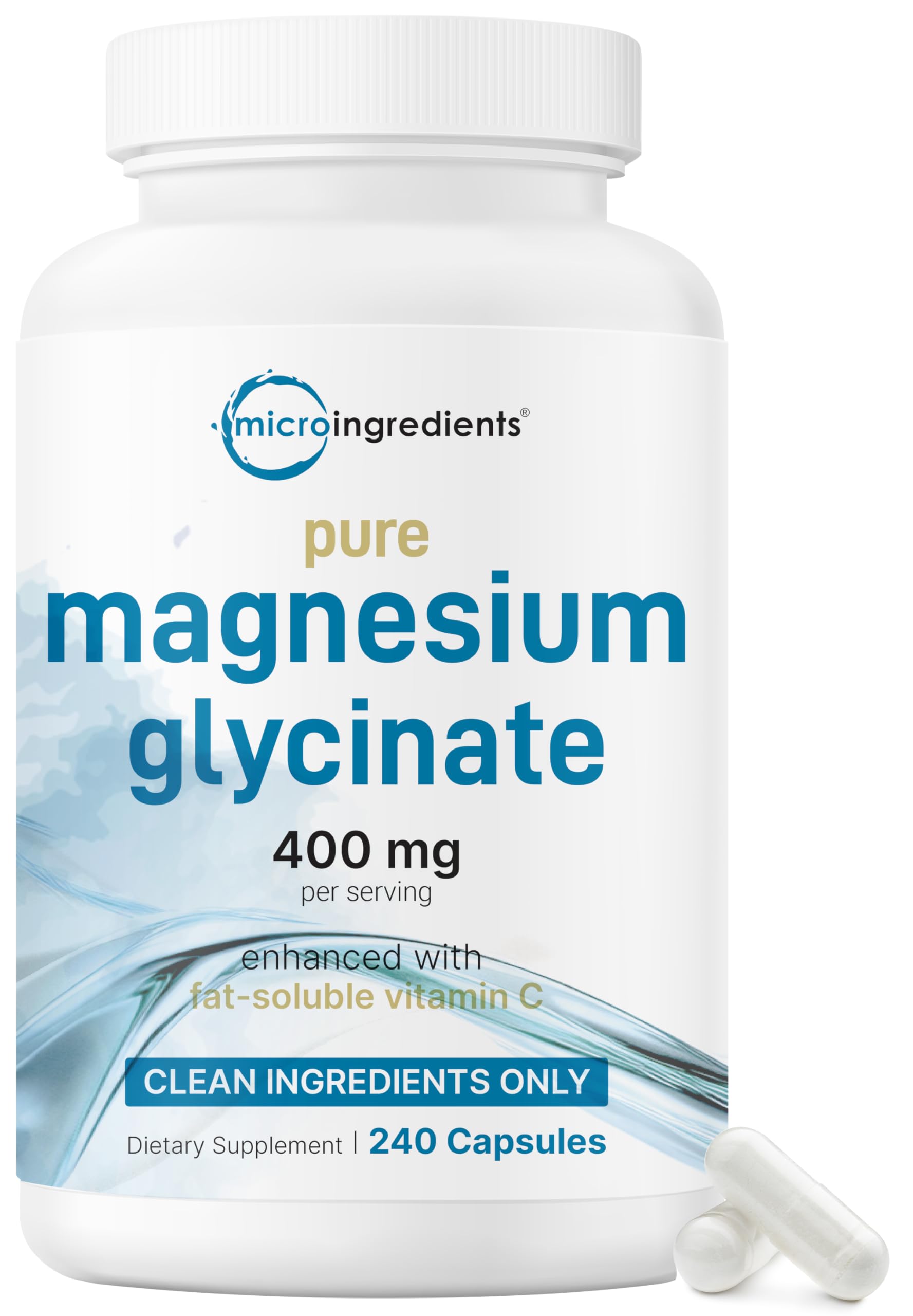
This bottle delivers 400 mg of elemental magnesium per three-capsule serving — exactly the therapeutic dose recommended for migraine prophylaxis. The glycine chelate ensures the mineral crosses the blood-brain barrier without the laxative effect that ruins magnesium oxide and citrate regimens. Each batch is third-party lab tested for heavy metals, which matters for migraine sufferers whose nervous systems react to trace contaminants.
The 240-count bottle stretches to an 80-day supply at full dosing, lowering the per-day cost without sacrificing purity. Micro Ingredients explicitly states the formula is filler-free, non-GMO, and free of soy, dairy, gluten, and tree nuts — all common triggers that amplify migraine symptoms. The cGMP compliant facility adds an extra layer of manufacturing rigor.
This is the simplest path to a consistent 400 mg elemental glycinate protocol. The only catch is the three-capsule serving size: those who struggle swallowing larger pills may prefer a two-capsule product, but the potency per capsule here is standard for the category.
Why it’s great
- 400 mg elemental per serving hits the clinical target
- Third-party tested for purity and heavy metals
- 80-day supply at a very reasonable per-day cost
Good to know
- Three capsules per serving may be bulky for some users
- No added BioPerine for absorption boost
2. NOW Supplements Magnesium Glycinate with BioPerine, 180 Veg Capsules

NOW marries magnesium glycinate with BioPerine, a patented black pepper extract that increases absorption across the intestinal wall. For migraine sufferers with compromised digestion — common in chronic migraine populations — this addition can make the difference between 80% bioavailability and the standard 60–70% range. The glycine bond itself is already gentle on the stomach, so the BioPerine does not introduce any laxative risk.
This 180-count bottle provides a 45-day supply at the recommended two-capsule serving taken twice daily. Each serving delivers a meaningful but moderate dose of elemental magnesium, so users with higher requirements may need to adjust the schedule. The GMP-certified facility and ISO/IEC accredited in-house lab confirm batch-level quality control.
NOW is a family-owned manufacturer operating since 1968, and their supply chain transparency is best-in-class among mass-market supplement brands. The veggie capsules also avoid gelatin, making the product suitable for plant-based diets. The trade-off is that the elemental dose per capsule is lower than some competitors, requiring more pills per day to reach 400 mg.
Why it’s great
- BioPerine increases absorption for sensitive digestive systems
- Veggie capsules and non-GMO ingredients
- Family-owned brand with rigorous testing
Good to know
- Lower elemental content per capsule means more pills per day
- Advanced users may find the dose insufficient per serving
3. Pure Magnesium Glycinate 1,000mg, 300 Capsules with Vitamin C
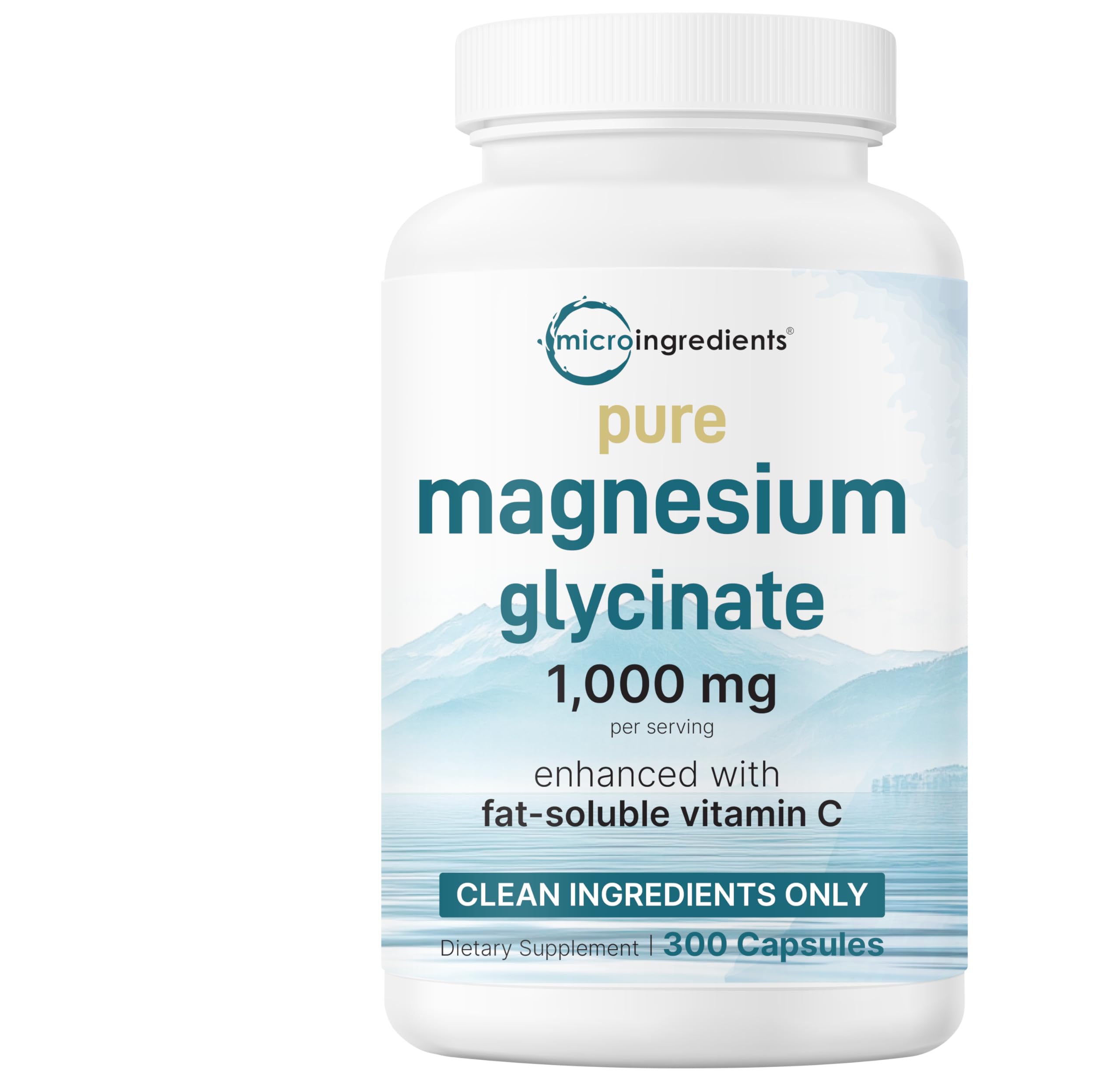
This product distinguishes itself with a two-capsule serving delivering 1,000 mg of magnesium glycinate paired with vitamin C. The vitamin C acts as an antioxidant that reduces oxidative stress linked to migraine aura, while the glycinate provides the neurological calm required for prevention. The two-capsule serving is a significant convenience over three-capsule alternatives.
Micro Ingredients claims a 150-day supply per bottle, making this one of the longest-lasting options per purchase. The formula is explicitly filler-free, non-GMO, and third-party lab tested for purity. The chelated mineral complex should be readily absorbed, and the addition of vitamin C does not interfere with magnesium transport.
The 1,000 mg figure refers to total compound weight, so users must check the Supplement Facts panel for the exact elemental magnesium content — typically around 200 mg per serving. This is still within the effective range for daily prevention but may require an extra capsule for those targeting the full 400 mg elemental dose. The vitamin C component is a minor addition rather than a core feature.
Why it’s great
- Two-capsule serving is convenient and easy to swallow
- 150-day supply at standard dosing
- Added vitamin C for antioxidant support
Good to know
- Check label for elemental content — may need extra capsule
- Vitamin C addition is modest and may not impact migraines directly
4. NOW Foods Magnesium Glycinate, 240 Tablets

NOW Foods returns with a larger tablet format designed for users who prefer tablets over capsules and want a longer supply. The 240-count bottle provides roughly four months of daily use at a moderate dose. Each tablet bonds magnesium to glycine for the same neurological benefits and gentle digestion profile that makes glycinate the migraine-preferred form.
Manufactured in the USA in a GMP facility that tests for stability and potency, this product avoids the eight major allergens including wheat, gluten, soy, milk, and eggs. The sustainability initiative — planting one tree for every 20 bottles sold — adds an environmental consideration that matters to some buyers. The tablet format may be easier for some people to cut in half for smaller doses.
The downside is the elemental content per tablet: like most glycinate products, each tablet delivers roughly 100–120 mg of elemental magnesium. Reaching the 300–400 mg therapeutic target requires 3–4 tablets daily, which runs through the supply faster than expected. Users serious about migraine prevention should calculate the per-tablet elemental dosage before assuming the 240-count equals a full four months.
Why it’s great
- USA-manufactured in GMP-certified facility
- Large bottle count extends time between repurchases
- Allergen-free formulation suitable for sensitive diets
Good to know
- Multiple tablets needed to reach therapeutic elemental dose
- Tablet format may not suit capsule-preferring users
5. UpNourish Pure Magnesium Citrate 1120mg, 240 Capsules

Magnesium citrate is the second most studied form for migraine prevention, and UpNourish offers it in a pure, unbuffered formulation free of artificial colors and preservatives. The 1,120 mg of magnesium citrate per serving delivers one of the highest total compound weights on the market. The citrate ion itself enhances water solubility and absorption speed compared to oxide or malate.
However, citrate draws water into the bowel lumen through osmosis, which can trigger loose stools or diarrhea at the 300–400 mg elemental doses required for migraine work. Migraine sufferers with IBS, Crohn’s, or general gut sensitivity may find daily citrate use unsustainable. The product is free of major allergens and is unbuffered, meaning the citric acid is fully active for faster absorption.
This bottle works best as a rescue option for acute migraine episodes rather than daily prevention. The high bioavailability makes it effective for rapid symptom relief, and the 240-count offers a long supply for infrequent use. For consistent daily prophylaxis, glycinate remains the safer choice — citrate is best reserved for those who tolerate it without bowel side effects.
Why it’s great
- High absorption rate due to ionic citrate form
- Free of all major allergens and artificial additives
- Unbuffered and fully reacted for rapid uptake
Good to know
- Laxative effect at migraine-level dosing is common
- Better suited for acute episodes than daily prevention
FAQ
Why is magnesium glycinate better than citrate for migraines?
How much elemental magnesium should I take each day for migraines?
Can magnesium citrate work for migraines if I can tolerate the laxative effect?
What does BioPerine do in a magnesium supplement?
Final Thoughts: The Verdict
For most users, the magnesium type for migraines winner is the Micro Ingredients Pure Magnesium Glycinate because it delivers 400 mg of elemental magnesium per serving in a filler-free, third-party-tested formula at a per-day cost that is hard to beat. If you want enhanced absorption through BioPerine, grab the NOW Supplements Magnesium Glycinate with BioPerine. And for a high-dose option with added vitamin C in a smaller pill count, nothing beats the Pure Magnesium Glycinate 1,000mg.