Ditching heavy boots for a lighter stride on technical terrain means sacrificing ankle support for agility — the right pair of low-top hiking shoes locks your foot to the trail with a precise sole and a secure heel cup, not a stiff collar. The difference between a solid day on the rocks and an afternoon nursing blisters comes down to traction lug depth, outsole rubber compound, and whether that mesh upper breathes without collecting every stray pebble.
I’m Emma — the founder and writer behind Baby Bangs. I specialize in researching gear categories where one wrong spec means a season of regret, from pack weight to sole stiffness, so you don’t have to guess which shoe holds up after mile eight.
After combing through recent releases and cross-referencing sole compounds, toe-box widths, and waterproof membranes across seven serious contenders, here is the shortlist for the best low-top hiking shoes that balance ground feel with real trail protection.
How To Choose The Best Low-Top Hiking Shoes
Low-top hiking shoes live in the gap between a trail runner and a full boot — you sacrifice ankle wrap to gain ground feel and a lighter step. The key is knowing which trade-offs you can accept and which specs are non-negotiable for the terrain you actually walk.
Outsole Grip: It is Not Just About the Lugs
A deep chevron lug pattern (4 mm or more) bites into mud and loose dirt, but on wet granite or slick roots the rubber compound itself matters more. Look for outsoles made from Vibram or proprietary blends with a durometer reading around 60-65 Shore A — soft enough to stick, hard enough to not wear flat after 100 miles.
Upper Material vs. Breathability
Leather or synthetic leather uppers last longer and shed mud, but they trap heat and dry slowly. Mesh or knit uppers breathe and flex, but they catch trail debris and won’t hold up to abrasive rock without early wear. A dual-layer approach — mesh backed by a waterproof membrane — gives you breathability with protection, provided the membrane has a high MVTR (moisture vapor transmission rate) so sweat escapes.
Toe Box Volume and Heel Lock
A low-top shoe relies almost entirely on the heel cup and lacing system to prevent lateral slip on angled terrain. Look for a deep, well-padded heel collar and lacing that extends close to the toes so you can cinch down without pressure points. A roomy toe box (think KEEN or Merrell standard) helps on descents, but only if the midsole provides enough torsional rigidity to stop your foot from sliding forward.
Quick Comparison
On smaller screens, swipe sideways to see the full table.
| Model | Category | Best For | Key Spec | Amazon |
|---|---|---|---|---|
| Merrell Men’s Accentor 3 | Premium | All-day support on uneven terrain | M Select Grip rubber outsole | Amazon |
| KEEN Targhee 4 Low | Premium | Wide feet & waterproof needs | KEEN.DRY waterproof membrane | Amazon |
| Timberland Field Trekker Low | Mid-Range | Casual hiker seeking durability | TimberDry waterproof membrane | Amazon |
| adidas Terrex Skychaser Ax5 | Mid-Range | Fast day hikes & disc golf | Continental rubber outsole | Amazon |
| Columbia Benson™ | Mid-Range | Budget-friendly walking comfort | Techlite lightweight midsole | Amazon |
| Columbia Vertisol Trail | Budget | Value-conscious trail walker | Omni-Grip outsole compound | Amazon |
| Columbia Strata Trail Low | Budget | Entry-level day hikes | Breathable mesh upper | Amazon |
In‑Depth Reviews
1. Merrell Men’s Accentor 3 Hiking Shoe
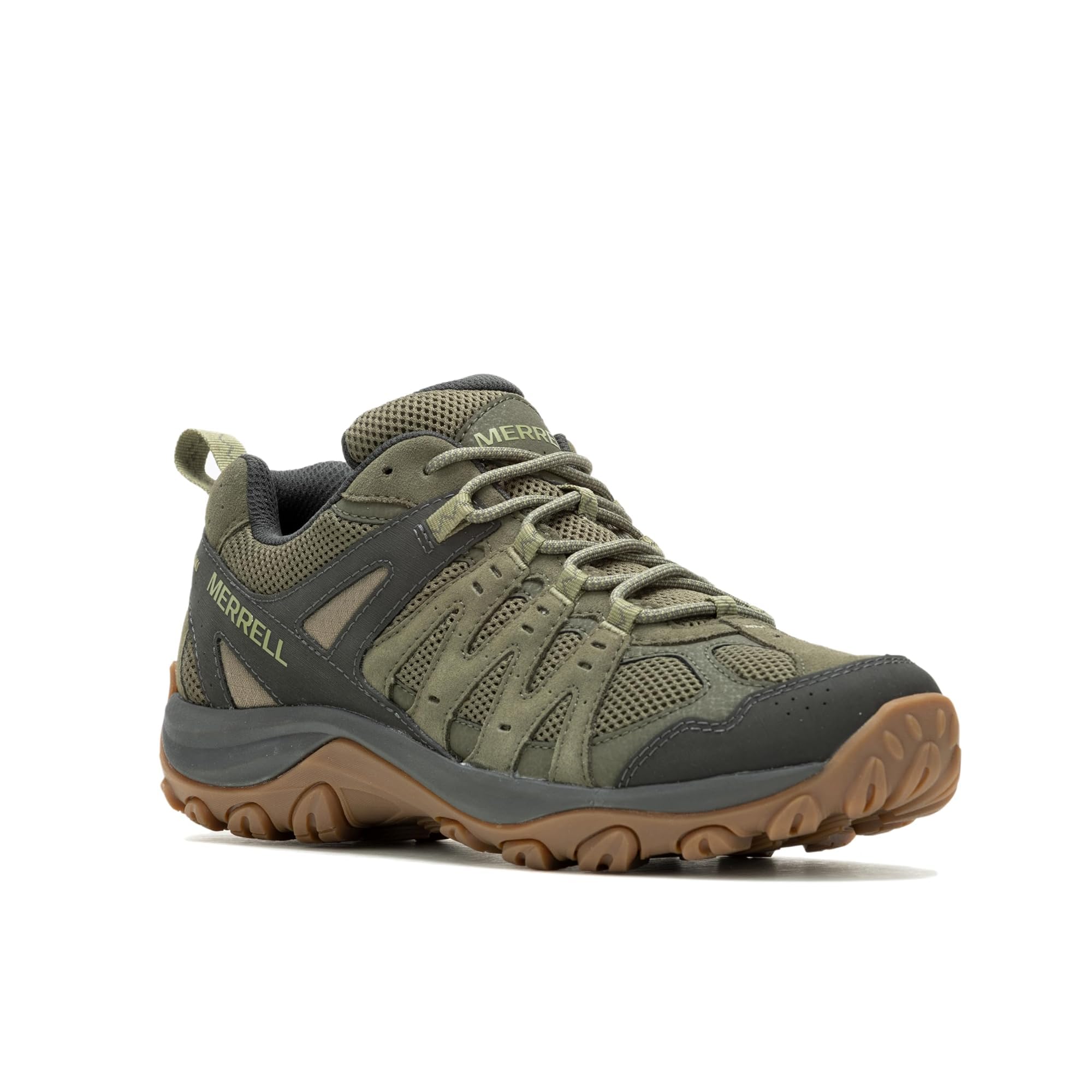
The Accentor 3 bridges the gap between a rugged boot and a lightweight walker better than any shoe in this test. The full-grain leather upper wraps the foot without the break-in period most leather hikers demand, and the M Select Grip outsole delivers predictable traction across dry rock, packed dirt, and wet grass. At roughly 14 ounces per shoe in mid sizes, it is light enough for a 10-mile day but stout enough to handle a scrambling section without folding.
Merrell uses a molded nylon arch shank underfoot, which adds torsional rigidity that low-tops often lack — you feel it on side-hill traverses when the shoe resists twisting under load. The heel cup is deep and padded enough that lacing down to the second eyelet locks the heel in place, reducing the friction that causes blisters. The toe box offers standard volume; if you need KEEN-level width, this shoe will feel snug.
The waterproof version uses a membrane that breathes adequately for shoulder-season hiking, but on 80-degree summer days you will want the ventilated mesh variant. The tread is Vibram-sourced under the M Select branding, and the 4 mm lugs shed mud well but are not aggressive enough for deep muck. This is the shoe for the hiker who wants one pair that does everything well without a glaring weakness.
Why it’s great
- Leather upper with minimal break-in period
- Nylon arch shank adds torsional rigidity
- Sticky M Select Grip outsole on varied surfaces
Good to know
- Standard toe box is snug for wide feet
- Waterproof membrane limits high-heat breathability
2. KEEN Men’s Targhee 4 Low Height Hiking Shoes
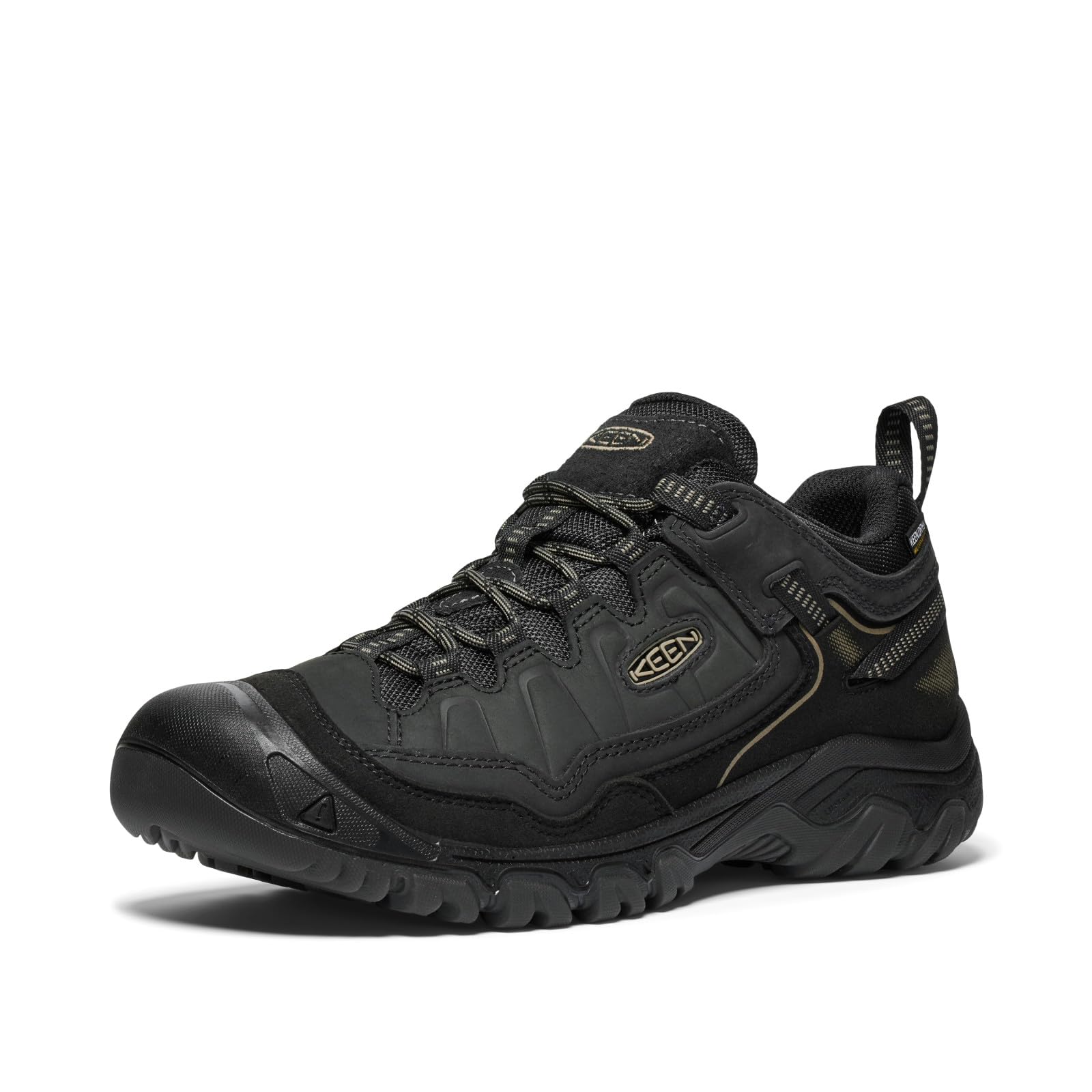
The Targhee 4 Low is the fourth iteration of KEEN’s flagship low-top, and the refinements show in every step. The fit signature — generous toe box with a secure mid-foot — remains, meaning hikers with wide feet or bunions can finally wear a low-top without crowding the toes. The KEEN.DRY membrane holds up reliably in stream crossings and sustained rain, as verified by multiple long-term users reporting dry feet through an entire wet winter.
Outsole traction comes from KEEN’s own rubber compound with multi-directional lugs that bite on loose-over-hardpack trails. The heel has a slight braking ridge for descents, and the toe bumper wraps high enough to protect against rock stubs. The midsole is denser than most in this category, which translates to better support on long rocky days but a slightly stiffer feel right out of the box. Users report that the shoe breaks in after about 15 miles of mixed walking.
At 15.5 ounces per shoe, the Targhee 4 Low is on the heavier end for a low-top, and the all-leather upper retains heat on hot days — it is best suited for spring through fall hiking in moderate-to-cool climates. The lace system extends far enough down the tongue to allow micro-adjustments, though some users wish for a third eyelet at the top for even more heel lock. If your priority is waterproofing and toe-room without resorting to a full boot, this is the pair.
Why it’s great
- Industry-leading waterproof membrane performance
- Very generous toe box accommodates wide feet
- Dense midsole offers serious support on rocky terrain
Good to know
- Heavier than average low-top at 15.5 oz per shoe
- Stiff midsole needs break-in time
3. Timberland Mens Field Trekker Low
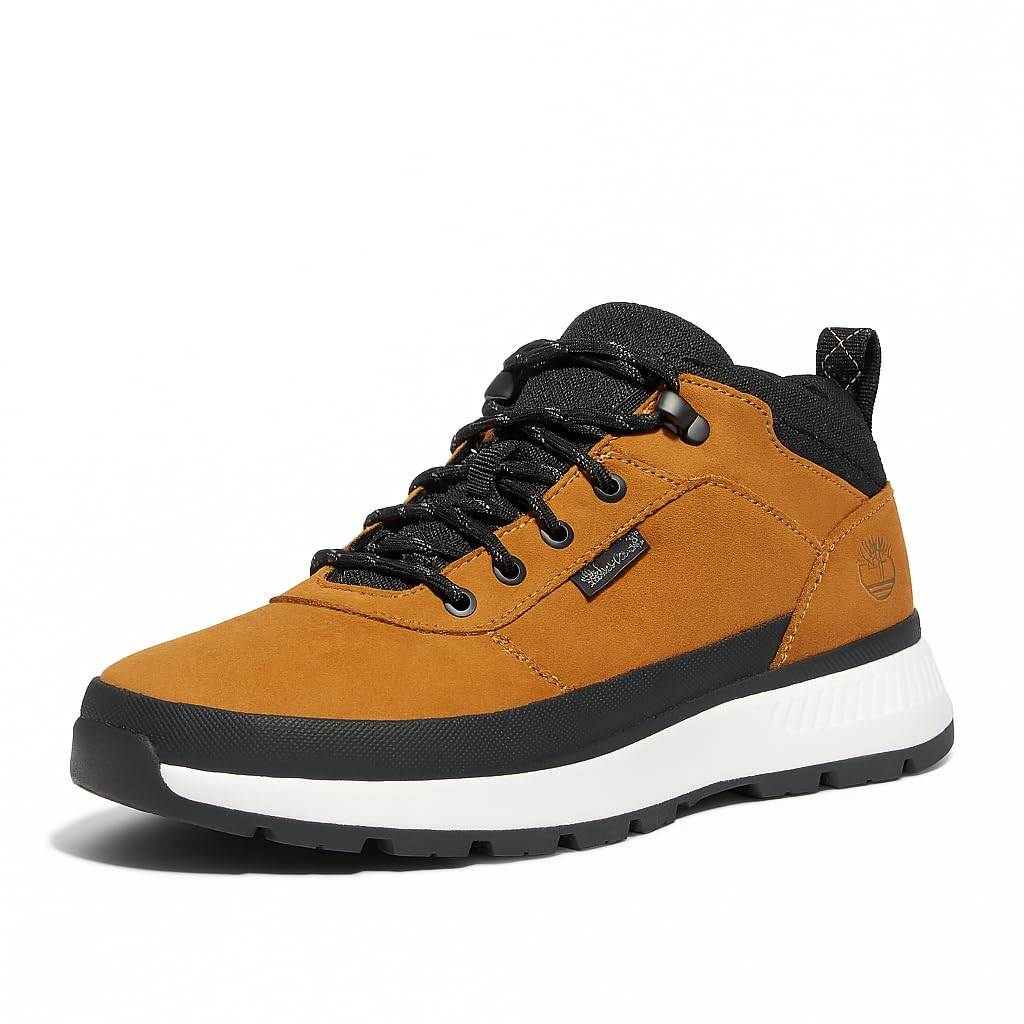
The Field Trekker Low takes Timberland’s signature rugged aesthetic and translates it into a hiking-specific package that feels substantial without being clunky. The upper is a mix of premium nubuck leather and abrasion-resistant mesh, giving it a longer lifespan than a purely fabric shoe while keeping weight manageable at roughly 14 ounces per shoe. The TimberDry membrane is a recycled-polyester waterproof liner that competes well against the bigger names, holding up in moderate rain and shallow puddles.
The outsole uses Timberland’s own rubber compound with a lug pattern that favors packed dirt and gravel over technical rock — the lugs are moderately deep at around 3.5 mm, but the rubber is on the harder side, which means less stick on wet slabs but longer tread life. The midsole has a noticeable rocker shape that helps with walking efficiency on flat sections, though it reduces sensitivity on uneven footing. The heel cup is padded enough for casual walks but lacks the aggressive heel-lock geometry found on purpose-built trail shoes.
Where the Field Trekker shines is durability for occasional to moderate use. The toe bumper is thick and extends around the full perimeter, protecting against scuffs and abrasion that would wear through a mesh shoe quickly. The insole is removable, making it easy to swap in custom orthotics. For the hiker who wants a shoe that looks good at the trailhead and still looks good after a season, this is a solid mid-range option.
Why it’s great
- Tough nubuck leather upper with long wear life
- Rocker midsole improves walking efficiency
- Full perimeter toe bumper for abrasion protection
Good to know
- Harder rubber outsole reduces wet-rock grip
- Heel lock is less effective than trail-specific designs
4. adidas Men’s Terrex Skychaser Ax5 Hiking Shoes

The Terrex Skychaser Ax5 borrows heavily from adidas’s trail-running lineage, delivering a low-top that feels more like an agile athletic shoe than a traditional hiker. The Continental rubber outsole — borrowed from the brand’s ultra-distance running line — provides excellent wet-road and wet-rock grip that outpaces many dedicated hiking outsoles. The weight is a standout feature at barely 11 ounces per shoe, making it the lightest option here by a wide margin.
The upper is a single-layer mesh with welded overlays rather than stitched panels, which reduces weight and potential failure points but leaves it vulnerable to abrasion from sharp rock. The midsole uses adidas’s BOOST foam — a TPU-based compound that retains cushioning even in cold temperatures, a major advantage over standard EVA midsoles that stiffen in winter. The fit runs true to size according to multiple user reports, and the lacing system offers a secure lockdown through the mid-foot thanks to a gusseted tongue that prevents debris entry.
One user reported their pair lasted three years of mixed use including disc golf, which speaks to the durability of the Continental outsole and BOOST midsole over the mesh upper. For fast day hikes where weight matters more than armor, this shoe excels.
Why it’s great
- Very lightweight at 11 oz per shoe
- Excellent wet-weather grip from Continental rubber
- BOOST foam retains cushioning in cold temperatures
Good to know
- Mesh upper vulnerable to sharp rock abrasion
- Minimal toe bumper and no stone plate underfoot
5. Columbia Mens Benson™
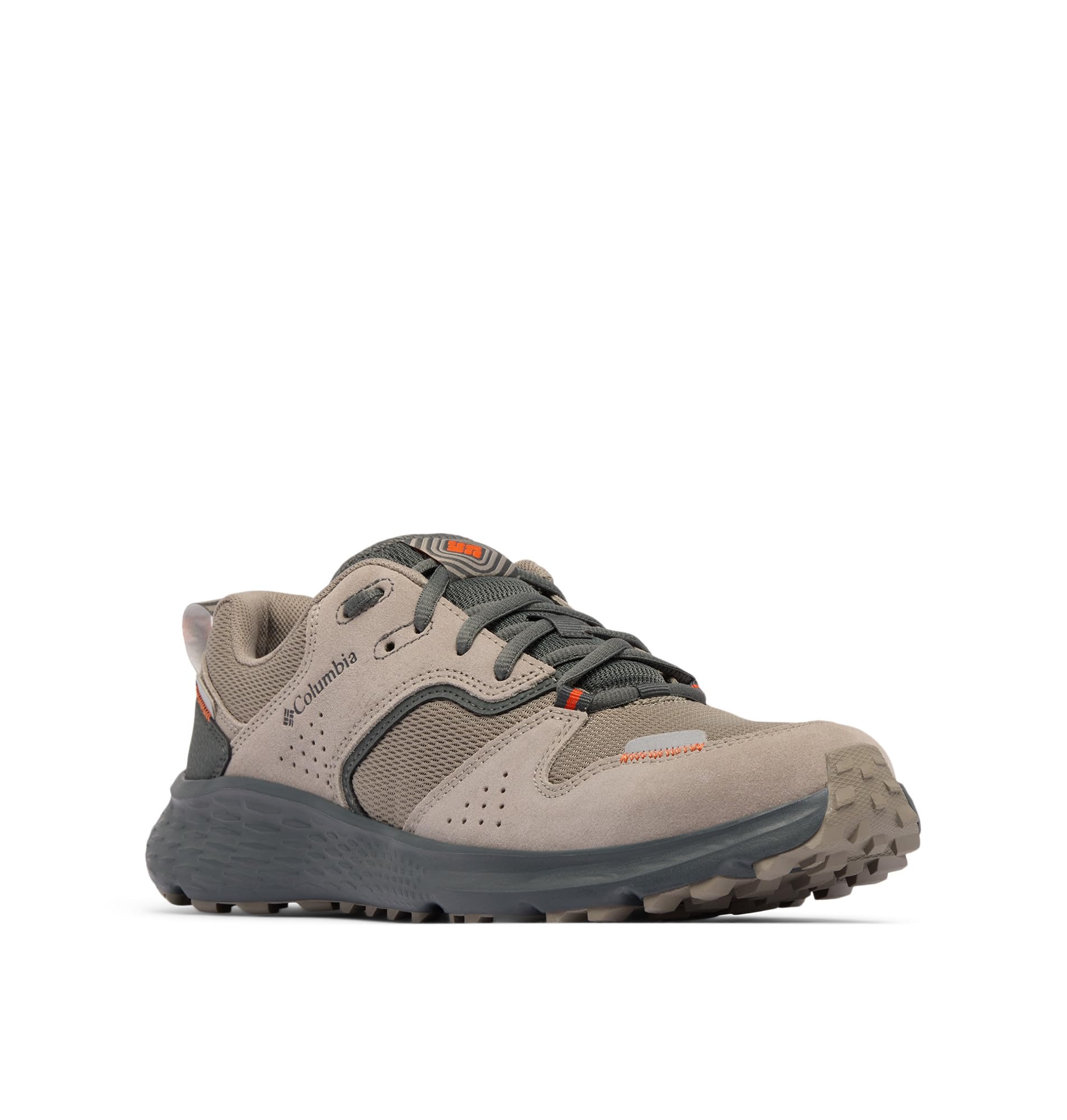
The Columbia Benson sits in a comfortable mid-range spot, offering a Techlite midsole that delivers reliable cushioning without the marshmallow feel that fatigues feet on longer walks. The upper is a combination of suede leather and mesh that provides a decent balance of structure and breathability, though it is not fully waterproof — the Benson is best reserved for dry trails and light morning dew rather than stream crossings.
The outsole uses Columbia’s Omni-Grip compound with a pattern that favors general trail walking over technical scrambling. The lugs are shallow at roughly 3 mm, which means they handle gravel paths and packed earth well but lose bite on loose scree or wet roots. The shoe runs true to size with a standard volume toe box that sits halfway between the roominess of KEEN and the snugness of adidas, making it a safe choice for most foot shapes.
Where the Benson stands out is in all-day comfort for casual use — the heel collar is well-padded, the tongue is gusseted to keep out debris, and the shoe requires no break-in period out of the box. The lack of a waterproof membrane keeps the weight low at around 13 ounces per shoe and the price accessible. For the hiker who walks mainly on maintained trails and wants a shoe that feels like a sneaker, the Benson is a strong everyday companion.
Why it’s great
- Techlite midsole provides consistent all-day cushioning
- No break-in period required
- Gusseted tongue effectively blocks trail debris
Good to know
- Not waterproof; avoid wet trail conditions
- Shallow lugs struggle on loose or technical terrain
6. Columbia Men’s Vertisol Trail
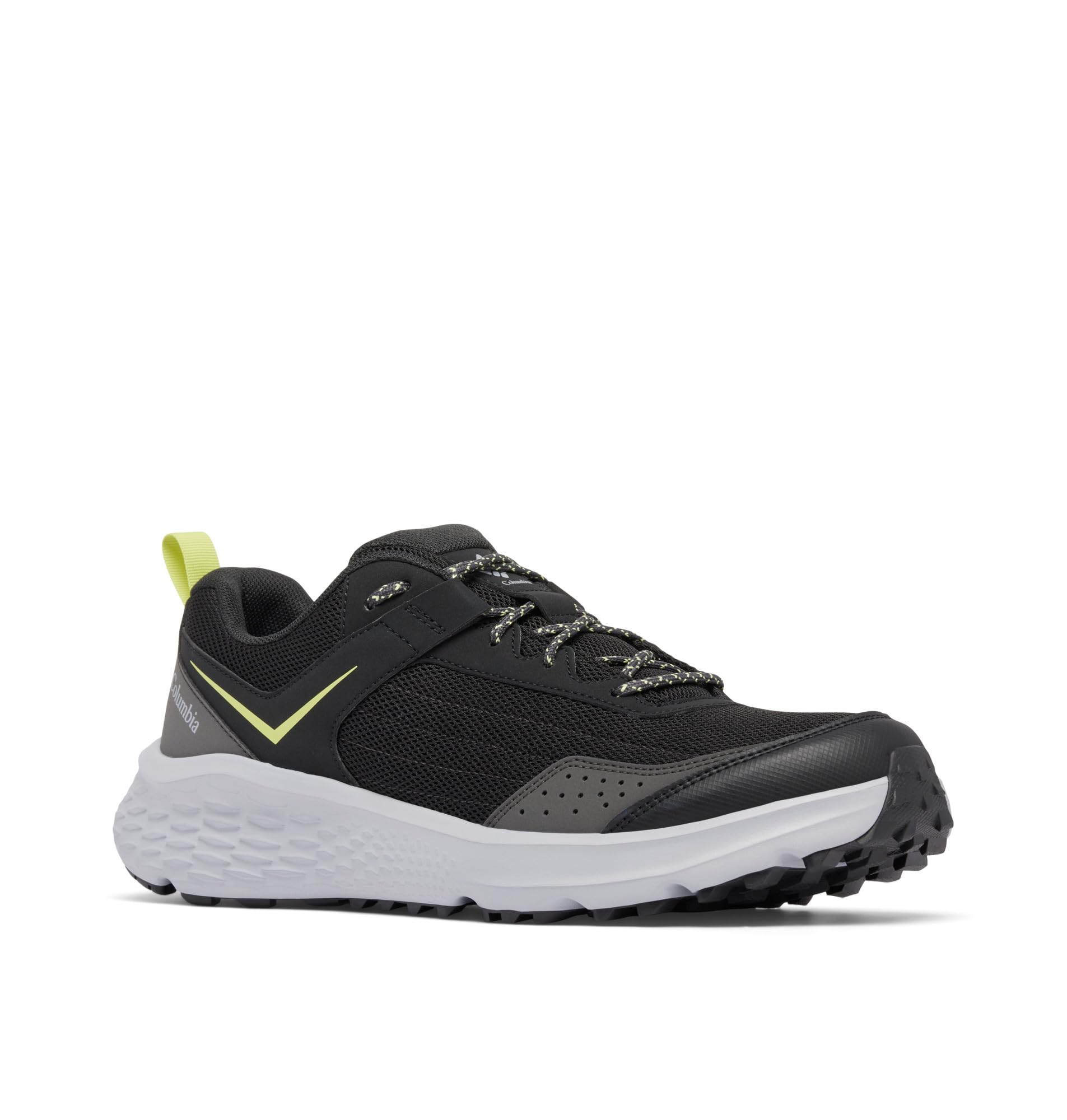
The Vertisol Trail is Columbia’s entry-level offering for the hiker who wants to test the low-top waters without a significant financial commitment. The omni-grip outsole provides adequate traction on dry, groomed trails and moderate slopes, though the rubber compound is on the firmer side, which reduces grip on polished rock or wet wood bridges. The multi-directional lug pattern looks aggressive from the side, but the shallow depth means it cleans quickly rather than digging in.
The upper is a synthetic suede and mesh construction that prioritizes breathability over structure — the shoe flexes easily side to side, which reduces protection on uneven side-hill sections but makes it comfortable for flat walking. The midsole is Columbia’s standard Techlite foam, which offers a plush step-in feel but compresses noticeably after the first few months of regular use. The heel cup is lightly padded with a modest counter, adequate for casual strolls but not for carrying a loaded pack on rocky descents.
For the buyer who walks fire roads, park trails, and neighborhood greenbelts, the Vertisol Trail delivers everything needed. The fit runs slightly wide through the mid-foot, and the toe box offers average room. The lack of a waterproof membrane keeps the shoe light and quick to dry if splashed, but it also means wet grass or morning dew soaks through the mesh within minutes. It is a smart starting point for someone who is not yet sure how much hiking they will actually do.
Why it’s great
- Very accessible entry-level price point
- Breathable upper dries quickly after splashes
- Comfortable out-of-box step-in feel
Good to know
- Midsole compresses faster than premium foams
- Not waterproof; mesh soaks through quickly
7. Columbia Mens Strata Trail Low
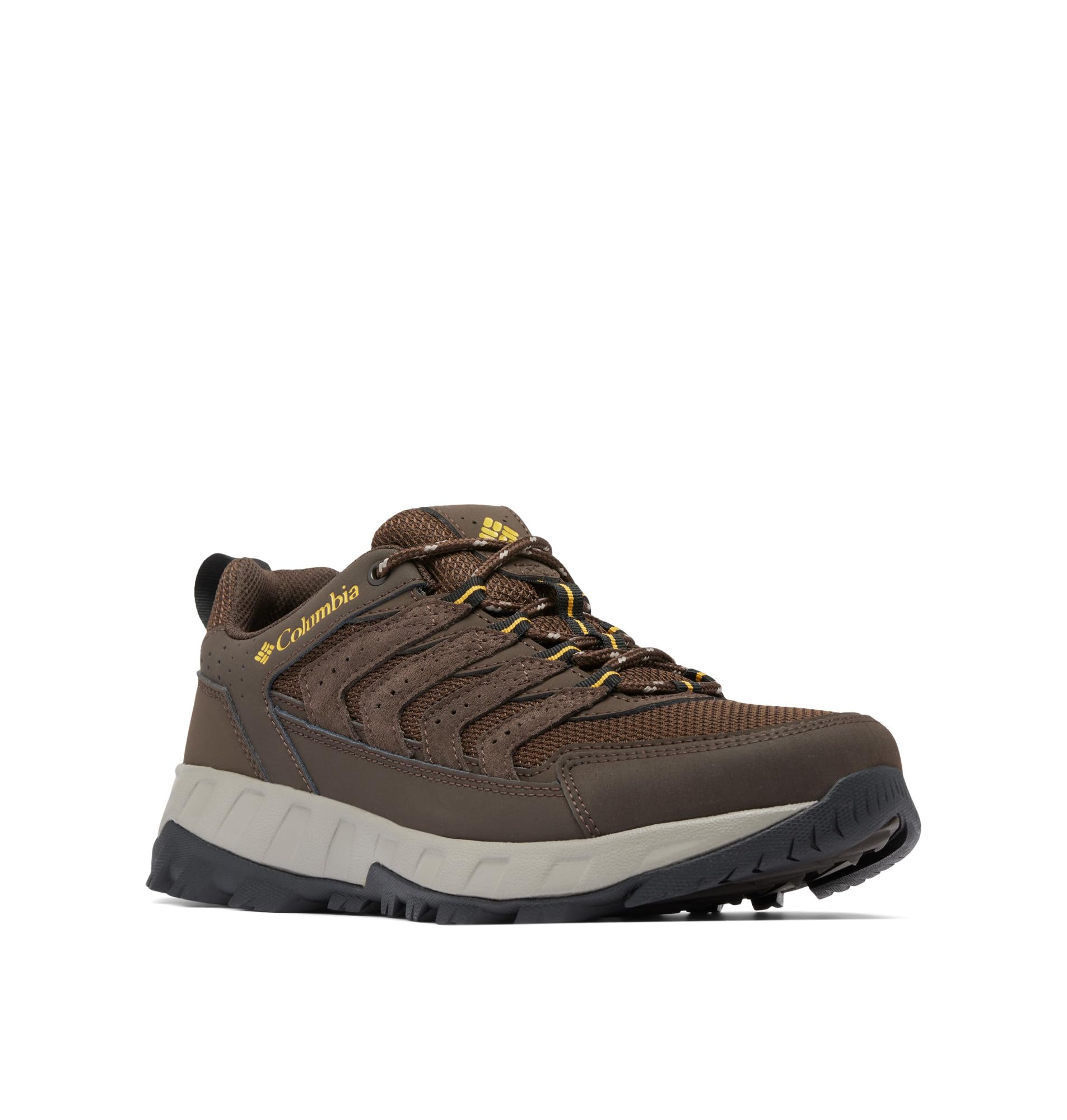
The Strata Trail Low is designed as a lightweight, flexible shoe for casual walkers who want a hint of trail capability without the heft or structure of a dedicated hiker. The upper is almost entirely mesh, making it the most breathable shoe in this lineup — ideal for warm-weather walks where airflow matters more than protection. The Omni-Grip outsole is present but the lugs are minimal, barely 2.5 mm deep, meaning this shoe is most at home on pavement, gravel paths, and hard-packed dirt.
The midsole is Columbia’s standard Techlite foam, tuned to be softer than in the Vertisol, which makes the Strata feel plush initially but prone to compression under repeated load. The shoe lacks a heel counter altogether, relying instead on a simple padded collar that offers minimal lateral stability — on uneven ground, the foot tends to roll slightly inside the shoe. The lacing system is standard and does not extend far enough forward to allow precise micro-adjustments across the toe box.
This is the shoe for the user who walks the dog on a dirt trail, strolls through a park, or needs a comfortable travel shoe that can handle light off-pavement use. It is not appropriate for technical hiking, carrying weight, or wet conditions. The value proposition is clear: a breathable, comfortable shoe at a budget-friendly tier that asks nothing in return except reasonable expectations. For the serious hiker, it is a backup shoe; for the casual walker, it is enough.
Why it’s great
- Most breathable mesh upper in this comparison
- Very comfortable for casual walking right out of the box
- Lightest weight Columbia option available
Good to know
- Minimal lugs and lateral support for technical terrain
- Midsole compresses quickly under consistent use
FAQ
Should I size up in low-top hiking shoes for foot swelling on longer hikes?
Are low-top hiking shoes adequate for carrying a heavy backpack on rocky trails?
How often should I replace low-top hiking shoes based on mileage wear?
Final Thoughts: The Verdict
For most users, the best low-top hiking shoes winner is the Merrell Accentor 3 because it delivers the best all-around mix of leather durability, outsole grip, and torsional stiffness without crossing into boot territory. If you want a wide toe box and waterproofing that actually works in sustained rain, grab the KEEN Targhee 4 Low. And for fast, lightweight day hikes where every ounce counts, nothing beats the agility of the adidas Terrex Skychaser Ax5.