A living room with a north-facing window, a dim apartment hallway, or a windowless office corner — these spots are often written off as plant-death zones. But the right foliage doesn’t need a sunbeam. It needs a specific tolerance for photosynthetic deprivation, a trait encoded in the genetics of species that evolved on the shaded forest floor under a dense canopy. The real challenge isn’t keeping a plant alive; it’s finding a specimen that won’t leggy-stretch and fade into pale thinness when denied direct rays.
I’m Emma — the founder and writer behind Baby Bangs. I’ve spent years tracking grower inventories, comparing USDA hardiness in reverse (downward light levels), and analyzing the failure points beginners hit when they mistake “low-light tolerant” for “no-light immortal.”
I’ve narrowed the field to five species that genuinely hold their color and structure in low foot-candles, skipping the ones that only survive because they’re green corpses. This is your data-backed guide to the best low-light plants for indoors.
How To Choose The Best Low-Light Plants For Indoors
The term “low-light” in houseplant marketing is chronically abused. A plant that merely fails to die for two months is not thriving. You need a species genetically programmed to photosynthesize efficiently with low Photosynthetic Photon Flux Density (PPFD) readings — under 50 µmol/m²/s. Here’s what to prioritize.
Variegation Versus Solid Green
Variegated leaves have less chlorophyll. In low light, that’s a handicap. A solid green leaf captures more photons per square inch, meaning it can sustain itself in a dimmer spot without reverting to all-green or dropping leaves. If you’re placing a plant in a true shadow corner, skip the pink, white, or yellow stripes and go for deep green cultivars.
Pet Toxicity: The ASPCA List Matters
Many low-light workhorses (Parlor Palm, Maranta, Haworthia) are listed as non-toxic by the ASPCA. Others, like the Dwarf Umbrella Tree, can cause vomiting if ingested. Cross-check your chosen species against the ASPCA database — especially if your cat treats leaves like a salad bar. The trade-off between leaf safety and light tolerance must be deliberate.
Watering Cadence in Low Light
Low light drastically slows soil evaporation. A plant that needs watering every 5 days in a sunny window might go 12–14 days in the same pot in a dim room. Overwatering in low light is the #1 killer. Search for species that tolerate dry soil between waterings (Maranta, Parlor Palm, succulents like Gasteria) to avoid root rot before you even see the signs.
Quick Comparison
On smaller screens, swipe sideways to see the full table.
| Model | Category | Best For | Key Spec | Amazon |
|---|---|---|---|---|
| Lemon Lime Maranta Prayer Plant | Mid-Range | Pet owners & recovery from neglect | Night-folding leaf movement | Amazon |
| Parlor Palm (Neanthe Bella) | Mid-Range | Extreme low-light corners | Compact 5-8 inch frond height | Amazon |
| Stromanthe Triostar Prayer Plant | Mid-Range | Burgundy/pink color in low light | Partial shade only requirement | Amazon |
| Dwarf Umbrella Tree | Premium | Tall floor plant (6-inch pot) | Glossy segmented leaf canopy | Amazon |
| Cacti & Succulent Mix (3-Pack) | Budget-Friendly | Gift sets & multiple-desk decor | Drought-tolerant succulent form | Amazon |
In‑Depth Reviews
1. Lemon Lime Maranta Prayer Plant

The Lemon Lime Maranta is a mid-range workhorse that earns its top spot for three reasons: it tolerates the low end of bright-indirect light without losing its leaf color, it folds its leaves upward at night (nyctinasty) — a visible sign it’s still metabolizing — and it’s ASPCA-listed as non-toxic, making it safe for homes with cats or dogs. The vivid yellow-green striping on deep green leaves survives in moderate shade better than most variegated species.
Shipped bare-root or in a 4-inch nursery pot at 12–16 inches tall, the Maranta prefers 65–75°F and responds to humidity misting with fuller leaf sets. Hopewind Plants Shop backs this with a no-return-required replacement policy, and the eco-friendly packaging protects the root ball well. Where many plants yellow from low light, the Maranta’s natural margin color hides mild stress, making it forgiving for inconsistent caretakers.
One standout detail: it grows by sending out runners, so it spreads slowly in low light — not leggy stretching toward a window, but horizontal fill-in. That means a denser pot over time without ugly bare stems. Water when the top half of the soil is dry, typically 7–9 days in a dim room, and avoid direct sun which burns the leaf edges.
Why it’s great
- Night-folding leaves confirm it’s actively growing in low light
- ASPCA non-toxic — safe around cats and dogs
- Runners create dense growth rather than leggy stems
Good to know
- Needs humidity above 40% or leaf edges brown
- Variegation may fade in very deep corners below 30 PPFD
2. Parlor Palm (Neanthe Bella)
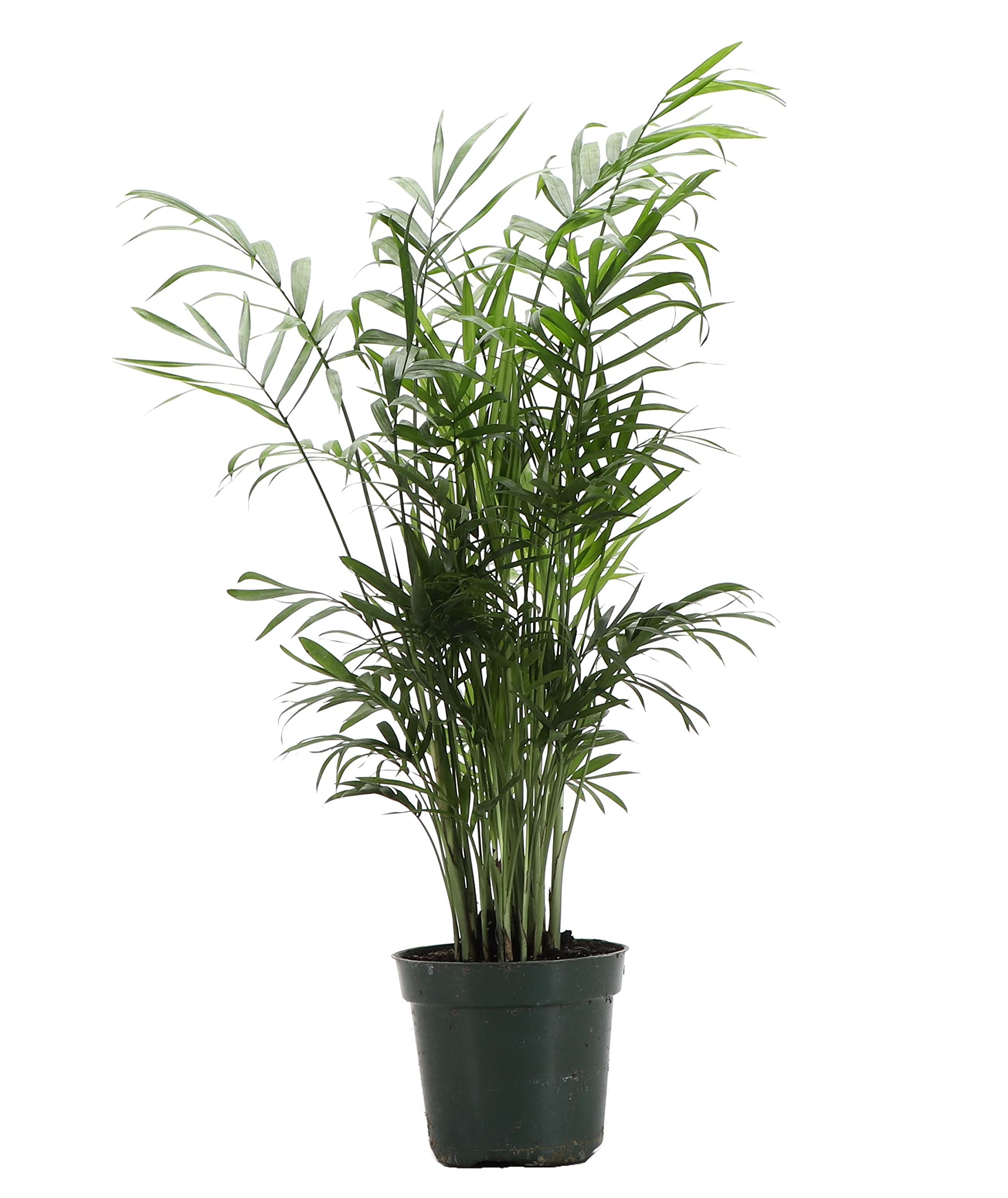
The Neanthe Bella Palm, often called the Parlor Palm, is the standard-issue species nurseries recommend for truly low-light corners. At 4 inches in pot diameter and only 5–8 inches tall at shipping, its compact feathery fronds require no pruning and maintain a dense habit even in sub-optimal conditions. Thorsen’s Greenhouse ships this as a fully rooted live plant, and its tolerance for drought makes it a top candidate for offices where weekend neglect is the norm.
This is one of the few plants that actually grows — albeit slowly — under typical fluorescent office lighting. It’s ASPCA-listed as safe for pets, and its air-purifying reputation comes from general houseplant studies showing that palm species are effective at reducing airborne VOCs in sealed indoor environments. The Parlor Palm’s deep green fronds contain enough chlorophyll to operate at low PPFD levels where other species stall.
The critical limitation is temperature sensitivity: it prefers 65–75°F and will show brown tip damage if exposed to drafts below 55°F. Also, because it grows slowly in low light, you won’t see much height gain in the first year — this is a patience plant. Water thoroughly only when the top inch of soil is dry, which may stretch to 12–14 days in a windowless room.
Why it’s great
- Thrives in true low-light and fluorescent-only areas
- ASPCA non-toxic — safe for pets
- Drought-tolerant — survives missed watering cycles
Good to know
- Very slow growth rate in dim conditions — minimal size increase
- Brown tips appear quickly if exposed to cold drafts
3. Stromanthe Triostar Prayer Plant
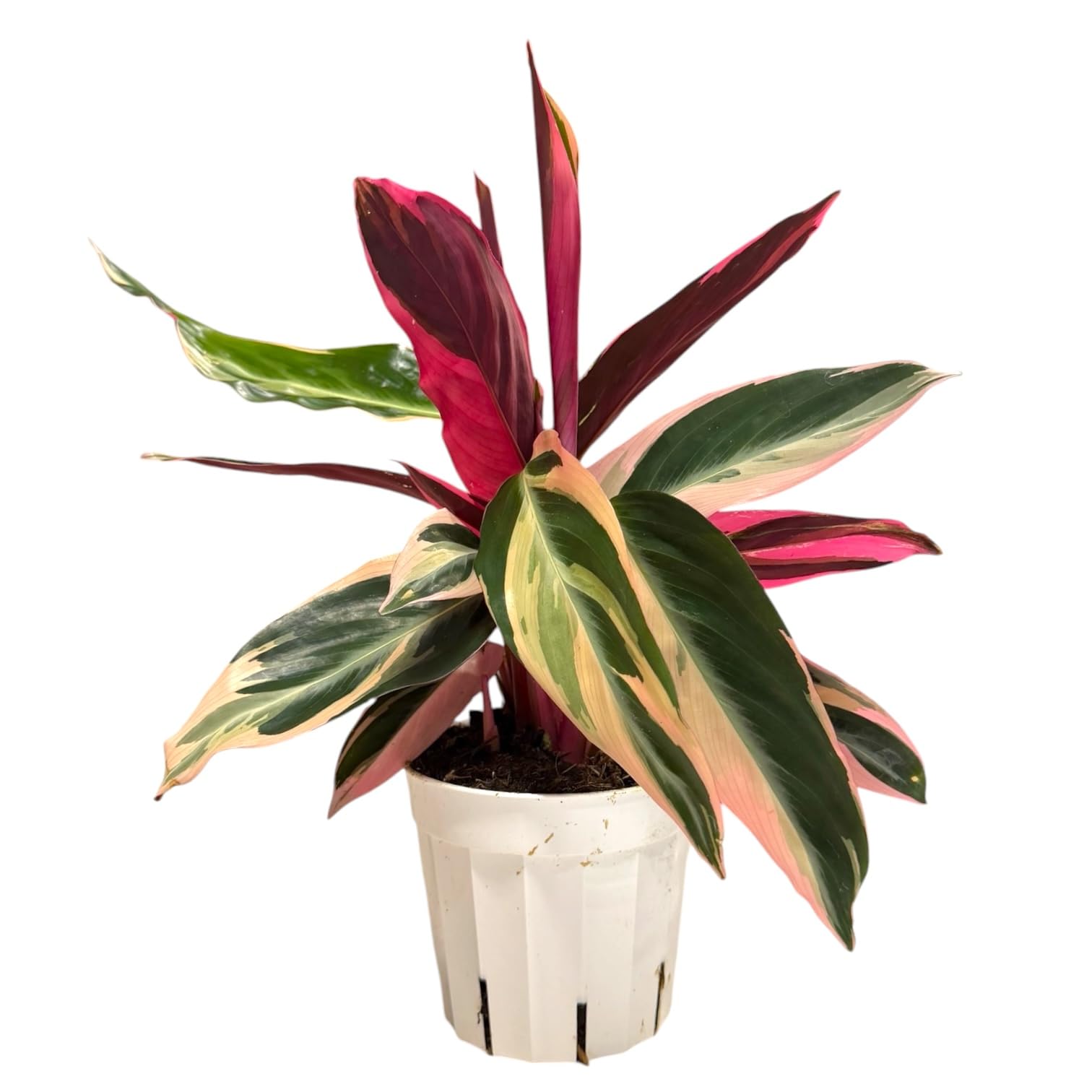
The Triostar Stromanthe brings burgundy undersides and pink-green variegation to the low-light conversation, but it’s worth noting the asterisk: this plant demands partial shade — it will not tolerate deep corners. It needs moderate indirect light, a spot that’s bright enough to cast a soft shadow. In those conditions, the vivid pink and cream variegation persists, making it one of the most visually dramatic low-light-tolerant plants available.
Hopewind ships this in a 4-inch pot at 12–16 inches tall. The plant has a moderate watering need — every 1–2 weeks when the soil is half-dry — and a strict temperature window of 65–70°F. Where the Maranta and Parlor Palm are forgiving, the Triostar is noticeably more sensitive: low humidity causes leaf curling, and overwatering leads to root rot quickly because the thick rhizome-like roots hold water.
The deal-sealing feature is the “prayer plant” nyctinastic movement; its leaves tilt upward in the evening, a satisfying visual cue of health. But if your goal is to place a plant in a truly dark corner, this is not the specimen. It needs to stay within 3–5 feet of a north-facing window. For those with a moderately bright room, it delivers color no other low-light species matches.
Why it’s great
- Unique pink, burgundy, and cream leaf variegation
- Nyctinastic leaf movement confirms plant health
- Moderate watering cycle — easy to schedule
Good to know
- Cannot tolerate deep low light — needs bright indirect exposure
- Sensitive to low humidity and overwatering
4. Dwarf Umbrella Tree (Heptapleurum Arboricola)
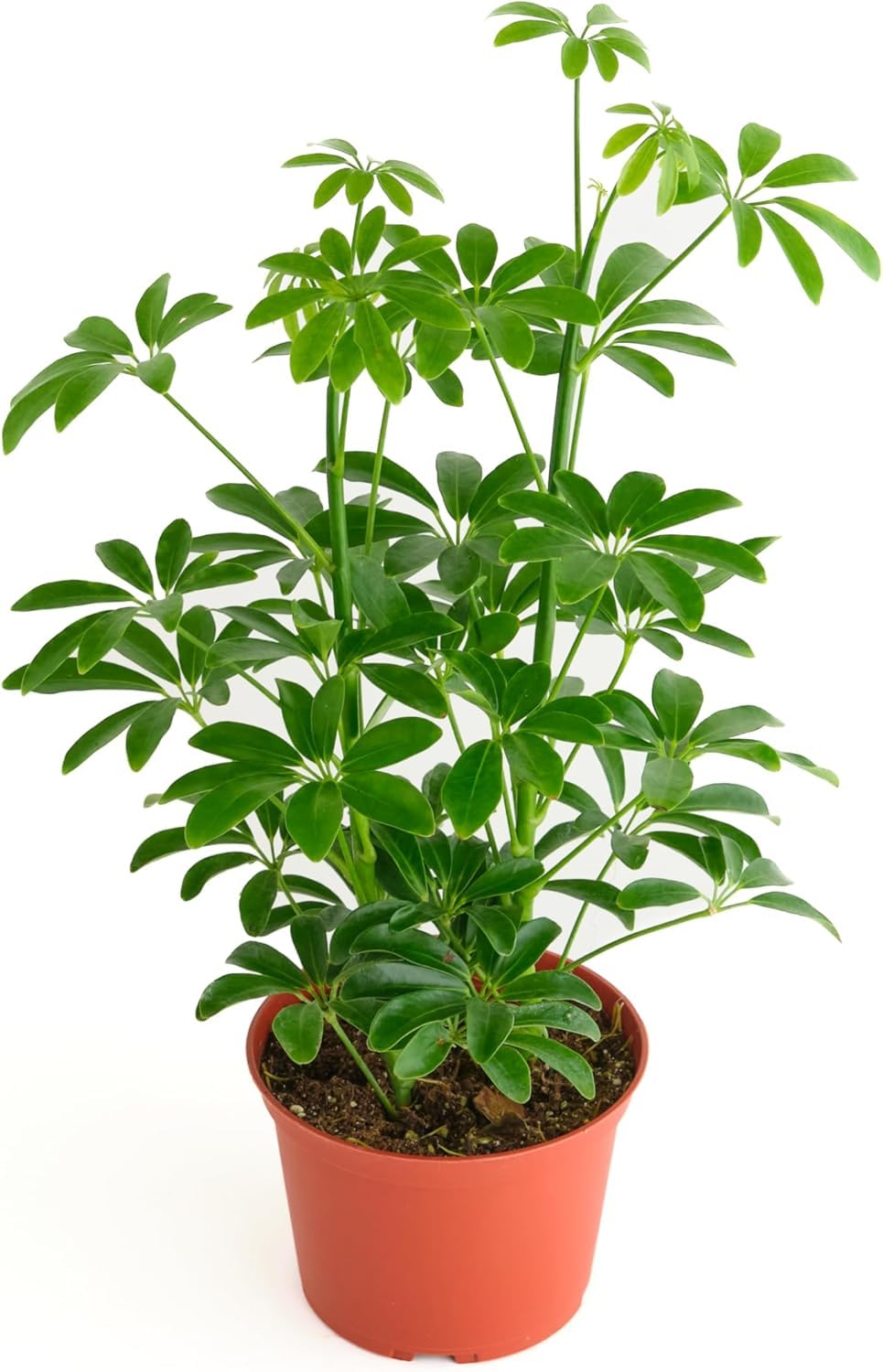
The Dwarf Umbrella Tree from Shop Succulents is the premium-tier option specifically for those who want a floor plant that doesn’t cower in low light. Its glossy, segmented leaves form a canopy that tolerates bright indirect down to moderate low light, though it will grow slower and leggier in deeper shade. The 6-inch nursery pot is a significant step up from 4-inch competitors, giving immediate visual heft for a living room corner or office floor space.
This plant is technically a shrub-tree species and can reach 3–4 feet indoors over time, even under moderate light. The support structure is woody and sturdy, so unlike palm fronds, the Dwarf Umbrella Tree will not droop when slightly underwatered. Shop Succulents ships the plant rooted and established, with the “Heptapleurum Arboricola” label that’s accurate to the species’ reclassification from Schefflera.
The main concern is pet safety: the plant contains calcium oxalate crystals that can cause oral irritation and vomiting in cats and dogs. If you have pets that chew leaves, skip this one. Also, it prefers to dry out between waterings — maintaining wet soil in low light invites root rot. It’s a resilient specimen, but not neglect-proof the way a Parlor Palm or succulent mix is.
Why it’s great
- Large 6-inch pot gives immediate floor-plant presence
- Woody stems support upright growth without drooping
- Tolerates a range from bright to moderate low light
Good to know
- Toxic to cats and dogs if ingested
- Will stretch and become leggy in deep low light
5. Cacti & Succulent Mix (3-Pack)

This 3-pack from Plants for Pets delivers three succulent species (Gasteria glomerata, Haworthia cooperi, Haworthia zebra, and Gasteria little warty) already planted in 2.5-inch white ceramic pots with pebble top-dressing. It’s the budget-friendly entry for those who want multiple plants for desk groupings or gifting without buying individual pots. The succulents are naturally drought-tolerant, making them nearly impossible to overwater if you ignore them for two weeks.
Here’s the nuance: true cacti and succulents are low-light *tolerant* but not low-light *thriving*. In a dim corner, they will etiolate — stretch toward the light source, growing pale and weak. To succeed, place the set within 4 feet of a window with indirect light or under a desk lamp with a daylight LED bulb. The Gasteria and Haworthia genera handle lower light better than Echeveria or Sempervivum because their leaves contain more chlorophyll.
The set ships fast (often early) and includes a mix of the species listed, so you get variety. The ceramic pots are white minimalist style — pleasant but non-porous, so ensure the pots have drainage or drill a hole. This set is not for deep-shadow corners, but for moderately lit desks, side tables, and bookshelves, it provides maximum variety at minimum maintenance.
Why it’s great
- Three species in one purchase — instant variety
- Drought-tolerant — forgive missed waterings
- Includes ceramic pots and pebble top-dressing
Good to know
- Succulents will etiolate (stretch) in very low light
- Ceramic pots lack drainage holes — risk of water pooling
FAQ
Can a Parlor Palm survive in a room with only a single fluorescent ceiling light?
How do I know if a low-light plant is getting enough light without a meter?
Final Thoughts: The Verdict
For most users, the best low-light plants for indoors winner is the Lemon Lime Maranta Prayer Plant because it combines pet safety, night-folding leaf movement as a health indicator, and a broad low-light tolerance window that beats variegated peers. If you want a plant that survives truly deep corners and fluorescent-only rooms, grab the Parlor Palm. And for a tall floor statement with glossy canopy leaves, the Dwarf Umbrella Tree delivers premium scale.