White rice is a comfort-food staple, but its carb count is a dealbreaker for keto, diabetic, or low-GI diets. Finding a substitute that looks, feels, and satiates like rice without the blood-sugar spike is a challenge most shoppers underestimate — many cooked alternatives turn mushy or taste like the vegetable they came from.
I’m Emma — the founder and writer behind Baby Bangs. I’ve logged hundreds of hours comparing macronutrient profiles, cooking methods, and flavor neutrality across low-carb rice options to separate the genuinely useful products from the hype.
This guide breaks down five shelf-stable, ready-to-heat options that deliver the rice experience without the carb load. The goal is simple: help you find the best low-carb rice that fits your macros, your palate, and your schedule.
How To Choose The Best Low-Carb Rice
Not all low-carb rice alternatives behave the same on the plate. Here are the three critical factors that separate a satisfying meal from a watery disappointment.
Base Ingredient: The Texture & Macro Trade-off
The primary ingredient determines nearly everything — carb count, cook time, and whether the rice absorbs sauce or sits on top. Konjac-based options (often labeled shirataki) deliver nearly zero calories and zero digestible carbs but have a gelatinous, chewy texture that some describe as “noodle-like.” Hearts of palm rice offers a firmer, more intact grain that mimics the mouthfeel of cooked brown rice with about 4g net carbs per serving. Cauliflower rice is the lightest — good for quick sautés — but requires proper draining to avoid sogginess and has higher water content.
Net Carbs Per Serving (Real Numbers)
Ignore the “low-carb” claim and read the nutrition panel. A serving of konjac rice typically provides 0g net carbs. Hearts of palm options average 2-4g net carbs per serving. Traditional riced cauliflower hovers around 3-5g net carbs. The difference matters if you’re strict keto (under 20g daily) or simply carb-conscious. Also check for added starches or fillers — some brands use potato starch or rice flour to improve texture, which inflates the carb count.
Preparation Speed & Convenience Format
Convenience is the hidden spec. Heavy pouches (5-6 oz each) are ideal for single servings but require rinsing and dry-frying if they have a preservative odor. Microwaveable pouches that go from pantry to bowl in 60 seconds are best for busy meal prep. Shelf-stable packaging (no refrigeration needed) is a key advantage over fresh cauliflower rice, which spoils within days. Consider total ounces per pack — a 48- to 57-ounce multi-pack gives roughly 6-8 servings and can be portioned for the week.
Quick Comparison
On smaller screens, swipe sideways to see the full table.
| Model | Category | Best For | Key Spec | Amazon |
|---|---|---|---|---|
| Natural Heaven Brown Rice | Hearts of Palm | Best Overall — closest to real rice | 4g net carbs per serv., 0mg sodium | Amazon |
| Palmini Rice | Hearts of Palm | Shark Tank brand, lowest calories | 20 cal per serving, 4g net carbs | Amazon |
| Soeos Konjac Noodles | Konjac / Shirataki | Best value multi-pack, 3 shapes | ~0g net carbs, 3 variety shapes | Amazon |
| SKINNY PASTA Rice | Konjac / Shirataki | Premium pure konjac rice | ~0g net carbs, Weight Watchers endorsed | Amazon |
| Kitchen & Love Cauliflower Rice | Cauliflower | Lightest option, organic certified | ~3g net carbs, USDA Organic | Amazon |
In‑Depth Reviews
1. Natural Heaven Brown Rice (Hearts of Palm)

This hearts of palm rice is the closest you’ll get to real steamed rice without the carb load. The grains hold their shape after microwaving — no mush, no clumping. At about 4g net carbs per serving and zero added sodium, it fits both keto and low-sodium meal plans equally well. The flavor is mildly nutty, subtle enough to work under curries, stir-fries, or even a simple poke bowl without overpowering the dish.
What really sets this apart is the texture feedback from real users: multiple verified buyers say it “looks and feels like real rice down to the grain” — a rare compliment in this category. It’s fully cooked, so you just need 60 seconds in the microwave or 2 minutes on the stovetop. No rinsing required, which is a major convenience upgrade over konjac-based options that demand a thorough wash to remove the trademark brine smell.
The 6-pack gives you 54 total ounces — enough for roughly 7-9 servings depending on portion size. The only friction point is the packaging: the bag can be tough to empty completely without tearing, so have a spatula ready. For the balance of taste, texture, and minimal prep effort, this is the king of the category.
Why it’s great
- Closest texture to real cooked rice among all alternatives
- No rinsing needed — microwave straight from pouch
- 0mg sodium per serving, ideal for low-sodium diets
Good to know
- Bag packaging is hard to fully empty without tearing
- Higher price per ounce compared to riced cauliflower
2. Palmini Rice (Hearts of Palm)

Palmini rose to fame after appearing on Shark Tank, and the formula holds up. Each serving clocks in at just 20 calories and 4g of net carbs, making it one of the lowest-calorie hearts of palm options on the market. The mild, slightly tangy flavor from the hearts of palm base works well with bold sauces and spices — think garlic butter, soy-ginger glaze, or a creamy curry.
The texture is firmer than cauliflower rice but slightly softer than konjac. It doesn’t turn to mush when reheated, which makes it a reliable candidate for meal prep. It’s gluten-free, vegan, and kosher, and the 6-pack format (12 oz pouches) gives you 72 total ounces — the largest total volume in this roundup. Each pouch feels generous enough for two side servings or one hearty main bowl.
One nuance: the pouches are packed in a brine that can have a faint tinny smell when first opened. A quick rinse and a 30-second dry sauté in a pan eliminates it entirely. If you’re looking for the broadest value-to-volume ratio in hearts of palm rice, this is your pick.
Why it’s great
- Only 20 calories per serving — lowest in category
- 72 total oz — biggest multi-pack volume
- Kosher, vegan, non-GMO certification
Good to know
- Brine rinse required to remove mild tinny smell
- Softer texture may not suit everyone who prefers crunchy grains
3. Soeos Konjac Noodles (3 Variety Shapes)
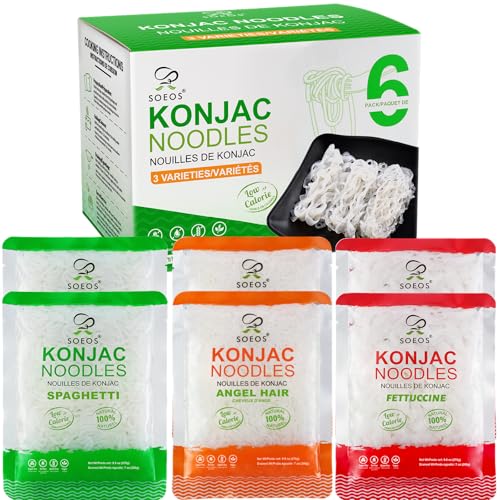
If you want maximum volume per dollar and near-zero carbs, this konjac multi-pack is the workhorse. With 6 packs totaling 57 ounces and three shape options — spaghetti, fettuccine, and angel hair — it covers more culinary ground than any single-format alternative. The konjac base has essentially no digestible carbs, making it safe for even the strictest keto or fasting-mimicking diets.
Texture-wise, konjac is polarizing. It’s gelatinous and chew-resistant straight out of the bag — much more like al dente noodles than soft rice. The preparation method matters here: rinse thoroughly under cold water for at least 30 seconds, then dry-fry in a hot pan for 2-3 minutes to evaporate excess water. Once dry-fried, the noodles absorb sauce like a sponge. They taste like absolutely nothing on their own, so the entire flavor profile depends on your seasoning and cooking method.
The variety pack format is a smart buy for households with mixed preferences — you can use angel hair for Asian soups, fettuccine for Alfredo-style dishes, and spaghetti for classic marinara. The 57-ounce total is competitive, but note that konjac contains a lot of water by weight, so the edible portion after draining is closer to 45-48 ounces. It’s still a phenomenal calorie-to-volume ratio.
Why it’s great
- Nearly zero net carbs and calories — perfect for strict keto
- Three noodle shapes in one purchase (spaghetti, fettuccine, angel hair)
- Excellent value for multi-pack volume
Good to know
- Gelatinous texture — not a direct rice substitute without dry-frying
- Strong brine smell requires thorough rinsing before cooking
4. SKINNY PASTA Healthy Konjac Shirataki Rice
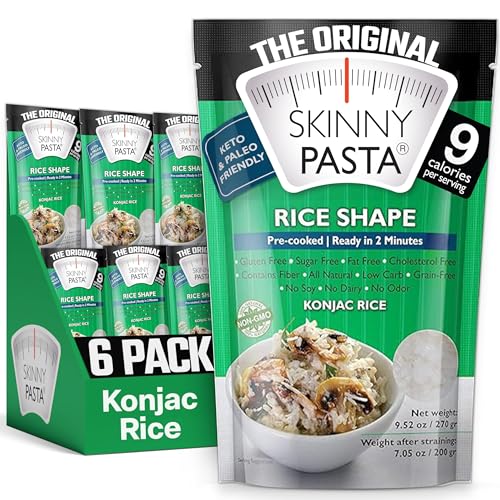
This konjac rice is the closest you’ll get to a pure shirataki grain format — it’s designed specifically to mimic rice rather than noodles. Like the Soeos pack, it delivers nearly zero net carbs and zero sugar, but in a granular shape that better approximates a bed of steamed rice. The Weight Watchers endorsement means it scores just 1 SmartPoint per serving, which gives it cross-diet compatibility beyond keto.
The preparation ritual is identical to other konjac products: rinse, drain, dry-fry. The difference is that the rice grains hold up better during stir-frying than the noodle formats — they don’t clump as easily and separate more like actual cooked rice. The 6-pack gives you 57.12 total ounces, and the brand’s packaging is standardized across their full pasta-and-rice line if you want to mix formats.
One detail that konjac veterans appreciate: the aroma out of the packet is slightly less aggressive than some konjac brands. It still has that characteristic seawater-mineral smell, but a single rinse followed by a dry pan-fry makes it virtually neutral. It’s vegan, gluten-free, dairy-free, and yeast-free, so it covers nearly every elimination diet.
Why it’s great
- Granular format mimics rice grains better than noodle shapes
- Weight Watchers 1 SmartPoint per serving
- Milder smell than typical konjac options
Good to know
- Dry-frying required for best texture
- Gelatinous chew persists even after cooking
5. Kitchen & Love Organic Riced Cauliflower
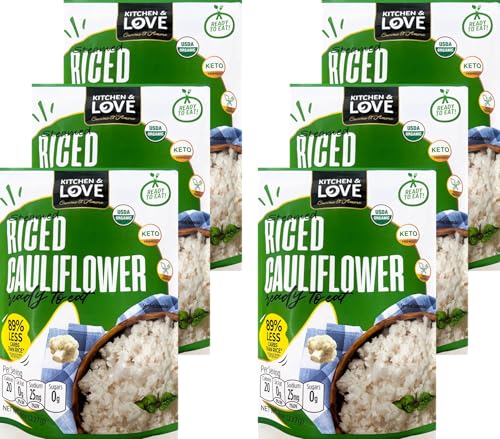
For buyers who prioritize organic ingredients and a whole-vegetable base, this riced cauliflower is the cleanest option on the shelf. It’s USDA Organic, gluten-free, vegan, and shelf-stable — no refrigeration needed until after opening. The 8 oz pouches (6-pack, 48 total ounces) are portion-controlled and microwaveable in 60 seconds, making them a solid desk-lunch companion.
Cauliflower rice has a lighter, fluffier texture compared to both konjac and hearts of palm. It doesn’t have the chewy bounce of shirataki or the firm grain of palm rice — it’s more like a finely minced vegetable that happens to look like rice. The flavor is mildly earthy and cruciferous, which works best with robust seasoning: soy sauce, garlic, turmeric, or chili. It holds up well in stir-fries but tends to release water if overcooked, so microwave in 30-second bursts and drain any excess liquid.
The biggest advantage here is the organic certification and the clean label — just cauliflower, no added starches or preservatives. At roughly 3g net carbs per serving, it’s slightly higher in carbs than konjac but within keto range for most people. The shelf-stable format also means you can stock up without worrying about spoilage, unlike fresh cauliflower that needs to be used within days.
Why it’s great
- USDA Organic — cleanest ingredient label in roundup
- Shelf-stable, no refrigeration needed until open
- Light, fluffy texture ideal for quick sauté bowls
Good to know
- Can release water if microwaved too long
- Mild cruciferous flavor — not neutral like konjac
FAQ
Is konjac rice safe to eat every day?
Why does my hearts of palm rice taste metallic or sour?
Can I freeze cauliflower rice to extend its shelf life?
Final Thoughts: The Verdict
For most users, the best low-carb rice winner is the Natural Heaven Brown Rice because it delivers the closest grain texture to real rice with minimal prep — just 60 seconds in the microwave. If you want the absolute lowest calories and volume per dollar, grab the Soeos Konjac Noodles. And for organic, plant-forward eating, nothing beats the Kitchen & Love Organic Riced Cauliflower.