Low-calorie salad dressing is usually a negotiation: you trade flavor for a smaller number on the nutrition label. Most bottles in the grocery aisle deliver on the calorie promise but leave you with a watery, over-salted, or artificially sweetened pour that ruins the bowl. The good news is that a new wave of brands — from sugar-free pit masters to fat-free classics — have closed the gap, proving that a dressing under forty calories per serving can actually taste like the real thing.
I’m Emma — the founder and writer behind Baby Bangs. I spend my research hours analyzing ingredient gaps, sweetener profiles, and serving-unit formats across the low-calorie dressing segment to separate the genuinely good from the merely acceptable.
This guide cuts through the label noise to identify the best low-calorie salad dressing options that hold up to real salads, marinades, and meal-prep routines without turning your kitchen into a chemistry experiment.
How To Choose The Best Low-Calorie Salad Dressing
Every low-calorie dressing makes the same promise — big taste, small calorie number. The difference is in the execution. Before you buy, consider four factors that determine whether that bottle ends up in the back of your fridge or on your daily salad.
Sweetener Philosophy: Real Sugar vs. Substitutes
Full-calorie dressings use sugar, honey, or corn syrup as a flavor backbone. Low-calorie versions must replace that sweetness. Look for dressings that use erythritol, monk fruit, or stevia — these avoid the bitter chemical aftertaste of straight sucralose. The best options keep total sugar under 1g per serving without relying on artificial flavors to mask the substitute.
Serving Structure: Bottle vs. Single-Serve Pouch
A standard 2-tablespoon serving of low-calorie dressing runs between 10 and 45 calories. That number stays low until you pour by eye. Single-serve pouches enforce the portion mechanically — you get exactly one serving. Bottles give you more flexibility for marinades and meal prep, but require a measuring spoon. If you eat salads on the go, pouches are a stronger pick. If you cook with dressing, the bottle wins.
Fat Source and Emulsifier Quality
Fat carries flavor. When a dressing removes most or all of the oil, the producer has to rebuild texture with gums (xanthan gum, guar gum) or starches. A well-formulated dressing coats the lettuce rather than pooling at the bottom of the bowl. Avoid anything that lists water as the first ingredient followed only by citric acid and artificial color — those pour like tinted vinegar.
Quick Comparison
On smaller screens, swipe sideways to see the full table.
| Model | Category | Best For | Key Spec | Amazon |
|---|---|---|---|---|
| G Hughes Sugar Free Miso | Sugar-Free | Asian bowls & marinades | 1g net carb per serving | Amazon |
| Newman’s Own Light Italian | Light | Classic Italian salads | No added sugar, no preservatives | Amazon |
| Skinnygirl Honey Dijon | Fat-Free | Quick meal prep & dipping | 0g fat, 0g sugar per serving | Amazon |
| G Hughes Sugar Free Bundle | Sugar-Free | Variety rotation | Three sugar-free flavors | Amazon |
| Pocket Flavors Variety | Portioned | On-the-go lunches | 1 oz single-serve pouches | Amazon |
In‑Depth Reviews
1. G Hughes Sugar Free Asian Miso Dressing (3-Pack)
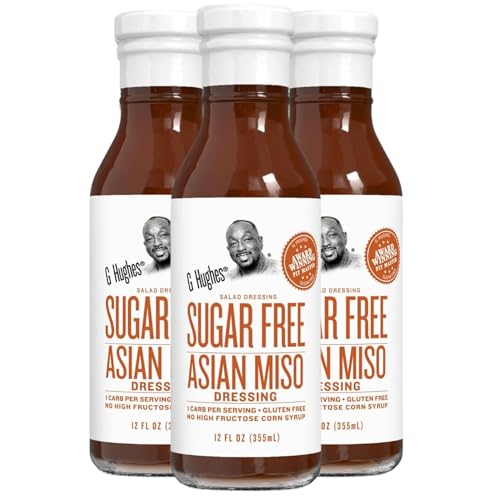
This miso dressing from G Hughes does what few low-calorie options manage: it delivers a savory umami base without sugar or oil. Each two-tablespoon serving lands at roughly 1g of net carbs and zero sugar, thanks to a sweetener profile built on erythritol rather than sucralose. The texture is thicker than a standard vinaigrette, which helps it cling to kale, romaine, or shredded cabbage without pooling in the bowl. It also doubles as a marinade for chicken or tofu without watering down the protein’s surface sear.
The three-pack format gives you 36 total ounces, which translates to roughly 18 servings per bottle depending on your pour. Because the dressing lacks oil, the separation is minimal during fridge storage — a quick shake re-emulsifies it in seconds. This is a strong pick for anyone on a keto, low-carb, or gluten-free protocol who wants more than another vinaigrette in the rotation.
The flavor leans noticeable toward soy and miso paste rather than sweet, so expect a dressing that complements rather than dominates. If you prefer a sweeter Asian-style dressing, this won’t scratch that itch, but for savory applications it outperforms every other sugar-free option in this price tier.
Why it’s great
- True umami depth without any added sugar
- Low net carb count works for keto and diabetic diets
- Thick enough to stick on greens and work as a marinade
Good to know
- Flavor profile is savory, not sweet — miso lovers only
- Pack of three may be too large if you just want to test the taste
2. Newman’s Own Light Italian Dressing (6-Pack)

Newman’s Own Light Italian is the rare dressing that cuts calories without cutting ingredients you can actually identify. You’ll see olive oil, vinegar, lemon juice, garlic, and onion in the list — no gums, no artificial colors, and no added sugar. The “light” designation comes from a reduced oil content compared to the original, which brings down the calorie count while keeping the familiar Italian tang intact.
The six-pack includes shaker-top bottles, which is a small but meaningful detail for portion control — a quick shake over a salad covers more surface area with less volume compared to pouring from a wide-neck bottle. Each 16-ounce bottle holds enough for multiple uses, making this a practical buy for a household that eats salad several times per week. The flavor profile is bright and acidic, so it pairs well with heavy toppings like cheese, croutons, or grilled chicken.
One nuance: because the oil content is lower, the emulsification breaks faster than the full-fat version. You’ll need to shake vigorously before each use. The lack of thickeners also means the texture is thinner than some competitors, so lettuce gets lightly coated rather than heavily dressed. For those who prefer their salad barely kissed with vinaigrette, this is a feature, not a bug.
Why it’s great
- Short, recognizable ingredient list with no added sugars
- Shaker-top bottles help with real-world portion control
- Classic Italian taste works on salads, pasta, and roasted vegetables
Good to know
- Thinner consistency means less cling on the greens
- You must shake hard before each use or the separation is noticeable
3. Skinnygirl Fat-Free Honey Dijon (12-Pack)
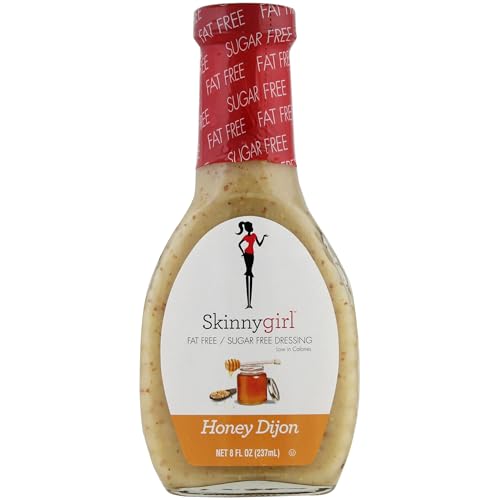
Skinnygirl’s Honey Dijon hits zero fat and zero sugar by using a proprietary blend of natural flavors and a sugar-free sweetener base. The result is a dressing that mimics the creamy mustard tang of a full-calorie honey Dijon without the calorie load. It works remarkably well as a dipping sauce for raw vegetables or grilled chicken strips, where the thicker consistency matters more than on a leafy salad.
The 12-pack format — eight ounces each — gives you a lot of bottles for the price, but each bottle is relatively small. That works in your favor if you rotate flavors often and don’t want a half-empty 16-ounce bottle lingering in the door. The flavor is sweet upfront with a mild mustard finish, which makes it accessible for kids or anyone transitioning away from heavy creamy dressings.
The trade-off is in the texture. Because it’s completely fat-free, the dressing can feel slightly syrupy compared to an oil-based vinaigrette. The texture also changes slightly when chilled, gaining a bit more viscosity straight out of the fridge. Let it sit at room temperature for five minutes before using if you want a pourable consistency.
Why it’s great
- Zero fat and zero sugar in every serving — hard numbers to beat
- Small bottle size reduces waste if you don’t finish a bottle quickly
- Works as a dip, not just a salad dressing
Good to know
- Texture can feel syrupy straight from the fridge
- Sweetness is noticeable — not ideal for strictly savory palates
4. G Hughes Sugar Free Bundle (Balsamic, Raspberry, Italian)
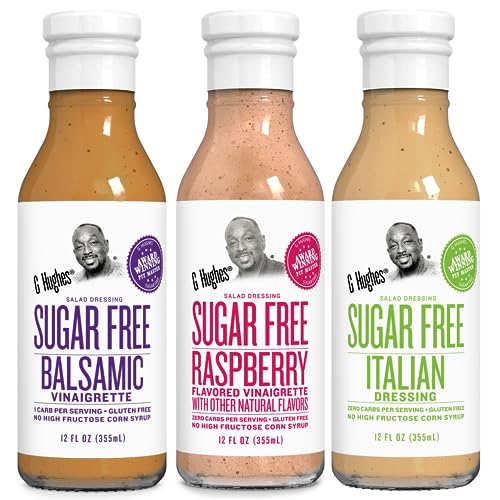
This G Hughes bundle covers three distinct flavor profiles — Balsamic, Raspberry, and Italian — all following the same sugar-free, gluten-free formula that the brand is known for. The Raspberry dressing is the standout here: it offers a fruit-forward sweetness without the syrupy artificial aftertaste that plagues most sugar-free fruit vinaigrettes. The Balsamic is tangy and clean, and the Italian hits the expected oregano-and-vinegar notes without the oil slick.
Each bottle is 12 ounces, and the three-bottle layout means you can rotate flavors across the week without committing to a full gallon of one style. This variety pack is particularly useful for meal-preppers who eat the same base salad all week — swapping the dressing changes the entire meal experience for roughly the same calorie budget. All three dressings contain erythritol as the primary sweetener, which avoids the cooling aftertaste some users report from xylitol-heavy formulas.
The main limitation is the same across all G Hughes dressings: the absence of oil makes the mouthfeel slightly thinner than a restaurant-style dressing. They work best on sturdy greens that can hold a coating — think iceberg wedges, chopped romaine, or crunchy slaw mixes. Delicate baby spinach or arugula may feel underdressed.
Why it’s great
- Three distinct flavors prevent diet boredom
- Raspberry variant is genuinely good — not just “good for sugar-free”
- Erythritol sweetener avoids the metallic aftertaste of sucralose
Good to know
- Thin mouthfeel may not satisfy those used to full-fat dressings
- Best on sturdy greens — delicate leaves need more coating power
5. Pocket Flavors Salad Dressing Variety Pack (32 Pouches)
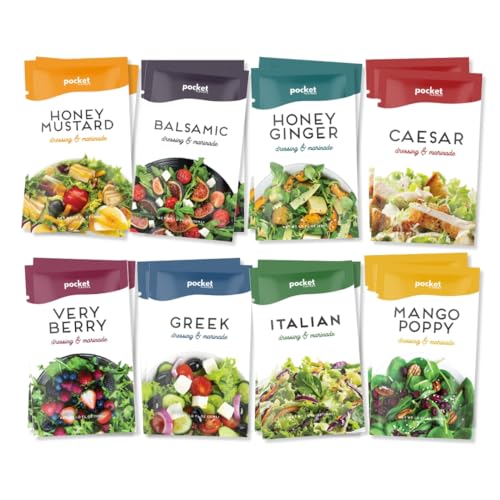
Pocket Flavors solves the portion-control problem entirely by removing the pour-from-the-bottle variable. Each 1-ounce tear-top pouch equals exactly one serving, which for low-calorie dressings means you’re looking at small, predictable calorie numbers per meal. The variety pack includes seven flavors — Balsamic, Greek, Italian, Caesar, Mango Poppy, Honey Mustard, and Honey Ginger — so you get 4-5 pouches of each depending on the count, for a total of 32 individual servings.
These pouches are designed for portability. They survive being stuffed into a lunch bag, a purse, or a carry-on without leaking, and they don’t need refrigeration until opened. That makes them a strong option for office workers who buy salads at the cafeteria and want to avoid the high-calorie house dressing, or for travelers who want to keep their calorie discipline on the road. The brand specifically avoids artificial flavoring, so the taste is cleaner than most shelf-stable diet dressings.
The obvious trade-off is the cost-per-serving compared to a bulk bottle. You pay a premium for the convenience of single-serve packaging. The Mango Poppy and Honey Ginger flavors are the most interesting in the lineup — they offer flavor variety that’s hard to find in mainstream low-calorie bottles. If you’re the type who eats salad at a desk or on a plane, this pack justifies its premium. For exclusive home use, a bottle format is more economical.
Why it’s great
- Forces honest portion control with zero guesswork
- Seven flavor variety covers more ground than any bottle can
- Portable and unrefrigerated until opened — good for travel and office
Good to know
- Cost per serving is higher than buying bottled dressings
- Each pouch is 1 oz — if you like heavy dressing, you may want two
FAQ
How many calories per serving should I look for in a low-calorie dressing?
Are sugar-free salad dressings safe for keto and diabetic diets?
Can I use low-calorie dressing as a marinade?
What is the difference between fat-free, light, and sugar-free dressing?
Final Thoughts: The Verdict
For most users, the best low-calorie salad dressing winner is the G Hughes Sugar Free Asian Miso because it delivers real savory umami depth with 1g of net carbs per serving and doubles as a functional marinade. If you want a clean-label option with recognizable ingredients, grab the Newman’s Own Light Italian. And for portion-controlled on-the-go lunches, nothing beats the Pocket Flavors Variety Pack.