That heavy, achy feeling in your legs as your pregnancy progresses is your body’s way of signaling it needs help moving blood against gravity. Maternity compression stockings apply graduated pressure at the ankle that decreases up the leg, actively pushing fluid back toward your heart and keeping swelling in check. Without the right pair, you’re fighting edema, varicose veins, and fatigue all day — with them, your legs actually feel lighter by evening.
I’m Emma — the founder and writer behind Baby Bangs. I’ve spent hundreds of hours analyzing the materials, compression gradients, and construction of over forty different maternity stocking models to find the ones that hold up to daily wear during pregnancy.
This guide cuts through the confusion around mmHg ratings, fabric blends, and sizing quirks so you can confidently choose the maternity compression stockings that actually relieve swelling and support your changing body through all three trimesters.
How To Choose The Best Maternity Compression Stockings
Maternity compression stockings are medical-grade garments worn during pregnancy to prevent blood from pooling in your lower legs. They work by applying the highest pressure at your ankle — typically 20-30 mmHg for pregnancy — then gradually releasing that pressure as the stocking rises up your leg. This “graduated compression” pushes venous blood upward, counteracting the circulatory slowdown caused by your growing uterus pressing on pelvic veins. Choosing the right pair requires matching the compression level, length, fabric, and sizing to your specific trimester symptoms and daily routine.
Compression Level Measured in mmHg
The millimeter of mercury (mmHg) rating is the pressure the stocking applies at the ankle. For pregnancy, 15-20 mmHg is considered mild support for minor swelling or travel, while 20-30 mmHg is the medical standard for managing edema, varicose veins, and venous insufficiency during gestation. Anything above 30 mmHg requires a doctor’s prescription and is rarely needed for standard pregnancy use. A 20-30 mmHg stocking gives the firmest therapeutic benefit without being overly difficult to put on.
Length: Knee-High vs. Thigh-High vs. Pantyhose
Knee-high stockings end just below the knee and are best for swelling concentrated in the calves and ankles — the most common pregnancy pattern. Thigh-high stockings extend to the upper thigh and are useful if swelling reaches above the knee or if you have varicose veins in the thigh area. Full pantyhose (waist-high) provide abdominal support along with leg compression, which some women find helpful during the second trimester, though they become harder to manage as the belly grows. Consider whether you need open-toe ventilation (common in thigh-high and pantyhose styles) to accommodate foot swelling and keep toes cool.
Fabric and Breathability
Most compression stockings use a nylon-spandex blend for stretch and durability. Higher spandex content (20-25%) gives a more conforming fit that resists bagging. Bamboo viscose blends offer superior moisture-wicking and temperature regulation for warm-weather wear, though they tend to be thicker than sheer nylon styles. Hospital-grade yarns in medical stockings (like those from Amazon Basics or Absolute Support) are heavier and more opaque but last longer under daily washing. If you have sensitive skin, look for latex-free construction and flat-lock seams that won’t chafe.
Quick Comparison
On smaller screens, swipe sideways to see the full table.
| Model | Category | Best For | Key Spec | Amazon |
|---|---|---|---|---|
| Myshear High Waist | Pantyhose | All-day wear & abdominal support | 20-30 mmHg, footless design | Amazon |
| Amazon Basics Medical | Thigh High | Medical recovery & post-procedure | 20-30 mmHg, open toe, silicone grip | Amazon |
| Wellow Knee High | Knee High | 18-25 mmHg, bamboo viscose | Amazon | |
| Doc Miller Thigh High | Thigh High | Workout & active pregnancy | 15-20 mmHg, open toe | Amazon |
| Absolute Support Sheer | Pantyhose | Extra-wide sizes & plus-size fit | 20-30 mmHg, sheer, reinforced heel | Amazon |
In‑Depth Reviews
1. Myshear High Waist Compression Tights

Myshear’s footless pantyhose style delivers reliable 20-30 mmHg graduated compression without squeezing your toes or feet — a crucial comfort feature during the third trimester when edema often spreads to the ankles. The high-waist design includes a wide, non-roll elastic band that provides gentle abdominal support, helping lift some of the weight from your growing belly. Reviewers consistently report that the opaque medical-grade fabric holds its shape through multiple washes and stays cool against the skin during long nursing shifts or full workdays.
The 75% nylon and 25% spandex blend offers enough stretch to accommodate thigh expansion without sagging or bagging. Flat-lock seams prevent irritation along the inner leg, and the reinforced gusset adds durability in the high-stress crotch area. Several customers noted that following the size chart precisely — not buying your usual leggings size — is essential for achieving the correct compression gradient, and that the footless design makes bathroom breaks far more manageable than full-foot pantyhose.
For pregnant women who need all-day compression with abdominal coverage, Myshear’s combination of breathability, secure waistband hold, and effective edema control makes it the most versatile option available. The only trade-off is that the footless style means you’ll need separate socks or slippers for warmth in cooler weather.
Why it’s great
- Reliable 20-30 mmHg graduated compression for serious swelling relief
- Wide high-waist band stays put without rolling during movement
- Soft, breathable fabric blend minimizes overheating
Good to know
- Footless design leaves toes exposed and requires separate footwear
- Length runs long — shorter women may experience bunching at the thigh
2. Amazon Basics Medical Compression Stockings
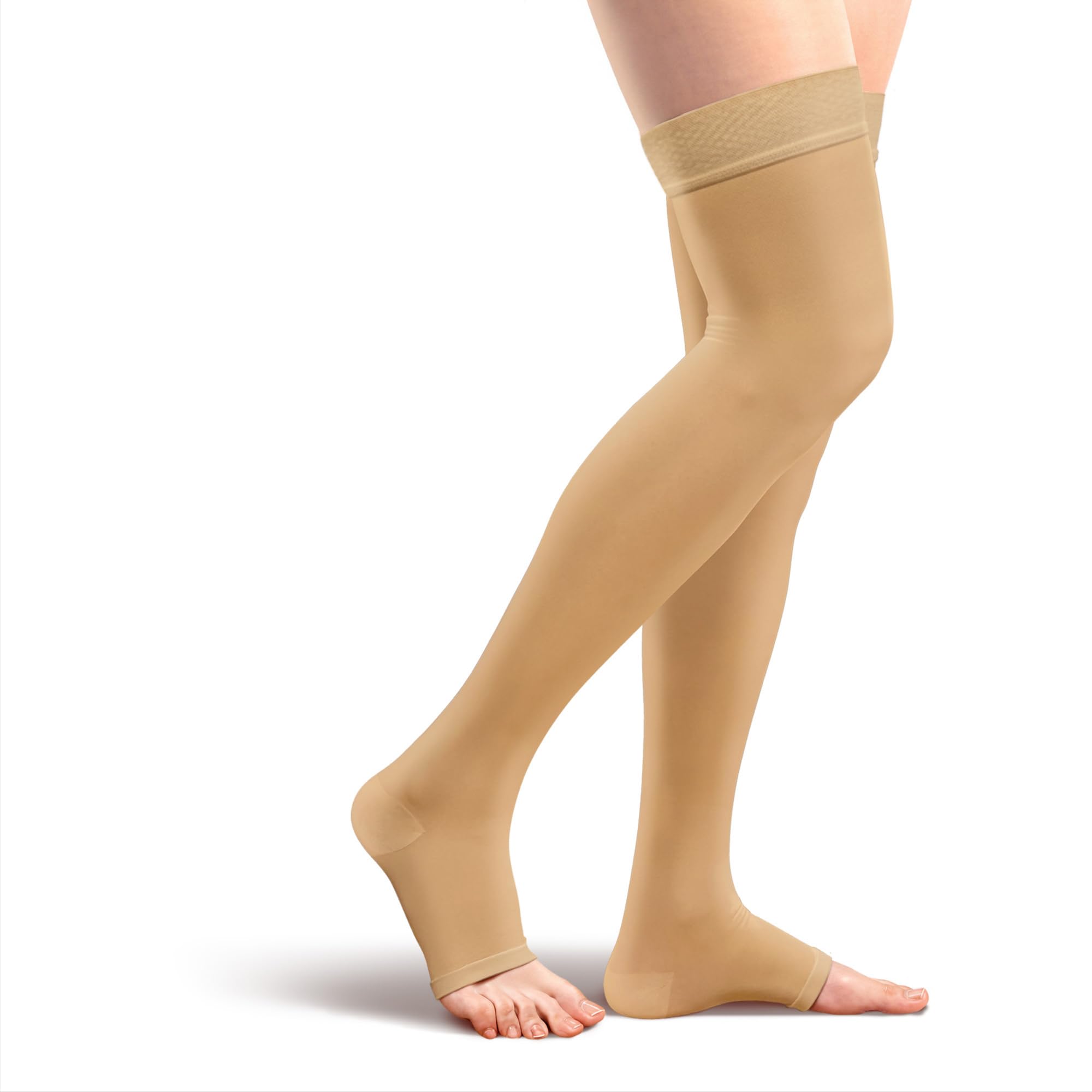
Formerly Amazon Basic Care, this thigh-high stocking uses hospital-grade opaque yarns that feel heavier and more durable than typical drugstore compression socks. The 20-30 mmHg rating is consistent with medical-grade postpartum and post-procedure use, and the open-toe design allows easy inspection of your feet for swelling or circulation issues — something your OB or midwife may recommend after delivery. Multiple verified buyers who wore these following vein procedures confirm the compression holds effectively for 24-hour wear without losing tension.
The silicone dot-grip lining at the top band is the standout engineering detail here: it prevents rolling or slipping down the thigh even under fitted pants, which solves the most common complaint about thigh-high stockings. A knit heel pocket keeps the garment anchored around the ankle, so the compression gradient stays properly aligned. Some users report mild numbness at the thigh band after extended wear, but this can be mitigated by layering with briefs that sit slightly above the band edge.
For women who need a no-nonsense, medical-grade stocking during the late third trimester or the critical postpartum recovery window, Amazon Basics delivers consistent compression at a sensible price. The main drawback is that the opaque fabric is visibly thicker than sheer styles, making it harder to pair with skirts or dresses.
Why it’s great
- Silicone grip top band prevents sliding and bunching throughout the day
- Open toe allows easy circulation checks and reduces foot constriction
- Hospital-grade yarns hold compression shape through repeated washing
Good to know
- Thick opaque fabric can feel warm and looks less discreet under sheer clothing
- Some wearers experience thigh numbness from the grip band after many hours
3. Wellow Knee High Compression Socks
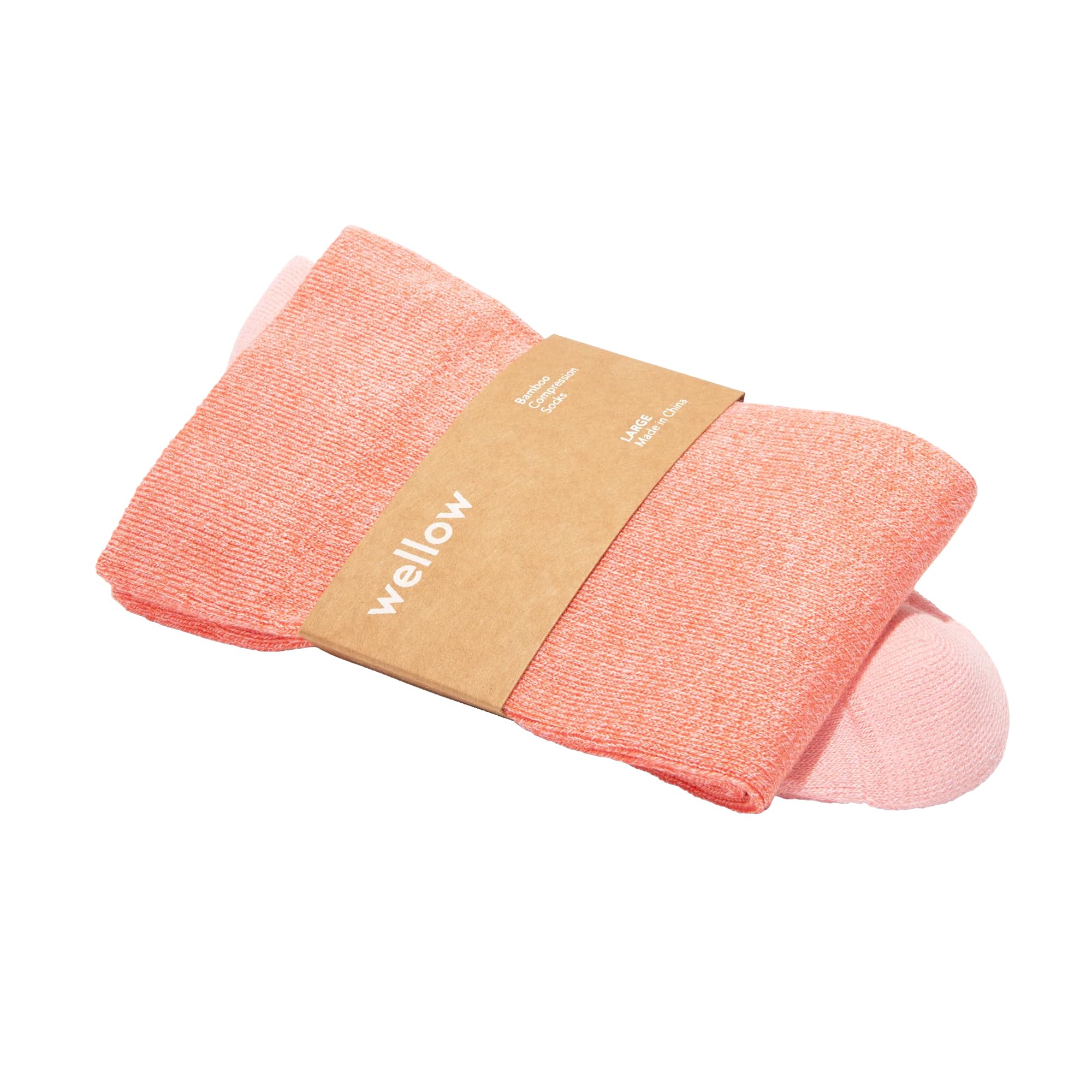
If your swelling is confined to the calves and ankles — the most common pattern during the first two trimesters — Wellow’s knee-high socks offer a more comfortable alternative to full-length stockings. The 18-25 mmHg compression level sits right between mild support and moderate medical-grade pressure, making them ideal for air travel, desk work, or days when you’re on your feet at the store. The bamboo viscose fabric is notably softer than nylon alternatives and wicks moisture effectively, reducing itchiness during warm-weather pregnancy.
The toe pocket is roomy enough to allow toe wiggling without pinching, and the socks are long enough to double over at the calf for extra reinforcement where swelling tends to concentrate. Several reviews from users with long legs confirm the length is generous compared to standard knee-highs. The trade-off is that bamboo viscose is a thicker knit, so these socks are noticeably warmer than sheer nylon options — better suited to cooler months or air-conditioned environments than summer heat.
For pregnant women seeking a everyday-friendly compression option that doesn’t look or feel like medical hosiery, Wellow’s bamboo construction and moderate gradient hit the sweet spot. Just be aware that the 18-25 mmHg range may not be firm enough for advanced third-trimester edema.
Why it’s great
- Bamboo viscose fabric is exceptionally soft, breathable, and moisture-wicking
- Roomy toe pocket provides wiggle room without compression restriction
- Longer length accommodates taller women without cutting into the calf
Good to know
- Thicker knit runs warmer than sheer nylon — less ideal for hot weather
- 18-25 mmHg may not provide enough pressure for severe third-trimester swelling
4. Doc Miller Thigh High Open Toe Compression Stockings

Doc Miller’s thigh-high stockings use a milder 15-20 mmHg gradient, which is appropriate for early-pregnancy discomfort, mild varicose veins, or women who find higher compression levels too constrictive for daily wear during exercise. The open-toe design provides ventilation and accommodates foot swelling, and the soft material feel draws consistent praise from reviewers who wear them under pants for long shifts. Multiple users report that the sizing is accurate when following the provided chart, though they note color variants may fit slightly differently — a quirk worth checking before ordering a second pair.
The fabric blend has a noticeably soft hand feel compared to rougher medical-grade stockings, which reduces skin irritation during active use like walking, prenatal yoga, or light cardio. However, the silicone grip at the top band can cause itching after several hours, and the stockings are thick enough to show under fitted leggings. For pregnant women who want a compression option they can move in without feeling like they’re wearing medical gear, Doc Miller offers a solid balance of support and freedom of motion.
Where these fall short is the upper end of the compression range: 15-20 mmHg simply won’t cut it for women with pronounced third-trimester edema or a history of venous insufficiency. But for first-trimester fatigue or active recovery days, they’re a budget-friendly entry point into thigh-high compression.
Why it’s great
- Soft fabric feels gentle against sensitive skin during movement and exercise
- Open-toe design improves airflow and reduces pressure on swollen feet
- Accurate sizing chart leads to a snug yet comfortable fit
Good to know
- Silicone thigh band can cause itching or irritation after extended wear
- Mild 15-20 mmHg insufficient for significant edema management
5. Absolute Support Sheer Compression Pantyhose
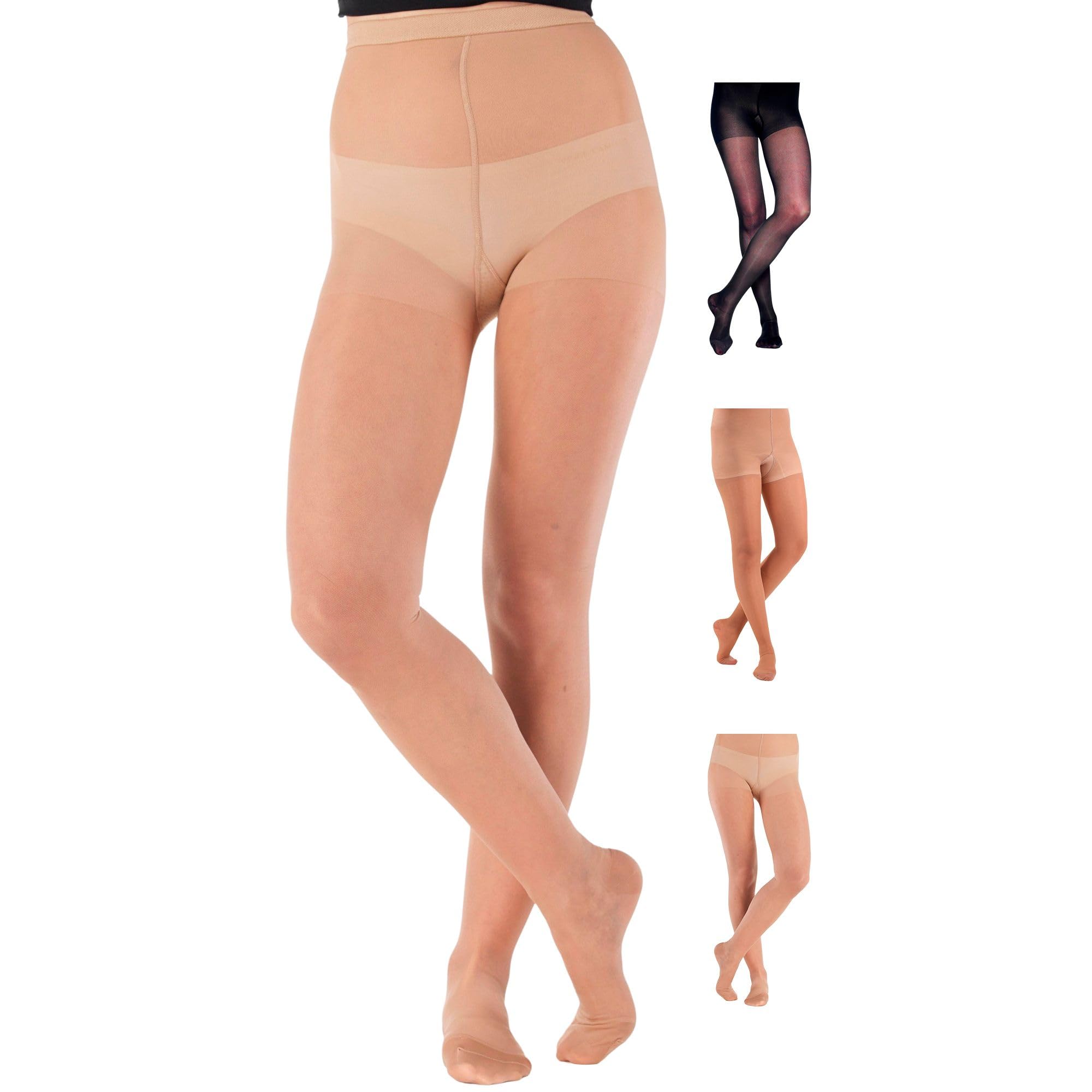
Absolute Support’s pantyhose, made in the USA from 80% nylon and 20% Lycra, provide a sheerer appearance than most medical compression garments while still delivering a firm 20-30 mmHg gradient. The reinforced heel and toe extend the garment’s lifespan in high-stress areas, and the latex-free construction is a critical detail for women with sensitive skin or latex allergies. The sizing range extends to 2X-Large, making this one of the few options that accommodates wider calves and larger thighs without sacrificing compression accuracy.
The sheer fabric is lightweight and breathable, making it a strong candidate for warmer climates or professional settings where you want compression that’s less visible under dress pants or skirts. However, the same qualities that make it sheer also make it more delicate — reviewers advise careful washing (air drying is mandatory) to avoid snags or runs. The detailed size chart requires precise ankle, calf, thigh, and waist measurements, and customers emphasize that skipping this step leads to improper fit and reduced therapeutic effect.
For pregnant women who need a plus-size compression pantyhose with medical-grade pressure but prefer a barely-there look, Absolute Support is the clear choice. The trade-off in durability compared to opaque stockings is worth it if discretion matters more than heavy-duty longevity.
Why it’s great
- Sheer fabric offers a more discreet appearance than opaque medical stockings
- Wide size range accommodates larger legs and plus-size body types
- Latex-free construction suitable for sensitive skin and allergy concerns
Good to know
- Sheer material is delicate and prone to snags if not hand-washed carefully
- Accurate sizing requires meticulous measurement — guesswork leads to poor fit
FAQ
How do I measure my legs for the correct compression stocking size?
Can I wear maternity compression stockings at night while sleeping?
How do I get compression stockings on without struggling?
What compression level is safe during the first trimester vs. the third trimester?
Final Thoughts: The Verdict
For most women dealing with pregnancy-related leg swelling, the maternity compression stockings winner is the Myshear High Waist Compression Tights because it combines a therapeutic 20-30 mmHg gradient with a breathable, non-slip waistband and footless design that works through all three trimesters. If you need a medical-grade option for postpartum recovery or post-procedure wear, grab the Amazon Basics Medical Stockings for their hospital-quality construction and stay-put silicone grip. And for warm-weather comfort or early-pregnancy support with a softer feel, nothing beats the Wellow Knee High Compression Socks in bamboo viscose.