Manuka honey is not a pantry sweetener — it’s a bioactive wound dressing and gut-support remedy you dose by the half-teaspoon. But the jar-to-jar quality gap is immense, and without the right certification, you are buying expensive syrup.
I’m Emma — the founder and writer behind Baby Bangs. I’ve spent years analyzing third-party lab reports and UMFHA compliance data to separate authentic medicinal-grade honey from marketing fluff.
This guide breaks down the five most reliable jars on Amazon, all independently tested and traceable. Here is my research-backed pick for the manuka honey for medicinal purposes that actually meets therapeutic thresholds.
How To Choose The Best Manuka Honey For Medicinal Purposes
Medicinal use demands a minimum MGO threshold and third-party certification. Without these, the honey lacks the methylglyoxal concentration needed for antibacterial effect. Here is what to check before buying.
MGO Rating and the Therapeutic Floor
Methylglyoxal (MGO) is the compound responsible for Manuka’s unique antibacterial activity. For general wellness, MGO 100+ is a starting point. For targeted medicinal use — sore throat relief, wound application, or gut support — look for MGO 250+ or UMF 10+. Higher ratings mean higher potency, but also higher cost. Only buy from brands that display their MGO or UMF number on the label.
UMF Certification vs. Self-Reported Numbers
UMF (Unique Manuka Factor) is the gold-standard certification verified by the UMFHA. It tests for four key markers: MGO, DHA, leptosperin, and overall authenticity. A jar with a UMF logo on the label has passed independent lab testing for both purity and potency. Some brands list MGO without UMF certification — while not automatically invalid, you lose the assurance of an independent auditor.
Monofloral vs. Multifloral — Why It Matters
Monofloral Manuka comes from hives placed in regions dense with Manuka bushes, producing honey with high and consistent MGO levels. Multifloral honey has lower potency and is often mixed with other floral sources. For medicinal purposes, monofloral is the clear choice because the MGO concentration is reliable batch to batch.
Raw, Unpasteurized, and Minimally Filtered
Heat and heavy filtration degrade the natural enzymes and antibacterial properties of honey. Look for “raw” or “cool-processed” on the label. Minimal filtration preserves pollen and beneficial compounds while still removing visible debris. A jar that is simply “pure honey” without a raw designation may have been heat-treated, reducing its medicinal value.
Quick Comparison
On smaller screens, swipe sideways to see the full table.
| Model | Category | Best For | Key Spec | Amazon |
|---|---|---|---|---|
| Nate’s Raw Manuka | Premium | UMF-certified assurance | MGO 263+ KUMF 10+ | Amazon |
| Egmont Honey MGO 515+ | Mid-Range | High potency, fair price | MGO 515+ UMF 15+ | Amazon |
| Bees & Trees MGO 350+ | Mid-Range | Daily medicinal + culinary | MGO 350+ monofloral | Amazon |
| P.R.I Manuka MGO 200+ | Budget-Friendly | Entry-level medicinal dose | MGO 200+ monofloral | Amazon |
| Cosana Manuka MGO 550+ | Premium | High potency for targeted use | MGO 550+ lab tested | Amazon |
In‑Depth Reviews
1. Nate’s Raw Manuka Honey New Zealand MGO 263+ UMF 10+
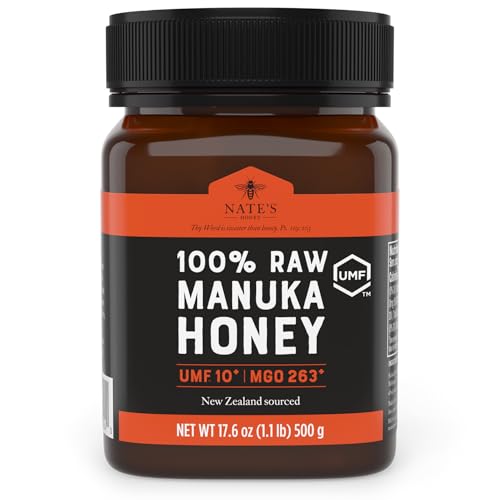
Nate’s is the only jar in this lineup carrying the UMF certification seal from the UMFHA, which verifies MGO 263+ and UMF 10+ through independent lab testing. For medicpurposes, this third-party validation removes all guesswork — you know the methylglyoxal concentration is genuine and consistent with what the label claims. The honey is monofloral and bottled in New Zealand, meeting every authenticity standard serious buyers should demand.
At 17.6 ounces, this is one of the larger jars in the roundup, making it a sensible choice if you plan to use Manuka daily for immune or digestive maintenance. The texture is thick, dark, and earthy — characteristic of high-grade monofloral honey. Potential downsides: the MGO 263+ potency is modest compared to 500+ options, so if you need aggressive antibacterial strength for acute issues like wound care, you may want a higher-numbered jar.
Customer feedback highlights its effectiveness against cold symptoms and reflux. The earthier flavor is a departure from standard honey, but most users find it pleasant in tea or warm water with lemon. Given the UMF certification and competitive price per ounce, this is the safest bet for first-time medicinal buyers who want guaranteed potency without overspending.
Why it’s great
- UMF 10+ gold‑standard certification
- 17.6 oz is generous for daily medicinal use
- Third-party tested for authenticity
Good to know
- MGO 263+ is moderate — not for acute wound-care needs
- Earthy flavor may surprise honey newcomers
2. Egmont Honey Manuka Honey MGO 515+ UMF 15+
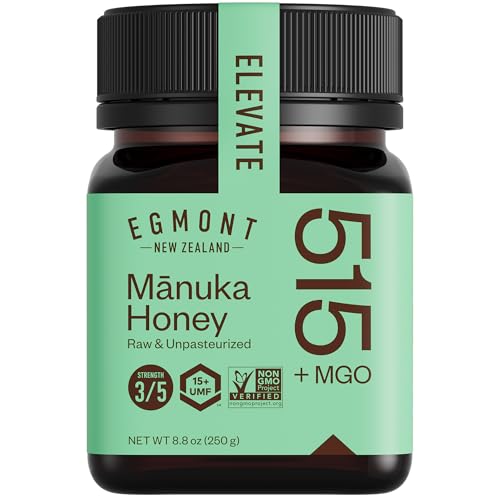
Egmont delivers an impressive MGO 515+ (UMF 15+) in a compact 8.8-ounce jar, making it the highest-potency option in the mid-range tier. This level of methylglyoxal is squarely in the therapeutic zone — documented clinical studies show MGO levels above 500 can suppress bacteria like Streptococcus pyogenes, which makes this a genuine candidate for sore throat therapy and oral wound management. The honey is monofloral, raw, and ethically sourced from remote Manuka forests accessible only by helicopter in New Zealand.
User reviews are consistently 5-star, with multiple customers reporting rapid relief from scratchy throats and cold symptoms after just a few half-teaspoon doses. The texture is described as “super smooth” and the taste is rich without being cloying. A notable detail: the jar is made from recycled plastic, which is eco-conscious but less premium than glass. If you prioritize packaging aesthetics or plan to re-use the jar, this may be a minor drawback.
Given its price point relative to MGO rating, Egmont offers the best potency-to-dollar value in this lineup. The 250g size is ideal for personal medicinal use — enough for a month of daily dosing without risking the honey losing freshness. For buyers who need high UMF for targeted treatment and want to avoid premium-tier prices, this is the smart pick.
Why it’s great
- MGO 515+ at a mid-range price point
- Customer-reported throat and cold relief
- Traceable, independently tested, monofloral
Good to know
- 250g jar is smaller than competitors
- Recycled plastic jar, not glass
3. Bees & Trees Manuka Honey MGO 350+
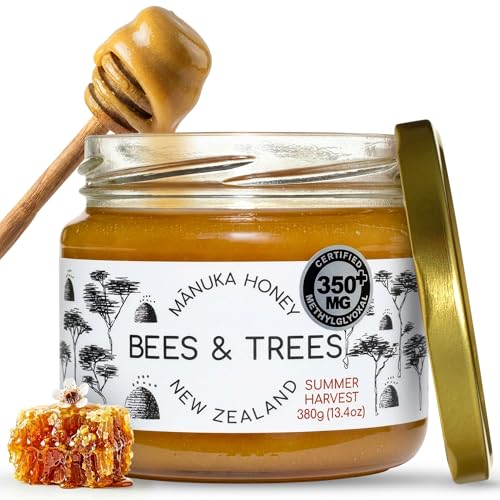
Bees & Trees positions itself as a dual-use honey — medicinal enough for respiratory and digestive support (MGO 350+ qualifies as active), mild enough for daily tea, oatmeal, or salad dressing. The 13.4-ounce glass jar is a clear upgrade over plastic containers, and the honey is raw, unpasteurized, and minimally filtered to preserve enzymes. Sourced from monofloral origins in New Zealand, it delivers consistent bioactivity without the ultra-premium price tag.
Customer reviews are uniformly excellent, with one user reporting that drinking tea with this honey helped clear a lingering respiratory virus. Others praise its thick, creamy texture and golden caramel color. The packaging is elegant enough for gifting, and the brand includes informative materials about Manuka sourcing and authenticity — a thoughtful touch for buyers new to the category.
The only trade-off is the lower MGO rating compared to Egmont or Cosana. At 350+, it is solid for maintenance and prevention, but not the first choice if you need high-concentration antibacterial action for a specific acute condition. For someone who wants a versatile honey they can use daily for taste and general wellness, this is the best-rounded option.
Why it’s great
- Glass jar with elegant packaging
- Raw, unpasteurized, and minimally filtered
- Versatile enough for culinary and medicinal use
Good to know
- MGO 350+ is entry-level for therapeutic potency
- No UMF certification seal
4. P.R.I Manuka Honey MGO 200+
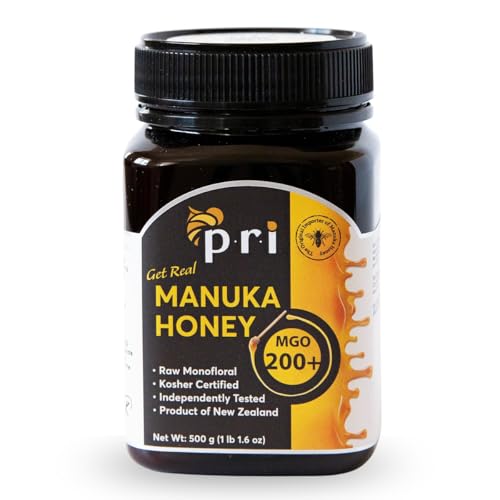
P.R.I is one of the original Manuka importers to the United States, with roots stretching back to 1987. This jar offers MGO 200+ in a 500g (1.1lb) format, making it the largest volume per dollar in this group. The honey is monofloral, raw, and cool-processed to protect natural enzymes. Each lid includes a QR code linking to batch-specific lab results — a transparency feature that builds trust for medicinal buyers on a tighter budget.
At MGO 200+, this is at the lower end of the therapeutic spectrum. It can support mild sore throat and digestive maintenance, but it lacks the potency needed for serious antibacterial application. Think of it as a reliable daily supplement rather than a targeted treatment. The size and price make it appealing for families or anyone who uses Manuka honey every day and wants to stretch their budget.
The brand’s long history and New Zealand sourcing standards are strengths, but the lack of recent customer review volume makes it harder to gauge current batch consistency. If you are new to Manuka and want to test the waters without a big investment, this is a reasonable starting point — just keep your potency expectations realistic.
Why it’s great
- Large 500g jar — best volume per dollar
- QR code traceability to lab reports
- Raw, cool-processed, monofloral
Good to know
- MGO 200+ is minimal for medicinal use
- Few recent customer reviews for current batches
5. Cosana Manuka Honey 550 MGO+
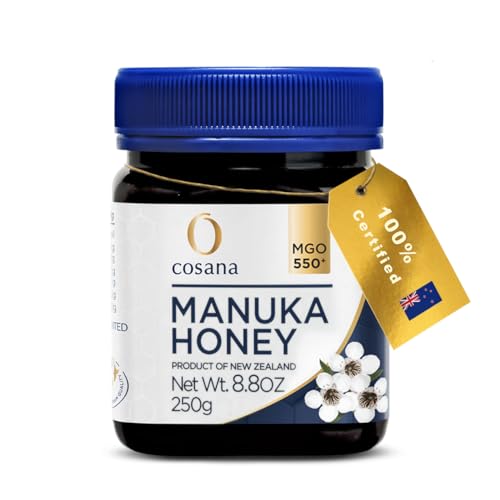
Cosana comes in with a declared MGO 550+, putting it in the same high-potency bracket as Egmont. The difference is the source — Cosana operates its own bottling plant in New Zealand and works directly with selected local beekeepers, a supply-chain advantage that allows tighter quality control. The honey is tested by a certified New Zealand lab and is free from glyphosate and pesticide residues, a critical detail for anyone using Manuka as a medicinal tool for sensitive conditions.
Reviews mention its effectiveness for cold relief (“Cleared my cold in 4 small spoons”) and note the distinctive herbal taste that differs from clover or wildflower honey. At 250g (8.8 oz), the jar size is modest, and the price per ounce is premium-level. One recurring note from customers is that the flavor profile can be assertive — strong and earthy — which some find overpowering for daily use.
If your need centers on acute symptoms and you want the highest MGO rating at a manageable size, Cosana delivers. The absence of a UMF certification seal means you are trusting the brand’s own lab reports rather than an independent umbrella organization, which may be a dealbreaker for purists. Still, for pure methylglyoxal concentration, this is a top contender.
Why it’s great
- MGO 550+ for targeted antibacterial potency
- Glyphosate and pesticide-free assurance
- Direct sourcing from New Zealand bottling plant
Good to know
- No UMF certification seal
- Strong earthy flavor not for everyone
FAQ
What MGO level is considered medicinal for Manuka honey?
Is UMF certification worth paying extra for?
Can I use Manuka honey on wounds directly?
How should I store manuka honey to preserve medicinal properties?
Final Thoughts: The Verdict
For most users, the manuka honey for medicinal purposes winner is the Egmont Honey MGO 515+ because it delivers the highest MGO rating at a mid-range price point, with independent testing and consistent customer-reported therapeutic results. If you want UMF third-party certification above all else, grab the Nate’s Raw Manuka Honey MGO 263+. And for a versatile daily option that works in tea and for general wellness, nothing beats the Bees & Trees MGO 350+ in its glass jar.