The difference between dull, bitter matcha and a cup that delivers a velvety, sweet umami finish comes down to one thing: the leaf itself. Ceremonial grade matcha uses only the youngest, shade-grown first-harvest leaves, stone-ground to a micron-fine powder that dissolves completely without clumps. Anything less betrays its purpose — a straight sip of pure tea and water that should feel rich, never astringent.
I’m Emma — the founder and writer behind Baby Bangs. Over the past several seasons I’ve scrutinized stone-milling methods, cultivar blends, organic certifications, and third-party lab tests for matcha sourced from Japan’s key prefectures to separate real ceremonial grade from inflated packaging claims.
My goal is to steer you toward the true contender in the best ceremonial grade matcha powder conversation — the one that delivers on color, texture, and flavor without the marketing fog.
How To Choose The Best Ceremonial Grade Matcha Powder
Not every packet marked “ceremonial grade” arrives from a first-harvest, stone-milled lot in Japan. Some brands use the term loosely for leaves harvested later or processed with steel grinders that generate heat and degrade chlorophyll. To find the real thing, focus on origin, harvest timing, milling method, and the specific organic certification that backs the claim.
Origin and Cultivar Composition
Genuine ceremonial grade matcha comes from the Uji, Yame, Kagoshima, or Shizuoka regions of Japan. These areas use the proper shade-growing technique for three to four weeks before harvest, which boosts L-theanine and chlorophyll levels. A blend of cultivars — like Okumidori, Samidori, Yabukita, or the rarer Gokou — adds complexity to the flavor. Single-cultivar matcha (such as Gokou from Shizuoka) offers a very specific, often sweeter profile, while multi-cultivar blends provide a balanced, layered umami.
Milling Method and Particle Size
Traditional stone grinding using a Mikage-ishi mill produces a particle size between 5 and 15 microns. This ultra-fine texture means the powder suspends fully in water without settling, and the low heat of the stone preserves both color and volatile aroma compounds. Steel or ball milling runs hotter and can dull the color and introduce a slight burnt note. If the powder feels gritty or leaves a sandy residue at the bottom of your cup, the milling method was likely compromised.
Organic Certification Beyond “USDA Organic”
USDA Organic certification verifies no synthetic pesticides, but for matcha it is not always enforced at the farm level in Japan. The gold standard is JAS Organic certification (Japan Agricultural Standard) or ECO JAS — these are enforced by Japanese inspectors at the source. A matcha with only a USDA seal but no JAS mark may still be clean, but the JAS or ECO JAS stamp is the stricter assurance that the leaves were grown and processed entirely under Japanese organic regulations.
Quick Comparison
On smaller screens, swipe sideways to see the full table.
| Model | Category | Best For | Key Spec | Amazon |
|---|---|---|---|---|
| Midori Spring Gold No. 2 | Premium | Nutty everyday ceremonial | 5-cultivar blend from Kyoto | Amazon |
| Midori Spring Organic Gold | Premium | Pure 1st harvest, stone ground | Kagoshima 1st flush, Mikage stone | Amazon |
| Ocha & Co. Shizuoka Organic | Premium | Deep umami, high value 100g | Single Gokou cultivar, ECO JAS | Amazon |
| Marukyu Koyamaen Aorashi | Premium | Traditional Japanese standard | Uji origin, multi-grade line | Amazon |
| Naoki Matcha Fragrant Yame | Premium | Sweet, beginner-friendly sip | Silver award, Yame region | Amazon |
| Dr. Weil Matcha Kari | Mid-Range | Barista-level, trust brand | USDA Organic, Uji farm origin | Amazon |
| FKRO Tea Master’s Organic | Mid-Range | Nutty umami, monthly fresh | 4th gen tea master blend | Amazon |
In‑Depth Reviews
1. Midori Spring Gold No. 2 — Conventional Ceremonial Grade Matcha
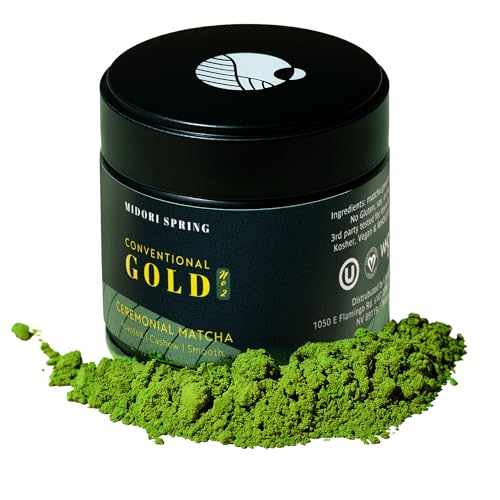
The Gold No. 2 uses a unique longer-roasted tencha from first-harvest young leaves, giving it a nutty, toasty profile with hints of umami that land softer than the typical floral-forward ceremonial matcha. The 5-cultivar blend — Okumidori, Samidori, Kanayamidori, Yabukita, and Sayamakaori — creates a layered cup that holds up well to both hot traditional preparation and cold brew without turning bitter.
In terms of visible quality, the vibrant green color confirms proper shading and chlorophyll preservation. The powder sifts easily and produces a thick foam when whisked, a direct marker of high L-theanine content and fine stone milling. Third-party lab testing for heavy metals and purity is a tangible step that not every premium tin offers at this tier.
The conventional (non-organic) sourcing keeps the cost more approachable than an organic first-harvest tin, but the flavor complexity — the roasty warmth and smooth finish — makes it the most versatile daily ceremonial matcha on this list. For drinkers who want a satisfying morning cup without the floral sharpness of some single-cultivar options, this is the top choice.
Why it’s great
- Nutty, toasty profile is more approachable than traditional bitter-umami matcha
- Third-party lab tested for metals and purity
- Excellent foam and smooth texture from fine stone milling
Good to know
- Not USDA organic — suitable for those not requiring an organic label
- Less floral character than pure Kagoshima first harvest blends
2. Ocha & Co. Shizuoka Organic Matcha — Ceremonial Grade
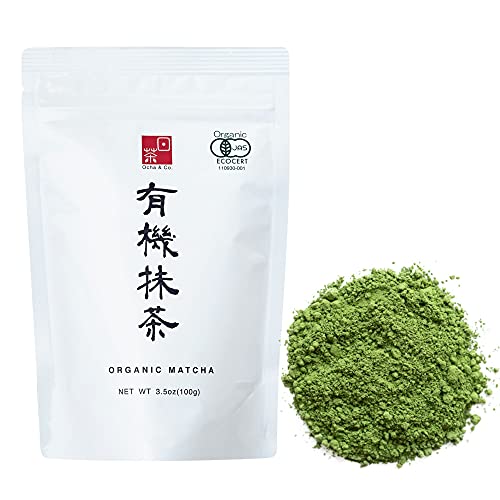
This matcha stands alone on the list for using the rare Gokou cultivar from Shizuoka, a variety known for its exceptionally deep umami and natural sweetness. The 100g tin yields about 50 servings, making the per-gram cost significantly lower than the 30g or 40g tins from competitors — without sacrificing ceremonial-grade quality.
The ECO JAS Organic certification is the most stringent organic standard you can find on Japanese matcha. It is enforced at the farm level, and combined with the traditional stone-milling process, the result is a powder that dissolves instantly into a velvety, vibrant green liquid. Reviews consistently note the smooth flavor and balanced caffeine — it delivers steady energy without coffee-like spikes.
If you drink matcha daily and prioritize certified organic sourcing, this tin offers the strongest combination of purity and volume. The Gokou cultivar’s distinct character — almost creamy with a hint of nori — is a clear step above generic multi-cultivar blends in terms of taste specificity.
Why it’s great
- 100g container provides excellent value per serving
- Rare Gokou cultivar offers naturally sweet, umami-rich flavor
- ECO JAS organic certification is the gold standard for purity
Good to know
- High caffeine content — sensitive drinkers should start with 1g
- Some reviews note periodic stock availability issues
3. Midori Spring Organic Ceremonial Grade Matcha — Gold 1st Harvest
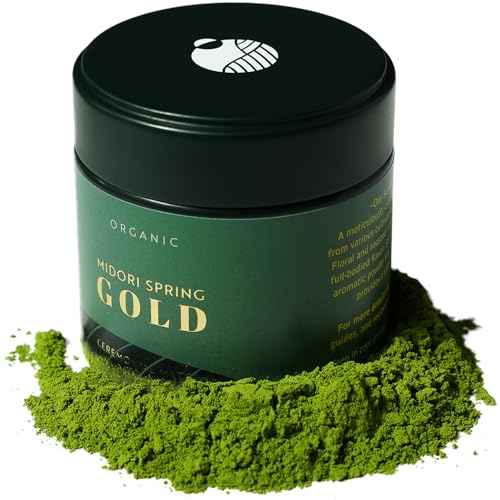
This is the organic counterpart to the Gold No. 2, but with a different sourcing origin — Kagoshima instead of Kyoto — and a focus on 1st flush leaves only. The organic Gold uses Mikage stone milling for a particle size that produces a silky, clump-free suspension and a florally aromatic cup with a light, roasted finish.
The vibrant green color upon opening the tin is the immediate signal that these leaves were properly shaded and harvested at the correct time. The flavor lands on the floral side with a very light umami, making it an excellent entry point for matcha drinkers who associate “ceremonial grade” with subtlety rather than bold savory notes. The recyclable tin packaging is also a practical touch for long-term freshness.
The one catch is that the 30g tin runs out quickly if this becomes your daily drink, especially compared to the 100g Ocha & Co. option. But for drinkers who prioritize organic certification and want a clean, floral ceremonial experience, this remains a benchmark product in its size class.
Why it’s great
- True 1st flush, Kagoshima-sourced with vibrant green color
- Mikage stone grinding delivers exceptionally smooth texture
- USDA Organic and Whole30 Approved
Good to know
- 30g tin is smaller than many competitors — higher per-gram cost
- Floral profile may be too subtle for those seeking deep umami
4. FKRO Tea Master’s Organic Ceremonial Grade Japanese Matcha
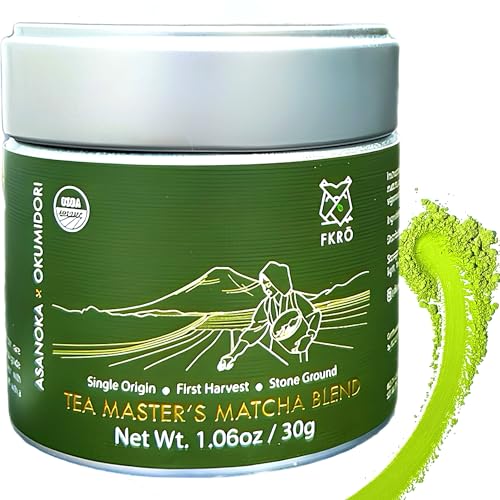
FKRO sources from the Nishi family farm in Kagoshima and uses the rare Asanoka and Okumidori cultivars, known for a nutty, rounded flavor with hints of sweet potato and chestnut. The blend was curated by a 4th-generation tea master, and the company ships small batches from Japan monthly to preserve freshness.
Each gram delivers approximately 19mg of L-theanine and 80mg of caffeine, providing the steady-focus effect that ceremonial matcha drinkers seek when replacing coffee. The dry powder is a brilliant emerald shade, and the taste avoids the flat, astringent profile that plagues lesser ceremonial claims. The hand-picked first-harvest leaves are stone ground in small batches, which keeps the particle size consistent.
The 30g tin is priced in line with competitors but lacks the volume of the Ocha & Co. option. For drinkers who value a tea master’s blend with a specific nutty flavor profile and want the assurance of monthly-fresh stock, the FKRO is a strong mid-range pick that doesn’t compromise on origin or milling method.
Why it’s great
- Rare Asanoka/Okumidori blend provides distinct nutty-sweet notes
- Flown in fresh monthly from Japan for peak quality
- USDA organic with high L-theanine content for stable energy
Good to know
- 30g tin — limited servings per container
- Nutty profile may not appeal to those expecting floral ceremonial matcha
5. Marukyu Koyamaen Premium Ceremonial Grade Matcha (Aorashi)
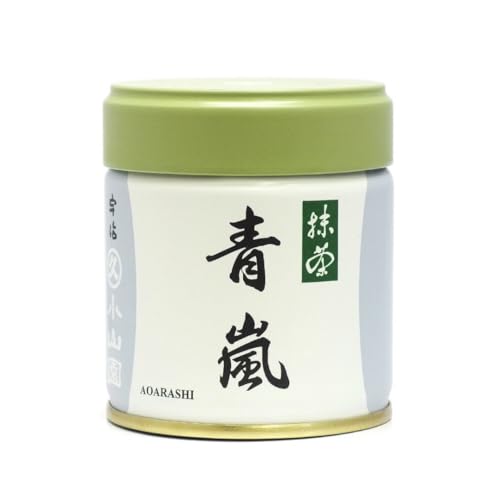
Marukyu Koyamaen is one of the most established matcha houses in Uji, Kyoto, with a reputation for producing the standard by which other ceremonial grades are measured. The Aorashi blend sits in their premium line and delivers the classic Uji profile — a balance of sweet umami, smooth body, and clean finish that is reliably consistent batch to batch.
This is not a flavored or roasted matcha; it is the pure, unsweetened ceremonial experience. The powder is extremely fine and produces a thick, creamy foam with minimal whisking effort. Drinkers familiar with high-end Japanese matcha will recognize the lack of bitterness and the lingering sweetness that coats the palate.
The main barrier is the per-gram cost, which lands at the higher end of this list. For daily drinking, the 40g tin may not last long. But for someone who wants to taste what true, non-adulterated ceremonial grade matcha from Uji tastes like — and is willing to pay for the legacy — the Aorashi is the definitive choice.
Why it’s great
- Heritage Uji producer with over 300 years of matcha history
- Exquisite balance of sweet umami with zero bitterness
- Extremely fine grind produces thick, creamy foam
Good to know
- Higher per-gram cost than most competitors
- 40g tin requires frequent reordering for daily drinkers
6. Naoki Matcha Fragrant Yame Blend – Ceremonial Grade
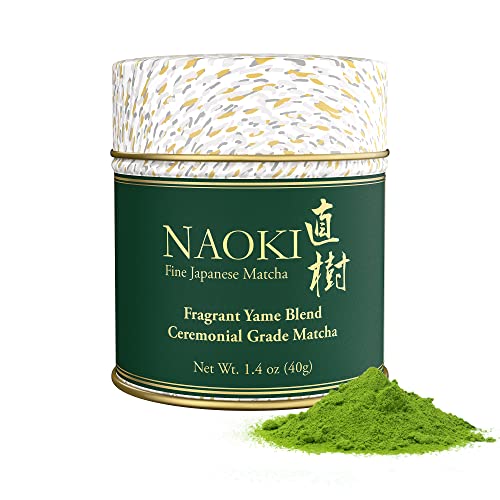
The Yame region of Fukuoka produces matcha with a natural sweetness due to the wide temperature swings between day and night during the growing season. The Fragrant Yame Blend from Naoki Matcha picks up a Silver award in a Japanese national tea competition, which signals that the flavor profile has been vetted by Japanese tea professionals.
This blend is intentionally lighter on umami and heavier on buttery, creamy sweetness. It is designed for intermediate matcha drinkers who want to drink it straight — just matcha and water — to appreciate the natural sweetness without milk or sweeteners. The finish is incredibly smooth with no astringency, making it one of the most forgiving ceremonial matchas for someone transitioning from lattes to straight tea.
The 40g tin is a reasonable size for this price tier, and the Yame-specific sourcing is a differentiator from the more common Uji or Kagoshima origins. If you find other ceremonial grades too sharp or floral, the soft, sweet profile of this blend is a worthwhile change.
Why it’s great
- Naturally sweet and buttery — no added sugar needed
- Silver award from a Japanese national tea competition
- Exceptionally smooth finish, ideal for straight drinking
Good to know
- Lighter umami may not appeal to those seeking deep savory notes
- Not certified organic
7. Dr. Weil Matcha Kari – Organic Matcha Green Tea Powder

Positioned as a “Barista Ceremonial” grade, this Matcha Kari offering from the Dr. Weil brand is USDA Organic and sourced from a dedicated Uji farm. The “Harvest To Whisk” program ensures the leaves are processed and shipped quickly, which preserves a bright green color and a clean, mild flavor that works well both plain and in lattes.
Some drinkers initially hesitate at the “barista” label, wondering if it implies a lower grade. In practice, this is a solid ceremonial-grade matcha with a smooth taste and no bitter edge. The 30g tin is compact, and the brand’s reputation for quality control adds a layer of assurance for those less familiar with Japanese matcha sourcing.
The flavor is pleasant but not complex — it lacks the depth of the multi-cultivar or single-cultivar blends from Midori Spring or Ocha & Co. For a drinker who wants a reliable, organic, easy-to-prepare matcha from a recognizable wellness brand, it delivers. But for the price, the per-gram value is lower than some competitors offering more nuanced flavor profiles.
Why it’s great
- USDA Organic with direct Uji farm sourcing
- Clean, mild flavor with no bitterness — beginner friendly
- Harvest To Whisk program ensures freshness
Good to know
- Flavor is less complex than multi-cultivar or single-cultivar blends
- Small 30g tin offers fewer servings per purchase
FAQ
What is the difference between ceremonial grade and culinary grade matcha?
Does the color of matcha powder indicate quality?
How long does ceremonial grade matcha stay fresh after opening?
Why does some ceremonial matcha cost more than others?
Final Thoughts: The Verdict
For most users, the best ceremonial grade matcha powder winner is the Midori Spring Gold No. 2 because its nutty, roasted flavor profile is the most approachable without sacrificing first-harvest quality and stone-milled texture. If you want deep umami and the best per-gram value, grab the Ocha & Co. Shizuoka Organic. And for the definitive Uji ceremonial experience rooted in centuries of tradition, nothing beats the Marukyu Koyamaen Aorashi.