Waking up with a stuffy nose and itchy eyes isn’t seasonal bad luck — it is often a reaction to fine household dust that standard cloth masks fail to stop. Dust mite debris, pollen, and construction-grade particulates require a sealed respirator layer, not just a fabric barrier, to keep your sinuses clear.
I’m Emma — the founder and writer behind Baby Bangs. I’ve spent hundreds of hours comparing filter media, valve designs, and fit certifications to separate the masks that actually block allergens from those that just feel secure.
This guide cuts through the noise to help you find the right mask for dust allergy that balances breathability, seal quality, and real-world filtration against the particles that trigger your symptoms day after day.
How To Choose The Best Mask For Dust Allergy
All dust is not created equal. Household dust contains mite feces, mold spores, and skin flakes — particles that are often under 10 microns. A mask suited for dust allergy must seal well and filter particles down to 0.3 microns with at least 95% efficiency. You can’t just look for breathability; you need a certified filter layer paired with a design that won’t slide off your face when you move.
Certification and Filter Efficiency
NIOSH-approved N95 masks are the gold standard for non-oil particulate filtration. They trap at least 95% of airborne particles down to 0.3 microns, which covers the vast majority of dust allergens. If a mask only says “filter” without a certification, it likely lacks the electrostatic microfiber media needed to actually capture microscopic dust.
Seal and Fit Strategy
The best filter in the world does nothing if air leaks around the nose bridge or along the cheeks. Look for an adjustable nose clip (aluminum or foam-padded), dual-strap head attachments rather than ear loops, and a contoured shape that matches your face. A 360° seal, like those found on premium reusable masks, is ideal because it reduces the “sneeze leak” that occurs during heavy breathing.
Breathability and Valve Design
Dense filter media can feel suffocating during extended wear. A well-designed exhalation valve reduces moisture buildup and heat inside the mask, which keeps the filter media dry and performing at peak efficiency. For allergy sufferers who wear the mask for hours at a time, a cool-flow or one-way valve is a major comfort upgrade.
Quick Comparison
On smaller screens, swipe sideways to see the full table.
| Model | Category | Best For | Key Spec | Amazon |
|---|---|---|---|---|
| 3M 8210V | N95 Cup | Heavy dust & woodworking | Cool Flow Valve | Amazon |
| GIKO N95 Respirator | N95 Cup | Daily wear & concrete grinding | Breathing Valve, 15 Pack | Amazon |
| RZ Mask M3 | Reusable Carbon | Odor & fine particle defense | 99.8% Carbon Filtration | Amazon |
| Tesoro Respirator + Goggles | Half Face Reusable | Spray painting & welding | 10 Replacement Filters | Amazon |
| BASE CAMP Family Pack | Reusable Cloth Shell | Family allergy defense | 6-Layer Filter, 99.6% | Amazon |
In‑Depth Reviews
1. 3M 8210V Particulate Respirator
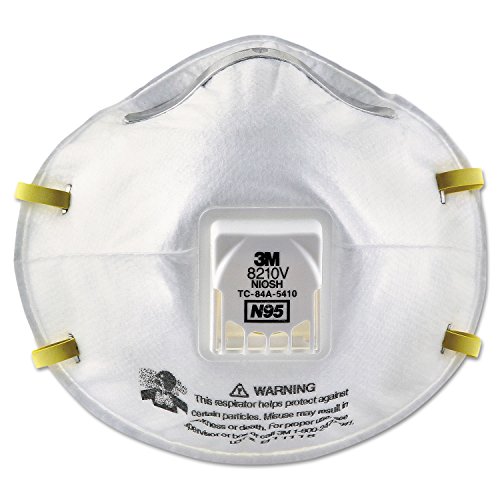
The 3M 8210V is the benchmark for lightweight N95 cup respirators. Its proprietary electrostatic microfiber filter media grabs dust particles at 0.3 microns while keeping breathing resistance low enough for sustained yard work or home renovation sessions. The Cool Flow valve is the star feature here: it vents exhaled air downward, which prevents moisture buildup inside and sharply reduces lens fogging for anyone wearing safety glasses or prescription spectacles.
This 10-pack offers a solid cost-per-unit value without sacrificing the adjustable nose clip and dual-strap head harness that creates a reliable seal across varied face shapes. The cushioning foam along the nose bridge distributes pressure evenly, so you don’t develop red marks after an hour of wear. It is designed for industrial use cases like grinding, sanding, and sweeping — exactly the environments where dust allergy triggers are most concentrated.
For the allergy sufferer who needs a certified, disposable respirator that just works without fuss, the 8210V delivers proven NIOSH protection and genuine breathability. The main trade-off is that as a single-use cup mask, it generates waste compared to reusable alternatives. But for peak allergy days, the seal and filtration confidence are unmatched.
Why it’s great
- Proven 3M electrostatic filter media reduces breathing resistance
- Cool Flow valve minimizes heat and lens fogging during active work
- Two-strap head harness provides a secure, adjustable seal
Good to know
- Single-use design creates more disposable waste
- May feel bulky for users with smaller face structures
2. GIKO N95 Respirator Masks – 15 Pack

The GIKO N95 is positioned as a value-friendly alternative to the 3M lineup, and it holds its own in key areas. The cup design includes an exhalation valve that reviewers report significantly reduces lens fogging during concrete grinding and woodworking — a critical detail for any allergy mask user who also wears glasses. The head loops (not ear loops) keep the mask anchored during prolonged movement, preventing the shift that often breaks a face seal.
At a 15-count pack size, this is a strong option for those who need a steady supply of fresh N95 masks for daily allergy defense and occasional dusty tasks. Users with larger head sizes specifically note that the fit is generous without being loose, and the soft inner lining holds up well against skin irritation over multiple hours. The valve construction channels exhaled air away from the face, which helps the interior stay cooler than non-vented designs.
While the GIKO lacks the decades of industrial testing behind 3M, user reports from construction sites and home workshops suggest it performs reliably for dust control.
Why it’s great
- Breathing valve keeps glasses clear during active work
- 15-pack offers good long-term supply for daily use
- Head straps fit securely on larger faces without slipping
Good to know
- Brand lacks the deep industrial trust of legacy NIOSH makers
- Availability fluctuates more than established competitors
3. RZ Mask M3 Patented Dust Mask

The RZ Mask M3 takes a radically different approach from cup respirators by using a washable fabric shell with replaceable carbon filter cartridges. The 99.8% filtration efficiency targets fine dust, pollen, and even odors — a major advantage for allergy sufferers sensitive to chemical smells or diesel fumes while commuting. The 360° seal uses a foam nose bridge and three-strap system (two lower, one over-head) that pulls the mask flush against the cheekbones without relying on an aluminum clip to conform.
Reviewers consistently highlight the comfort edge: the foam padding on the nose is soft enough to wear during long bus rides or caretaking shifts without digging in. The breathability improvement is measurable — the larger surface area of the replaceable filter combined with the vented valve means less resistance than many N95 cup styles. Anti-fogging performance is strong thanks to the directed exhaust, making it a top choice for glasses wearers.
The trade-off is that this is not a NIOSH-certified N95 respirator. For strictly controlled workplace compliance, the RZ Mask works as a supplemental allergy defense rather than a full industrial replacement. But for everyday living — walking through construction zones, cleaning the garage, or gardening during pollen season — it delivers elite comfort and real particle protection.
Why it’s great
- Foam-lined seal virtually eliminates nose gap leakage
- Replaceable carbon filters block odors in addition to dust
- Washable shell reduces single-use waste over time
Good to know
- Not NIOSH-certified as an N95 replacement filter
- Higher upfront investment than disposable packs
4. Tesoro Respirator Mask with Goggles
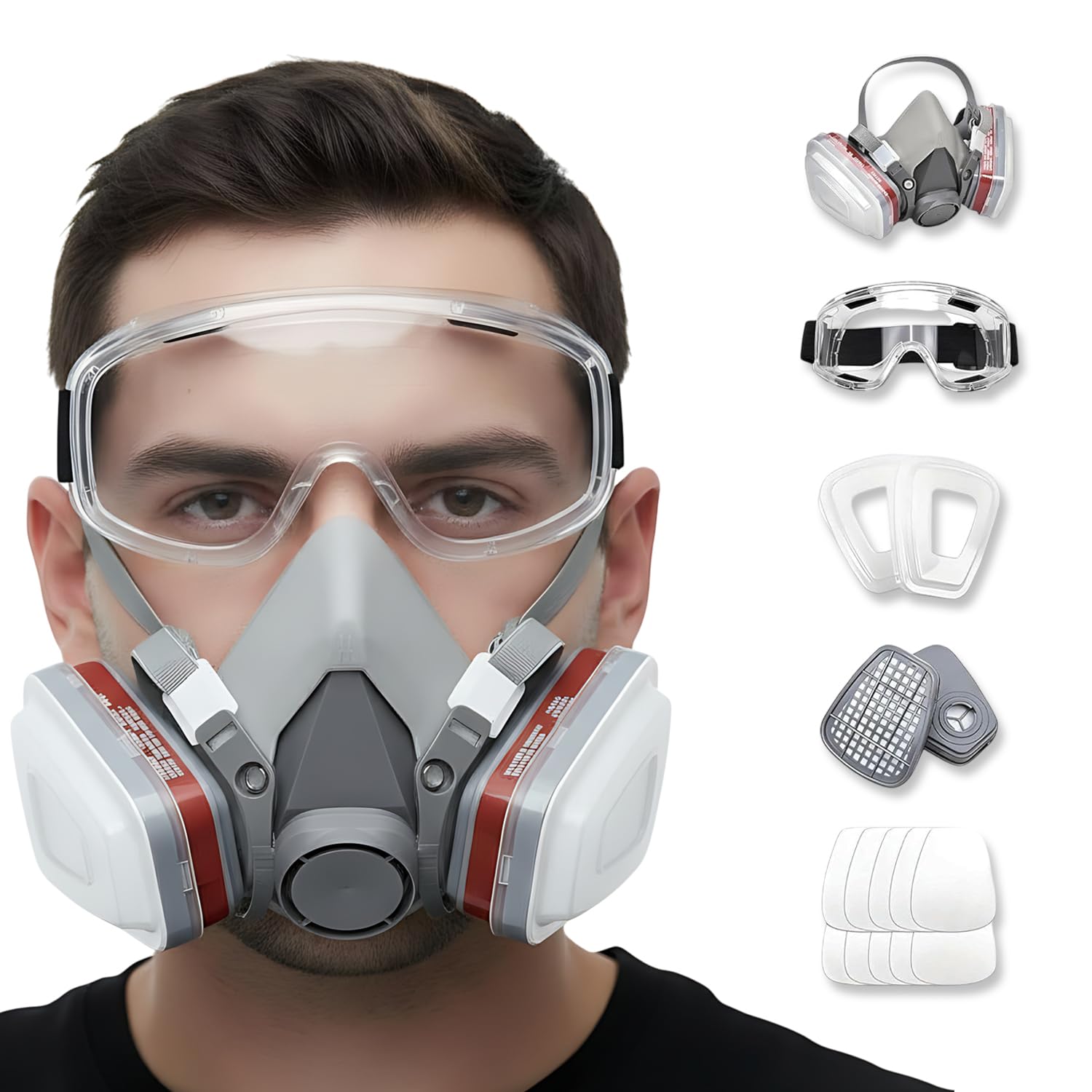
The Tesoro half-face respirator is for the allergy sufferer who also deals with chemical irritants, paint fumes, or fine spray mists. This is not a simple mask — it uses a silicone half-face cradle that seals completely around the mouth and nose, with dual cartridge ports that take the included 10 replacement filter sets. The build quality is robust, with the main body weighing over a pound and the integrated clear eye goggles providing simultaneous eye protection against airborne irritants.
For dust allergy scenarios involving heavy landscaping, spray painting, or woodworking with fine sanding dust, this level of seal coverage prevents the eye irritation that often accompanies nasal symptoms. The replaceable filters are easy to swap by twisting the cartridges, and the silicone body cleans up with soap and water for indefinite reuse. The exhale valve is positioned at the bottom center, which channels breath moisture away from the goggles and keeps visibility clear.
The major trade-off is bulk: this is not a mask you keep in your pocket for quick trips to the store. The full-face-to-goggle connection means the entire unit feels substantial on the face, and extended wear in warm weather can feel sweaty. It is purpose-built for specific high-exposure tasks rather than daily allergy maintenance, but for those jobs, the particle and fume protection is in a different league than cup-style respirators.
Why it’s great
- Silicone half-face seal provides a leak-proof barrier for fine particles
- Integrated goggles keep eyes protected from airborne allergens
- 10 spare filters included for extended use without repurchasing soon
Good to know
- Bulky design is impractical for casual or everyday wear
- Heats up noticeably during long sessions in warm environments
5. BASE CAMP Family Pack Dust Mask
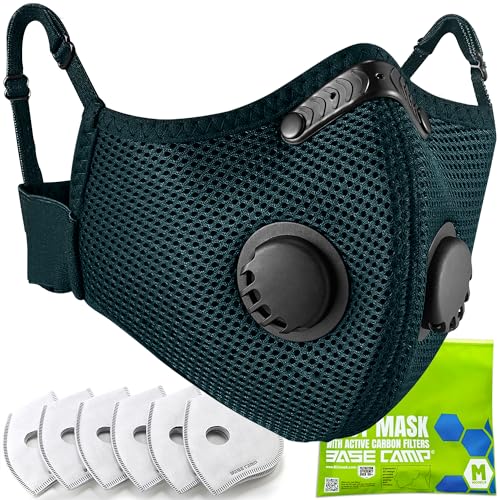
The BASE CAMP mask takes a reusable cloth-shell approach with a replaceable 6-layer filter insert that claims 99.6% filtration. The shell is made from washable nylon with an enlarged one-way exhaust valve that the manufacturer states improves heat and moisture release by 26.3% compared to standard valves. For allergy households where multiple people need protection, the family pack includes color-coded masks to keep each person’s fit and filter separate.
This design uses a hook-and-loop adjustable neck band combined with an elastic top strap to create a snug fit across different face sizes. The adjustable nose clip reduces the fogging issue common with less sealed masks, and the multi-color scheme makes it easy to grab your assigned mask on the way out the door. It is marketed for pollen allergy, yard work, woodworking, and lawn mowing — all scenarios where fine dust triggers sinus trouble.
While the filtration claims are attractive, this mask lacks an independent certification like NIOSH. The 6-layer filter works by combining mechanical and activated carbon layers, but without standardized testing, you rely on the manufacturer’s stated efficiency. For mild to moderate allergy symptoms during outdoor chores, it offers a comfortable, low-cost reusable option, but for high-risk exposure, a certified N95 cup respirator delivers more dependable protection.
Why it’s great
- Color-coded masks make family organization simple
- Washable shell and replaceable filters reduce ongoing cost
- One-way valve improves exhalation moisture management
Good to know
- No independent NIOSH certification for the filter layer
- Cloth seal may not hold as securely during heavy breathing
FAQ
Does an N95 mask filter out dust mite allergens effectively?
Can I wash a reusable dust mask with carbon filters?
Will a dust mask prevent allergy symptoms if I wear it indoors all day?
Final Thoughts: The Verdict
For most users, the mask for dust allergy winner is the 3M 8210V because it combines proven NIOSH N95 certification with a Cool Flow valve that keeps you comfortable during extended wear. If you want a reusable option that blocks odors along with fine dust, grab the RZ Mask M3. And for family use where multiple people need affordable day-to-day allergy defense, nothing beats the BASE CAMP Family Pack.