If you’re stretching on a hard floor, every second of discomfort from a thin or sliding mat directly undermines the recovery you’re trying to build. A proper stretching mat needs to stay planted, absorb impact at the knees and spine, and give you enough width to open into a full hip flexor or prone cobra without your hands falling off the edge.
I’m Emma — the founder and writer behind Baby Bangs. I’ve spent years evaluating the material density, dimensional specs, and grip texture of over forty floor mats to separate the ones that genuinely cushion joints from those that just feel soft in the box.
This guide breaks down seven of the market’s top options, sorted by construction quality and real-world usability, so you can confidently pick your next stretching mat.
How To Choose The Best Stretching Mat
Picking a stretching mat isn’t just about the squish test in a store aisle. The wrong material can break down in three months, the wrong width can limit your range of motion, and the wrong density can let your weight press straight through to the floor. Focus on these three factors before you click buy.
Material Density Determines How Long It Lasts
NBR foam (like the Gaiam Essential) is plush and cheap but absorbs sweat and compresses permanently over time. TPE (Thermoplastic Elastomers) resists tearing, stays closed-cell so it doesn’t soak up moisture, and offers a firmer, more stable surface. Premium RecFoam is fully recyclable and rebounds faster than standard TPE, making it ideal for daily use. If you plan to stretch on the mat four or more times a week, skip NBR and go straight to TPE or RecFoam.
Width and Length Define Your Movement Range
Standard mats are 24 inches wide — fine for seated poses, restrictive for active lateral stretching. A 32-inch surface lets you spread your knees wide in butterfly or frog stretches without sliding off. A 48-inch surface works for supine twists, full-body rolling, or sharing space during pairs stretches. Measure the floor area you can spare and choose a width that matches the movements you do most.
Thickness vs. Stability Trade-Off
Thicker foam (10mm / 2/5 inch) feels luxurious under bony knees but can make standing balancing poses wobble because your feet sink in unevenly. A 6mm or 7mm high-density mat strikes the best balance — enough shock absorption for prone stretches without sacrificing the firm foundation you need for lunges or warrior holds. If your primary activity is gentle floor stretching or physical therapy, go thicker. If you mix in balance work, stay at or under 7mm.
Quick Comparison
On smaller screens, swipe sideways to see the full table.
| Model | Category | Best For | Key Spec | Amazon |
|---|---|---|---|---|
| Gogokiwi 6’x4′ | Premium | Maximum floor coverage | 48″ wide, 1/4″ RecFoam | Amazon |
| Hatha Yoga 6’x4’x1/2″ | Premium | Extra cushion plus stability | 1/2″ thick TPE, 48″ wide | Amazon |
| Gogokiwi 72″x36″ | Premium | Alignment-guided stretches | 36″ wide, center alignment line | Amazon |
| UMINEUX Large TPE | Mid-Range | Budget large mat | 48″ wide, 6mm TPE | Amazon |
| MRZZATA TPE 72″x32″ | Mid-Range | Wide space on a budget | 32″ wide, 7mm TPE | Amazon |
| KEEP Yoga Mat 32″ | Mid-Range | Eco-friendly wide mat | 32″ wide, 7mm TPE | Amazon |
| Gaiam Essentials 10mm | Budget | Max cushion for low-impact | 10mm NBR foam, 24″ wide | Amazon |
In‑Depth Reviews
1. Gogokiwi Large Yoga Mat (6’x4′)

At 72 by 48 inches, this mat delivers 112 percent more surface area than a standard 24-inch-wide mat, which means you can rotate through lateral lunges, supine spinal twists, and wide-legged forward folds without repositioning once. The 1/4-inch RecFoam construction lands in the Goldilocks zone — thick enough to mute the hardness of tile or concrete, yet dense enough that your weight doesn’t sink unevenly during balance stretches.
The dual-sided design with two distinct color patterns lets you flip the mat based on mood or grip preference, and both sides feature a textured anti-slip finish that holds well on hardwood and carpet alike. Because RecFoam is closed-cell, sweat beads on the surface rather than soaking in, making post-session cleaning as simple as a damp wipe and air dry.
The included Velcro straps roll the mat into a compact cylinder that fits neatly in a closet or corner, though at 4 pounds it’s a bit heavier than narrower mats — a fair trade for the generous footprint. If you regularly stretch in a dedicated space at home and want a surface that won’t slide, wrinkle, or absorb odor, this is the most versatile pick across the entire range.
Why it’s great
- Massive 48-inch width suits tall or plus-size users and dynamic lateral stretches.
- Closed-cell RecFoam resists moisture absorption and cleans with one wipe.
- Dual-sided textured surfaces provide reliable grip on both sides.
Good to know
- At 4 pounds it’s heavier than most standard mats — less portable for frequent travel.
- 1/4-inch thickness may feel thin for users needing extreme joint cushioning on concrete.
2. Hatha Yoga Large TPE Yoga Mat 6’x4’x1/2″

If you need a mat that swallows impact for deep floor stretches but still offers enough density for controlled balance, the Hatha Yoga’s half-inch TPE construction is the thickest option in this lineup without going full foam-pit soft. The 6-by-4-foot footprint gives you the same generous lateral coverage as the Gogokiwi, but the extra thickness noticeably reduces pressure on the sacrum during supine stretches and on the patella during kneeling hip flexor work.
The dual-sided non-slip texture uses a high-density TPE compound that’s phthalate-free and fully recyclable, so you don’t trade environmental considerations for cushion. Because TPE is naturally closed-cell, moisture beads up rather than penetrating the mat, which prevents bacterial buildup even with heavy daily use. The 8.8-pound weight tells you this mat stays planted — it won’t slide on hardwood, but it also commits you to stationary studio or home use.
Two bundling ribbons keep the mat rolled tidy when not in use, though at this thickness it rolls into a wider cylinder that demands more storage space. For users who prioritize joint relief above all else — especially those recovering from injury or working on bare concrete — the thickness-to-stability ratio here outperforms every other mat reviewed.
Why it’s great
- Half-inch thickness provides the most joint cushioning among premium TPE mats tested.
- 48-inch width supports full lateral movement without edge anxiety.
- High-density TPE resists permanent compression better than NBR foam.
Good to know
- Weighs nearly 9 pounds — strictly a home-use mat, not travel-friendly.
- Stiffer texture may feel less comfortable on bare skin during supine poses compared to softer NBR.
3. Gogokiwi Extra Wide Yoga Mat (72″x36″)
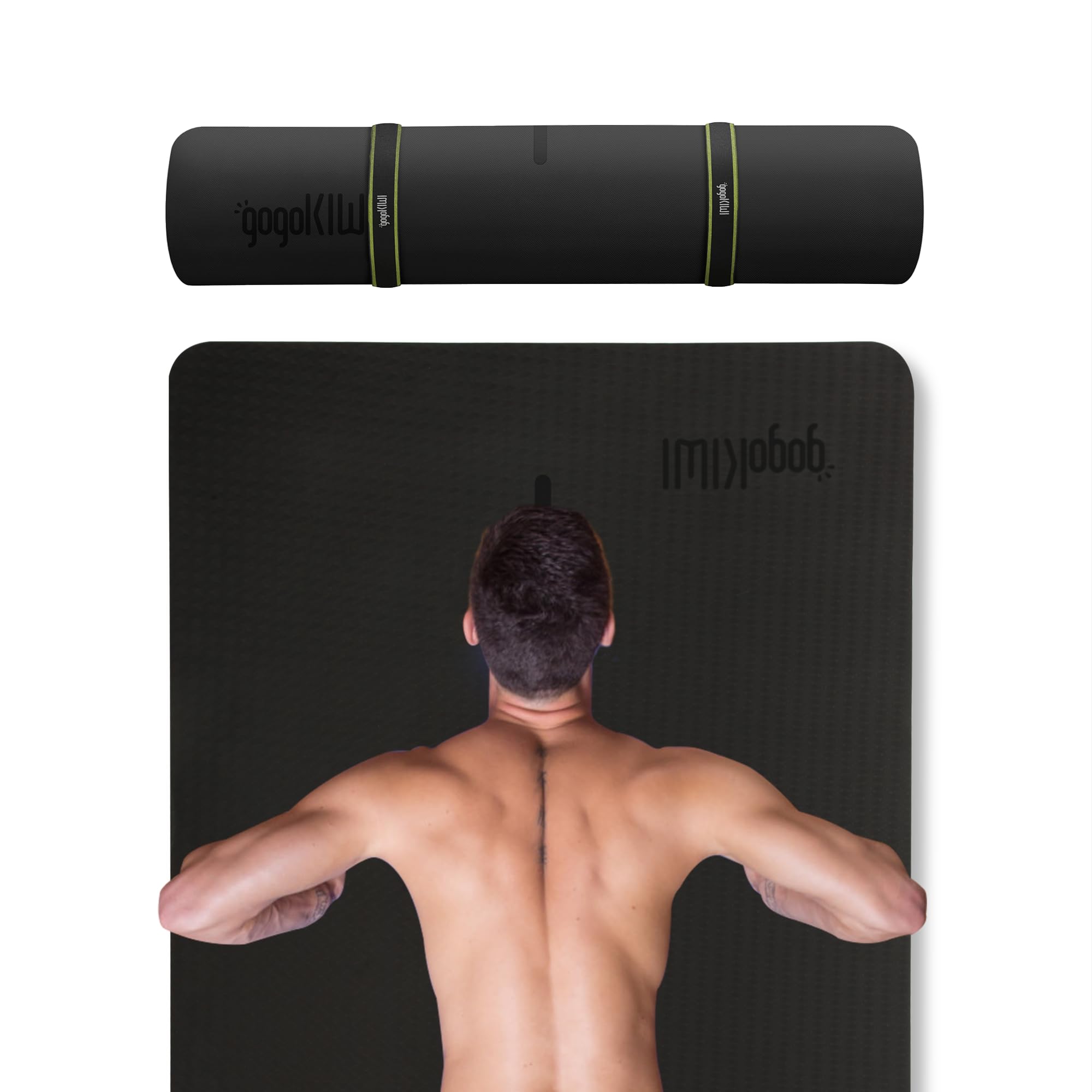
The 36-inch width here splits the difference between a standard mat and a full 48-inch platform, giving you enough room for wide-legged stretches while staying manageable for carrying to a studio or class. The standout feature is the center alignment line printed directly into the surface — a visual cue that helps you center your spine during standing balances and symmetrical poses, reducing unconscious compensation patterns that build up over time.
Made from 100 percent recyclable premium RecFoam, the mat weighs just 2.7 pounds and comes with a dual-use strap that works both as a carry handle and as a stretching strap for hamstring or shoulder work. The dual-sided non-slip design uses different patterns on each side, so you can flip based on grip preference or simply to distribute wear evenly.
The 1/4-inch thickness leans slightly toward the firmer side, which prioritizes stability for balance work over plush cushioning for prone stretches. For users who mix dynamic stretching with controlled holds, this mat offers the best width-to-portability ratio in the premium tier without sacrificing eco-friendly materials.
Why it’s great
- Center alignment line improves spinal awareness during symmetrical stretches.
- Lightweight enough at 2.7 pounds for regular transport.
- RecFoam is fully recyclable and resists moisture absorption.
Good to know
- 1/4-inch thickness provides less cushion than 1/2-inch mats for users on hard floors.
- The printed alignment line may wear slightly faster than the rest of the surface with heavy use.
4. UMINEUX Large Yoga Mat (6’x4’x6mm)

The UMINEUX brings the full 48-inch width into a mid-range price bracket, making oversized floor coverage accessible without jumping to premium price points. At 6mm thick, it’s slightly thinner than the 7mm TPE options, but the high-density formulation keeps it from bottoming out under body weight during prone stretches. The dual-sided non-slip texture uses wavy patterns on the bottom for floor traction and a finer texture on top for skin grip.
Made from TPE free of phthalates and heavy metals, this mat is both skin-friendly and recyclable. The included storage bag and two Velcro straps make rolling and stowing straightforward, though the 4-foot width means the rolled mat is noticeably longer than a standard mat — plan your storage space accordingly.
The 6mm thickness is a deliberate trade-off: it offers enough cushion for hip openers and floor work while maintaining the stability needed for standing balances. If you’re looking for a budget-conscious entry into large-format stretching mats and don’t need maximum plushness, this is the most cost-effective wide option in the roundup.
Why it’s great
- Full 48-inch width at a price point well below premium competitors.
- High-density TPE delivers decent cushion without sacrificing balance stability.
- Includes both a storage bag and Velcro straps for organized storage.
Good to know
- 6mm thickness may feel insufficient for users who need extra joint padding on concrete.
- The longer rolled mat can be awkward to store in standard closet spaces.
5. MRZZATA TPE Yoga Mat (72″x32″x7mm)

The MRZZATA offers a 32-inch width and 7mm thickness in a TPE build that strikes a near-perfect balance for mixed-discipline users who do both floor stretching and standing yoga. The extra width compared to a standard 24-inch mat means you won’t feel the edge during wide-legged forward folds or lateral hip openers, while the 7mm cushion compresses just enough to feel stable underfoot.
The double-sided non-slip surface uses a wavy bottom pattern that grips hardwood and tile without leaving residue, and the top texture prevents hand or foot sliding even when skin is slightly damp. Being made from TPE, the mat unrolls flat out of the box with minimal curling — a common complaint with cheaper NBR mats that want to stay rolled for days. The included dual-use strap functions both as a carry strap and as a stretching strap for hamstring pulls.
The 2.8-pound weight makes it one of the lighter wide mats available, so it travels well to the gym or studio without feeling like you’re hauling equipment. For users who want a wider surface than standard without committing to the bulk of a 48-inch mat, the MRZZATA hits the sweet spot between coverage, cushion, and portability.
Why it’s great
- 32-inch width gives meaningful extra space without feeling oversized.
- 7mm TPE provides a stable yet cushioned platform for mixed stretching and balance work.
- Lightweight and easy to roll with minimal curling out of the package.
Good to know
- Some users report the surface shows scuff marks from shoes or pets over time.
- The included strap is functional but basic in feel compared to branded alternatives.
6. KEEP Yoga Mat (72″x32″x7mm)
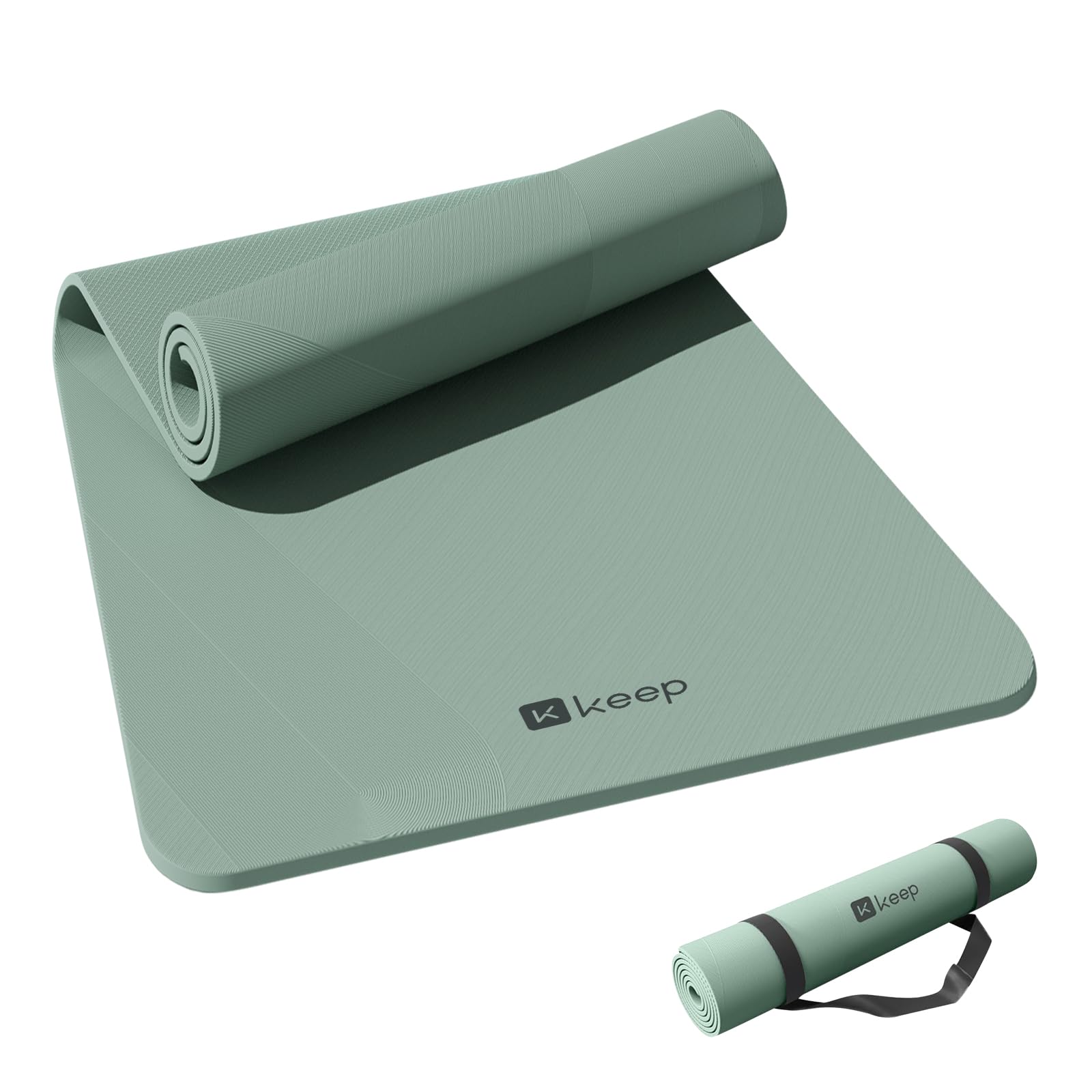
The KEEP mat shares the same 32-inch width and 7mm TPE specs as the MRZZATA but distinguishes itself with a fingerprint-like anti-slip texture on the top layer that provides noticeably precise grip during sweaty sessions. The bottom pattern uses a comprehensive anti-slip design that leaves no corner unanchored, so the mat stays completely stationary even on polished wood floors during dynamic movements.
The TPE formulation is free from plasticizers and formamide, making it one of the cleaner options chemically in the mid-range tier. At 2.8 pounds, it’s similarly lightweight and portable, with a free adjustable polyester strap included for easy rolling and carrying. The mat unrolls flat with minimal curl, and the surface is easy to spot-clean with cold water — no soaking required.
The pale green color option offers a subdued aesthetic that doesn’t show dirt as readily as black, and the 7mm thickness provides sufficient joint relief for floor stretches without compromising balance. For eco-conscious users who want a wide mat with strong grip performance and a clean material profile, the KEEP is the strongest value proposition in this category.
Why it’s great
- Fingerprint-style top texture offers reliable grip even when slightly sweaty.
- TPE is free from plasticizers and formamide for a cleaner chemical profile.
- Lightweight build with included strap makes it easy to take to classes.
Good to know
- 7mm thickness may not be enough for users who want extreme cushion on concrete floors.
- The surface can feel slightly tacky when new but settles after a few uses.
7. Gaiam Essentials 2/5″ Thick (10mm) Yoga Mat

The Gaiam Essentials is the most cushioned mat in this review at 10mm thick, using high-density NBR foam that offers a plush, forgiving surface ideal for beginners, physical therapy, or low-impact floor stretching on hard surfaces. The textured foam top reduces slipping on dry floors, and the soft feel prioritizes joint comfort over the firm feedback that advanced users might prefer.
At 72 by 24 inches, this is a standard-width mat, so you’ll feel the edges during wide-legged stretches. The NBR foam is heavier than TPE at about 2.8 pounds, but the included easy-cinch carrier strap makes it simple to roll and transport. Initial foam odor is common with NBR — airing it out for 24 to 48 hours resolves the smell in most cases.
Where the Gaiam falls short relative to the TPE options is durability: NBR compresses permanently over time, especially in high-pressure zones like kneeling spots, and it absorbs moisture rather than repelling it. For casual daily stretching on a budget where maximum softness is the priority, this mat delivers. For long-term heavy use, the TPE mats above will outlast it.
Why it’s great
- 10mm thickness offers the most plush cushioning for joints on hard floors.
- Low price point makes it accessible for first-time mat buyers or physical therapy use.
- Included carrying strap simplifies transport despite the heavier foam.
Good to know
- Standard 24-inch width limits lateral movement for wide-legged stretches.
- NBR foam compresses permanently over time and absorbs moisture rather than repelling it.
FAQ
What is the best thickness for a stretching mat used mostly on hardwood floors?
Can I use a yoga mat for stretching, or do I need a dedicated stretching mat?
How do I clean a TPE stretching mat without damaging the surface?
Final Thoughts: The Verdict
For most users, the stretching mat winner is the Gogokiwi Large Yoga Mat (6’x4′) because it combines a massive 48-inch width with durable closed-cell RecFoam that stays clean, stays put, and supports everything from light floor stretching to active balance work. If you want extra cushion for joint-sensitive floor work, grab the Hatha Yoga 6’x4’x1/2″ mat. And for a portable option with alignment guidance, nothing beats the Gogokiwi 72″x36″ mat with its center alignment line.